
Features
PMB:My Recollections Of The Man And The Moments .
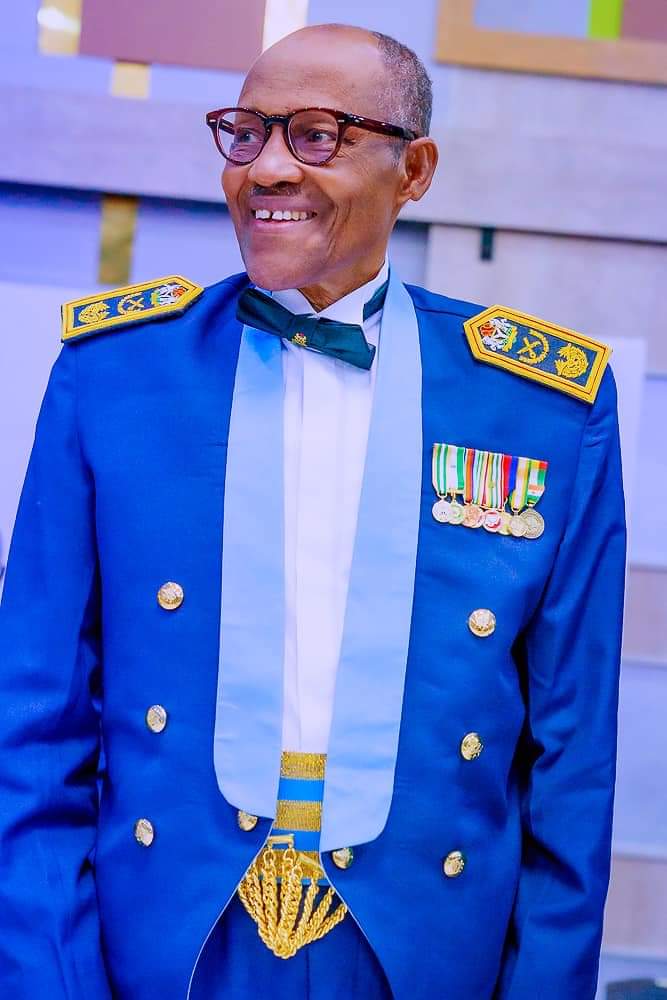
Isa Mansur
A. A Hero (1980s – 1990s)
I was just above two years old when Major General Muhammadu Buhari, as he then was, took over power on January 1st, 1984. By the time he was toppled in August 1985, I was just four. I, therefore, have not much recollection of what his 20 months stewardship as military head of state was like. The only vivid recollection I have about him, as at then, was the discussion I heard my mother and my grandmother doing a day after he was toppled about “juyin mulki”. I asked my mother what it was, and she replied that “an cire shugaban kasa an a canza wani”, meaning: “the president has been removed and replaced with another one”.
For the next eight years as we grew up under the military presidency of General Ibrahim Babangida, we heard nostalgic stories from our parents, teachers and elders alike about how patriotic, well-intentioned and great the short “purposeful and corrective” regime of General Buhari was. We were told how his government vigorously fought corruption, indiscipline, economic sabotage, armed robbery, drug trafficking etc in an effective and non-nonsense manner! Typical of Nigerians, the incumbent president then, General IBB, was being portrayed as a stinkingly corrupt devil who conspired with his fellow unpatriotic colleagues in the military to truncate the good government of GMB in a place coup! IBB was being accused then of “institutionalizing corruption”, “selling” the country to the IMF and the World Bank, dancing to the tunes of Western Powers etc A hero was created of Buhari in our minds then – a non-nonsense, non-compromising, incorruptible, patriotic and pro-masses general who could have rescued the country out of the woods if not for the inglorious action of IBB and co that unpatriotically and selfishly removed him from office.
As a junior secondary student in 1992, I stumbled upon my father’s 1986 edition of the Newswatch magazine that made a cover story with the title: “Where is Buhari?”, or something to that effect. The magazine gave detailed description of how GMB was toppled, including how he was arrested in the Dodan Barracks, and also the travails of his family after the coup, especially that of his now late wife, Safina Buhari. Describing how Buhari was arrested, the writer mentioned how a “stoical” Buhari was found in his living room by the heavily armed majors and how they informed him that they have effected a change of government and that they were there to arrest him. GMB, according to the report, responded to the heavily armed officers with: “Why is there so many of you? One man is enough to arrest me and, in any case, one bullet is enough to do the job.” The general requested for a permission to go and dress properly, which was granted by the young officers. He went into his bedroom and emerged later fully dressed in his military uniform. Before being taken away, according to the report, the general retorted to his captors: “I may no longer be the Head of State, but I am a superior general who still deserves to be respected!” The young officers smartly saluted the general and whisked him away! This further consolidated the hero status of the general in my mind.
The government of General Sani Abacha, in a credibility shopping effort, brought GMB from his post-detention retirement and appointed him as the head of the Petroleum Trust Fund (PTF) for the purpose of judiciously investing a portion of the proceeds generated from the sell of petroleum into the provision social services and infrastructural development. At that time when government’s primary responsibility of taking care of the citizens welfare has virtually ceased, PTF brought a serious relief to the people and was a huge success. It was visible all over the federation particularly in health, education, agriculture and transportation sectors. The hero!
In late 1998, I came across a book written by a lady, Rosaline Odeh, titled “Muhammadu Buhari: the Nigeria’s Seventh Head of State”. The book was a biography of the general and it documented his rise in the military, the various military and political appointments he held as well as how he discharged each effectively. I particularly found very fascinating the book’s description of how GMB, as the GOC of the 3rd Armored Division Jos, effectively dealt with the Chadian army’s invasion of some Nigerian islands on the Lake Chad. The book detailed how, as the commander, GMB relocated from Jos to Maiduguri and how he daily goes to the front to ensure the operation is successfully executed. The Chadian were not only sacked out of the occupied Nigerian territories, but were chased several kilometers into the Chadian territory, something that nearly caused a rift between the general and the then civilian government of Alhaji Shehu Shagari. A hero!
2. A Savior (2000 – 2015).
The return of democratic rule in 1999 and the emergence of General Olusegun Obasanjo as the democratically elected president sees the North relinquishing power to the South after twenty years (1979 – 1999). While the return of democratic rule, after years of military dictatorship, was some sort of relief to the ordinary Nigerians, here in the North relinquishing power to the South created a sense of fear, anxiety and mistrust among majority of the people. Some actions/inactions of the OBJ government such as the mass retirement of mostly northern officers in the military that served political appointments, the alleged movement of military hardwares from the North to the South, the Sharia implementation agitations and the government’s response to it, rampant ethno-religious violence in the North, alleged marginalization of the North in appointments in the military and the civil service, the OPC’s series of violence against northerners in the Southwest etc, further aggravated the feelings marginalization and/or even persecution by majority of the people in the North.
It was in the above circumstances that some politicians here in the North begun to search for a leader from the region that can be put forward to led the region in its effort to both protect its interests and by extension rescue the nation from its seeming derailing under the OBJ government. With his history of integrity and patriotism, his sterling record of performance as PTF chairman and the widespread respect and admiration he has among the masses, GMB was the best person for the role at the time. Politicians, opinion leaders, intellectuals and even some of his retired colleagues in the military began to call for the general to join politics and rescue the country! He was promoted in newspaper articles, invited to deliver public lectures by universities and the Arewa House, invited to attend the declaration of Sharia by some state governors etc. By 2002, GMB that was known for seeing nothing good about politics and multiparty democracy, was convinced to join partisan politics by registering with the then opposition All People’s Party (APP). He later admitted that the collapse of the Soviet Union in the 1990s, without a single shot fired, was the reason why he became a “converted democrat.”
In the early 2000s the wind of Sharia implementation agitations was blowing fiercely in the Muslim North. After the declaration by Zamfara State, there was a lot of pressure on all governors in the region to follow suit and implement Sharia. On the other hand, quite understandably, the Christian community in the country were also afraid of the Sharia implementation and were resisting it by all the means at their disposal. The tension in the country was so high and palpable. President OBJ summoned a meeting of the Council of State to discuss the issue, among others. After the meeting, the then Vice President, Atiku Abubakar, informed the nation that the council had agreed that Sharia declaration be suspended across the country. GMB and some of the governors that attended the meeting publicly disassociated themselves from the announcement made by Atiku by insisting that no such decision was made by the Council. This singular action further endeared GMB to the people of the north. He was the only voice among the various former presidents from the region that was being heard in solidarity with the people of the region. A savior!
By 2003 GMB was on the ballot contesting for the office of the president on the opposition ANPP, while OBJ runs for the ruling PDP. With the feeling of marginalization and/or even persecution high among the people in the North, PMB was seen as the only savior that can save the region and by extension the nation from the “corrupt and inept” PDP government under OBJ. The love, confidence and trust people had for him was unimaginably fanatical. A savior!
After contesting and loosing the 2003 elections, the love people have for Buhari only increased. He contested and lost again to Umaru Musa Yar’adua in 2007. For the people, Buhari was being rigged out by the “forces of evil” that are against the emancipation of the Nigerian masses. The elections were no doubt everything but free and fair. But whether GMB at the time has enough national acceptability to win an election was out of concern to us, his teeming supporters. However, the existential threat that Boko Haram constituted to the North in particular and the nation in general under President Goodluck Jonathan, provided the necessity for a unity of purpose between the masses that supported Buhari over years and some of the elites that were against him. While the masses sees as their one and only savior and emancipator, the political elites saw him as the only formidable politician with a support base large enough to unseat a sitting president with an opposition merger. Against the odds, the savior made it in 2015! It was a historic, remarkable and exciting moment for millions of Nigerians that were tired of the status quo and yearning for positive change!
3. A President (2015-2023).
Now christened PMB, Buhari assumed office on May 29th, 2015 amidst unreasonably high hopes from most of the people that elected him to power. As a career opposition candidate, the president has vehemently criticised all the governments before him, condemning them for corruption, insecurity, poor management of the economy, high poverty and unemployment rate, fuel and power scarcity, bad education and health policies etc During his years of campaigns, he has made a lot of promises to immediately and effectively change things for the better if elected into office. Naturally, majority Nigerians expected nothing short of miracles from him.
With high hopes, acute and dwindling resources, a nation at war in many fronts, serious health challenges, endemic public sector corruption , PMB government started on a very bad and difficult footing. These, coupled with the president’s slow approach to decision making, uncompromising attitude and poor oversight over subordinates etc all contributed to the terribly below expectation and disappointing outing of PMB as the president.
Unfortunately, from his speeches and body language, PMB seems to believe, and off course many Nigerians at the time, that having a honest president who will not steal or conspire with others to steal; a president who will give all the institutions and functionaries of government the freedom and the resources to discharge their duties, based on established laws and procedures, is enough to make the nation work again and rescue it from the precipice! As a leader, he seems to believe that in as much as he has done his best, by way of approving and providing what is needed to, for example, fight insecurity and terrorism, or fight corruption, or provide social intervention, or build roads, etc he has done his best and the people down the line of authority and responsibility should be held responsible and accountable for whatever failure that may arise. In short, in as much as he has done his own part honestly and patriotically, the people and the law should hold those who haven’t done so responsible and accountable. Many of the people he entrusted make good use of this shortcomings of the president to do what they like. Either the law or history, or both, will certainly take care of this.
4. Sweet and Bitter Farewell.
As the president retires to Daura tomorrow, as his ardent supporter for many decades, I am both happy and sad for him. I am sad that the president has performed far below even the reasonable expectations Nigerians had on him in virtually all sectors. However, I am also happy for him that he has succeeded in living above board and returning home with his personal integrity intact.
I really don’t mind the insults and curses some Nigerians are raining on the president at the moment – that is our convention. From Balewa to Buhari, no leader was spared of insults and curses while in power. We only celebrate our cursed leaders in nostalgia – after they left power.



Features
Why I want To Rewrite Kannywood’s Playbook – Dan Hausa

By Saif Ibrahim, Kano
Who is Dan Hausa?
I am Kamilu Ibrahim born 31 years ago, but most people know me as Dan Hausa. I was born in Fagge, Kano State, and from the very beginning I knew I wanted to tell stories that reflect the realities of my people. I trained at the High Definition Film Academy in Abuja, SAE Institute, and also took part in the U.S. Embassy’s Filmmaking for Impact program. I join the fikm making industry and started directing in 2017 because I wanted full control over how my stories are told.
Can you tell us a bit about yourself and your journey into film directing?
My journey began with a love for storytelling—I started as a scriptwriter, then worked closely with experienced filmmakers before directing my first film. Over the years, I’ve learned that directing isn’t just about cameras and lights, but about understanding people, culture, and the power of narrative.
Growing up, I saw how films could educate and inspire people. In Arewa, cinema is more than entertainment—it’s a mirror of society. I wanted to use that mirror to reflect our values, challenges, and hopes. That desire to make meaningful films pushed me into directing.
What sets your work apart in today’s Kannywood?
For me, it’s about merging modern cinematic techniques with our Hausa cultural identity. I love bold visuals and tight storytelling, but I never want to lose that traditional heartbeat of my origin. My goal has always been to raise our production quality to international standards while staying true to our roots”, proof of that is clear in my current and biggest project, “Wata Shida.
How would you describe your directing style?
I like to call my style “realism with purpose.” I focus on authenticity—every scene, every performance, every frame must feel true to life. But I also ensure that there’s always a message, something the audience can take home and reflect on.
Can you highlight some of your notable works?
Sure, there is Wata Shida which is currently airing and has an overwhelming response from the public and the likes of Lulu Da Andalu a myth-inspired adventure series showing on AREWA24 and YouTube. YouTube pushed us to think bigger in terms of story and production. Mijin Hajiya earned me Best Director at the 2024 Kano Entertainment Awards, while Tataburza made waves at film festivals. Earlier films like Bakon Yanayi (2019) and my debut Kulba Na Barna (2017) helped me define my style. My latest project, Amaryar Lalle, starring Rahama Sadau, premieres August 2025 on Sadau Pictures TV. Each project is a step forward in showing what Kannywood can achieve.
What awards and recognitions have you earned?
I have also been recognized by the Arewa5050 Awards and Kaduna International Film Festival (KIFF) for Lulu Da Andalu, which even won Best Indigenous Hausa Film. There’s also an AMVCA nomination for best Africanindigenous language , which is exciting because it means Hausa stories are getting wider attention.”
Who are your key collaborators?
Filmmaking is teamwork; TY Shaba has been a creative partner on several projects, especially on Lulu Da Andalu. I have WORKED with Rahama Sadau on Amaryar Lalle has been fantastic; she brings so much energy to the screen.”
What themes do you explore in your films?
I like telling stories where modern life clashes with traditional values—family conflict, cultural identity, gender roles. These are real issues in our society, and I try to explore them honestly but cinematically. I believe film should make people feel and also think.”
What is your next project?
I am working on Wata Shida Season 2, a story about a woman who enters a six-month sham marriage to protect her inheritance. It’s socially meaningful but also very entertaining. I will also continue with season 2 of “Amaryar Lalle.”
Can you tell us a little about your latest project?
This project is very close to my heart. It follows a young girl fighting to get an education in a society full of obstacles. Through her eyes, we see how family, tradition, and resilience collide, and how hope can survive even in the harshest situations.”
What inspired you to make this story?
Growing up, I saw so many bright young girls whose dreams were cut short just because they were girls. I felt a responsibility to tell this story—not as fiction, but as a mirror of what is happening around us.
How do you balance tradition and modernity in your work?
A: It’s about respect. I respect our traditions, but I also embrace new technology and ideas. In my films, I make sure traditional values are represented truthfully, while using modern techniques to improve production quality.
What challenges do you face as a director in Kannywood?
Budgets are often limited, and resources can be scarce. But the biggest challenge is sometimes societal misunderstanding of what we do as filmmakers. People forget that film is also an art form and a tool for change, not just entertainment.
Can you tell us your favourite project
Every project has its own special memory, but I’m proudest when a film sparks conversation or impacts people’s lives. For example, one of my recent films about youth unemployment led to community discussions and even small initiatives to help young people. That’s when I feel film is doing its job.
What advice would you give to aspiring directors?
Learn the craft—don’t rush. Watch films, study scripts, spend time on set even if it’s just to observe. Most importantly, stay humble and focused. Filmmaking is about patience, teamwork, and vision.
What should audiences expect from your upcoming projects?
Expect more powerful stories rooted in our culture, with better technical quality. I’m working on projects that tackle real societal issues, and I believe they’ll resonate with audiences not just in Arewa, but globally.
Features
Antenatal Care: Why some women misses several sessions

By Aisha Muhammad Rabiu
In many parts of Northern Nigeria, antenatal care is a vital step in ensuring the health of both mother and the unborn child. Yet, an increasing number of women are neglecting this crucial stage of pregnancy, putting themselves and their babies at serious risk, hence the high infant, mother mortality rate.
Health experts have been warning that antenatal visits help detect pregnancy complications at its early stage, provide essential supplements for healthy mother/child development, and educate mothers on safe delivery practices. But for some women, they find antenatal care as a burden either due to poverty or lack of awareness based on cultural practices and beliefs. As such antenatal remains a neglected priority.
In Kadawa, Fatima Sani, a 28-year-old expectant mother, admits she has not attended a single session of antenatal since the start of her pregnancy. she said “It’s not that I don’t want to go, but the clinic is far from my house, and my husband says we should save the transport money for delivery day. I just pray Allah protects me and my baby.”
From Dan Bare, Shago Tara precisely, Khairat a mother of 4 shares her reasons for not attending antenatal session even though she is fully aware that the session is very important to pregnant women. She said “I feel healthy, so I don’t see the need to go for antenatal. My mother gave birth to all her children at home without any clinic visits, and they all survived.”
In Rijiyar Zaki, Hadiza Mukhtar recalls her previous pregnancy, where she skipped antenatal visits entirely. “The nurses were rude to me when I first went. I decided I would not return. This pregnancy, I haven’t gone at all,” she confesses.
For Usaina Muhammad of Kurna, the problem is financial. “I can’t afford the registration fee, and I also have other children to feed. I know antenatal is important, but survival comes first.”
Meanwhile, Maryam Lawan of Layi Kaji reveals that misinformation has influenced her decision. “Someone told me that the iron tablets they give at the clinic make the babies grow too big, making delivery harder. So, I decided to avoid it altogether.”
Medical professionals emphasize that skipping antenatal care increases the risk of complications such as anemia, high blood pressure, infections, and even maternal or infant death. Dr. Ibrahim Musa, a gynecologist in Kano, warns: “We see many emergencies that could have been avoided if the mother had attended antenatal. Most of these cases arrive late, making it harder for the doctors to save lives.”
Experts and community leaders agree that raising awareness is key in addressing the matter. Antenatal care should be made more affordable, accessible, and culturally acceptable for all women. Religious leaders, health workers, and family members all have a role to play in encouraging expectant mothers to attend regular check-ups.
Neglecting antenatal care is not just a personal choice; it’s a public health concern that affects families, communities, and the future of the nation. Ensuring that every mother has the knowledge, resources, and support to seek antenatal care is a step toward a healthier society.
Aisha Muhammad Rabiu writes from Bayero University Kano (BUK) and she can be reached at Email: aishatama2020@gmail.com
Phone no.08084273341
Features
Rano’s Peaceful Legacy: More Than a Slogan, One Tragedy Won’t Define Us

For decades, Rano Garin Autan Bawo has proudly stood as a symbol of peace and harmony in Kano State. It is a place where neighbors look out for one another, where disputes are settled through dialogue, and where diversity is met with respect—not resentment. In Rano, peace is not just a slogan—it is a way of life passed down through generations.
The tragic incident that recently occurred at the Divisional Police Station in Rano Local Government has deeply shaken our community. Known for generations as one of the most peaceful and united areas in Nigeria, Rano now faces the painful reality of an attack that led to the death of a Divisional Police Officer and the destruction of police property. This senseless act of violence goes against everything our community stands for and must not be seen as a reflection of who we are.
Rano has long been recognized for its peaceful spirit, tolerance, and respect for all. People from different backgrounds, religions, and cultures have lived side by side here in harmony. This didn’t happen by chance—it is the result of years of effort by our leaders, religious figures, and ordinary citizens who believe that our strength lies in our unity and diversity.
Our respect for law and order is deep-rooted. We understand the crucial role that security personnel play in keeping our community safe. The people of Rano have always appreciated the risks and sacrifices made by the police, military, and other agencies to protect lives and property.
Respect for the law here is not just about obeying rules—it’s about a shared belief in justice, fairness, and solving problems peacefully and legally. This belief has helped build a respectful and cooperative relationship between the police and the people.
What happened at the police station is completely out of character for our community. The individuals who carried out this attack do not represent us. Their actions go against the values that have shaped Rano. We strongly condemn what they did and make it clear that their behavior does not reflect who we are.
The loss of the Divisional Police Officer is not just a blow to the Nigeria Police Force or the Kano State Police Command—it is a loss for all of us. He wasn’t just doing his job; he was part of our extended family. His death is an attack on the peace and security that we all hold dear.
We send our deepest condolences to his family. No words can ease the pain of losing a loved one in such a brutal way. Our thoughts are also with his colleagues in the police force, who have lost a brother and a friend.
We also stand with the Kano State Police Command and the Nigeria Police Force as they face this heartbreaking loss. We understand how much this affects their morale, especially at a time when their work is more important than ever.
Destroying police buildings and equipment is not just an attack on law enforcement—it’s an attack on the very system that helps keep us safe. These facilities belong to the people and serve the entire community. Damaging them harms everyone, especially the most vulnerable among us.
We urge the government and relevant authorities to investigate this incident fully and fairly. Those responsible must be held accountable. Justice must be swift and uncompromised. Our community deserves to see the law upheld and the wrongdoers brought to book.
To our young people—the future of Rano—we ask for calm and reflection. We know that you may be frustrated or angry about many issues. But violence is never the answer. Taking the law into your own hands only brings more pain and setbacks for everyone.
Instead, we encourage our youth to focus on positive, constructive paths. There are peaceful, legal ways to raise your voices and push for change. Use those channels. Help move our community forward.
Rano must now focus on healing, rebuilding trust, and recommitting to the peaceful values that have always defined us. We must come together—young and old, leaders and citizens—to ensure that such violence never happens again.
We call on traditional leaders, religious figures, community elders, youth leaders, and all residents to stand united in promoting peace and respect for the law. Let’s strengthen our partnership with security agencies and support their efforts to keep us safe, while also holding them accountable to serve with respect and dignity.
How we respond to this tragedy will shape our future. Let us choose unity over division, peace over violence, and hope over despair. The actions of a few will not define us. We will protect the legacy of peace that Rano is known for and continue working together for a better tomorrow.
Buhari Abba wrote this piece from Unguwar Liman Rano.

Nigeria’s Power Supply to Improve in Two Weeks as Gas Pipeline Work Nears Completion

Court Orders Arrest of PDP Factional Chairman Kabiru Turaki for Skipping Trial

Youth Call on Ibrahim Little to Contest for Kano Governorship Under ADC

Attacks on the media: IPI Nigeria urges President Tinubu to call Governor Bago to order.

Governor Yusuf Sacks Sagagi as Kano Commissioner Of Commerce

The Governor Who Chose His People Over His Politics: Abba Yusuf and the Moral Courage Behind Kano First

FREEDOM OF SPEECH, NOT FREEDOM FROM CONSEQUENCE: A CITIZEN’S CALL FOR RESPONSIBLE PUBLIC COMMENTARY

How Kano Government Official Allegedly Intimidate And Insult Two Journalists On Lawful Duty

Press Freedom: IPI Nigeria Calls on New Acting IGP to End Police Harassment of Journalists
Tinubu to Swear in Olatunji Disu as Inspector-General of Police on Wednesday
Nigeria’s Power Supply to Improve in Two Weeks as Gas Pipeline Work Nears Completion
Court Orders Arrest of PDP Factional Chairman Kabiru Turaki for Skipping Trial
Youth Call on Ibrahim Little to Contest for Kano Governorship Under ADC
Attacks on the media: IPI Nigeria urges President Tinubu to call Governor Bago to order.
Governor Yusuf Sacks Sagagi as Kano Commissioner Of Commerce
The Governor Who Chose His People Over His Politics: Abba Yusuf and the Moral Courage Behind Kano First
FREEDOM OF SPEECH, NOT FREEDOM FROM CONSEQUENCE: A CITIZEN’S CALL FOR RESPONSIBLE PUBLIC COMMENTARY
How Kano Government Official Allegedly Intimidate And Insult Two Journalists On Lawful Duty
Press Freedom: IPI Nigeria Calls on New Acting IGP to End Police Harassment of Journalists
Tinubu to Swear in Olatunji Disu as Inspector-General of Police on Wednesday
-

 Opinion4 years ago
On The Kano Flyovers And Public Perception
-

 Features5 years ago
How I Became A Multimillionaire In Nigeria – Hadiza Gabon
-

 Opinion5 years ago
Kano As future Headquarters Of Poverty In Nigeria
-

 History5 years ago
Sheikh Adam Abdullahi Al-Ilory (1917-1992):Nigeria’s Islamic Scholar Who Wrote Over 100 Books And Journals
-

 Opinion4 years ago
My First Encounter with Nasiru Gawuna, the Humble Deputy Governor
-

 History5 years ago
The Origin Of “Mammy Market” In Army Barracks (Mammy Ochefu)
-

 History4 years ago
The History Of Borno State Governor Professor Babagana Umara Zulum
-

 News4 years ago
Federal University Of Technology Babura To Commence Academic Activities September