
News
Dangote Sugar pays N18.22bn Dividends, to produce 170,000 Tonnes next season
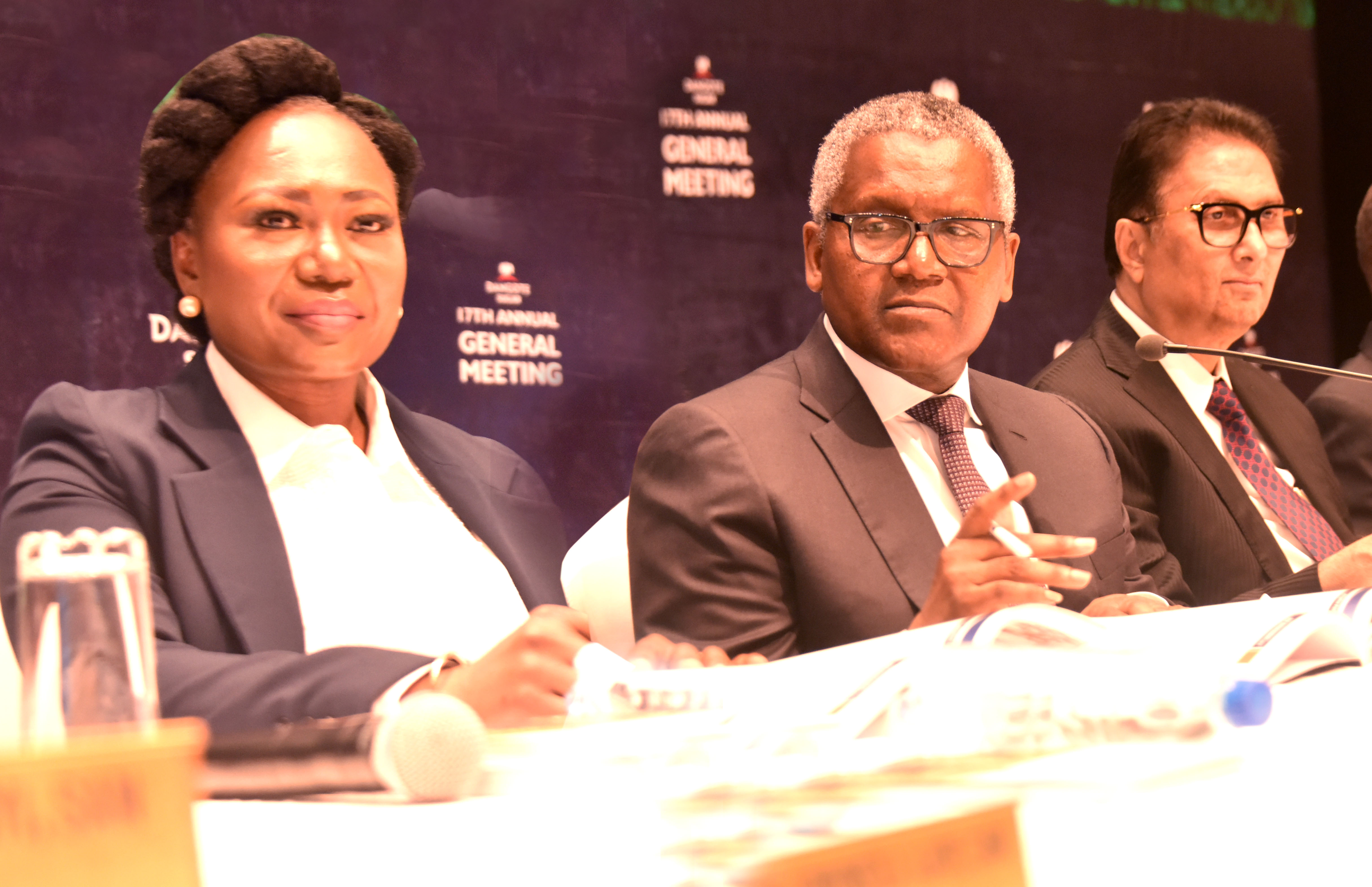
Despite the economic headwinds that characterised 2022, Dangote Sugar Refinery Plc (DSR) will pay N18.22 billion as dividends to shareholders for the year ended December 31, 2022, while also targeting the production of over 170,000 tonnes of sugar next season. The dividend payout will translate to N1.50 kobo per share held by shareholders.
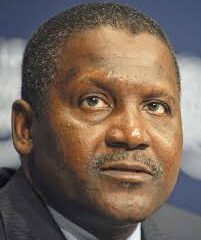
Chairman of the Company, Aliko Dangote said: “The shareholders are very happy with the way we have been running their company and also in re-investing the profit into the Backward Integration Programme (BIP) for the sugar industry. We are going to play our part in ensuring that Nigeria becomes self-sufficient in sugar within a very short period. We are not the only players, but we will surely play our part. We should be able to produce over 170,000 tonnes which are by far, in the history of Nigeria, the highest to be produced locally.”
The company recorded an impressive turnover of N403 billion, a 46 per cent increase over N276 billion recorded during the same period in the year before, and posted a Profit before Tax (PBT) of N82 billion.
Dangote attributed the company’s remarkable performance to the pragmatic approach the management deployed by focusing on continued cost and process optimisation, improved efficiencies in every area of operations, and service delivery to our customers.
He pledged that the management would continue to implement strategic actions to sustain the performance with the support of all stakeholders with complete adherence to the tenets of the Federal Government’s Sugar Master Plan.
Dangote said part of the success recorded by Dangote Sugar was made possible by the management’s continued implementation of the Dangote Sugar Development Master Plan with the rehabilitation and upgrade of the Dangote Sugar Refinery’s Numan operations, facilities and land development, as well as the development of the Nasarawa Sugar Company Limited, the greenfield sugar project, and Tunga in Nasarawa State.
He said: “Concerted efforts were made during the year to rise above the various challenges that came about due to the COVID–19 lockdown which affected project timelines considerably and continued to generally impact economic activities due to its spill-over effect, which also led to the lack of forex to finance most of the project deliverables.
“We however continued to surge ahead supported by the various stakeholders in the industry and government parastatals, with the resolve to ensure that the goals of the Nigeria Sugar Development Master Plan are achieved.”
The Company Chairman noted that during the year under review, the first phase of the Sugar Master Plan implementation period came to an end and that the Federal Government approved the second phase over the next 10 years. “This extension came on the back of the review of the first phase by the National Sugar Development Council and other government parastatals with cognisance of the challenges and several circumstances that were unforeseen which riddled the first phase of the programme,” he added.
Dangote stated that the board and management were, however, focused on the achievement of the goals of the strategic initiative, and thus considerable progress was recorded in the project development, despite the numerous challenges faced.
Not minding the obstacles ahead, Dangote promised that the management would continue to create sustainable value for all stakeholders through an inclusive approach to growth and development, with continuous engagement with all parties, to enable the company make a positive impact, support poverty eradication and food security, infrastructure development, empowerment for members of the immediate communities, and the society at large.
In her remarks, the Coordinator of the Pragmatic Shareholders Association, Mrs. Adebisi Bakare expressed the satisfaction of shareholders with the performance of the company, noting that despite all the encumbrances in the sugar sub-sector of the economy, the company still performed far and above the previous year.
She urged the board and the management to continue in the direction they have taken to get the company to the current winning, assuring that the management has the support of the shareholders to post even better performance in the coming years













News
El-Rufai Taken Back To Custody
By Yusuf Danjuma Yunusa
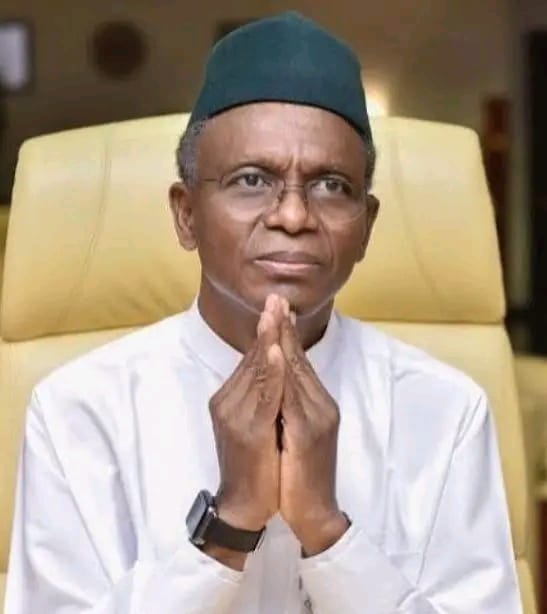
The ICPC and DSS operatives, after the court session on Tuesday, 31 March, have taken Mallam Nasir El-Rufai with them to Abuja, a move which has raised questions about the status of his administrative bail.
The journey to Abuja followed his appearance at the Federal High Court, Kaduna, which was scheduled to hear his application for bail. The court adjourned to tomorrow, 1 April 2026, after the prosecution said it had just filed its counter affidavit.
He had been released on administrative bail on Friday following the death of his mother. Sources say that he was granted bail for 14 days. He hosted the fidau prayers for his mother yesterday in Abuja before proceeding to Kaduna for today’s court sessions. The latest development indicates that the bail has been revoked.
Mallam El-Rufai has first appeared this morning at the Kaduna State High Court. The absence of the second defendant stalled the hearing which was then adjourned to 10 April 2026.
News
Eight Kano Rep Members Abandon NNPP for APC
By Yusuf Danjuma Yunusa
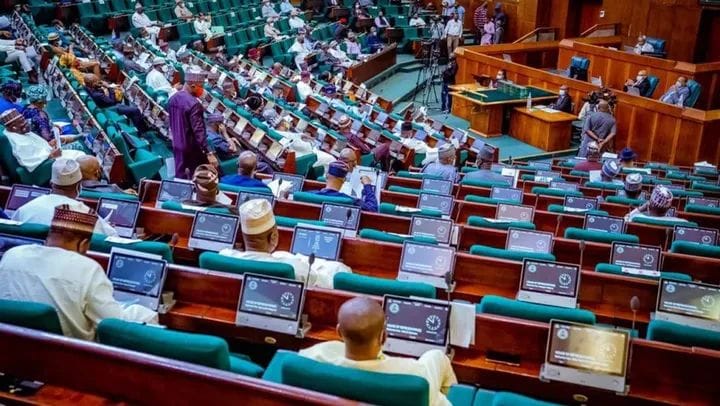
In a dramatic political realignment, eight members of the House of Representatives from Kano State formally defected from the New Nigeria Peoples Party (NNPP) to the ruling All Progressives Congress (APC) on Tuesday.
The mass defection, which signals a significant shift in the political dynamics of Nigeria’s most populous state, was announced during plenary at the Green Chamber. The move represents a major blow to the NNPP, which controls the Kano State Government House, and a substantial boost for the APC as it consolidates its federal influence.
The announcement drew a high-profile audience, underscoring the political weight of the development. Among those present to witness the defection were Kano State Governor Abba Kabir Yusuf, a prominent figure in the NNPP; Deputy Senate President Barau Jibrin; and former Kano governor Abdullahi Umar Ganduje, who now serves as a national leader of the APC. Their presence highlighted the escalating political contest for control and influence in the state.
Political analysts view the defection as a major realignment ahead of future electoral contests. For the APC, the addition of eight federal lawmakers strengthens its numerical standing in the House and deepens its foothold in a state where the NNPP had mounted a formidable challenge in the 2023 elections.
The lawmakers have yet to publicly detail their reasons for leaving the NNPP, but the coordinated switch points to intensifying factional battles and strategic maneuvering within Kano’s political landscape. The development is expected to further polarize the state’s political environment as both parties position themselves for the next electoral cycle.
News
Governor Abba Kabir Yusuf Holds Exclusive Prerogative to Choose Deputy – Malam Inuwa Waya
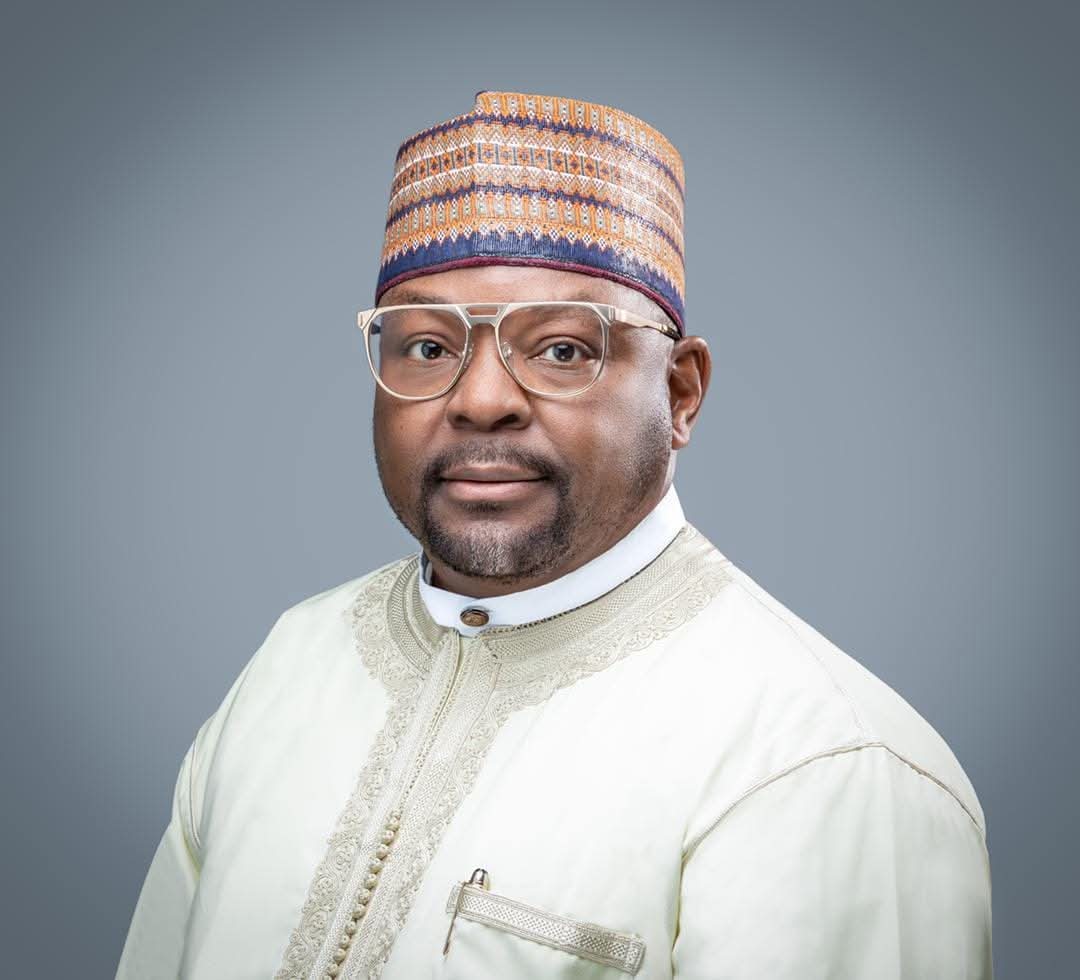
Malam Inuwa Waya, a chieftain of the All Progressives Congress (APC) in Kano, has reaffirmed that the constitutional prerogative to appoint a new Deputy Governor rests solely with His Excellency, Governor Abba Kabir Yusuf.
Speaking to journalists in Kano, Malam Waya cautioned against undue interference from individuals on social media who have been attempting to dictate the Governor’s choice following the resignation of the former Deputy Governor, Comrade Aminu Abdulsalam.
“It is only Governor Abba Kabir Yusuf who has the prerogative to choose his deputy. People should stop coming to social media to tell him who to appoint. The constitution does not mandate him to select from any particular zone; it is entirely his decision,” Malam Waya stated.
He further explained that while political balancing may encourage consideration of candidates from Kano North or South since the Governor hails from Kano Central, such arrangements remain political strategies rather than constitutional requirements.
Malam Waya also commended Governor Yusuf’s infrastructural strides, noting that within two years, the administration has revived water projects, advanced public-private partnerships in power, and accelerated development across education, agriculture, and investment.
“The Governor has revived the glory of Kano. With the infrastructure projects ongoing, it will be an easy sail for all of us as we prepare for 2027. He has put Kano first, and that is what matters,” he said.
On the issue of inclusivity, Malam Waya emphasized that all stakeholders, including former APC members, are being carried along in governance. He urged the people of Kano to unite behind the Governor’s vision.
“We, the old APC members, have no problem with Governor Yusuf. We are knit together in Kano, and our priority is Kano first, not any individual. The Governor knows who he will pick as his deputy, and we trust his judgment,” he concluded.
Malam Waya also extended prayers for the acceptance of Ramadan fasting and congratulated the Muslim Ummah in Kano for celebrating Sallah peacefully.

El-Rufai Taken Back To Custody

Eight Kano Rep Members Abandon NNPP for APC

Governor Abba Kabir Yusuf Holds Exclusive Prerogative to Choose Deputy – Malam Inuwa Waya

ADC Reports Surge in Membership Following Kwankwaso’s Defection, Calls Him ‘Game Changer’

Foreign Affairs Minister Resigns to Pursue Bauchi Governorship Election

The Governor Who Chose His People Over His Politics: Abba Yusuf and the Moral Courage Behind Kano First

FREEDOM OF SPEECH, NOT FREEDOM FROM CONSEQUENCE: A CITIZEN’S CALL FOR RESPONSIBLE PUBLIC COMMENTARY
Restoring the Glory That Was Always There: Governor Abba Kabir Yusuf and the Historical Vision Behind Kano First

Tinubu to Swear in Olatunji Disu as Inspector-General of Police on Wednesday

NDLEA Clarifies: Drug Case Against Abba Kyari Still Active After Court Discharge
El-Rufai Taken Back To Custody
Eight Kano Rep Members Abandon NNPP for APC
Governor Abba Kabir Yusuf Holds Exclusive Prerogative to Choose Deputy – Malam Inuwa Waya
ADC Reports Surge in Membership Following Kwankwaso’s Defection, Calls Him ‘Game Changer’
Foreign Affairs Minister Resigns to Pursue Bauchi Governorship Election
The Governor Who Chose His People Over His Politics: Abba Yusuf and the Moral Courage Behind Kano First
FREEDOM OF SPEECH, NOT FREEDOM FROM CONSEQUENCE: A CITIZEN’S CALL FOR RESPONSIBLE PUBLIC COMMENTARY
Restoring the Glory That Was Always There: Governor Abba Kabir Yusuf and the Historical Vision Behind Kano First
Tinubu to Swear in Olatunji Disu as Inspector-General of Police on Wednesday
NDLEA Clarifies: Drug Case Against Abba Kyari Still Active After Court Discharge
-

 Opinion4 years ago
On The Kano Flyovers And Public Perception
-

 Features5 years ago
How I Became A Multimillionaire In Nigeria – Hadiza Gabon
-

 Opinion5 years ago
Kano As future Headquarters Of Poverty In Nigeria
-

 History5 years ago
Sheikh Adam Abdullahi Al-Ilory (1917-1992):Nigeria’s Islamic Scholar Who Wrote Over 100 Books And Journals
-

 Opinion4 years ago
My First Encounter with Nasiru Gawuna, the Humble Deputy Governor
-

 History5 years ago
The Origin Of “Mammy Market” In Army Barracks (Mammy Ochefu)
-

 History4 years ago
The History Of Borno State Governor Professor Babagana Umara Zulum
-

 News4 years ago
Federal University Of Technology Babura To Commence Academic Activities September