
News
President Buhari names Dangote as Chairman of National End Malaria Council
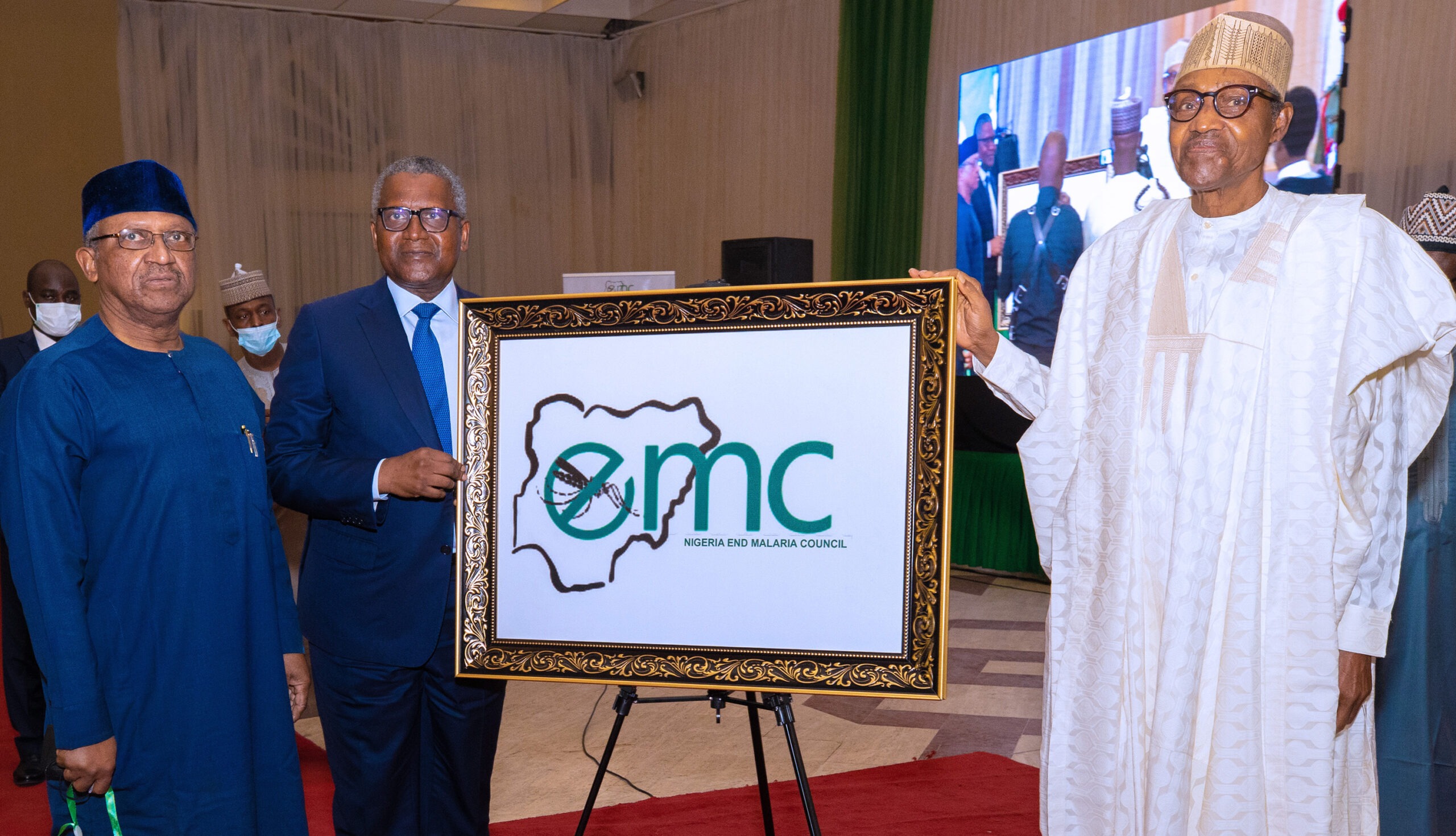
Chairman of Aliko Dangote Foundation and Africa’s richest man, Aliko Dangote has been named the pioneer Chair of the National End Malaria Council (NMEC), a body established by President Muhammadu Buhari to eliminate the scourge of malaria in the country. The National End Malaria Council (NMEC) was inaugurated by the President at a well-attended event in the Presidential Banquet Hall, Aso-Rock Villa, Abuja yesterday.
Dangote, who accepted the responsibility of chairing the Council, said the new function was in tandem with his current roles as the Nigerian Ambassador for Malaria, his role on the Global End Malaria Council, and with the work that his Foundation, Aliko Dangote Foundation is doing to mobilise the private sector to support malaria control in Nigeria in particular, and Africa at large.
While inaugurating the 16-member Council, President Buhari projected that the successful implementation of the Council’s agenda and savings from the estimated economic burden of the disease would save Nigeria about N687 billion in 2022 and N2 trillion by 2030.
The President told the Council that beyond improving the quality of life, health and well-being of Nigerians, the concerted strategy to tackle malaria had both public health as well as socio-economic benefits for Nigeria.
“Our inauguration today will therefore ensure that malaria elimination remains a priority on our agenda, with strong political commitment from leaders at all levels. Additionally, the End Malaria Council will provide a platform to advocate for more funding to protect and sustain progress made so far by our country, and put us on a pathway to ending malaria for good,” the President said.
Expressing concern that the age-long disease had remained a major public health challenge in Nigeria, the President cited the World Health Organisation (WHO) report of 2021, showing that Nigeria alone accounts for 27 per cent of all cases of malaria and 32 per cent of deaths globally.
On his choice of Dangote to chair the Council, Buhari explained that it was in recognition of the track record and passion of Africa’s richest man in supporting initiatives on various health issues such as polio and primary health care system strengthening.
He expressed confidence that Dangote would bring his outstanding achievements to help the country achieve its goal of malaria elimination, adding that a group of eminent personalities, who have also made their mark across all walks of life, have been selected to work in the Council. He added that the membership of the Council reflects Government’s commitment to significantly reducing the malaria burden in Nigeria, to a level where it is no longer a public health issue.
President Buhari also thanked the Chairman of the African Leaders Malaria Alliance (ALMA), President Uhuru Kenyatta of Kenya, the Executive Secretary of ALMA, RBM Partnership in Nigeria for their continuous support to the Federal Ministry of Health and the malaria programme, in particular. He also acknowledged the contributions of the Global Fund, the United States Agency for International Development (USAID), the President’s Malaria Initiative, Bill and Melinda Gates Foundation, WHO, UNICEF, UK Foreign and Commonwealth Development Office, other implementing partners, and the private sector.
In his acceptance speech, Dangote thanked the President and all members of the Council for entrusting him with the enormous responsibility, pledging to work hard to achieve the mandate.
“I must confess that this resonates with my current role as the Nigerian Ambassador for Malaria, my role on the Global End Malaria Council and with the work that my Foundation is doing to mobilise the private sector to support malaria control in Nigeria and Africa at large,” he said.
“It is with humility that I today accept the responsibility to be the Chair of the National Malaria Elimination Council. I am also grateful to the Minister, Federal Ministry of Health for nominating me to serve in this capacity. I would also like to express my gratitude to all the members of the Council for entrusting me with an enormous responsibility which I pledge to fulfil.
“In 2016, Aliko Dangote Foundation supported the development of a Private Sector Engagement Strategy for Malaria Elimination in Nigeria. The document highlighted private sector support in the fight against malaria as well as a strategy for private sector engagement and steps for implementation. In fulfilling our longstanding commitment/investment to end malaria, my Foundation will continue to support all efforts at mobilising all sectors to end malaria in Nigeria and Africa at large”, Dangote added.
Speaking on behalf of the Council members, Dangote said, “Together we will work hard to ensure that malaria elimination remains high on Nigeria’s agenda with strong political commitment from leaders at all levels. We will advocate at the National and State levels to ensure sufficient funding for malaria elimination. The Council under my watch will drive progress toward malaria elimination by focusing on two key areas: Ensure that malaria elimination remains high on Nigeria agenda with strong political commitment from leaders at all levels; and advocate at all levels to ensure sufficient funding to protect the progress made so far, sustain the progress, and be on an irreversible pathway to ending malaria for good.”
In separate remarks, the Minister of Health, Osagie Ehanire, and the Minister of State for Health, Joseph Ekumankama Nkama, said since 2010, Nigeria has been recording a continuous decline in malaria from 42 per cent in 2010, 27 per cent in 2015 to 23 per cent in 2018.
Quoting figures from the 2010 Nigeria Malaria Indicator Survey and the 2018 Nigeria Demographic and Health Survey, they attributed the decline to the thorough implementation of the National Malaria Strategic Plan (NMSP). Both ministers, however, admitted that funding gap has impacted the implementation of the malaria programmes in Nigeria, adding that the country needs N1.89 trillion to reduce malaria prevalence and mortality by 2025.
The Council members are: Shehu Ibrahim, Permanent Secretary, Office of the Vice President on Political and Economic Affairs, Governor Kayode Fayemi of Ekiti State and Chairman of the Nigeria Governors’ Forum (NGF), Sen. Yahaya Oloriegbe, Chairman, Senate Committee on Health, Hon. Abubakar Dahiru, Chairman, House Committee on AIDS, TB and Malaria, Dr. Ehanire, Hon. Ekumankama, Mahmuda Mamman, Permanent Secretary, Federal Minister of Health.
Others include, Tony Elumelu, Chairman, Board of Directors, UBA, Folorunsho Alakija, CEO, Rose of Sharon Group, Herbert Wigwe, CEO, Access Bank, Femi Otedola, CEO Forte Oil, Hajiya Lami Lau, President, National Council of Women Societies, John Cardinal Onaiyekan, Emeritus Archbishop of Abuja Catholic Archdiocese, Alhaja Rafiyat Sanni, National Amira, Federation of Muslim Women Nigeria (FOWAN) and Dr. Perpetua Uhomoibhi, NEMC Secretariat/National Coordinator, National Malaria Elimination Programme (NMEP). Malaria is a life-threatening disease caused by parasites that are transmitted to people through the bites of infected female Anopheles mosquitoes. It is preventable and curable. In 2020, there were an estimated 241 million cases of malaria worldwide. The estimated number of malaria deaths stood at 627,000 in 2020.
The WHO African Region continues to carry a disproportionately high share of the global malaria burden. In 2020 the Region was home to 95% of all malaria cases and 96% of deaths. Children under 5 years of age accounted for about 80% of all malaria deaths in the Region.
Four African countries accounted for just over half of all malaria deaths worldwide: Nigeria (31.9%), the Democratic Republic of the Congo (13.2%), United Republic of Tanzania (4.1%) and Mozambique (3.8%











News
President Tinubu Seeks Senate Approval To Borrow $20.5bn and €1.05bn For 2026–2027 Projects
By Yusuf Danjuma Yunusa
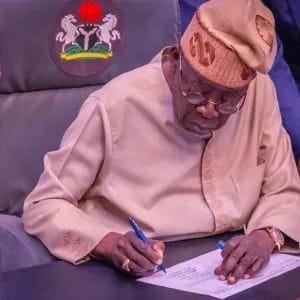
President Bola Tinubu has asked the Senate to approve an external borrowing plan of $20.52 billion and €1.05 billion to bridge funding gaps under the Federal Government’s 2026–2027 supplementary borrowing plan.
Senate President Godswill Akpabio read the President’s request during plenary on Tuesday, stating that the proposed loans would help address Nigeria’s infrastructure deficit and fund critical sectors of the economy.
In the letter, Tinubu requested approval for $20,517,755,901 and €1,045,083,643, with investments planned for power, transportation, healthcare, education, agriculture, water supply, security, job creation and financial management reforms.
“I submit the attached Federal Government 2026–2027 Supplementary External Borrowing Plan for consideration and early approval of the National Assembly to ensure prompt implementation of our projects,” the President wrote.
Tinubu said the proposed projects had undergone technical and economic assessments to ensure they contribute to poverty reduction, skills development, entrepreneurship and national food security.
He added that external borrowing had become necessary to meet the country’s substantial infrastructure financing needs.
Following the presentation, Akpabio referred the request to the Senate Committee on Local and Foreign Debts, chaired by Senator Haruna Manu, for detailed review, with support from the Committees on Appropriations and Finance.
Akpabio noted that aspects of the borrowing framework had featured in earlier government borrowing plans approved for 2025–2027. However, he said the committee would examine the scope of the latest request before further legislative action.
The committee’s review is expected to clarify the proposed borrowing arrangements, disbursement timeline and alignment with Nigeria’s existing debt management framework.
News
Tinubu Says Dangote Group Performs Excellently in Driving Economy
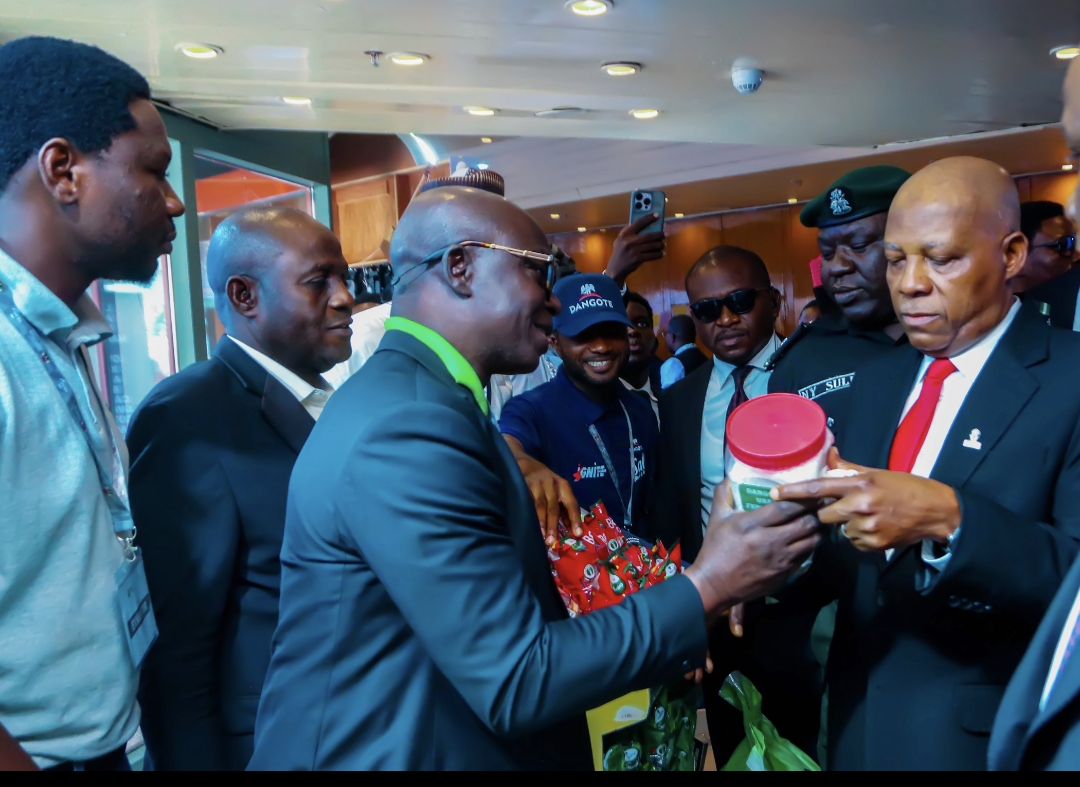
President Bola Ahmed Tinubu has commended the Dangote Group for its significant contribution to Nigeria’s economic growth, citing the conglomerate’s strategic investments in key sectors as instrumental in boosting domestic production, creating jobs, reducing dependence on imports, conserving foreign exchange and strengthening the country’s industrial capacity.
The President gave the commendation during a visit to the Dangote Group pavilion at the ongoing 32nd Nigeria Economic Summit at the Transcorp Hilton, Abuja, on Monday. He was represented at the event by Vice President Kashim Shettima.
Tinubu praised the Group’s performance across its business operations, highlighting the critical role of private-sector investments in expanding productive capacity, stimulating economic activities and supporting national development.
The Dangote Group has investments spanning cement manufacturing, fertiliser production, sugar refining, salt processing and petroleum refining.
These investments contribute to local value addition, employment generation and the development of domestic supply chains, while supporting efforts to reduce Nigeria’s dependence on imported products.
He said his administration is creating conditions for public and private sectors to invest, expand and generate productive employment.
Dangote Group is the second biggest employer of labour after the federal government.
The 2026 Nigeria Economic Summit, themed “Growth That Works: Delivering Jobs, Productivity and Shared Prosperity,” was declared open by the President, who used the occasion to defend the Federal Government’s ongoing economic reforms and emphasise the importance of industrial harmony and private-sector-led growth.
The summit brings together policymakers, business leaders, investors and other stakeholders to discuss practical strategies for accelerating economic growth, improving productivity, generating employment and ensuring that the benefits of economic expansion reach more Nigerians.
The President’s commendation underscores the importance of sustained collaboration between government and the private sector in building a more productive, competitive and resilient Nigerian economy.
He said Nigeria has performed below its potentials for far too long, but “there is no shortcut for economic development.”
We came to rewrite the story of a nation that has performed below its potentials for far too long,” he said.
Through its investments in strategic industries, the Dangote Group remains a major private-sector participant in Nigeria’s industrialisation drive, with the potential to deepen local manufacturing, strengthen supply chains and support the country’s broader economic development objectives.
Through the Dangote Group’s diversified operations, the conglomerate has established a substantial presence across critical sectors of the economy, providing products and services that support construction, agriculture, manufacturing, energy and other productive activities.
One of its investments is the Dangote Petroleum Refinery and Petrochemicals complex in Lagos, which has the potential to transform Nigeria’s downstream petroleum industry by increasing domestic refining capacity and reducing the country’s reliance on imported refined petroleum products.
News
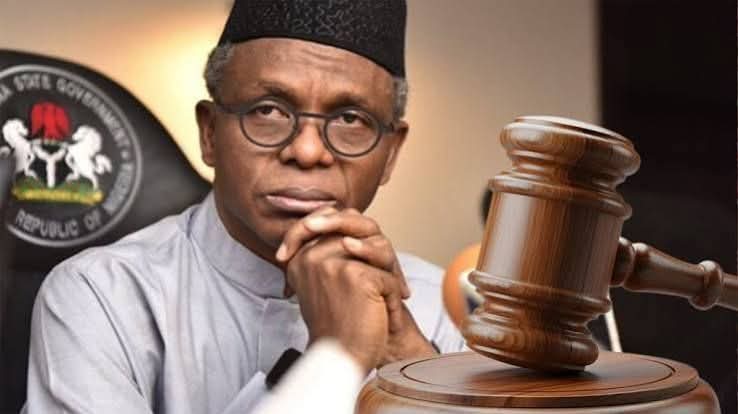
Court Dismisses El-Rufai’s No-Case Submission in Ribadu Phone-Tapping Trial, Orders Defence
By Yusuf Danjuma Yunusa
The Federal High Court in Abuja on Monday dismissed a no-case submission filed by former Gov. Nasir El-Rufai of Kaduna State in his ongoing trial over alleged unlawful interception of the telephone communications of the National Security Adviser, NSA, Nuhu Ribadu.
Justice Joyce Abdulmalik, in a ruling, held that the State Security Service, SSS, had placed before the court sufficient evidence to warrant the court to call on the ex-governor to enter his defence if he so desires.
The judge, therefore, ordered El-Rufai, the sole defendant in the charge, to enter his defence.
The defendant had opted for a no-case submission after the SSS closed its case by calling two witnesses.
Mr El-Rufai, through his counsel, Akinyemi Aremu, had urged the court to hold that the prosecution had failed to establish a case requiring the former governor to enter a defence.
In response, the SSS lawyer, Oluwole Aladedoye, SAN, adopted their counter affidavit in opposition to the no-case submission.
Mr Aladedoye argued that the defence failed to address Exhibit “B”, which the prosecution said contained El-Rufai’s alleged admission concerning the tapping of Ribadu’s phone.
He submitted that since the prosecution had established a prima facie case against El-Rufai, the defendant was required by law to enter his defence.

President Tinubu Seeks Senate Approval To Borrow $20.5bn and €1.05bn For 2026–2027 Projects

Tinubu Says Dangote Group Performs Excellently in Driving Economy

Court Dismisses El-Rufai’s No-Case Submission in Ribadu Phone-Tapping Trial, Orders Defence

JIBWIS Calls For Arrest,Investigation Of Man In JIBWIS Uniform Over Viral Video Threatening Attack On Enugu On Sunday

Ebola: NCDC to Provide N100,000 Weekly Allowance for Isolated People

PCACC Arrests Man Over Alleged ₦4.5m Sale, Illegal Leasing of Kano Government Horse Stable

Kano Monitors ₦48.9bn Projects Across Six LGAs

Kano Spends ₦10.36bn on Hospitality, Sitting Allowances, Others in Six Months

Goje’s Electoral War:The Confrontation With Tinubu,Governor Inuwa,Usman Kumo And APC candidates Ahead Of 2027

Open The Social Sciences “A Tribute to a Heterodox Scholar: Mallam Ibrahim Muazzam
President Tinubu Seeks Senate Approval To Borrow $20.5bn and €1.05bn For 2026–2027 Projects
Tinubu Says Dangote Group Performs Excellently in Driving Economy
Court Dismisses El-Rufai’s No-Case Submission in Ribadu Phone-Tapping Trial, Orders Defence
JIBWIS Calls For Arrest,Investigation Of Man In JIBWIS Uniform Over Viral Video Threatening Attack On Enugu On Sunday
Ebola: NCDC to Provide N100,000 Weekly Allowance for Isolated People
PCACC Arrests Man Over Alleged ₦4.5m Sale, Illegal Leasing of Kano Government Horse Stable
Kano Monitors ₦48.9bn Projects Across Six LGAs
Kano Spends ₦10.36bn on Hospitality, Sitting Allowances, Others in Six Months
Goje’s Electoral War:The Confrontation With Tinubu,Governor Inuwa,Usman Kumo And APC candidates Ahead Of 2027
Open The Social Sciences “A Tribute to a Heterodox Scholar: Mallam Ibrahim Muazzam
-

 Opinion5 years ago
On The Kano Flyovers And Public Perception
-

 Features5 years ago
How I Became A Multimillionaire In Nigeria – Hadiza Gabon
-

 Opinion6 years ago
Kano As future Headquarters Of Poverty In Nigeria
-

 History6 years ago
Sheikh Adam Abdullahi Al-Ilory (1917-1992):Nigeria’s Islamic Scholar Who Wrote Over 100 Books And Journals
-

 Opinion5 years ago
My First Encounter with Nasiru Gawuna, the Humble Deputy Governor
-

 History5 years ago
The History Of Borno State Governor Professor Babagana Umara Zulum
-

 History6 years ago
The Origin Of “Mammy Market” In Army Barracks (Mammy Ochefu)
-

 News5 years ago
Federal University Of Technology Babura To Commence Academic Activities September