
News
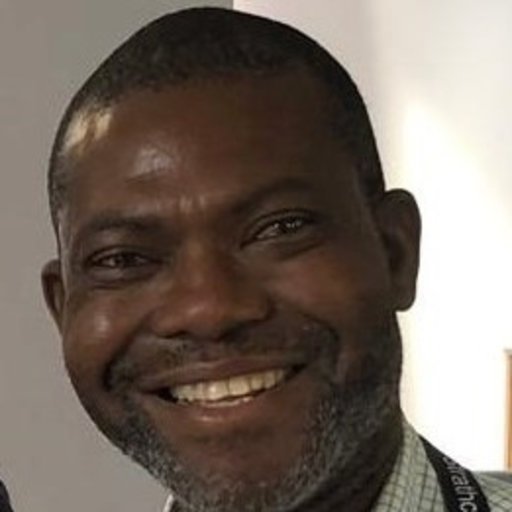
Pen Resource University Appoints Pioneer VC,Prof Igoli
By: Umar Umar, Gombe
Gombe’s maiden private University, Pen Resource, recently announced the appointment of Professor Ogbaji Igoli, as its founding Vice-Chancellor. But little is known about the UK based Professor of Chemistry, hence the reason Nigeriantracker.com profiled the icon for the limelight of the public.
In a statement signed by Dr Sani Jauro, Pro-Chancellor and Chairman of Governing Council, announced the appointment.
Igoli studied Chemistry at the University of Nigeria, Nsukka finishing as the best graduating student in his class of 1985. He obtained an MSc in Organic Chemistry, specializing in natural products in 2003, winning the Vice Chancellor’s prize for the best PhD thesis in his Faculty. He had a six-year post-doctoral training at the University of Strathclyde, Glasgow where he learnt spectroscopy and structure elucidation of organic compounds.
United States Foundation Donates Medical Equipments To FMC Gusau
He had a six-year postdoctoral training at the University of Strathclyde Glasgow, UK where he learnt spectroscopy and structure elucidation of organic compounds. Until his appointment, he was the Director of the Specialized Equipment Centre, Joseph Sarwuan Tarka University (Formerly Federal University of Agriculture), Makurdi. His expertise is in the area of phytochemistry, ethnobotany and natural products isolation from plants, propolis and microbial sources. He is also involved in bioactivity studies against Neglected Tropical Diseases (NTDs) such as malaria, trypanosomiasis and leishmaniasis. He has over 150 publications centred on ethnopharmacology, phytochemistry and structural elucidation of novel bioactive compounds. He is avidly involved in training and mentoring young scientists in phytochemical studies, the spectroscopic identification of compounds and the evaluation of plants used in traditional medicine. He has obtained fellowships, research and travel grants from DAAD/OPCW, IFS, NHS, RSC, CRUK, IFAH, CADFP and the Wellcome Trust. Presently, he is an Honorary Research Fellow with the University of Glasgow, UK. He is currently the editor of two special journal editions of Frontiers in Pharmacology and an Associate editor for Heliyon. He is a member of the Federal Government of Nigeria’s expert committee on the evaluation and registration of herbal remedies against Covid-19. His publications are well cited with a ResearchGate Score of 32.15 and on Google Scholar with a h-index of 21 and i10-index of 43. He is listed among the Top 500 authors, by Scholarly Output in Nigeria over the period 2018 to 2021 by SciVal. The appointed Vice Chancellor’s wealth of experience in research and administration coupled with his extensive international collaborations will set the tone and put the baby Pen Resource University, Gombe on an enviable path of research and academic excellence to achieve the aims and objectives of setting up the University. The University will further set up the Centre for African Plant Research (CAPRE) under his leadership, which is aimed at the production of drugs from our local resources. The appointment has since taken effect.









News
Breaking:Kano Deputy Governor Resigns
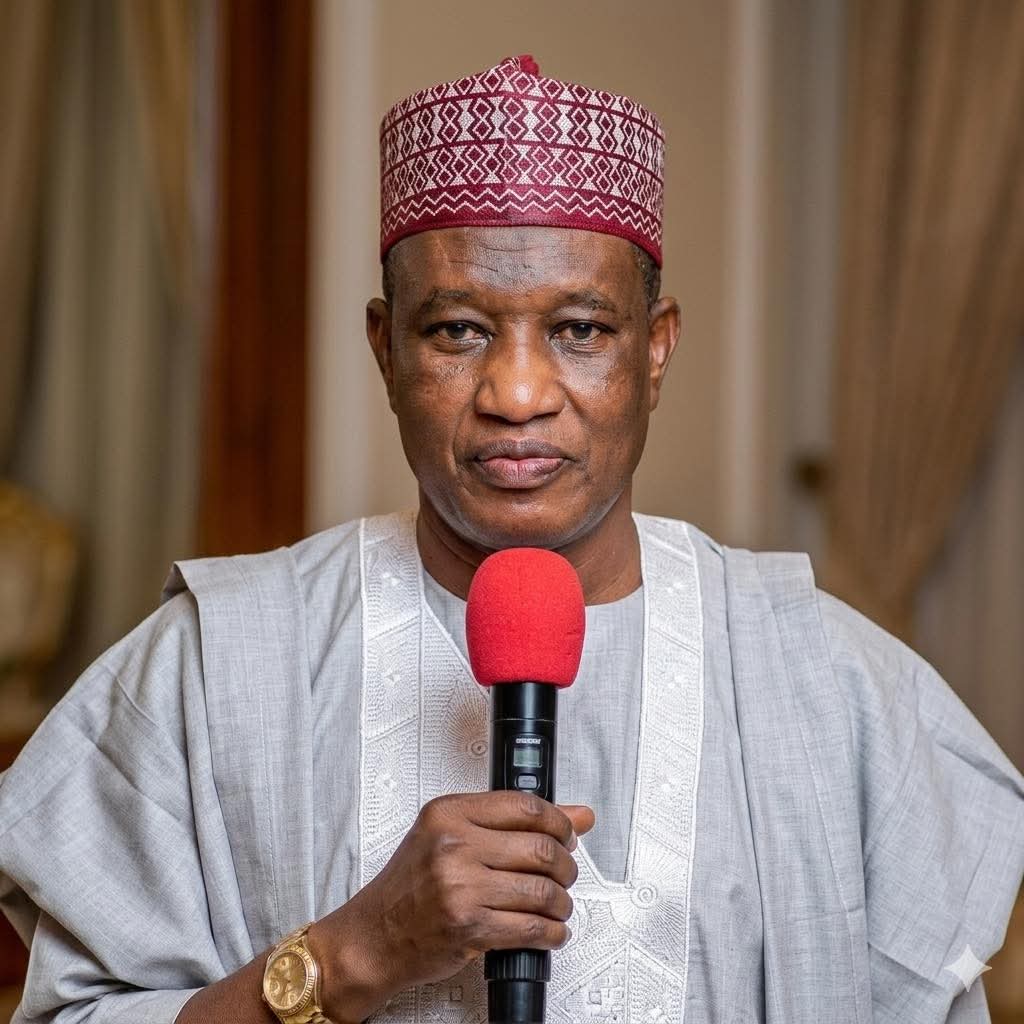
The Kwankwasiyya Movement has announced the resignation of the Deputy Governor of Kano State Comrade Aminu Abdulsalam Gwarzo, stating that the decision was formally communicated to the public in a press release issued on Friday and signed by its spokesperson, Dr. Habibu Sale Mohammed.
According to the statement, the resignation was taken “in the overall interest of the people and the stability of governance” in the state, with the movement noting that recent developments had significantly limited the Deputy Governor’s ability to fully discharge the responsibilities of the office.
The movement also addressed the ongoing issues involving the Kano State House of Assembly, emphasizing that the Deputy Governor’s decision to step down should not be interpreted as an admission of any allegations raised against him, and insisting that he continues to maintain his innocence.
Describing the move as one of “statesmanship,” the statement said the resignation was intended to reduce political tension and prevent further disruptions to governance and development efforts in Kano State, while demonstrating a commitment to peace and political maturity.
The Kwankwasiyya Movement further disclosed that the former Deputy Governor plans to redirect his focus toward strengthening the movement’s internal structures and strategies, particularly as political actors begin positioning ahead of Nigeria’s 2027 general elections.
The statement added that this renewed engagement would involve rebuilding party frameworks and pursuing strategic realignments aimed at promoting what it described as people-oriented leadership, social justice, and sustainable development.
The movement called on its supporters and residents of Kano State to remain calm, law-abiding, and committed to democratic principles, assuring the public that additional details regarding the resignation would be communicated in due course, according to the spokesperson.
Comrade Aminu Abdulsalam Gwarzo the Deputy Governor has been enmeshed in a political battle with his boss Governor Abba Kabir Yusuf since the Governor defected to the All Progressives Congress without the blessing of the NNPP National leader Senator Rabiu Musa Kwankwaso.
Recently the Kano state House of Assembly has issued Impeachment notice on Comrade Aminu Abdulsalam Gwarzo over allegation of corruption.
News
Hajiya Umma El-Rufai, Mother of Former Kaduna Governor, Passes Away
By Yusuf Danjuma Yunusa
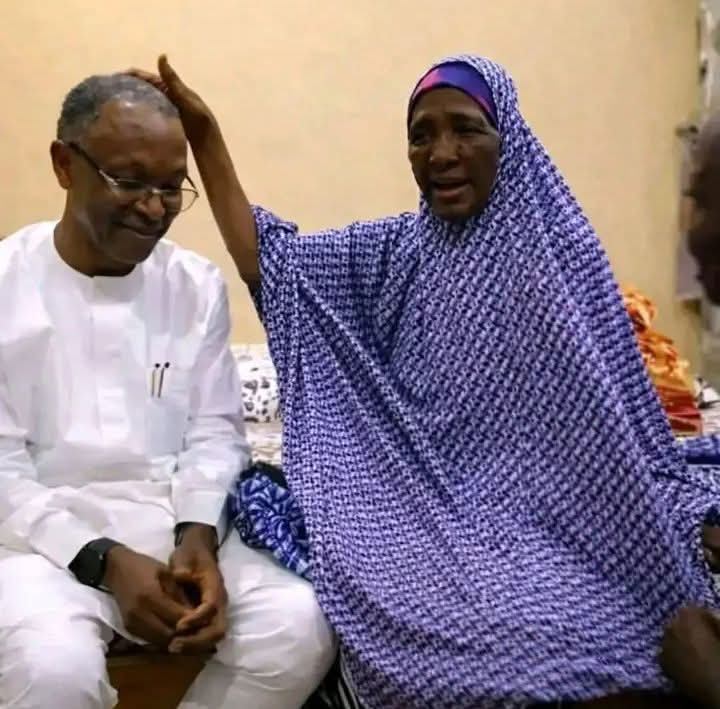
Hajiya Umma El-Rufai, the mother of former Kaduna State governor, Mallam Nasir El-Rufai, has died.
According to family sources, she passed away on Friday afternoon. While details surrounding her death remain unclear at this time, the family has since confirmed the sad event.
The announcement was made public by her grandson, Bello El-Rufai, in a statement shared on Facebook. The statement read:
“Inna lillahi wa inna ilayhi raji’un. From Allah SWT we came and to Him we shall all return.
I would like to inform the public of the demise of my grandmother, Hajiya Umma El-Rufai, who passed away a few hours ago.
She is the biological mother of our father, Mallam Nasir El-Rufai. We are grateful for the life she lived and pray that Allah SWT bless her gentle soul.
May He bless the souls of the parents we have lost. On behalf of our family, we seek your prayers. Thank you.”
The family is expected to release further details regarding funeral arrangements in due course.
News
ASUU Threatens Nationwide Shutdown
By Yusuf Danjuma Yunusa
The Academic Staff Union of Universities has warned the Federal Government of Nigeria to immediately implement the newly approved salary structure for university lecturers or face a possible nationwide shutdown of public universities.
The union issued a four-day ultimatum on Thursday, with its president, Christopher Piwuna, saying failure to act within the deadline would trigger a strong response.
Speaking at Sa’adu Zungur University in Bauchi State, Piwuna said the government must begin payment under the new salary arrangement without further delay.
“We have issued a four-day ultimatum from today to the federal government to commence payment of the newly approved salary structure. Failure to comply will attract a strong response from the union,” he said.
The warning comes months after ASUU and the federal government signed a renegotiated agreement in January, aimed at resolving long-standing disputes and preventing the recurring strikes that have plagued Nigeria’s university system.
At the heart of the agreement is a revised salary structure designed to improve lecturers’ welfare and finally address issues stemming from the controversial 2009 FG-ASUU pact, which remained largely unimplemented for years.

Breaking:Kano Deputy Governor Resigns

Hajiya Umma El-Rufai, Mother of Former Kaduna Governor, Passes Away

ASUU Threatens Nationwide Shutdown

APC Convention:FG Orders Remote Work for Offices Near Eagles Square

Nigeria’s Power Supply to Improve in Two Weeks as Gas Pipeline Work Nears Completion

The Governor Who Chose His People Over His Politics: Abba Yusuf and the Moral Courage Behind Kano First

FREEDOM OF SPEECH, NOT FREEDOM FROM CONSEQUENCE: A CITIZEN’S CALL FOR RESPONSIBLE PUBLIC COMMENTARY

Press Freedom: IPI Nigeria Calls on New Acting IGP to End Police Harassment of Journalists
Tinubu to Swear in Olatunji Disu as Inspector-General of Police on Wednesday
Restoring the Glory That Was Always There: Governor Abba Kabir Yusuf and the Historical Vision Behind Kano First
Breaking:Kano Deputy Governor Resigns
Hajiya Umma El-Rufai, Mother of Former Kaduna Governor, Passes Away
ASUU Threatens Nationwide Shutdown
APC Convention:FG Orders Remote Work for Offices Near Eagles Square
Nigeria’s Power Supply to Improve in Two Weeks as Gas Pipeline Work Nears Completion
The Governor Who Chose His People Over His Politics: Abba Yusuf and the Moral Courage Behind Kano First
FREEDOM OF SPEECH, NOT FREEDOM FROM CONSEQUENCE: A CITIZEN’S CALL FOR RESPONSIBLE PUBLIC COMMENTARY
Press Freedom: IPI Nigeria Calls on New Acting IGP to End Police Harassment of Journalists
Tinubu to Swear in Olatunji Disu as Inspector-General of Police on Wednesday
Restoring the Glory That Was Always There: Governor Abba Kabir Yusuf and the Historical Vision Behind Kano First
-

 Opinion4 years ago
On The Kano Flyovers And Public Perception
-

 Features5 years ago
How I Became A Multimillionaire In Nigeria – Hadiza Gabon
-

 Opinion5 years ago
Kano As future Headquarters Of Poverty In Nigeria
-

 History5 years ago
Sheikh Adam Abdullahi Al-Ilory (1917-1992):Nigeria’s Islamic Scholar Who Wrote Over 100 Books And Journals
-

 Opinion4 years ago
My First Encounter with Nasiru Gawuna, the Humble Deputy Governor
-

 History5 years ago
The Origin Of “Mammy Market” In Army Barracks (Mammy Ochefu)
-

 History4 years ago
The History Of Borno State Governor Professor Babagana Umara Zulum
-

 News4 years ago
Federal University Of Technology Babura To Commence Academic Activities September