
Kano News
Quality Assurance and Academic Progress in KUST: A testimonial of innovative stride under Professor Shehu Alhaji Musa
By Saidu Abdullahi Nayaya, Head of Public Relations, KUST Wudil.
Necessity is the mother of invention, a proverbial assertion in the English parlance that illustrates a symbiotic relationship between problem and solution depicted in any sphere of life.
In his determination to transform the existing structure at Kano University of Science and Technology, Wudil, (KUST) into a modern citadel of academic excellence, the Vice Chancellor, Professor Shehu Musa contended with the proverbial cliché of “necessity and invention”, a journey he navigated in the last eight years.

Today, the cerebral university administrator has successfully reversed the status quo and instilled monumental innovation in academic progression and quality assurance, a precedent that has placed KUST among the fast-growing and most subscribed tertiary institutions in Northern Nigeria.

One of the university well equipped ICT centres
Although Professor Shehu Musa was never in doubt about a mission and vision to give a facelift to academic integrity and physical development, the Vice Chancellor tirelessly worked to improve teaching and learning as well as increase the visibility of KUST on the pedestals of the global ranking.
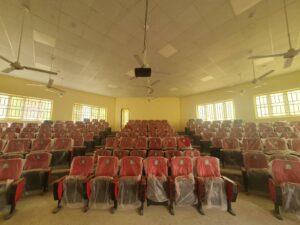
Another computer centre
Essentially, this spotlight dissects the testimonial accounts of quality assurance, innovation and academic progress in KUST since Professor Shehu Musa assumed the leadership of the university on 14th November 2013.
KUST Academic Staff Training
Intellectual strength determines the capacity and scholarship of every academic institution. In fulfilment of one out of the seven vocal points of Professor Shehu Musa, the university invested significant resources in the intellectual base and human development of the institution.

Students patronizing the ICT centres
Available data obtained from the university’s Directorate of Academic Planning and Control (DAPC) indicated a total sum of 312 academic staff benefited from the university’s scholarship, further expanding their frontier of knowledge.
In the data provided by the director of DAPC, Dr Maitama Hotoro, the Vice Chancellor Professor Shehu Musa magnanimously approved both foreign and local scholarships for academic and non-academic staff of the institution with a commitment to contribute their quotas to human resources and development in the university.
In specific terms, Professor Shehu granted scholarships to 69 PhDs, 101 M.Sc and 142 staff with BSc, HND, ND, NCE and other relevant qualifications. The Vice-Chancellor facilitated a similar scholarship opportunity from the Tertiary Education Trust Fund (TETFUND) to augment the strength of KUST’s intellectual base. On the part of TETFUND, the VC attracted 128 PhD’s, 28 M.Sc and 8 staff on bench work training.
Apart from the scholarship opportunity, Professor Shehu Musa graciously approved huge resources on foreign and local conference attendance for both academic and non-Academic Staff of the university.
Cumulatively, 370 staff secured such chances to widen their horizon with 40 and 60 per cent international and local ratio respectively.
In the same vein, Professor Shehu Musa has aided significant resources for academic publications and manuscripts by KUST staff to contribute to the body of knowledge. According to records, 10 manuscripts have been published in various fields of learning including Physics (1), Biology (1), Climate Change (1) Biochemistry (3) and (4) in the area of General studies.
KUST Academic Promotion and Employment Opportunity
When he resumed duty, Professor Shehu Musa was the only full professor in the university with only three academic staff on the rank of readership. Presently, KUST has produced 25 academic staff in the full professorial cadre and about 50 readers on the verge of reaching the apex academic cadre. The unique academic promotion superintendent by the Vice Chancellor equally ratified hundreds of holders of PhD upon completion of their thesis, majority of them sponsored by the university.
Professor Shehu Musa filled the wide gap of manpower deficit in the university in the last nine years with the recruitment of sizable but most competent capacity in both academic and non-academic. The recruitment became necessary to meet the growing number of candidates seeking admission into new faculties, departments and postgraduate programmes.
Between 2014 and 2017, available data indicated the recruitment of 250 teaching staff and 100 non-teaching staff. Similar exercises conducted between 2017 till date indicated 137 (full-time) academic staff, 4 (contract) and 32 laboratory technologists (full-time). Also, 675 administrative and Technology staff (full-time) and 21 (contract) got jobs. In addition, the appointment and renewal of 146 staff on visiting and sabbatical were yearly achieved on the average. Data specifying the analysis above were obtained from the university’s Human Resources department.
Reformation of KUST Management Information System (MIS)
Management Information System (MIS) is an artificial brain and information data box of every tertiary institution. Established in 2006, the MIS unit at KUST controls the collation and processes student and staff information data. Prior to his assumption as vice Chancellor, the centre was devoid of necessary facilities to discharge functions, including human capacity and equipment to efficiently optimize data management. The laxity however impeded KUST’s ability to conform with the dynamics of synchronization of information systems and data management.
Professor Shehu Musa however left no stone unturned on a mission to rescue the situation. Urgently, the Vice Chancellor engaged the services of professional and competent hands essentially to carry out the innovations and academic integrity of the university. Some of the few changes introduced by the VC at the MIS include the centralization of information management of students and staff, computer-based examination, adoption of Radio Frequency Identification (RFID) and partnership with global ICT firms to deploy the university’s hardware.
Director of the Management Information System KUST, Dr Alhassan Adamu who is an alumnus of the university attested to the contribution and courage of Professor Shehu Musa to reform the MIS, emphasized the renewed energy deployed to place KUST on the global academic visibility.
According to Dr Adamu, “ On assumption of duty, we developed an action plan to renew the centralization of our data. There was a decentralized system which made it impossible to harmonize our information in the past. For instance, then, students will go to departments and faculties for registration and later move to other units for similar registration before bursary for payment.
“In a nutshell, there was a lack of synchronization between all these units making it difficult for the university to identify who paid and who did not. This is because students only take hardcopy to the department as a means of identification for registration; nobody can prove the authenticity or confirm the veracity”.
These and several other systemic challenges were finally put to rest in no time the Vice Chancellor rose to the occasion. As a solution, the MIS under the stewardship of Professor Shehu Musa came up with a centralized system where all data information is synchronized under one system. With the VC’s support, the MIS developed a new university portal that administers student affairs from the point of admission all through the point of graduation, the student information flows through the portal.
“As an innovation, students do not need to physically appear in the university before getting admission. The MIS will get data of the applicants from the JAMB portal, upload and students get notice of admission and then payment would be made online. Thereafter we invite them for post-UTME verification. The candidate will write an aptitude test and the result is out in less than 24 hours. Unlike when students write with pen and paper during the examination and take another one week before the result is released” Dr Adamu explained.
At the level of Continuous Assessment examination, Professor Shehu Musa introduced Computer Based Examination beginning from 100 level students. The idea is to improve integrity and eliminate fraud during semester examinations. The CBE system is anchored with an Automated Attendance System (AAS), a unique technology that synchronizes student’s data in Radio Frequency Identification (RFID) cards. The RFID card that contains an individual student’s unique identification number on campus.
“It is through that unique number that students are scheduled for examinations which also link to RFID software. So when students go for examinations, they slot their RFID card into a reader system which would certify the eligibility of student identity. The whole idea is to strengthen the integrity of our examination. With such a system, the possibility of impersonation is near impossible in KUST”, Dr Adamu noted.
The hosting of technological hardware in the global domain also took the magnanimity of the VC who approved the engagement of the cloud services to host the KUST website and other software that enabled 24 hours 7 days internet accessibility in the university. Additionally, KUST secured a robust working relationship with global ICT giant “Google” to provide the university with an institutional technological platform to widen its visibility and knowledge base.
Professor Shehu Musa was actually in haste to grant all requirements to cement the partnership. The working partnership with Google provides institutional email; thereby boosting the visibility of KUST and automatically increases the reach in the university’s global ranking.
The renewed information system under the leadership of Professor Shehu Musa has equally made the payment process at KUST seamless. Gone are the days when thousands of students would be compelled to spend productive hours in a queue at the banks simply to collect PINs and make payments. With the upgrade of the payment portal, students can now log online at the comfort of their rooms to initiative their payment.
KUST Reformation of Reading Culture with Introduction of e-Library and e-Learning
Central to academic progress recorded under the Vice Chancellor were the upgrade of the KUST library, establishment of departmental reading centres, introduction of e-library and e-learning centres, establishment of the Department of Library and Information Science and procurement of about 50,000 volumes of relevant academic books. As attested by the University’s Librarian, Mallam Danladi Bala, the KUST library was repositioned to stand at equal among modern libraries and fitted to making reading and learning conducive.
In fairness to past Vice Chancellors of the university who had also contributed their best to improve the status of the university library, available facts and records clearly show more impactful achievements of Professor Shehu Musa on the path to install modern reading centres in the university.
For instance, Professor Shehu Musa established six faculty libraries, about 20 departmental libraries and a postgraduate library besides the central library. Also the VC pioneered the establishment of multimedia and binding units in the library connected with internet facilities and approved the employment of about 16 qualified Liberians to manage all these facilities.
According to Danlandi, “From the date he assumed duty some nine years ago, we have a tremendous achievement in terms of infrastructure, staff development, resources and many other things. In particular, as you know, a Library is central to any academic institution without a functional institutional library little progress could be achieved. Our Vice-Chancellor paid serious attention to the development of the library, that I can competently confirm.
“In terms of resources, reading materials both for staff and students, we have made tremendous progress. This is because when we came, we had few books and journals but presently, our libraries are fully stocked with more than 50,000 volumes of relevant academic books courtesy of the VC’s dedication to the development of the library.
“Professor Shehu Musa approved the establishment of e-library and e-learning centres. KUST has one of the best centres in the country and that was attested to during the accreditation of our programs by a staff of NUC who revealed that he has never seen a well-functional library with well-equipped resources”.
The KUST Librarian further said: “We have about 300 computers in our e-library and we subscribed to about 8 databases both online and offline besides other free networks. Again, with the e-library, the university makes judicious use of the 300 computers for e-examination. We also use the e-library for external examinations. Apart from that we also have an e-learning centre attached to the e-library with 100 computers for research work used by the academic staff to teach the students through the instructive board networked to the internet connectivity.
“In terms of staff development, we have made serious improvements because when we came on board we had very few staff. With the intervention of Professor Shehu Musa the situation changes for good. Presently, we have not less than 16 professional librarians working in the library.
“The impact of the staff recruitment gave birth to the establishment of the Library and Information Science Department in the university with the staff strength piloting the teaching and learning of the department. The university library developed curriculum and other necessary resources to kick start the department after being certified by the university’s senate and that has recently earned the NUC full accreditation”. Danladi explained.
KUST Alumni and Impact on Socio-Economic Development
In all feats, KUST has continued to grow in lips and bands, turning out quality manpower resources spread across the stratum of economy in Nigeria and abroad. Professor Shehu Musa has nurtured quality products of the university, certified both in character and learning. Majority of these worthy ambassadors are busy creating wealth and employment opportunities for teeming youth while those in the entrepreneurship trait and many others are making their alma mater proud.
Quite a number of KUST Alumni who are making significant impact spread across various sectors include Professor Nasiru Faruq Gujungu, a lecturer with Sule Lamido University, Kafan-Hausa, Jigawa state and Architect Bilkisu Garba, of the Upcycle Architect (TUPA). Arc. Bilkisu lectures students of Entrepreneurship of Butler University, Indianapolis, U.S.A in 2021 based on projects executed at The Upcycle Architect.
Dr Aminu Wada Fanda, a 2014 graduate of Forestry, Fisheries and Wildlife also lectures in the department he graduated from at Kano University of Science and Technology, Wudil. Aysha Sulaiman Babasidi a graduate of Biochemistry is presently the Chief Executive Officer Ashley’s Cuisine’s. She presently employs 22 staff and trained over 200 women on small chops business.
Another KUST Alumnus Dr. Yunus Abdulhameed is currently a visiting assistant professor of Physics at Bates College, USA. As postdoctoral researcher, Yunus worked on a huge biomedical data obtained from the US Defense Advanced Research Projects Administration (DARPA) grant at the University of Texas. He is the driving force in the development of an early reliable noninvasive diagnosis of malaria.
In the security sector, KUST products are well represented. The present Police Public Relations Officer, Kano state Command, SP Abdullahi Haruna Kiyawa is a graduate of Mathematics of KUST. Yusuf Abubakar, Ahmad Muhammad and many more senior officers at Nigerian Customs Services are also proud products of KUST.
Umar Shehu Umar, graduated with first class in agricultural economics from KUST and now a PhD holder from University of Reading, UK under the prestigious commonwealth scholarship. Umar was the first graduate to obtain the commonwealth scholarship
Dr Umar Dauda, a first-class graduate of Mathematics and overall graduate of Kano state French scholarship program, best out of sixteen participants drawn from across other nationals. The performance however earned him an automatic PhD scholarship at the Universite de Bourgogne, France. Presently, he lectures in the Department of Mathematics at the same university.
Abubakar Muhammad Adam (KAMALAH), proprietor of Sensitive MM Kamalah enterprises, an industrial outfit in Sharada and Danbatta areas of the state. He employed 27 graduates of KUST. He has pledged to provide a luxury bus to aid student’s transportation among a host of others.

Kano News
Gwarzo Community Celebrates Arrival of Certified Herbal Practitioner Dr. Sam Zuga

By: Ahmad Muhammad Sani Gwarzo.
The people of Gwarzo Local Government Area continue to celebrate the arrival of a highly respected traditional medical practitioner who offers free herbal treatment to the public, widely known as Dr. Sam Zuga, a man whose exceptional gift has won admiration across Nigeria.
Residents describe his presence as a blessing, noting that his long-standing commitment to healing has brought hope to countless individuals in different communities.
Dr. Sam Zuga, originally from Gboko in Benue State, has been recognized as a certified traditional medical expert, having obtained and possessed all authorized government certifications for his practice since the year 2003.
His professional documentation and approvals underline his credibility, legal compliance, and the authenticity of his work within the Nigerian health regulatory space.
He began offering free herbal treatment nationwide as far back as 2003, the very year his organization officially began its humanitarian service to the public.
His visit to Gwarzo has gathered immense interest, especially among the poor and underserved who struggle to access modern healthcare due to economic challenges.
Many residents believe that his therapies help with conditions such as high blood pressure, diabetes, eye problems, ear infections, fibroid-related issues, joint pains, asthma, and immune system complications.
The herbal remedies he administers are rooted in natural healing traditions, supported by prayers and trust in the Creator.
A strong message has continued to resonate among community members: medicine does not conflict with religion. Whether a person is Muslim or Christian, the treatment works by God’s permission.
Once a patient declares “tawakaltu Alallah”—meaning complete trust in Allah—residents believe the Almighty allows the medicine to achieve healing according to His will.
This understanding has strengthened community confidence, encouraging people to accept treatment with open hearts and deep faith.
During separate interviews, Alhaji Mansur Sani Gwarzo and Hajiya Haulatu Abdullahi Bakin Rafi shared their testimonies of past consultations, noting significant improvement after using the herbal remedies.
They reaffirmed their satisfaction with the treatment and emphasized that natural medicine, when taken responsibly and with trust in God, contributes meaningfully to healing.
Their experiences mirror the joy expressed across the community as people welcome a support system that reaches the elderly, women, youths, and persons with limited resources.
Healthcare observers in the region acknowledged the role of traditional medicine but advised that all treatments, whether modern or herbal, should be used respectfully and safely.
The arrival of a certified practitioner like Dr. Sam Zuga has renewed conversations about the value of regulated traditional medicine in underserved communities.
Residents believe that blending faith, natural therapy, and good guidance creates a balanced path toward recovery.
Across several gatherings, people have described the initiative as a sign of compassion, humanity, and community upliftment.
Local leaders have extended their appreciation, stating that free healthcare initiatives reinforce unity and social well-being.
Youth groups noted that such humanitarian acts inspire hope and remind society that caring for humanity remains one of the greatest virtues.
Women in the area have expressed gratitude for the relief these services bring at a time when many families face financial stress.
Testimonies continue to spread, with more residents expressing their willingness to seek treatment and praying for complete healing.
Health volunteers advised recipients to follow instructions carefully and maintain patience during treatment to ensure safety and positive outcomes.
They stressed that all healing ultimately comes from God, and medicine—whether herbal or modern—is only a medium through which He grants recovery.
Elders in the community said the visit highlights the enduring value of indigenous knowledge passed down through generations.
They encouraged residents to uphold peace, unity, and cooperation as they embrace beneficial initiatives.
Local youths appealed for more programmes of this nature, believing they can reduce community health burdens and raise awareness.
Patients who spoke with reporters expressed comfort and renewed hope after their encounters with the certified practitioner.
Observers believe the programme will leave a lasting impact on public health in Gwarzo if sustained.
The community remains optimistic that such generosity will continue, especially when healthcare costs are rising nationwide.
Stakeholders applauded the spirit of service, calling on more practitioners to emulate this model of community support.
Religious leaders again reaffirmed that healing is solely in God’s hands and that medicine—whether herbal or modern—does not discriminate between Muslims and Christians.
They emphasized that faith and responsible usage allow the treatment to work in line with divine purpose.
Residents prayed for continued blessings, guidance, and expansion of beneficial initiatives that uplift the community.
In conclusion, the people of Gwarzo expressed profound appreciation for the humanitarian mission, viewing it as a shining example of sincerity, compassion, and fear of God strengthened by the fact that the practitioner has been fully certified and authorized by the government since 2003 to carry out his healing work.
Kano News
Tribute To An Islamic Icon And Khadimul Quran Khalifa Isyaku Rabiu
By. Ahmad Muhammad Sani Gwarzo , Anipr.
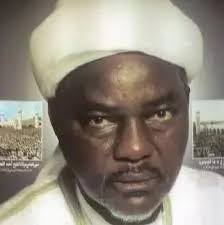
Sheikh Is’haq Rabiu was appointed as the Leader of the Tijjaniyya Movement in Nigeria and neighbouring countries in nineteen ninety four, a position that elevated him to the revered title of KHALIFA.
His appointment signified an era of renewed spiritual discipline, unity and advancement within the Tijjaniyya order.
As a spiritual guide, he strengthened the structure of the movement through wisdom, humility and an unwavering commitment to Islamic principles.
He became recognised for his deep knowledge of Islamic jurisprudence, Sufism and spiritual mentorship.
Sheikh Isyaku Rabiu served as the President of the Sheikh Muhammadu Rabiu Islamic Foundation International.
Under his leadership, the foundation expanded its humanitarian activities across Nigeria and beyond.
The organisation promoted Islamic propagation, social welfare and community development.
He championed educational programmes aimed at strengthening Islamic scholarship.
Sheikh Isyaku Rabiu also supervised the construction of Islamic schools and learning centres.
His devotion to Islamic education helped thousands of students acquire valuable knowledge.
He invested in the training of young scholars who later became respected teachers.
Through his efforts, many memorised the Holy Qur’an and mastered various Islamic sciences.
He sponsored Islamic competitions and Qur’anic recitation events.
These programmes encouraged excellence and discipline among learners.
The Khalifa ensured the availability of learning materials for schools in rural and urban areas.
He promoted the establishment of Tsangaya and Islamiyya schools for easy access to Islamic knowledge.
His vision extended to empowering widows, orphans and vulnerable families through the Foundation.
He initiated food distribution programmes during Ramadan and throughout the year.
He also provided clothing, shelter and basic necessities for disadvantaged communities.
His philanthropy was recognised across several West African countries.
Sheikh Isyaku Rabiu nurtured unity among different Islamic groups.
He promoted peaceful coexistence within the Muslim Ummah.
His guidance encouraged tolerance, compassion and fairness.
The Khalifa frequently delivered lectures emphasising the importance of sincerity in worship.
He encouraged Muslims to uphold moral values and good character.
He taught countless students the principles of cleanliness, discipline and humility.
His leadership strengthened the Tijjaniyya teachings of remembrance, devotion and spiritual purification.
He hosted gatherings for zikr (supplication) and spiritual counselling.
Many people found guidance through his calm and wise approach to issues.
The Khalifa contributed greatly to the spread of Tijjaniyya teachings in remote and urban areas.
He travelled extensively to meet followers and encourage Islamic growth.
He maintained strong relationships with scholars across Africa.
His partnership with international Islamic institutions enhanced religious education.
Through the Foundation, he supported the translation of Islamic texts into local languages.
Sheikh Isyaku Rabiu encouraged inter‑generational learning between elders and youth.
He sponsored youth empowerment initiatives rooted in Islamic values.
He emphasised the importance of balancing religious knowledge and positive community service.
His legacy inspired young Muslims to seek education and practise righteousness.
He also encouraged women to participate in Islamic learning programmes.
The Foundation organised seminars for women on family life and Islamic ethics.
His leadership style was inclusive and respected diverse cultural backgrounds.
He maintained discipline and transparency in all organisational affairs.
The Khalifa always prioritised the welfare of his community.
He promoted the construction of mosques in many Nigerian communities.
He renovated old structures to provide safe and clean worship environments.
He ensured that Imams were trained to deliver correct Islamic teachings.
His contributions strengthened Friday congregational prayers across various towns.
Sheikh Isyaku Rabiu also placed great importance on charity as part of faith.
He personally funded countless humanitarian missions.
The Foundation offered medical support to vulnerable families.
It organised free screening exercises across communities.
Sheikh Isyaku Rabiu collaborated with health organisations to promote public health.
He encouraged the Muslim community to embrace hygiene and cleanliness.
He also supported clean water initiatives for rural communities.
His humanitarian vision extended to peaceful conflict resolution.
He mediated disputes and promoted unity within families.
He advocated for justice and fairness in leadership.
He advised political leaders on good governance guided by Islamic teachings.
The Khalifa encouraged the wealthy to support the needy.
He reminded Muslims that charity strengthens the heart and purifies wealth.
His sermons often emphasised patience, gratitude and trust in Allah.
He uplifted communities through continuous Islamic enlightenment.
Sheikh Isyaku Rabiu empowered scholars to become transformative leaders.
He encouraged research and documentation of Islamic history.
He supported the preservation of Tijjaniyya heritage through writings and lectures.
His leadership was characterised by deep spiritual insight.
He inspired thousands to embrace sincerity in worship.
His teachings encouraged Muslims to constantly seek knowledge.
He supported Qur’anic memorisation camps for children and adults.
He promoted inter‑faith respect and peaceful dialogue.
His influence extended beyond Nigeria into neighbouring African countries.
He was recognised internationally for his contributions to Islamic knowledge.
His leadership brought honour to his community and the Tijjaniyya movement.
The Foundation built research centres for Islamic scholars.
He ensured that books and learning resources were made available to students.
He funded academic scholarships for Islamic studies abroad.
He encouraged Muslims to maintain their cultural identity with dignity.
His guidance strengthened moral values in society.
The Khalifa played a major role in preserving Islamic unity.
He performed humanitarian projects without seeking personal recognition.
His actions inspired love and respect among followers.
He emphasised justice in all personal and community dealings.
His compassion touched the lives of thousands.
The Khalifa’s spiritual sessions attracted people from various regions.
His home served as a centre of learning and guidance.
He encouraged discipline through constant remembrance of Allah.
He mentored many scholars who continued his legacy.
His leadership expanded Islamic awareness across generations.
Through dedication and service, he earned admiration from scholars and leaders.
His passion for Islamic propagation elevated the Tijjaniyya movement.
He revived traditional principles of Islamic brotherhood.
The Khalifa’s wisdom helped resolve numerous social and spiritual challenges.
His life remains an example of humility and devotion.
His teachings continue to inspire communities across West Africa.
His legacy endures through the Sheikh Muhammadu Rabiu Islamic Foundation International.
His contributions to Islamic scholarship remain invaluable.
His leadership continues to influence spiritual development in Nigeria.
Sheikh Isyaku Rabiu is remembered as a symbol of knowledge, charity and unity.
His life stands as a beacon of faith and service.
His contributions strengthened the foundation of Islamic propagation.
His memory remains alive in the hearts of scholars and followers.
His impact will continue to guide future generations.
The Khalifa’s dedication to Islam represents a shining chapter in Nigerian Islamic history.
His life story stands as a testament to exceptional success rooted in unwavering faith, discipline and dedication.
His achievements in Islamic scholarship elevated him among the greatest leaders of his generation.
Through commitment to the Tijjaniyya movement, he succeeded in uniting followers across Nigeria and neighbouring countries.
His success in Islamic propagation strengthened the spiritual identity of countless communities.
His leadership brought transformative growth to Islamic education at local, national and international levels.
He successfully nurtured institutions that continue to empower future scholars.
His humanitarian achievements positioned him as a symbol of generosity and compassion.
He succeeded in touching the lives of people regardless of tribe, status, or background.
His foundation became a successful bridge between faith and community development.
His success continues to inspire generations on the path of sincerity, knowledge and service.
Kano News
KANSIEC Chairman Commends Governor Yusuf For Ensuring Due Process In Governance
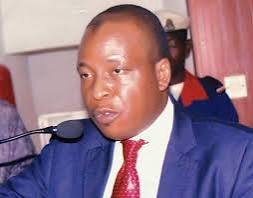
By. Ahmad Muhammad Sani Gwarzo , Anipr.
Professor Sani Lawan Malumfashi, the Chairman of the Kano State Independent Electoral Commission, has poured profound commendation on Governor Alhaji Abba Kabir Yusuf FNISE for his exceptional leadership qualities and relentless commitment to rebuilding Kano State on the foundation of transparency and due process.
In a detailed statement released to the public, the Chairman described Governor Yusuf as a reformer whose administrative brilliance continues to redefine governance across sectors.
He highlighted that the Governor’s style of leadership is rooted in discipline, clarity of purpose, and meticulous attention to detail.
According to him, Governor Yusuf is not only a political leader but also an architect of modern transformation whose actions reflect a deep understanding of developmental governance.
He emphasized that Kano State has entered a new era of accountability under the Governor’s watch, with policies thoroughly examined before approval or implementation.
Professor Malunfashi stated that the Governor’s insistence on due process has restored confidence in public institutions and strengthened democratic practices.
He noted that the Governor’s professionalism and respect for established procedures exemplify what leadership should represent in a progressive society.
The Chairman further described Governor Yusuf as a beacon whose guidance has inspired a wave of administrative reforms across various ministries and agencies.
He praised the Governor for ensuring that every public project meets the standard of quality, relevance, and long-term value to citizens.
He pointed out that the present administration has brought back hope, trust, and renewed enthusiasm among the people of Kano State.
Professor Malumfashi stressed that education remains one of the most impressive pillars of the Governor’s reform agenda.
He acknowledged the massive renovation of schools, provision of instructional materials, and restoration of learning facilities across both urban and rural communities.
He explained that these educational reforms are evidence of a leader who places the future of the younger generation above politics.
The Chairman commended the Governor for investing heavily in the training and motivation of teachers, which has significantly enhanced academic performance in the state.
He stated that the Governor’s approach to planning is holistic, people-centered, and deeply aligned with global best practices.
He added that every policy under the administration follows a sequence of consultation, verification, and technical review before implementation.
He emphasized that this method reduces wastage, prevents policy failure, and protects the integrity of governance.
Professor Malumfashi also praised Governor Yusuf’s unwavering focus on infrastructure development, describing it as a game-changer for the state’s economy.
He acknowledged the numerous roads, water projects, and public utilities currently undergoing construction or rehabilitation across the state.
He stated that the Governor’s developmental agenda is visible, measurable, and inspiring to both residents and visitors.
The Chairman said that Governor Yusuf has demonstrated rare courage in addressing long-standing challenges that previous administrations overlooked.
He stressed that the Governor combines visionary thinking with practical action, a trait found in only the most dedicated leaders.
He applauded the Governor’s ability to assemble competent technocrats who contribute expertise to government programs.
He observed that the Governor listens to experts, consults stakeholders, and prioritizes solutions that benefit the majority.
Professor Malumfashi declared that Governor Yusuf’s governance philosophy embodies fairness, justice, and service to humanity.
He commended the Governor for promoting transparency in financial management, procurement processes, and public resource allocation.
He described the administration as one that values truth, efficiency, and accountability above personal interest or political considerations.
The Chairman emphasized that Governor Yusuf’s commitment to due process is not symbolic but deeply practical and consistent across decisions.
He stated that this commitment has improved efficiency, reduced corruption tendencies, and enhanced public trust.
He praised the Governor for championing reforms that strengthen local government autonomy and community participation.
Professor Malumfashi highlighted the Governor’s initiatives in urban renewal, environmental sanitation, and healthcare revitalization as clear signs of responsible leadership.
He stated that the reforms reflect a leader who works for the people, listens to the people, and stands with the people.
He described Governor Yusuf as a forward-thinking executive officer whose ideas continue to modernize Kano’s administrative landscape.
He applauded the Governor’s wisdom, patience, and strategic mindset in handling sensitive matters of state interest.
Professor Malumfashi affirmed that Kano State is currently witnessing one of its most transparent and accountable eras in democratic history.
He credited the Governor for creating a system where public institutions operate with clarity, integrity, and well-defined responsibilities.
He concluded by calling on citizens to support the Governor’s transformative mission and recognize the value of his reform-driven leadership.
He expressed confidence that the legacy of Governor Abba Kabir Yusuf FNISE will endure as a model of purposeful, people-oriented, and principled governance.
He reaffirmed that the Governor remains a shining example of dedication, transparency, and visionary public service in Nigeria.

Internal Crisis Deepens in Jigawa APC as High-Profile Defections Threaten Party Cohesion

OPINION:Bauchi ,A Paradise for Immunity Seekers? How Alleged Corrupt Politicians Are Eyeing Government House

Federal Government, Pluck Global Inaugurate ₦8BN Critical Infrastructure at FGC Kano

REJOINDER: The Fallacy of the “Commander” and the Burden of Integrity

INEC Directs RECs to Suspend Plans on Voter Revalidation Exercise

ADC Leadership Crisis: State Chairmen to Elect Caretaker Committee on Tuesday

Governor Abba Kabir Yusuf Holds Exclusive Prerogative to Choose Deputy – Malam Inuwa Waya

The Governor Who Chose His People Over His Politics: Abba Yusuf and the Moral Courage Behind Kano First
Restoring the Glory That Was Always There: Governor Abba Kabir Yusuf and the Historical Vision Behind Kano First

Table Water Producers Increase New Price for Sachet Water in Kano
Internal Crisis Deepens in Jigawa APC as High-Profile Defections Threaten Party Cohesion
OPINION:Bauchi ,A Paradise for Immunity Seekers? How Alleged Corrupt Politicians Are Eyeing Government House
Federal Government, Pluck Global Inaugurate ₦8BN Critical Infrastructure at FGC Kano
REJOINDER: The Fallacy of the “Commander” and the Burden of Integrity
INEC Directs RECs to Suspend Plans on Voter Revalidation Exercise
ADC Leadership Crisis: State Chairmen to Elect Caretaker Committee on Tuesday
Governor Abba Kabir Yusuf Holds Exclusive Prerogative to Choose Deputy – Malam Inuwa Waya
The Governor Who Chose His People Over His Politics: Abba Yusuf and the Moral Courage Behind Kano First
Restoring the Glory That Was Always There: Governor Abba Kabir Yusuf and the Historical Vision Behind Kano First
Table Water Producers Increase New Price for Sachet Water in Kano
-

 Opinion4 years ago
On The Kano Flyovers And Public Perception
-

 Features5 years ago
How I Became A Multimillionaire In Nigeria – Hadiza Gabon
-

 Opinion5 years ago
Kano As future Headquarters Of Poverty In Nigeria
-

 History5 years ago
Sheikh Adam Abdullahi Al-Ilory (1917-1992):Nigeria’s Islamic Scholar Who Wrote Over 100 Books And Journals
-

 Opinion4 years ago
My First Encounter with Nasiru Gawuna, the Humble Deputy Governor
-

 History5 years ago
The Origin Of “Mammy Market” In Army Barracks (Mammy Ochefu)
-

 History4 years ago
The History Of Borno State Governor Professor Babagana Umara Zulum
-

 News4 years ago
Federal University Of Technology Babura To Commence Academic Activities September