
News
Friday Sermon] The 1443 AH/2022 Eid-ul-Fitr Celebration
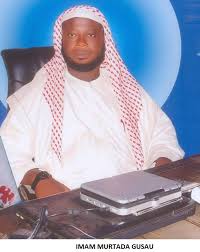
By Imam Murtadha Gusau
In the Name of Allah, the Most Gracious, the Ever Merciful
All praise is due to Allah, the Lord of all creation. May the salutations of Allah, His peace and blessings be upon our Prophet, his family, his companions and his true and sincere followers until the Last Day – then to proceed:
Dear brothers and sisters! Eid-ul-Fitr or the Festival of breaking the fast is one of the most celebrated of all Muslim holidays, observed by over two billion Muslims around the world. During the entire month of Ramadan, Muslims observe a strict fast and participate in various pious activities such as charitable giving/Sadaqah, peacemaking, Qur’an recitation, Zikr, Tarawih/Qiyamul-lail etc. It is a time of intense spiritual renewal for those who observe it. At the end of Ramadan, Muslims throughout the world break their fast and celebrate their accomplishments in Eid-ul-Fitr.
Respected brothers and sisters! This year, 1443 AH/2022 Eid-ul-fitr is expected In Shaa Allah to be celebrated on Sunday, May 1st 2022 or Monday, May 2nd 2022. However, the exact date is subject to the sighting of the moon of Shawwal, 1443 AH, the 10th month of Islamic Calendar, and the announcement from your country’s supreme Islamic leader.
Beloved servants of Allah! Eid-ul-Fitr, known as ’عيد الفطر’ in Arabic, is a religious festival for all Muslims around the world. Eid-ul-Fitr marks the end of noble month of Ramadan. Eid-ul-Fitr is Allah’s reward for believers who fasted during the noble month of Ramadan. This is also believers thanking Allah for giving them the chance and the strength to carry out His commands during the blessed month of Ramadan. Traditionally, Eid-ul-Fitr is celebrated for three days in almost all Muslim countries.
Both Eid-ul-Fitr and Eid-Al-Adha have great significance in Islam as the same is evident from the following Hadith, which was narrated by Anas Bin Malik (RA), who said:
“Allah has given you better than those feasts (festivals of non-believers): the Eid-ul-Adha and Eid-ul-Fitr.” [An-Nasa’i]
Remember one thing that Fasting on Eid days i-e Eid-ul-Fitr and Eid-al-Adha is forbidden as the same is evident from the following Hadith, which was narrated by Abu Sa’id Al-Khudri (RA), who said that the Prophet (Peace be upon him) said:
“No fasting is permissible on the two days of Eid-ul-Fitr and EId-ul-Adha.” [Bukhari]
Since it is a religious festival, Muslims all over the world celebrate this event with much fervour and each country’s celebrations vary as there is an influence of their traditions. Muslims all over the world celebrate the festival of Eid-ul-Fitr by starting the day with the Eid prayer. After offering prayer, Muslim greet each other with the customary Eid greeting, ‘Eid Mubarak.’ Everyone gets new clothes made for the special occasion because every single person wants to look his/her best. The day is spent with friends and family get-togethers, indulging in delicious feasts and handing out gifts also known as Sallah gifts or Barka da Sallah in hausa language.
Eid-ul-Fitr is a time of happiness and enjoyment; and this is also evident from the following Hadith, which was narrated by Aisha (RA), who reported that Prophet (Peace be upon him) said to Abu Bakr (RA) (On the day of Eid when Abu Bakr (RA) saw two girls were singing the stories about the Day of Bu’ath in Madinah):
“….. O Abu Bakr! Every people have their Eid and this is our Eid.” [Bukhari]
In another narration, it is said that Allah’s Messenger (Peace be upon him) said to Abu Bakr (RA):
“Let them be O Abu Bakr, for these are days of Eid.”
Religious scholars have differing opinions on Eid prayers. However, all Muslims should attend prayers of both Eids as most scholars, on the basis of strong evidence, is of opinion that it is Wajib (obligation). One of the purposes behind Eid Prayer is to provide an opportunity to a large number of Muslims to attend congregations in an atmosphere of religious piety. Apart from prayer, the Eid sermon (after Eid Prayer) has also been made an integral part of this gathering and the prayer.
It is important and compulsory for a Muslim to pay Zakatul Fitr or Sadaqatul Fitr before offering of Eid Prayer. [Bukhari]
The time for Eid Prayer begins from the time the sun is three meters above the horizon until the sun reaches its meridian. However, it is better to offer the prayer in the early hours after the sunrise. [Abu Dawud]
Know that, Eid Prayer is performed without any Iqamah or Azan. [Muslim]
And Eid prayer consists of two Raka’ats (Two Units Prayer) during which Takbir (Allahu Akbar) is announced seven times. [Abu Dawud]
Rest of the Eid prayer is same as other prayer offered daily. After completing the prayer, it is Sunnah (some scholars say that it is Wajib/obligatory) to listen to the Sermon (Khutbah) after Eid Prayer. So one should stay for the Imam’s sermon to end after completing the Eid Prayer. After listening to the sermon, Muslims congratulate each other with greetings such as Eid Mubarak, Happy Eid, and عيد مبارك etc. However, the most common Eid Greeting Muslims like to wish their friends and fellow Muslims with, is Eid Mubarak.
A person should follow the teachings of the Messenger of Allah (Peace be upon him) for every aspect of life. Same should also be applied for Eid Prayer. Following are some of the Sunnah of Prophet Muhammad (Peace be upon him) with regards to Eid prayer that every Muslim should follow:
1. Take a bath or perform ablution before going for prayer.
2. Use a toothbrush or Miswak to clean your mouth.
3. Wear your best clothes on this day.
4. Apply perfume.
5. Eat an odd number of dates before leaving for prayer of Eid-ul-Fitr. [Bukhari]
6. Make sure that you have paid Zakatul Fitr before offering Eid Prayer.
7. Recite the following Takbirats while going to and returning from Eid Prayer:
“اَللهُ أَكْبَرُ ، اَللهُ أَكْبَرُ، اَللهُ أَكْبَرُ، لَا إِلَهَ إِلَّا اللهُ ، وَاللهُ أَكْبَرُ، اَللهُ أَكْبَرُ، وَلِلَّهِ الْحَمْدُ
Allahu Akbar, Allahu Akbar, Allahu Akbar, la ilaha illallah, wallahu Akbar, Allahu Akbar, walillahil hamd.
Meaning:
Allah is Most Great, Allah is most Great, Allah is most Great there is no god but Allah, Allah is Most great, Allah is most great, and to Allah be praise.” [See Irwa Al Ghalil, vol. 3, page 125]
8. Listen to the Sermon (Khutbah) after offering Eid Prayer. [An-Nasa’i]
9. Use different ways while going to and returning from the Mosque (Eid ground) after offering Eid Prayer. [Bukhari]
Dear brothers and sisters! Narrated Ibn Umar (RA) that:
“Allah’s Messenger (Peace be upon him) made it incumbent (Wajib/obligatory) on all the servants or free Muslims, male or female, to pay one Sa’i of dates, barley or grain as Zakatul Fitr.” [Bukhari]
According to above mentioned Hadith, Zakatul Fitr or Sadaqatul Fitr is Wajib/obligatory upon every Muslim including servant, freeman, male, female, young, new-born and old. Compulsion of Zakatul Fitr on a Muslim is same as the Nisab of normal Zakah (Nisab Is the exemption limit for the payment of Zakah).
The amount of Sadaqatul Fitr to be given by each person is an amount minimum or equivalent to one Sa’i of grain, barley or date. Sa’i is an ancient measure of volume and most common understanding is that one Sa’i is equivalent to approx. 2.25-2.5 KGs. However, Muslim scholars all around the world usually announce the amount of Zakatul Fitr to be paid during Ramadan.
As in normal Zakah, Zakatul Fitr is distributed among poor and needy Muslims. It is preferable to give Sadaqatul Fitr first to needy relatives, then to needy neighbours and then to other needy Muslims. And the Zakatul Fitr should be paid before the Eid Prayer.
Celebrate the day with your loved ones by indulging in delicious festive feasts and handing out gifts. Give out charity as much as you can so that your underprivileged Muslim brothers and sisters can also celebrate this blessed festival. And please remember the entire Ummah and your country in your prayers and your Du’as (Supplications).
Dear brothers and sisters! We sincerely seek your financial support on the feeding and Eid-ul-fitr celebration in this blessed month of Ramadan. Your support is highly needed for Allah’s sake.
As usual, we sincerely solicit for your kind and sincere contribution towards the Ramadan feeding and clothing of our orphans, widows and less privileged; and the development of our schools and Islamic Center financially, materially and morally.
Our aim and objective always is to have a standard Islamic center and Arabic/Islamic schools for orphans and less privileged Muslims children in Nigeria.
If you want to pay your Zakah, Sadaqah, Zakatul-Fitr/Sadaqatul-Fitr, Fidyah, or Kaffarah, our great Islamic center is waiting for you. Your donation will help distribute clothes, food packs, and iftar food for our orphans.
Remember, Ramadan will not be the same without our families, but unfortunately this is not a privilege enjoyed by everyone. This is the reason we’re steadfast in planning to provide iftar for poor people, orphans, widows, less privileged etc.
We are planning to distribute food stuff package that worth amount of to 4000 poor Muslim families and 2000 orphans In Shaa Allah.
And your contribution towards feeding the fasting souls is highly waiting as usual. May Allah rewards all your efforts and your good deeds, ameen.
Allah Almighty says:
“If you support the course of Allah, He will support you.” [Qur’an, 47: 7]
The Prophet Muhammad (Peace be upon him) said:
“Whoever relieves his Muslim brother of a hardship from the hardships of this world, Allah shall relieve him of a hardship from the hardships of the Day of Judgement. And whoever makes things easy for a person in difficulty, Allah will ease for him in this world and the Next. Allah is forever aiding a servant so long as he is in the aid of his Muslim brother.”
And he (Peace be upon him) said:
“Every act of goodness is considered as Sadaqah.” [Al-Bukhari]
We need the followings:
• Permanent buildings with many classes
• Boards, chairs and desks
• Arabic and Islamic books
• Feeding facilities
• Uniforms
• Computers
• Foodstuffs for Ramadan Iftar and clothes for orphan’s Sallah festival
Account details:
Account no. – 0048647196
Account name – Murtala Muhammed
GTBank
For more enquiries contact, Imam Murtadha Muhammad, the director and Imam Of the Center: 08038289761.
To donate foodstuffs. Contact the following Numbers: 08038289761, 08056557477
Jazakumullah Khairan as you kindly contribute.
Ya Allah, the blessed month of Ramadan is now coming to an end, please help us to remain steadfast in your religion. Grant us the knowledge of your religion.
Ya Allah, you are truly merciful, please forgive us. Choose for us, what is best.
Ya Allah, help us to succeed in this life and the hereafter.
Ya Allah, if we have been in anyway ungrateful, unjust, dishonest; please forgive us.
Ya Allah, we don’t know if we will be alive next Ramadan, please forgive us. Grant us a place in paradise. Save us from hellfire.
Ya Allah, include us in the people who will be put in heaven without accountability.
Ya Allah, help us to spread your religion in the best of ways.
Ya Allah, please let us not be among the backbiters.
Ya Allah, forgive us if we have been among the arrogant.
Ya Allah forgive us, grant us success, verily you are most forgiving, most merciful, ameen.
May Allah send His Salah and Salam upon our noble Prophet Muhammad (Peace be upon him).
And all praises and thanks are due to Allah alone, Lord of the worlds. May the peace, blessings and salutations of Allah be upon our noble Messenger, Muhammad, and upon his family, his Companions and his true and sincere followers.
Murtadha Muhammad Gusau is the Chief Imam of Nagazi-Uvete Jumu’ah and the late Alhaji Abdur-Rahman Okene’s Mosques, Okene, Kogi State, Nigeria. He can be reached via: gusauimam@gmail.com or +2348038289761.
This Jumu’ah Khutbah (Friday sermon) was prepared for delivery today, Friday, Ramadan 28, 1443 AH (April 29, 2022).









News
Tinubu Says Dangote Group Performs Excellently in Driving Economy
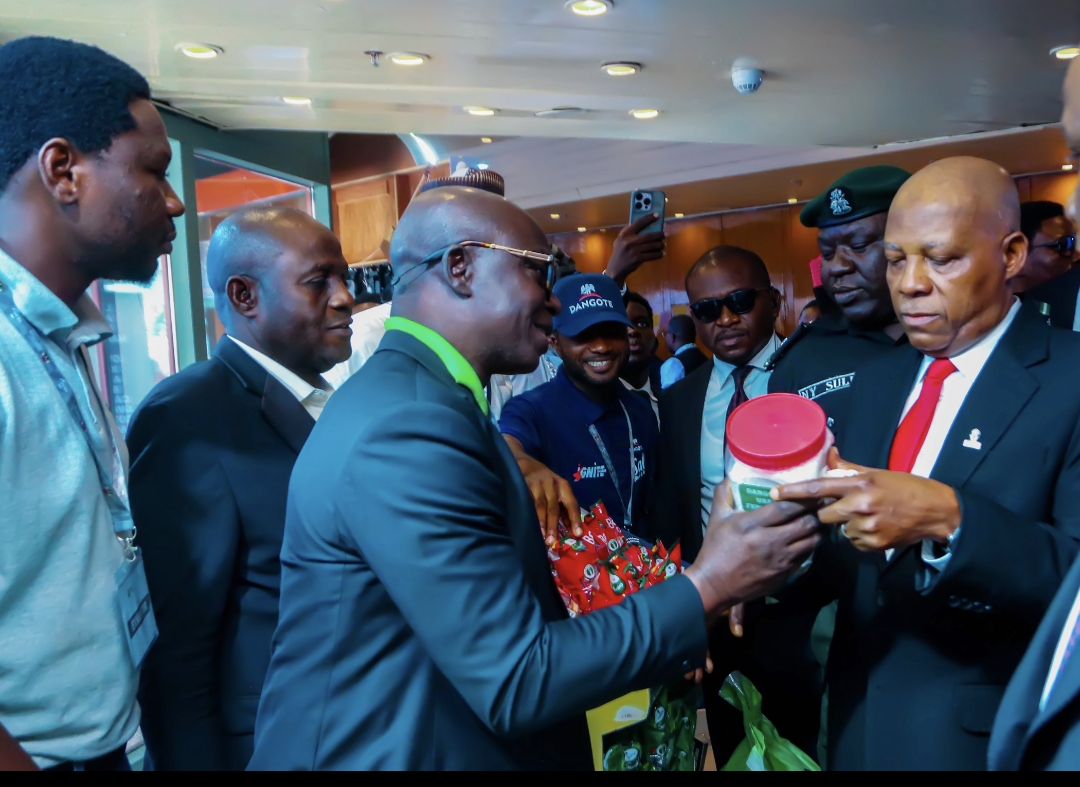
President Bola Ahmed Tinubu has commended the Dangote Group for its significant contribution to Nigeria’s economic growth, citing the conglomerate’s strategic investments in key sectors as instrumental in boosting domestic production, creating jobs, reducing dependence on imports, conserving foreign exchange and strengthening the country’s industrial capacity.
The President gave the commendation during a visit to the Dangote Group pavilion at the ongoing 32nd Nigeria Economic Summit at the Transcorp Hilton, Abuja, on Monday. He was represented at the event by Vice President Kashim Shettima.
Tinubu praised the Group’s performance across its business operations, highlighting the critical role of private-sector investments in expanding productive capacity, stimulating economic activities and supporting national development.
The Dangote Group has investments spanning cement manufacturing, fertiliser production, sugar refining, salt processing and petroleum refining.
These investments contribute to local value addition, employment generation and the development of domestic supply chains, while supporting efforts to reduce Nigeria’s dependence on imported products.
He said his administration is creating conditions for public and private sectors to invest, expand and generate productive employment.
Dangote Group is the second biggest employer of labour after the federal government.
The 2026 Nigeria Economic Summit, themed “Growth That Works: Delivering Jobs, Productivity and Shared Prosperity,” was declared open by the President, who used the occasion to defend the Federal Government’s ongoing economic reforms and emphasise the importance of industrial harmony and private-sector-led growth.
The summit brings together policymakers, business leaders, investors and other stakeholders to discuss practical strategies for accelerating economic growth, improving productivity, generating employment and ensuring that the benefits of economic expansion reach more Nigerians.
The President’s commendation underscores the importance of sustained collaboration between government and the private sector in building a more productive, competitive and resilient Nigerian economy.
He said Nigeria has performed below its potentials for far too long, but “there is no shortcut for economic development.”
We came to rewrite the story of a nation that has performed below its potentials for far too long,” he said.
Through its investments in strategic industries, the Dangote Group remains a major private-sector participant in Nigeria’s industrialisation drive, with the potential to deepen local manufacturing, strengthen supply chains and support the country’s broader economic development objectives.
Through the Dangote Group’s diversified operations, the conglomerate has established a substantial presence across critical sectors of the economy, providing products and services that support construction, agriculture, manufacturing, energy and other productive activities.
One of its investments is the Dangote Petroleum Refinery and Petrochemicals complex in Lagos, which has the potential to transform Nigeria’s downstream petroleum industry by increasing domestic refining capacity and reducing the country’s reliance on imported refined petroleum products.
News
Court Dismisses El-Rufai’s No-Case Submission in Ribadu Phone-Tapping Trial, Orders Defence
By Yusuf Danjuma Yunusa
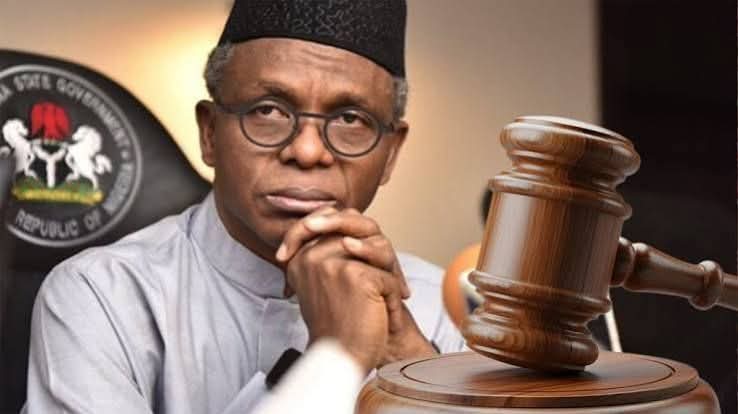
The Federal High Court in Abuja on Monday dismissed a no-case submission filed by former Gov. Nasir El-Rufai of Kaduna State in his ongoing trial over alleged unlawful interception of the telephone communications of the National Security Adviser, NSA, Nuhu Ribadu.
Justice Joyce Abdulmalik, in a ruling, held that the State Security Service, SSS, had placed before the court sufficient evidence to warrant the court to call on the ex-governor to enter his defence if he so desires.
The judge, therefore, ordered El-Rufai, the sole defendant in the charge, to enter his defence.
The defendant had opted for a no-case submission after the SSS closed its case by calling two witnesses.
Mr El-Rufai, through his counsel, Akinyemi Aremu, had urged the court to hold that the prosecution had failed to establish a case requiring the former governor to enter a defence.
In response, the SSS lawyer, Oluwole Aladedoye, SAN, adopted their counter affidavit in opposition to the no-case submission.
Mr Aladedoye argued that the defence failed to address Exhibit “B”, which the prosecution said contained El-Rufai’s alleged admission concerning the tapping of Ribadu’s phone.
He submitted that since the prosecution had established a prima facie case against El-Rufai, the defendant was required by law to enter his defence.
News
JIBWIS Calls For Arrest,Investigation Of Man In JIBWIS Uniform Over Viral Video Threatening Attack On Enugu On Sunday
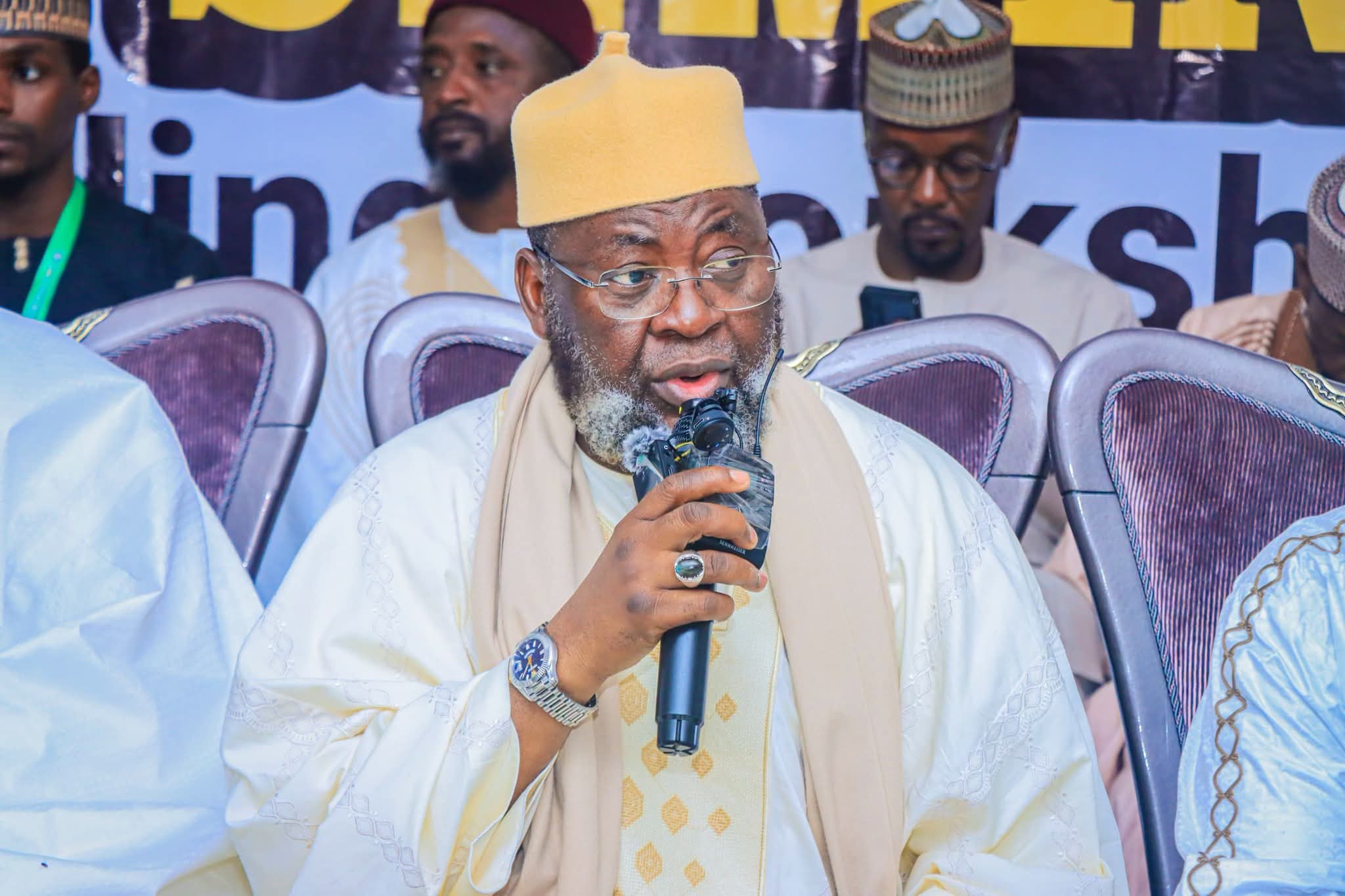
The National Chairman of Jama’atu Izalatil Bid’ah Wa Iqamatis Sunnah (JIBWIS), Sheikh Abdullahi Bala Lau, has strongly condemned a viral video showing a man dressed in the uniform of the organisation’s First Aid Group, participating in a jogging exercise and chanting provocative statements calling for AK-47 rifles to be given to them to enable them to travel to Enugu on Sunday and carry out an attack.
Reacting to the disturbing development, Sheikh Bala Lau called on the Department of State Services (DSS), the Nigeria Police Force and other relevant security agencies to immediately investigate the incident, identify those responsible and ensure that anyone found culpable is brought to justice in accordance with the law.
The National Chairman categorically dissociated JIBWIS from the inflammatory statements, stressing that such expressions of violence, intimidation and threats against any community are completely alien to the principles, teachings and objectives upon which the organisation was established.
He emphasised that wearing the uniform of the JIBWIS First Aid Group or appearing among its members does not automatically establish that an individual is acting on behalf of the organisation or with its authorisation.
Sheikh Bala Lau further expressed concern that the incident could represent a deliberate attempt by individuals or external interests to misrepresent the organisation and damage its longstanding reputation. He therefore urged security agencies to thoroughly investigate the circumstances surrounding the video, including the identity, affiliation and possible motives of those involved.
The Chairman recalled that JIBWIS recently organised an international conference in Abuja, bringing together Christian leaders, Muslim scholars from different Islamic schools of thought, prominent personalities and participants from different parts of the world, with the central objective of promoting interfaith dialogue, mutual understanding, religious tolerance and peaceful coexistence.
He questioned how an organisation that has consistently invested its resources, leadership and institutional efforts in building bridges across religious and ethnic divides could reasonably be associated with statements advocating violence against fellow Nigerians.
For approximately 48 years since its establishment, JIBWIS has remained committed to the propagation of authentic Islamic teachings, the promotion of the Sunnah of Prophet Muhammad (SAW), moral reformation, education, humanitarian services and the peaceful coexistence of people irrespective of their religious, ethnic or geographical backgrounds.

Tinubu Says Dangote Group Performs Excellently in Driving Economy

Court Dismisses El-Rufai’s No-Case Submission in Ribadu Phone-Tapping Trial, Orders Defence

JIBWIS Calls For Arrest,Investigation Of Man In JIBWIS Uniform Over Viral Video Threatening Attack On Enugu On Sunday

Ebola: NCDC to Provide N100,000 Weekly Allowance for Isolated People

IGP Proposes 200% Gratuity, Pension for Retired Officers

PCACC Arrests Man Over Alleged ₦4.5m Sale, Illegal Leasing of Kano Government Horse Stable

Kano Monitors ₦48.9bn Projects Across Six LGAs

Kano Spends ₦10.36bn on Hospitality, Sitting Allowances, Others in Six Months

Goje’s Electoral War:The Confrontation With Tinubu,Governor Inuwa,Usman Kumo And APC candidates Ahead Of 2027

Open The Social Sciences “A Tribute to a Heterodox Scholar: Mallam Ibrahim Muazzam
Tinubu Says Dangote Group Performs Excellently in Driving Economy
Court Dismisses El-Rufai’s No-Case Submission in Ribadu Phone-Tapping Trial, Orders Defence
JIBWIS Calls For Arrest,Investigation Of Man In JIBWIS Uniform Over Viral Video Threatening Attack On Enugu On Sunday
Ebola: NCDC to Provide N100,000 Weekly Allowance for Isolated People
IGP Proposes 200% Gratuity, Pension for Retired Officers
PCACC Arrests Man Over Alleged ₦4.5m Sale, Illegal Leasing of Kano Government Horse Stable
Kano Monitors ₦48.9bn Projects Across Six LGAs
Kano Spends ₦10.36bn on Hospitality, Sitting Allowances, Others in Six Months
Goje’s Electoral War:The Confrontation With Tinubu,Governor Inuwa,Usman Kumo And APC candidates Ahead Of 2027
Open The Social Sciences “A Tribute to a Heterodox Scholar: Mallam Ibrahim Muazzam
-

 Opinion5 years ago
On The Kano Flyovers And Public Perception
-

 Features5 years ago
How I Became A Multimillionaire In Nigeria – Hadiza Gabon
-

 Opinion6 years ago
Kano As future Headquarters Of Poverty In Nigeria
-

 History6 years ago
Sheikh Adam Abdullahi Al-Ilory (1917-1992):Nigeria’s Islamic Scholar Who Wrote Over 100 Books And Journals
-

 Opinion5 years ago
My First Encounter with Nasiru Gawuna, the Humble Deputy Governor
-

 History5 years ago
The History Of Borno State Governor Professor Babagana Umara Zulum
-

 History6 years ago
The Origin Of “Mammy Market” In Army Barracks (Mammy Ochefu)
-

 News5 years ago
Federal University Of Technology Babura To Commence Academic Activities September