
Politics
2023 Elections and Kano Political Gamblers
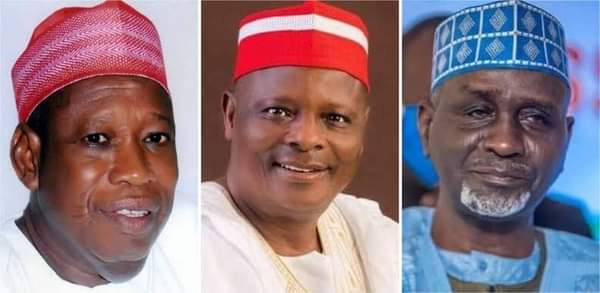
It has been said that when an ant is on the verge of becoming useless, it grows wings and begins flying (Hausa proverb). Politics as they say is a game of betrayal, style, skirmishes and dribbling. This description has made many betray the trust the masses put on them all in the search of greener pasture, and most of the time on their way of searching the “greener pasture” they lose their relevance completely and become a part of history. Many politicians in the past, especially in Nigeria had cross carpeted from one party to another, to the extent that even their spouses or close allies can hardly accurately count the number of political parties they had romance with to satisfy their greed and egos.
As the 2023 election is edging closer, politicians have started their usual deceptions to garner the support of the masses and many of them have seen with corner of their eyes, their fate boldly written. The major contestants among them have started splashing the money they stole from the public treasury and stashed in various foreign and domestics bank accounts in their previous appointments and positions they held, alas, many will spent the money in the wrong way and on the wrong people and regret doing it as many of the politicians will go back to square one when they were finally caught by “Karma”.
Friday Sermon] Ramadan: The Blessed Month, Month Of Forgiveness, Mercy And The Qur’an
In Kano State, the political atmosphere has taken a new dimension with ruling party in the state engulfed by many crises from the leadership of the party which gave birth to a new faction called G-7 led by Malam Ibrahim Shekarau with backing of five other lawmakers from the state and the chairman “The Buhari Organization” to splitting of the camp of the Kano State Governor, Abdullahi Umar Ganduje. In the governor’s camp too, the story is not a pleasant one as the anointed candidate of the governor who was handpicked by the wife of the governor is facing many challenges from within the camp who are determined and desperate to eliminate him and undo what the first lady did at any cost. This brouhaha was what led to another faction in the ruling party called G-9 with people like Kabiru Alasan Ruram, Member representing Rano, Kibiya & Bunkure, Abdurrahman Kawu Sumaila and Alasan Ado Doguwa, member representing Tudun Wada and Doguwa with support of the majority of Kano State House of Assembly Members in the state. This support was what almost cost the speaker in the state his seat few weeks ago for being loyal to his former colleague.
The People’s Democratic Party (PDP) also like other political parties in the country is not immune from the crises, this includes the internal party crisis which has to do with leadership at the different levels to the allege sidelining in the party’s activities and decisions as complained by one of its stalwarts, Rabi’u Musa Kwankwaso. This internal party crisis in some states was what led to many members of Kwankwasiya movement to move to an unknown party with hope to recapture power if not anywhere but in Kano State, the state that according to political commentators is believed to be the biggest and largest centre of politics due to its population and the number of politicians it’s produced in the past and the present ones. The followers in the party have been in conflict with one another for a very long time, which has resulted in the party losing major seats in 2003 elections including the seat of the governor in the state. Though there were some reconciliations to mend the internal crisis between the camp of Aminu Wali and Rabi’u Kwankwaso’s, however, it seems one of the camps has lost the battle and decided to switch allegiance to another party.
The desperation by politicians to win elections by all means, is the genesis of our problems and the loss of political ideology in the country. To prove these desperation and over ambitions of politicians in the country, on the 29th of March, 2022, the Kwankwasiya leader in Kano State announced his formal resignation from PDP and joined a barely known political party, New Nigerian People’s Party (NNPP). With the recent dumping of the PDP by Rabi’u Musa Kwankwaso, the Kwankwasiya leader has switched camps four times from 1999 to date and in every occasion when joining another party he will give one reason or the other just like other politicians in the country. This time, some of the reasons he cited include the refusal of the party leadership to allow him to nominate the party leaders in the North West as the party did to all the other leaders in other zones. Another reason was that the party is not giving him the DUE respect he deserves. These according to political analysts in the state are just mere excuses and cannot hold water.
As we draw near to the 2023 elections, all eyes are on the politicians in the state to see who will emerge victorious and who will be buried politically.
Ali Sabo Writes from Kano









Politics
Beyond the Verdict: How NNPP Loss Vindicates Governor Yusuf’s Political Foresight
By: Sanusi Bature Dawakin Tofa
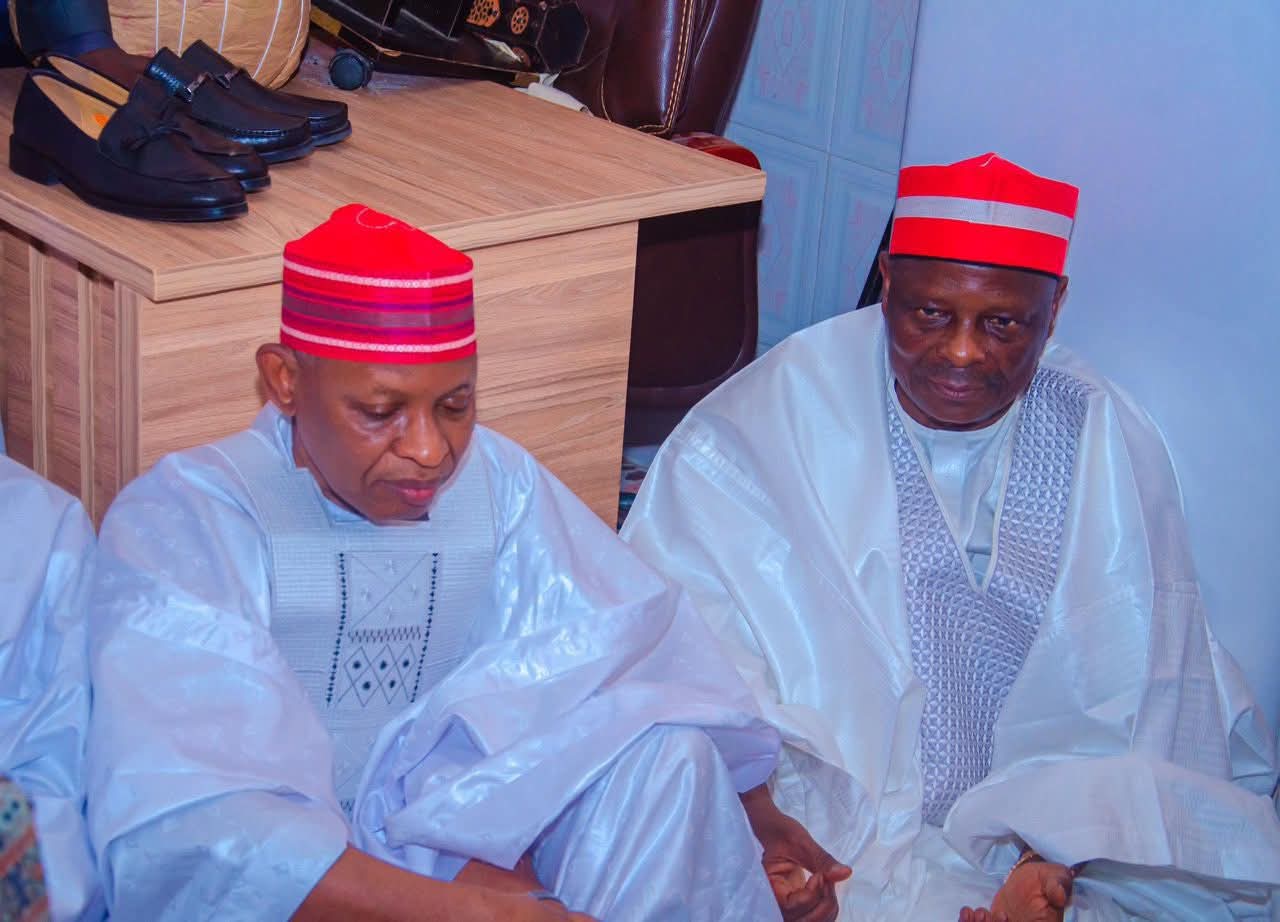
A defining political moment unfolded in Lagos as loyalists of NNPP founder, Boniface Aniebonam, converged at his Apapa office in celebration of a decisive court victory that has reshaped the party’s leadership structure. The ruling of the Federal Capital Territory High Court in Abuja, which directed INEC to recognise the Agbo Major led National Working Committee, effectively nullified the claims of the faction aligned with Rabiu Musa Kwankwaso and the Kwankwasiyya Movement, setting the stage for what many now regard as a turning point in the NNPP’s internal power dynamics.
The celebration was not merely symbolic but deeply political. Songs, dancing and thanksgiving echoed through the venue, signaling what many within the camp see as the final collapse of the rival structure. In their view, the ruling has drawn a clear line under the prolonged leadership tussle, affirming ownership and restoring the party to its original custodians.
While the Kwankwasiyya faction has dismissed the judgment and signaled its intention to appeal, the optics of the Lagos celebration suggest a deeper reality. It portrays a movement that is steadily losing institutional footing. What was once projected as a dominant bloc within the NNPP now appears increasingly isolated and weakened by legal setbacks and internal contradictions.
Within this unfolding scenario, the earlier decision of Abba Kabir Yusuf to exit the NNPP now stands out as not just strategic but profoundly prophetic. At a time when many still believed the crisis could be contained, the governor had already read the signs of a looming structural breakdown. His defection to the All Progressives Congress was a calculated move to shield Kano from the instability that has now fully consumed the party.
Since the entrance of Rabiu Musa Kwankwaso into the NNPP in late 2022, the party has been embroiled in persistent internal wranglings. What should have been a smooth political expansion quickly degenerated into disputes, counter claims and a cycle of litigations across multiple courts. These legal battles not only fractured the party’s leadership but created an environment too volatile for any serious governance to thrive.
For a sitting government, such instability is more than a political inconvenience. It is a direct threat to focus, peace of mind and administrative efficiency. Governor Yusuf clearly understood that a state like Kano could not afford to be governed from within a party constantly entangled in courtrooms. Governance requires clarity, stability and direction, conditions that had become increasingly absent within the NNPP.
The events of today have validated that judgment. The celebrations by Aniebonam’s loyalists underscore the extent to which the party structure has shifted away from the Kwankwaso bloc. In stark terms, the former political stronghold has been reduced to a shadow of its past influence within the party.
Indeed, a harsh but unavoidable metaphor now defines the situation. Rabiu Musa Kwankwaso appears politically like a wandering herdsman without shepherds, disconnected from a recognised structure and navigating an uncertain terrain without institutional backing. The court’s affirmation of a rival leadership has effectively placed him in a position where his relevance within the NNPP is severely diminished.
In practical terms, this leaves him perilously close to being politically homeless, a figure without a firmly recognised platform and with a future clouded by legal and structural dislocations. His refusal to align with Governor Yusuf in the strategic move to the APC now appears in hindsight as a significant political miscalculation, one that may carry lasting consequences for his political journey.
The contrast could not be clearer. While Kano under Abba Kabir Yusuf has secured stability within a broader national framework, the NNPP remains trapped in cycles of litigation and internal strife. The governor’s decision ensured that his administration would not be distracted by endless legal battles, thereby preserving the focus required to deliver democratic dividends to the teeming people of Kano.
In the final analysis, politics rewards those who can read the future before it arrives and act before circumstances impose their will. Power is never sustained by sentiment but by structure, clarity and timing. What is unfolding within the NNPP is a reminder that when a political house becomes divided against itself, its strongest voices can quickly fade into irrelevance. In contrast, leadership that prioritises stability over attachment secures not just survival but continuity. In this moment, the lesson is clear that history does not remember hesitation, it remembers decision.
Sanusi Bature Dawakin Tofa, is the Spokesperson to Gov. Abba Yusuf of Kano State
Politics
DSP Barau and APC Unity in Kano
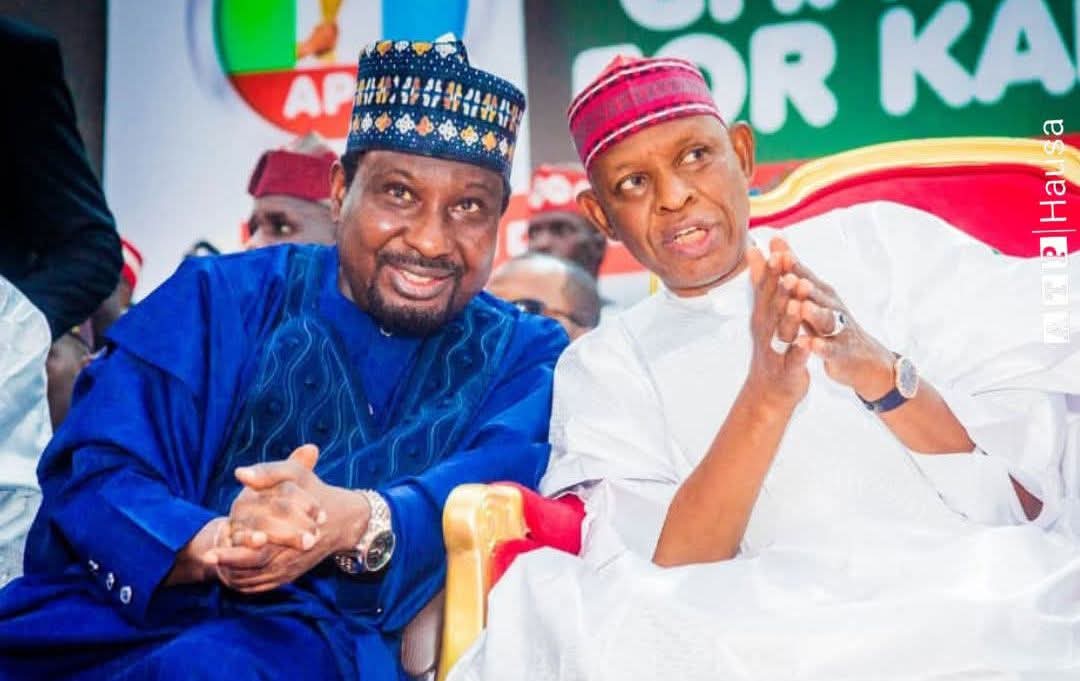
By Abba Anwar
Democracy, in my candid opinion, is not only a game of numbers, as numbers could be falsified, twisted, deliberately avoided and deceiving, it is also a process of fair arrangement, fence-mending, thinking-ahead, conceding overturned events and strategy jogging, all within a sane and stable environment.
To push my take, closer to readers’ comprehension, let me, first and foremost, acknowledge the genuine involvement of His Excellency, the Deputy Senate President, Barau I Jibrin, CFR, immediately when the Kano State Governor, Abba Kabir Yusuf, joined All Progressives Congress (APC).
His contributions and commitment to the new union, new normal, as some may put it, explain his intent for building stronger, more peaceful, ambitious and strategic political platform devoid of crisis and cluelessness ahead of 2027 election period. The deeper commitment is manifested in almost all his recent visibility in the affairs of the party.
It was he, to the chagrin of all, who announced, publicly, that he jettisoned his long held ambition, of becoming number one citizen in the state. That happened during the welcome celebration of the Governor, to APC fold. There and then, he endorsed and called for genuine support, of Governor Yusuf ahead of 2027. Senator’s endorsement, was, in my understanding, out of volition and deep sense of responsibility.
After his unexpected withdrawal from the race, the former Governor of Kano State, Abdullahi Umar Ganduje, CON, made similar pronouncement on behalf of all those contesting for gubernatorial seat in the state. Assuring Governor Yusuf that, all those contesting for the exalted seat, had also withdrawn.
I think after commending Ganduje for that, we should profoundly appreciate and thumb-up for the aspirants. His Excellency Nasiru Yusuf Gawuna and His Excellency Murtala Sule Garo. The duo also exhibited decorum and absolute loyalty in the scheme of things. No doubt about this. So also would-be-aspirants, remained low-key and enduring. As low-key as they were, no one could accurately spot individuals here.
My personal conviction, tells me that, APC heavyweights, did that, just to properly and unarguably, present the party, APC, to the Governor, as a comfort zone. Where his ambition for second tenure could well be secured seamlessly.
As a matter of fact, APC tries hard to make the Governor feel comfortable for the development of the state. Which is at stake. Hence the debut of the slogan “Kano First.”
Looking at the wards and local governments congresses, that took place recently, one can, but, believe with me, when I appreciate that Governor Yusuf is reciprocating well. Just look at how the government handles process, procedures and outcomes. Even the sharing formula of party’s executives, between the Governor and old APC members. Yes, the Governor is moving at his own pace, but to me, the situation is neither disturbing nor alarming. Each leader has his own way of discharging responsibilities.
All cards are now on the table. As the ball is in the court of the Governor. His understanding of the political arithmetic, as he merges with APC, is paramount and part of the necessary prerequisite for victory, in the face of all. Supporters, non-supporters and so-called neutral entities.
While DSP, alongside other critical stakeholders cooperate with the Governor for injecting life to good governance, it is not out of place, to also mention that, the DSP is becoming the engine room for unity in the party.
All his actions that followed the golden pronouncement, signify honest and genuine support for the status-quo. Few days before the formal pronouncement, it was he, who empowered and reinforced local governments officials in 13 local governments under his constituency, Kano North, with means of transport. Mobility worth commendation.
He gave a similar gesture to party leaders at all levels, long before now. Particularly in his constituency. But that was not limited to Kano North alone. His magnanimous intervention to party leaders, even at that time, across the state, was everything to write home about.
It is indeed dignifying to note that, Distinguished Senator knows clearly that, as it is democratic to support any idea, process and democratic styles, but within the confines of dignity, respect, law and order, it is also democratic to oppose any action or inaction, but within the confines of the identified situations.
The many politicians I spoke with, from Governor Yusuf’s side, on how the Deputy Senate President plays his cards, they passed an impressive judgment on him. They all acknowledged and appreciated his genuine commitment to the cause and his open-minded approach to the progress of the party and the government in the state.
I understand one good thing about him, I mean, out of many good things, he believes, Governor’s survival and victory, is APC’s. Adieu DSP, Adieu!
Anwar writes from Kano
Tuesday, 24th February, 2026
Politics
Political Organization : Why Gov Abba Should Adjust
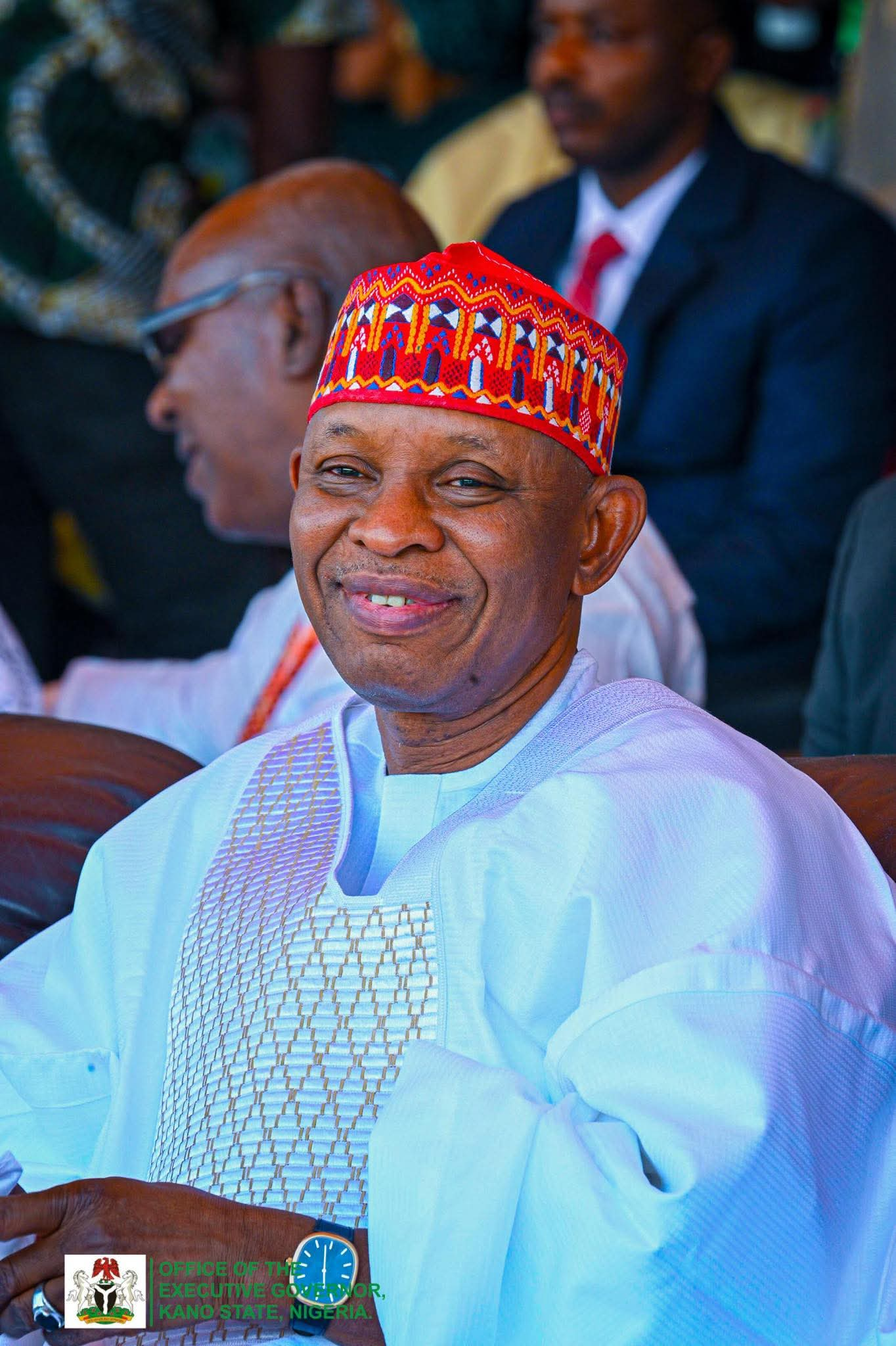
By Abba Anwar
It was evidently clear that, yesterday’s grand political gathering to formally welcome the Governor of Kano State, Abba Kabir Yusuf, into the fold of the ruling All Progressives Congress (APC), that took place at Sani Abacha Indoor Stadium, as was blessed by His Excellency, the Vice President Kashim Shettima, GCON, was a yardstick to measure, who is more prepared for 2027, between the Governor and APC stalwarts in the state.
With the first look of the historic gathering, one could understand that, most of those who handled the responsibility of organizing supporters from the side of the Governor, are either reluctant, weak or inexperienced.
I expected to see the movement of red caps all over. As the trademark of the Governor and his people. Which literally means, Governor and his people, who just joined APC, are firmly on ground. But the direct opposite was the case. What filled the air were T-shirts and Face Caps of APC juggernauts all over. Right from the Airport surrounding, to the streets where Vice President and other top guys passed, on their way to the stadium.
I want believe that, Governor Yusuf knows exactly where he came from and is very conversant with what his former political godfather, is capable of doing. If to say the event to receive the Governor, was singlehandedly left in the hands of the Governor and his team, ALONE, it wouldn’t be that successful.
This tells us the unwavering capacity of APC heavyweights at the event. Wherever you look, what you would see was supporters chanting slogans of their political directions. And more than 80 percent of those supporters, came from the APC big hands.
Many people started asking questions, as to where were the local government Chairmen? What of the Commissioners and Advisers of the Governor? Where were closest individuals to the Governor? What of Governor’s well wishers and enthusiasts?
It appeared like there was no good mobilisation from the part of the local government Chairmen. Who by design, commission or omission, are the ones who should play most of the role in organizing grassroot supporters from their respective local governments.
Allah Ya jikan Murtala Sule Garo, ba dan ya mutum ba. Though he is alive, May Allah forgive Garo and bless him. When he was Kano State Chairman of the Association for Local Governments of Nigeria (ALGON) or when he was the Commissioner for Local Governments and Chieftaincy Affairs or when he was the State Organizing Secretary of the then ruling party, the atmosphere was brighter, cleaner and more promising.
The grand gathering speaks volumes about the capacity of four to five strong men I spotted in pre, during and post event period. All of them, adherent of APC. What I mean by that? I mean those APC people, Governor Yusuf met in the party, in the current political development.
These are His Excellency, the Deputy Senate President, Barau I Jibrin, CON, His Excellency former Deputy Gubernatorial candidate for APC, in 2023 election, Murtala Sule Garo, Chairman of the House Committee on Appropriation, House of Representatives, Hon Abubakar Kabir Bichi, Director General, National Productivity Centre, Hon Baffa Babba Dan Agundi and House of Representatives Member representing Tudunwada/Doguwa federal constituency, Hon Alhassan Ado Doguwa.
These people I mentioned, did their best at the event, to portray to Nigeria, Nigerians and the remnants from where Governor Yusuf left, that, APC is still alive and vibrant in Kano. And a clear message was sent to President Bola Ahmed Tinubu, GCFR, that, the former Governor of the state, Abdullahi Umar Ganduje, CFR, does not relent. I only mentioned what happened principally and there are more to my observation from other people. Genuine and pretenders.
The role played by the five heavyweights I mentioned above, says a lot about who and who Governor Yusuf needs to work with in closer terms and relationship. All of them did their possible best, showcased political strategy, sophistication and engage the Governor in what can be termed as, the time to do it, is now. Either to make or mar. So the victory and its processes are largely in the hand of the Governor. When I say victory, I’m looking at 2027, largely.
Coming down the ladder, where I met Barau, Garo, Abba Bichi, Doguwa and Dan Agundi, the former chairman of Municipal local government, Hon Fa’izu Alfindiki and the current Commissioner for Information, Hon Abdullahi Waiya, did the needful. They did well in their own way. I salute the courage, commitment and unwavering loyalty being displayed. In pre, during and post event period. I eavesdropped their good work as good team players.
Down the ladder also, I saw the commitment, unwavering loyalty and support of Comrade Magaji Kabiru Gulu, from Rimingado and that boy Aminu Dahiru from Gwale local government. When it comes to organization, I’m sure they performed differently also.
I suggest, His Excellency, Yusuf, should cross examine most of his local governments’ bosses. It was crystal clear that their organization was very poor, inexperienced, shallow, loosely engaging and panic – laddened. While the Governor should sit-up and face the challenges head-on, working closely with APC hands is absolutely necessary.
Anwar writes from Kano
Tuesday, 17th February, 2026

Sallah Thanksgiving: NUJ President Commends Kano Correspondents’ Chapel For Fostering Love, Unity Among Journalists

Breaking: Kwankwaso Resigns from NNPP

Northern Youth Group Backs Doguwa for Kano APC Leadership, Urges National Role

Kwankwaso to Join ADC on Monday

Radiographers Kick Against Controversial Health Bills, Demand Immediate Withdrawal

The Governor Who Chose His People Over His Politics: Abba Yusuf and the Moral Courage Behind Kano First

FREEDOM OF SPEECH, NOT FREEDOM FROM CONSEQUENCE: A CITIZEN’S CALL FOR RESPONSIBLE PUBLIC COMMENTARY
Restoring the Glory That Was Always There: Governor Abba Kabir Yusuf and the Historical Vision Behind Kano First

Tinubu to Swear in Olatunji Disu as Inspector-General of Police on Wednesday

NDLEA Clarifies: Drug Case Against Abba Kyari Still Active After Court Discharge
Sallah Thanksgiving: NUJ President Commends Kano Correspondents’ Chapel For Fostering Love, Unity Among Journalists
Breaking: Kwankwaso Resigns from NNPP
Northern Youth Group Backs Doguwa for Kano APC Leadership, Urges National Role
Kwankwaso to Join ADC on Monday
Radiographers Kick Against Controversial Health Bills, Demand Immediate Withdrawal
The Governor Who Chose His People Over His Politics: Abba Yusuf and the Moral Courage Behind Kano First
FREEDOM OF SPEECH, NOT FREEDOM FROM CONSEQUENCE: A CITIZEN’S CALL FOR RESPONSIBLE PUBLIC COMMENTARY
Restoring the Glory That Was Always There: Governor Abba Kabir Yusuf and the Historical Vision Behind Kano First
Tinubu to Swear in Olatunji Disu as Inspector-General of Police on Wednesday
NDLEA Clarifies: Drug Case Against Abba Kyari Still Active After Court Discharge
-

 Opinion4 years ago
On The Kano Flyovers And Public Perception
-

 Features5 years ago
How I Became A Multimillionaire In Nigeria – Hadiza Gabon
-

 Opinion5 years ago
Kano As future Headquarters Of Poverty In Nigeria
-

 History5 years ago
Sheikh Adam Abdullahi Al-Ilory (1917-1992):Nigeria’s Islamic Scholar Who Wrote Over 100 Books And Journals
-

 Opinion4 years ago
My First Encounter with Nasiru Gawuna, the Humble Deputy Governor
-

 History5 years ago
The Origin Of “Mammy Market” In Army Barracks (Mammy Ochefu)
-

 History4 years ago
The History Of Borno State Governor Professor Babagana Umara Zulum
-

 News4 years ago
Federal University Of Technology Babura To Commence Academic Activities September