
International
United Nations And Its Selected Bias/Punishment Against World Leaders
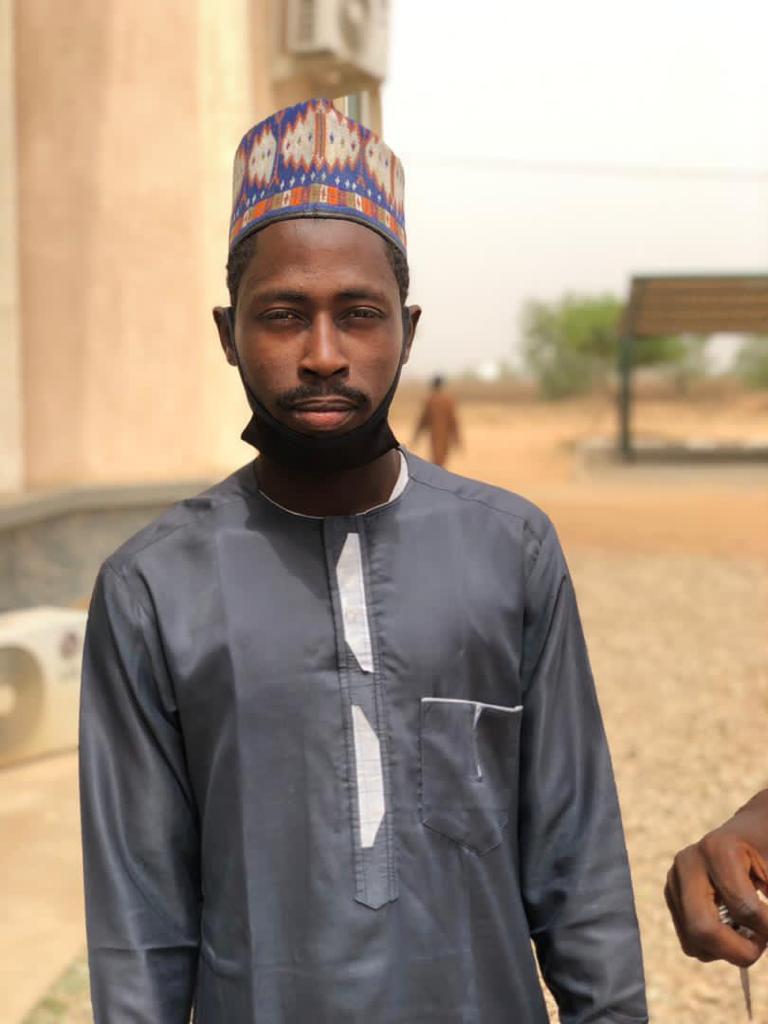
By Tafida Sabo Akilu.
It has been on record that several attempts had taken place on how to establish an institution that would coordinate the entire world and simultaneously prevent global conflicts. Such attempt can be dated back to 17th century, ie the Vienna conference which as a result brought the end of napoleon war and at the same time led to the unification of European societies.
There were also attempt by the Europe such as Russia, Australia, Prussia and Britain to maintain peace in europe.
However, the eruption of the WWI of 1914-1918 hindered all such strenuous effort. Despite that, still international communities didn’t despair but pushed more efforts in order to initiate world body that would solely foster peace and stability in the international arena. This necessitated the establishment of the league of nations as suggested by the then US leader Wilson. League of nations was emanated from the treaty of versailles in 1919.
The above institution was unable to last long nor it had achieved her goals. Thus, WWlI erupted due to inability of the aforementioned institution. At the end of the WWII, nation states decided to replace league of nations with United Nations Organization (UNO). It has been reported that on 25th April 1945 at Francisco (USA), that China, Britain, and Soviet submitted the draft charter for the organization that is toady known as UNO. The UNO aimed at the following goals.
1. To maintain international peace and security, prevent threat to peace and punish aggressors.
2. To develop friendship among states and to treat all states equally
3. To promote and achieve international cooperation in solving economic, social, diplomatic, and cultural problems, and promote & respect for human rights and freedom for all people irrespective of their race, gender, language or religion.
This paper will examine objective number one of the above goals. That’s maintenance of international peace and punishment of the aggressors. Since the inception of UNO, there were many international crises witnessed by international communities. These included Iraq, Afghanistan, Syria , Yemen , Israeli-Palestine Libya, Sudan ethiopia-Tigrayan wars to mention just few.
World has witnessed number of aggressors such as Muammar Ghaddafi of Libya, Sadam Hussein of Iraq, George W Bush jr, V. Putin of Russia, Al-Bashar of Sudan etc. However, some of these aggressors were faced consequences of their actions by united nations while others escaped.
In march 2009, Al -Bashar of Sudan became the first sitting head of state to be indicated by international criminal court ( ICC) , for allegedly directing a campaign of mass killing, rape, and pillage against civilians of Dafur.
On 30 December 2006, Sadam Hussein was sentenced to death by hanging after being convicted of crime against humanity. He killed 148 shi’tes in the town of Dujail in 1982, in retaliation for an assassination attempt against him.
On 21 October 211, Muammar Ghaddafi of Libya was found west of sitter after his convoys were attacked by NATO aircraft. He was then captured by national transition council (TNC) forces and killed shortly. Reuters. 21 October 2011
Week after Al-Qaeedah attacked the US on September 11, president George W Bush jr announced the US invasion of Afghanistan. In spite the fact that invasion of one country by another is strictly against the charter of UNO which guaranteed sovereignty and territorial integrity of member states. According to the coast of war project, the invasion of Afghanistan by US under the aggressive George W Bush claimed 176,000 people lives in Afghanistan; 461,319 civilians, 69,095 military and police at least 52,893 opposition fighters. Despitefully, United Nations refused to hold Bush accountable for his flagrant violation of international law.
Gunmen Attack Final Year Student At Birnin-Gwari,Kills 7
In February and March 2014, Russia invaded and subsequently annexed the crimean peninsula from Ukraine. The invasion claimed the lives of six people, 3 protesters, 2 pro-Russian, 1 pro-Ukraine, two soldiers and one crimean SDP trooper( google). Meanwhile , for the past three months, Russia has amassed more than 100,000 armed forces on Ukraine border and it began to invade Ukraine three days ago.
According to the president zalensky of Ukraine substantiated that about 100 people lost their lives which included civilians , both Russian and ukraine armed forces. , United Nations did nothing to President Putin in 2014 and perhaps this emboldened him to start another invasion three days ago.
Concerning the current invasion of Ukraine by Russia, United Nations security council (UNSC) summoned emergency meeting so as to condemn Russia’s aggressions on Ukraine. This meeting ended off with a voting in which 11 members voted in favour of Ukraine, China, India and UAE abstained while Russia who’s part of the permanent member states vetoed the resolution and called it anti -Russian.
Lastly the UNSC vowed to take the issue to united nations general assembly (UNGA) for further resolution. Note , Russian has a veto power and it may likely veto any resolution against her.
I call on international communities to re-think about the settings of united nations and come up with a better international institutions that will favour world leaders equally since it’s apparent that united nations is just a mish-mash and balderdash.
Tafida Sabo Akilu, Is a Student at Yusuf Maitama Sule University Kano, Department of History And International Studies.












International
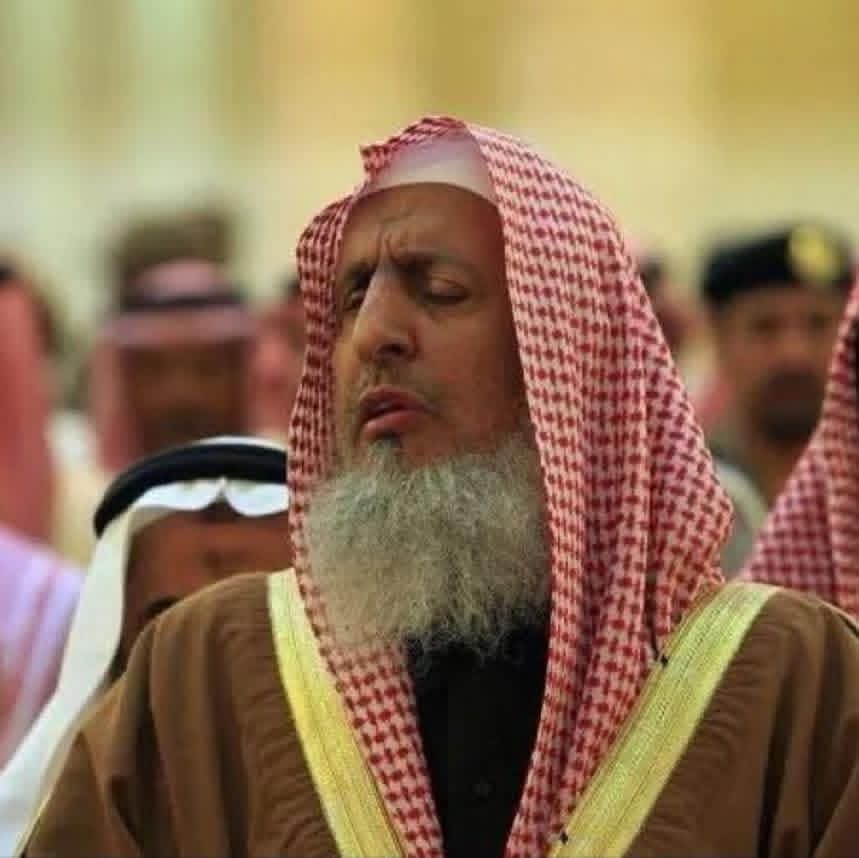
The Life And Times Of Saudis Grand Mufti, Sheikh Abdul Aziz Abdullah Al-Sheikh
By Inside Haramain
The Passing of the Grand Mufti of Saudi Arabia, Sheikh Abdulaziz bin Abdullah Al-Sheikh رحمه الله
With hearts filled with sorrow and submission to the decree of Allah, the Kingdom of Saudi Arabia and the Islamic world bid farewell to Sheikh Abdulaziz bin Abdullah Al-Sheikh (1362 AH / 1943 CE – 1447 AH / 2025 CE), the Grand Mufti of Saudi Arabia, Chairman of the Council of Senior Scholars, and President of the General Presidency of Scholarly Research and Ifta.
Appointed as the third Grand Mufti in the history of the Kingdom in 1420 AH / 1999 CE, succeeding Sheikh Abdulaziz bin Baz, Sheikh Al-Sheikh served the religion and the Ummah with unwavering dedication until his passing on 1 Rabiʿ al-Thani 1447 AH / 23 September 2025 CE.
Born on 3 Dhul-Hijjah 1362 AH / 30 November 1943 CE in Makkah al-Mukarramah, Sheikh Abdulaziz grew up an orphan, losing his father at the tender age of eight. He memorized the Qur’an in his youth under the tutelage of Sheikh Muhammad bin Sinan and pursued his studies in Sharia under the guidance of the former Grand Mufti, Sheikh Muhammad bin Ibrahim Al-Sheikh. Despite losing his eyesight in his twenties, his determination to seek knowledge never faltered.
He went on to study with eminent scholars including Sheikh Abdulaziz bin Baz, Sheikh Abdulaziz bin Saleh Al-Murshid, and Sheikh Abdulaziz Al-Shathri. He graduated from the College of Sharia at Imam Muhammad bin Saud Islamic University in Riyadh, specializing in Arabic and Islamic sciences in 1384 AH / 1965 CE.
Sheikh Abdulaziz began his career as a teacher at Imam al-Da’wah Institute in Riyadh before becoming a professor at the College of Sharia and the Higher Institute of Judiciary. His academic service extended to supervising theses at Imam University and Umm al-Qura University, nurturing generations of scholars and students.
As a khatib, he served at several mosques, most prominently Imam Turki bin Abdullah Mosque in Riyadh, and he was among the most renowned khatibs of Masjid Namirah in Arafat, where he addressed the Hujjaj during Hajj with sermons that resonated across the Islamic world.
His scholarly journey was crowned with key positions:
•Member of the Council of Senior Scholars (from 1407 AH / 1987 CE).
•Deputy Grand Mufti (from 1416 AH / 1995 CE).
•Grand Mufti of Saudi Arabia, President of Scholarly Research and Ifta, and Chairman of the Council of Senior Scholars (from 1420 AH / 1999 CE).
Throughout his tenure, he became a trusted voice of guidance for millions, issuing fatwas on creed, worship, and contemporary issues through platforms such as the famous program Nur ʿala al-Darb. His published works include The Book of Allah and Its Great Status, The Reality of the Testimony that Muhammad is the Messenger of Allah, The Compendium of Arafat Sermons, alongside numerous collections of fatwas on belief, purification, prayer, fasting, zakat, and Hajj.
Sheikh Abdulaziz Al-Sheikh’s voice echoed from the pulpits of Arafat, guiding millions of pilgrims with words of admonition and faith. His lifelong dedication to teaching, issuing fatwas, and serving Islam remains a legacy remembered not only in the Kingdom but across the Ummah.
May Allah envelop him in His vast mercy, accept his deeds, elevate his ranks in Jannah, and reward him for his lifelong service to Islam and the Muslims.
إنا لله وإنا إليه راجعون
International
The United Nations and Eight Decades of Impotence
By: Amir Abdulazeez
The United Nations is currently holding its 80th General Assembly sessions in New York. Some days earlier, the U.S. State Department, under the pretext of national security and anti-terrorism laws, revoked visas for dozens of Palestinian officials, including President Mahmoud Abbas slated to participate, at the General Assembly and a high-level two-state conference. This move drew criticism from the UN itself, EU and some human-rights groups, with calls to relocate Palestinian-related meetings outside New York. This echoes historical precedents, notably the 1988 visa denial to Late Yasser Arafat, which forced the UN to shift one of its sessions to Geneva to allow him participate.
Although the 1947 ‘Headquarters Agreement’ obliges the United States to admit all UN participants, Washington occasionally and selectively invoke security and legal excuses to discriminate between entrants. Such practices explain how the UN’s operations remain vulnerable to U.S. control, thereby undermining its independence, authority and credibility. As the UN marks the 80th anniversary of the ratification of its charter on 24th October 2025, the organization which was founded on the ashes of World War II in 1945 faces an existential crisis of credibility and effectiveness.
While it has achieved notable successes in humanitarian aid, educational research and global environmental and health initiatives, its core mission of maintaining international peace and security has been repeatedly undermined by structural and diplomatic flaws. The organization’s inability to meaningfully respond to crises from Syria to Ukraine and most visibly in the Israeli-Palestinian conflict, has exposed fundamental weaknesses that warrant urgent reform. The UN’s record is one of profound paradox: a body designed for action but often defined by its inaction. Nowhere is this impotence more starkly illustrated than in its 70 years’ failure to resolve the Palestinian question or to hold Israel accountable for its international impunities.
From the outset of the Israeli-Palestinian conflict, the United Nations assumed a central role by proposing the 1947 Partition Plan, which sought to establish separate independent states for both parties. Although initially conceived as a potential path to peace, the plan was never enforced and the UN has since struggled to translate its own decisions into reality. Further failures are documented in a paper trail of unimplemented resolutions: Security Council Resolution 242 (1967) called for Israel’s withdrawal from territories occupied during the Six-Day War; Resolution 338 (1973) and countless subsequent resolutions reaffirmed this demand that was not only ignored but instead empowered Israel’s massive expansion of illegal settlements.
Beyond the unimplemented resolutions, a critical UN failure in this regard is that of narrative framing. It has been unable to consistently enforce a foundational principle: that the right to self-determination for one people (Israelis) cannot be predicated on the denial of that same right to another (Palestinians). The organization’s various bodies often treat the conflict as a symmetrical dispute between two equal parties, rather than an asymmetrical struggle between a nuclear-armed occupying power and a stateless, occupied population living under a brutal blockade.
The core of the UN’s ineffectiveness lies in the flawed decision-making structure of its Security Council, where the five permanent members (United States, Russia, China, France and United Kingdom) hold the autocratic privilege of veto power. This system of outdated World War II geopolitics has frequently paralyzed the organization in hours of need. Since 1946, the veto has been selfishly exercised about 300 times. Between 2011 and 2023, Russia and China blocked 16 resolutions on Syria, enabling the Assad regime’s brutal campaign against civilians. The United States, meanwhile, has used its veto more than 50 times to shield Israel from accountability, making Palestine the single most vetoed issue in UN history. Instead of serving as a platform for global security, the Council has become an arena for shameless and hypocritical power politics.
The General Assembly, despite representing all 193 member states equally, has been relegated to a largely ceremonial role in matters of international peace and security. While the Assembly can pass resolutions by majority vote, these carry no binding legal force and are routinely ignored by powerful nations. The 2012 resolution calling for an arms embargo on Syria passed with 133 votes but had no practical effect, as Russia continued supplying weapons to the Assad government. This has created a two-tiered system where the views of the international majority are systematically subordinated to the interests of Security Council Super Powers.
The selective enforcement of international law has become a defining hallmark of UN impotence. While the organization has at times demonstrated resolve such as coordinating global sanctions against apartheid South Africa in the 1980s or authorizing military intervention in Libya in 2011, its responses to other similar crises have been inconsistent and politically driven. Similarly, the International Criminal Court, often operating with UN support, swiftly indicted leaders of Liberia, Sudan and Libya, yet no Western or allied leaders like George W. Bush or Tony Blair have been held to account for baseless interventions in Iraq, Afghanistan or Yemen. These double standards have eroded the UN’s credibility and moral authority, particularly in the Global South, where it is increasingly viewed as an instrument of Western hegemony.
The UN’s peacekeeping apparatus, while successful in some contexts, has also demonstrated significant limitations when confronting determined state actors. The United Nations Disengagement Observer Force (UNDOF) on the Golan Heights and the United Nations Interim Force in Lebanon (UNIFIL) have maintained buffer zones during their operations, but have been powerless to prevent violations by all parties. During the 2006 Lebanon War and subsequent conflicts, these forces could only observe and report violations rather than enforce compliance.
Financial manipulation has emerged as another tool of selective pressure within the UN system. The United States, which contributes 22% of the UN’s regular budget, has repeatedly withheld or threatened to withhold funding to pressure the organization on specific issues. In 2018, the Trump administration cut $285 million from UN peacekeeping operations and reduced contributions to various UN agencies. The UN’s human rights mechanisms face similar challenges of selective application and political manipulation. The Human Rights Council, reformed in 2006 to address criticisms of its predecessor, continues to be influenced by bloc voting and political considerations rather than objective human rights assessments. Countries with questionable human rights records have served on the Council while using their positions to deflect criticism and protect allies.
Critics argue that the UN has become a stage for symbolic debates while real decisions and tangible actions are outsourced to global bullies like the US, less formal coalitions like the NATO and regional actors like the EU. For example, the U.S.-brokered Abraham Accords normalized relations between Israel and several Arab states without addressing core Palestinian concerns while side-lining the UN. Similarly, its response to Russia’s invasion of Ukraine in 2022 was limited to humanitarian aid and symbolic condemnation, as bodies like EU looked more relevant and assertive.
The rise of new global powers and changing geopolitical realities have rendered the UN’s 1945 structure increasingly obsolete. Reform proposals have circulated for decades but have consistently failed due to the resistance of existing power holders. Things have changed since World War II, nations have evolved, others have declined and hence the UN must be reformed to reflect current realities. The permanency of the Security council membership must be reviewed and the senseless veto authority must be abolished or modified along the lines of justice and accountability. As the United Nations approaches its 80th anniversary, the choice is clear: fundamental reform or continued irrelevance.
Maintaining the United Nations system costs about $50–55 billion per year, not counting military deployments and opportunity costs. Beyond money, states commit significant diplomatic, military, humanitarian and bureaucratic resources to maintain their participation. This makes the UN one of the most resource-intensive international organizations ever created. Without serious reforms to address structural inequalities, eliminate veto abuse and restore the primacy of international law over great power politics, the UN risks becoming a historical footnote rather than the cornerstone of the global governance its founders envisioned. The international community must decide whether it will tolerate continued dysfunction or demand the transformative changes necessary to address 21st century challenges.
International
Ghana’s former president Mahama wins election
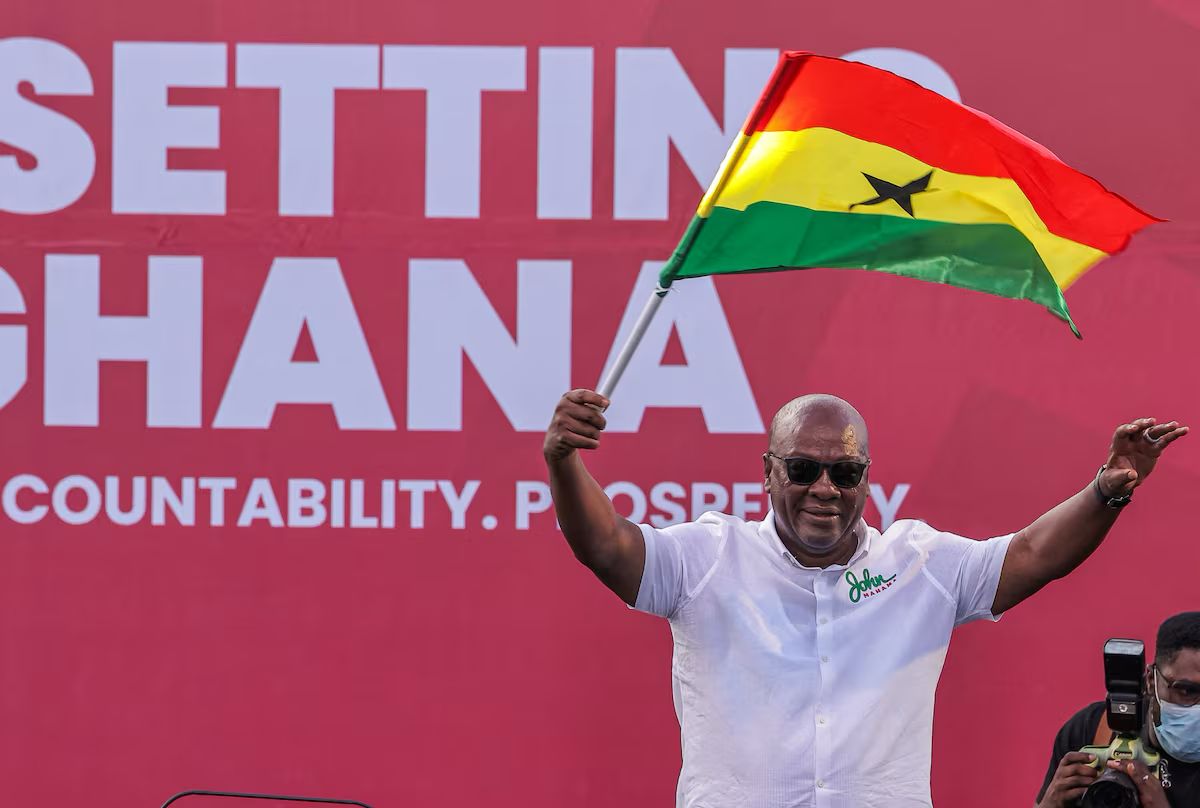
Ghana’s former president John Dramani Mahama has staged a political comeback by winning the West African nation’s presidential election after his rival Vice President Mahamudu Bawumia conceded defeat on Sunday.
Addressing a press conference from his residence, Bawumia said he had called Mahama to congratulate him, adding that Mahama’s National Democratic Congress (NDC) also won the parliamentary election.
Bawumia said he conceded before the official results to ease tensions.

Breaking: Kwankwaso Resigns from NNPP

Northern Youth Group Backs Doguwa for Kano APC Leadership, Urges National Role

Kwankwaso to Join ADC on Monday

Radiographers Kick Against Controversial Health Bills, Demand Immediate Withdrawal

2027 Race : President Tinubu’s Aide, Ja’oji Resigns to Contest

The Governor Who Chose His People Over His Politics: Abba Yusuf and the Moral Courage Behind Kano First

FREEDOM OF SPEECH, NOT FREEDOM FROM CONSEQUENCE: A CITIZEN’S CALL FOR RESPONSIBLE PUBLIC COMMENTARY
Restoring the Glory That Was Always There: Governor Abba Kabir Yusuf and the Historical Vision Behind Kano First

Tinubu to Swear in Olatunji Disu as Inspector-General of Police on Wednesday

NDLEA Clarifies: Drug Case Against Abba Kyari Still Active After Court Discharge
Breaking: Kwankwaso Resigns from NNPP
Northern Youth Group Backs Doguwa for Kano APC Leadership, Urges National Role
Kwankwaso to Join ADC on Monday
Radiographers Kick Against Controversial Health Bills, Demand Immediate Withdrawal
2027 Race : President Tinubu’s Aide, Ja’oji Resigns to Contest
The Governor Who Chose His People Over His Politics: Abba Yusuf and the Moral Courage Behind Kano First
FREEDOM OF SPEECH, NOT FREEDOM FROM CONSEQUENCE: A CITIZEN’S CALL FOR RESPONSIBLE PUBLIC COMMENTARY
Restoring the Glory That Was Always There: Governor Abba Kabir Yusuf and the Historical Vision Behind Kano First
Tinubu to Swear in Olatunji Disu as Inspector-General of Police on Wednesday
NDLEA Clarifies: Drug Case Against Abba Kyari Still Active After Court Discharge
-

 Opinion4 years ago
On The Kano Flyovers And Public Perception
-

 Features5 years ago
How I Became A Multimillionaire In Nigeria – Hadiza Gabon
-

 Opinion5 years ago
Kano As future Headquarters Of Poverty In Nigeria
-

 History5 years ago
Sheikh Adam Abdullahi Al-Ilory (1917-1992):Nigeria’s Islamic Scholar Who Wrote Over 100 Books And Journals
-

 Opinion4 years ago
My First Encounter with Nasiru Gawuna, the Humble Deputy Governor
-

 History5 years ago
The Origin Of “Mammy Market” In Army Barracks (Mammy Ochefu)
-

 History4 years ago
The History Of Borno State Governor Professor Babagana Umara Zulum
-

 News4 years ago
Federal University Of Technology Babura To Commence Academic Activities September