
News
Dangote receives CILT Champion Award, pledges collaboration with Institute
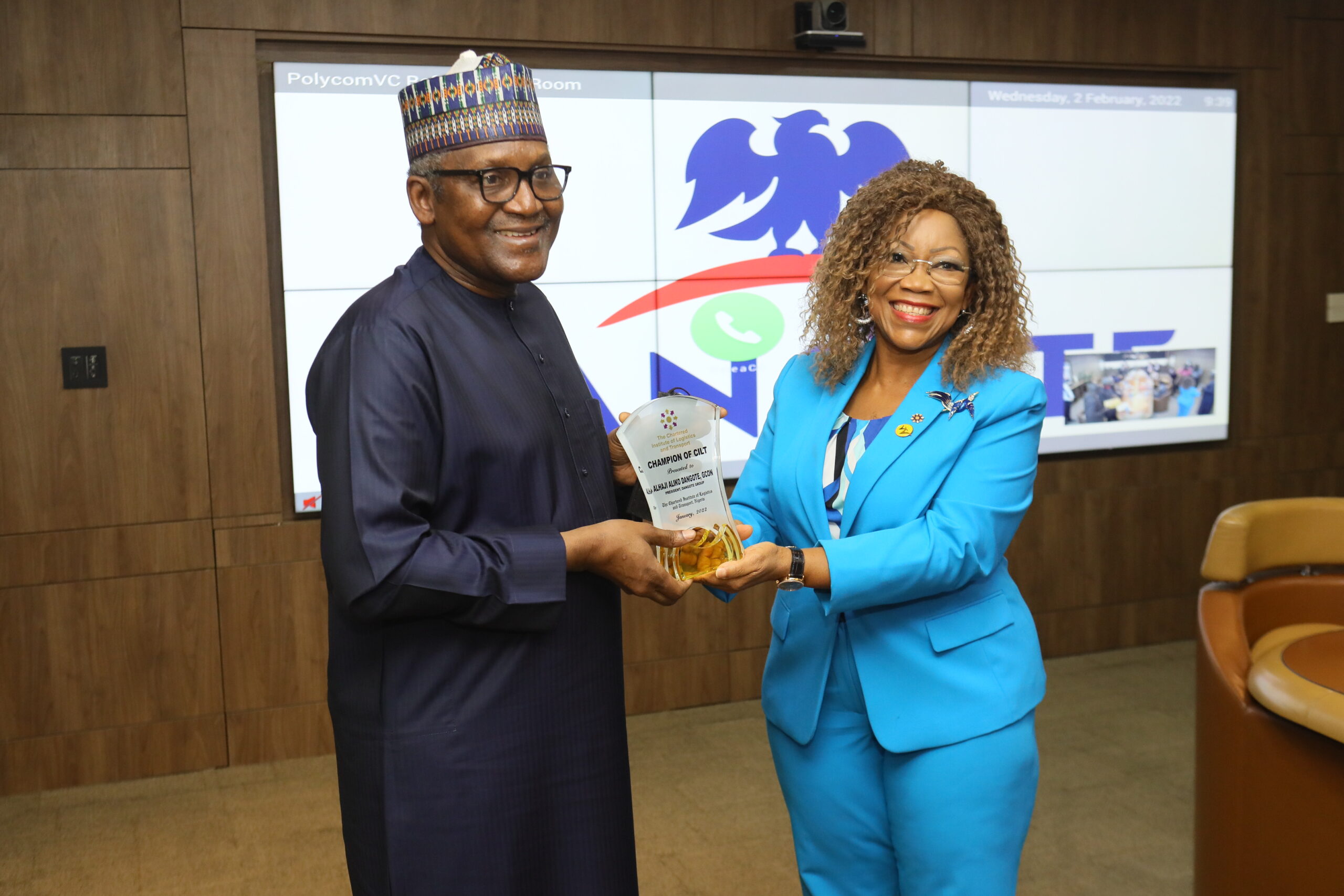
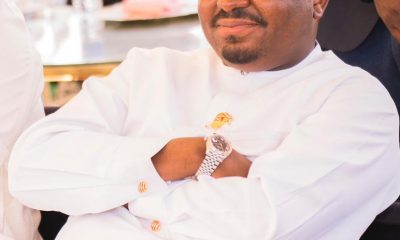
President/CE, Dangote Industries Limited and Africa’s wealthiest man, Aliko Dangote yesterday received the prestigious award of the ‘Champion of CILT’ in recognition of his personal and the group’s contributions and support in areas of transport, logistics and supply chain management in Nigeria and Africa.
The award was bestowed on him by the National President of the Chartered Institute of Logistics and Transport, Mrs. Mfon Ekong Usoro, during an official visit by executive members of the Institute and its Women in Logistics and Transports (WILAT) branch to Dangote at the Head Office of the Dangote Group in Ikoyi, Lagos, State.
Shonekan’s burial: Lagos to divert traffic at Marina
While accepting the award, Dangote, who commended the efforts of the Institute’s top officials to improve the transport sector in Nigeria, also pledged to collaborate with the CILT in the areas of training and capacity building on transport, logistics and supply chain management issues.
He received the CILT award in the company of the Group Executive Director, Special Duties and Group Chief Risk Officer, Dangote Industries Limited, Dr. Nike Fajemirokun; Group Managing Director, Dangote Cement Plc, Mr. Michel Puchercos, and the Managing Director, Greenview Development/Port Operations, Mr. Akin Omole.
Members of the CILT delegation led by Mrs. Usoro included the National President Emeritus, Ibrahim Jibril; International Vice President, Dr. Usman Gidado; Founder WiLAT, Aisha Ali-Ibrahim; Vice President, East CILT, Peter Borlo; CMILT/Chairperson WILAT, Khadijat Ifelola Sheidu-Shabi; Vice President, ENL Consortium, Princess Vicky Haastrup; National Executive Director, Paul Ndibe; Director, CLTL, UNILAG, Prof. Iyiola Oni, and Chairperson, Next Generation, Jafaaru Bello.
Usoro, who presented the award to Dangote, said the delegation came to inform him about the change in baton in the Institute, and to renew the relationship between the CILT and corporate members. She noted the long relationship with the Dangote Group, which presently has 5 Fellows of the Institute; 5 Chartered members, 18 Members, and 47 affiliate Members of the CILT. The team also expressed condolence over the recent demise of the Group Vice President, Alhaji Sani Dangote.
Dangote, who welcomed the CILT team, noted the need for adequate infrastructure, transport and logistics to boost the economy. He noted that the Group can work together with the Institute in the areas of transport and logistics, with training for the customers of the Group.
Immediate past president of the CILT, Mr. Jibril, in a vote of thanks, commended Dangote for the good work being done by the group in creating wealth not only in Nigeria but in Africa. He also hailed the group for building capacity in logistics, transport and supply chain management in Nigeria.
According to him, “I have been with CILT Council for over one and a half decades and through this period I have come to realise the great work the President of the Dangote Group is doing and his supporting staff in the area of development of capacity and skills acquisition in the logistics, transport and supply chain industry and this has gone a long way in professionalising the industry and has gone a long way in creating wealth and generating employment not only in Nigeria but the African region.
“This is a development that we have been keenly following and we are very much proud of what the Dangote Group is doing as led by the president himself. On that note, we appreciate all that he has done, we appreciate all that the Dangote Group is doing, and at the end of the day we believe that this is what Nigeria should benefit from”, he added.








News
Kwankwaso Officially Joins ADC
By Yusuf Danjuma Yunusa
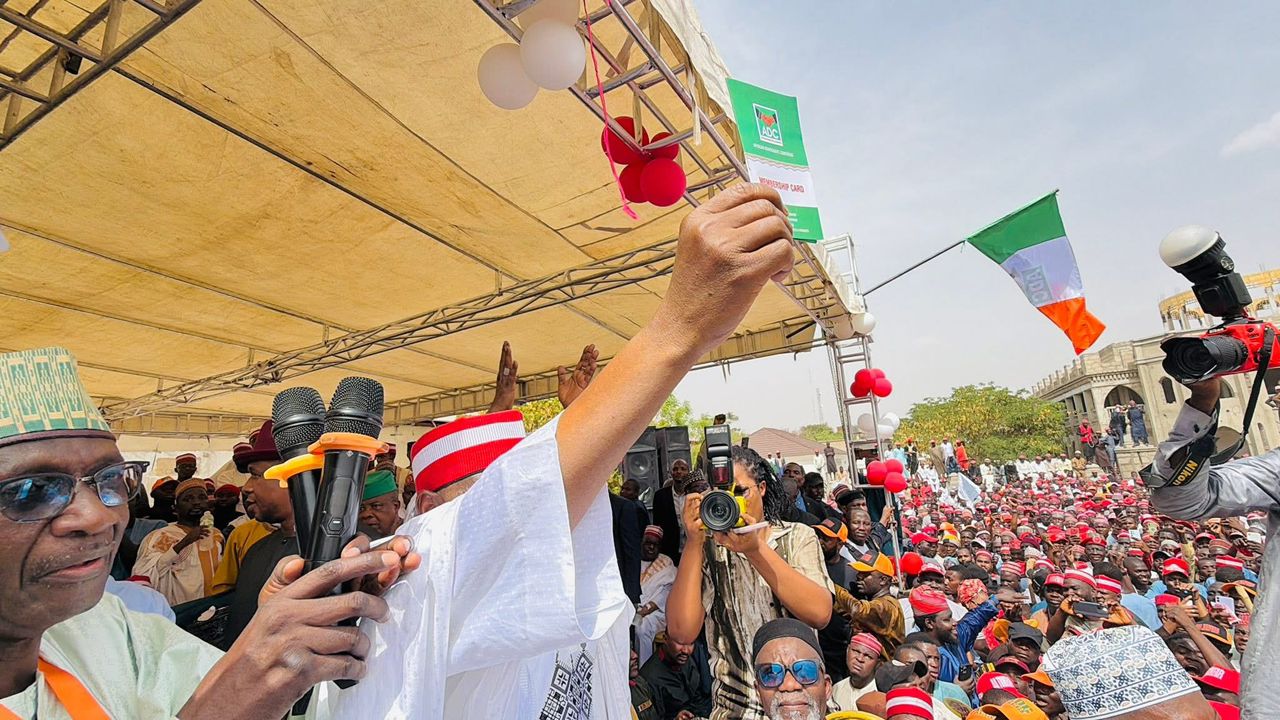
Former presidential candidate of the New Nigeria Peoples Party and ex-Governor of Kano State, Senator Rabiu Kwankwaso, has officially joined the African Democratic Congress.
The former Minister of Defence also registered with the party and received his membership card on Monday at Gidan Kwankwasiyya, Miller Road, Bompai, Kano.
Present at the event include ADC National Chairman and former Senate President, David Mark; former Sokoto State Governor, Senator Aminu Tambuwal; former Minister of Transportation, Rotimi Amaechi; former Labour Party presidential candidate, Peter Obi; Senator Dino Melaye; and former National Chairman of the All Progressives Congress, John Odigie-Oyegun, among others.
News
FMBN Chairman Nasiru Gawuna Resigns, Set to Defect to ADC Amid Kano Political Realignments
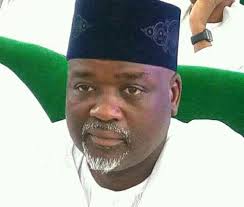
The chairman of the Governing Board of the Federal Mortgage Bank of Nigeria, FMBN, Nasiru Gawuna, has resigned from his position.
Reports indicate that Mr Gawuna has perfected his defection deal with a former governor of Kano, Rabiu Kwankwaso, and is expected to defect to ADC on Tuesday.
In a resignation letter dated March 27, 2026, the former APC governorship candidate said his decision takes immediate effect and aligns with the President’s instruction aimed at ensuring adherence to electoral laws ahead of forthcoming political activities.
He expressed profound gratitude to President Bola Tinubu for the opportunity to serve, describing his tenure as a privilege to contribute to the growth and development of the Federal Mortgage Bank of Nigeria and the country at large.
“My resignation is in strict compliance with the President’s directive requiring all political appointees to step down in accordance with the provisions of the Electoral Act,” the letter read.
Mr Gawuna also stated that he is placing his future “in the hands of Allah (SWT),” while seeking divine guidance on his next course of action.
He further assured of his commitment to a smooth transition process, noting that he would hand over all responsibilities in accordance with established procedures and directives.
Daily Nigerian
News
Sallah Thanksgiving: NUJ President Commends Kano Correspondents’ Chapel For Fostering Love, Unity Among Journalists
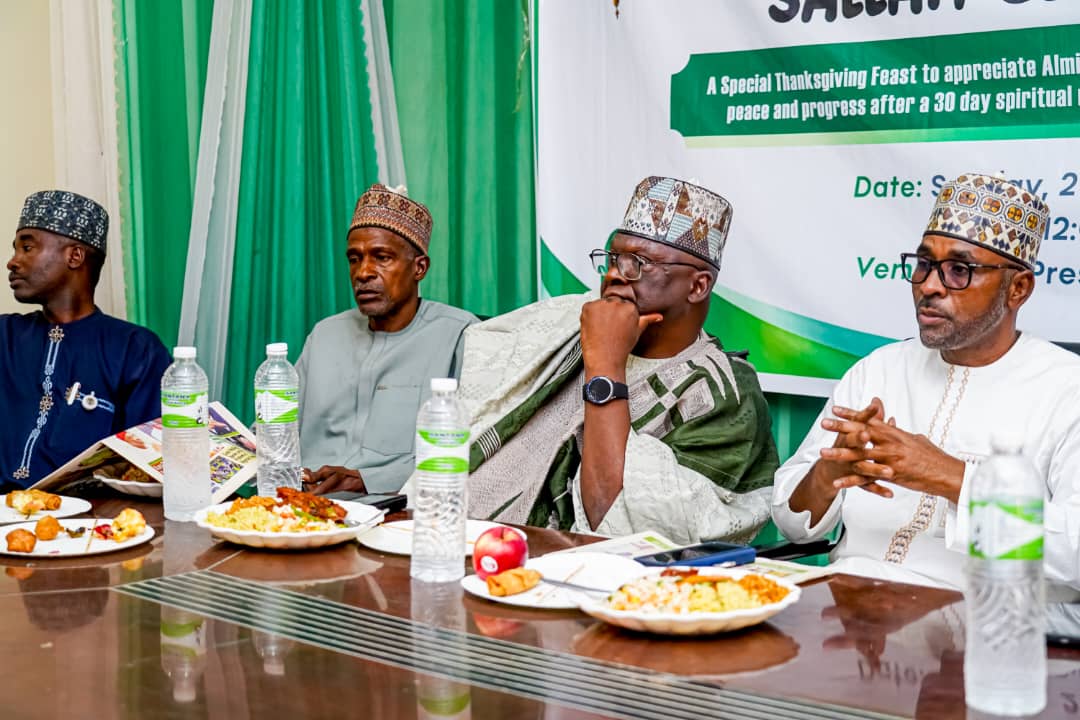
The National President of the Nigeria Union of Journalists (NUJ),
Comrade Alhassan Yahya, has commended the leadership of Kano Correspondents’ Chapel, NUJ, for providing platforms and occasions that foster love, unity and progress among journalists.
Comrade Yahya stated this at Kano Press Centre, on Sunday, during the 2026 Eid-El-Fitr Sallah Celebrations, Thanksgiving And Special Prayers Ceremony, organized by Kano Correspondents’ Chapel, NUJ, to appreciate God for the successful month long Ramadan fasting period and the Eid-El-Fitr Sallah celebrations.
The NUJ National President used the occasion to urge journalists to reflect on the true meaning of the occasion and promote unity, peace, and tolerance, among themselves, in the course of their profession.
Represented by former chairman of Kano NUJ and a member of NUJ National Board of Trustees, Comrade Abbas Ibrahim, the NUJ National President, who said he has been impressed over the activities of Kano NUJ Correspondents’ Chapel, within the last one year, under the leadership of Comrade Murtala Adewale, emphasized the importance of compassion, unity, and addressing national challenges, particularly food security and insecurity.
Comrade Alhassan Yahya urged other NUJ chapels to draw inspiration from Kano Correspondents’ Chapel’s unity and camaraderie, highlighting their event as a model for promoting peace and solidarity among journalists.
He encouraged other chapels to organize similar events, fostering a sense of community and cooperation, which is essential for the growth and development of the journalism profession.
In his remarks, chairman of the occasion, a Professor of Communication in Bayero University, Kano (BUK), Prof. Yakubu Mai Nasara Kurfi, described the event as not only inspiring, but heart-warming, while urging the Kano Correspondents’ Chapel leadership to sustain the tempo.
Prof. Mai Nasara Kurfi congratulated the Kano Correspondents’ Chapel executive members for their foresight to organize the event, and promised to borrow a leaf from them as he planned to introduce such occasion in the Faculty of Communication, BUK.
The Professor of Communication also used the occasion to canvass for collaboration and synergy among the NUJ, working journalists and the Faculty of Communication, BUK, so as to ensure training and re-training of both working journalists and student journalists for enhancement of the journalism profession.
The chairman of NUJ in Kano state, Comrade Suleiman Abdullahi Dederi, who was represented by the Vice Chairman, Comrade Mustapha Gambo, noted that the event was not only a Thanksgiving for the successful Ramadan and celebration of the Eid El Fitr, but a symbol of unity and togetherness among members of Kano Correspondents’ Chapel, and the larger Kano NUJ family.
“This even is so special because some of the prominent scholars and practitioners in the media are here. I want to thank and commend the leadership of the Kano Correspondents’ Chapel for organizing this event,” he said.
In his speech, chairman of NUJ Kano Correspondents’ Chapel, Comrade Murtala Adewale, described the event as not just a celebration, but a moment to reflect on Allah’s countless mercies—granting us the strength, patience, and opportunity to observe the holy month.
According to him: “Ramadan has been a period of spiritual renewal, sacrifice, and discipline. It has reminded us of the importance of empathy, humility, and self-restraint. As journalists, these values resonate deeply with our professional responsibilities—to be fair, truthful, and guided by integrity in all that we do.
“This gathering also serves as an avenue to strengthen our unity as members of the Chapel. In the midst of our demanding schedules and the pressures of the profession, moments like this allow us to reconnect, share, and reinforce the bond that holds us together.”
He encouraged all imbibe the lessons of Ramadan, and continue to embody patience, kindness, and responsibility, “in our daily lives and in our reportage. Our society looks up to us, and we must remain committed to promoting peace, truth, and understanding.
“I sincerely appreciate all our invited guests and well-wishers who have joined us today. Your presence is a testament to the strong relationships we have built over time, and we do not take it for granted. As we share this special breakfast, let us also remember those who are less privileged and continue to extend a helping hand, as taught during the holy month.”
The event was designed as a special Thanksgiving feast to appreciate Almighty Allah for His mercies and offer prayers for peace and progress, after a 30-day spiritual rejuvenation in the fasting month of Ramadan.

Kwankwaso Officially Joins ADC

El-Rufai/Uba Sani And Pantami’s Perceived Peace Of The Graveyard

Defection: Kwankwaso’s Legacy Under Scrutiny; A Critical Look at his Political Journey Since 1999

The Godfather Who Mistook Democracy for Personal Ownership

FMBN Chairman Nasiru Gawuna Resigns, Set to Defect to ADC Amid Kano Political Realignments

The Governor Who Chose His People Over His Politics: Abba Yusuf and the Moral Courage Behind Kano First

FREEDOM OF SPEECH, NOT FREEDOM FROM CONSEQUENCE: A CITIZEN’S CALL FOR RESPONSIBLE PUBLIC COMMENTARY
Restoring the Glory That Was Always There: Governor Abba Kabir Yusuf and the Historical Vision Behind Kano First

Tinubu to Swear in Olatunji Disu as Inspector-General of Police on Wednesday

NDLEA Clarifies: Drug Case Against Abba Kyari Still Active After Court Discharge
Kwankwaso Officially Joins ADC
El-Rufai/Uba Sani And Pantami’s Perceived Peace Of The Graveyard
Defection: Kwankwaso’s Legacy Under Scrutiny; A Critical Look at his Political Journey Since 1999
The Godfather Who Mistook Democracy for Personal Ownership
FMBN Chairman Nasiru Gawuna Resigns, Set to Defect to ADC Amid Kano Political Realignments
The Governor Who Chose His People Over His Politics: Abba Yusuf and the Moral Courage Behind Kano First
FREEDOM OF SPEECH, NOT FREEDOM FROM CONSEQUENCE: A CITIZEN’S CALL FOR RESPONSIBLE PUBLIC COMMENTARY
Restoring the Glory That Was Always There: Governor Abba Kabir Yusuf and the Historical Vision Behind Kano First
Tinubu to Swear in Olatunji Disu as Inspector-General of Police on Wednesday
NDLEA Clarifies: Drug Case Against Abba Kyari Still Active After Court Discharge
-

 Opinion4 years ago
On The Kano Flyovers And Public Perception
-

 Features5 years ago
How I Became A Multimillionaire In Nigeria – Hadiza Gabon
-

 Opinion5 years ago
Kano As future Headquarters Of Poverty In Nigeria
-

 History5 years ago
Sheikh Adam Abdullahi Al-Ilory (1917-1992):Nigeria’s Islamic Scholar Who Wrote Over 100 Books And Journals
-

 Opinion4 years ago
My First Encounter with Nasiru Gawuna, the Humble Deputy Governor
-

 History5 years ago
The Origin Of “Mammy Market” In Army Barracks (Mammy Ochefu)
-

 History4 years ago
The History Of Borno State Governor Professor Babagana Umara Zulum
-

 News4 years ago
Federal University Of Technology Babura To Commence Academic Activities September