
News
APC Inaugurates Excos for 34 States, Excludes Kano,Sokoto
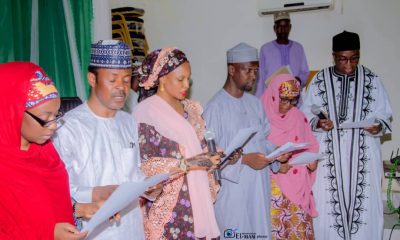
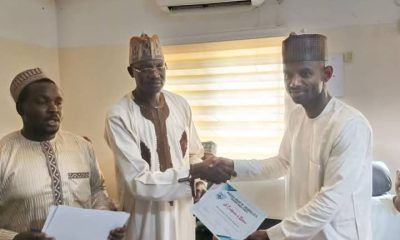
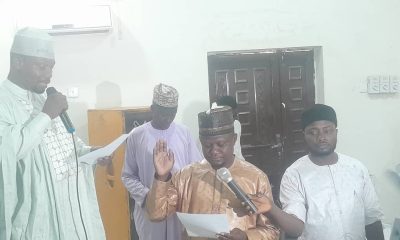
Ahead of its 26 February, 2022 National Convention, the caretaker committee of the All Progressives Congress (APC) has inaugurated state executives of the party for 34 states and the Federal Capital Territory.
Kano and Sokoto states, however, have their party chairmen not inaugurated in an event that took place in Abuja on Thursday.
The decision not to inaugurate the excos for the two states may not be unconnected with the crisis rocking the party in the affected states.
The list of state chairmen inaugurated on Thursday as obtained by PlatinumPost include; Dr. Kingsley Ononogbu (Abia), Alh Ibrahim Bilal (Adamawa), Mr Augustine Enefiok Ekanem (Akwa Ibom), Hon Basil Ejike (Anambra), Alh Babayo Aliyu Misau (Bauchi), Dr. Dennis Otiotio (Bayelsa), Mr Augustine Agada (Benue), Hon. Ali Bukar Dalori (Borno), and Mr. Alphonsus Orgar Eba Esq. (Cross River).
The Secrets Of A Successful 2022
Others are Elder Omeni Sabotie(Delta), Hon. Stanley Okoro Emegha (Ebonyi), retired Col David Imuse (Edo), Barr. Omotosho Paul Ayodele (Ekiti), Chief Ogochukwu Agballah (Enugu), Mr Nitte K Amangal (Gombe), Dr Macdonald Ebere (Imo), Hon. Aminu Sani Gumel (Jigawa), Air Cdre Emmanuel Jekada (Rtd) (Kaduna), Alh. Muhammed Sani (Katsina), Alh. Abubakar Muhammed Kana (Kebbi) and Hon. Abdullahi Bello (Kogi).
The list also include Prince Sunday Adeniran Fagbemi (Kwara), Hon. Cornelius Ojelabi (Lagos), Mr John D Mamman (Nasarawa), Hon. Haliru Zakari Jikantoro (Niger), Chief Yemi Sanusi (Ogun), Engr Ade Adetimehin (Ondo), Prince Adegboyega Famodun (Osun), Hon Isaac Omodewu (Oyo), Hon Rufus Bature (Plateau), Chief Emeka Bekee (Rivers). Hon Ibrahim Tukur El-Sudi (Taraba), Alh Muhammed A. Gadaka (Yobe), Alh. Tukur Umar Danfulani (Zamfara) and Alh. Abdulmalik Usman (FCT).










News
Kano Govt Faults TRACKA Report on ₦235.4m School Project
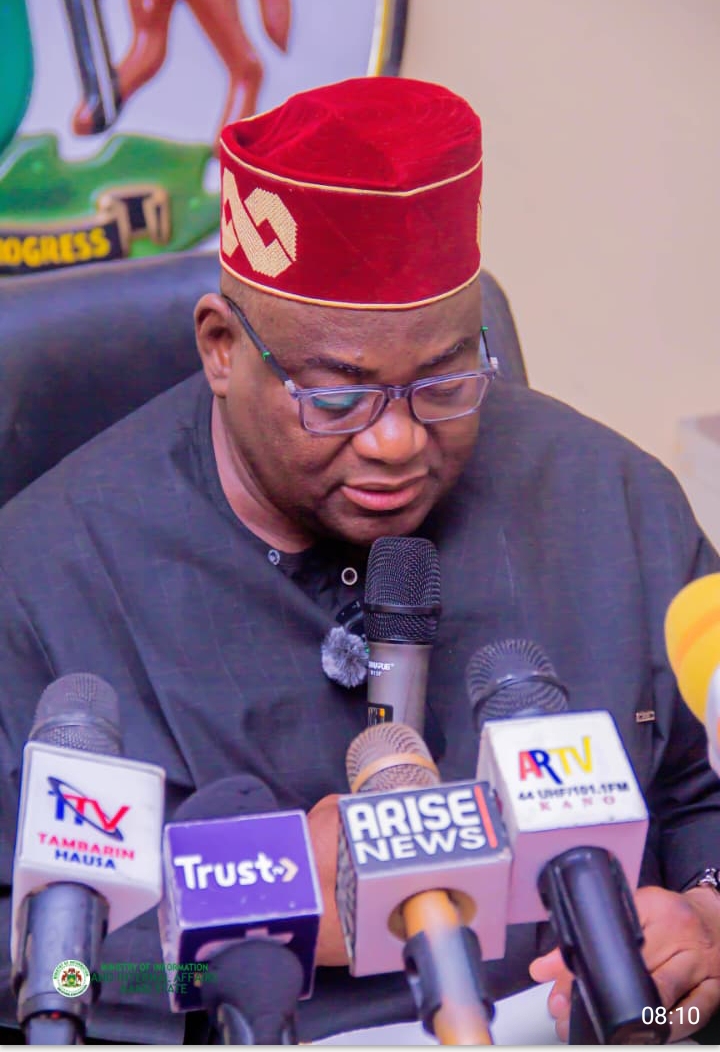
The Kano State Government has refuted a report by TRACKA, a civic accountability platform under BudgIT, concerning an alleged ₦235.4 million expenditure on the construction of classroom blocks at Government Girls Senior Secondary School, Permanent Site, Massu, in Sumaila Local Government Area.
The State Commissioner for Information and Internal Affairs, Comrade Ibrahim Abdullahi Waiya, made the clarification while addressing journalists at a press briefing, saying the government considered it necessary to set the record straight and prevent the public from being misled by information contained in the report.
Waiya said the administration of Governor Abba Kabir Yusuf remained committed to transparency, accountability and prudent management of public resources, stressing that government projects were executed through established procedures and supported by appropriate documentation.
According to him, the reference in the TRACKA report to an alleged ₦235.4 million expenditure on classroom construction had generated considerable public interest and therefore required official clarification.
The Commissioner said the government would continue to provide accurate information on its projects, expenditures and development programmes whenever questions arose, assuring residents that official records remained available to clarify issues of public concern.
He reaffirmed the administration’s commitment to transforming the education sector through the construction and renovation of schools, as well as the provision of essential infrastructure and facilities across the state.
Waiya urged civil society organisations, the media and members of the public to exercise caution when relying on reports concerning government expenditure, advising them to seek clarification from relevant authorities before drawing conclusions.
He also said the Kano State Government remained open to constructive engagement with TRACKA, BudgIT and other accountability organisations, noting that credible scrutiny, verification and dialogue were essential to strengthening transparency and improving public service delivery.
The Commissioner assured the people of Kano that the government would continue to uphold accountability and make relevant information concerning its projects and programmes available to the public whenever necessary
News
Idiaye Emerges Edo Assembly Speaker, Alleges Corruption, Poor Leadership Under Ousted Predecessor
By Yusuf Danjuma Yunusa
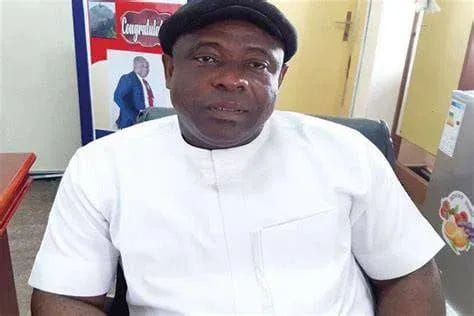
The newly elected Speaker of the Edo State House of Assembly, Yekini Idiaye, has said his predecessor, Blessing Agbebaku, was removed by lawmakers over alleged poor leadership and corruption.
Idiaye, who represents Akoko-Edo Constituency I and is a third-term lawmaker, emerged as Speaker on Monday following Agbebaku’s resignation amid moves by lawmakers to impeach him.
Addressing journalists after Monday’s plenary, Idiaye accused Agbebaku of poor leadership, alleging that his tenure was characterised by corruption and prolonged adjournments.
He said, “The House was inaugurated on the 16th of June, 2023 under the leadership of Agbebaku, and since then we have been passing through a lot of challenges, corruption here and there, adjournment here and there, sometimes for 30 days without a cause. We are not happy with his leadership style. His leadership is poor, and it has been drawing the work of the government backwards.”
Idiaye added, “That is why we removed him. We must encourage our performing governor. He is doing well, anything that will derail or stop our performing governor, we must stop it. That is why we changed him. I can assure all of you that we will do everything possible to support Governor Monday Okpebholo to move this state forward.”
Idiaye’s emergence was also said to have followed the Assembly’s zoning arrangement, which provides that when the governor is from Edo Central Senatorial District, the Speaker should come from Edo North.
News
Kano Government Reports ₦996bn Project Portfolio, 867 Completed Across 44 LGAs
The Kano State Government says it has committed nearly ₦1 trillion to development projects across the state, with more than half of its 1,557 clearly classified projects already completed.
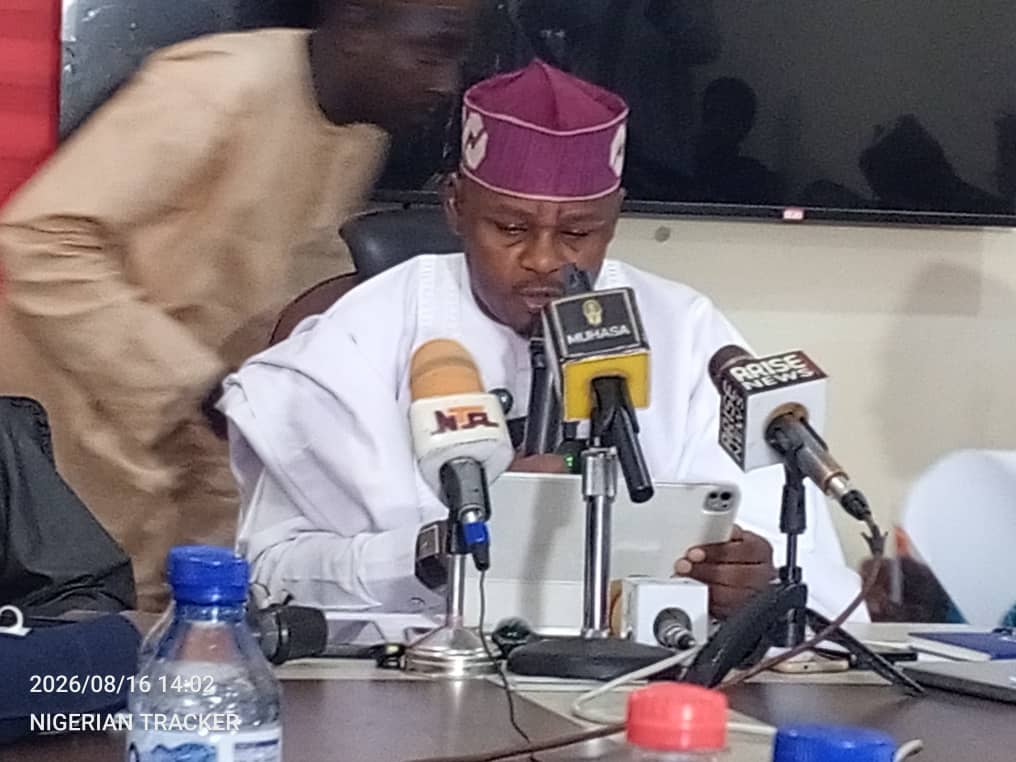
The figures were contained in an international press briefing, by Comrade Nura Maaji Sumaila, Commissioner for Public Procurement, Projects Monitoring and Evaluation. The briefing provided an update on project implementation, geographical distribution, procurement compliance and financial performance under the administration of Governor Abba Kabir Yusuf.
According to the ministry’s project database, the cumulative contract value stands at ₦996.29 billion, while ₦695.20 billion has received No Objection Certificate (NOC) approval and ₦444.75 billion represents payment certificates vetted by the ministry.
Of the 1,557 projects classified by the ministry, 867 projects, representing 55.68 per cent, have been completed. Another 654 projects, or 42 per cent, are ongoing, while 26 projects are at the award stage and 10 are planned and ready for award.
The ministry said some high-value projects are still awaiting the establishment of relevant due-process procedures. They include an approximately ₦113.19 billion mass-housing project at Dawakin Kudu and a ₦22 billion Rural Model City housing project covering the state’s 36 rural local government areas.
According to Maaji the geographical spread of the projects, stressing that government investment is not concentrated in Kano metropolis.
For its analysis, the ministry classified projects into single-LGA, cross-cutting and statewide/other interventions to avoid double-counting projects that serve several local government areas.
The eight metropolitan LGAs account for 598 projects valued at ₦299.36 billion, representing 30.01 per cent of the total contract value. The 36 rural LGAs account for 653 projects valued at ₦287.90 billion, or 28.90 per cent. Cross-cutting projects account for ₦159.50 billion, while statewide and other interventions represent ₦249.54 billion.
The government said the figures demonstrate substantial investment beyond the state capital, covering rural roads, healthcare facilities, schools, housing, feeder roads and other infrastructure.
According to the commissioner Cross-cutting projects account for approximately ₦159.50 billion, or 16.01 per cent of the cumulative contract value. The projects include solar-powered street lighting, wireless solar traffic lights, traffic-management systems, major road expansions, pedestrian bridges, metropolitan road corridors and inter-LGA roads and bridges.
Among the projects identified are the Dakata–Yadakunya Road, Airport Gate–Triumph–Murtala Muhammad corridor, Katsina Road expansion, Airport Junction–Ashton/Club Road corridor, Kura–Kubarachi–Madobi road and bridges, and the Janguza–Durum–Kabo–Karaye road.
The ministry said such projects should not be assessed solely according to the local government in which they are located because their benefits extend across administrative boundaries.
The briefing identified several high-value investments contributing significantly to the state’s overall project portfolio.
These include the approximately ₦113.19 billion mass-housing scheme at Rijiyar Gwangwan in Dawakin Kudu, the ₦24.77 billion Katsina Road expansion covering Fagge and Dala, and about ₦21.90 billion for the Modern Cities infrastructure programme across Dawakin Kudu, Dawakin Tofa and Kumbotso.
The ministry also identified approximately ₦27.74 billion for the Madobi–Yako–Kafin Maiyaki/Kiru Road intervention and about ₦22 billion for prototype mass-housing units under the Rural Model City Project covering all 36 rural LGAs.
Beyond project delivery, the ministry said its mandate includes ensuring that public procurement and implementation are subject to appropriate review, monitoring and financial controls.
The ₦996.294 billion cumulative contract sum represents 100 per cent of the portfolio. Of this amount, ₦695.196 billion, or 69.78 per cent, has received NOC approval, while ₦444.747 billion, equivalent to 44.64 per cent of the contract value, represents vetted payments. Vetted payments amount to approximately 63.97 per cent of the NOC-approved figure.
The ministry said the figures reflect the fact that the portfolio includes completed, ongoing, recently awarded and planned projects, making continued monitoring, certification, cash-flow planning and prioritisation necessary.
The government said it would continue monitoring ongoing projects, addressing implementation bottlenecks, strengthening certification processes and ensuring that public resources are deployed responsibly and with value for money.
It also reaffirmed commitments to transparency in procurement, monitoring projects from procurement through completion, linking payment certification to verified implementation, and providing objective information to citizens, development partners and the international community.
Nura Iro Maaji said the project portfolio demonstrates interventions across all 44 local government areas, covering urban and rural infrastructure, mass housing, roads, bridges, healthcare, education, climate-resilient infrastructure and traffic management.

Kano Govt Faults TRACKA Report on ₦235.4m School Project

Idiaye Emerges Edo Assembly Speaker, Alleges Corruption, Poor Leadership Under Ousted Predecessor

Kano Projects Not Urban-Based: Why Gov Abba Beats All

Kano Government Reports ₦996bn Project Portfolio, 867 Completed Across 44 LGAs

History Made: Eyamu Oghenenyerovwo Peculiar Emerges as UniAbuja’s First Female SUG President

How Kano Digitized Land Turns N50m to N750m Monthly
Kano Governor Yusuf Shortlisted for Africa’s SANKOFA Award of Excellence in Infrastructural Development

Beyond the Numbers: What the Ekiti 2026 Governorship Results Reveal About Coalition Politics and Path to 2027

From the struggle for Gombe State to life in the Senate: Senator Umar Usman Dukku reflects on politics, democracy, and his relationship with the late General Sani Abacha.

Borders, Visas and the Beautiful Game: How U.S. Immigration Policies Shaped Global Perceptions During the 2026 FIFA World Cup
Kano Govt Faults TRACKA Report on ₦235.4m School Project
Idiaye Emerges Edo Assembly Speaker, Alleges Corruption, Poor Leadership Under Ousted Predecessor
Kano Projects Not Urban-Based: Why Gov Abba Beats All
Kano Government Reports ₦996bn Project Portfolio, 867 Completed Across 44 LGAs
History Made: Eyamu Oghenenyerovwo Peculiar Emerges as UniAbuja’s First Female SUG President
How Kano Digitized Land Turns N50m to N750m Monthly
Kano Governor Yusuf Shortlisted for Africa’s SANKOFA Award of Excellence in Infrastructural Development
Beyond the Numbers: What the Ekiti 2026 Governorship Results Reveal About Coalition Politics and Path to 2027
From the struggle for Gombe State to life in the Senate: Senator Umar Usman Dukku reflects on politics, democracy, and his relationship with the late General Sani Abacha.
Borders, Visas and the Beautiful Game: How U.S. Immigration Policies Shaped Global Perceptions During the 2026 FIFA World Cup
-

 Opinion4 years ago
On The Kano Flyovers And Public Perception
-

 Features5 years ago
How I Became A Multimillionaire In Nigeria – Hadiza Gabon
-

 Opinion6 years ago
Kano As future Headquarters Of Poverty In Nigeria
-

 History5 years ago
Sheikh Adam Abdullahi Al-Ilory (1917-1992):Nigeria’s Islamic Scholar Who Wrote Over 100 Books And Journals
-

 Opinion5 years ago
My First Encounter with Nasiru Gawuna, the Humble Deputy Governor
-

 History5 years ago
The History Of Borno State Governor Professor Babagana Umara Zulum
-

 History5 years ago
The Origin Of “Mammy Market” In Army Barracks (Mammy Ochefu)
-

 News4 years ago
Federal University Of Technology Babura To Commence Academic Activities September