
News
2023: Don’t Dream About Muslim-Muslim Ticket,Christian-Christian Ticket,Northern Christian Elders To Tinubu, Others
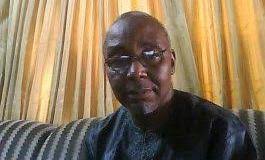
A group, Northern States Christian Elders Forum (NOSCEF) has described as insensitive and selfish, thoughts of fielding a Muslim-Muslim ticket for presidency in the 2023 general elections, warning that such moves will be massively resisted.
NOSCEF expressed this in a statement, signed by its chairman, Engineer Ejoga Oyinehi Inalegwu, made available to newsmen in Kaduna on Tuesday December 14, 2021.
Tinubu Commissions Kano Anti-Corruption Office
“The Northern States Christian Elders Forum (NOSCEF) read with concerns the reported meeting of a frontline politician with some Northern Elders, advocating a Muslim/Muslim ticket, if given the Presidential ticket and many days after, the report has not been refuted.
“We wonder which Northern Elders were in the said meeting.
Let us recall the Chief Abiola Alhaji Kingibe Muslim-Muslim ticket that won the election in a military imposed two-party system in 1993. Majority of Nigerians, including myself voted for that ticket because, a vote for that ticket was a vote for fairness, equity, justice and power rotation between North and South, South East and North East,” the statement said.
They submitted that at the previous election, Alhaji Shehu Shagari (North West)/Dr. Ekwueme (South East) ruled Nigeria and Abiola/Kingibe therefore, meant power shifting between North and South and in the North, power shifting from North West to North East and in the South, from South West to South East.
“Remember there were no other alternatives since it was a two party system.
“Therefore, the same injustice, inequity, marginalization that Nigerians fought against to vote a Muslim–Muslim ticket cannot now be promoted by voting same Muslim-Muslim or Christian- Christian ticket,” it said.
They explained that Nigerians in 1993, bent over backward to vote and affirm with one voice, that the ill of religious and regional differences were more tolerable than injustice, inequity and marginalization.
“Northerners across religious lines voted for Chief Abiola from the south, and expected that thereafter that it would only be fair, for power to shift back to North East or North Central.
“The voting pattern re-echoed Fayemi’s saying that “ unity cannot endure where injustice, marginalization and inequity thrives”. It was a vote against injustice and marginalization,” they recalled.
NOSCEF said that it is deeply concerned about this kite being flown again.
“When we remember the speculated rift between Senator Bukola Saraki and the clique that had pressed in 2015 for a Buhari/Tinubu Muslim-Muslim ticket, which Saraki and many like-minded patriots had considered insensitive in the Nigerian state.
“Linking it with the North West, would remind observing Nigerians, who have seen how a similar insensitivity has deepened the divide and mistrust in the North West state,” they pointed out.
The group said that they had identified with the President in his call for unity and therefore, condemn in strong terms, any move that will further aggravate the lines of divide for selfish political gains at the expense of a peaceful and united Nigeria.
“We appeal to all Nigerians across party, regional, ethnic and religious divides to rise up and mobilize the citizenship against any inconsiderate politician or political grouping, seeking to promote exclusion and marginalization of any section of our country.
“Those that do not wish Nigeria well have no business seeking its leadership,” they warned.
They added that such politicians will make every attempt to manipulate Nigerians as a people, through double talks and deceit but, “we trust that God who put us together for a great nation, will defeat them in all their antics/craftiness and bring to pass the expectations of true and patriotic Nigerians seeking a truly united and prosperous Nigeria.”
They therefore, tasked Nigerians to pray that anyone who plans to rise to power in Nigeria, by fueling the embers of discrimination, using the instrumentation of religious ethnic differences will fail, because God is greater and wiser than any manipulation of man.
“NOSCEF being mindful of the various crisis that has bedeviled our nation to date calls on all Nigerians to be vigilante and prepared to defeat the enemies to our peaceful co-existence without regard to party affiliation and persuasion.
“Remember that loyalty to the nation Nigeria, ranks far above loyalty to any party.
“The nation is in dire need of a selfless, considerate, sensitive, honest, transparent leader who will unite, bind, heal the wounds that have posed a great danger to our corporate existence as a nation, integrate and foster lasting bonds of unity of our dear country.
“We need politicians across party lines and all peace loving Nigerians across religious, regional and ethnic divides to reject politicians sowing seeds of further polarization and work for/align with inclusiveness, unity, equity, fairness, justice.
“This might even entail going against regional and party affiliations to drive home the point that power is giving in trust for the good of the people not for self centered ambition.
“Anyone that is seeking the highest political office of the land at the expense of the peace the nation and building of tolerance amongst the diversity of our country, cannot lay claim to being a patriot and would therefore have no business being encouraged or voted to such a position.
“NOSCEF enjoins Nigerians to continue to pray for our country,” it concluded.











News
President Tinubu Appoints Abel Olumuyiwa As Head Of Service
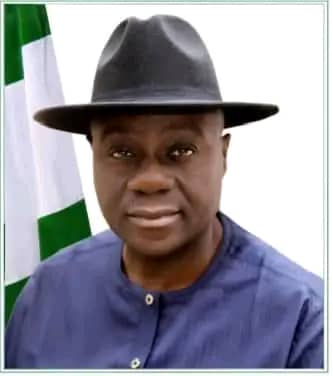
President Bola Ahmed Tinubu has appointed Mr Abel Olumuyiwa Enitan as the Head of the Civil Service of the Federation, effective August 27, 2026.
Mr Enitan succeeds Mrs Didi Esther Walson-Jack, who will retire soon from the Federal Civil Service upon attaining the statutory retirement age of 60.
Mr Enitan, from Osun State, is the most senior Permanent Secretary in the Federal Civil Service.
He has served as Permanent Secretary for seven years and seven months, working at the Ministry of Police Affairs, the Ministry of Humanitarian Affairs, and the Office of the Vice President. He is currently the Permanent Secretary in the Federal Ministry of Education.
He brings considerable institutional experience and a deep understanding of how the Federal Civil Service works to his new responsibility.
President Tinubu expresses his profound appreciation to Mrs Walson-Jack for her distinguished service to the nation and for the reforms, impact and innovations witnessed in the Civil Service during her tenure.
The President wishes her a fulfilling and successful life after service and conveys the nation’s gratitude for her years of dedicated and impactful public service.
President Tinubu charges the incoming Head of the Civil Service of the Federation to consolidate on the reforms and innovations already underway, deepen professionalism and efficiency across the service, and build a more effective and responsive Civil Service capable of delivering on the administration’s Renewed Hope Agenda.
The President further urges Mr Enitan to lead a Civil Service that is professional, merit-driven, accountable, innovative, and responsive to Nigerians’ needs and aspirations.
Enitan was born on December 12, 1966. He had his secondary education at Ajibode Grammar School, Ibadan and the College of Arts and Science, Ile-Ife. He later attended the University of Lagos and graduated in 1988 with a B.Sc. in Finance and Banking.
In 2015, Enitan obtained an M.Sc. in Public Policy Analysis from Nasarawa State University, Lafia.
News
Kano Trains Mass Education Officers to Strengthen Adult Learning, Tackle Out-of-School Challenge
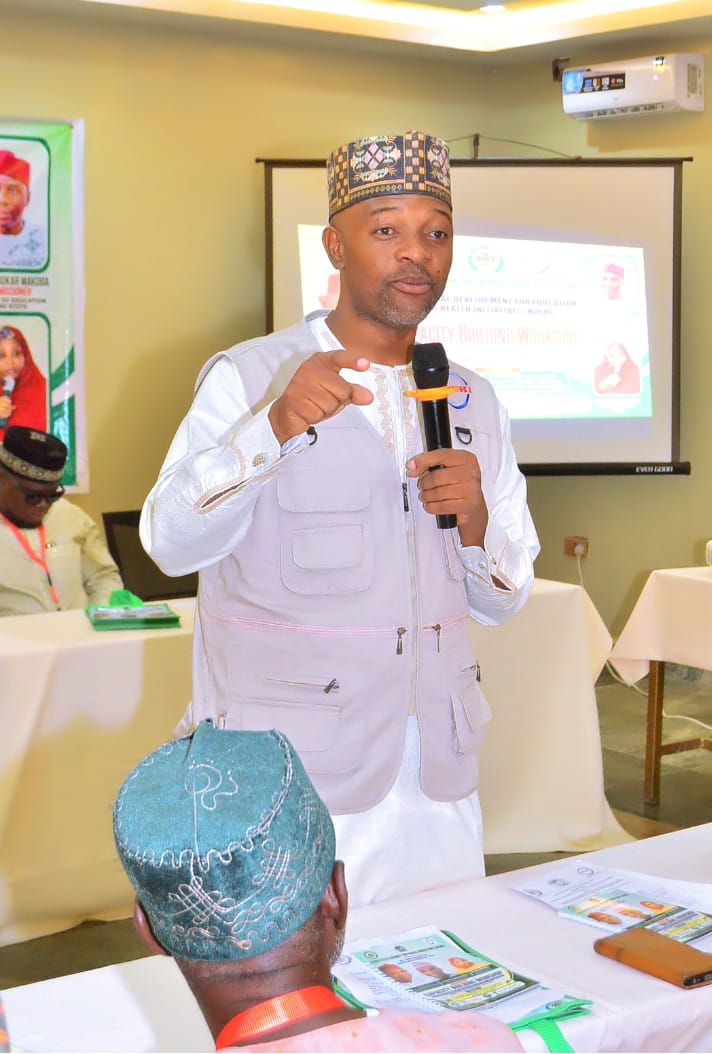
The Kano State Agency for Mass Education has trained Area Coordinating Officers from all 44 Local Government Areas of the state as part of efforts to strengthen adult and non-formal education and support the government’s ambition of reducing the number of out-of-school children to zero.
The 2 day capacity-building workshop, held in Zaria, Kaduna State, brought together Area Coordinating Officers, Zonal Directors, Directors and other key personnel of the agency.
The workshop, organised by SAME in collaboration with Non-Formal Development for Education and Health Initiatives (NDEHI), was held under the theme, “Strengthening Leadership, Community Engagement, and Quality Service Delivery in Adult Non-Formal Education in Kano State.”
Declaring the workshop open on behalf of the Commissioner for Education, Dr. Ali Haruna Makoda, the Permanent Secretary of the Ministry, Baffa Bashir Muhammad, said the initiative reflected the Kano State Government’s renewed commitment to advancing adult and non-formal education.
Muhammad praised Governor Abba Kabir Yusuf for prioritising education under the administration’s “Education First” agenda, noting that non-formal education remained an important tool for empowering citizens, reducing illiteracy and reaching people who were outside the formal school system.
He commended the Executive Secretary of SAME, Dr. Binta Abubakar, for initiating the workshop, describing it as a landmark step towards strengthening non-formal education delivery in the state.
The Permanent Secretary urged participants to maximise the expertise of the resource persons and ensure that the knowledge acquired translated into measurable improvements in adult literacy and learning programmes across Kano.
Speaking on the objectives of the workshop, the Executive Secretary of SAME, Dr. Binta Abubakar, said the training was designed to refresh the knowledge and strengthen the capacity of personnel responsible for implementing the agency’s programmes across the 44 LGAs.
She said the participants were exposed to modern approaches to leadership, monitoring and evaluation, record keeping, community engagement, learning-centre management and the establishment of new learning centres.
Dr. Abubakar emphasised the need for the agency to improve enrolment, monitoring and evaluation, record management and community participation, while expanding learning opportunities to underserved communities.
She said the ultimate goal was to contribute to the reduction of out-of-school learners and support the state government’s ambition of achieving zero out-of-school children in Kano State.
The lead facilitator, Dr. Auwalu Halilu, said the workshop was aimed at changing the perception and delivery of adult education by moving beyond the traditional focus on literacy and numeracy.
According to him, modern adult education encompasses literacy, numeracy, life skills, community engagement and practical approaches to addressing societal challenges through adult learning.
Majority of them feel adult education is just about literacy and numeracy. In a more globalized perspective now, it’s modern literacy and numeracy—you have to think about literacy, numeracy, and life skills, including engagement with the community and solving societal problems through adult learning,” Halilu said.
He said the workshop brought together university professors, doctors, field practitioners and other resource persons to expose participants to contemporary methods of delivering adult and non-formal education.
Halilu described the initiative as historically significant, noting that it was the first time staff of the agency, including Area Coordinating Officers from all 44 LGAs, had been sponsored to travel outside Kano State for a capacity-building programme of this nature.
He attributed the development to the support of Governor Abba Kabir Yusuf and said participants were expected to apply the knowledge acquired to improve the agency’s operations after returning to Kano.
The Chairman of the Kano State School-Based Management Committee (SBMC), Tijjani Haladu Baraya, commended the agency for organising the training outside the state, describing it as an important step towards improving operational efficiency.
Baraya praised Dr. Binta Abubakar for what he described as innovative approaches since assuming leadership of the agency, saying the initiative aligned with the state government’s priority on education.
He appealed to the Ministry of Education and the Kano State Government to sustain adequate budgetary support for the Agency for Mass Education to enable it to consolidate the gains of the training and improve service delivery.
Also speaking, the Kano Municipal Zonal Director, Rabi Hassan Gwarzo, said the workshop had equipped participants with practical knowledge that would help improve the management of learning centres across the state.
Gwarzo said the training provided clearer understanding of modern administrative practices, particularly the implementation and operation of Centre-Based and Community-Based Management Committees (CBMCs).
She said the knowledge gained would help address challenges affecting some local learning centres and pledged to work with community leaders, facilitators and other stakeholders to revive and strengthen centres in Kano Municipal.
She also stressed the need for continuous retraining of facilitators to address administrative lapses and sustain improvements across the centres.
Gwarzo commended Dr. Binta Abubakar, whom she described as “Super ES,” for initiating the programme and urged participants to implement the strategies acquired during the training.
The workshop featured sessions on the foundations of adult and non-formal education, the structure of non-formal education, adult learners, instructional materials, the role of facilitators and the responsibilities of practitioners.
Other areas covered included leadership, community engagement, monitoring and evaluation, record keeping, learning-centre management and strategies for improving service delivery.
The agency said the training was expected to strengthen leadership, improve accountability and equip its personnel with modern tools to deliver more effective adult and non-formal education programmes across Kano State.
News
SEMA Assesses Sites of Building Collapses, Condoles Families of Nine Victims
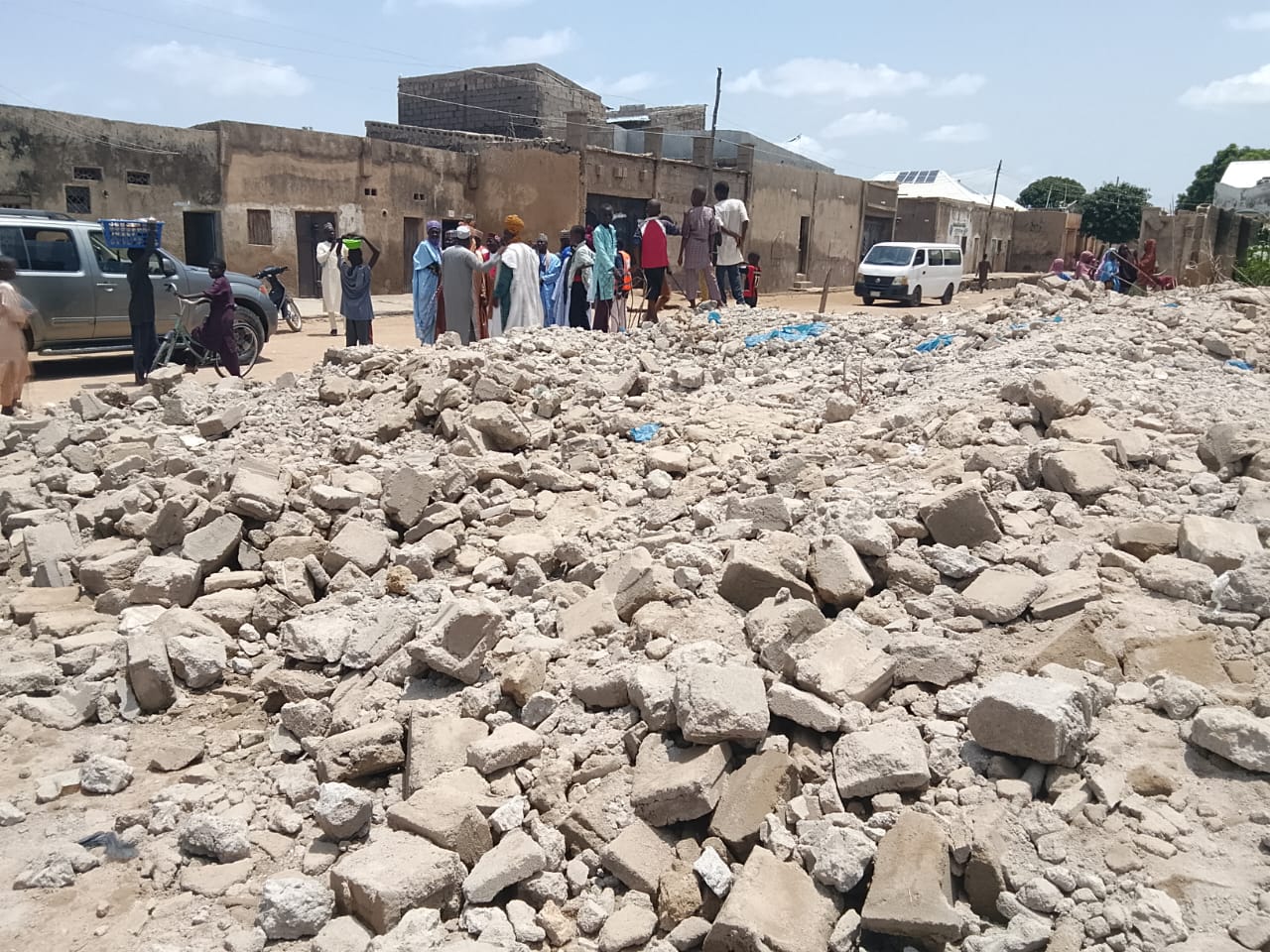
The Executive Secretary of the Kano State Emergency Management Agency (SEMA), Alhaji Isyaku Abdullahi Kubarachi, accompanied by directors of the Agency, has visited the scenes of recent building collapses within Kano metropolis and condoled with families who lost loved ones in the incidents.
During the visit, the SEMA team inspected the site of the collapsed Khadija Bala Memorisation School, located at No. 1030, Police Station Road, Fagge Local Government Area, where one female student lost her life while eight others were rescued following the collapse of the Islamic school.
The team also visited Dukawa, Gobirawa area of Dala Local Government Area, where the residence of Malam Mutari Abdulhamidu collapsed, resulting in the death of his four children.
Similarly, at Gaida, four people reportedly lost their lives following the collapse of a residential building.
The Executive Secretary, alongside a representative of the National Emergency Management Agency (NEMA), expressed deep sympathy and condolences to the bereaved families, praying for the repose of the souls of those who lost their lives and wishing the survivors a speedy recovery.
Alhaji Isyaku Abdullahi Kubarachi urged members of the public to strictly adhere to approved building regulations and safety standards, particularly during periods of heavy rainfall, when building structures may become more vulnerable to collapse.
In a statement, SEMA spokesperson Jamil Sagir Danbala said the Executive Secretary further called on property owners, developers and residents to avoid compromising building standards and to promptly report any signs of structural weakness to the relevant authorities.

President Tinubu Appoints Abel Olumuyiwa As Head Of Service

Kano Trains Mass Education Officers to Strengthen Adult Learning, Tackle Out-of-School Challenge

SEMA Assesses Sites of Building Collapses, Condoles Families of Nine Victims

From Grade Level 03 to Director: Binta Bala’s 35-Year Journey of Resilience, Service and Inclusion

UNICEF Hands Over Renovated Diso Ward Primary Healthcare Centre to Kano State

How Kano Digitized Land Turns N50m to N750m Monthly
Kano Governor Yusuf Shortlisted for Africa’s SANKOFA Award of Excellence in Infrastructural Development

From the struggle for Gombe State to life in the Senate: Senator Umar Usman Dukku reflects on politics, democracy, and his relationship with the late General Sani Abacha.

Borders, Visas and the Beautiful Game: How U.S. Immigration Policies Shaped Global Perceptions During the 2026 FIFA World Cup

Defamation Against DSP Barau, Institutional
President Tinubu Appoints Abel Olumuyiwa As Head Of Service
Kano Trains Mass Education Officers to Strengthen Adult Learning, Tackle Out-of-School Challenge
SEMA Assesses Sites of Building Collapses, Condoles Families of Nine Victims
From Grade Level 03 to Director: Binta Bala’s 35-Year Journey of Resilience, Service and Inclusion
UNICEF Hands Over Renovated Diso Ward Primary Healthcare Centre to Kano State
How Kano Digitized Land Turns N50m to N750m Monthly
Kano Governor Yusuf Shortlisted for Africa’s SANKOFA Award of Excellence in Infrastructural Development
From the struggle for Gombe State to life in the Senate: Senator Umar Usman Dukku reflects on politics, democracy, and his relationship with the late General Sani Abacha.
Borders, Visas and the Beautiful Game: How U.S. Immigration Policies Shaped Global Perceptions During the 2026 FIFA World Cup
Defamation Against DSP Barau, Institutional
-

 Opinion5 years ago
On The Kano Flyovers And Public Perception
-

 Features5 years ago
How I Became A Multimillionaire In Nigeria – Hadiza Gabon
-

 Opinion6 years ago
Kano As future Headquarters Of Poverty In Nigeria
-

 History5 years ago
Sheikh Adam Abdullahi Al-Ilory (1917-1992):Nigeria’s Islamic Scholar Who Wrote Over 100 Books And Journals
-

 Opinion5 years ago
My First Encounter with Nasiru Gawuna, the Humble Deputy Governor
-

 History5 years ago
The History Of Borno State Governor Professor Babagana Umara Zulum
-

 History5 years ago
The Origin Of “Mammy Market” In Army Barracks (Mammy Ochefu)
-

 News4 years ago
Federal University Of Technology Babura To Commence Academic Activities September