
Opinion
My Parting Point With Buhari
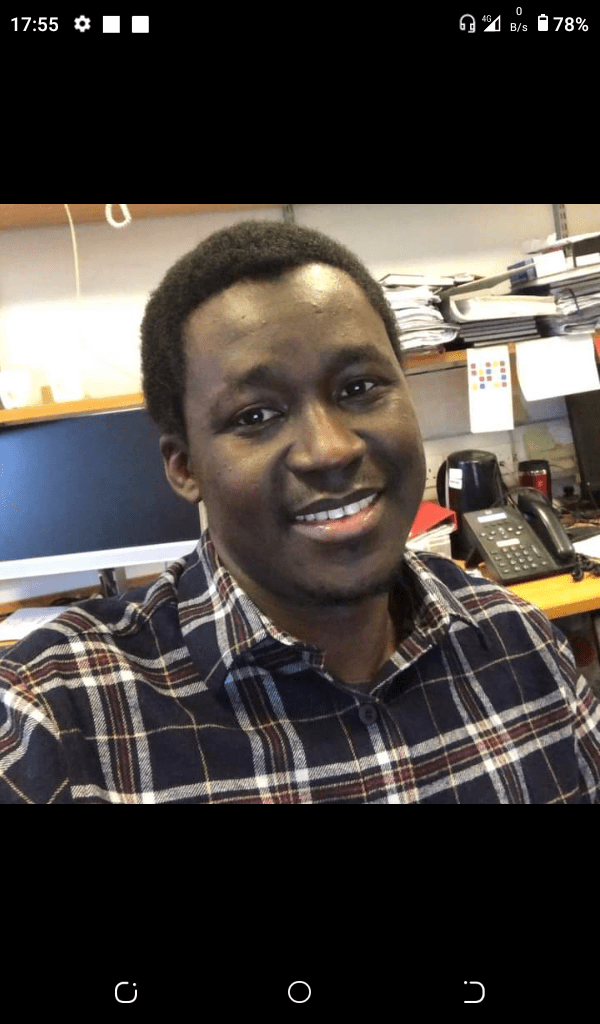
To all those who insulted me because of what I wrote on Buhari on 17th September 2016, apology accepted! Allah ya yafe mana baki daya 😁.
……….
Marzuq Ungogo
Before it’s too late I believe we should all add our voices to happenings in Nigeria. Perhaps the presidency will feel the 2019 continuity agenda is threatened and wake up from this slumber. It’s apparent these days that either the president is shielded away from knowing what is happening to the country and its people or he knows it and decided not to do anything about it. And before I proceed, let me make it clear to the “oversabis” who will start ascribing meaning and judgement that Nigeria is greater than all of us and to many of us altruistic motives exist. Let’s go into some of the things making many of us hopeless these days;
1. Too much ado about the past; a week can’t pass these days without a top government official telling us why Nigeria is where it is. For Allah’s sake we all know how it is, otherwise we wouldn’t have changed it. Why worry us with “16 years” nonsense excuse all the time??? Is the government suffering from obsessive compulsive disorder of dwelling on the past?? What are you doing to provide the change you promised? When will we move and look forward? Are we still campaigning for the 2015 election??
Plot to remove Jigawa Speaker thickens, as serving Senator from the state is fingered in the process
2. Confusion and incoherence; this government has more than 10 times so far contradicted itself. What ministers tell us is different from what Femi Adesina will say. Garba Shehu too can contradict Adesina. And above all Buhari himself will say completely different thing. From China trip to updates on Twitter, Nigerians have been subjected to either misinformation or confusing information on almost everything. Nothing is clear.
This at best shows confusion or incoherence on part of the government at best or at worst insincerity. But what is most annoying is the several reckless statements devoid of logic or reasoning made by several ministers. I have since decided not to take Audu Ogbe and many others in this administration seriously anymore. They ain’t just worthy of my time. I am avoiding hypertension.
3. The economic team; Buhari formed economic team late and he himself has several times mentioned that the country doesn’t need it. That means the president is ignorant of the current economic practice globally and largely oblivious of the dire situation in the country. But then he went ahead anyway to form the team. Why then form a team the country doesn’t need??? But then the economic team itself is made up of the Vice President and so many other people we know ain’t economists or people we are confident can meaningfully chart a way forward for us. This shows unseriousness to the core.
4. Economic plan; so far there is no written or documented long and short term economic plan for the country that is widely known. I want to believe the ambiguous article published by minister of finance in pages of newspapers can’t pass as an economic plan. The policies themselves made on banning imports ain’t real policies per say because there is no roadmap for food sufficiency of time limit. We just woke up and saw laws edicted by presidency and supported by other arms of government. I think policy will include a roadmap and strategic plan. Of course the story of rice from Kebbi and that of Dangote mill is encouraging. But are they policies or part of the roadmap or merely dividends of a programme??? Ain’t Dangote an opportunistic capitalist sensible enough to invest and on the long run we will know he’s doing it for profit not charity.???
We all learnt that recession is often unavoidable and no one can prevent what has already occurred. But sincerely we feel it’s either not managed the right way or we are simply not told. Either way, it’s wrong. The government in democracy doesn’t only need to do the right thing but it’s also its duty to make it known to stakeholders who gave it the mandate and trust -the citizens. But even if we were not told, if there is something “tangible” we would have touched or felt it.
5. Injustice; many of us didn’t vote or worked for Buhari’s success for him to turn Nigeria into Canada within weeks. We all believe he’s “Mai Gaskiya”, and at least justice will prevail
We all know the shortcomings of Nigerian legal system. But certain injustices are not necessarily doing of the judiciary. Nepotism is still pronounced and those of us who know or learnt about happenings in the villa are aware of the untouchable family and friends circle created by the president.
The situation is the same in Almost all parastatals and ministries. While the children of the poor were encouraged to farm and forced to register with N-power and its 20,000 salary the often less brilliant children of the elites are secretly recruited into CBN, FIRS and so on. The presidency without sensitivity to the trust people have it even had the audacity to refute the claim which everybody knows is truth. No apology so far, only rainin hankali
I am not saying government should employ everybody, but when all vacancies are advertised and clear transparent process ensued in all employments, people will have more confidence in the government and the democratic process. Quite alright many children of the poor who studied in Sokoto may not outshine graduates of Surrey in recruitment exams, but the fact that a merit based system is in place will instill hope and people will work harder.
6. Slow pace; in a fast developing world, any player who wants to catch up has to do it at an accelerated pace. We claim to be catching up to compete globally and fail to produce results. All projections made are in years the government is long forgotten so that if they don’t come to pass no one will be blamed. I am not advocating rush work, but certain things we all know are better at a fast pace. Why will it always has to take us long to accomplish what more developed and less developed countries do at a shorter time???
7. Wrong Approach; sustainable development is wholistic. Although certain things like power drive development in all sectors, growing individual sectors in a wholistic manner is what will translate in to better Nigeria. But even energy and power that would have stimulated economic growth are yet to get the president’s deserved attention beyond the mystical “body language”. Sectors like health, environment, technology and aviation are all left to collapse completely with attendant consequences. What he hear daily from education ministry so far is a ban on post-UTME. The president promised free tertiary science education, it’s 3 months to the end of the year 2016 and nothing is seen.
These are just some and there are so many others. I believe we can’t #StandWithBuhari anymore, we can only stand for Nigeria and ensure right thing is done. I also know if Buhari leads by example, takes full responsibility, ensure justice and show more seriousness, people will change. That’s just where the change should begin.









Opinion
How Gov Abba Beats Many African Cities In Health Sector
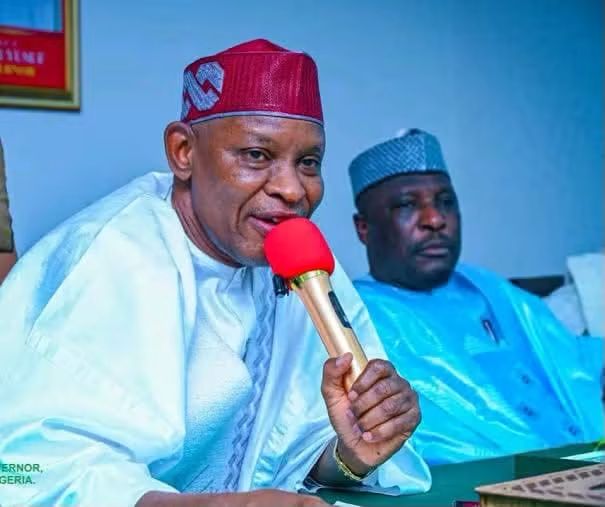
By Abba Anwar
In an era when most West African cities still struggle to meet the 15 percent health funding threshold set by the Abuja Declaration of 2001, Kano State under Governor Abba Kabir Yusuf has not only met the target but surpassed it, rewriting the narrative of public health financing in Nigeria and the sub-region. Showing political will and genuine commitment in their purest form.
While official budget briefs show Ghana at 6.32 percent, Côte d’Ivoire at 5.1 percent, Senegal at less than 4 percent, and even Lagos State, Nigeria’s economic capital, scrawled at 8 percent, Kano in 2024 and 2025 allocated over 15 percent of its annual budget to health, the highest executive commitment in the history of the state.
That deliberate fiscal decision, under the leadership of a committed Governor is now translating into visible, measurable life-saving results on the ground. From tripling drug availability in public hospitals from 30 percent to over 90 percent in three years and clearing N1.2 billion in inherited pharmaceutical debts, to the simultaneous renovation of over 20 General Hospitals, upgrading of more than 200 Primary Health Centres (PHCs) across 44 local governments, and the enrolment of 300,000 vulnerable citizens into free AbbaCare insurance.
This is a clear case of demonstration that political will backed by proper funding can be achieved in three years what many cities have failed to achieve in two decades. This is wowing development
For clarity in the understanding of this discussion, my reader should know that the Abuja Declaration in Health is a historic commitment made by all African Heads of State and governments.
It was birthed on April 27, 2001, in Abuja, Nigeria, at an African Union Summit on HIV/AIDS, Tuberculosis and Other Related Infectious Diseases. Under this Declaration it was agreed that very African government should allocate at least 15% of its annual government budget to the health sector. A messiah-looking effort to save the health sector.
As a build-up to the Declaration it was observed that Africa had the highest disease burden in the world — HIV/AIDS was killing millions, plus malaria, TB, and high maternal deaths — but most governments were spending only 3-5% on health. The leaders agreed that without money, health systems would collapse. Years after the Declaration, many governments relent. Hence the coming on board of Governor Yusuf of Kano state, whose singular determination, commitment, political will and the effort, place him above many African cities in this all-important sector.
The recommended 15% covers for almost everything health. It looks at hospitals and PHCs, drugs and medical supplies, health worker salaries, immunization and maternal health and health insurance.
To the chagrin of many Kano under Governor Yusuf is praised as it crossed the 15% line in 2024 and 2025, while most countries and cities in West Africa are still at 4% to 10%.
Kano in 2023-2026 boasts of drug availability 30% to over 90% in 3 years and N1.2bn debt cleared. While over 200 PHCs were upgraded and over 20 hospitals were renovated. And 926 workers reinstated on CONHESS, over 250 doctors and over 155 nurses.
But under this benchmark many cities in Africa failed Abuja. Let’s look at the following cities across our continent :
In ACCRA, Ghana in 2025 the health percentage was 6.32% of total national budget. Which is far below the 15% Abuja target. In 2026 it is 9.6% of total budget, still short of 15%. Under UNICEF Ghana Health Budget Brief it also shows total health at 10.6% including NHIA, MoH alone only 6-8%.
In ABIDJAN, Côte d’Ivoire it failed the Abuja status badly. It did not comply with the Abuja Declaration in 2023 to 2026. It is still far below 15%. In 2023 it was bout 5% of government budget. WHO AFRO and government dialogue documents state that, “At around 5% of the national budget, health financing is insufficient”.
In 2024-2025, that is the current plan, the National Development Plan 2021-2025 itself says health is 5.1% of the state budget. UNICEF CPD repeats same 5.1%. Just one-third of Abuja target.
In comparison with Kano,
Côte d’Ivoire with 32 million people, richest in West African Economic and Monetary Union (WAEMU), has 5.1%. While Kano under Gov Yusuf a state with over 20 million people has over 15% in 2024 and 2025. Can my reader see the gap?
That is why WHO still lists Côte d’Ivoire as having some of the lowest health indicators in the region and out-of-pocket spending at 50.81%, while Kano moved to free AbbaCare insurance.
For DAKAR, Senegal, under health financing it also failed Abuja Declaration woefully. From the standpoint of UNICEF assessment it shows Dakar has low public spending on health less than 4 per cent of national budget. In 2024 health budget CFA271.62bn but execution only 62%. In 2026 budget cut by 18.7% due to fiscal pressure.
In LAGOS, Nigeria, the state also failed Abuja status badly. The Commissioner for Health Prof. Akin Abayomi clarifies that the state currently allocates about 8% of its budget to healthcare, far below the 15 percent benchmark. The position repeated in 2026. As Lagos currently spends about 8%, far below 15%.
When you look at other West African cities like Bamako, Ouagadougou, Niamey, and Freetown, they are in the same WHO Global Health Expenditure Database (GHED) bucket as Senegal and Ivory Coast. WHO database shows all UEMOA countries average 5-8% government health expenditure, none hit 15%. That is why UNICEF and WHO keep calling for increased domestic financing.
Every city I listed is documented in official papers as below 15%. Ghana officially 6.32%, Ivory Coast 5.1%, Senegal less than 4%, Lagos 8%. But Kano under Gov Yusuf is the only administration in this comparison that is on record as having CROSSED the 15% Abuja line and used it to deliver drugs, hospitals and free insurance at the same time.
Let’s see for ourselves. Kano State Health Sector Reforms: A Three-Year Appraisal (2023-2026) shows that between 2023 and 2026, the state undertook a system-wide health reform that moved the sector from near-collapse to measurable recovery. The reform rests on three pillars. These are financing above the Abuja threshold, supply chain restoration, and workforce stabilisation.
Under health financing and governance it is acknowledged that for the first time in its history, Kano State surpassed the 15% budgetary allocation recommended by the 2001 Abuja Declaration. Both 2024 and 2025 health budgets exceeded 15%, placing Kano among the few states in Nigeria to achieve the benchmark. Kudos the people’s Governor. Leadership by example.
The 2026 framework consolidates this with N214.8 billion for health repositioning, including N500 million for a Cancer Centre at Giginyu General Hospital, N1.5 billion for statewide free hernia surgery, N473.5 million for Intensive Care Units (ICUs) at Murtala Muhammad Specialist Hospital and Muhammad Abdullahi Wase Teaching Hospital, and N79.49 billion multi-sectoral plan for Wudil General Hospital and 484 Primary Healthcare Centres.
Under medicines and supply chain where the security of the process and practice were expanded and ensured, it was reported that the baseline in 2023 was critical. According to Kano State Drugs and Medical Consumables Supply Agency (DMCSA) Director-General, Pharmacist Gali Sule, drug availability in public health facilities was only 30%. Essential medicines were unavailable in most general hospitals and PHCs, forcing patients to private pharmacies. By July 2026, availability rose to over 90%. Wow! What a befitting effort and show of political will.
This turnaround was achieved through three deliberate interventions. So it wasn’t accidental. It was well designed, process and procedures followed, officials toiled and result became fruitful, in its purest form.
Firstly there was a complete liquidation of N1.2 Billion inherited debt to Pharmaceutical Suppliers by January 2026. When the administration assumed office in 2023, the DMCSA was owing suppliers about N1.2 billion. This debt had destroyed supplier confidence, leading to a boycott of government tenders. No supplier was willing to deliver on credit. The government prioritised debt clearance as a first step, paying all verified liabilities by January 2026. This single action restored the state’s credit rating in the pharmaceutical market, reopened supply lines, and led to the Association of Nigerian Industrial Pharmacists (NAIP) conferring an Award of Excellence on Governor Yusuf. Lallai lallai Abba ka cika Gwarzo! The experience of the agency under the past administration(s) was terrible and disgusting!
Secondly the strategy of Direct Procurement and Centralised Distribution Model helps much and saves all. Instead of allowing each hospital to procure drugs at inflated prices from middlemen, the administration strengthened DMCSA as a central bulk purchaser. DMCSA now procures directly from manufacturers and accredited importers at negotiated national prices, ensures quality testing, and distributes to all 44 LGAs through a scheduled last-mile delivery system. This eliminated fake drugs, reduced cost by up to 40%, and ensured that a drug available in Kano Municipal is also available in remote facilities like Rogo and Takai.
Thirdly is the Restoration of Supplier Confidence and Supply Chain Accountability.
Beyond paying debts, the government instituted a 30-day payment guarantee and an e-inventory tracking system. Every facility now reports drug stock electronically, allowing DMCSA to see real-time consumption and restock before stock-out. Suppliers are now paid within 30 days of delivery, a policy that has attracted more competitive bidders and ensured sustained availability of over 90% for 12 consecutive months. A practice where only patriotic leaders with human face can leverage on. Not a practice filled with corruption and intentionally induced setbacks.
The over 15% heath allocation under Governor Yusuf touches almost all areas under the health sector. Almost all areas. Yes scale of preference also applies. For example under infrastructure in secondary and primary sub-sectors over 20 General Hospitals including Wudil, Bichi, Gaya, Tiga and Hasiya Bayero Paediatric Hospital have been rehabilitated. Over 200 PHCs across 44 LGAs were upgraded, solarized and re-equipped with modern diagnostic tools to ensure 24-hour service.
Healthcare delivery system doesn’t work at infrastructural level alone. Human resource for health is another critical area of concern.
Governor Yusuf’s reform includes reinstatement of 926 health workers on full CONHESS allowance, employment of 250 doctors and 155 nurses/community health workers, deployment of 65 residency doctors to secondary facilities, and accreditation of postgraduate programmes. Prompt salary payment and continuous training were introduced to curb brain drain. Abba ka iya Gwamna.
Under Maternal, Newborn And Child Health (MNCH) the outcomes expanded, as a result of good and effective health management and control system. Which is devoid of corruption, political rivalry and unease struggles.
This is the sector with the most visible human impact. According to Commissioner for Health Dr Abubakar Labaran Yusuf, maternal mortality dropped from over 1,300 cases in 2023 to about 300 in 2026. This was driven by some well designed programmes. See the following:
(1) AbbaCare Initiative – Free Health Insurance for the Vulnerable. This is a state-funded health insurance programme that covers over 300,000 vulnerable residents who cannot afford healthcare. You remember ObamaCare? Under AbbaCare project beneficiaries include pregnant women, children under-five, the elderly above 65, persons with disabilities, and the poorest of the poor identified through the social register. Under the initiative, enrollees receive free consultation, free drugs, free laboratory tests, and free admission. It removes out-of-pocket payment, which is the major cause of delayed care and maternal death in Kano.
(2) Abba Care Centre – Free Treatment for Sickle Cell Patients: This is established as a specialised Centre within the health system, Abba Care Centre provides free comprehensive care for sickle cell patients statewide. This includes free routine drugs like hydroxyurea, free blood transfusion, free pain crisis management, and free counselling for families.
Before 2023, sickle cell patients spent an average of N35,000 per crisis episode. The centre has now absorbed that cost, serving as a first-of-its-kind intervention in Northern Nigeria and reducing sickle cell-related child mortality.
(3) Nutrition Response and MNCH Week Interventions: The administration of His Excellency Engineer Abba Kabir Yusuf, an exceptional leader of kind-hearted approach, tackled the root cause of child mortality, which is malnutrition. It provided N500 million counterpart funding to UNICEF for Ready-to-Use Therapeutic Foods (RUTF) and N170 million for malnutrition treatment centres during Maternal, Newborn and Child Health Week. During MNCHW, every child under five is screened for malnutrition, vitamin A deficiency and given deworming tablets. Mothers receive free antenatal supplements, iron folate, and nutrition education. This has reduced severe acute malnutrition admission in Kano by over 60% in two years. Wow! A Governor like no other.
(4) Sustained Free Maternity and Paediatric Services – Lafiya Dole Initiative: An all-encompassing corridor designed to put a halt to the suffocation of women and children healthcare effort.
Under Lafiya Dole, the corridor, all pregnant women receive free antenatal care, free delivery including caesarean section, and free postnatal care. Children under-five receive free treatment for malaria, pneumonia and diarrhoea, the three major child killers. This has increased hospital deliveries from 28% in 2023 to over 61% in 2026, directly contributing to the drop in maternal deaths.
In conclusion let me make this point very clear. The Kano health reform of 2023-2026 is not based on rhetoric but on three verifiable indicators, drug availability moved from 30% to 90%, maternal deaths dropped from 1,300 to 300, and over 1,300 health workers were reinstated or newly employed.
While I commend the Governor for all the feats achieved in the health sector, I should also acknowledge the team he chooses to work with in the sector. Starting with the Commissioner for Health, Heads of Agencies under the Ministry of Health, civil servants working in the sector, from Doctors, Pharmacists, all other health workers that are numerous to mention here, down to laborers, cleaners and of course messengers.
Anwar writes from Kano
Wednesday, 16th September, 2026
Opinion
From Desks to Degrees: How Governor Yusuf Is Bankrolling A Generation’s Future
By Abba Anwar
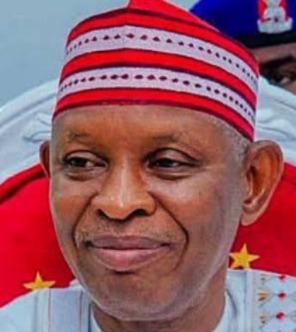
Who really wants to know who is His Excellency Engineer Abba Kabir Yusuf, Executive Governor of Kano State, in the education sector? Read through the following few paragraphs.
In 2024, education got 29.95% of Kano’s ₦437 billion budget. In 2025, it rose to ₦280.6 billion, 31% of the budget. A provision exceeding the globally suggested percentage for education. Meaning above UNESCO’s 26% recommendation. For 2026, Governor Yusuf presented a ₦1.368 trillion budget to the State Assembly, with ₦405.3 billion earmarked for education, which is 30% of the total.
That allocation earned His Excellency, by extension the state, an “Award of Excellence” at the Nigeria Governors’ Forum Education Summit and was hailed as a new National Benchmark. Kano sets pace for national development in one of the most important sectors of human endeavor.
“These allocations demonstrate our unwavering determination to invest heavily in human capital development,” Governor Yusuf said while presenting the 2026 budget. This clearly demonstrates his uninterrupted commitment and political will to change the direction of our education system from good to best.
With 68% of the 2026 budget going to capital projects, the message is clear: build systems, not just pay salaries. Which unarguably maintains his human-face policies since his assumption as an elected governor in 2023. Same zeal, same approach and same endurance keeps the wheel moving at high speed.
Another success narration is when the Governor assigned the Education Ministry to another committed gentleman of great substance and value, in the person of Dr Ali Haruna Makoda. Who, when the then Commissioner for Higher Education resigned, the Governor collapsed the Higher Education Ministry with the main Ministry of Education and directed Dr Makoda to handle them both. An executive recommendation from an Executive personality.
Another perspective to it, keeps manifesting for all to know how engaging is the people’s Governor. It is one’s clarity in observation that lights the road for healthier development. From the Minbars (pulpit) of Kano’s historic mosques to the timelines of Facebook, X and WhatsApp, one message is uniting all the 44 Local Government Areas, invest in the child. And extends same treatment to other aspect of the sector.
In just under three years, Governor Yusuf has turned that message into policy, budgets, and bricks. By declaring a “State of Emergency” on education and committing an unprecedented 30% of state resources to the sector, Kano is not just spending more. It is redefining what government can deliver to ordinary families. This means the direction of the ship is straight, the captain navigating all on board is visionary and the system is not collapsing but strengthening.
The result of Kano’s commitment is what led education experts to coin the development as “The Kano Model” which is bold, people-first experiment in how a sub-national government can interrogate out-of-school rates, teacher shortages, and poor learning outcomes all at once.
You may not appreciate Kano’s Model in the most appropriate way until and unless you view other states across the country. I searched two states from each of the six geo-political zones, compared them with Kano, I then arrived at what excellence means, what commitment entails and what Kano Governor symbolizes. An embodiment of good work and commitment.
Let me begin with the North West zone. Kano state had no available data for 2023. While in 2024, when the current administration started the year from the beginning, the percentage allocated to education was 29.95%. In 2025 education got 31%, meaning ₦280.6bn. And in 2026 the percentage is 30%, meaning ₦405.3bn. While Jigawa state had no available data in 2023-2025. But in 2026 the percentage is 26%, meaning ₦234.48bn of ₦901.84bn.
Under North East we are looking at Bauchi and Gombe states. For Bauchi in 2023 there was no available data. With the total budget ₦202.64bn, still allocation for education was not available. In 2024 the percentage for education was 16.1% meaning the sum of ₦48bn was allocated to the sector of the total budget of ₦300.2bn. In 2025 the allocation for education was 13%. And in 2026 it was 15%.
While in Gombe there was no available data for 2023-2025. But in 2026 they allocated 8.01%.
North Central we have Benue and Nassarawa states. Benue in 2023-2024 it lacked available data on the education allocation for the two fiscal years. But in 2025 the percentage is 14.1% and in 2026 they have 21.4%, equal to ₦148.73bn. For Nasarawa there was no available data for 2023-2025. But in 2026 the percentage for education is 17.3%.
At the level of South East states I selected Enugu and Anambra states. For Enugu in 2023-2024 fiscal years there was no available data. While in 2024 the percentage was 33%. In 2025 they have 32.99% and in 2026 they have 32.3%, meaning ₦522bn of ₦1.62tn. For Anambra in 2023 the percentage was 21.6%, meaning ₦30.88bn spent out of ₦142.9bn. In 2024 the percentage was 3.04%, of ₦15.85bn spent from ₦521.5bn. There was no available data in 2025. As in 2026 it was recorded that the percentage is 46.9%, meaning ₦355bn of ₦757bn.
Under South West I chose Lagos and Oyo states. Lagos in 2023 has 6.02% for education. Meaning ₦135.15bn out of ₦2.246tn.
In 2024 the percentage is 5.62%, meaning ₦127.49bn out of ₦2.267tn. In 2025 the percentage for education is 6.1%. And in 2026 it is 5.3%, meaning ₦234.6bn of ₦4.4tn. While in Oyo there is no available data for 2023-2025. But in 2026 the percentage allocated for education was 16.4%, meaning ₦145.97bn. The range for all South West states for 2026 is between 5.3% – 16.4%.
For South South zone I looked at Delta and Bayelsa states. Where
Delta in the period between 2023-2025, the data for such percentage is not available. In 2026 the percentage is 6.11%, meaning ₦105.08bn of ₦1.72tn. While Bayelsa also has no available data for 2023-2025. But in 2026 the education percentage for education is 7.43%, meaning ₦75.1bn of ₦1.01tn.
Looking at the above presented data we can deduce that, only 4 states crossed 26%, UNESCO recommended percentage. Kano, Enugu, Jigawa and Anambra 2026. Still Kano takes the lead. Kano still has 29.95% in 2024 and 31% in 2025.
In what I call Data Gap my reader can understand that most states didn’t publish education percentage in 2023-2024 Appropriation Laws. Especially in 2023 because they just assumed the leadership position in their respective states, that is the month of May of that year. Immediately after they were elected and emerged winners.
Kano in its budget breakdown gave the nitty-gritty areas of where those overwhelming percentage under education goes. Accountability in its purest and clearest form. I stand to be corrected. That is where I critically mean a Benchmark, that the state sets for other states of the federation.
You will come to understand that the numbers, percentages and the distribution of allocated share for education sector tell the story of political will of the people’s Governor, His Excellency Governor Yusuf.
He takes fees off parents. Under this I can say for parents in Dala, Tarauni and Rano, the impact is immediate and tangible. While the Governor feels better, because he is fulfilling campaign promises. He is managing the affairs with care, caution and prudent management.
While the Governor perfects proper management, his constituency, Kano State keeps faith in him continuously. An emerging trend of no cost barriers fills the space. Free education from primary to secondary remains. In 2025, government paid NECO, NABTEB and NBAIS fees for Kano indigenes, with over ₦4.45 billion earmarked. In 2024, ₦2.9 billion covered 109,000 students.
Population having more ccess to university increases. 10,000 SS3 students received free JAMB forms plus CBT training and transport. While another 5,000 benefited earlier.
I believe that there is new emerging perspective to classes. Which I also term as Dignity in the Classroom. This is where over ₦3.5 billion was spent to fabricate 80,000 desks for 240,000 pupils who previously sat on bare floors. In April 2026, another ₦2 billion was approved for furniture across 30 LGAs. Government also approved ₦1.5 billion for free uniforms for over 800,000 Primary 1 pupils.
At the infrastructural level again 1,358 secondary and technical schools plus 5,200 primary schools have been rehabilitated. While ₦2.7 billion was released for 176 new classrooms and 88 offices across all 44 LGAs. 250 boreholes and 820 toilets were installed. 73 buses were refurbished to convey girls to school daily. A state like no other.
Another slogan after Kano First, to me, should be Teachers First. Another very important slogan Governor Yusuf finds comfort in. S comfort zone. Hence his sudden endorsement. Which resulted into the recruitment of over 13,000. In 2025 alone, 400 Mathematics teachers and 1,600 watchmen were hired. 2,000 BESDA volunteers were converted to permanent staff. Wow! Wow!! Wow!!! For the first time in years, 39,000 personnel had their 2017-2022 promotions cleared, and salaries now arrive by the 25th of every month. Your Excellency Sir WAI DAN ALLAH AKWAI IRIN KA KUWA. I asked rhetorically.
The boarding school feeding budget was doubled to ₦4 billion, and in April 2026, the government settled debts owed to food suppliers. Feeding in Islam has a special place in our faith. Kano government under him does not stop at feeding alone. It goes with good feeding system.
I hope my reader can still remember when Kano was ranked 1st in Nigeria in the 2025 NECO results. That did not happen just like that. It wasn’t by accident. It was planned, followed process and procedures, perfectly executed, closely monitored and compassionately gave out result. What result? Emerging the First amongst all the remaining 35 states of the federation including Abuja, the Federal Capital Territory.
At the level of tertiary education, I can say it is a clear case of affordability meets aspiration. At the university level, the administration attacked cost.
Where all students in state-owned institutions enjoy a fifty percent (50%) reduction in tuition fees. Foreign and domestic scholarships have been re-introduced, and the state settled fees of Kano indigenes studying nationwide. This is a case of energy meets energy. We now have an energetic state bouncing back to its past glory.
Infrastructures are catching up. The Aliko Dangote Foundation is investing ₦15 billion to upgrade Aliko Dangote University, Wudil to international standard. In 2025, Gaya Polytechnic was established. Where ₦270.9 million went to an E-Library at the College of Education and Preliminary Studies. While ₦400 million furnished Northwest University.
The debate about skills not certificates or certificates not skills or a mixture of two standpoints is faced with wisdom, experience and encouraging political will. When twenty-one Skills Acquisition Institutes were also re-opened. For our population of mostly young men and women.
Under beyond the classroom strategy the vision goes wider. A statewide survey is ongoing to identify out-of-school children and integrate Qur’anic schools into formal learning centres. Whereas ₦2.81 billion is budgeted in 2026 for Almajiri school renovation, feeding and teacher training. Cash conditional transfers continue to support girl-child education. An excellent initiative of financial inclusion for girls.
There must be reason why the world is watching Kano. Governor Yusuf’s formula is simple but radical. Every school a good school; every child enrolled; every learner engaged; every teacher empowered. A well spirited engagement of political will, quality assurance and human approach of higher standard.
It is both systemic and systematic to understand that by putting more than 3 in every 10 Naira into education, clearing teacher backlogs, removing exam fees, and measuring success by NECO rankings, Kano has moved from promises to proof, from dream to reality, from analog to digital and from weak position to stronger engagement.
Governor Yusuf once said “This is a covenant to consolidate gains, complete key projects, and build systems that will serve generations.”
As other states grapple with dwindling revenues and rising dropout rates, Kano’s bet is that the fastest route to prosperity is not oil, gas, or contracts. It is the mind of a 10-year-old in a public primary school in Gwale and elsewhere in the state.
In Kano today, hope replaces hopelessness, kind substitutes wickedness, job dismantles joblessness and progress derails powerlessness.
Adieu Abba, Adieu Baban Al’Ameen, Adieu Kanawan Dabo!
Anwar writes from Kano
Saturday, 12th September, 2026
Opinion
Clerics Call, Citizens Cheer: Kano Rallies Behind Muhuyi’s Anti-Drug Task Force
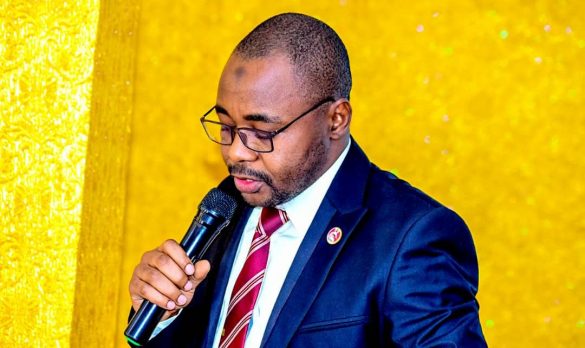
By Abba Anwar
Politics apart, if there is anything non-political that can open corridor of victory for the Governor of Kano State, Eng Abba Kabir Yusuf to secure second term in office, that thing, could automatically be his fight against drug abuse and other related crimes strategy. Not only the fight, the political will and the commitment are but best options for better result.
The leadership of the State Multi-Agency Task Force on Drug Abuse and other Related Crimes, under Barrister Muhiyi Magaji Rimingado and his able team, gives much hope and periscopes brighter future for Kano. Once a leading state in drug peddling and substance abuse. But in recent Kano political history, Governor Yusuf excels in the area of suffocating drug abuse and other related crimes, with the bringing on board of the Task Force.
No wonder from the Minbars (pulpits) of Kano’s Mosques to the timelines of Facebook, X and WhatsApp, a single refrain is ringing out across the state: Stand with the Task Force! The war against drug abuse and illicit trafficking has taken a decisive turn, as the State Task Force pushes deeper into the Local Government Areas with arrests, raids, sensitization and community engagement.
The result is unprecedented. When Islamic clerics are urging congregations to pray for and protect the officers, civil society groups are applauding the boldness, fearless operations and thousands of citizens online are flooding comment sections with commendations and prayers. In a moment that feels like renewed hope. Result? Kano is uniting from Pulpits to pixels, behind the fight to reclaim its streets and secure the future of its youth.
The Chairman of the Council of Ulama of Nigeria, Kano State Branch, Shaykh Ibrahim Khalil, though a gubernatorial candidate of the opposition party, calls on the people of Kano state and beyond to support the work of the Task Force and secure the future of our younger ones. This he does without any recourse to political party differences. A Shaykh like no other.
In a widely circulated video clip, Shaykh Khalil made a courageous call as he said, “I am calling on my brothers the people of Kano state and beyond to stand up, cooperate and support the Task Force led by Barrister Muhiyi Magaji Rimingado in the fight against drug abuse and other related crimes. Because the thing is really harming us as a people. It is also retrogressive to our youth.
I also call on the government to please create a platform where people will be selected to engage these young people, our future, the youth, and counsel them. So that government will come to know their problems and frustrations. With the view to proffering lasting solution.”
Reiterating his commitment and support for the Task Force’s tasking responsibility, Shaykh Khalil emphasized that, “We are absolutely hopeful that, this Committee will help much in this area of drug abuse and other related crimes.
“We are also calling on all people to rise up and help Muhuyi Magaji in this struggle with prayers. It is absolutely necessary for government to listen to these suspected criminals and know their real worries,” fatherly advice by Chairman Council of Ulama, Kano Branch.
The Commander General of the agency saddled with the responsibility of ‘Al-Amr Bil Ma’ aruf Wannahayi Anil Munkar’ (enjoying good deed and forbidden evil), Kano State Hisbah Board, Shaykh Aminu Ibrahim Daurawa, in another widely circulated video clip encouraged that, “On behalf of our Hisbah, with twenty thousand (20,000) personnel, we are sending our good wishes and commendation for the establishment of Barrister Muhiyi Magaji Rimingado’s Task Force on the fight against drug abuse, phone snatching and even the killing of innocent people.
We should all thank His Excellency, the Governor for this great work. We are calling on people to commend the Task Force. This is a very important committee for all of us to encourage and support. Imams should preach against drug abuse on Minbars. So also journalists and social media users, among many others.”
This Task Force, according to Shaykh Daurawa, “… is not for Barrister Muhiyi Magaji alone. We call on all those who support those miscreants to please desist from that. Doing that is counter-productive and bad for all of us.”
Before saying anything concerning praises Barrister Rimingado enjoys in the social media, let me begin with commending social media handlers of the Task Force. Clips of many operations are viral in the social media. So also in the conventional media platforms, especially our radio stations and other national dailies.
I personally searched many videos shared/posted on the Task Force’s Facebook handle, monitoring operations, raids and arrests. My major concern for this, is knowing how Kano people react to Barrister Rimingado’s operations and other activities under the Task Force.
While over 90 percent of the reviewed comments are praises, commendations, encouragement and prayers directed at Barrister Rimingado and his team, like 5 percent or so condemned the mode of operations and 5 percent or so condemned the work of the Task Force in its entirety. The tiny percentage that totally condemned the Task Force is mainly because of political differences. Or because they work and judge with hearsay.
Let me share some of the comments here. I visited some postings and monitored their comment sections. I also monitored shares and likes.
A fraction of my findings is briefly presented below:
1- In posting “A” there are 4.8k and 225 comments. Some of the comments are that of Sagir Aminu who said, “Our people should not politicize this problem. It affects all. May Allah see us through.” Mannir Sale Muhammad critically observed that, “Masha Allah. All what Muhiyi Magaji said is true in its purest form. I saw a boy in railway who is always intoxicated from drug abuse.” Imam Bichi commented, “We wish you the best always.”
Bashir Nasidi Muhammad encouraged that, “We are solidly behind you in the fight against drug abuse. But you should make sure that there is a need for good investigation always. We are wishing you well.”
Jameel Yareema commended that, “I really enjoy your commitment. May Allah help you and guide you always. And whoever breaks the law should be punished.” Aminuddeen Abdullahi commended and encouraged that, “Wallahi Wallahi Wallahi we are with you always. Ours is to say may Allah protect you and make you successful Barrister Muhiyi Magaji Rimingado.”
2. In posting “B” there are 7.6k Likes, 282 Comments and 220 Shares. Under this one Sulaiman Sani said, “Truthfully this is the most important and crucial job that Abba’s administration created since their assumption.” Yusuf Muhammad commented that, “Oga this is Fashion Parade because you can’t fight drugs with (sic) telling them you are coming to them by (sic) siren.”
Hafizu Akilu said, “Whenever you see someone condemning this work of Muhuyi’s Committee he is not loving Kano. Or such a person is not from Kano. Because I observed there are a few individuals who hates Kano and they are condemning the effort.”
Hamza Musa compared Muhuyi and Wike in his comment. He said, “Wike and Muhuyi are like twin brothers. Even if you don’t like them, but you can’t deny that they are working. Though I don’t like Muhuyi because of a reason I reserve for myself, I think he deserves federal appointment.”
Musa Yunusa commented that, “Wallahi Wallahi Wallahi I’m extremely happy with what Muhuyi’s Committee did concerning those children around Nassarawa Specialists Hospital, (now called Abdullahi Wase Hospital). You always see them abusing drugs.” Abdullahi Ismail Muhammed KT, who sees the Task Force work as a mere content creation said, “This is a good content.”
3- In posting “C” there are 7.6k Likes, 282 Comments and 220 Shares. Under this Ibrahim Y. Said commented that, “If the Kano State government is really serious about this, marketers of such illicit drug should be arrested. And all routes used by them in trafficking the drugs should also be blocked.” Usman T Abdullahi, who saw the operation as a film or drama, queried that,” Name of the Scene.” To me you may not blame him. Probably he witnessed similar efforts in the past, that derailed. So it is up to the Task Force to take the challenge and prove to Usman and like-minded individuals that it is no longer as usual.
Bukhari Ashafa, who volunteered to be part of this great effort, urged that, “Please give us the phone number for giving you intel.” Saleh Nuhu commented, “Show of force. This is our collective fight.” And Usman Tijjani Abdulqadir said “Well done.”
4- In posting “D” there are 4.9k Likes, 107 Comments and 79 Shares. One Musa Ahmed encouraged that, “Wallahi whenever an educated man is assigned with responsibility he will deliver. In less that one Month Muhuyi terrified drug abusers and marketers.” Nasir Sani Dansaja who looked at the medical side of the operations advised that, “Please you should be using hand gloves next time, for safety.”
Malam Usman Fantami encouraged and appreciated the personality of Barrister Muhuyi, he said, “Whichever appointment is given to Muhuyi I believe without any doubt that, the result will be fruitful.”
5- In posting “E” there are 14k likes, 694 comments, 705 shares and 379 saved. This is a posting from BBC Hausa Service, in an interview with Muhuyi. In the comment section, one Bashir Mukhtar said, “I urge respectfully the Governor of Kano State to please encourage Barrister Muhiyi with everything and resources. So that he can work well continuously. I also urge His Excellency to please reopen Reformatory Institute Kiru and to establish another one in Kano Central and Kano North. So that the Centres can cater very well for the children involved in this menace of drug abuse. May Allah continue to protect our families and cater for those coming much later.”
Umar Usman Danlarabawa in his comment observed something critically important. He said, “Malam Muhiyi Magaji my observation concerning parents’ undertaking whose children are involved in this problem. Most of those young people engaging in this drug abuse cannot be controlled by their parents. Their hearts are that hard that they don’t even listen to their parents.
When a father is taken away by the Task Force who then will cater for the remaining children back home? When a father confessed that he can’t correct his ward, so the burden is on government to know what to do with the bad egg. But for a father who comes forward to bail his child or children, then such a father should write undertaking. I do hope that Muhuyi will see this advice and work with it.”
Abdulmutallib Muhammad Sani, in his comment adviced that, “If and only if government and Judges will support Muhiyi Magaji the effort will be successful. Because I know him as someone who keeps faith in whatever responsibility assigned to him. He is an achiever. Though I differ with him in politics, but I support him hundred percent in this struggle. There is nothing more harmful for us in Kano than drug abuse and related crimes.”
Muhammad G. Muhammad warned in his comment that, “People are taking this problem for granted. Unknown to them that this is a very serious problem. That we must all wake up an fight collectively. We just have to aid our able security agencies win this war.”
Hafizu Akilu another commentator queried with annoyance that, “In the entire world setting who gives birth to a boy and pushes him to the society for life direction, if not a Hausa man? His (Hausa man) is only interested in making love and producing babies without any recourse to how to train them in their upbringing.”
Above are some of the comments I came across with while examining how Kano people react to the work of the Task Force.
One greater thing I observed is, even the security agents going round with Barrister Rimingado for operations, are ready for the work. You will see courage, will and belief that the leader of the team, Rimingado, is courageous, unapologetic and honest in discharging his responsibility. The moral support is there, being promoted by the Chairman.
My final call is to the Governor, Sir this Task Force alone if handled well, can give you second tenure comfortably. And beyond that, it can pave your way to the Jannatul-Fiddaus.
Anwar writes from Kano
Friday, 11th September, 2026

Alleged NYSC Certificate Forgery: Court Grants Atiku Permission to Serve Tinubu

How Gov Abba Beats Many African Cities In Health Sector

First Lady Remi Tinubu rewards Qur’anic champion Maryam Dan’Azumi with N20m

Kano APC Chieftain Calls For Re-election Of President Tinubu, Governor Yusuf

ADC Urges INEC to Bar Partisan Lecturers from Serving as Returning Officers in 2027 Elections

From World’s 9th Most Populous City to Perfect: As Gov Yusuf Revisits Kano Master Plan

95% of Governor Abba Kabir Yusuf’s Promises Have Been Fulfilled — CPS Interview By Musa Diso, In Kano

Bello Sharada: A Great Writer, A Bookish Soul, Gone Too Soon

Call Me Chairman, Not Tony!’: Elumelu’s Blunt Correction of Trainee Splits Internet as Old Video Sparks Double Standard Fury

NUT Launches ‘Go Public’ Campaign to Promote Public Education in Nigeria
Alleged NYSC Certificate Forgery: Court Grants Atiku Permission to Serve Tinubu
How Gov Abba Beats Many African Cities In Health Sector
First Lady Remi Tinubu rewards Qur’anic champion Maryam Dan’Azumi with N20m
Kano APC Chieftain Calls For Re-election Of President Tinubu, Governor Yusuf
ADC Urges INEC to Bar Partisan Lecturers from Serving as Returning Officers in 2027 Elections
From World’s 9th Most Populous City to Perfect: As Gov Yusuf Revisits Kano Master Plan
95% of Governor Abba Kabir Yusuf’s Promises Have Been Fulfilled — CPS Interview By Musa Diso, In Kano
Bello Sharada: A Great Writer, A Bookish Soul, Gone Too Soon
Call Me Chairman, Not Tony!’: Elumelu’s Blunt Correction of Trainee Splits Internet as Old Video Sparks Double Standard Fury
NUT Launches ‘Go Public’ Campaign to Promote Public Education in Nigeria
-

 Opinion5 years ago
On The Kano Flyovers And Public Perception
-

 Features5 years ago
How I Became A Multimillionaire In Nigeria – Hadiza Gabon
-

 Opinion6 years ago
Kano As future Headquarters Of Poverty In Nigeria
-

 History5 years ago
Sheikh Adam Abdullahi Al-Ilory (1917-1992):Nigeria’s Islamic Scholar Who Wrote Over 100 Books And Journals
-

 Opinion5 years ago
My First Encounter with Nasiru Gawuna, the Humble Deputy Governor
-

 History5 years ago
The History Of Borno State Governor Professor Babagana Umara Zulum
-

 History5 years ago
The Origin Of “Mammy Market” In Army Barracks (Mammy Ochefu)
-

 News4 years ago
Federal University Of Technology Babura To Commence Academic Activities September