
News
Nigeria Ranks Lower Than Rwanda In Innovation-Sanusi
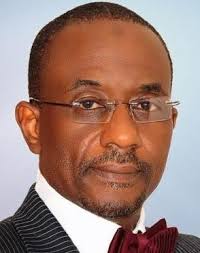
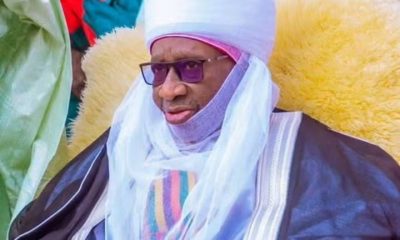
Former Central Bank (CBN) Governor and immediate past Emir of Kano, Muhammad Sanusi II, on Friday said the Nigerian economy is about to collapse totally as he warned that oil which he described in parable as the goose laying the ‘golden egg’ for the country is about to die.
Sanusi who spoke at the closing of the Kaduna Investment Summit, tagged KadInvest 6.0 said aside the fact that Nigeria is having difficulties in oil production, the product is now being rejected in the global market, as there is no longer a future in carbon.
The former CBN governor who pointed out that the future lies in knowledge based economy, which is the theme of the summit, however lamented that Nigeria is behind many African countries in innovation index and ranking 114th globally.
He lamented that while Ghana with a smaller economy invests more in education, Nigeria spends only seven percent of its budget in that direction, saying that, only eight of every 100 Nigerians who start primary school, complete university education.
According to him, “globally, work is being redefined. 30 to 40 per cent of workers in developed economies will need to significantly upgrade their skills by 2030. And what are the major drivers of this redefinition? ICT and remote working, which we have seen even here with COVID. There is increased automation and artificial intelligence. Very soon, robots will take over work in most countries and those who would have jobs are those who operate the robots or manufacture the robots or service the robots.
“And you have decarbonisation. For us in Nigeria, the enclave economy that we have, the so-called goose that lays the golden egg is about to die. There will be no eggs. The future is not in the carbons.
“A few months ago, Germany was able to produce enough renewable energy for the entire country’s needs. Today, we are having difficulties selling Nigerian oil. So, not only are we having problems to produce, even when we produce, the market is not there.
“So, this is forcing a change, and for us as a country that depends on oil, things need to change.
“Nigeria is ranked 114th in the global innovation index. We are lower than other African countries such as Kenya, Rwanda and Senegal. We are in fact ranked 14th in sub-Saharan Africa. I think we should have this reality check and know where we are as a country. Let’s stop calling ourselves the giant of Africa, because we are the giant with clay feet.
“Countries like Kenya, Rwanda and Senegal are ahead of us. I am not even talking about South Africa. Our expenditure on education is only seven per cent of the budget. We are spending less on education than Ghana; I am not talking about as per percentage of the budget; in absolute terms, even though the Ghanaian economy is much smaller than the Nigerian economy, even though the Ghanaian government revenue is less than Nigeria’s revenue, Ghana is spending more on education than Nigeria.
“And we are surprised that industries are moving to Ghana. We are surprised that the Ghanaian president has become the leading President in Africa? We are not investing in education and human capital.
“We have a 68 per cent missing job requirement and the major areas being IT, communication and decision making. And the completion rate between entry into primary one and completing university is eight per cent, meaning that out of every 100 pupils who go into primary school, only eight come out of university. And out of those eight, nine percent, which is one of the eight, will get a job.
“So, this is the reality in addition to what is happening globally. Now, digitization to level the playing field is required if we are deliberate and we shift from consumption to value creation. But, part of our problem is that even when we have the solution at our feet, we do not take it,” he said.
Meanwhile, the Kaduna State government said it will be introducing ICT skills in vocational institute and also in primary and secondary schools across the state.
Governor Nasir El-Rufai in an interview at the summit said his administration believes that the future of jobs in the world today will be digital. “So everyone needs digital skills and we intend to provide that and we have an agreement with IHS to cover Kaduna with 3g and 4g network so that everyone will have access to the internet,” he said








News
NFF Appoints Eguavoen as Interim Head Coach of Super Falcons
By Yusuf Danjuma Yunusa
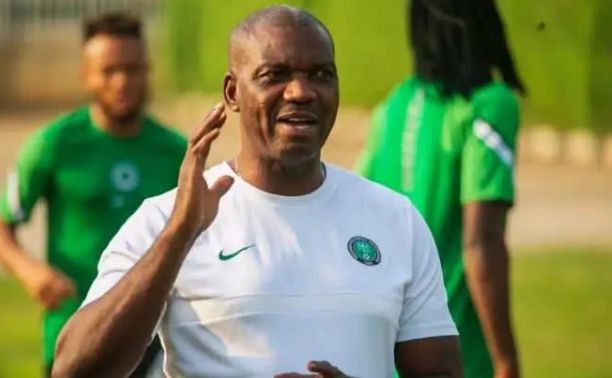
Augustine Eguavoen has been appointed the interim head coach of the Super Falcons.
The former Super Eagles head coach will lead the Falcons for their 2028 Olympic Games double-legged qualifier against Comoros in October.
Eguavoen will be assisted by Christopher Danjuma, head coach of Nasarawa Amazons, alongside a supporting cast that includes Ayisat Yusuf, a former Super Falcons defender; Olatunji Baruwa, former Super Eagles goalkeeper trainer.
The Falcons will kick off their Olympic qualifying campaign in the second round against Comoros, with both legs taking place at the Remo Stars Stadium in Ikenne-Remo on October 9 and 13.
Nigeria had received a bye into the second round as one of the top-ranked teams, while Comoros qualified after a 30-0 aggregate victory over Sudan.
Falcons must navigate four rounds of two-legged knockout ties to secure of Africa’s two slots for the women’s football event at the Olympics. A win over Comoros will advance the team to the third round in early 2027 to face either DR Congo or Morocco.
Eguavoen will be handling women’s football team for the first time in his managerial career.
His appointment comes a few weeks after Justine Madugu was sacked as Falcons’ head coach alongside his technical crew.
The dismal follows the Falcons failure to qualify for the 2027 women’s World Cup.
The first time the team will miss the World Cup since its inception in 1991.
News
Dependable political ally’ — Tinubu celebrates Abdulmumin Jibrin at 50
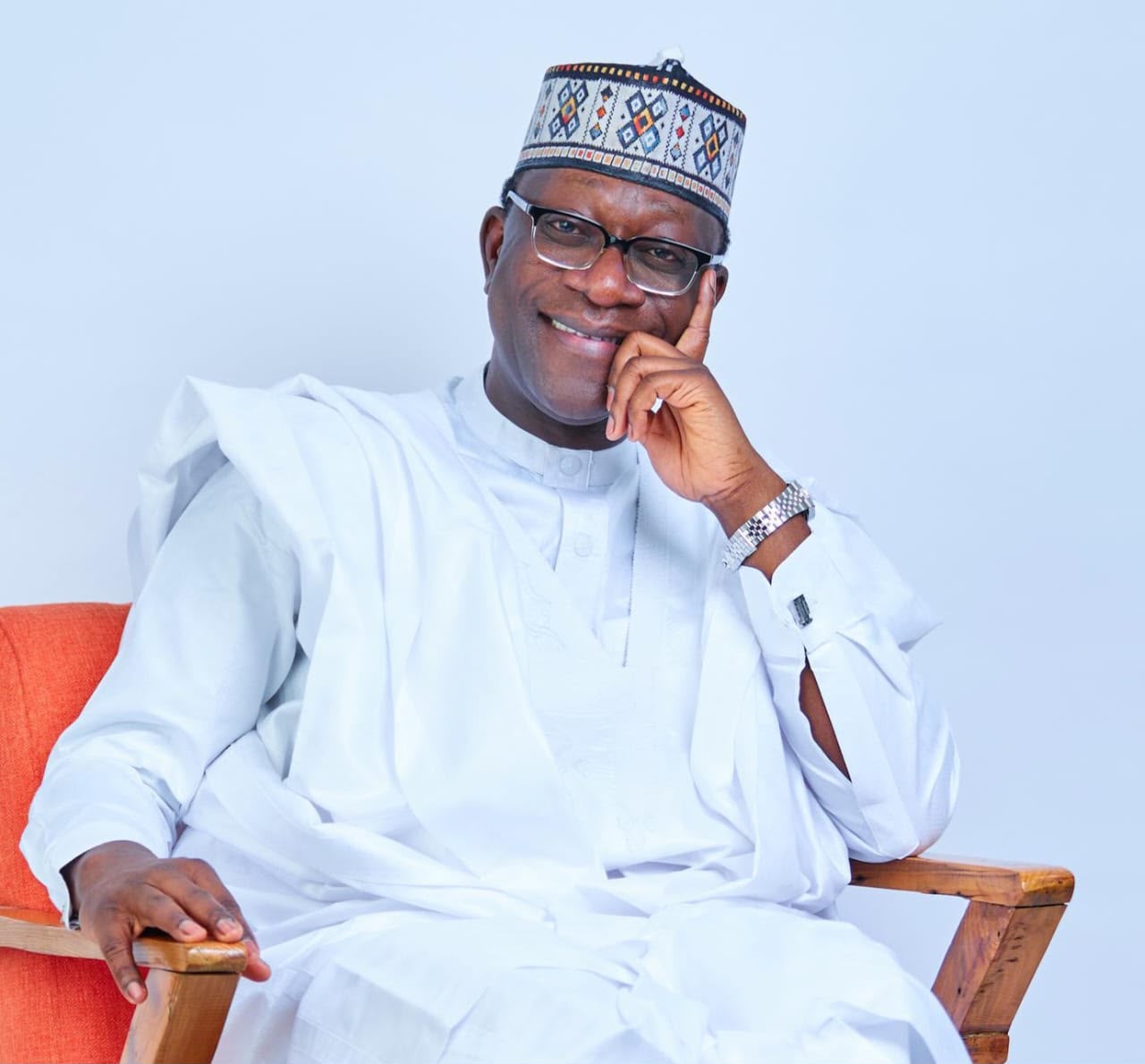
President Bola Tinubu has congratulated Abdulmumin Jibrin, the member representing the Kiru/Bebeji federal constituency in the house of representatives, on his 50th birthday.
In a statement issued on Tuesday by Bayo Onanuga, special adviser to the president on information and strategy, Tinubu described Jibrin as a dependable political ally and commended his intellectual rigour, entrepreneurial drive and commitment to public service.
The president praised Jibrin’s pursuit of knowledge, noting that his academic background at the University of Abuja, Ahmadu Bello University, Zaria, SBS Swiss Business School in Switzerland, Bayero University, Kano, and other institutions has shaped his approach to leadership and public service.
Jibrin holds two PhDs in international relations and economics, as well as an MBA from Bayero University. He also attended executive education programmes at Harvard Business School, Oxford and London Business Schools, and INSEAD in France.
Tinubu also acknowledged Jibrin’s record in public service, including his leadership of the house committees on finance, appropriations, land transport, foreign affairs, and housing and habitat.
According to the president, the lawmaker has contributed to debates and policies on public finance, fiscal policy, infrastructure and housing.
Jibrin also served as executive director at the Federal Housing Authority (FHA).
“Abdulmumin Jibrin represents a generation of Nigerians whose pursuit of knowledge, enterprise, and public service has been driven by a desire to make a difference,” the president said
His journey from scholarship and business into national politics reflects intellectual curiosity, resilience, and a deep commitment to Nigeria.
“At 50, he has much to celebrate, but I am confident that his most consequential contributions to our nation are still ahead.”
The president wished Jibrin renewed strength, good health, wisdom and fulfilment as he marked the milestone.
He also urged him to continue using his experience and knowledge to mentor younger Nigerians, strengthen democratic institutions and contribute to the development of Kano state and Nigeria.
Jibrin rejoined the All Progressive Congress (APC) in 2025 after he was expelled from the New Nigerian People’s Party (NNPP).
News
Ibrahim Little Condemns Attack on Journalists, Calls for Government Commitment to Ending Thuggery
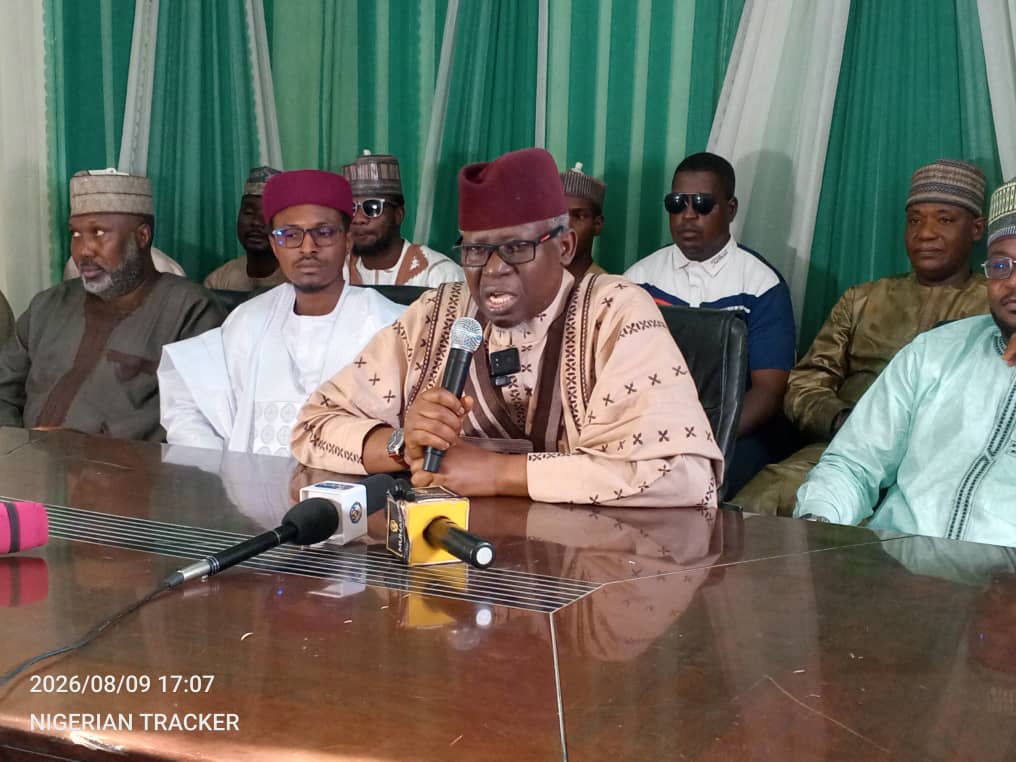
The gubernatorial candidate of the African Democratic Congress (ADC), Alhaji Ibrahim Ali Amin Little, has condemned the recent attack on journalists covering the All Progressives Congress (APC) rally at the Sani Abacha Stadium in Kano on Saturday
Little, in a statement signed by his Executive Assistant, Adnan Mukhtar, described the attack as unfortunate and unacceptable, calling on security agencies to demonstrate greater commitment to ending political thuggery in the state.
“Politicians are guilty of recruiting and using thugs during political rallies, and I believe this is absolutely wrong. Such actions contribute to the destruction of the future of our young people by exposing them to immoral and criminal activities.
“It is important that we tell ourselves the truth. A government that claims to be fighting thuggery, phone snatching and drug abuse should not be seen sponsoring or encouraging thugs to attend political rallies. This is unfortunate, unacceptable and uncalled for.
“Political rallies should be platforms for presenting ideas, engaging citizens and seeking their support, rather than breeding grounds for violence and criminality.”
Little extended his sympathy to the Nigerian Union of Journalists (NUJ), the affected journalists and all other victims of the incident.
He assured the people of Kano that, if elected, his administration would have zero tolerance for political thuggery and other forms of violence, stressing that his government would prioritise the protection of lives and property and create an environment where journalists and citizens can carry out their legitimate activities without fear.

Fifty Years, Four Terms. A Life Of Enterprise, Scholarship And Public Service-By Abbas Tajuddin

NFF Appoints Eguavoen as Interim Head Coach of Super Falcons
Dependable political ally’ — Tinubu celebrates Abdulmumin Jibrin at 50

A FRIEND’S LETTER TO ABDULMUMIN AT FIFTY

Ibrahim Little Condemns Attack on Journalists, Calls for Government Commitment to Ending Thuggery

From World’s 9th Most Populous City to Perfect: As Gov Yusuf Revisits Kano Master Plan

95% of Governor Abba Kabir Yusuf’s Promises Have Been Fulfilled — CPS Interview By Musa Diso, In Kano

Kano Islamic Scholar Declares Kano Widow Marriage Programme ‘Haram’, Urges Government to Stop It

Between Sabotage and Scepticism: Why Nigeria’s Oil Dream Keeps Stalling

Bello Sharada: A Great Writer, A Bookish Soul, Gone Too Soon
Fifty Years, Four Terms. A Life Of Enterprise, Scholarship And Public Service-By Abbas Tajuddin
NFF Appoints Eguavoen as Interim Head Coach of Super Falcons
Dependable political ally’ — Tinubu celebrates Abdulmumin Jibrin at 50
A FRIEND’S LETTER TO ABDULMUMIN AT FIFTY
Ibrahim Little Condemns Attack on Journalists, Calls for Government Commitment to Ending Thuggery
From World’s 9th Most Populous City to Perfect: As Gov Yusuf Revisits Kano Master Plan
95% of Governor Abba Kabir Yusuf’s Promises Have Been Fulfilled — CPS Interview By Musa Diso, In Kano
Kano Islamic Scholar Declares Kano Widow Marriage Programme ‘Haram’, Urges Government to Stop It
Between Sabotage and Scepticism: Why Nigeria’s Oil Dream Keeps Stalling
Bello Sharada: A Great Writer, A Bookish Soul, Gone Too Soon
-

 Opinion5 years ago
On The Kano Flyovers And Public Perception
-

 Features5 years ago
How I Became A Multimillionaire In Nigeria – Hadiza Gabon
-

 Opinion6 years ago
Kano As future Headquarters Of Poverty In Nigeria
-

 History5 years ago
Sheikh Adam Abdullahi Al-Ilory (1917-1992):Nigeria’s Islamic Scholar Who Wrote Over 100 Books And Journals
-

 Opinion5 years ago
My First Encounter with Nasiru Gawuna, the Humble Deputy Governor
-

 History5 years ago
The History Of Borno State Governor Professor Babagana Umara Zulum
-

 History5 years ago
The Origin Of “Mammy Market” In Army Barracks (Mammy Ochefu)
-

 News4 years ago
Federal University Of Technology Babura To Commence Academic Activities September