
Opinion
Amidst Soaring Prices Nigerians Languishing In Extreme Poverty
By Abba Dukawa
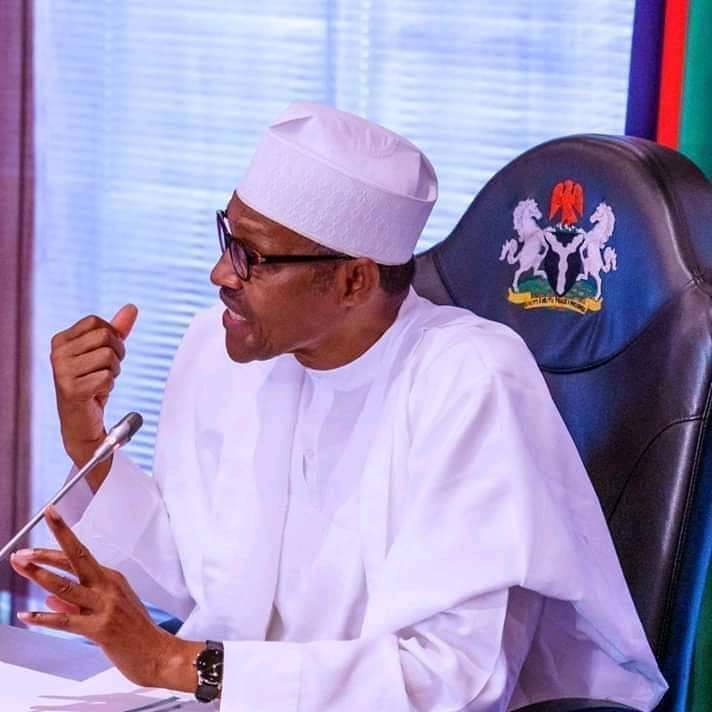
During Democracy Day National Address to the Nation by President Buhari to mark 22 years of civilian dispensation in the country claimed the administration has lifted 10m out of poverty in the two last years.
But days after president’s speeche, World Bank reports says the rising prices in the country have pushed an estimated 7 million Nigerians below the poverty line in 2020 alone.
In fact Nigerians are languishing in extreme poverty battling daily survival became uphill challenge due to unprecedented skyrocketing of essential commodities , peoples going through in the country reaching highest since in the late 80s. For one to understand the poverty in the country can go to market stalls to listen the peoples conversation even without listening them one may see anger registered in their faces.
Everyday Nigerians lamented rising cost of living as food prices soar at 12.56%. With all sense of highest esteem to Mr President, the level of poverty in the country is unspeakable let alone Government claiming to have of lifted 10m people out of poverty.
According to reports released by National Statistic Bureau ,the rise in the food index was broad based, caused by increases in prices of bread,egg, beans, rice, yam, Fish, meat, fruits, and vegetables.
Mexico Friendly: Iwuala, Olawoyin, 23 others to resume camping in Abuja
Nigerians never expect such kind hardship as country’s inflation rate rose further in June 2020 to 12.56% (Year-on-Year), 0.16% points higher than the rate recorded in May 2020 (12.4%) as country’s inflation rate rose further each passing day. In reality Food inflation across the federation is worse than official Bureau figures show.
For the administration to reduce the level of poverty in the country federal government should focus on three Policy Priorities which include: “Reduce Inflation by Implementing Policies That Support Macroeconomic Stability, Inclusive Growth, And Job Creation; Protect poor households from the impacts of inflation; Facilitate access to financing for small and medium enterprises in key sectors to mitigate the effects of inflation and accelerate the recovery. World Bank advice
It will be highest injustice for anybody not to acknowledge infrastructural development recorded especially in the southern part of the country.
PMB’s administration introduced many programs to alleviate economic hardship to Nigerians like Anchor Borrowers Programme and Conditional Cash Transfer Program. Unfortunately briefcase farmers and those close to the power benefited much than real pleasant and small scale farmers. Same with Conditional Cash Transfer Program that targets poor and vulnerable households all targets citizens .
Reviving Nation’s Economy which is the one of the three cardinal promises PMB made before the electorates remain a herculean tasks. Lack of clear economic policies scare Foreign Investment coupled with weak Naira , the country slum into recession twice while financial and economic policies of the administration do not favor the masses that spent hours under the sun to vote . Nigerians are worrying each passing day over the increasing debt burden reached unprecedented level as it increased by N191 billion in the first quarter of this year, representing a 0.58 percent increase from N32.916 trillion as of December 31, 2020.
There was no government in Nigeria history that have enjoyed citizens goodwill like the present administration. There was a time which is a crime before to criticise Baba Buhari’s administration.
Anybody who criticise the administration openly would surely ended up with nose bleeding especially from enthusiastic supporters of the regime who thought the administration would turn poor people into rich overnight and turn rich ones in the society to poor overnight. The case remain other way around poor remain poorer while rich became richer.
To be honest the adminstration Poverty Reduction efforts will continue to remain inclusive due to execution challenges, high level of Inflation, unemployment rate, high rate of money landing and other factors. Those entrusts with public offices may not necessarily remain honest to tell truth to the leaders on the true situation on the ground.
For the sake of history and the country to judge the administration fairly, let captain of the ship regain his past hard earn status of being a strong and No non Sense General . About half of the population, live on less than $1(N500) per day, unemployment rate has rising to 32.5 and also Nigeria had overtaken India as the country with the largest number of people living in extreme poverty. Let the president do anything to prevent the worst happening in remaining two years of the administration.
Dukawa Write In From Kano And Can Be Reached At abbahydukawa@gmail com









Opinion
Open The Social Sciences “A Tribute to a Heterodox Scholar: Mallam Ibrahim Muazzam
By Muttaqa Yusha’u
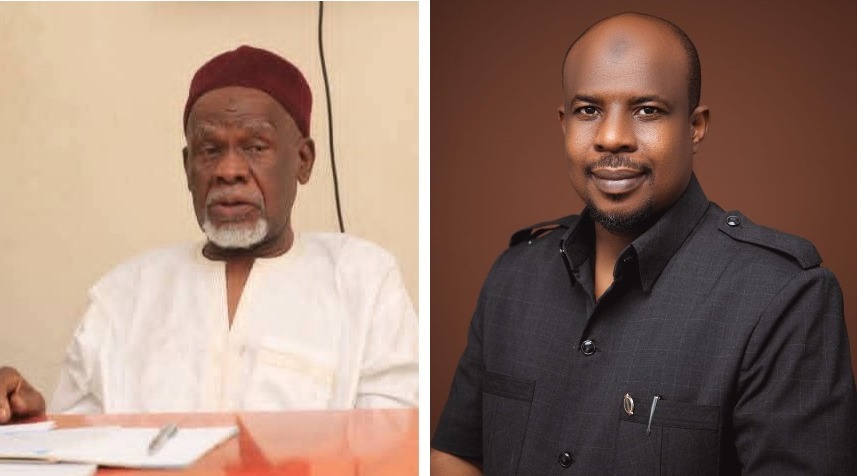
It was the Gulbenkian Commission’s report, Open the Social Sciences, that first came to my mind while reflecting on what to write in tribute to a scholar par excellence, Mallam Ibrahim Muazzam of the Department of Political Science, Bayero University, Kano.
The report raises fundamental questions about how knowledge is produced, the boundaries of academic disciplines, and the methods through which we understand society. These questions have remained central to my intellectual journey, one that began in Mallam Muazzam’s classroom.
Mallam Muazzam is a household name for anyone who passed through Bayero University, particularly in the social sciences and humanities. His intellectual influence cuts across disciplines, and generations of scholars have benefited from his scholarship, critical engagement, and commitment to expanding the frontiers of knowledge.
I first encountered Mallam as an undergraduate student through his course on Political Ideas. His eloquence and critical engagement with ideas were second to none. In his classroom, we encountered a wide range of political traditions, including liberalism, anarchism, and many others. More importantly, we were encouraged to interrogate these ideas rather than merely memorise their central arguments.
I was particularly fascinated by anarchism. Beyond its popular misconception as a doctrine of lawlessness, anarchism represents a political and social tradition that envisions a society organised around freedom, voluntary association, and collective self-management. I remember the famous idea associated with Mikhail Bakunin that a free society would have administration of things rather than government over people. This challenged conventional assumptions about authority, the state, and how society could be organised.
The idea resonated even more with me in 2012, when I undertook an MA in Labour Policies and Globalisation at the University of the Witwatersrand, South Africa. There, I encountered Professor Lucien van der Walt, who deepened our understanding of anarchism as a libertarian tradition grounded in workers’ self-management and the possibility of organising society beyond hierarchical authority.
I found this idea reflected in practical experience during our visit to a community in Kassel, Germany, in 2018, when members of the community interacted with us as alumni of the Global Labour University. I can no longer recall the name of the community, but I vividly remember how its members shared their experiences of organising around anarchist principles of self-management. It was a fascinating encounter that brought to life the possibility of organising collective existence differently.
Looking back, I can trace an intellectual journey from Mallam Muazzam’s classroom, where I first encountered these ideas, to their deeper theoretical exploration and practical expression years later. This is one of the enduring values of a good teacher: the ideas introduced in the classroom continue to travel with the student, opening new horizons of thought and experience long after the formal encounter has ended.
You cannot celebrate Mallam without recognising his contribution to critical knowledge production in our society. His scholarship challenged the academic boundaries that compartmentalise the social sciences into separate disciplines. For anyone who took his MSc course on Contemporary Political Analysis, the references attached to the course outline were enough to leave you intimidated. There were over a hundred classical sources to engage with. Yet, beyond the sheer volume of reading, what mattered was the intellectual disposition he cultivated: an insistence that understanding society requires serious engagement with competing traditions of thought.
What was even more important to me was how Mallam challenged orthodoxy in the production of knowledge, particularly the methods and methodologies adopted in the social sciences and humanities. As graduate students, we encountered highly elevated debates about research methods, often influenced by positivist and behavioural approaches. What counted as knowledge was frequently understood in terms of what could be established through scientific methods, measurement, observation, and the search for regularities in social behaviour.
Through Mallam, I became fascinated by how knowledge could also be produced and analysed using interpretivist methodologies. I began to appreciate alternative ways of understanding social reality beyond the assumptions of dominant methodological traditions. Social reality could not always be adequately understood by reducing human experience to measurable variables; it also required an engagement with meaning, historical context, lived experience, and the ways people interpret the world around them.
If you studied under Mallam, listened to him, or engaged with him, you must have encountered the key words epistemology and ontology, alongside the questions he would ask you to factor into your analysis. What do we know? How do we know it? What constitutes reality? Whose knowledge is recognised, and whose experiences are excluded from the production of knowledge? These are not merely philosophical questions. They shape the theories we adopt, the methods we use, and the conclusions we draw about society.
It was never an accident that, when I met my PhD supervisor, Professor Ahmad Murad Mohd Noor Merican, a scholar of media studies in Malaysia, in 2014, I encountered another intellectual spirit who reminded me of Mallam Muazzam. Professor Merican, now a professor at the International Institute of Islamic Thought and Civilisation, shared Mallam’s concern with the intellectual ferment within the social sciences and humanities. Scholars who questioned dominant approaches, particularly the privileging of quantitative methods, could find themselves marginalised within the university environment.
Both scholars encouraged us to look beyond conventional norms in understanding reality. Their interdisciplinary approaches brought together insights from the sociology of knowledge, literature, history, philosophy, and other fields. I believe this openness to different intellectual traditions explains their significant influence on scholars across disciplinary boundaries.
For me, this is what makes Mallam Ibrahim Muazzam a heterodox scholar. Heterodoxy is not simply a disposition to disagree with established ideas or reject mainstream scholarship. It is a commitment to questioning the assumptions upon which dominant intellectual traditions are built, examining the power relations that shape knowledge, and remaining open to alternative ways of understanding social reality. Mallam embodied this intellectual disposition by refusing to confine the study of society within narrow disciplinary and methodological boundaries.
His intellectual orientation resonates with the central concern of the Gulbenkian Commission’s report, Open the Social Sciences: the need to rethink the historical organisation of knowledge and the rigid boundaries that separate academic disciplines. To open the social sciences is not merely to encourage interdisciplinary research. It is also to interrogate the intellectual hierarchies through which certain theories, methods, and traditions acquire authority while others are relegated to the margins.
Mallam Muazzam was never a passive scholar. He was an organic public intellectual who connected knowledge with society. I remember him introducing us to the work of Archie Mafeje on democracy and democratisation in Africa as we grappled with the democratic challenges confronting Nigeria during its transition. These engagements encouraged us to look beyond formal democratic institutions and interrogate deeper questions of political power, popular participation, and the conditions necessary for meaningful democratic transformation.
Mallam’s days at the Centre for Research and Documentation (CRD) were memorable for the way knowledge was connected with public life. His intellectual engagement extended beyond the university classroom, bringing scholarship into conversation with the realities and challenges of society. The significance of this tradition lies in its refusal to treat knowledge as an end in itself, detached from the historical conditions, social struggles, and aspirations of the people among whom it is produced.
The last time I met Mallam was at a Marxist conference held in Keffi, Nasarawa State, in 2018. The conference was organised around a series of historic Marxist milestones, including the bicentenary of Karl Marx’s birth, the 150th anniversary of the publication of Das Kapital, and the centenary of the Russian Revolution. Its theme, “Capitalism, Imperialism and Revolutions in the 21st Century,” captured the continuing relevance of Marxist thought to understanding contemporary society and the contradictions of global capitalism.
The gathering brought together academics, intellectuals, and activists seeking to interrogate the ferment within society, particularly the challenges confronting the labour movement and the broader struggle for social transformation. Mallam presented a paper on the Nigerian Left, a subject that brought together many of the questions that had long occupied his intellectual engagement with politics, social change, and the struggles of ordinary people.
I remember seeing Professor Jibrin Ibrahim, Mallam Y. Z. Yau, the late Professor Nuhu Yaqub, Dr Amina Salihu, who coordinated the discussion, Salihu Lukman, Nura Iro Maaji, Gbenga Komolafe, Aliyu Dahiru, Joh Odah, the late Abiodun Aremu, Comrade Salisu Mohammed, among others. These are the people I can still remember from that gathering. Their different intellectual, political, and organisational engagements reflected the longstanding relationship between critical scholarship and progressive social movements in Nigeria.
That conference remains memorable to me because it demonstrated Mallam’s continuing engagement with the Nigerian Left and the labour movement. His contribution was not simply that of a scholar analysing political developments from a distance; it was that of an intellectual participating in the collective effort to understand the contradictions of our society and the challenges confronting the struggle for a better one.
The theme of the conference also reminds us that the questions raised by Marx remain relevant to understanding capitalism, imperialism, class relations, and the possibilities of social transformation in the twenty-first century. These questions cannot be adequately addressed through an intellectual tradition that separates political economy from history, sociology from politics, or the production of knowledge from the material conditions of society. They require precisely the kind of intellectual openness that Mallam represented.
Mallam’s retirement from the university comes at a time when democratic credentials are increasingly under strain across the world. We inhabit a post-truth society in which critical approaches to understanding reality are often dismissed as unnecessary nuisances. The labour movement risks losing its organic links with critical intellectual traditions, while an academic environment increasingly shaped by the commodification of knowledge threatens to suppress the emancipatory impulse of the social sciences and humanities.
The danger is not simply that universities may produce less critical scholarship. It is that knowledge itself may increasingly be treated as a commodity, valued primarily for its marketability rather than its capacity to illuminate social contradictions, challenge power, and expand the possibilities of human freedom. In such a context, the need for heterodox scholars and organic public intellectuals becomes even more urgent.
Mallam Y. Z. Yau, my teacher and mentor, deserves special commendation for initiating a platform to immortalise Mallam Muazzam through the Ibrahim Muazzam Philosophy Institute, which seeks to train young people in philosophy and critical thinking. All students of Mallam, at home and abroad, should support this initiative. It is a worthy effort to ensure that the intellectual tradition he represents continues to inspire generations of young people.
The establishment of such an institute is particularly important at a time when critical thinking, philosophical inquiry, and independent intellectual engagement need to be strengthened among young people. To immortalise Mallam should mean more than preserving his name or celebrating his achievements. It should mean creating spaces in which young people can question established ideas, engage competing traditions of thought, and develop the intellectual confidence to interrogate the realities confronting their society.
We need to open the social sciences and connect them more closely with the task of understanding our society. We need to question established orthodoxies and explore alternative ways of understanding social reality. We need to challenge the artificial boundaries separating disciplines and recognise that the problems confronting our society—poverty, inequality, political domination, labour exploitation, and democratic deficits—cannot be understood through narrow disciplinary lenses.
Above all, we need social sciences that illuminate the struggles and aspirations of our people and help us imagine a better society. For those of us in the labour movement, this intellectual task is particularly important. Workers’ struggles are not simply struggles over wages and conditions of employment; they are also struggles over power, the distribution of social resources, democratic participation, and the kind of society we wish to build.
To honour Mallam Ibrahim Muazzam is therefore to sustain this critical intellectual tradition and keep open the possibilities of understanding and transforming our society. It is to recognise that the university must remain a space for questioning, debate, and the contestation of ideas, rather than merely a site for reproducing established orthodoxies.
As we celebrate Mallam and the enduring intellectual legacy he has given to generations of students and scholars, I wish him many more years of good health, strength, and fulfilment. May he continue to inspire younger generations with his wisdom, critical spirit, and commitment to knowledge and society.
To honour Mallam Ibrahim Muazzam is to keep the social sciences open, keep critical thought alive, and keep alive the possibility of a better society
Dr Muttaqa Yushau wrote this from Abuja
Opinion
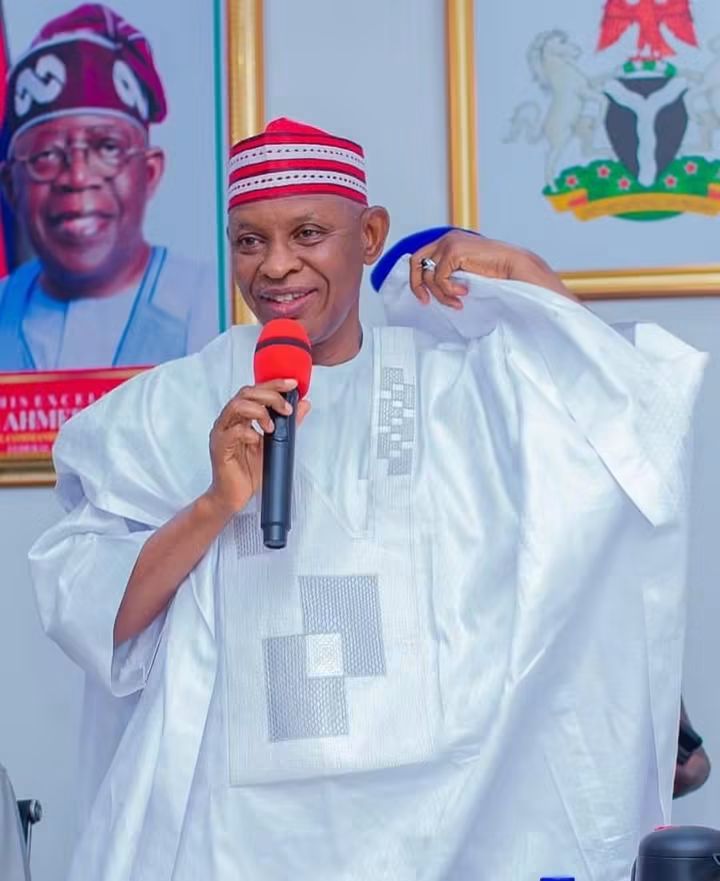
Why Gov Abba Deserves Another Tenure
By Abba Anwar
Let us be honest with ourselves. When Abba Kabir Yusuf took over on 29th May, 2023, many people were doubting. Today, even his worst enemies cannot deny that Kano has moved.
I went through the project registry at the Office of the SSA Publicity. As at May 29, 2026, this government has 1,493 projects on its table. 799 completed and delivered, 694 are ongoing at advanced level. You can go and verify in any of the 44 LGAs. That is not audio project.
EDUCATION FIRST, SECOND, THIRD
Abba did what many avoided. On June 8, 2024, he declared State of Emergency on Education. And he backed it with money nobody has done before in Kano.
2024 budget – 29.95% to education. 2025 budget – 31% to education. 2026 budget – N405.3 billion out of N1.368 trillion, which is 30% of the whole budget. UNESCO asks for 26%, Abba is doing 30% plus.
WHAT IS THE RESULT OF THE MONEY ALLOCATED AND SPENT?
He recruited over 15,000 teachers. That includes 2,000 volunteer teachers who were regularized. He renovated more than 3,500 classrooms and built hundreds of new ones across the state. Free uniforms, furniture, textbooks distributed.
At tertiary level, he cut registration fees by 50% in all state-owned institutions. He paid N4.45 billion examination fees for NECO, NABTEB and NBAIS for Kano students. Go to Ministry of Education and ask.
And about the scholarship the former Governor Rabi’u Musa Kwankwaso started, Governor Yusuf revived it fully. First batch 418 students, they all completed their studies. Second batch 1,001 students flagged off at Coronation Hall, Government House, Kano, 350 to India, 240 to private universities inside Nigeria. He also paid the debt left behind over N3 billion, N2.4bn to Near East University Cyprus, N500m to 5 private universities, plus N2 billion support for Kano indigenes in public universities. And for those 150 first class graduates that came back, he gave them automatic employment.
Today Kano students are Best in NECO 2024 and 2025 consecutively. An achievement celebrated across.
HEALTH – LAFIYA DOLE IS REAL
You remember how our General Hospitals were? No drugs, no light. Our able leader renovated 340 Primary Healthcare Centres (PHCs) across 44 LGAs. He upgraded over 200 PHCs to run 24 hours. He renovated General Hospitals in Wudil, Bichi, Gaya, Rano and others.
He built 10 new General Hospitals, 6 more are in the pipeline. He established Kano Centre for Disease Control (KCDC) for the first time. He revived the Drug Revolving Fund – now 90% of prescribed drugs are available.
And for our mothers – free antenatal, free postnatal, free CS for pregnant women, free healthcare for children under 5 and elderly. Over 2,000 health workers employed – doctors, nurses, midwives and pharmacists.
ROADS, WATER, LIGHT – YOU CAN SEE IT.
Dan Agundi Flyover and Underpass completed, only finishing touches. Tal’udu Cloverleaf Flyover completed, finishing touches also. These two alone decongested many parts of the city.
Then 5km roads in each LGA, though not promise, but they are on ground. Tarauni-Hotoro-Kwanar Dawaki dualization, BUK Road, Zaria Road, Katsina Road. Panshekara Underpass to Madobi Bridge N5.2bn. Dambatta to Gwarabjawa N2.63bn.
Water: He rehabilitated Challawa and Tamburawa Water Treatment Plants. The biggest Goron Dutse Reservoir that was dead for 30 years, now back with 40.4 million litres capacity and 15.6km transmission line from Challawa. Test run already on board before the main supply.
PEOPLE-ORIENTED POLICIES THAT TOUCH THE POOR
This is where many governors fail. Our Governor went to the grassroots.
(1) Agriculture – subsidized fertilizer, improved drought-tolerant seeds, tractors, harvesters. Kano divided into three zones for mechanization.
(2) Empowerment – KEEP programme: sewing machines, grinding machines, freezers, noodle machines, soft loans for women and youth.
(3) Girl-child – He created Office of SSA on Girl-Child Education, appointed 88 girl-child advocates across 44 LGAs. Through AGILE, 148,000 girls trained in life skills, 100,000 girls got cash transfer, free school shuttle buses for girls, re-entry policy for married adolescent girls. No other governor has done that.
(4) Economy – Created Kano State Signage and Advertisement Agency (KASA) to block revenue leakages. The Agency made N300m in just 3 months, now targeting N2bn. Under him Kano acquired majority shares in KEDCO, launched Kano Electricity Policy, and secured President Tinubu’s approval for N1 trillion Kano Metropolitan Rail.
(5) Security – Kano remains peaceful. Neighbourhood security offices, support for police, DSS, Civil Defence.
And for workers – settlement of pension backlogs, which runs into Billions of Naira. After prolonged years of negligence from past administrations. With this he injected life into the near-dead families across the state. Establishment and construction of 50 low-cost houses in each of the 36 LGAs, an ongoing project. solar streetlights, 150KW solar backup.
In conclusion without taking much time to explain, let me say this, in three years, he has fulfilled over 90% of his campaign promises.
So when some opposition politicians gather and start shouting, ask them one question – where were they when schools had no roofs, hospitals had no drugs, and water was not running for 30 years?
Apart from projects and other infrastructural development, there are two major issues that are brought on board by His Excellency Governor Yusuf, in the last few months.
The first and foremost is his choice of HE Murtala Sule Garo to become his Deputy after the resignation of the then Deputy, HE Aminu Abdussalam Gwarzo. Personal interest and political differences apart, there was no better choice than Garo. Looking at the prism from all angles. But His Excellency, the Governor is in the best position to understand what I’m saying. What HE Garo is to him and his administration, can best be explain by the Governor. Yes him alone (Governor Yusuf) can put it succinctly clear.
The second issue is that of the establishment of Kano State Multi-Agency Task Force on Drug Abuse and Other Related Crimes. As he appointed Barrister Muhuyi Magaji Rimingado, as the Chairman. This agency is doing well in cleansing the state, especially the metropolis, from the activities of drug abuse among our youth. The nefarious activities of our derailed youth, popularly called ‘Yandaba’ are reduced drastically. Rimingado trails them down to their hideout.
When it comes to real politics, His Excellency, the people’s Governor, is a political unifier. A moulder of peace and tranquility among members and leaders of the ruling party, All Progressives Congress (APC). While he promotes peace in party politics, he is a bridge between divergent political interests within the ruling APC. This needs no further explanation and instances.
Abba deserves another tenure not because he is perfect, but because he has done what many could not do in many years, in just three years. The remaining 694 ongoing projects need him to finish them.
Kano First is not a slogan. It is visible remark hovering around us. His efforts, political will and delivery are visible for all to see. Let us allow him to finish what he started. The good work for a better legacy.
Anwar writes from Kano
Friday, 16th October, 2026
Opinion
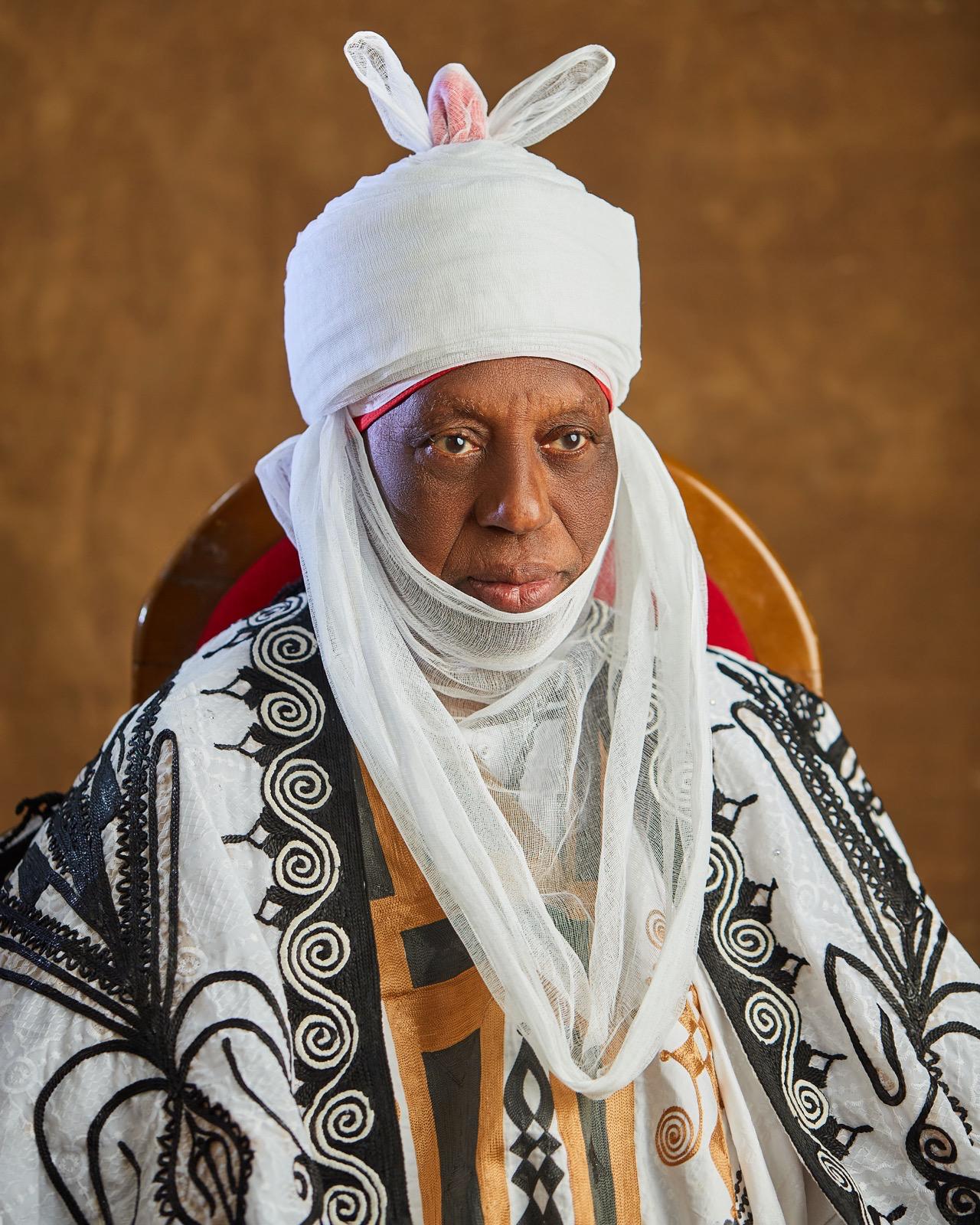
Alhaji Abba Yusuf At 81: A Life Of Service, Leadership And Traditional Responsibility
By Baba Dantiye, MON, mni, FNGE
Eighty-one years is a remarkable milestone in the journey of life. It represents more than the passage of time; it offers an opportunity to reflect on a life shaped by experience, service and the enduring values that give meaning to human existence.
For Alhaji Abba Yusuf, Secretary of the Kano Emirate Council and District Head of Dawakin Kudu, Danmakwayon Kano, his 81st birthday provides an opportunity to celebrate a distinguished journey through public administration, trade union leadership and traditional service.
His story reflects a career spanning three important spheres of responsibility. From local government administration to the trade union movement and, subsequently, the Kano Emirate Council, he has served in institutions that require an understanding of people, respect for established procedures and a commitment to the responsibilities entrusted to their leaders.
His years in local government administration provided an important foundation for his subsequent assignments. As the tier of government closest to the people, local government operates where public policies meet everyday needs and where the effectiveness of governance is often measured by its direct impact on communities.
Service at this level demands familiarity with administrative procedures, patience in dealing with competing expectations and an appreciation of the practical challenges confronting ordinary citizens. His experience in local government therefore constitutes an important chapter in his professional journey, exposing him to the workings of public administration and the relationship between government and the communities it serves.
Another defining aspect of his career is his involvement in trade union leadership. Trade unionism occupies an important place in public administration and democratic society. It provides an organised platform through which workers articulate their concerns, defend their legitimate interests and engage employers and government on matters affecting their welfare.
Veteran union leaders often operate in demanding circumstances. They must understand their members’ interests, negotiate with management, manage disagreements and pursue collective objectives without losing sight of the need for dialogue. Such responsibilities require patience, courage, tact and an ability to balance competing interests.
The experience acquired through trade union leadership can be valuable beyond the workplace. Consultation, negotiation, representation and conflict management are essential in many areas of public life. For someone who subsequently assumed responsibilities within a traditional institution, these experiences provide a useful foundation for understanding people and managing institutional relationships.
Alhaji Abba Yusuf’s years in the trade union movement consequently form a significant part of his professional story. They represent another phase in a career that has brought him into contact with different institutions, constituencies and responsibilities.
His subsequent service at the Kano Emirate Council represents a further chapter in this journey. The Kano Emirate occupies an important place in the historical and cultural life of Kano. Beyond its ceremonial functions, the traditional institution plays a role in community engagement, traditional administration and the preservation of customs and values that have endured across generations.
As Secretary of the Council, Alhaji Abba Yusuf occupies an administrative position that connects institutional decisions with their implementation. The office requires organisational ability, effective communication, familiarity with established procedures and an appreciation of the traditions and protocols of the institution.
His journey from local government administration and trade union leadership to the Emirate Council brings together three distinct but related areas of service. Each has its own demands, yet all require an understanding of people, respect for institutions and the ability to work within established systems.
His position as District Head of Dawakin Kudu, with the traditional title of Danmakwayon Kano, adds another dimension to his public responsibilities.
Traditional leadership remains an important feature of community life in Kano State. District heads and other traditional officeholders operate within an established hierarchy and are expected to uphold the dignity of their offices, respect local customs and contribute to peaceful community relations.
Such responsibilities extend beyond the prestige associated with a traditional title. They call for a commitment to the people, respect for institutions and an appreciation of the historical significance of traditional authority. The district headship also places Alhaji Abba Yusuf within the continuing relationship between the Kano Emirate and the communities under its traditional administration.
Taken together, his experience in local government, trade union leadership and traditional administration provides an opportunity to reflect on the different ways individuals contribute to public life. Each sphere has its own expectations, but the ability to listen, consult, negotiate and understand the concerns of others remains relevant across them all.
An 81st birthday is also an occasion to appreciate the value of experience accumulated over many decades. Society changes, institutions evolve, generations succeed one another and new challenges emerge. Those who have lived through different periods of these developments possess perspectives that can enrich public discourse and provide useful lessons for younger generations.
The value of such experience lies not simply in the number of years lived, but also in the opportunities it offers for reflection, learning and continued contribution. Alhaji Abba Yusuf’s professional journey provides a basis for considering how knowledge and experience acquired in one institution can serve as a resource in another.
At this milestone, family members, friends, colleagues and associates have an opportunity to celebrate not only his longevity but also the various responsibilities he has undertaken over the years. His career has encompassed public administration, organised labour and traditional service, giving his professional life several distinct chapters.
The occasion also reminds us of the importance of continuity across generations. Institutions endure when experience is respected, responsibilities are taken seriously and the values underpinning public life are preserved. The lessons accumulated over a long career can remain useful long after particular assignments have ended.
On this special occasion, I congratulate Alhaji Abba Yusuf, Secretary of the Kano Emirate Council and District Head of Dawakin Kudu, Danmakwayon Kano, on attaining the remarkable age of 81.
May Almighty Allah grant him continued good health, peace of mind and renewed strength. May He bless his years with contentment, protect his family and enable him to continue contributing meaningfully to the institutions and communities with which he is associated.
Happy 81st birthday, Alhaji Abba Yusuf, Danmakwayon Kano. May the years ahead bring you good health, dignity, peace and fulfilment.
Baba Dantiye, MON, mni, FNGE
Former Kano State Commissioner for Information and Internal Affairs
Former President, Nigerian Guild of Editors

Dagumawa Promises to Connect Wudil/Garko to Global Economy Through ICT Hub

Hamma Urges Political Candidates to Prioritise Unity, Ideology Over Personal Interests

Open The Social Sciences “A Tribute to a Heterodox Scholar: Mallam Ibrahim Muazzam

State Police: 24 State Assemblies Approve Constitutional Amendment–Presidency

ECOWAS Court Faults Process Backed by Council of Ministers in Darma Removal Case

PCACC Arrests Man Over Alleged ₦4.5m Sale, Illegal Leasing of Kano Government Horse Stable

Kano Monitors ₦48.9bn Projects Across Six LGAs

Goje’s Electoral War:The Confrontation With Tinubu,Governor Inuwa,Usman Kumo And APC candidates Ahead Of 2027

Kano Spends ₦10.36bn on Hospitality, Sitting Allowances, Others in Six Months

Senate Passes Barau’s Bill to Provide Legal Framework for Yusuf Maitama Sule Federal University of Education, Kano
Dagumawa Promises to Connect Wudil/Garko to Global Economy Through ICT Hub
Hamma Urges Political Candidates to Prioritise Unity, Ideology Over Personal Interests
Open The Social Sciences “A Tribute to a Heterodox Scholar: Mallam Ibrahim Muazzam
State Police: 24 State Assemblies Approve Constitutional Amendment–Presidency
ECOWAS Court Faults Process Backed by Council of Ministers in Darma Removal Case
PCACC Arrests Man Over Alleged ₦4.5m Sale, Illegal Leasing of Kano Government Horse Stable
Kano Monitors ₦48.9bn Projects Across Six LGAs
Goje’s Electoral War:The Confrontation With Tinubu,Governor Inuwa,Usman Kumo And APC candidates Ahead Of 2027
Kano Spends ₦10.36bn on Hospitality, Sitting Allowances, Others in Six Months
Senate Passes Barau’s Bill to Provide Legal Framework for Yusuf Maitama Sule Federal University of Education, Kano
-

 Opinion5 years ago
On The Kano Flyovers And Public Perception
-

 Features5 years ago
How I Became A Multimillionaire In Nigeria – Hadiza Gabon
-

 Opinion6 years ago
Kano As future Headquarters Of Poverty In Nigeria
-

 History6 years ago
Sheikh Adam Abdullahi Al-Ilory (1917-1992):Nigeria’s Islamic Scholar Who Wrote Over 100 Books And Journals
-

 Opinion5 years ago
My First Encounter with Nasiru Gawuna, the Humble Deputy Governor
-

 History5 years ago
The History Of Borno State Governor Professor Babagana Umara Zulum
-

 History6 years ago
The Origin Of “Mammy Market” In Army Barracks (Mammy Ochefu)
-

 News5 years ago
Federal University Of Technology Babura To Commence Academic Activities September