
News
Twitter Ban:FG Infringes On The Right Of Millions -CITAD
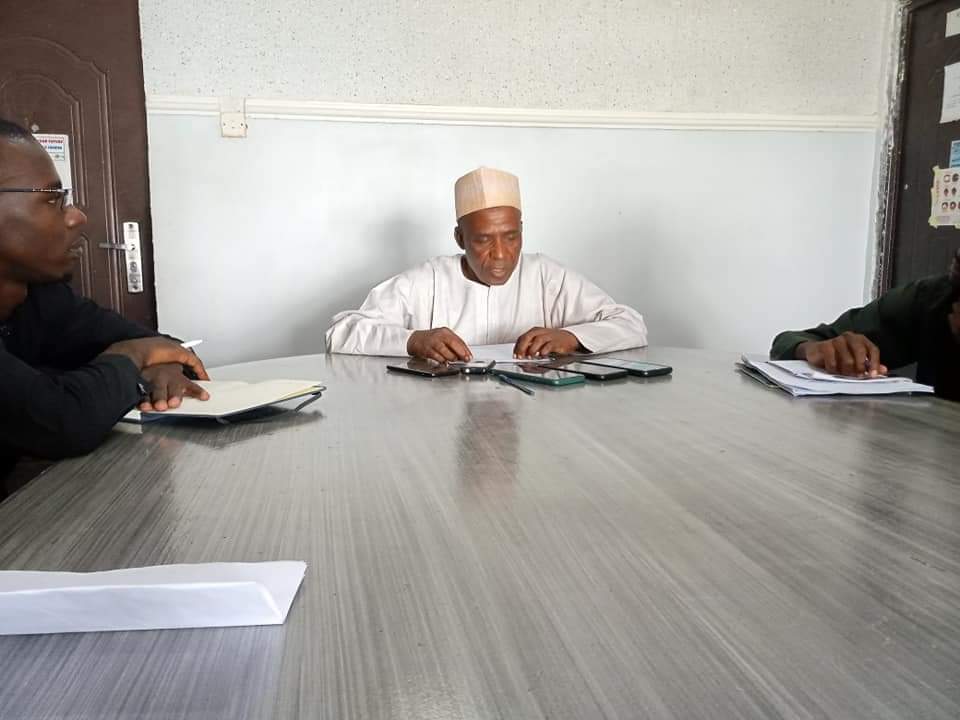
The center f or information technology and development CITAD says the twitter ban by the federal government is an ill-advised and unacceptable action by the federal government.
The executive director of the centre Malam Y Z Ya’u made the statement during a press conference held in Kano.
According to Malam Y Z Yau the Federal Government, through its Minister of Information, Mr. Lai Mohammed announced the suspension of the operations of Twitter in Nigeria. This suspension followed the action of Twitter in deleting a tweet by President Mohammed Buhari which the platform concluded had violated its community standards.
He pointed out that CITADexpresses shock with such an ill-advised action by the Government.
The Head further said they are surprised that the president could allowed himself to be wrongly advised. The quality of advice that he received shows an extremely level of ignorance of the working of Over the top (OTTs) in the world.
“First, Twitter does not need to be in Nigeria for its business to strive. By suspending its operation in the country the government is not hurting the interests of Twitter but rather jeopardising the jobs of the Nigerian staff of Twitter and more fundamentally, derogating the right of Nigerians to freedom of expression which is guaranteed in both our constitution and in the Africa Peoples and Human Rights which Nigeria is a signatory to, among other covenants of human rights.
Twitter Ban: FG Orders Prosecution of Offenders
The platforms of OTTs are important component of the internet, access to which the UN has decided as constituting a fourth generation of rights that all citizens should enjoy.
By shutting down access to Twitter for the millions of Nigerians, the government has totally curtailed the rights of Nigerians to this service.
Second, it shows the lack of understanding of the state of technology in the world. Many countries have unsuccessfully tried to block social media access for their citizens, but the increasing number of by-pass technologies means that such an action is fruitless and rather a drain on useful resource that could be used to support educating citizens on how to use the internet.
Third, when government argues that Twitter was selective in punishing misuse of its platform, it betrays a lack of understanding of the issues at hand. Twitter like, any other OTTs, has its community standards. Violating any of these standards elicits punishment which ranges from deletion to suspension and to even outright ban on the platform. One of the standards is that no message that is threatening violence against other people should be allowed on the platform. ”
YZ Yau said the Presidents message was a threat to violence. It does not matter that he was responding to a violent situation. That other people had in the past made similar messages and were not so punished is not an argument for two wrongs do not make a right.
The statement further said the ban illustrates the fourth nativity of the government. When the Government or the President noticed that some people were spreading messages inciting or inviting violence, what they ought to do was to flag this off with Twitter. Once a message is flagged the relevant OTT (in this case Twitter) is duty bound to respond to it by taking action. When it is dissatisfied with the action taken, it can appeal the case and in the case of Facebook, it has a global Independent Board of Oversight which deals with controversial appeals and whose decisions or rulings are binding on the OTT.”
The other aspect of the naivety of the government response is that it does not understand the nature of hate speech for which it has over a long period been pushing for a legislation. One of the key attributes of hate speech for it to catalyse into violence is that it should have a powerful speaker. That powerful speaker can earn his or her status on the basis of statutory power (such as a President) or love such as celebrity or cultural assets such respected community leaders or even religious capital in the case of religious leaders. What a powerful speaker does is that he makes the audience to commit the call to action embedded in his or her message. They could act the call to action either because they fear the speaker or love her or him or has institution of violence that could do his or her bidding. In the Nigerian context, clearly President Buhari is a powerful speaker who earned his status because of the office he occupies but also, additionally, because he has political and probably, ethnic followers. His message has a clear call to action which is to incite violence against his target. It is clear that his message, given his position as President has the potential to catalyse violence. It is entirely different from a riffraff ranting on twitter.
However, all these are by the way, the substantive issue for us is that we see in the act of the president a vicious intolerance of dissenting views. What Twitter had done was a mild criticism of the President but the president responded with an over kill. Clearly if President Buhari where the President of USA when twitter banned President Trump, he probably could have ordered the army to take over the company and dragged its management and owners to prison.
This intolerance of dissenting views is dangerous to democracy and unacceptable. It also is unnecessary and uncalled for given the situation that Nigeria is in, a situation that requires building bridges through effective communication rather than one of responding in kind.
We also fear that this act is preamble to the long ambition of the government to control access to the social media in the country.
Over the last six years, it has tried to do this through legislation unsuccessfully and now it wants use the response by Twitter to start a piece meal effort.
This is acceptable, undemocratic and unconstitutional.
We call on the government to withdraw its suspension and allow Twitter to carry out its legitimate business unhindered.
The government should allow Nigerians unhindered access to the platform. What the Government ought to do is to begin to educate and enlighten citizens on how to use the social media and not how to prevent them from using it.
We join millions of other well-meaning and patriotic Nigerians in demanding an immediate restoration of access to Twitter and a proactive safeguard against similar action to other OTTs.
We call on the National Assembly to declare the act of the president as illegal and unconstitutional and proceed to provide a legal clarify by enacting a law that prohibits presidents or any other authority from blocking any internet platform.
As an organization dedicated to the use of information technology to promote development and good governance, we are prepared to help in the campaign for better use of the internet but even more, we are ready to help Nigerians reclaim their right to access to twitter, among other OTT platforms by building their capacity on by bypass technologies.”










News
IMF to Nigeria: Don’t Bring Back Petrol Subsidy for Everyone, Help the Poor Instead
By Yusuf Danjuma Yunusa
The International Monetary Fund (IMF) has advised Nigeria against restoring broad petrol subsidy, recommending targeted support for vulnerable households to cushion the impact of rising energy costs.
IMF said blanket petrol subsidies were expensive, often benefited higher-income consumers disproportionately and could worsen fiscal pressures amid rising borrowing costs.
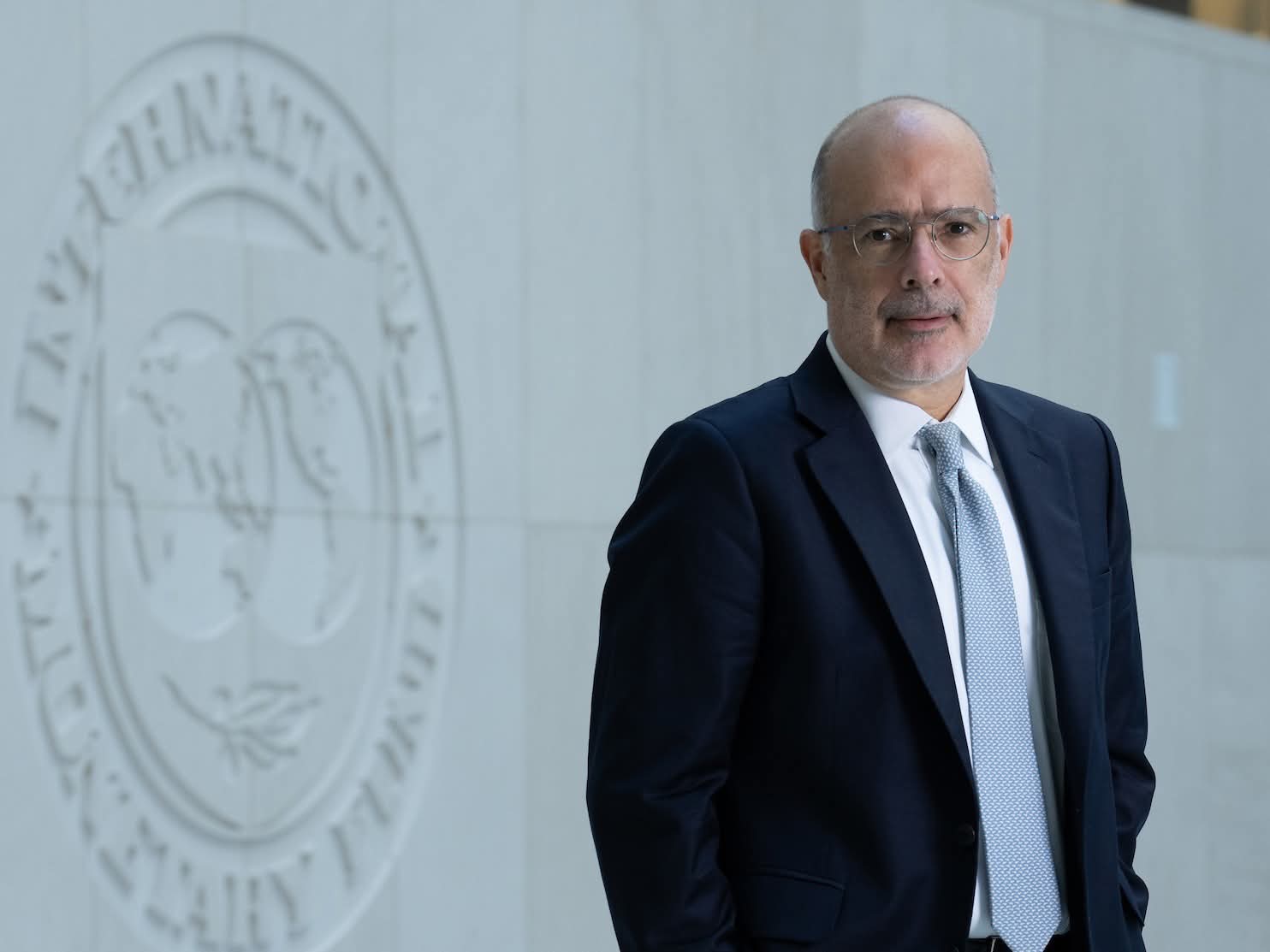
Rodrigo Valdés, director of the IMF’s fiscal affairs department, spoke during a press briefing on the fund’s fiscal monitor at the 2026 annual meetings of the IMF and World Bank in Bangkok, Thailand, on Wednesday.
His comments followed a question on how the fund could recommend allowing energy prices to reflect scarcity when higher fuel prices in Nigeria could raise transport costs, worsen inflation and deepen poverty, particularly when the government was facing calls to restore petrol subsidy ahead of an election year.
“Protecting people is not the same as protecting the price of fuels,” Valdés said.
He said fuel subsidies or measures preventing prices from adjusting fully to an energy shock had cost countries between 1 percent and 1.5 percent of gross domestic product (GDP) in 2026.
“It’s first fiscally very costly, and second, if you look at the pattern of consumption, it’s easy to see that that subsidy is readily regressive in many places,” he said.
Valdés said governments should instead use social safety nets and household data to identify people who need assistance.
“There are better tools to deal with this,” he said.
The federal government recently announced a 30-day petrol discount at Nigerian National Petroleum Company (NNPC) Limited retail stations, with priority for public transport operators, to cushion the impact of rising fuel prices.
Taiwo Oyedele, minister of finance, said NNPC retail would sell petrol at cost by foregoing its retail profit margin, describing the measure as temporary relief rather than a return to petrol subsidy.
The government also proposed negotiating a ceiling of N1,350 per litre on petrol’s ex-gantry or landing cost, subject to monthly reviews.
The IMF also recommended targeted interventions to cushion the effect of higher fuel prices on transportation costs.
Davide Furceri, a division chief in the fund’s fiscal affairs department, said governments could redirect some of the resources spent on blanket subsidies towards vulnerable consumers.
“For example, you mentioned transportation costs. Yeah, gasoline could go up, and perhaps bus fees may be subsidised in a way that is a much better policy at the end of the day than just a blanket subsidy for everybody,” Furceri said.
He also suggested alternatives such as school feeding programmes, geographical targeting and assistance for vulnerable farmers.
Furceri acknowledged that some countries lacked household registries and digital payment systems needed to deliver targeted support effectively.
However, he said governments could adopt alternative approaches in the short term while developing stronger systems.
He recommended that assistance should be limited, targeted and temporary.
Valdés explained that fuel subsidies could worsen global energy pressures by preventing demand from adjusting when supplies were constrained.
“When you subsidise, you don’t allow, at the end of the day, demand to adjust,” he said.
“And reality is that we have less fuels in the world economy. That means that someone else has to adjust more, and the market produces a higher price for that.”
The IMF official said subsidies were not only costly and regressive but could also have spillover effects on the global economy.
News
Ahmad Hamisu Gwale Wins NBMA National Award for Best Male Newscaster 2026
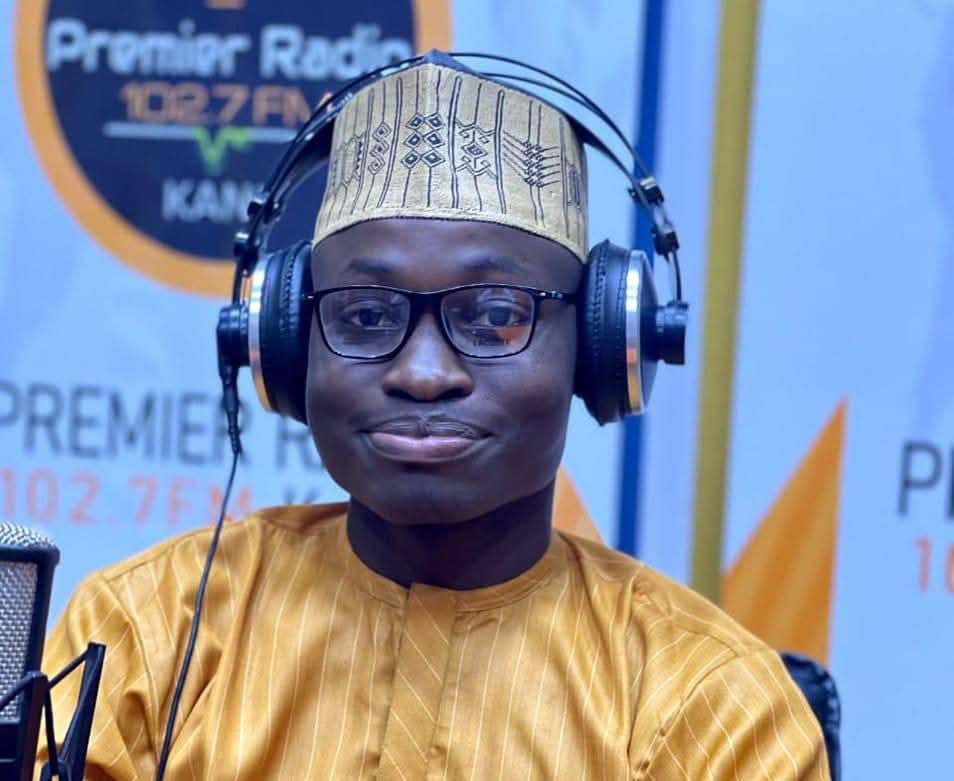
Kano-born journalist and broadcaster Ahmad Hamisu Gwale of Premier Radio 102.7 FM, Kano, has emerged as the winner of the Best Radio Newscaster (Male) National category at the seventh edition of the Nigerian Broadcasters Merit Awards (NBMA) 2026.
The awards ceremony was held on Saturday, 10 October 2026, at the Oriental Hotel, Lagos, bringing together broadcasting and media professionals to recognise excellence, professionalism and innovation across Nigeria’s media industry.
The annual awards featured more than 85 categories spanning television, radio and digital media.
Gwale emerged as the winner ahead of five other nominees: Gbenga Alli-Balogun of Eko FM; Nnah Douglas of Wazobia FM Abuja; Nyamgul Agaji of City 105.1 FM; Augustus “GUS” Aigbe of Cool FM; and Chike Osuji of Orient FM/IBC Owerri.
His achievement marks a significant milestone in his broadcasting career, further highlighting his work in radio news presentation and journalism.
From Sports Broadcasting to National Recognition.
Before winning the NBMA national award, Gwale received recognition from the Sports Writers Association of Nigeria (SWAN), Kano State chapter, as Best Radio Sports Presenter of the Year 2024.
The award was presented on 6 February 2025 during the association’s calendar launch in Kano, recognising his contributions to sports broadcasting.
His recognition at both the SWAN awards and NBMA reflects his professional experience across two important areas of radio broadcasting: sports presentation and news reading.
Early Life and Education
Ahmad Hamisu Gwale was born in Sani Mainagge, Gwale Local Government Area of Kano State, Nigeria.
He developed an interest in journalism and communication, which led him to pursue formal training in mass communication. He graduated from the School of Basic Mass Communication (BMC), Kano, in 2018.
He subsequently studied Computer Science at Kano State Polytechnic, completing his programme on 15 May 2026. He is currently advancing his studies in Computer Science through the Ahmadu Bello University, Zaria.
His educational background combines communication and journalism training with technical knowledge, supporting his interests in digital publishing, multimedia production and technology-driven media.
Journalism and Broadcasting Career
Gwale began his journalism career at Freedom Radio Kano in 2021 before joining Premier Radio 102.7 FM Kano in 2023.
At Premier Radio, he has worked in different capacities, including newsreader, reporter, sports presenter and multimedia journalist. His experience covers news preparation and presentation, editorial work, current affairs reporting, sports coverage and digital content production.
His professional responsibilities and interests include presenting news bulletins, writing and editing reports, covering football competitions, conducting interviews and producing content for broadcast and online audiences.
He has also contributed to sports programmes, including Zauren Wasanni, through which audiences receive updates and discussions about sporting developments.
Through these roles, Gwale has built experience in communicating news and sports information to diverse audiences.
Contributions to Sports Journalism and Barau FC
Beyond radio broadcasting, Gwale has been involved in football media and communications, particularly through his work with Barau Football Club, popularly known as the Maliya Boys.
His contributions have included preparing match reports, previews, player profiles, official announcements, post-match updates and digital content for supporters.
His involvement in football communications has also focused on promoting players, documenting club activities and bringing developments in Kano football to a wider audience.
His experience in sports journalism has complemented his broadcasting career and contributed to his recognition by SWAN Kano.
Publishing and Media Entrepreneurship
In addition to his broadcasting career, Gwale is the founder and chief executive officer of AHG Mirror Media Services Company.
He is also associated with Independent Mirror, an online newspaper established in September 2023, where he serves in a leadership and publishing capacity.
His media interests span online newspaper publishing, news reporting, digital content creation, multimedia production, social media management, online branding and media consultancy.
Through these initiatives, he seeks to expand access to news and information while exploring opportunities offered by digital communication and contemporary media platforms.
Combining Journalism with Technology
Gwale’s interest in Computer Science complements his work in journalism and digital publishing.
His technical education supports his broader interests in online media development, digital communication and multimedia production.
By combining journalism with technology, he is developing a professional profile that spans traditional broadcasting, online publishing, sports communications and media entrepreneurship.
A Milestone in His Broadcasting Career
Winning the Best Radio Newscaster (Male) — National award at NBMA 2026 adds to Gwale’s professional recognition and marks another milestone in his journey through Nigeria’s broadcasting industry.
From his early career at Freedom Radio Kano to his work at Premier Radio and his involvement in digital publishing and football communications, his experience reflects a career built across news presentation, sports journalism and media enterprise.
His latest recognition at the Nigerian Broadcasters Merit Awards places his name among the award recipients celebrated at the seventh edition of the national broadcasting event.
Ahmad Hamisu Gwale continues to pursue opportunities at the intersection of journalism, sports, technology and digital media.
News
Senate Passes Barau’s Bill to Provide Legal Framework for Yusuf Maitama Sule Federal University of Education, Kano
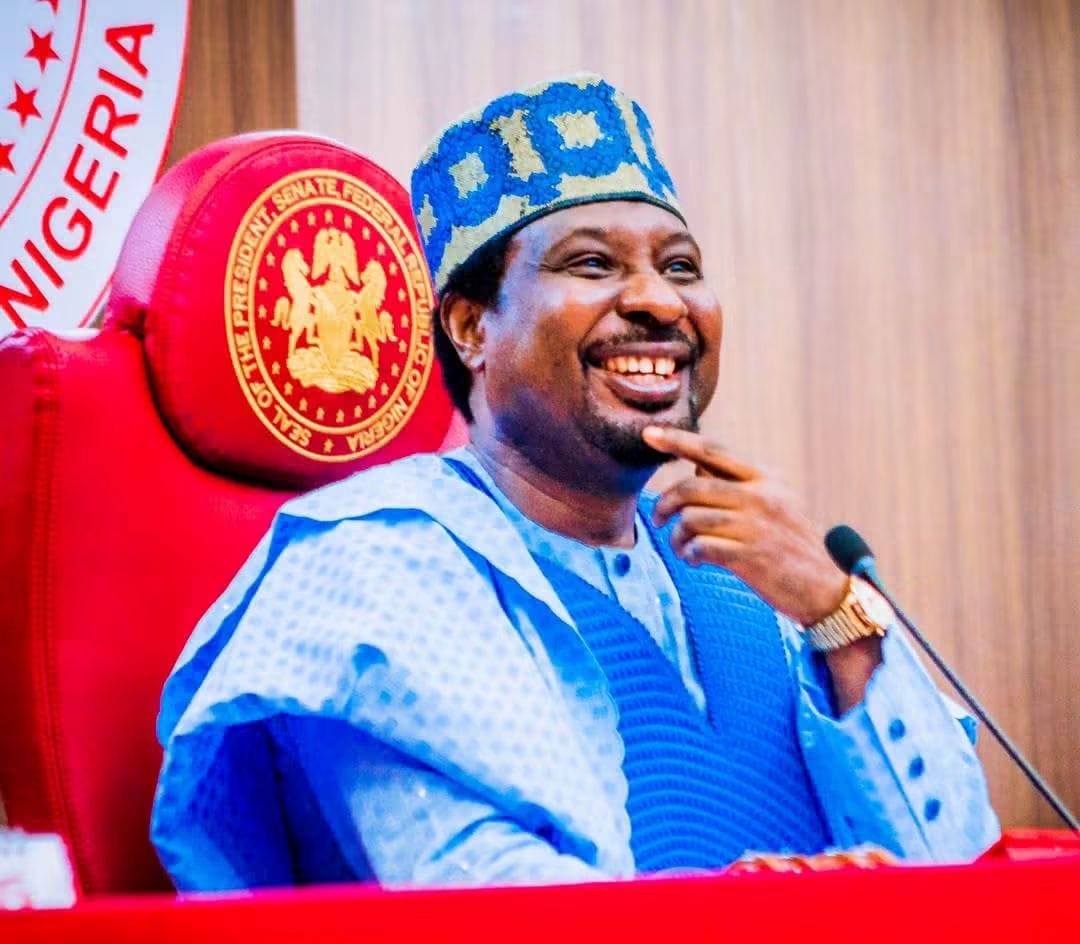
The Senate on Tuesday passed a bill sponsored by the Deputy President of the Senate, Senator Barau I. Jibrin (APC, Kano North), to provide a legal framework for the Yusuf Maitama Sule Federal University of Education, Kano, Kano State.
The bill was passed during plenary presided over by the President of the Senate, Senator Godswill Obot Akpabio, GCON. It seeks to provide the statutory foundation for the effective management and administration of the institution.
Recall that in September 2024, President Bola Ahmed Tinubu approved the conversion of the Federal Colleges of Education in Kano and Zaria into federal universities of education.
Following Senator Barau’s request on behalf of the people of Kano, President Tinubu, on May 10, 2025, also approved the renaming of the institution as the Yusuf Maitama Sule Federal University of Education, Kano.
To give the institution a legal framework, Senator Barau sponsored the bill, which passed through the legislative process and was approved by the Senate for second and third readings. The bill scaled first reading on Wednesday, March 25, 2025.
While leading the debate on the bill, Senator Barau said the legislation was necessary to give legal backing to the institution.
He commended President Tinubu for approving the institution’s upgrade and renaming, explaining that the bill would provide a legal framework for the promotion and development of teacher education and make comprehensive provisions for the university’s management and administration.
He said: “Mr Senate President, this institution has already been established by the President of the Federal Republic of Nigeria.
“You may recall, my colleagues, that in the last Senate, I made efforts to facilitate the establishment of these institutions, including the Federal College of Education, Zaria, which was to be upgraded to a full-fledged university, as well as Alvan Ikoku College of Education and Adeyemi College of Education. The bills were passed and transmitted to the late President Muhammadu Buhari, but they were not assented to.
“When President Bola Ahmed Tinubu assumed office, I approached him and conveyed the desire of my people to have the Federal College of Education, Kano, upgraded to a full-fledged university. He assured me that, since it was the request of the people, it would be done. The President subsequently approved the upgrade of the institution.
“But we were not done yet. At the request of my people, I returned to the President to seek approval for the institution to be named after the late Yusuf Maitama Sule. The President immediately approved the request. Today, the institution is a full-fledged university offering degrees in various fields of education.
” We cannot thank Mr President enough. He loves Kano and has consistently acceded to our requests. Beyond this institution, he has also approved the establishment of the Federal University of Science and Technology in Kabo and the Federal Polytechnic in Rano. We cannot thank him enough for these interventions.”
In his remarks, Senate President Godswill Akpabio commended Senator Barau for sponsoring the bill and thanked senators for supporting its swift passage.
He expressed optimism that President Tinubu would assent to the bill upon its transmission to him, thereby providing the university with the necessary statutory and regulatory framework to fulfil its mandate and continue contributing to national development.
Signed:
Ismail Mudashir
Special Adviser to the Deputy President of the Senate
(Media and Publicity)
October 13, 2026

IMF to Nigeria: Don’t Bring Back Petrol Subsidy for Everyone, Help the Poor Instead

Alhaji Abba Yusuf At 81: A Life Of Service, Leadership And Traditional Responsibility

Ahmad Hamisu Gwale Wins NBMA National Award for Best Male Newscaster 2026

Senate Passes Barau’s Bill to Provide Legal Framework for Yusuf Maitama Sule Federal University of Education, Kano

APC London branch confers development award on Gov Abba Kabiru Yusuf

Zamfara Varsity ASUU Threatens Warning Strike Over FG-ASUU Agreement, Promotion Arrears

PCACC Arrests Man Over Alleged ₦4.5m Sale, Illegal Leasing of Kano Government Horse Stable

Goje’s Electoral War:The Confrontation With Tinubu,Governor Inuwa,Usman Kumo And APC candidates Ahead Of 2027

Prof Yusuf Adamu Delivers BUK’s 63rd Professorial Inaugural Lecture, Reflects on Medical Geography and Academic Legacy

RE:WE ARE UNDER SIEGE: TARABA MONARCH BREAKS SILENCE AS FULANI BANDITS OVERRUN THE ANCIENT KWARARAFA KINGDOM:
IMF to Nigeria: Don’t Bring Back Petrol Subsidy for Everyone, Help the Poor Instead
Alhaji Abba Yusuf At 81: A Life Of Service, Leadership And Traditional Responsibility
Ahmad Hamisu Gwale Wins NBMA National Award for Best Male Newscaster 2026
Senate Passes Barau’s Bill to Provide Legal Framework for Yusuf Maitama Sule Federal University of Education, Kano
APC London branch confers development award on Gov Abba Kabiru Yusuf
Zamfara Varsity ASUU Threatens Warning Strike Over FG-ASUU Agreement, Promotion Arrears
PCACC Arrests Man Over Alleged ₦4.5m Sale, Illegal Leasing of Kano Government Horse Stable
Goje’s Electoral War:The Confrontation With Tinubu,Governor Inuwa,Usman Kumo And APC candidates Ahead Of 2027
Prof Yusuf Adamu Delivers BUK’s 63rd Professorial Inaugural Lecture, Reflects on Medical Geography and Academic Legacy
RE:WE ARE UNDER SIEGE: TARABA MONARCH BREAKS SILENCE AS FULANI BANDITS OVERRUN THE ANCIENT KWARARAFA KINGDOM:
-

 Opinion5 years ago
On The Kano Flyovers And Public Perception
-

 Features5 years ago
How I Became A Multimillionaire In Nigeria – Hadiza Gabon
-

 Opinion6 years ago
Kano As future Headquarters Of Poverty In Nigeria
-

 History6 years ago
Sheikh Adam Abdullahi Al-Ilory (1917-1992):Nigeria’s Islamic Scholar Who Wrote Over 100 Books And Journals
-

 Opinion5 years ago
My First Encounter with Nasiru Gawuna, the Humble Deputy Governor
-

 History5 years ago
The History Of Borno State Governor Professor Babagana Umara Zulum
-

 History6 years ago
The Origin Of “Mammy Market” In Army Barracks (Mammy Ochefu)
-

 News5 years ago
Federal University Of Technology Babura To Commence Academic Activities September