
Opinion
APC Zoning Arrangement :A Knot Too Tough To Untie
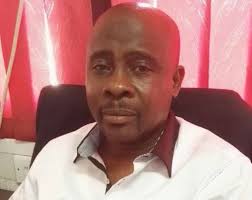
By Bala Ibrahim.
Yesterday, Wednesday 14/04/21, the social media was awash with a breaking news about a new zoning arrangement for the ruling APC, come 2023. But no sooner than the social media release, the Caretaker/Extra-Ordinary Convention Planning Committee (CECPC) of the party, came out with a counter statement, distancing itself from the zoning arrangement list in circulation.
According to the disowned list, the presidential ticket is zoned to the South, Vice President – North, Senate President – South, Deputy Senate President – North, while the Speaker – North and Deputy Speaker – South.
For the National Working Committee zoning, the list showed that the north will produce the National Chairman, National Secretary – South, National Treasurer – South, Financial Secretary – North, Legal Officer – North and Welfare Officer – South.
Whether true or false, the disowned arrangement is a reflection of the political pulse of the country, and the APC would find it as a knot too tough to untie.
Since the annulment of the June 12 election of 1993, the election that was adjudged to be Nigeria’s freest and fairest, and one that was cancelled by the then President of the day, Gen.Ibrahim Badamasi Babangida, Nigeria has been struggling with stress, in search of solution out of the precarious and politically entrapped position it found itself.
The predicament had resulted in many political experiments, with the then acceptable, even though not the best, being the idea of power rotation, between the geographical north and the geographical south.
Following the death of General Sani Abacha in 1998, his successor, General Abdulsalami Abubakar, began the transition process, which led to Nigeria’s return to democracy in 1999. The ban on political activities was lifted, and political parties were formed in accordance with the constitution, which was styled after the pattern of the second republic of 1979.
Cashing in on the sentiments that followed the June 12 annulment, the Peoples Democratic Party, PDP, founded in 1998, by members of numerous groups and organizations, including the G-18 and G-34, moved to the north, and in it’s first presidential primary election held in Jos, nominated former military leader Chief Olusegun Obasanjo, who had just been released from prison, and who happens to be from the same state with late MKO Abiola, the presumed winner of the June 12 election, as the presidential candidate in the elections of February 1999.
Obasanjo, in consultation with the party’s strategists, quickly picked Atiku Abubakar (then Governor-elect of Adamawa State) and a former leading member of the Social Democratic Party, SDP, as his running mate. They won the presidential election easily, and were inaugurated on the 29th of May 1999.
Using the same sentiment of power shift, the PDP held sway for 16 years, until the 28th of March 2015, when the party was defeated by the opposition APC, and Muhammadu Buhari became the President.
But still, the political problems continued, mostly rotating around the same pendulum of power shift, with restructuring as a recurring weapon of threat.
The argument of the advocates for the power shift and the clamourers for political zoning is that, for the practice of liberal democracy to be peaceful and successful, the mechanism for power-sharing must not only oscillate between north and south, but be seen to be ethno-regionally balanced.
Short of calling for the introduction of the policy of one country two systems, many political pundits believe the power shift arrangement, which, although seen as an elites’ strategy to negotiate continued participation in the political process and access to the national wealth, is the only panacea for maintaining peaceful political order in Nigeria today.
So for the ruling APC, it is a knot too tough to untie now.
Some adventurists are of the believe that, by virtue of it’s numerical strength, the north can retain power, through a negotiated alliance, but methinks that too is too tough to try.
Many APC stake holders, including Governors like Mallam Nasir El-Rufai of Kaduna state, Aminu Masari of Katsina state and Professor Babagana Zulum of Borno state, are openly in support of power shift to the south.
According to Governor Aminu Masari, the Southern region of the country should produce the next President, arguing that a non-northerner should succeed President Buhari in 2023, in the spirit of equity, fairness and justice.
Masari’s position trailed the views of other APC chieftains, who have maintained that there is an agreement on zoning, amongst whom is the former Senate Leader, Ali Ndume. Senator Ndume said the retention of the presidency in the North in 2023 would amount to a third term.
As for the Borno State governor, Prof. Babagana Zulum, it would be ungentlemanly for power to remain in the north, so the APC must heed the advice and keep to previous agreements made to shift power to the southern part of the country in the next administration.
Even non politicians, like the respectable former Head of State, Gen. Yakubu Gowon, have joined the clamour for such power shift. Gen. Gowon is calling for both zoning and rotational presidency among the six geo-political zones. He said, rotating the office is key to peace, tranquillity and development, suggesting that Nigeria should henceforth, have two vice presidents, saying that one of them should come from the zone producing the President and the other elected into power during the presidential election.
Yes, the APC can disown the statement on paper, but in the real sense of things, it is a reflection of the political pulse of the country, and a knot too tough to untie, I think.










Opinion
From Desks to Degrees: How Governor Yusuf Is Bankrolling A Generation’s Future
By Abba Anwar
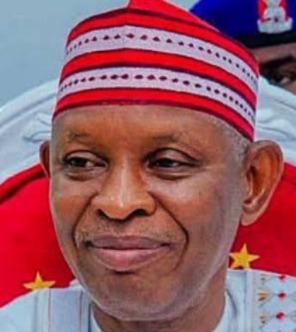
Who really wants to know who is His Excellency Engineer Abba Kabir Yusuf, Executive Governor of Kano State, in the education sector? Read through the following few paragraphs.
In 2024, education got 29.95% of Kano’s ₦437 billion budget. In 2025, it rose to ₦280.6 billion, 31% of the budget. A provision exceeding the globally suggested percentage for education. Meaning above UNESCO’s 26% recommendation. For 2026, Governor Yusuf presented a ₦1.368 trillion budget to the State Assembly, with ₦405.3 billion earmarked for education, which is 30% of the total.
That allocation earned His Excellency, by extension the state, an “Award of Excellence” at the Nigeria Governors’ Forum Education Summit and was hailed as a new National Benchmark. Kano sets pace for national development in one of the most important sectors of human endeavor.
“These allocations demonstrate our unwavering determination to invest heavily in human capital development,” Governor Yusuf said while presenting the 2026 budget. This clearly demonstrates his uninterrupted commitment and political will to change the direction of our education system from good to best.
With 68% of the 2026 budget going to capital projects, the message is clear: build systems, not just pay salaries. Which unarguably maintains his human-face policies since his assumption as an elected governor in 2023. Same zeal, same approach and same endurance keeps the wheel moving at high speed.
Another success narration is when the Governor assigned the Education Ministry to another committed gentleman of great substance and value, in the person of Dr Ali Haruna Makoda. Who, when the then Commissioner for Higher Education resigned, the Governor collapsed the Higher Education Ministry with the main Ministry of Education and directed Dr Makoda to handle them both. An executive recommendation from an Executive personality.
Another perspective to it, keeps manifesting for all to know how engaging is the people’s Governor. It is one’s clarity in observation that lights the road for healthier development. From the Minbars (pulpit) of Kano’s historic mosques to the timelines of Facebook, X and WhatsApp, one message is uniting all the 44 Local Government Areas, invest in the child. And extends same treatment to other aspect of the sector.
In just under three years, Governor Yusuf has turned that message into policy, budgets, and bricks. By declaring a “State of Emergency” on education and committing an unprecedented 30% of state resources to the sector, Kano is not just spending more. It is redefining what government can deliver to ordinary families. This means the direction of the ship is straight, the captain navigating all on board is visionary and the system is not collapsing but strengthening.
The result of Kano’s commitment is what led education experts to coin the development as “The Kano Model” which is bold, people-first experiment in how a sub-national government can interrogate out-of-school rates, teacher shortages, and poor learning outcomes all at once.
You may not appreciate Kano’s Model in the most appropriate way until and unless you view other states across the country. I searched two states from each of the six geo-political zones, compared them with Kano, I then arrived at what excellence means, what commitment entails and what Kano Governor symbolizes. An embodiment of good work and commitment.
Let me begin with the North West zone. Kano state had no available data for 2023. While in 2024, when the current administration started the year from the beginning, the percentage allocated to education was 29.95%. In 2025 education got 31%, meaning ₦280.6bn. And in 2026 the percentage is 30%, meaning ₦405.3bn. While Jigawa state had no available data in 2023-2025. But in 2026 the percentage is 26%, meaning ₦234.48bn of ₦901.84bn.
Under North East we are looking at Bauchi and Gombe states. For Bauchi in 2023 there was no available data. With the total budget ₦202.64bn, still allocation for education was not available. In 2024 the percentage for education was 16.1% meaning the sum of ₦48bn was allocated to the sector of the total budget of ₦300.2bn. In 2025 the allocation for education was 13%. And in 2026 it was 15%.
While in Gombe there was no available data for 2023-2025. But in 2026 they allocated 8.01%.
North Central we have Benue and Nassarawa states. Benue in 2023-2024 it lacked available data on the education allocation for the two fiscal years. But in 2025 the percentage is 14.1% and in 2026 they have 21.4%, equal to ₦148.73bn. For Nasarawa there was no available data for 2023-2025. But in 2026 the percentage for education is 17.3%.
At the level of South East states I selected Enugu and Anambra states. For Enugu in 2023-2024 fiscal years there was no available data. While in 2024 the percentage was 33%. In 2025 they have 32.99% and in 2026 they have 32.3%, meaning ₦522bn of ₦1.62tn. For Anambra in 2023 the percentage was 21.6%, meaning ₦30.88bn spent out of ₦142.9bn. In 2024 the percentage was 3.04%, of ₦15.85bn spent from ₦521.5bn. There was no available data in 2025. As in 2026 it was recorded that the percentage is 46.9%, meaning ₦355bn of ₦757bn.
Under South West I chose Lagos and Oyo states. Lagos in 2023 has 6.02% for education. Meaning ₦135.15bn out of ₦2.246tn.
In 2024 the percentage is 5.62%, meaning ₦127.49bn out of ₦2.267tn. In 2025 the percentage for education is 6.1%. And in 2026 it is 5.3%, meaning ₦234.6bn of ₦4.4tn. While in Oyo there is no available data for 2023-2025. But in 2026 the percentage allocated for education was 16.4%, meaning ₦145.97bn. The range for all South West states for 2026 is between 5.3% – 16.4%.
For South South zone I looked at Delta and Bayelsa states. Where
Delta in the period between 2023-2025, the data for such percentage is not available. In 2026 the percentage is 6.11%, meaning ₦105.08bn of ₦1.72tn. While Bayelsa also has no available data for 2023-2025. But in 2026 the education percentage for education is 7.43%, meaning ₦75.1bn of ₦1.01tn.
Looking at the above presented data we can deduce that, only 4 states crossed 26%, UNESCO recommended percentage. Kano, Enugu, Jigawa and Anambra 2026. Still Kano takes the lead. Kano still has 29.95% in 2024 and 31% in 2025.
In what I call Data Gap my reader can understand that most states didn’t publish education percentage in 2023-2024 Appropriation Laws. Especially in 2023 because they just assumed the leadership position in their respective states, that is the month of May of that year. Immediately after they were elected and emerged winners.
Kano in its budget breakdown gave the nitty-gritty areas of where those overwhelming percentage under education goes. Accountability in its purest and clearest form. I stand to be corrected. That is where I critically mean a Benchmark, that the state sets for other states of the federation.
You will come to understand that the numbers, percentages and the distribution of allocated share for education sector tell the story of political will of the people’s Governor, His Excellency Governor Yusuf.
He takes fees off parents. Under this I can say for parents in Dala, Tarauni and Rano, the impact is immediate and tangible. While the Governor feels better, because he is fulfilling campaign promises. He is managing the affairs with care, caution and prudent management.
While the Governor perfects proper management, his constituency, Kano State keeps faith in him continuously. An emerging trend of no cost barriers fills the space. Free education from primary to secondary remains. In 2025, government paid NECO, NABTEB and NBAIS fees for Kano indigenes, with over ₦4.45 billion earmarked. In 2024, ₦2.9 billion covered 109,000 students.
Population having more ccess to university increases. 10,000 SS3 students received free JAMB forms plus CBT training and transport. While another 5,000 benefited earlier.
I believe that there is new emerging perspective to classes. Which I also term as Dignity in the Classroom. This is where over ₦3.5 billion was spent to fabricate 80,000 desks for 240,000 pupils who previously sat on bare floors. In April 2026, another ₦2 billion was approved for furniture across 30 LGAs. Government also approved ₦1.5 billion for free uniforms for over 800,000 Primary 1 pupils.
At the infrastructural level again 1,358 secondary and technical schools plus 5,200 primary schools have been rehabilitated. While ₦2.7 billion was released for 176 new classrooms and 88 offices across all 44 LGAs. 250 boreholes and 820 toilets were installed. 73 buses were refurbished to convey girls to school daily. A state like no other.
Another slogan after Kano First, to me, should be Teachers First. Another very important slogan Governor Yusuf finds comfort in. S comfort zone. Hence his sudden endorsement. Which resulted into the recruitment of over 13,000. In 2025 alone, 400 Mathematics teachers and 1,600 watchmen were hired. 2,000 BESDA volunteers were converted to permanent staff. Wow! Wow!! Wow!!! For the first time in years, 39,000 personnel had their 2017-2022 promotions cleared, and salaries now arrive by the 25th of every month. Your Excellency Sir WAI DAN ALLAH AKWAI IRIN KA KUWA. I asked rhetorically.
The boarding school feeding budget was doubled to ₦4 billion, and in April 2026, the government settled debts owed to food suppliers. Feeding in Islam has a special place in our faith. Kano government under him does not stop at feeding alone. It goes with good feeding system.
I hope my reader can still remember when Kano was ranked 1st in Nigeria in the 2025 NECO results. That did not happen just like that. It wasn’t by accident. It was planned, followed process and procedures, perfectly executed, closely monitored and compassionately gave out result. What result? Emerging the First amongst all the remaining 35 states of the federation including Abuja, the Federal Capital Territory.
At the level of tertiary education, I can say it is a clear case of affordability meets aspiration. At the university level, the administration attacked cost.
Where all students in state-owned institutions enjoy a fifty percent (50%) reduction in tuition fees. Foreign and domestic scholarships have been re-introduced, and the state settled fees of Kano indigenes studying nationwide. This is a case of energy meets energy. We now have an energetic state bouncing back to its past glory.
Infrastructures are catching up. The Aliko Dangote Foundation is investing ₦15 billion to upgrade Aliko Dangote University, Wudil to international standard. In 2025, Gaya Polytechnic was established. Where ₦270.9 million went to an E-Library at the College of Education and Preliminary Studies. While ₦400 million furnished Northwest University.
The debate about skills not certificates or certificates not skills or a mixture of two standpoints is faced with wisdom, experience and encouraging political will. When twenty-one Skills Acquisition Institutes were also re-opened. For our population of mostly young men and women.
Under beyond the classroom strategy the vision goes wider. A statewide survey is ongoing to identify out-of-school children and integrate Qur’anic schools into formal learning centres. Whereas ₦2.81 billion is budgeted in 2026 for Almajiri school renovation, feeding and teacher training. Cash conditional transfers continue to support girl-child education. An excellent initiative of financial inclusion for girls.
There must be reason why the world is watching Kano. Governor Yusuf’s formula is simple but radical. Every school a good school; every child enrolled; every learner engaged; every teacher empowered. A well spirited engagement of political will, quality assurance and human approach of higher standard.
It is both systemic and systematic to understand that by putting more than 3 in every 10 Naira into education, clearing teacher backlogs, removing exam fees, and measuring success by NECO rankings, Kano has moved from promises to proof, from dream to reality, from analog to digital and from weak position to stronger engagement.
Governor Yusuf once said “This is a covenant to consolidate gains, complete key projects, and build systems that will serve generations.”
As other states grapple with dwindling revenues and rising dropout rates, Kano’s bet is that the fastest route to prosperity is not oil, gas, or contracts. It is the mind of a 10-year-old in a public primary school in Gwale and elsewhere in the state.
In Kano today, hope replaces hopelessness, kind substitutes wickedness, job dismantles joblessness and progress derails powerlessness.
Adieu Abba, Adieu Baban Al’Ameen, Adieu Kanawan Dabo!
Anwar writes from Kano
Saturday, 12th September, 2026
Opinion
Clerics Call, Citizens Cheer: Kano Rallies Behind Muhuyi’s Anti-Drug Task Force
By Abba Anwar
Politics apart, if there is anything non-political that can open corridor of victory for the Governor of Kano State, Eng Abba Kabir Yusuf to secure second term in office, that thing, could automatically be his fight against drug abuse and other related crimes strategy. Not only the fight, the political will and the commitment are but best options for better result.
The leadership of the State Multi-Agency Task Force on Drug Abuse and other Related Crimes, under Barrister Muhiyi Magaji Rimingado and his able team, gives much hope and periscopes brighter future for Kano. Once a leading state in drug peddling and substance abuse. But in recent Kano political history, Governor Yusuf excels in the area of suffocating drug abuse and other related crimes, with the bringing on board of the Task Force.
No wonder from the Minbars (pulpits) of Kano’s Mosques to the timelines of Facebook, X and WhatsApp, a single refrain is ringing out across the state: Stand with the Task Force! The war against drug abuse and illicit trafficking has taken a decisive turn, as the State Task Force pushes deeper into the Local Government Areas with arrests, raids, sensitization and community engagement.
The result is unprecedented. When Islamic clerics are urging congregations to pray for and protect the officers, civil society groups are applauding the boldness, fearless operations and thousands of citizens online are flooding comment sections with commendations and prayers. In a moment that feels like renewed hope. Result? Kano is uniting from Pulpits to pixels, behind the fight to reclaim its streets and secure the future of its youth.
The Chairman of the Council of Ulama of Nigeria, Kano State Branch, Shaykh Ibrahim Khalil, though a gubernatorial candidate of the opposition party, calls on the people of Kano state and beyond to support the work of the Task Force and secure the future of our younger ones. This he does without any recourse to political party differences. A Shaykh like no other.
In a widely circulated video clip, Shaykh Khalil made a courageous call as he said, “I am calling on my brothers the people of Kano state and beyond to stand up, cooperate and support the Task Force led by Barrister Muhiyi Magaji Rimingado in the fight against drug abuse and other related crimes. Because the thing is really harming us as a people. It is also retrogressive to our youth.
I also call on the government to please create a platform where people will be selected to engage these young people, our future, the youth, and counsel them. So that government will come to know their problems and frustrations. With the view to proffering lasting solution.”
Reiterating his commitment and support for the Task Force’s tasking responsibility, Shaykh Khalil emphasized that, “We are absolutely hopeful that, this Committee will help much in this area of drug abuse and other related crimes.
“We are also calling on all people to rise up and help Muhuyi Magaji in this struggle with prayers. It is absolutely necessary for government to listen to these suspected criminals and know their real worries,” fatherly advice by Chairman Council of Ulama, Kano Branch.
The Commander General of the agency saddled with the responsibility of ‘Al-Amr Bil Ma’ aruf Wannahayi Anil Munkar’ (enjoying good deed and forbidden evil), Kano State Hisbah Board, Shaykh Aminu Ibrahim Daurawa, in another widely circulated video clip encouraged that, “On behalf of our Hisbah, with twenty thousand (20,000) personnel, we are sending our good wishes and commendation for the establishment of Barrister Muhiyi Magaji Rimingado’s Task Force on the fight against drug abuse, phone snatching and even the killing of innocent people.
We should all thank His Excellency, the Governor for this great work. We are calling on people to commend the Task Force. This is a very important committee for all of us to encourage and support. Imams should preach against drug abuse on Minbars. So also journalists and social media users, among many others.”
This Task Force, according to Shaykh Daurawa, “… is not for Barrister Muhiyi Magaji alone. We call on all those who support those miscreants to please desist from that. Doing that is counter-productive and bad for all of us.”
Before saying anything concerning praises Barrister Rimingado enjoys in the social media, let me begin with commending social media handlers of the Task Force. Clips of many operations are viral in the social media. So also in the conventional media platforms, especially our radio stations and other national dailies.
I personally searched many videos shared/posted on the Task Force’s Facebook handle, monitoring operations, raids and arrests. My major concern for this, is knowing how Kano people react to Barrister Rimingado’s operations and other activities under the Task Force.
While over 90 percent of the reviewed comments are praises, commendations, encouragement and prayers directed at Barrister Rimingado and his team, like 5 percent or so condemned the mode of operations and 5 percent or so condemned the work of the Task Force in its entirety. The tiny percentage that totally condemned the Task Force is mainly because of political differences. Or because they work and judge with hearsay.
Let me share some of the comments here. I visited some postings and monitored their comment sections. I also monitored shares and likes.
A fraction of my findings is briefly presented below:
1- In posting “A” there are 4.8k and 225 comments. Some of the comments are that of Sagir Aminu who said, “Our people should not politicize this problem. It affects all. May Allah see us through.” Mannir Sale Muhammad critically observed that, “Masha Allah. All what Muhiyi Magaji said is true in its purest form. I saw a boy in railway who is always intoxicated from drug abuse.” Imam Bichi commented, “We wish you the best always.”
Bashir Nasidi Muhammad encouraged that, “We are solidly behind you in the fight against drug abuse. But you should make sure that there is a need for good investigation always. We are wishing you well.”
Jameel Yareema commended that, “I really enjoy your commitment. May Allah help you and guide you always. And whoever breaks the law should be punished.” Aminuddeen Abdullahi commended and encouraged that, “Wallahi Wallahi Wallahi we are with you always. Ours is to say may Allah protect you and make you successful Barrister Muhiyi Magaji Rimingado.”
2. In posting “B” there are 7.6k Likes, 282 Comments and 220 Shares. Under this one Sulaiman Sani said, “Truthfully this is the most important and crucial job that Abba’s administration created since their assumption.” Yusuf Muhammad commented that, “Oga this is Fashion Parade because you can’t fight drugs with (sic) telling them you are coming to them by (sic) siren.”
Hafizu Akilu said, “Whenever you see someone condemning this work of Muhuyi’s Committee he is not loving Kano. Or such a person is not from Kano. Because I observed there are a few individuals who hates Kano and they are condemning the effort.”
Hamza Musa compared Muhuyi and Wike in his comment. He said, “Wike and Muhuyi are like twin brothers. Even if you don’t like them, but you can’t deny that they are working. Though I don’t like Muhuyi because of a reason I reserve for myself, I think he deserves federal appointment.”
Musa Yunusa commented that, “Wallahi Wallahi Wallahi I’m extremely happy with what Muhuyi’s Committee did concerning those children around Nassarawa Specialists Hospital, (now called Abdullahi Wase Hospital). You always see them abusing drugs.” Abdullahi Ismail Muhammed KT, who sees the Task Force work as a mere content creation said, “This is a good content.”
3- In posting “C” there are 7.6k Likes, 282 Comments and 220 Shares. Under this Ibrahim Y. Said commented that, “If the Kano State government is really serious about this, marketers of such illicit drug should be arrested. And all routes used by them in trafficking the drugs should also be blocked.” Usman T Abdullahi, who saw the operation as a film or drama, queried that,” Name of the Scene.” To me you may not blame him. Probably he witnessed similar efforts in the past, that derailed. So it is up to the Task Force to take the challenge and prove to Usman and like-minded individuals that it is no longer as usual.
Bukhari Ashafa, who volunteered to be part of this great effort, urged that, “Please give us the phone number for giving you intel.” Saleh Nuhu commented, “Show of force. This is our collective fight.” And Usman Tijjani Abdulqadir said “Well done.”
4- In posting “D” there are 4.9k Likes, 107 Comments and 79 Shares. One Musa Ahmed encouraged that, “Wallahi whenever an educated man is assigned with responsibility he will deliver. In less that one Month Muhuyi terrified drug abusers and marketers.” Nasir Sani Dansaja who looked at the medical side of the operations advised that, “Please you should be using hand gloves next time, for safety.”
Malam Usman Fantami encouraged and appreciated the personality of Barrister Muhuyi, he said, “Whichever appointment is given to Muhuyi I believe without any doubt that, the result will be fruitful.”
5- In posting “E” there are 14k likes, 694 comments, 705 shares and 379 saved. This is a posting from BBC Hausa Service, in an interview with Muhuyi. In the comment section, one Bashir Mukhtar said, “I urge respectfully the Governor of Kano State to please encourage Barrister Muhiyi with everything and resources. So that he can work well continuously. I also urge His Excellency to please reopen Reformatory Institute Kiru and to establish another one in Kano Central and Kano North. So that the Centres can cater very well for the children involved in this menace of drug abuse. May Allah continue to protect our families and cater for those coming much later.”
Umar Usman Danlarabawa in his comment observed something critically important. He said, “Malam Muhiyi Magaji my observation concerning parents’ undertaking whose children are involved in this problem. Most of those young people engaging in this drug abuse cannot be controlled by their parents. Their hearts are that hard that they don’t even listen to their parents.
When a father is taken away by the Task Force who then will cater for the remaining children back home? When a father confessed that he can’t correct his ward, so the burden is on government to know what to do with the bad egg. But for a father who comes forward to bail his child or children, then such a father should write undertaking. I do hope that Muhuyi will see this advice and work with it.”
Abdulmutallib Muhammad Sani, in his comment adviced that, “If and only if government and Judges will support Muhiyi Magaji the effort will be successful. Because I know him as someone who keeps faith in whatever responsibility assigned to him. He is an achiever. Though I differ with him in politics, but I support him hundred percent in this struggle. There is nothing more harmful for us in Kano than drug abuse and related crimes.”
Muhammad G. Muhammad warned in his comment that, “People are taking this problem for granted. Unknown to them that this is a very serious problem. That we must all wake up an fight collectively. We just have to aid our able security agencies win this war.”
Hafizu Akilu another commentator queried with annoyance that, “In the entire world setting who gives birth to a boy and pushes him to the society for life direction, if not a Hausa man? His (Hausa man) is only interested in making love and producing babies without any recourse to how to train them in their upbringing.”
Above are some of the comments I came across with while examining how Kano people react to the work of the Task Force.
One greater thing I observed is, even the security agents going round with Barrister Rimingado for operations, are ready for the work. You will see courage, will and belief that the leader of the team, Rimingado, is courageous, unapologetic and honest in discharging his responsibility. The moral support is there, being promoted by the Chairman.
My final call is to the Governor, Sir this Task Force alone if handled well, can give you second tenure comfortably. And beyond that, it can pave your way to the Jannatul-Fiddaus.
Anwar writes from Kano
Friday, 11th September, 2026
Opinion
Per Ishaq Samaila: “Waziri” for Strategy. “Mai Jama’a” for Service. One Man. One Mission. Ibrahim Kabir Masari
By Abba Anwar
I read with great admiration and clear endorsement the piece by Ishaq Samaila titled “Why President Tinubu Calls Ibrahim Kabir Masari ‘Waziri’ and the First Lady Senator Oluremi Tinubu calls him ‘Mai Jama’a.” It is not only an envelope of precision, it is also the kind of political writing we need more of under the current political atmosphere; thoughtful, measured, and rooted in substance rather than fallacy.
Ishaq Samaila deserves commendation for capturing what many in Abuja understand but few can articulate so clearly. As he rightly noted, “President Bola Ahmed Tinubu describes Alhaji Ibrahim Kabir Masari as his ‘Waziri’ — a traditional title associated with counsel, responsibility, political strategy and service close to leadership. And First Lady Senator Oluremi Tinubu has referred to him as ‘Mai Jama’a’ a Hausa expression meaning “man of the people.”
These are not casual and loosed nicknames. In Samaila’s analysis, they represent “… two defining sides of Masari’s political identity.” I could not agree more. And it is on this premise that I offer this addendum, not to debate, but to amplify and showcase how Masari, the man, embodies every word in that excellent article.
Being “Waziri” in tensed and difficult political atmosphere isn’t a joke. The man, Masari, is an embodiment of Presidential trust, vision for the nation and unwavering loyalty from the former. While the latter maintains a very long standing relationship. He (Masari) is entrusted with the weight of the nation’s political stability. It is to be the calm in the storm, the ear that listens as it sounds musical to it, before decisions are made, and the hand that builds bridges where others see walls and castles in the air.
That is Masari. As Special Adviser to the President on Political and Other Matters, he has operated with a rare combination of discretion, ingenuity, efficiency and effectiveness. At a time when governance requires managing 36 states, 360 federal constituencies, and thousands of political interests, Masari has been the President’s henchman and trusted anchor.
He does not grandstand. He does not seek credit. His work is in the consultations that prevent crises, in the engagements that align stakeholders with the Renewed Hope Agenda, and in the political intelligence that allows leadership to stay ahead of challenges. Also in political sophistication that strengthens presidential ambition through utilization of all options.
This is the modern definition of a Waziri: a man who serves power by serving the country first. President Tinubu, a master political strategist himself, recognized this quality in Masari and brought him closer in strategy and execution. It was not by accident. It was designed long before now. A relationship built over decades and rooted in trust.
If “Waziri” explains Masari in the Villa, “Mai Jama’a” explains Masari in the villages, in our communities. And this is where his political genius truly shines. This is where he speaks wisdom, freedom and breaks chain of hardship, to stardom, to build a kingdom of service. He is a great leader and mentor who never left ground, grassroot. Hence, he is well grounded and firmer.
The title “Man of the People” is the hardest to earn in Nigerian politics because the people themselves must give it to you. You cannot buy it. You cannot lobby for it. You can only work for it. The title is more or less, achievable and non-replaceable. Masari toiled for it and achieved it.
First Lady’s description speaks to something deeper than politics. It speaks to character and characteristics. To accessibility and creativity. To a man who, despite holding one of the most sensitive political offices in the country, still believes in his people, still attends community events, and still understands the language of the ordinary Nigerian. Hence the initiation of many interventions. To help people become economically independent, culturally creative and politically reliable.
From Katsina to Kano, from party meetings to condolence visits, Masari has maintained what Samaila correctly called “… grassroots orientation and his ability to maintain contact with communities, political supporters and ordinary citizens.” What a reliable political figure. Reliability in its purest form.
He is proof that you can be in the room where national strategy is decided in the morning, and still be on the ground listening to market women and youth leaders in the evening. A balanced political figure, who believes strategy keeps political opponents continuously busy from a position of weakness. That balance is rare. That balance is leadership. That balance is resistance against a non-welfare state.
As Samaila concluded so powerfully, “Tinubu’s ‘Waziri’ is also the First Lady’s ‘Mai Jama’a.’ One description highlights his role around political leadership; the other highlights his connection with the people.”
In today’s Nigeria we need leaders who understand high-level politics but are not imprisoned by it. A clear explanation of President Tinubu’s symbol, a broken chain of slavery. Where poverty of rationality remains in limbo. We need advisers who can navigate complex stakeholder dynamics without losing touch with the pain and aspirations of the people. We need a Waziri who is also Mai Jama’a.
It is absolutely true that Masari depicts this with all that is said in Samaila’s article. He depicts loyalty without sycophancy. He depicts strategy without arrogance. He depicts accessibility without losing authority. The same way he depicts engagement without scarcity.
He is a bridge-builder in an age of division, where weaker opponents misrepresent facts with fictions, vision with illusion, and hope with hype. A stabilizer in an age of noise, who clearly differentiates empty noise from real choices. A public servant who understands that titles are not for decoration, they are for duty. They are for selfless service to humanity.
While I concur with the author in all his submission, let me also join him in celebrating this well-thought and timely piece. It reminds us that in the midst of our national challenges, we still have men and women in government who embody service, humility, and competence.
Alhaji Masari, by all standard, is one of them. The President saw the Waziri in him. The First Lady saw the Mai Jama’a in him. The people are beginning to see both. His interventions to his people is invaluable. His faith in this administration is absolute. His hope is renewed. His effort in renewing people’s hope is rewarding and visibly engaging.
Samaila Bravo for explaining in a more clearer terms, Waziri and Mai Jama’a in Masari. A golden coin of two inseparable sides.
Anwar writes from Kano
Thursday, 10th September, 2026

Kano APC Chieftain Calls For Re-election Of President Tinubu, Governor Yusuf

ADC Urges INEC to Bar Partisan Lecturers from Serving as Returning Officers in 2027 Elections

Male Heir Not My Priority ; My Daughters Are Doing Well, Says Dangote

BREAKING: APC Governors Hold Closed-Door Meeting Over Wike’s ‘Rainbow Coalition’

Oil Prices Rise After Saudi Pipeline Halt and Delayed Hormuz Talks

From World’s 9th Most Populous City to Perfect: As Gov Yusuf Revisits Kano Master Plan

95% of Governor Abba Kabir Yusuf’s Promises Have Been Fulfilled — CPS Interview By Musa Diso, In Kano

Bello Sharada: A Great Writer, A Bookish Soul, Gone Too Soon

Call Me Chairman, Not Tony!’: Elumelu’s Blunt Correction of Trainee Splits Internet as Old Video Sparks Double Standard Fury

Nigerians Are Tired of Promises’ — CAN Demands Action on Insecurity, Hardship In Eid-el-Maulud Message
Kano APC Chieftain Calls For Re-election Of President Tinubu, Governor Yusuf
ADC Urges INEC to Bar Partisan Lecturers from Serving as Returning Officers in 2027 Elections
Male Heir Not My Priority ; My Daughters Are Doing Well, Says Dangote
BREAKING: APC Governors Hold Closed-Door Meeting Over Wike’s ‘Rainbow Coalition’
Oil Prices Rise After Saudi Pipeline Halt and Delayed Hormuz Talks
From World’s 9th Most Populous City to Perfect: As Gov Yusuf Revisits Kano Master Plan
95% of Governor Abba Kabir Yusuf’s Promises Have Been Fulfilled — CPS Interview By Musa Diso, In Kano
Bello Sharada: A Great Writer, A Bookish Soul, Gone Too Soon
Call Me Chairman, Not Tony!’: Elumelu’s Blunt Correction of Trainee Splits Internet as Old Video Sparks Double Standard Fury
Nigerians Are Tired of Promises’ — CAN Demands Action on Insecurity, Hardship In Eid-el-Maulud Message
-

 Opinion5 years ago
On The Kano Flyovers And Public Perception
-

 Features5 years ago
How I Became A Multimillionaire In Nigeria – Hadiza Gabon
-

 Opinion6 years ago
Kano As future Headquarters Of Poverty In Nigeria
-

 History5 years ago
Sheikh Adam Abdullahi Al-Ilory (1917-1992):Nigeria’s Islamic Scholar Who Wrote Over 100 Books And Journals
-

 Opinion5 years ago
My First Encounter with Nasiru Gawuna, the Humble Deputy Governor
-

 History5 years ago
The History Of Borno State Governor Professor Babagana Umara Zulum
-

 History5 years ago
The Origin Of “Mammy Market” In Army Barracks (Mammy Ochefu)
-

 News4 years ago
Federal University Of Technology Babura To Commence Academic Activities September