
Features
The Man,The Scholar And The Activist :A Tribute To Professor Dahiru Yahaya (1947-2021)
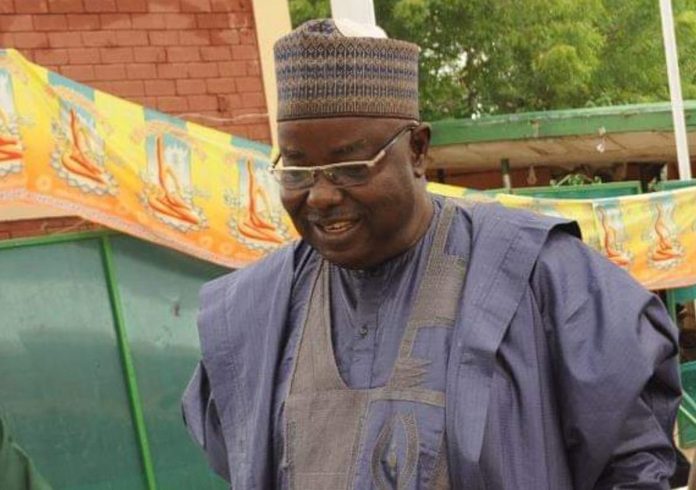
Huzaifa Dokaji
Although my grand uncle, I first met Professor Dahiru Yahya in 2011, when I joined Bayero University’s Department of History as a fresh History Major. In a short space of time, my relationship with him metamorphosed into many things: becoming his Majidadi, personal assistant to a point, his mentee, and also his research assistant. I was always in his office with questions about points he made in papers that he agreed to let me accompany him to his lectures both within and without the university. Impliedly, I spent five years (3 during my undergrad years and 2 after) attending both his Sokoto Caliphate, The Mediterranean World and the History of Political Ideas in the 19th Century lecture sessions. Establishing an intellectual rapport was easy because we shared interest in Ideas, which he was uniquely excellent with, and revolution, in which he was actively engaged. This familial and intellectual bond offered me the privilege of considerable access to many papers he wrote but did not publish, and even book manuscripts he was working on. When he started a project on the Intellectual biography of Malam, his father, which he tentatively named Gold in the Garbage: Reminisces of my Father, He nominated me as the Secretary of what was supposed to be the Project’s Committee.
A few months before his death, he engaged me in other projects including what would’ve been a commissioned Intellectual biography of former Head of State, Ibrahim Badamasi Babangida. He asked me to draft a proposal he would flesh out and forward to the titan. The last time I met him was on 8th January, when he informed me of his desire to involve me in another book project on the Historiography of Islam in Hausaland (which would be in the Hausa Language). We discussed and, as usual, argue on some of the key claims the work envisages on the history of Islam in Northern Nigeria. Like the humble intellectual he was, Professor Dahiru Yahya insists that I should accept his invitation to join the project, least to help find answers to what he called the “cogent issues” I raised against some of his key claims. As fate would have it, none of the projects would materialize. Perhaps, someday, someone capable will take up the gauntlet.
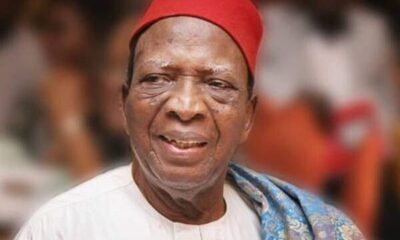
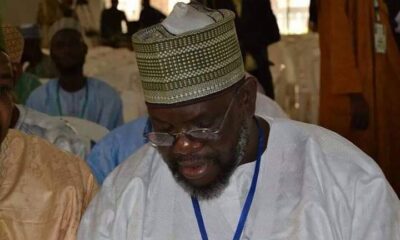
Nigeria’s Professor Of History ,Dahiru Yahaya Passes On At 75
If there was anybody who taught me to believe in my potential, it was Professor Dahiru Yahya. When I complained to him of a recurring feeling of inadequacy whenever I write, He called me the next day and asked me to pen a draft speech the Governor of Kano would read at the coronation of Emir Muhammad Sanusi II (2013-2020). When I submitted it to him, he made some corrections and asked that I deliver it myself to the person who asked for it. He was that kind of Mentor at his best.
DAHIRU YAHYA THE SCHOLAR
Once, at an event on the Sokoto Caliphate, a participant intimated that the Fulani are the only courageous people in Hausaland and it was thus wrong to consider Sarkin Gobir Bawa Jan Gwarzo as a gwarzo. Professor Dahiru Yahya disagreed with the speaker on grounds that not only did Bawa patronized scholars (which is an attribute of gwarazan masu mulki), but was courageous enough to grant Dan Fodio and his Jama’a Freedom of speech, conscience, despite knowing well they seek to upset the status quo ante with such freedom. Later in a private conversation, Professor Dahiru Yahya asked the Sultan of Sokoto if it was fair to refuse to recognize Bawa Jan Gwarzo as a gwarzo considering his conduct towards the jama’a. The Sultan refused to, and wisely so, commit himself by not answering the question. That was Dahiru Yahya, an intellectual who said it as he saw it.
Dahiru Yahya’s appreciation of Bawa Jan Gwarzo’s courage to grant his opponents freedom may have its origin in ‘lessons from history and politics’, since both his grandfather Muhammad and his father, Malam Yahya, were, like the Islamic Movement in Nigeria (IMN) he sympathized with, victims of repressive regimes. Muhammad was a legitimist who was unjustly imprisoned by the Yusufawa rebels for identifying himself with the Tukurawa. It took a petition to the Colonial government (to Mr Palmer actually) by his son, Malam Yahya, to secure his release. Malam himself did not have it good with Emir Sanusi I (1953-1963) at some point. Allegedly, the Emir felt threatened that with Malam’s guidance, the ascetic Galadima Inuwa stood a better chance to succeed karagar Dabo. Malam had to resign from his job as district scribe. Events like these might have prompted him to admit, in a poem he called Tabrīyah, his secret appeal before God:
I have come to you with many demands,
The best of all demands is to demand Freedom.
Professor Dahiru was an honest academic “who”, as Dr. Tijjani Naniya, his first Ph.D. candidate, told BBC Hausa, “said his mind without mincing words and appreciated scholarship wherever it came from”. For example, in 2017, I approached him with a list of topics I wanted to work on for my MA thesis for guidance. Two of the topics, one on the activities of the Islamic Movement in Nigeria (IMN) and the other on Opposition Politics in Kano, were proposed to me by some faculty in the department. I expected him to weigh in on the first topic since his romance with the IMN was well known. But he didn’t. He instead advised that I work on the second topic as it was “promising & would build my scholarly credentials more than the topic on IMN which was relevant largely because it was contemporary”.
Dahiru Yahya sees history as an unbreakable process that binds the Past, the Present, and the Future in a unity. As indigenous to traditional Historiography, his scope of the past dates as far back to Adam’s life of Innocence in heaven and the Present can be as long or as short as a lifetime spiritual anguish or bliss due to the Fall of Man.
The Future is not limited to life on Earth as agreed in Secular Historiographies, but to eternity & resurrection where man will return to his state of Innocence. The historical process, he often told me, was the link between the Past, the Present, and the Future. It is human efforts within the supervising Sunnatullah (scientific cause and effect) and mashi’ah, accidents, as Jacob Bronowski extrapolated it, that determine, mold and shape this process.
This historical progression is apparent in what al-Kindi recognized as the “universality of truth” or in a more generic sense, reality. It is the philosophical kith of Aristotle’s postulation that “the truth is universal and has neither ethnicity, nationality nor tribe”. It is hence safe to accept there is the element “truth” in every religion and philosophy, the bases of spiritual and secular civilizations respectively.
Nonetheless, Dahiru Yahya appreciated the achievements of Western Civilization and accepted its feats. He saw solutions in some of its approaches to social and political issues since knowledge is universal. But primary sources of inspiration were rather Islam, History and personal experience. He sees the social and political ideal in Islamic exoteric dimension and human ability to roam its esoteric propensities with divine guidance and personal effort. The Koran, the life of the Prophet (SAS) the struggles of the ahl bait, the Prophet’s noble progeny, the intellectual legacy of the Sokoto Jihadists especially the Sheikh Uthman Dan Fodio & his son, the cosmopolitan Muhammad Bell; and the poems of his father, Malam Yahya (published as Nahyl Bughya), influenced and shaped his thought on, and approach to, the Philosophy of history and intellectual activism. Dahiru Yahya’s “stridently bullish account” of the potential capability, achievement and future of Islam won him the recognition of the Times Literary Supplement, in its Centenary issues in 2004.
Outside this class of social and political philosophers, the individual with the most influence on him as a Professor of the History of Ideas is the Swiss-born Perennial Philosopher and Sufi Master, Frithjof Schuon, founder of the Maryamiyya order.
Professor Dahiru’s romance with philosophia perennis shouldn’t be a surprise since Malam, his father, who had great influence on his scholarship, appreciated and accepted, like the Perennials, the universality of knowledge in both its exoteric and esoteric dimensions. Malam considered the separation of the two dimensions as an “ideological amputation” ostensibly because the diversity of human thought goes back to the unity of God’s knowledge
. The truth therefore is and should be, a manifestation of both divine and human presence. Other Muslim scholars with remarkable influence on him include Ibn Khaldun, the Austrian-Jewish scholar Muhammad Asad, the Iranian Islamic Philosopher, Sayyed Hussein Nasr, and Ahmad Ghulam of the Ahmadiyya.
As a product of, and a Professor in Western scholarship, the influence of Western intellectuals is evident in his approaches. French Historian Fernand Braudel certainly makes it to the list through his magnum opus, The Mediterranean and the Mediterranean World in the Age of Philip II. The work provides the theoretical formula that guides Professor Dahiru’s analysis of how geography shaped the movement of history in pre-colonial and even contemporary Northern Nigeria.
This is more so ostensible in his analytical studies of the social, economic and political relations between the lowland and highland communities that constitute the region. Polish-British Mathematician, Historian and Humanist Scientist, Jacob Bronowski; and French Historian, Maxim Rodinson, are other key influences.
One thing that has always stumped me about Dahiru Yahya was how he was able to maintain a genial relationship with the nation’s shady political elites and its rebellious clerical class as a scholar-activist.
He was a one-time secretary of the Kano branch of the National Party of Nigeria (NPN), the nation’s ruling party in the Second Republic, and later the voice of the Islamic Movement in Nigeria. Like his father, Professor Dahiru personally never identified himself as part of Nigeria’s elites despite serving at least, and among others, as a Consultant on National Security to the Babangida Regime.
Consequently, this led to many conspiracy theories about his role on issues of national significance. A late Kano leader allegedly cautioned a former Military Head of State against appointing him as Vice Chancellor for fears that he could stir a rebellion from the comfort of his office.
His father, Malam, shared a similar dilemma, except that Malam was not controversial at least in the court of public opinion. On the one hand, Malam was the moral guardian and a favorite of the Galadima Inuwa, (1939-1963), and an employee of the Kano palace which he accused of replacing the wisdom of governance with the arrogance of past glory. In a Colonial report on the Dawaki ta Kudu district, a European inspection Officer described Malam as “unusually intelligent and keen”.
All his career as a District Scribe, Malam refused to accept accommodation and salary from the Colonial regime on grounds that it was contaminative. On the other hand, Malam accused the clerical class of substituting the humility of knowledge with the stupidity of ignorance. The elites handled both father and son with caution as did some of the clerics who considered him as a Malum Fada, the unpopular ulama-as-su that Dan Fodio condemned in his Kitab al-Farq. Many of such clerics later became his disciples and saw him as he truly was- an anti-Colonialist who sought to liberate his society from the anchor the “triumph of absurdity” has tied it to. Dahiru Yahya on the other hand was an anti-imperialist who aimed to push his society towards Islamic resurgence.
Dahiru Yahya received wide recognition for his academic feats. His Ph.D. at Birmingham University had neither a Masters degree before it nor a viva after it. The Ph.D. which was published in 1981 as Morocco in the 16th Century: Problems and Patterns in African Foreign Policy was the last book published in the Ibadan History Series and is to date one of the leading works on Sa’adi diplomacy, in English, and by a foreigner. It qualified him as the first Nigerian to publish a work on diplomacy. The research saw him cultivate Arabic, Osmanli Turkish, Spanish and French as research languages.
He established himself as the leading authority on Intellectual History and the History of Ideas in Northern Nigeria. For his outstanding contribution to scholarship, Dahiru Yahya became the first academic to be honored with a festschrift at Bayero University, Kano.
He was indeed a great scholar. Many may disagree with his conclusions and approach especially at the closing decade of his life, but none could honestly fault the exclusivity of his intellect, the precision of his approach and the profundity of his scholarship.
Rest well, Mentor.
Huzaifa Dokaji.
14th February, 2021












Features
Why I want To Rewrite Kannywood’s Playbook – Dan Hausa

By Saif Ibrahim, Kano
Who is Dan Hausa?
I am Kamilu Ibrahim born 31 years ago, but most people know me as Dan Hausa. I was born in Fagge, Kano State, and from the very beginning I knew I wanted to tell stories that reflect the realities of my people. I trained at the High Definition Film Academy in Abuja, SAE Institute, and also took part in the U.S. Embassy’s Filmmaking for Impact program. I join the fikm making industry and started directing in 2017 because I wanted full control over how my stories are told.
Can you tell us a bit about yourself and your journey into film directing?
My journey began with a love for storytelling—I started as a scriptwriter, then worked closely with experienced filmmakers before directing my first film. Over the years, I’ve learned that directing isn’t just about cameras and lights, but about understanding people, culture, and the power of narrative.
Growing up, I saw how films could educate and inspire people. In Arewa, cinema is more than entertainment—it’s a mirror of society. I wanted to use that mirror to reflect our values, challenges, and hopes. That desire to make meaningful films pushed me into directing.
What sets your work apart in today’s Kannywood?
For me, it’s about merging modern cinematic techniques with our Hausa cultural identity. I love bold visuals and tight storytelling, but I never want to lose that traditional heartbeat of my origin. My goal has always been to raise our production quality to international standards while staying true to our roots”, proof of that is clear in my current and biggest project, “Wata Shida.
How would you describe your directing style?
I like to call my style “realism with purpose.” I focus on authenticity—every scene, every performance, every frame must feel true to life. But I also ensure that there’s always a message, something the audience can take home and reflect on.
Can you highlight some of your notable works?
Sure, there is Wata Shida which is currently airing and has an overwhelming response from the public and the likes of Lulu Da Andalu a myth-inspired adventure series showing on AREWA24 and YouTube. YouTube pushed us to think bigger in terms of story and production. Mijin Hajiya earned me Best Director at the 2024 Kano Entertainment Awards, while Tataburza made waves at film festivals. Earlier films like Bakon Yanayi (2019) and my debut Kulba Na Barna (2017) helped me define my style. My latest project, Amaryar Lalle, starring Rahama Sadau, premieres August 2025 on Sadau Pictures TV. Each project is a step forward in showing what Kannywood can achieve.
What awards and recognitions have you earned?
I have also been recognized by the Arewa5050 Awards and Kaduna International Film Festival (KIFF) for Lulu Da Andalu, which even won Best Indigenous Hausa Film. There’s also an AMVCA nomination for best Africanindigenous language , which is exciting because it means Hausa stories are getting wider attention.”
Who are your key collaborators?
Filmmaking is teamwork; TY Shaba has been a creative partner on several projects, especially on Lulu Da Andalu. I have WORKED with Rahama Sadau on Amaryar Lalle has been fantastic; she brings so much energy to the screen.”
What themes do you explore in your films?
I like telling stories where modern life clashes with traditional values—family conflict, cultural identity, gender roles. These are real issues in our society, and I try to explore them honestly but cinematically. I believe film should make people feel and also think.”
What is your next project?
I am working on Wata Shida Season 2, a story about a woman who enters a six-month sham marriage to protect her inheritance. It’s socially meaningful but also very entertaining. I will also continue with season 2 of “Amaryar Lalle.”
Can you tell us a little about your latest project?
This project is very close to my heart. It follows a young girl fighting to get an education in a society full of obstacles. Through her eyes, we see how family, tradition, and resilience collide, and how hope can survive even in the harshest situations.”
What inspired you to make this story?
Growing up, I saw so many bright young girls whose dreams were cut short just because they were girls. I felt a responsibility to tell this story—not as fiction, but as a mirror of what is happening around us.
How do you balance tradition and modernity in your work?
A: It’s about respect. I respect our traditions, but I also embrace new technology and ideas. In my films, I make sure traditional values are represented truthfully, while using modern techniques to improve production quality.
What challenges do you face as a director in Kannywood?
Budgets are often limited, and resources can be scarce. But the biggest challenge is sometimes societal misunderstanding of what we do as filmmakers. People forget that film is also an art form and a tool for change, not just entertainment.
Can you tell us your favourite project
Every project has its own special memory, but I’m proudest when a film sparks conversation or impacts people’s lives. For example, one of my recent films about youth unemployment led to community discussions and even small initiatives to help young people. That’s when I feel film is doing its job.
What advice would you give to aspiring directors?
Learn the craft—don’t rush. Watch films, study scripts, spend time on set even if it’s just to observe. Most importantly, stay humble and focused. Filmmaking is about patience, teamwork, and vision.
What should audiences expect from your upcoming projects?
Expect more powerful stories rooted in our culture, with better technical quality. I’m working on projects that tackle real societal issues, and I believe they’ll resonate with audiences not just in Arewa, but globally.
Features
Antenatal Care: Why some women misses several sessions

By Aisha Muhammad Rabiu
In many parts of Northern Nigeria, antenatal care is a vital step in ensuring the health of both mother and the unborn child. Yet, an increasing number of women are neglecting this crucial stage of pregnancy, putting themselves and their babies at serious risk, hence the high infant, mother mortality rate.
Health experts have been warning that antenatal visits help detect pregnancy complications at its early stage, provide essential supplements for healthy mother/child development, and educate mothers on safe delivery practices. But for some women, they find antenatal care as a burden either due to poverty or lack of awareness based on cultural practices and beliefs. As such antenatal remains a neglected priority.
In Kadawa, Fatima Sani, a 28-year-old expectant mother, admits she has not attended a single session of antenatal since the start of her pregnancy. she said “It’s not that I don’t want to go, but the clinic is far from my house, and my husband says we should save the transport money for delivery day. I just pray Allah protects me and my baby.”
From Dan Bare, Shago Tara precisely, Khairat a mother of 4 shares her reasons for not attending antenatal session even though she is fully aware that the session is very important to pregnant women. She said “I feel healthy, so I don’t see the need to go for antenatal. My mother gave birth to all her children at home without any clinic visits, and they all survived.”
In Rijiyar Zaki, Hadiza Mukhtar recalls her previous pregnancy, where she skipped antenatal visits entirely. “The nurses were rude to me when I first went. I decided I would not return. This pregnancy, I haven’t gone at all,” she confesses.
For Usaina Muhammad of Kurna, the problem is financial. “I can’t afford the registration fee, and I also have other children to feed. I know antenatal is important, but survival comes first.”
Meanwhile, Maryam Lawan of Layi Kaji reveals that misinformation has influenced her decision. “Someone told me that the iron tablets they give at the clinic make the babies grow too big, making delivery harder. So, I decided to avoid it altogether.”
Medical professionals emphasize that skipping antenatal care increases the risk of complications such as anemia, high blood pressure, infections, and even maternal or infant death. Dr. Ibrahim Musa, a gynecologist in Kano, warns: “We see many emergencies that could have been avoided if the mother had attended antenatal. Most of these cases arrive late, making it harder for the doctors to save lives.”
Experts and community leaders agree that raising awareness is key in addressing the matter. Antenatal care should be made more affordable, accessible, and culturally acceptable for all women. Religious leaders, health workers, and family members all have a role to play in encouraging expectant mothers to attend regular check-ups.
Neglecting antenatal care is not just a personal choice; it’s a public health concern that affects families, communities, and the future of the nation. Ensuring that every mother has the knowledge, resources, and support to seek antenatal care is a step toward a healthier society.
Aisha Muhammad Rabiu writes from Bayero University Kano (BUK) and she can be reached at Email: aishatama2020@gmail.com
Phone no.08084273341
Features
Rano’s Peaceful Legacy: More Than a Slogan, One Tragedy Won’t Define Us

For decades, Rano Garin Autan Bawo has proudly stood as a symbol of peace and harmony in Kano State. It is a place where neighbors look out for one another, where disputes are settled through dialogue, and where diversity is met with respect—not resentment. In Rano, peace is not just a slogan—it is a way of life passed down through generations.
The tragic incident that recently occurred at the Divisional Police Station in Rano Local Government has deeply shaken our community. Known for generations as one of the most peaceful and united areas in Nigeria, Rano now faces the painful reality of an attack that led to the death of a Divisional Police Officer and the destruction of police property. This senseless act of violence goes against everything our community stands for and must not be seen as a reflection of who we are.
Rano has long been recognized for its peaceful spirit, tolerance, and respect for all. People from different backgrounds, religions, and cultures have lived side by side here in harmony. This didn’t happen by chance—it is the result of years of effort by our leaders, religious figures, and ordinary citizens who believe that our strength lies in our unity and diversity.
Our respect for law and order is deep-rooted. We understand the crucial role that security personnel play in keeping our community safe. The people of Rano have always appreciated the risks and sacrifices made by the police, military, and other agencies to protect lives and property.
Respect for the law here is not just about obeying rules—it’s about a shared belief in justice, fairness, and solving problems peacefully and legally. This belief has helped build a respectful and cooperative relationship between the police and the people.
What happened at the police station is completely out of character for our community. The individuals who carried out this attack do not represent us. Their actions go against the values that have shaped Rano. We strongly condemn what they did and make it clear that their behavior does not reflect who we are.
The loss of the Divisional Police Officer is not just a blow to the Nigeria Police Force or the Kano State Police Command—it is a loss for all of us. He wasn’t just doing his job; he was part of our extended family. His death is an attack on the peace and security that we all hold dear.
We send our deepest condolences to his family. No words can ease the pain of losing a loved one in such a brutal way. Our thoughts are also with his colleagues in the police force, who have lost a brother and a friend.
We also stand with the Kano State Police Command and the Nigeria Police Force as they face this heartbreaking loss. We understand how much this affects their morale, especially at a time when their work is more important than ever.
Destroying police buildings and equipment is not just an attack on law enforcement—it’s an attack on the very system that helps keep us safe. These facilities belong to the people and serve the entire community. Damaging them harms everyone, especially the most vulnerable among us.
We urge the government and relevant authorities to investigate this incident fully and fairly. Those responsible must be held accountable. Justice must be swift and uncompromised. Our community deserves to see the law upheld and the wrongdoers brought to book.
To our young people—the future of Rano—we ask for calm and reflection. We know that you may be frustrated or angry about many issues. But violence is never the answer. Taking the law into your own hands only brings more pain and setbacks for everyone.
Instead, we encourage our youth to focus on positive, constructive paths. There are peaceful, legal ways to raise your voices and push for change. Use those channels. Help move our community forward.
Rano must now focus on healing, rebuilding trust, and recommitting to the peaceful values that have always defined us. We must come together—young and old, leaders and citizens—to ensure that such violence never happens again.
We call on traditional leaders, religious figures, community elders, youth leaders, and all residents to stand united in promoting peace and respect for the law. Let’s strengthen our partnership with security agencies and support their efforts to keep us safe, while also holding them accountable to serve with respect and dignity.
How we respond to this tragedy will shape our future. Let us choose unity over division, peace over violence, and hope over despair. The actions of a few will not define us. We will protect the legacy of peace that Rano is known for and continue working together for a better tomorrow.
Buhari Abba wrote this piece from Unguwar Liman Rano.

Breaking: Kwankwaso Resigns from NNPP

Northern Youth Group Backs Doguwa for Kano APC Leadership, Urges National Role

Kwankwaso to Join ADC on Monday

Radiographers Kick Against Controversial Health Bills, Demand Immediate Withdrawal

2027 Race : President Tinubu’s Aide, Ja’oji Resigns to Contest

The Governor Who Chose His People Over His Politics: Abba Yusuf and the Moral Courage Behind Kano First

FREEDOM OF SPEECH, NOT FREEDOM FROM CONSEQUENCE: A CITIZEN’S CALL FOR RESPONSIBLE PUBLIC COMMENTARY
Restoring the Glory That Was Always There: Governor Abba Kabir Yusuf and the Historical Vision Behind Kano First

Tinubu to Swear in Olatunji Disu as Inspector-General of Police on Wednesday

NDLEA Clarifies: Drug Case Against Abba Kyari Still Active After Court Discharge
Breaking: Kwankwaso Resigns from NNPP
Northern Youth Group Backs Doguwa for Kano APC Leadership, Urges National Role
Kwankwaso to Join ADC on Monday
Radiographers Kick Against Controversial Health Bills, Demand Immediate Withdrawal
2027 Race : President Tinubu’s Aide, Ja’oji Resigns to Contest
The Governor Who Chose His People Over His Politics: Abba Yusuf and the Moral Courage Behind Kano First
FREEDOM OF SPEECH, NOT FREEDOM FROM CONSEQUENCE: A CITIZEN’S CALL FOR RESPONSIBLE PUBLIC COMMENTARY
Restoring the Glory That Was Always There: Governor Abba Kabir Yusuf and the Historical Vision Behind Kano First
Tinubu to Swear in Olatunji Disu as Inspector-General of Police on Wednesday
NDLEA Clarifies: Drug Case Against Abba Kyari Still Active After Court Discharge
-

 Opinion4 years ago
On The Kano Flyovers And Public Perception
-

 Features5 years ago
How I Became A Multimillionaire In Nigeria – Hadiza Gabon
-

 Opinion5 years ago
Kano As future Headquarters Of Poverty In Nigeria
-

 History5 years ago
Sheikh Adam Abdullahi Al-Ilory (1917-1992):Nigeria’s Islamic Scholar Who Wrote Over 100 Books And Journals
-

 Opinion4 years ago
My First Encounter with Nasiru Gawuna, the Humble Deputy Governor
-

 History5 years ago
The Origin Of “Mammy Market” In Army Barracks (Mammy Ochefu)
-

 History4 years ago
The History Of Borno State Governor Professor Babagana Umara Zulum
-

 News4 years ago
Federal University Of Technology Babura To Commence Academic Activities September