
History
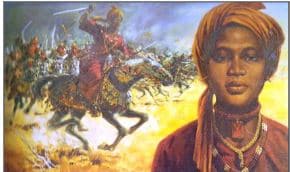
33 observations on the claim made by Ndagi Abdullahi regarding the non-existence of Queen Amina of Zazzau(1533-1610 Ad)
By Professor TIJJANI MUHAMMAD NANIYA
I am privileged to have read a write-up of one Abdullahi Ndagi on the fallacy of the existence puts Queen Amina of Zazzau. Initially, I was hesitant to take the issue seriously and thorny.
But on second thought, I realize that being a student of history always engulfed in research and documentation, to leave that matter to fizzle out without any response would be an injustice to posterity. More so, it is the responsibility of any teacher to engage in the practice of drawing away from his students and perhaps others from misinformation, disinformation, and conjectures, especially on issues pertaining to historical facts and facts of history. It is on this premise that I want to add my voice and partake in the discussion raised by Ndagi. However, I will limit my participation at the level of making the following observations on the write-up in the first instance:
- Ndagi’s reference to Amina as Queen of Zaria is very degrading and unacademic. All credible academic sources recognized Amina as Queen of Zazzau, and not Zaria. To reduce her authority to Zaria city is tantamount to debasing her status and military powers she exhibited in extending the territory of Zazzau Kingdom to the borders of Nupe Land.
- Ndagi claims that “Queen Amina” of Zazzau did not exist on the basis that the earliest “Zaria traditions did not mention it.”. Which are these traditions? Ndagi should have been scrupulous enough to name them. Weighty decisions in historical research must be substantiated with facts and sources. In history, nothing is accepted at its face-value.
- Ndagi infers that because the sources that attributed Zazzau origin to Queen Amina are not indigenous to Zazzau, they lacked credibility and could therefore be rejected. This is an unscholarly judgment. What of the works of al-Bakri and others that Ndagi is at pain to cite in order to bring home his hypothesis? Are they indigenous to Zazzau and Nupe kingdom?
- Ndagi should be reminded that the Kano chronicle is the first and oldest indigenous effort to document information about Hausa states and some of their neighbors. We are yet to have any other source to the contrary. If Ndagi is in possession of such works, he should make it available to us, please.
- Sultan Muhammad Bello’s affirmation of the existence of Queen Amina of Zazzau as mentioned in the Kano chronicle indicated the currency of the story within the scholarly circle in the Sokoto caliphate. The variance in the information on Queen Amina of Zazzau between the Kano chronicle and Infaqul Maysur and which Ndagi would want us to believe as folly is in fact credence to it. For it shows no connivance copious compilation from another source. Thus, Sultan Bello’s source is independent of that of the Kano chronicle.
- Ndagi should be reminded that both the Kano chronicle and Infaqul Maysur are two primary sources indigenous to the history of central Sudan. Readers would to know want which more authoritative sources Ndagi would refer them to use instead.
- That the Kano chronicle and Infaqul Maysur are the only sources that mentioned the story of Queen Amina goes to affirm the plausibility of the data. Prominent historians that Ndagi cites to support his case (Smith & Last) have attested to the quality of Infaqul Maysur. On the other hand, there are works that subjected the Kano chronicle to scrutiny which make them accept it as reliable documents. Abdullahi Smith, Murray Last and M.G Smith fall in this category. This made the history circle of many institutions to accept it as a relatively authoritative source of information for pre-colonial Hausaland and Sokoto caliphate.
- Ndagi claims that the name ‘Amina’ was not in use as a Hausa name in the 16th century. Unfortunately, he does not provide us with his source of information. But we are aware that as far back as the 14th century, that is before the formal acceptance of Islam in Kano by Sarki Yaji (1348-1385), one or two Sarakunan Kano bore Muslim names. Suffice it to add that Muhammad Rumfa’s (1463-1499) Mother was named Fatsimatu.
- What is more, prominent Historians such as Professors Abdullahi Smith and Murray Last which we realize Ndagi has respect for, have accepted the 16th century to be the golden period of the rise into prominence of Hausaland as a major Muslim region. Perhaps, adopting Muslim names such as ‘Amina’ could not have been uncommon in this period.
- The claim that no contemporary source, either written or oral ever mentions the story of Queen Amina as alleges by Ndagi, is not sufficient a reason to invalidate the sources that documented the information.
- Pre-colonial Explorers such as mentioned by Ndagi in his submission were not on a mission to identify and provide details on the origin and accomplishments of central Sudanese states. This was left for the colonial period when many colonial officers and others (H.R. Palmer, Hessler, M. Perham, E.D Morel etc) to do that. The assignments of the explorers in the 19th century were to explore the direction of river Niger, the nature of communities inhabiting the region, their projected population, their military preparedness, the topography of their lands and their agricultural potential. Queen Amina was not in their schedule.
- Ndagi claims that Queen Amina was “unknown to native griots”. We are yet to know the authority he relies upon in making this wild allegation. Secondly, We could not imagine how a documented story from indigenous sources could escape the memory of griots.
- With regard to the assertion that it was “European colonial historians that popularised” the story of Queen Amina, Ndagi should full well know that such ‘historians’ were sent with a purpose and a mission by the metropolitan power (Britain). If they popularised the legend of Amina, it was done to achieve a goal in a similar way they did to that of Bayajida, Syfawa, Kisra and Tsoede.
- The claim by Ndagi that the “Northern Nigerian story of Queen Amina” is a sort of narrating the “Middle Belt story of Kisra”. This is both contra factual and a mix-up. It is contra factual because during the era of Queen Amina there was no Nigeria to talk of its northern part let alone the ‘Middle Belt’.
- Secondly, even the current not constitutionally recognized categorization of Nigeria into six(6) geo-political zones, there is no such an official name as ‘Middle Belt’.
- To assume, as Ndagi wants us to believe, that the “original Zaria province or state is the ancient Nupe province of old Gbara…” is to degenerate into a soliloquy. It is a conjecture berry of logic and science, not to talk of death in sources.
- Secondly, “Zaria province“, connotes the colonial period. We are at odd to comprehend this speculation and mix-up that made Zaria province to be the same as ancient “old Gbara, Gunguma or Kangoma and now known as Wushishi or Dunguru (Zungeru).”
- Thirdly, if Ndagi were trying to create Nupe hegemony from the blues, let him first preoccupy himself with tackling the issue of the Igala factor in the origin of Nupe as a people and in bringing them into the limelight of history.
- Ndagi should be reminded that authors of Tarikh-a-Sudan and Tarikh-al-Fattash are not al-Sadi and al-Mukhtar as he presented. The actual authors are Ahmad Baba and Mahmud Kati respectively.
- Secondly, both works, known collectively as Timbuctu chronicles, primarily dwelt on the western Sudanese state of Songhai and its aftermath. They only provided scanty information on states such as Hausa land. We could not understand why their unawareness of the existence of Queen Amina should even come up.
- The claim by Ndagi that an Arab historian, “El Bakri wrote that today’s Nigerian ‘Middle Belt’ was known as Mina or Al Mina”. First of all, let us explain that Al-Bakri was more of a geographer than a historian.
- Second, his era was 11th century AD. In fact, he lived between 1040 and 1094 AD, at Cordova in Andalusia (Modern Spain). He did not visit central Sudan. All the information he provided in his work on the region was given to him by long-distance traders who traversed Kanem and Borno, Hausaland, and their neighbors.
- Third, we would like to be educated whether the Al-Bakri of the 11th century is the same Al- Bakri that stated “today’s Nigerian Middle Belt” as posited by Ndagi.
- Fourth we could not comprehend the reason why Ndagi should choose to accept the information provided by Al-Bakri, a foreigner not physically familiar with Hausaland, as valid and at the same time choose to reject or degrade data from the Kano chronicle and Infaqul Maysur, two sources that should have held more weight for reasons of being indigenous and as such more familiar with the geography, politics, and economy of central Sudan.
- Ndagi needs to prove a concrete source of his information to support the claim that it was Goddess Al-Mina that was misrepresented and misconstrued for Queen Amina. Sweeping statements such as above have no place in scholarship.
- It seems Ndagi is in dilemma in assessing the authenticity of European colonial sources on the northern region of Nigeria; when it supports his Nupe overbearing agenda as in the information provided by lady, then it is worthy and okay. But where it goes contrary to such goal, as in the case of S.J Hogben, it becomes unacceptable.
- More so we would wish Ndagi to enlighten us as to when communities in the ‘Middle Belt’ developed the tradition of adding the prefix, al, to a name, as in Al-Mina.
- As far as we know, the linguistic classification of Africa has placed central Naija-Benue confluence communities in the category of the Benue Congo family of languages that are more tonal in their speech. On the other hand, afro-Asiatic languages to which Chadic languages belong are mostly not tonal.
- We are in agreement with Ndagi that Smith and Last questioned the authenticity of Queen Amina’s story. Y.B Usman even called it a myth. But we could not recall any of these scholars ever identifying Queen Amina as the Goddess Al-Mina. Now that Ndagi wants us to believe so, we await proof from him.
- The claim by Ndagi that it was the “Hausa city chroniclers” who “unprofessionally” transcribed ‘Queen of Al-Mina’ as Queen Amina, suffers from gross inconsistency. Throughout the write-up, he repeats the ‘Goddess Al-Mina’. Suddenly now the Goddess has metamorphosed to Queen Al-Mina because it sources his cause.
- Secondly, we more clarification from Ndagi as to the identity of these ‘Hausa chroniclers’ and how it came about that they ‘unprofessionally transcribed’ the story on Queen Amina. After all, these chroniclers were officially trained professionals in the art of keeping oral information.
- There is another place where Ndagi posits that, in fact, the ‘Hausa chroniclers’ hijacked the story of Kisra and rehearsed it as the story of Queen of Amina. Which of the two does he want his audience or readers to believe?
- On the whole, the write-up by Ndagi seems to have a clear purpose which is to laud to the sky Nupe power and influence. But the supporting evidence that is adduced is either not mustered effectively or they are disjointed, misinterpreted, and sometimes deliberately rejected. In the end, they fail to provide concatenated cogency required to make a hypothesis valid. This does not augur well for scholarship especially in an era of post-truth promoted by the new Information Age where deliberate lies are posted in social media and both the unsuspecting and uncouth followers take them for the truth.
History
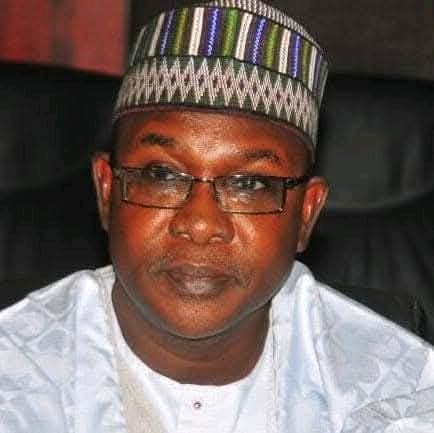
Late Prof. Haruna Wakili: A Legacy of Scholarship, Service, and Integrity
By Dr. Yau Muhammad
Professor Haruna Wakili (1960–2020) was a distinguished Nigerian academic, historian, and public servant whose contributions to education and governance left an indelible mark on both Bayero University, Kano (BUK), and Jigawa State.
Early Life and Academic Pursuits
Born in June 1960 in Rumfa word, Hadejia, Jigawa State, Prof. Wakili began his educational journey at Government Teachers College, Dutse, obtaining his Grade II Certificate in 1980. He proceeded to Bayero University, Kano, where he earned a B.A. in History in 1985, graduating as the best student in his department and receiving the Prof. M.A. Al-Hajj Memorial Prize and the Prof. Michael Crowder Prize for excellence in modern African history. He further obtained an M.A. in History in 1989 and a Ph.D. in 1998 from the same institution. In 2004, he expanded his academic horizons by earning a certificate in American History from New York University, USA .
Academic and Administrative Roles at Bayero University
Prof. Wakili commenced his academic career at BUK in 1990 as an Assistant Lecturer in the Department of History. Over the years, he rose through the ranks, becoming a Professor and Head of the Department. He was notably the only individual to serve twice as Director of the Aminu Kano Centre for Democratic Research and Training (Mambayya House), where he spearheaded significant research initiatives and promoted democratic studies . In 2018, he was appointed Deputy Vice Chancellor (Administration), a role he held until his passing in 2020 .
Commissioner for Education in Jigawa State
Between 2010 and 2015, Prof. Wakili served as the Commissioner for Education, Science, and Technology in Jigawa State under Governor Sule Lamido’s administration. During his tenure, he was instrumental in transforming the state’s educational landscape. His notable achievements include the establishment of Sule Lamido University in Kafin-Hausa, aimed at expanding higher education access for the state’s residents . He also oversaw the construction and renovation of schools, enhancement of teacher welfare, and implementation of training programs to improve educational standards .
Scholarly Contributions and Mentorship
An accomplished historian, Prof. Wakili specialized in the study of riots, revolts, conflicts, and peace studies in Nigeria. His doctoral thesis focused on the phenomenon of riots and revolts in Kano. He authored several publications, including “Turawa A Kasar Hadejia: Karon Hadejiyawa da Turawan Mulkin Mallaka” and “Religious Pluralism and Conflict in North Western Nigeria, 1970–2000” . Known for his intellectual rigor and integrity, he emphasized original research and was a staunch advocate against plagiarism. His mentorship inspired many students to pursue academic excellence and critical thinking .
Legacy and Tributes
Prof. Wakili passed away on June 20, 2020, at the National Hospital in Abuja after a prolonged illness. His death was deeply mourned across academic and political communities. BUK’s Vice Chancellor, Prof. Muhammad Yahuza Bello, lauded him as a dedicated scholar and administrator . Former Governor Sule Lamido described him as an epitome of humility and selfless service . The Emir of Hadejia, Alhaji Adamu Abubakar Maje, remembered him as a close confidant and a man devoted to humanity .
Prof. Haruna Wakili’s life was characterized by unwavering commitment to education, scholarly excellence, and public service. His contributions continue to inspire and shape the academic and educational landscapes in Nigeria.
Allah ya jikan Mallam da rahama. Ameen thumma Ameen.
Wassalam
History
History, Identity, and the Unexpected Echoes of Ancestry”-Dokaji
By Huzaifa Dokaji
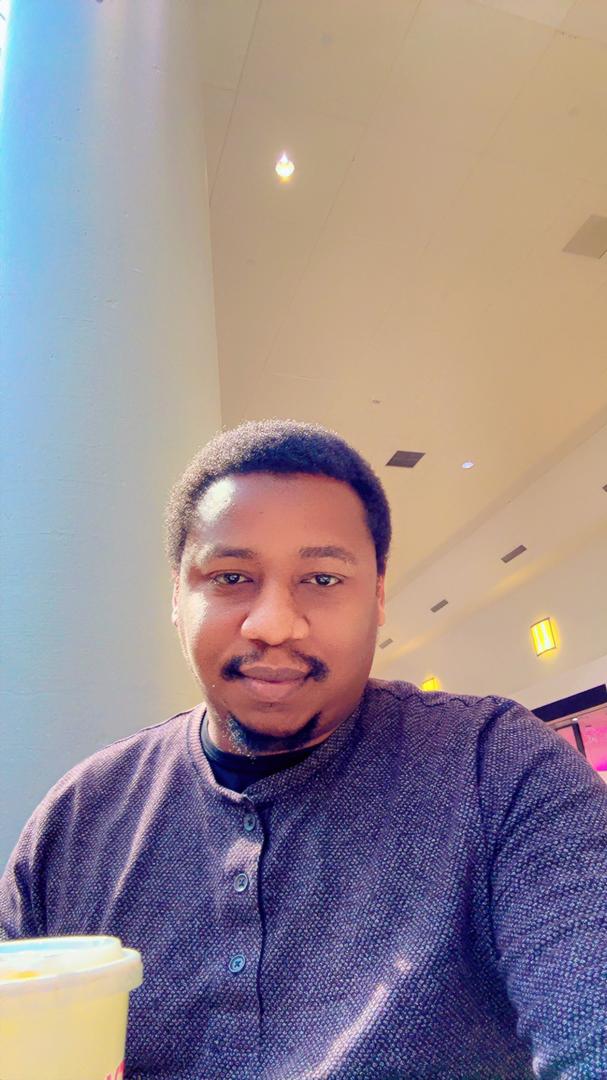
About 2 years ago, a good friend of mine who works and lives in the UK engaged me in a conversation about the history of Northern Nigeria. The discussion moved from topic to topic until we ventured to the Sokoto Jihad. After several exchanges, we agreed to create a Clubhouse room to discuss texts written by the Sokoto Jihadists. One of the most fascinating conversations we had focused on the intellectual exchange between Sokoto and Borno, or more precisely, between Sultan Bello and al-Kanemi. Like my friend, I found much of al-Kanemi’s reasoning compelling, except his argument that people should only preach against social and political corruption. To me, that view felt overly idealistic and did not align with the broader Islamic impetus.
My friend grew increasingly critical and more interested in the subject. The engineer in him wanted to understand how, to borrow from Prof. Samaila Suleiman Yandaki, the Sokoto history machine produced and disseminated its narratives of rebellion and legitimacy. We agreed and disagreed, but always in pursuit of the truth, elusive and debatable as it was. That was possible perhaps because neither of us was blinded by ethnic fetishism.
I must add that when all those conversations were going on, my friend felt his connection to that history was merely a result of geography and faith. He often tried to discuss it as a detached observer, carefully framing his questions to me as someone he considered a legacy of the very history we were scrutinizing.
Not long ago, my friend reached out with what was definitely an exciting and shocking news to him. He had taken one of those ancestry DNA tests, and the result showed he was Fulani. Through the company’s database, he identified and reconnected with a relative. Since they were both in the UK, they met and had a fruitful discussion, and to my friend’s astonishment his paternal descent goes back directly to Abdullahi b. Fodio.
This discovery, while exhilarating for him, also unsettled the very framework through which he had previously engaged with history. It blurred the line between the observer and the subject, raising questions about belonging, identity, and the burden of historical legacy. A realization hit him that in this part of the world, ethnicity is never just about bloodlines or surnames; it is a contested space shaped by memory, politics, and perception. My friend’s new discovery did not simply anchor him to a lineage; it dragged him into a narrative that is still very much alive, one that shapes contemporary anxieties, resentments, and aspirations.
His realization took us back into a discussion we had on Club House on the dangers of simplistic historical, or more correctly, political narratives. As we debated at the time, I argued that the past was never the neat category some would have us believe. The story of Ali Aisami makes this clear. Permit me to digress a little.
Ali Aisama was a Kanuri man who was forced to flee his town after it fell to the Jihadists. After his parents died, and he married his surviving sister off to his father’s friend, he sought refuge with another family friend in a Shuwa Arab town. One night, while returning from a nearby town, he was kidnapped by Fulani slavers. The following day, they sold him to Hausa slavers in Ngololo market, about 55 miles from the town of Shagou.
The Hausa slavers fettered him and marched him for 22 days to Tsangaya, a village southeast of Kano and known at the time for its dates. From there, he was moved to Katsina and later to Yawuri, where he was sold to the Borgawa. His new Borgu master took him home, and put iron fetters on him day and night until he finally sold him to a Katunga (Yoruba) king/prince in old Oyo.
The king/prince mistook Ali Aisami’s tribal marks for royal ones (since they look like Yoruba royal marks), and treated him honorably. However, after the jihad broke out in Ilorin, out of fear that Ali Aisami might join his Muslim brethren, he was taken to Dahomey and sold to European slave dealers. Eventually, he was freed by British anti-slavers and resettled in Sierra Leone, where he converted to Christianity and adopted the name William Harding.
Ali Aisami’s journey across ethnic, political, and religious boundaries show that 19th-century Northern Nigeria was more complicated than comtemporary narratives suggest. His story, like many others, disrupts the simplistic binaries that often dominate discussions of the 19th century—binaries that cast certain groups primarily as victims and others as aggressors or perpetrators. In reality, such roles were fluid, reversible, and deeply embedded in broader social institutions, particularly slavery. Although Ali Aisami was Kanuri, a group that were said to enslave Hausa and other less powerful groups, Aisami himself was enslaved by Fulani captors, sold to Hausa slave traders, and passed through a complex chain of transactions that involved the Borgawa, Yoruba royalty, and eventually European slave dealers.
More surpringsly, the Borgawa and the Hausa (recently framed as “helpless” victims in the midst of Kanuri and especially Fulani imperialists) were at different moments and in different contexts, complicit in the same systems of exploitation. Narratives like Ali Aisami’s compel us to rethink ethnic identity not as a fixed or moral category but as one embedded in larger structures of power, commerce, and survival.
Furthermore, they also reveal how the legacy of the Sokoto Caliphate cannot be read solely through the lens of ideological or religious transformation, but must also be situated within the material realities of slavery, warfare, and shifting political alliances. In this sense, Aisami’s life not only humanizes the abstract forces of the 19th century. It reminds us that historical agency often operated within morally ambiguous frameworks, where perpetrators and victims could inhabit the same position at different moments.
My point here is it is not intellectually helpful to see the jihad starkly as a war between right and wrong (as its protagonists do) nor dryly as the victimization of a certain group (as its antagonists do). Rather, it is more productive to approach 19th-century Northern Nigeria as a site of competing visions, shifting alliances, and intersecting hierarchies, in which individuals and groups navigated complex moral, economic, and spiritual terrains. This requires moving beyond essentialist readings that reduces history into tidy moral tales or ethnic scorecards. It calls for a method attentive to contradiction, nuance, and context. Only such an approach allows us to hold multiple interpretations at once: that perhaps, the jihad did led to religious and intellectual reform, and at the same time brought about new systems of enslavement and exclusion.
It is this methodological caution, grounded in a critical reading of sources and a suspicion of inherited and currently promoted narratives, that enables a fuller, more honest reckoning with the past. Here, the past is treated not as gold or garbage, but as a tangled emblem of value and ruin.
Anyways, the end of the gist is that after a Fulani Professor here in the US told me his ancestry DNA revealed strong Yoruba ties, I decided to send mine in to know where I fit. Who knows what I will turn out to be. I mean, it might not be a coincidence that I was almost born in Lagos and somehow vibe effortlessly with Yoruba people. Maybe it’s in the blood, or maybe, it’s just being Professor Aderinto’s mentee, I developed a soft spot for amala and fuji music. We will know in few months.
Huzaifa Dokaji wrote from the United States of America
History
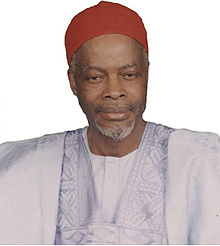
Today in History: Former Senate President Chuba Okadigbo Was Gassed To Death
By Abbas Yushau Yusuf
On September 23, 2003, the vice-presidential candidate of the All Nigeria Peoples Party, Chief William Wilberforce Chuba Okadigbo, was allegedly gassed at Kano Pillars Stadium by security agents during a rally of the defunct All Nigeria Peoples Party (ANPP), led by the opposition candidate in the 2003 general elections, General Muhammadu Buhari (retired).
The ANPP and its candidate, Muhammadu Buhari, staged the opposition rally at Sani Abacha Stadium as a prelude to their court case at the Presidential Election Tribunal in Abuja, led by Justice Umaru Abdullahi.
The rally, which had thousands of Buhari’s supporters in attendance, was graced by the new Governor of Kano State, Malam Ibrahim Shekarau, his late Deputy, Engineer Magaji Abdullahi, Hajiya Najaatu Muhammad, and John Nwodo Junior.
The ANPP National Chairman, Chief Donald Etiebet, also attended the rally. However, apart from Malam Ibrahim Shekarau, the rest of the ANPP Governors were not in attendance, including Ahmad Sani Yerima of Zamfara, Adamu Aliero of Kebbi, the late Bukar Abba Ibrahim of Yobe, Senator Ali Modu Sheriff of Borno, and Attahiru Dalhatu Bafarawa of Sokoto.
Aware of Dr. Chuba Okadigbo’s health condition, the then Federal Government under Chief Olusegun Obasanjo did not want the rally to proceed. Security personnel mounted the entrance to Kano Pillars Stadium to prevent entry into the field until the Kano Governor, Malam Ibrahim Shekarau, ordered the youth to break the gate, allowing the opposition figures to enter.
Upon entering the stadium, Malam Ibrahim Shekarau chastised his predecessor and the then Minister of Defence, Engineer Rabiu Musa Kwankwaso, for not visiting Kano since handing over power on May 29, 2003. He referred to Kwankwaso as “Ministan tsoro,” meaning “Minister of Fear.”
On returning to Abuja, the late William Wilberforce Chuba Okadigbo died on Friday, September 25, 2003, following the alleged gassing by security agents at Kano Pillars Stadium.
Dr. Chuba Okadigbo was the political adviser to former President Shehu Shagari during the Second Republic. He hailed from Oyi Local Government in Anambra State.

EFCC Reopens Atiku’s Alleged Financial Crimes Probe

APC Presidential Campaign Council: Nigerians Devoid Of Party Affiliations Endorses Tinubu’s 2nd Term-Kwankwaso

IMF to Nigeria: Don’t Bring Back Petrol Subsidy for Everyone, Help the Poor Instead

Alhaji Abba Yusuf At 81: A Life Of Service, Leadership And Traditional Responsibility

Ahmad Hamisu Gwale Wins NBMA National Award for Best Male Newscaster 2026

Zamfara Varsity ASUU Threatens Warning Strike Over FG-ASUU Agreement, Promotion Arrears

PCACC Arrests Man Over Alleged ₦4.5m Sale, Illegal Leasing of Kano Government Horse Stable

Goje’s Electoral War:The Confrontation With Tinubu,Governor Inuwa,Usman Kumo And APC candidates Ahead Of 2027

Prof Yusuf Adamu Delivers BUK’s 63rd Professorial Inaugural Lecture, Reflects on Medical Geography and Academic Legacy

RE:WE ARE UNDER SIEGE: TARABA MONARCH BREAKS SILENCE AS FULANI BANDITS OVERRUN THE ANCIENT KWARARAFA KINGDOM:
EFCC Reopens Atiku’s Alleged Financial Crimes Probe
APC Presidential Campaign Council: Nigerians Devoid Of Party Affiliations Endorses Tinubu’s 2nd Term-Kwankwaso
IMF to Nigeria: Don’t Bring Back Petrol Subsidy for Everyone, Help the Poor Instead
Alhaji Abba Yusuf At 81: A Life Of Service, Leadership And Traditional Responsibility
Ahmad Hamisu Gwale Wins NBMA National Award for Best Male Newscaster 2026
Zamfara Varsity ASUU Threatens Warning Strike Over FG-ASUU Agreement, Promotion Arrears
PCACC Arrests Man Over Alleged ₦4.5m Sale, Illegal Leasing of Kano Government Horse Stable
Goje’s Electoral War:The Confrontation With Tinubu,Governor Inuwa,Usman Kumo And APC candidates Ahead Of 2027
Prof Yusuf Adamu Delivers BUK’s 63rd Professorial Inaugural Lecture, Reflects on Medical Geography and Academic Legacy
RE:WE ARE UNDER SIEGE: TARABA MONARCH BREAKS SILENCE AS FULANI BANDITS OVERRUN THE ANCIENT KWARARAFA KINGDOM:
-

 Opinion5 years ago
On The Kano Flyovers And Public Perception
-

 Features5 years ago
How I Became A Multimillionaire In Nigeria – Hadiza Gabon
-

 Opinion6 years ago
Kano As future Headquarters Of Poverty In Nigeria
-

 History6 years ago
Sheikh Adam Abdullahi Al-Ilory (1917-1992):Nigeria’s Islamic Scholar Who Wrote Over 100 Books And Journals
-

 Opinion5 years ago
My First Encounter with Nasiru Gawuna, the Humble Deputy Governor
-

 History5 years ago
The History Of Borno State Governor Professor Babagana Umara Zulum
-

 History6 years ago
The Origin Of “Mammy Market” In Army Barracks (Mammy Ochefu)
-

 News5 years ago
Federal University Of Technology Babura To Commence Academic Activities September