
News
How female students in higher institutions suffer Sexual assault- report
Centre for Awareness on Justice and Accountability (CAJA), has revealed that more than half of the population of female students studying in higher institutions in Kano suffered one form of sexual harassment from male academic and non academic staff.
Executive director of the Centre, Kabiru Saidu Dakata disclosed this during a virtual conferences organized by Centre for Information Technology and Development (CITAD) on sexual harassment in higher institutions.
The three hours discussion held on zoom dissected issues around “Knowledge Production Dialogue Series Between Knowledge Production and Body Abuse: Debating Sexual Harassment in Knowledge Production Centres Confirmation in Kano”.
Kabiru who raised concern over the soaring rate of sexual abuse, revealed that recent survey conducted by the centre across universities, polytechnics and colleges of education in Kano, indicated no less than 51.7 percent of female students have suffered some form of assault, abuse or outright rape in the hands of their academic and non-academic staff of their institutions.
According to him, ” Outcome of the survey showed 45 percent physical touch or kiss by lecturers, 36 percent vocal request for sex from female students, 10 percent actual sex and 6 percent of rape. We also have percentages for cases of mutual resolution, no evidence to validate allegation and those on investigation”.
Although, the CAJA director affirmed circumstances where female students approach their male lectures for assistance, he regretted how lecturers usually take cheap advantage of students weaknesses to offer sexual commodity in exchange.
He also cited lack of effective channel to report case of sexual, inadequate security to protect students and absence of enabling laws to genuinely punish perpetrators of the heinous act as major predicament why rapists would never repent.
” Sexual assault and sometimes rape will continue in our higher institutions especially in Kano where we had our survey, for reasons I will advance. There is no proper and effective communication channel where student can safely report cases of assault.
” In some cases when the school authorities announced that we have set up a committee to look into an open case. You will realised the committee will take several months to wrap up their investigation and at the end of the day, is either the case is resolved amicably without justice or everything is buried.
” Also we find out that security in our schools is not very effective to secure female students. You will also realise that our legal instrument lack the strength to severely met our punishment against rapists, such that will serve as deterrent”.
Communication officer of CITAD, Ali Sabo stressed that the centre is advocating enabling laws to addressing the increasing trend in sexual assault on female students in Kano.
Rosa Luxemburg foundation west Africa supported the webinar.
News
Kenyan Presidential Aspirant Warns Dangote: ‘Don’t Rush Lamu Refinery, I’ll Send You Back to Nigeria’
By Yusuf Danjuma Yunusa
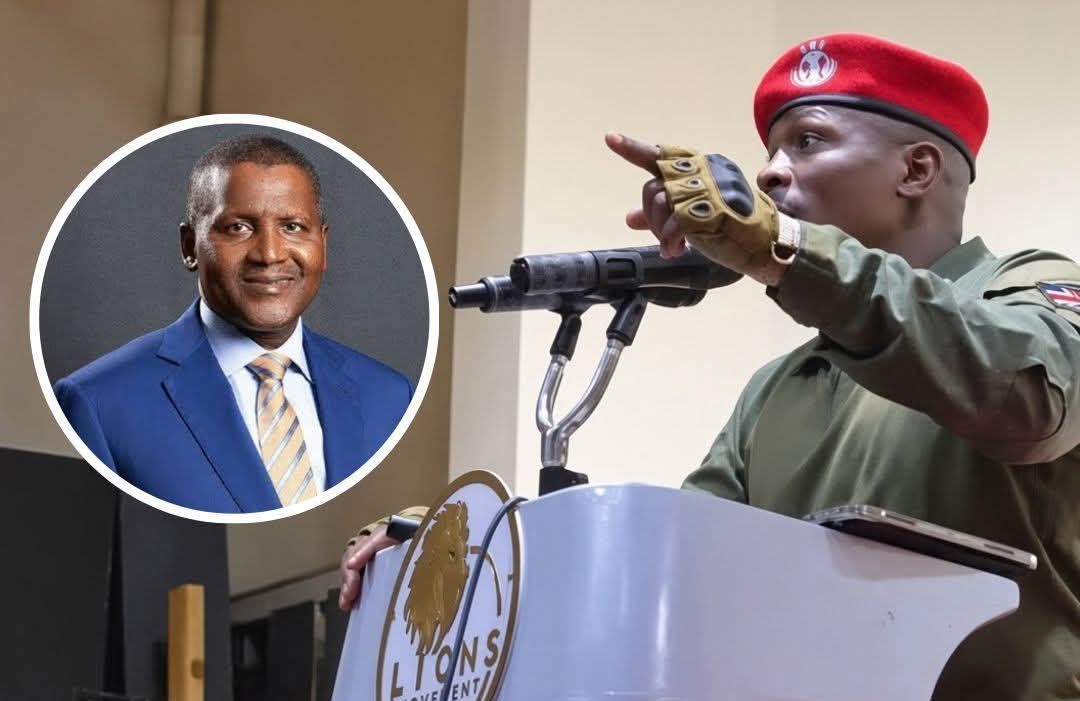
A man identified in a viral video as Kenyan presidential aspirant Patrick Osoi has sparked a heated online debate after warning Nigerian billionaire Aliko Dangote not to rush into establishing an oil refinery in Lamu, saying he would send the businessman back to Nigeria if elected president.
In the clip, said to have been recorded at a Lions Movement event, Osoi says: “I want to tell Aliko Dangote, please don’t rush to start the refinery because, when I’m sworn in as President of Kenya next year, you will be heading back to Nigeria.”
The remarks appear to reference a proposed $16 billion refinery project in Lamu, a coastal county that Kenya has promoted as a future hub for oil and gas infrastructure. Osoi argued that Kenyan investors have the capacity to build and run such a facility without foreign ownership.
“We don’t need to beg foreigners to develop our resources,” he said, according to a partial transcript of the video. “Kenyans can do it.”
The video has been shared widely on Facebook, X and WhatsApp, drawing mixed reactions. Supporters praised Osoi for what they called a bold defense of economic sovereignty. Critics warned that the comments could scare off foreign investors and strain Kenya’s diplomatic and trade ties with Nigeria.
Dangote, Africa’s richest man and chairman of Dangote Group, has not publicly responded to the clip. His conglomerate operates one of the world’s largest single-train refineries in Nigeria and has investments in cement, sugar, fertilizer and petroleum across Africa.
The Kenyan government has not commented on the video. It was not immediately clear whether the Lamu refinery project involving Dangote is still active or whether Osoi’s remarks reflect any official policy.
Political analysts say the controversy underscores growing public debate in Kenya over foreign investment, local content and control of natural resources ahead of the next general election, expected in 2027.
News
NDC’s Kano Governorship Candidate Gwarzo Missing From INEC Final List
By Yusuf Danjuma Yunusa
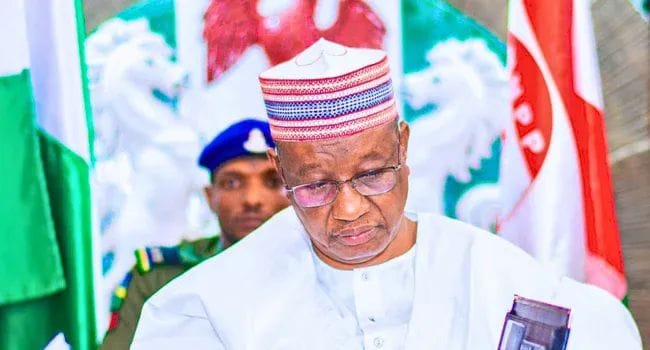
The National Democratic Congress (NDC) governorship candidate in Kano State, Aminu Abdussalam Gwarzo, is absent from the final list of governorship candidates released by the Independent National Electoral Commission (INEC).
The three-page list, signed by INEC Secretary Rose Oriaran-Anthony, contains 17 governorship candidates and their running mates for the Kano election, but neither Gwarzo nor any other NDC candidate appears on it.
Those listed include Governor Abba Kabir Yusuf of the All Progressives Congress (APC), Abacha Muhammed Sani of the Peoples Democratic Party (PDP), and candidates from the African Democratic Congress (ADC), Labour Party (LP), Social Democratic Party (SDP), Action Alliance (AA), African Action Congress (AAC), Action Democratic Party (ADP), All Progressives Grand Alliance (APGA), Allied Peoples Movement (APM), and New Democratic Party (NDP), among others.
The document provides the names, political parties, ages, genders, and educational qualifications of the candidates and their deputy governorship candidates.
INEC did not state why the NDC candidate was omitted, and the published list does not indicate whether the omission is connected to the party’s nomination process, documentation, or another issue.
The development raises questions about the NDC’s participation in the Kano governorship election, although the list alone does not establish the reason for Gwarzo’s absence.
News
Dawakin Tofa Academic Forum Holds Maiden Heroes Day, Honours Former Kano Governor
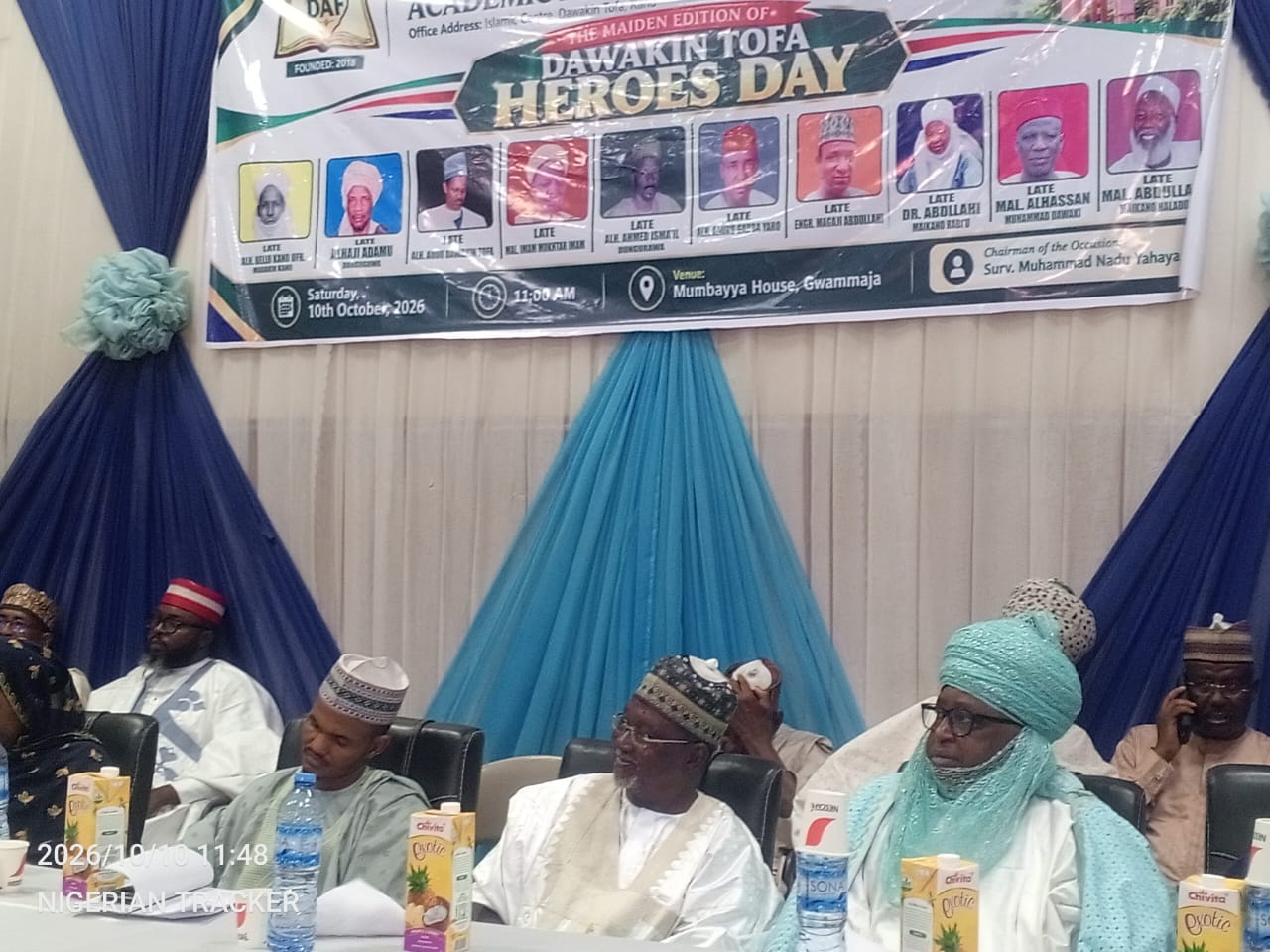
The Dawakin Tofa Academic Forum has held its maiden Heroes Day and awards ceremony, honouring 10 distinguished late indigenes of Dawakin Tofa Local Government Area of Kano State for their contributions to education, public service, politics, community development and other fields.
The event, organised by the Dawakin Tofa Academic Forum, brought together academics, community leaders, elders and other stakeholders to celebrate the legacies of prominent personalities who contributed to the development of Dawakin Tofa, Kano State and Nigeria.
Speaking at the ceremony, the chairman of the forum, Dr Junaidu Danladi, said the organisation was established in 2018 to bring together educated indigenes of Dawakin Tofa, including professors, associate professors and other professionals from tertiary institutions.
Danladi said the forum had grown significantly since its establishment, with more than 100 members committed to promoting educational development and recognising individuals whose contributions had positively shaped the community.
He said the maiden Heroes Day was organised to preserve the history of Dawakin Tofa and ensure that the achievements of its prominent sons were documented and remembered by present and future generations.
In his remarks, Surveyor Muhammad Nadu Yahaya, an elder and former commissioner for lands, budget and planning, described the initiative as a timely and commendable development, saying the recognition of distinguished personalities from Dawakin Tofa was long overdue.
Yahaya said the forum represented the intellectual elite of Dawakin Tofa, whose members had demonstrated a commitment to advancing the community through knowledge, innovation and public service.
He commended the organisers for introducing the Heroes Day initiative, describing the selected award recipients as eminent personalities whose influence extended beyond Dawakin Tofa to Kano State and Nigeria.
Yahaya also called on the people of Dawakin Tofa to make additional efforts to distinguish the local government through educational advancement, community development and other innovative initiatives.
He prayed for Allah’s blessings upon the award recipients and the organisers, urging the forum to sustain the programme as an annual event that would inspire younger generations.
Similarly, Madakin Kano, Yusuf Nabahani Cigari, commended the Dawakin Tofa Academic Forum for recognising the achievements of the community’s late prominent figures.
Cigari said Dawakin Tofa was blessed with accomplished individuals across politics, the economy and public service, adding that the local government had a rich history of producing personalities who contributed to the development of Kano State and the country.
He urged the people of Dawakin Tofa to remain united and work collectively towards the progress of their community, stressing the importance of preserving its heritage and celebrating its achievements.
The former chairman of the Dawakin Tofa Academic Forum, Dr Ameer Abdul Aziz, presented the profiles and contributions of the personalities selected for the maiden edition of the Heroes Day.
Abdul Aziz explained that hundreds of deserving indigenes could be considered for recognition, but the forum selected 10 individuals for the inaugural edition, with the intention of honouring more distinguished personalities in subsequent editions.
Among those honoured was Bello Kano, also known as Madakin Kano, who was born in 1907 and died in 1987. Abdul Aziz said Bello Kano began his career in education as an assistant teacher before rising to become a headteacher at a middle school.
According to Abdul Aziz, Bello Kano also served in different administrative and legislative capacities and contributed to the establishment of primary and post-primary schools in Dawakin Tofa, helping to expand access to education in the area.
Another recipient was Alhaji Adamu Danguguwa, who lived from 1913 to 1988. Abdul Aziz said Danguguwa acquired Qur’anic education and later attended Samaru Agricultural School, where he received agricultural training.
The forum also recognised a former governor of Kano State, “Alhaji Abdu Dawakin Tofa,” born in 1932 and died in 2003, who studied at Kansas University in the United States and served as commissioner for agriculture, deputy governor and governor of Kano State from May to October 1983.
The late Imam of Dawakin Tofa, Mukhtar Iman, who lived from 1935 to 2008, was also honoured for his contributions to reconciliation and efforts to combat illiteracy, according to Abdul Aziz.
The forum recognised Ahmad Ismail Dungurawa, who lived from 1945 to 2008, for his role in struggles for justice and his efforts to promote the interests of ordinary people.
Another award recipient, Aminu Garba Yaro, was celebrated for his generosity and support for children, including assistance to young people seeking educational opportunities. Abdul Aziz said Yaro, who worked with United Bank for Africa, made contributions to the welfare and advancement of others.
The forum also honoured Engineer Magaji Abdullahi, a water engineer who lived from 1947 to 2016, for his contributions to Dawakin Tofa, Kano State and Nigeria. Abdul Aziz said Abdullahi’s professional work and services had made a lasting impact on the community ,a prominent politician and a former Deputy Governor of Kano state from 2003 to 2007.
Abdullahi Maikano Rabiu, who lived from 1949 to 2021, was recognised for his commitment to supporting students, including those he knew personally and others who approached him for assistance, according to Abdul Aziz.
Abdul Aziz described Rabiu as a compassionate individual and a man of wisdom whose generosity helped many people pursue their educational ambitions.
The forum also honoured Alasan Dawakin, who was born in 1946 and died in 2023, for dedicating about five decades of his life to teaching and learning, according to the former chairman.
Another honouree was Malam Abdullahi Maikano, who lived from 1942 to 2023, in recognition of his contributions to the community.
The organisers said the Heroes Day was designed not only to honour the achievements of the deceased personalities but also to encourage younger generations to emulate their commitment to education, service, integrity and community development.
The maiden edition marked an effort by the Dawakin Tofa Academic Forum to document the history of prominent indigenes and establish a platform for celebrating individuals whose contributions might otherwise be forgotten.
The forum is expected to use the initiative to strengthen community ties, promote educational values and encourage the emergence of future leaders committed to the development of Dawakin Tofa and Kano State.

Kenyan Presidential Aspirant Warns Dangote: ‘Don’t Rush Lamu Refinery, I’ll Send You Back to Nigeria’

NDC’s Kano Governorship Candidate Gwarzo Missing From INEC Final List

Dawakin Tofa Academic Forum Holds Maiden Heroes Day, Honours Former Kano Governor

Atiku Slams Tinubu Over 30-Day Petrol Discount, Demands Answers on Day 31

Kano Local Government Finance Deputy Director, Balarabe Muhammad, Dies

Zamfara Varsity ASUU Threatens Warning Strike Over FG-ASUU Agreement, Promotion Arrears

PCACC Arrests Man Over Alleged ₦4.5m Sale, Illegal Leasing of Kano Government Horse Stable

Goje’s Electoral War:The Confrontation With Tinubu,Governor Inuwa,Usman Kumo And APC candidates Ahead Of 2027

Prof Yusuf Adamu Delivers BUK’s 63rd Professorial Inaugural Lecture, Reflects on Medical Geography and Academic Legacy

Al-Istiqama University to Hold Convocation, Honours Late Aminu Dantata, Sheikh Ibrahim Khalil
Kenyan Presidential Aspirant Warns Dangote: ‘Don’t Rush Lamu Refinery, I’ll Send You Back to Nigeria’
NDC’s Kano Governorship Candidate Gwarzo Missing From INEC Final List
Dawakin Tofa Academic Forum Holds Maiden Heroes Day, Honours Former Kano Governor
Atiku Slams Tinubu Over 30-Day Petrol Discount, Demands Answers on Day 31
Kano Local Government Finance Deputy Director, Balarabe Muhammad, Dies
Zamfara Varsity ASUU Threatens Warning Strike Over FG-ASUU Agreement, Promotion Arrears
PCACC Arrests Man Over Alleged ₦4.5m Sale, Illegal Leasing of Kano Government Horse Stable
Goje’s Electoral War:The Confrontation With Tinubu,Governor Inuwa,Usman Kumo And APC candidates Ahead Of 2027
Prof Yusuf Adamu Delivers BUK’s 63rd Professorial Inaugural Lecture, Reflects on Medical Geography and Academic Legacy
Al-Istiqama University to Hold Convocation, Honours Late Aminu Dantata, Sheikh Ibrahim Khalil
-

 Opinion5 years ago
On The Kano Flyovers And Public Perception
-

 Features5 years ago
How I Became A Multimillionaire In Nigeria – Hadiza Gabon
-

 Opinion6 years ago
Kano As future Headquarters Of Poverty In Nigeria
-

 History5 years ago
Sheikh Adam Abdullahi Al-Ilory (1917-1992):Nigeria’s Islamic Scholar Who Wrote Over 100 Books And Journals
-

 Opinion5 years ago
My First Encounter with Nasiru Gawuna, the Humble Deputy Governor
-

 History5 years ago
The History Of Borno State Governor Professor Babagana Umara Zulum
-

 History6 years ago
The Origin Of “Mammy Market” In Army Barracks (Mammy Ochefu)
-

 News5 years ago
Federal University Of Technology Babura To Commence Academic Activities September