
Opinion
On Masari’s Self Defense Narrative
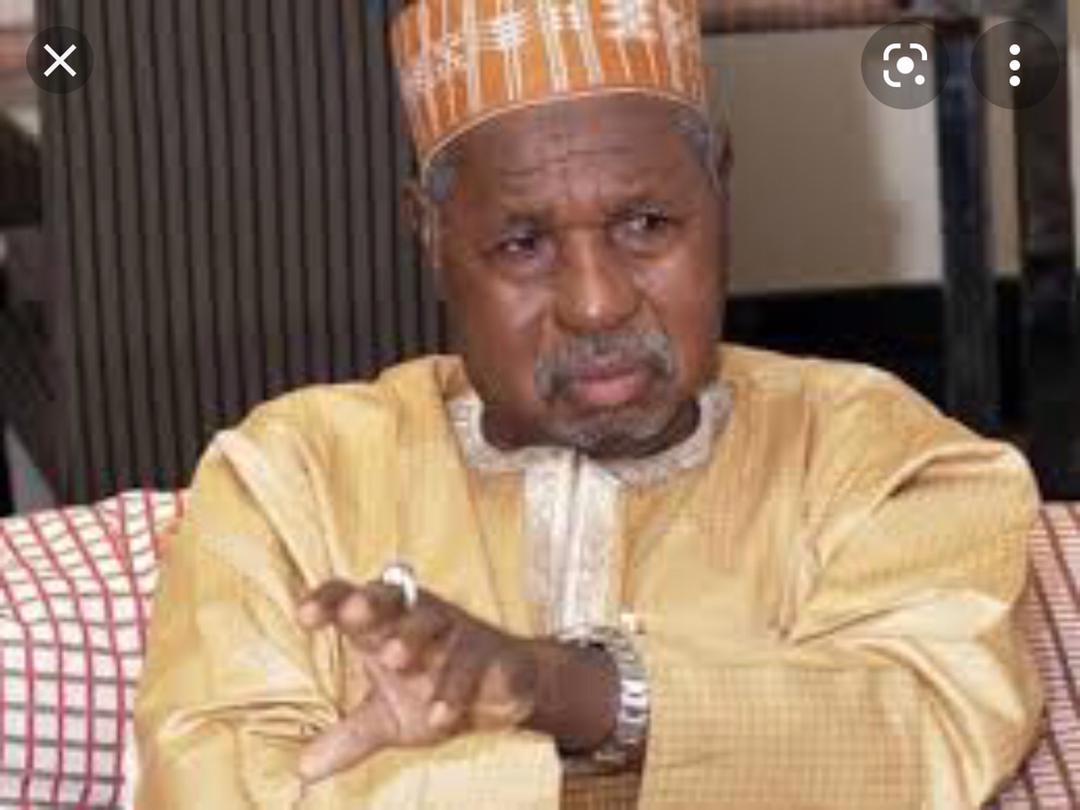
Idris Mohammed
Let me start with calling attention to my dear state Governor of Katsina in his recent speech to locals to defend themselves against the deadly and heavily armed groups operating all over the state. Masari was saying as I quoted “why should I seat in my village making calls to security forces without doing nothing, it’s ridiculous that people are not defending themselves against armed bandits” does that means Masari was saying federal and state governments threw away their primary responsibility of protecting life and property of its citizens and other persons residing in their domains? How can an armless and vulnerable villager confront an armed criminal with sophisticated weapons like Anti-air craft or Ak-47? With my little knowledge of security and governance, I knew one of the responsibilities of any democratically elected government is to ensure the management of the security sector in line with democratic best practices and provision of security as public good. To perform this function, governments need detailed and extensive plans and management structures to ensure security policies and practices are transparent and accountable.
Masari, you are trying your very best to manage one of the very fragile and devastating security situations of Katsina but it is very wrong at the same time to ask defenseless citizens to defend themselves. This will throw them into more serious confusion and life threatening traumatic situations because the armed groups will continue to engage them since they heard you asking people to confront them. Maybe you are getting the wrong information on the current situation, the bandits terrorizing our people storm communities on bikes and each bike carries three people each with AK-47. You can see over 200 bikes in a community of less than 300 people, remember how they mercilessly slaughtered and killed over 80 people in Kadisau community of Dandume local government last year.
As one of the peace loving indigenes of Katsina state, I wrote an article published widely by national dailies last year titled “Who are these Katsina armed bandits?” I raised a question on “how a state government goes into a deal with bandits who have no education, have no sympathy or faith and behave like animals”. I felt very bad when I saw my Governor in the photo standing next to a very young bandit wielding an AK-47 rifle; it was a very sad moment. Few days after the drama, the government came out to announce that they are no longer interested in the negotiation because nothing has been changed. The group kept attacking and sacking communities exactly as I predicted in the article. Amnesty and negotiation is a good method of resolving conflict but we have to know and dig out the root causes of the issue before we jump into conclusion
Katsina state is one of the Northwestern states in Nigeria that has largest ungovernable spaces with a significant number of armed groups controlling the rural communities and their economy.
Recently, a security report revealed that Boko Haram/ISWAP, Ansar and many more groups are busy building trust with locals to enable them recruit their members especially in Katsina and other northwestern states. This should be our main focus on how to curtail their recruitment process and come up with non kinetic approaches that will counter their narratives.
Our borders are porous and the vast forest reserves in the border regions have been turned into operational bases for the bandits, many atrocities are taking place in the communities residing in the area. People are more loyal and obedient to the different armed groups in the area than Nigerian government, how can we give them hope to build their resilience should be the issue than asking them to confront them with empty hands.
The over growing threat to our local farmers in the state is devastating, Katsina is one of the leading agricultural producers in the country, 90% of the farm product is from the local communities and majority of them relocated to cities while many became beggars on the street. Bandits have warned them several times that they should not go near their farmlands and talk less of bowing down to cultivate. Who is going to rescue us if you are asking us to defend ourselves?
The insecurity situation in the state has been very disappointing particularly in the nine frontline local government areas bordering Rugu Forest, different armed groups are conducting their businesses unchallenged and anytime they need food items or money, they will strike and kill the innocent armless villagers that you are asking to defend themselves.
The traumatized residents of Katsina state are in season of lamentation with tears flowing as a result of frequent armed group attacks that killed innocent souls, destroying their livelihood, displaying hundreds and raping women and girls on daily basis. These people deserve encouragement and a resilient approach not creating more fear and sorrow in their mines by asking them to defend themselves.
Idris Mohammed is a Violent Conflict Researcher writes from Katsina
Opinion
Beyond the Numbers: What the Ekiti 2026 Governorship Results Reveal About Coalition Politics and Path to 2027
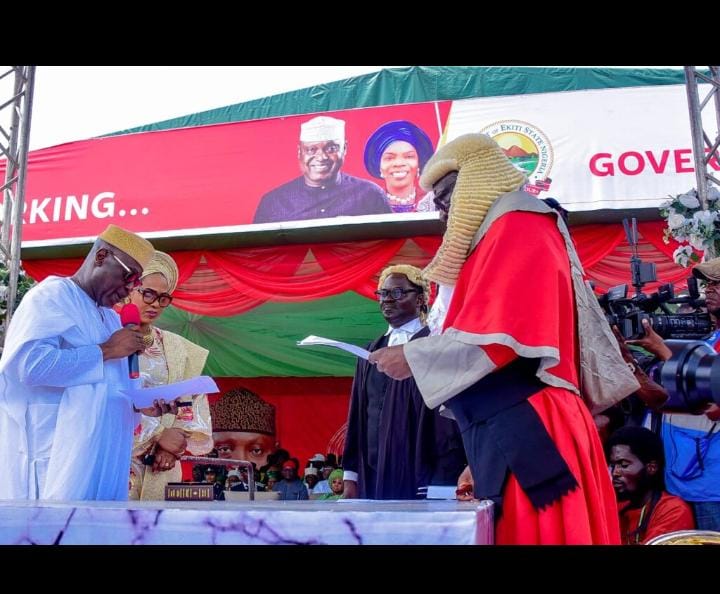
By Abass Sherifat Taiwo
Returning Officer Adenike Oladiji, a professor and Vice-Chancellor of the Federal University of Technology, announced the results in the early hours of Sunday, at roughly 3:13 a.m. Incumbent Governor Biodun Oyebanji of the APC won comfortably, polling 319,224 votes across the state’s 16 local government areas. His closest challenger, the PDP’s Oluwole Oluyede, trailed far behind with 40,543 votes, while the ADC’s Dare Bejide came in third with 12,872 votes.
Of the 384,940 voters accredited for the election, 375,777 cast valid votes, a validity rate of about 97.6%, suggesting relatively few spoiled or rejected ballots.
Oyebanji’s win carries added weight as the first consecutive re-election in Ekiti’s history, a state known for unseating incumbents since 1999. His dominance was also total: he won all sixteen LGAs, and even his closest contest, in Ikere, was still a comfortable margin. His five strongest councils alone delivered nearly half his statewide votes, showing concentrated rather than thin support.
Elite alignment mattered too. For the first time, every living former Ekiti governor backed his re-election, leaving the opposition without any prominent defectors to rally behind. This unified backing functioned as a coordinated endorsement strategy, a visible signal of consensus that opposition parties had no comparable message to counter.
Between the opposition parties, PDP’s showing is more telling than ADC’s. ADC placing third as a newer platform isn’t surprising, but PDP, a long-established national party, barely crossed 3,000 votes in most councils, pointing to weak grassroots structure rather than just a bad cycle. The deeper question is whether this reflects a structural failure or a failure to sustain visibility and message presence at the ward level between election cycles.
Party | Votes | % of Valid Votes
APC | 319,224 | 84.95%
PDP | 40,543 | 10.79%
ADC | 12,872 | 3.43%
ADP | ~1,289 | 0.34%
Accord | 564 | 0.15%
LP | ~263 | 0.07%
AAC | ~188 | 0.05%
When the vote totals of every opposition party are combined, they amount to roughly 55,719 votes, or about 14.83% of all valid votes cast, a stark contrast to the APC’s dominant 84.95% share on its own. Even in a hypothetical scenario where every opposition party ran on a single, fully united ticket, their combined total would still fall short of the APC’s by approximately 263,505 votes. This gap illustrates just how commanding Oyebanji’s victory was: it was not simply a matter of a divided opposition splitting votes among several parties, but a result that would have withstood even total opposition unity.
Following the Ekiti result, APC framed it as proof of growing national support ahead of 2027, pointing to the rise in its vote totals in the state from about 187,000 in 2022 to roughly 318,000 in 2026, and projecting even higher numbers for Tinubu in 2027. Opposition parties, including the ADC and SDP, pushed back, arguing that Ekiti’s off-cycle, low-turnout nature makes it a poor predictor of a national contest.
Both claims need scrutiny. APC’s growth trend is real, but it happened in a state the party already governs, where incumbency and federal attention worked in its favour, so it says more about consolidating an existing stronghold than expanding into contested territory. The opposition’s caution is fair, but understates that APC’s structural advantages, incumbency and federal resources, aren’t unique to Ekiti and could repeat elsewhere. The more accurate takeaway is that Ekiti confirms APC’s strength where it already holds power, without proving it can replicate that in genuinely competitive states by 2027.
ADC’s third-place finish in Ekiti, just 3.43% of the vote, looks unremarkable on its own, but it only makes sense next to the party’s national story. A year earlier, ADC had positioned itself as the face of a new opposition coalition, pulling in heavyweight names like Atiku Abubakar and Peter Obi with the promise of a unified front against the APC. That promise hasn’t held: Obi and Kwankwaso have since defected to a rival platform, the NDC, while ADC battles leadership disputes and court cases that put its own 2027 participation in doubt.
That is the real lesson here for coalition politics as a communication problem, not just a structural one. ADC did not fail for lack of big names, it had plenty. What it could not do was hold one coherent message together once multiple egos and regional bases began pulling in different directions. Whether it can still become the platform it promised by 2027 is uncertain, but Ekiti is an early sign of a bigger unraveling.
Beyond Ekiti, the result speaks to a deeper pattern in Nigerian opposition politics: alliances are far easier to announce than to sustain. This suggests APC’s greatest advantage going into the next general election may not be its own performance, but the opposition’s continued inability to stay united. The near-total validity rate and one-sided outcome in Ekiti also raise questions about how genuinely competitive Nigeria’s state elections currently are, and whether low-turnout, off-cycle polls like this one can reliably signal national voter sentiment.
The Ekiti result is less a story about Oyebanji’s popularity alone than about the opposition’s structural fragility. Even a fully united opposition ticket would not have closed the gap, which means the problem isn’t vote-splitting, it’s organisational weakness, unstable coalitions, and the absence of a party capable of matching APC’s machinery and incumbency advantages. What Nigeria’s opposition needs before 2027 isn’t just structural unity, but a coherent, disciplined communication strategy capable of sustaining one message across factions, something no coalition has yet demonstrated. Until Nigeria’s opposition can build a coalition that survives contact with real electoral pressure, results like Ekiti’s are likely to repeat themselves in APC strongholds heading into 2027.
By Abass Sherifat Taiwo
Department of Development and Strategic communication University of Abuja
200level
Opinion
Governor Abba Kabir Yusuf Has Earned a Vote of Confidence on Education
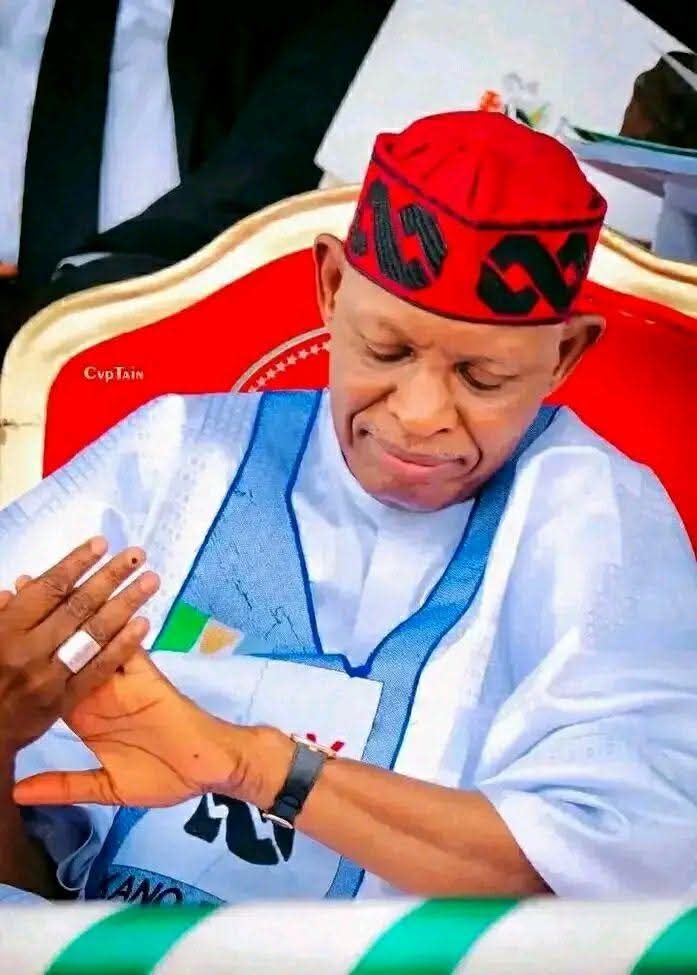
By Hon. Muhammad Sanusi S. Kiru, FCIA
(Former Commissioner of Education, Kano State)
There comes a time in public discourse when fairness must prevail over partisanship and facts must take precedence over preconceived opinions. That moment has come in my assessment of the educational reforms being implemented by the administration of His Excellency, Governor Abba Kabir Yusuf.
As a former Commissioner of Education and someone who has consistently evaluated government performance with candour, I owe the people of Kano State an honest appraisal of the Governor’s performance in the education sector. After objectively reviewing the administration’s interventions from 2024 to 2026, particularly its determined efforts to address the acute shortage of teachers, I have reached an inescapable conclusion: Governor Abba Kabir Yusuf deserves a vote of confidence for his outstanding commitment to the development of education in Kano State.
One of the greatest challenges confronting our educational system has been the persistent shortage of teachers, resulting in unfavourable teacher-pupil and teacher-student ratios across many public schools. This problem has adversely affected the quality of teaching and learning for many years.
The present administration has confronted this challenge with courage and determination. Between 2024 and 2026, the government recruited or absorbed 8,715 permanent teachers and engaged 3,688 temporary BESDA Cohort V teachers, bringing the documented total to 12,403 education personnel. With recruitments by other education agencies, the overall figure is widely estimated at approximately 13,000 teachers.
This represents one of the largest teacher recruitment exercises in the history of Kano State. More importantly, it is a strategic investment in the future of our children and in the long-term development of the state. By substantially reducing the teacher deficit, the administration has strengthened both the basic and post-basic education subsectors and created a stronger foundation for improved educational outcomes. The new recruitment not only means making our classrooms more vibrant and ensuring that teaching is consistently taking place, but it also signifies a positive shift in the narrative reflected in monitoring reports, the annual school census, and national personnel data.
Looking at the tangible achievements now before us, particularly in education, it is clear that the administration has made significant and commendable progress. Leadership should always be judged by measurable accomplishments, and in this regard, the Governor has acquitted himself admirably.
One area where the administration must, however, improve is public communication. Many of its remarkable achievements have not received the publicity they deserve. A well-coordinated and effective publicity strategy would ensure that citizens fully appreciate the scope and impact of these landmark interventions.
As His Excellency prepares to personally attend the special ceremony for the presentation of appointment letters to the newly employed teachers on Tuesday, 21st July 2026, I consider it appropriate to congratulate him on this historic milestone. The ceremony is more than a presentation of appointment letters; it is a celebration of renewed hope for thousands of families, a reaffirmation of government’s commitment to quality education, and a significant step towards building a stronger educational system for future generations.
I wish His Excellency a successful and hitch-free ceremony and pray that Almighty Allah grants him wisdom, good health, and continued strength to sustain the ongoing transformation of the education sector. May this programme mark the beginning of even greater achievements in the quest to provide every child in Kano State with access to quality education delivered by competent and dedicated teachers.
Governor Abba Kabir Yusuf deserves sincere commendation for these giant strides. If this policy of continuous recruitment and investment in teachers is sustained, it will undoubtedly be remembered as one of the defining legacies of his administration. Future generations will look back on this period as a turning point in the educational history of Kano State.
I therefore extend my heartfelt congratulations to His Excellency and offer him a well-deserved vote of confidence. I also wish him every success as he formally presents appointment letters to these newly recruited teachers on Tuesday. May the occasion be memorable, successful, and another milestone in the march towards educational excellence in Kano State.
Opinion
Kashim Shettima and the Question of Continuity in 2027
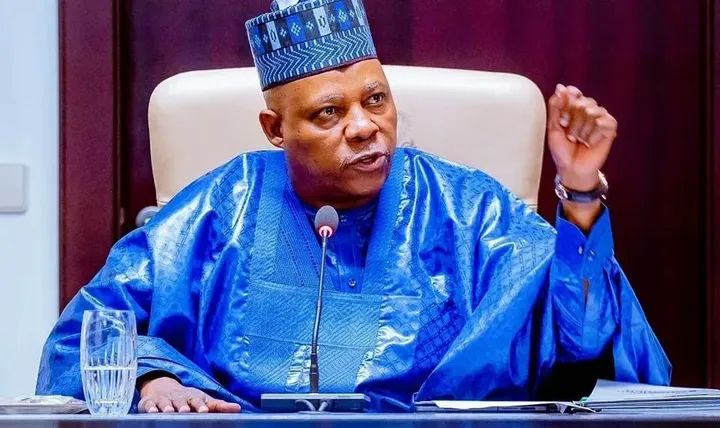
Kashim S
By Baba Dantiye, MON, mni, FNGE
As Nigeria gradually approaches another election cycle, political discussions are naturally beginning to focus on the choices that will shape the 2027 general elections. Among the issues attracting attention is the question of presidential tickets and, particularly, the role of Vice President Kashim Shettima within the current administration.
The choice of a running mate is one of the most significant decisions in any presidential contest. It involves considerations that go beyond electoral calculations. Factors such as competence, experience, political balance, governance record, public perception and the ability to complement the President’s vision all play important roles.
Against this background, the performance, public service record and leadership contributions of Vice President Kashim Shettima have become central to discussions about continuity and the future direction of the Tinubu administration.
Since assuming office in May 2023, Shettima has occupied an important position within the administration of President Bola Ahmed Tinubu. As Vice President, his responsibilities have included representing the President at official engagements, chairing strategic meetings, coordinating government initiatives and engaging with national and international stakeholders.
One of the notable features of the Tinubu-Shettima partnership has been the public display of cooperation between the President and his deputy. Nigeria’s political history has witnessed instances where relationships between presidents and vice presidents became strained, creating distractions that affected governance. The relatively smooth working relationship between the two leaders has been viewed by observers as an important factor in maintaining stability within the administration.
Shettima has consistently presented himself as a supportive deputy, focusing on responsibilities assigned to him and contributing to the implementation and communication of government policies.
In political leadership, loyalty is often considered alongside competence and capacity. A Vice President is expected not only to support the President but also to bring experience, judgment and independent value to governance. Supporters of Shettima point to his ability to maintain this balance by remaining committed to the administration while drawing from his extensive background in public service.
His leadership of the National Economic Council (NEC) is one of the key areas in which his role has attracted attention. The Council provides a platform for collaboration between the Federal Government and state governments on issues affecting economic development, infrastructure, agriculture, energy and other national priorities.
Chairing such a body requires political maturity, patience and the ability to manage diverse interests. Nigeria’s governors represent different political parties, regions and perspectives. Effective coordination therefore depends on consultation, dialogue and consensus-building.
As a former Governor of Borno State, Shettima brings practical experience of state administration and an understanding of the challenges faced by sub-national governments. This background has been useful in facilitating discussions between the Federal Government and State leaders on issues requiring collective action.
The Vice President has also been involved in government efforts relating to economic coordination, food security and other national development priorities. While the long-term impact of many policies will continue to be assessed, his role demonstrates the importance of coordination and collaboration in a complex federal system.
Another area frequently discussed is his role in communicating government policies. The current administration has introduced significant economic reforms that have generated extensive public debate. In such circumstances, communication and public engagement become important elements of governance.
Shettima has consistently used public platforms to explain government positions, engage stakeholders and present the administration’s perspective on national issues. His approach has generally emphasised patience, understanding and the long-term objectives of government programmes.
Beyond his current office, Shettima’s experience as Governor of Borno State remains an important part of his public record. He governed during one of the most challenging periods in Nigeria’s recent history, when the Boko Haram insurgency created serious security and humanitarian difficulties.
Leading Borno State during that period required resilience, crisis management skills and the ability to work with security agencies, traditional institutions, humanitarian organisations and development partners. His administration operated under extraordinary circumstances while attempting to sustain government services and support affected communities.
That experience contributed to his understanding of security management, humanitarian challenges and the relationship between peace, stability and development.
His political journey also reflects experience across different levels of governance. Before becoming Vice President, he served in the Senate, where he participated in national legislative processes and gained further exposure to federal governance. His experience as a former governor, legislator and Vice President has shaped his understanding of Nigeria’s political and administrative environment.
Observers have also highlighted his relationship with his successor in Borno State as an example of political transition without public disagreement. In Nigeria’s political environment, where transitions between elected officials can sometimes lead to conflicts, peaceful succession and institutional continuity are often regarded as positive developments.
The Vice President’s relationship with Northern stakeholders has also formed part of discussions around his political relevance. Through engagements with traditional institutions, business communities, professional groups and other stakeholders, he has remained one of the administration’s prominent voices in explaining government policies and national priorities.
The North remains an important component of Nigeria’s political landscape, and leaders from the region have historically played significant roles in national affairs. Shettima’s experience and political network have contributed to his visibility in national conversations.
However, the question of a presidential ticket involves broader considerations beyond the performance of an individual office holder. Political parties must consider issues such as national spread, electoral strategy, changing alliances, public sentiment and the overall objectives of the party.
Different perspectives will naturally emerge as Nigeria moves closer to 2027. Some may emphasise continuity and the value of retaining an established partnership, while others may advocate different approaches based on evolving political circumstances. Such debates are part of the democratic process.
Ultimately, the decision on the composition of the presidential ticket will rest with President Bola Ahmed Tinubu and the leadership of the All Progressives Congress. Their decision will reflect political consultations, strategic considerations and their assessment of what best serves their objectives and the country.
Nevertheless, public discussion remains important because democracy is strengthened when citizens assess leaders based on performance, responsibility and contributions to national development.
A successful administration depends not only on policies but also on teamwork among those entrusted with implementing them. Stability, trust and institutional experience are valuable assets in governance, particularly in a country as complex and diverse as Nigeria.
Whether continuity is ultimately preferred or a different path is chosen, the debate underscores an enduring principle: democratic leadership is strengthened when decisions are informed by performance, experience, constitutional responsibility and the public interest. As Nigeria looks ahead to 2027, the experience, service and contributions of Kashim Shettima will remain central to any serious assessment of the choices before the nation.
About the Writer
Baba Dantiye, MON, mni, FNGE, is a former Commissioner for Information and Internal Affairs, Kano State and former President of the Nigerian Guild of Editors (2003–2008)

Tinubu’s Projects In The North Are Traceable-Kwankwaso

Arewa Youth Groups Reject Kwankwaso-Obi 2027 Ticket, Insist On North-South Power Rotation Agreement

President Tinubu Appoints ex-Ekiti Gov. Fayose as Chairman Rural Electrification Agency

Beyond the Numbers: What the Ekiti 2026 Governorship Results Reveal About Coalition Politics and Path to 2027

FCT Police Detain 4 Officers for Extorting N53,000 from ICPC Chairman

Alhaji Tijjani Rabiu Spikin: A Neighbour, Philanthropist, and Friend of Children

When Military Ethos Is Married Into Royalty: As Emir Muhammad Sanusi II Turbans Former Chief of Air Staff as “Sarkin Fulanin Jaidanawa”

AI Delusion Among Students: When Smart Tools Start Replacing Real Connections, The Truth About AI And Student Life

From Corruption to Cannabis: As Governor Yusuf Puts Muhiyi, Anti-Graft Czar, in Charge of Kano Drug Crackdown

Alkalanci holds fact-checking, media and information literacy workshop for Northern Islamic clerics in Abuja
Tinubu’s Projects In The North Are Traceable-Kwankwaso
Arewa Youth Groups Reject Kwankwaso-Obi 2027 Ticket, Insist On North-South Power Rotation Agreement
President Tinubu Appoints ex-Ekiti Gov. Fayose as Chairman Rural Electrification Agency
Beyond the Numbers: What the Ekiti 2026 Governorship Results Reveal About Coalition Politics and Path to 2027
FCT Police Detain 4 Officers for Extorting N53,000 from ICPC Chairman
Alhaji Tijjani Rabiu Spikin: A Neighbour, Philanthropist, and Friend of Children
When Military Ethos Is Married Into Royalty: As Emir Muhammad Sanusi II Turbans Former Chief of Air Staff as “Sarkin Fulanin Jaidanawa”
AI Delusion Among Students: When Smart Tools Start Replacing Real Connections, The Truth About AI And Student Life
From Corruption to Cannabis: As Governor Yusuf Puts Muhiyi, Anti-Graft Czar, in Charge of Kano Drug Crackdown
Alkalanci holds fact-checking, media and information literacy workshop for Northern Islamic clerics in Abuja
-

 Opinion4 years ago
On The Kano Flyovers And Public Perception
-

 Features5 years ago
How I Became A Multimillionaire In Nigeria – Hadiza Gabon
-

 Opinion5 years ago
Kano As future Headquarters Of Poverty In Nigeria
-

 History5 years ago
Sheikh Adam Abdullahi Al-Ilory (1917-1992):Nigeria’s Islamic Scholar Who Wrote Over 100 Books And Journals
-

 Opinion5 years ago
My First Encounter with Nasiru Gawuna, the Humble Deputy Governor
-

 History5 years ago
The History Of Borno State Governor Professor Babagana Umara Zulum
-

 History5 years ago
The Origin Of “Mammy Market” In Army Barracks (Mammy Ochefu)
-

 News4 years ago
Federal University Of Technology Babura To Commence Academic Activities September