
Opinion
Kano Zoological Garden: A Place Where Animals Complain And The Trees Are Silent
By Musa MAZAN KWARAI
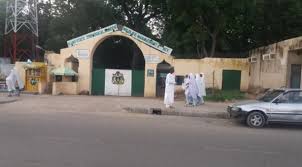
Who did the animals at Kano Zoo told they’re not comfortable there? What about Trees? Did they also complain? There is no place in the whole of Kano city that has a high density of vegetation as the Kano Zoological garden. One of the numerous beauties nature has blessed us with is a vegetal cover, comprising of trees, shrubs, and grasses which are very much important and necessary for life. Vegetation, especially trees are important to man and his environment in a variety of ways.
Carbon dioxide is one of the major greenhouse gases that is, when injected into the atmosphere makes it possible for shortwave electromagnetic radiation to reach the surface of the earth but traps the longwave (terrestrial) radiation from escaping to the sky thereby making the earth surface hot, a phenomenon referred to as GLOBAL WARMING. Trees are very good at sequestering the ocean of carbon dioxide we inject into the atmosphere which are responsible for making the earth surface relatively hotter than it should be
We were taught in our elementary science that green plants use carbon dioxide and give us oxygen during photosynthesis. This is a pointer to the importance of vegetal cover to us and our environment. That is to say, trees are blessings to us because of the roles they play in reducing the ocean of carbon dioxide we inject as a result of urbanization and industrialization. In environmental science, humans are advised to reduce the level of carbon dioxide emission to the atmosphere through a variety of processes such as the adoption of clean sources of energy for our vehicles, domestic and industries, for example, the use of biofuels, use of solar, wind and hydro energy. In addition to this, reduced deforestation and massive tree plantings are always advocated.
It was estimated that carbon dioxide level has increased from 288ppm (parts per million) to 382ppm from the pre-industrial period to 2006 worldwide and this is forecast to skyrocket as long as humans live on the planet earth, however, with better practices, the menace can be managed as contained in many UN protocols and treaties such as Montreal and Kyoto protocols.
Another beauty of vegetation does not stop at aesthetic beautification of the environment and purification of the earth’s atmosphere from harmful effects of pollutants but is also one of the major contributors to the hydrological cycle.
Relocation Of Kano Zoological Garden: Decimating The City’s Air Purification
Vegetation contributes to a high percentage of water molecules through the process of transpiration and or evapotranspiration. This helps in transferring water molecules from vegetation through the stomata in their leaves to the sky. These water molecules converge with other molecules from other phenomena such as evaporation from water bodies (lakes, oceans, seas, rivers), condense and form precipitation in any of it forms (rain, snow, hail, drizzle) as the case may be which later ends as surface or underground water. The process goes on and on; hydrological cycle.
Another role of vegetation has to do with the moderating effects of the water molecules (from transpiration) to the immediate environment is adding to cloud content (mostly water molecules).
The major content of cloud cover, water droplets comes from the vegetal cover as pointed earlier. There is always a moderating effect in an environment with lust vegetation when compared to another environment that is devoid of vegetation. These droplets inform of, moderate the effects of sunlight (short wave radiation) from penetrating the atmosphere, thereby making the surface cooler than it should during the day time when radiation is more active and in turns trap the outgoing longwave (terrestrial radiation) from escaping, there by moderating the low night temperatures (nights are always colder due to the fact that all the supposed energy that entered into the earth must have escaped to the sky- heat lost). This is very much practical if someone compares two environments; one with lush vegetal cover with another one that is devoid of vegetation. This is the case if we take for example the thick forests of southern Nigeria and its northern counterpart especially as one approaches the Niger republic. The same applies to the southern tip of Kano along Riruwai in Doguwa local government and Kano city.
One can go on and on to downscale these examples to a local level; say looking at Kano city (where there are very little trees) and the outskirt of the city such as places like APCU quarters, Janbulo, BUK new and old campus, FCE Kano and many other places especially government ministries within Kano.
With the above benefits of vegetation and the fact that the Kano Zoo is one of the few places that has a high density of trees standing for decades, we should be very careful and at the same time trade with cautions when taking any decision concerning this important place. The Ministry of Environment should at this juncture guide our decision and policymakers on the danger of destroying our vegetation.
It did not come to me as a surprise when I first heard of the news that the Kano Zoo will be relocated due to some reason. My worry was the justification given by the government side that; the animals are not comfortable with the sound of human activities within the environment.
How can any human give such a justification for relocating the garden that has been in the same place for decades, something every citizen of Kano has right over. Even if they find it deem to do that, they need to provide more concrete reasons and conduct public opinion to do that.
The issue of Kano Zoo is never the same as that of Triumph publishing company, Daula Hotel and many other public landed properties sold by the Kano state government because of this concerns all of us and the environment itself.
A Zoologist friend of mine during a conversation said; Musa so all you care about is the trees in the Zoo, not even the animals? I smiled and said to him the animals are mobile and would be fine everywhere they are relocated to, especially the Tiga/Bagauda axis (although the state government will experience a decline in revenue due to proximity) as I heard but what about the trees standing there for decades and the ecosystem services they provide? Can they be relocated as well? Definitely, if we allow this to happen, the Zoo land would be converted to commercial or residential land which means all the trees will be cut down thereby losing all the benefits they serve to us and the environment.
The Kano Zoo is one, if not the only decent public garden left for us the ‘Talakawas’ to enjoy. My very big question to those that want to sell off the Kano Zoo for whatsoever reason is; can they relocate the animals and leave the garden with the beautiful trees most of which are indigenous for us since I understand their compassion for animals?
Lastly, I am appealing to the executive governor of Kano to please in the name of Almighty Allah to look into the yearnings people that have written on this matter. We are good citizens of Kano and we understand that the idea to convert this important place may not necessarily be his but he has the veto power to stop any policy that can harm his people. I believe that some potential benefactors wrote you a memo on this idea. Please listen to us not them on this and Insha Allah you’ll not regret it.
Musa Mazankwarai, Mazan Kwarai Quarters, Kano (eltankomusa@yahoo.com)
Opinion
Clerics Call, Citizens Cheer: Kano Rallies Behind Muhuyi’s Anti-Drug Task Force

By Abba Anwar
Politics apart, if there is anything non-political that can open corridor of victory for the Governor of Kano State, Eng Abba Kabir Yusuf to secure second term in office, that thing, could automatically be his fight against drug abuse and other related crimes strategy. Not only the fight, the political will and the commitment are but best options for better result.
The leadership of the State Multi-Agency Task Force on Drug Abuse and other Related Crimes, under Barrister Muhiyi Magaji Rimingado and his able team, gives much hope and periscopes brighter future for Kano. Once a leading state in drug peddling and substance abuse. But in recent Kano political history, Governor Yusuf excels in the area of suffocating drug abuse and other related crimes, with the bringing on board of the Task Force.
No wonder from the Minbars (pulpits) of Kano’s Mosques to the timelines of Facebook, X and WhatsApp, a single refrain is ringing out across the state: Stand with the Task Force! The war against drug abuse and illicit trafficking has taken a decisive turn, as the State Task Force pushes deeper into the Local Government Areas with arrests, raids, sensitization and community engagement.
The result is unprecedented. When Islamic clerics are urging congregations to pray for and protect the officers, civil society groups are applauding the boldness, fearless operations and thousands of citizens online are flooding comment sections with commendations and prayers. In a moment that feels like renewed hope. Result? Kano is uniting from Pulpits to pixels, behind the fight to reclaim its streets and secure the future of its youth.
The Chairman of the Council of Ulama of Nigeria, Kano State Branch, Shaykh Ibrahim Khalil, though a gubernatorial candidate of the opposition party, calls on the people of Kano state and beyond to support the work of the Task Force and secure the future of our younger ones. This he does without any recourse to political party differences. A Shaykh like no other.
In a widely circulated video clip, Shaykh Khalil made a courageous call as he said, “I am calling on my brothers the people of Kano state and beyond to stand up, cooperate and support the Task Force led by Barrister Muhiyi Magaji Rimingado in the fight against drug abuse and other related crimes. Because the thing is really harming us as a people. It is also retrogressive to our youth.
I also call on the government to please create a platform where people will be selected to engage these young people, our future, the youth, and counsel them. So that government will come to know their problems and frustrations. With the view to proffering lasting solution.”
Reiterating his commitment and support for the Task Force’s tasking responsibility, Shaykh Khalil emphasized that, “We are absolutely hopeful that, this Committee will help much in this area of drug abuse and other related crimes.
“We are also calling on all people to rise up and help Muhuyi Magaji in this struggle with prayers. It is absolutely necessary for government to listen to these suspected criminals and know their real worries,” fatherly advice by Chairman Council of Ulama, Kano Branch.
The Commander General of the agency saddled with the responsibility of ‘Al-Amr Bil Ma’ aruf Wannahayi Anil Munkar’ (enjoying good deed and forbidden evil), Kano State Hisbah Board, Shaykh Aminu Ibrahim Daurawa, in another widely circulated video clip encouraged that, “On behalf of our Hisbah, with twenty thousand (20,000) personnel, we are sending our good wishes and commendation for the establishment of Barrister Muhiyi Magaji Rimingado’s Task Force on the fight against drug abuse, phone snatching and even the killing of innocent people.
We should all thank His Excellency, the Governor for this great work. We are calling on people to commend the Task Force. This is a very important committee for all of us to encourage and support. Imams should preach against drug abuse on Minbars. So also journalists and social media users, among many others.”
This Task Force, according to Shaykh Daurawa, “… is not for Barrister Muhiyi Magaji alone. We call on all those who support those miscreants to please desist from that. Doing that is counter-productive and bad for all of us.”
Before saying anything concerning praises Barrister Rimingado enjoys in the social media, let me begin with commending social media handlers of the Task Force. Clips of many operations are viral in the social media. So also in the conventional media platforms, especially our radio stations and other national dailies.
I personally searched many videos shared/posted on the Task Force’s Facebook handle, monitoring operations, raids and arrests. My major concern for this, is knowing how Kano people react to Barrister Rimingado’s operations and other activities under the Task Force.
While over 90 percent of the reviewed comments are praises, commendations, encouragement and prayers directed at Barrister Rimingado and his team, like 5 percent or so condemned the mode of operations and 5 percent or so condemned the work of the Task Force in its entirety. The tiny percentage that totally condemned the Task Force is mainly because of political differences. Or because they work and judge with hearsay.
Let me share some of the comments here. I visited some postings and monitored their comment sections. I also monitored shares and likes.
A fraction of my findings is briefly presented below:
1- In posting “A” there are 4.8k and 225 comments. Some of the comments are that of Sagir Aminu who said, “Our people should not politicize this problem. It affects all. May Allah see us through.” Mannir Sale Muhammad critically observed that, “Masha Allah. All what Muhiyi Magaji said is true in its purest form. I saw a boy in railway who is always intoxicated from drug abuse.” Imam Bichi commented, “We wish you the best always.”
Bashir Nasidi Muhammad encouraged that, “We are solidly behind you in the fight against drug abuse. But you should make sure that there is a need for good investigation always. We are wishing you well.”
Jameel Yareema commended that, “I really enjoy your commitment. May Allah help you and guide you always. And whoever breaks the law should be punished.” Aminuddeen Abdullahi commended and encouraged that, “Wallahi Wallahi Wallahi we are with you always. Ours is to say may Allah protect you and make you successful Barrister Muhiyi Magaji Rimingado.”
2. In posting “B” there are 7.6k Likes, 282 Comments and 220 Shares. Under this one Sulaiman Sani said, “Truthfully this is the most important and crucial job that Abba’s administration created since their assumption.” Yusuf Muhammad commented that, “Oga this is Fashion Parade because you can’t fight drugs with (sic) telling them you are coming to them by (sic) siren.”
Hafizu Akilu said, “Whenever you see someone condemning this work of Muhuyi’s Committee he is not loving Kano. Or such a person is not from Kano. Because I observed there are a few individuals who hates Kano and they are condemning the effort.”
Hamza Musa compared Muhuyi and Wike in his comment. He said, “Wike and Muhuyi are like twin brothers. Even if you don’t like them, but you can’t deny that they are working. Though I don’t like Muhuyi because of a reason I reserve for myself, I think he deserves federal appointment.”
Musa Yunusa commented that, “Wallahi Wallahi Wallahi I’m extremely happy with what Muhuyi’s Committee did concerning those children around Nassarawa Specialists Hospital, (now called Abdullahi Wase Hospital). You always see them abusing drugs.” Abdullahi Ismail Muhammed KT, who sees the Task Force work as a mere content creation said, “This is a good content.”
3- In posting “C” there are 7.6k Likes, 282 Comments and 220 Shares. Under this Ibrahim Y. Said commented that, “If the Kano State government is really serious about this, marketers of such illicit drug should be arrested. And all routes used by them in trafficking the drugs should also be blocked.” Usman T Abdullahi, who saw the operation as a film or drama, queried that,” Name of the Scene.” To me you may not blame him. Probably he witnessed similar efforts in the past, that derailed. So it is up to the Task Force to take the challenge and prove to Usman and like-minded individuals that it is no longer as usual.
Bukhari Ashafa, who volunteered to be part of this great effort, urged that, “Please give us the phone number for giving you intel.” Saleh Nuhu commented, “Show of force. This is our collective fight.” And Usman Tijjani Abdulqadir said “Well done.”
4- In posting “D” there are 4.9k Likes, 107 Comments and 79 Shares. One Musa Ahmed encouraged that, “Wallahi whenever an educated man is assigned with responsibility he will deliver. In less that one Month Muhuyi terrified drug abusers and marketers.” Nasir Sani Dansaja who looked at the medical side of the operations advised that, “Please you should be using hand gloves next time, for safety.”
Malam Usman Fantami encouraged and appreciated the personality of Barrister Muhuyi, he said, “Whichever appointment is given to Muhuyi I believe without any doubt that, the result will be fruitful.”
5- In posting “E” there are 14k likes, 694 comments, 705 shares and 379 saved. This is a posting from BBC Hausa Service, in an interview with Muhuyi. In the comment section, one Bashir Mukhtar said, “I urge respectfully the Governor of Kano State to please encourage Barrister Muhiyi with everything and resources. So that he can work well continuously. I also urge His Excellency to please reopen Reformatory Institute Kiru and to establish another one in Kano Central and Kano North. So that the Centres can cater very well for the children involved in this menace of drug abuse. May Allah continue to protect our families and cater for those coming much later.”
Umar Usman Danlarabawa in his comment observed something critically important. He said, “Malam Muhiyi Magaji my observation concerning parents’ undertaking whose children are involved in this problem. Most of those young people engaging in this drug abuse cannot be controlled by their parents. Their hearts are that hard that they don’t even listen to their parents.
When a father is taken away by the Task Force who then will cater for the remaining children back home? When a father confessed that he can’t correct his ward, so the burden is on government to know what to do with the bad egg. But for a father who comes forward to bail his child or children, then such a father should write undertaking. I do hope that Muhuyi will see this advice and work with it.”
Abdulmutallib Muhammad Sani, in his comment adviced that, “If and only if government and Judges will support Muhiyi Magaji the effort will be successful. Because I know him as someone who keeps faith in whatever responsibility assigned to him. He is an achiever. Though I differ with him in politics, but I support him hundred percent in this struggle. There is nothing more harmful for us in Kano than drug abuse and related crimes.”
Muhammad G. Muhammad warned in his comment that, “People are taking this problem for granted. Unknown to them that this is a very serious problem. That we must all wake up an fight collectively. We just have to aid our able security agencies win this war.”
Hafizu Akilu another commentator queried with annoyance that, “In the entire world setting who gives birth to a boy and pushes him to the society for life direction, if not a Hausa man? His (Hausa man) is only interested in making love and producing babies without any recourse to how to train them in their upbringing.”
Above are some of the comments I came across with while examining how Kano people react to the work of the Task Force.
One greater thing I observed is, even the security agents going round with Barrister Rimingado for operations, are ready for the work. You will see courage, will and belief that the leader of the team, Rimingado, is courageous, unapologetic and honest in discharging his responsibility. The moral support is there, being promoted by the Chairman.
My final call is to the Governor, Sir this Task Force alone if handled well, can give you second tenure comfortably. And beyond that, it can pave your way to the Jannatul-Fiddaus.
Anwar writes from Kano
Friday, 11th September, 2026
Opinion
Per Ishaq Samaila: “Waziri” for Strategy. “Mai Jama’a” for Service. One Man. One Mission. Ibrahim Kabir Masari

By Abba Anwar
I read with great admiration and clear endorsement the piece by Ishaq Samaila titled “Why President Tinubu Calls Ibrahim Kabir Masari ‘Waziri’ and the First Lady Senator Oluremi Tinubu calls him ‘Mai Jama’a.” It is not only an envelope of precision, it is also the kind of political writing we need more of under the current political atmosphere; thoughtful, measured, and rooted in substance rather than fallacy.
Ishaq Samaila deserves commendation for capturing what many in Abuja understand but few can articulate so clearly. As he rightly noted, “President Bola Ahmed Tinubu describes Alhaji Ibrahim Kabir Masari as his ‘Waziri’ — a traditional title associated with counsel, responsibility, political strategy and service close to leadership. And First Lady Senator Oluremi Tinubu has referred to him as ‘Mai Jama’a’ a Hausa expression meaning “man of the people.”
These are not casual and loosed nicknames. In Samaila’s analysis, they represent “… two defining sides of Masari’s political identity.” I could not agree more. And it is on this premise that I offer this addendum, not to debate, but to amplify and showcase how Masari, the man, embodies every word in that excellent article.
Being “Waziri” in tensed and difficult political atmosphere isn’t a joke. The man, Masari, is an embodiment of Presidential trust, vision for the nation and unwavering loyalty from the former. While the latter maintains a very long standing relationship. He (Masari) is entrusted with the weight of the nation’s political stability. It is to be the calm in the storm, the ear that listens as it sounds musical to it, before decisions are made, and the hand that builds bridges where others see walls and castles in the air.
That is Masari. As Special Adviser to the President on Political and Other Matters, he has operated with a rare combination of discretion, ingenuity, efficiency and effectiveness. At a time when governance requires managing 36 states, 360 federal constituencies, and thousands of political interests, Masari has been the President’s henchman and trusted anchor.
He does not grandstand. He does not seek credit. His work is in the consultations that prevent crises, in the engagements that align stakeholders with the Renewed Hope Agenda, and in the political intelligence that allows leadership to stay ahead of challenges. Also in political sophistication that strengthens presidential ambition through utilization of all options.
This is the modern definition of a Waziri: a man who serves power by serving the country first. President Tinubu, a master political strategist himself, recognized this quality in Masari and brought him closer in strategy and execution. It was not by accident. It was designed long before now. A relationship built over decades and rooted in trust.
If “Waziri” explains Masari in the Villa, “Mai Jama’a” explains Masari in the villages, in our communities. And this is where his political genius truly shines. This is where he speaks wisdom, freedom and breaks chain of hardship, to stardom, to build a kingdom of service. He is a great leader and mentor who never left ground, grassroot. Hence, he is well grounded and firmer.
The title “Man of the People” is the hardest to earn in Nigerian politics because the people themselves must give it to you. You cannot buy it. You cannot lobby for it. You can only work for it. The title is more or less, achievable and non-replaceable. Masari toiled for it and achieved it.
First Lady’s description speaks to something deeper than politics. It speaks to character and characteristics. To accessibility and creativity. To a man who, despite holding one of the most sensitive political offices in the country, still believes in his people, still attends community events, and still understands the language of the ordinary Nigerian. Hence the initiation of many interventions. To help people become economically independent, culturally creative and politically reliable.
From Katsina to Kano, from party meetings to condolence visits, Masari has maintained what Samaila correctly called “… grassroots orientation and his ability to maintain contact with communities, political supporters and ordinary citizens.” What a reliable political figure. Reliability in its purest form.
He is proof that you can be in the room where national strategy is decided in the morning, and still be on the ground listening to market women and youth leaders in the evening. A balanced political figure, who believes strategy keeps political opponents continuously busy from a position of weakness. That balance is rare. That balance is leadership. That balance is resistance against a non-welfare state.
As Samaila concluded so powerfully, “Tinubu’s ‘Waziri’ is also the First Lady’s ‘Mai Jama’a.’ One description highlights his role around political leadership; the other highlights his connection with the people.”
In today’s Nigeria we need leaders who understand high-level politics but are not imprisoned by it. A clear explanation of President Tinubu’s symbol, a broken chain of slavery. Where poverty of rationality remains in limbo. We need advisers who can navigate complex stakeholder dynamics without losing touch with the pain and aspirations of the people. We need a Waziri who is also Mai Jama’a.
It is absolutely true that Masari depicts this with all that is said in Samaila’s article. He depicts loyalty without sycophancy. He depicts strategy without arrogance. He depicts accessibility without losing authority. The same way he depicts engagement without scarcity.
He is a bridge-builder in an age of division, where weaker opponents misrepresent facts with fictions, vision with illusion, and hope with hype. A stabilizer in an age of noise, who clearly differentiates empty noise from real choices. A public servant who understands that titles are not for decoration, they are for duty. They are for selfless service to humanity.
While I concur with the author in all his submission, let me also join him in celebrating this well-thought and timely piece. It reminds us that in the midst of our national challenges, we still have men and women in government who embody service, humility, and competence.
Alhaji Masari, by all standard, is one of them. The President saw the Waziri in him. The First Lady saw the Mai Jama’a in him. The people are beginning to see both. His interventions to his people is invaluable. His faith in this administration is absolute. His hope is renewed. His effort in renewing people’s hope is rewarding and visibly engaging.
Samaila Bravo for explaining in a more clearer terms, Waziri and Mai Jama’a in Masari. A golden coin of two inseparable sides.
Anwar writes from Kano
Thursday, 10th September, 2026
Opinion
Fifty Years, Four Terms. A Life Of Enterprise, Scholarship And Public Service-By Abbas Tajuddin
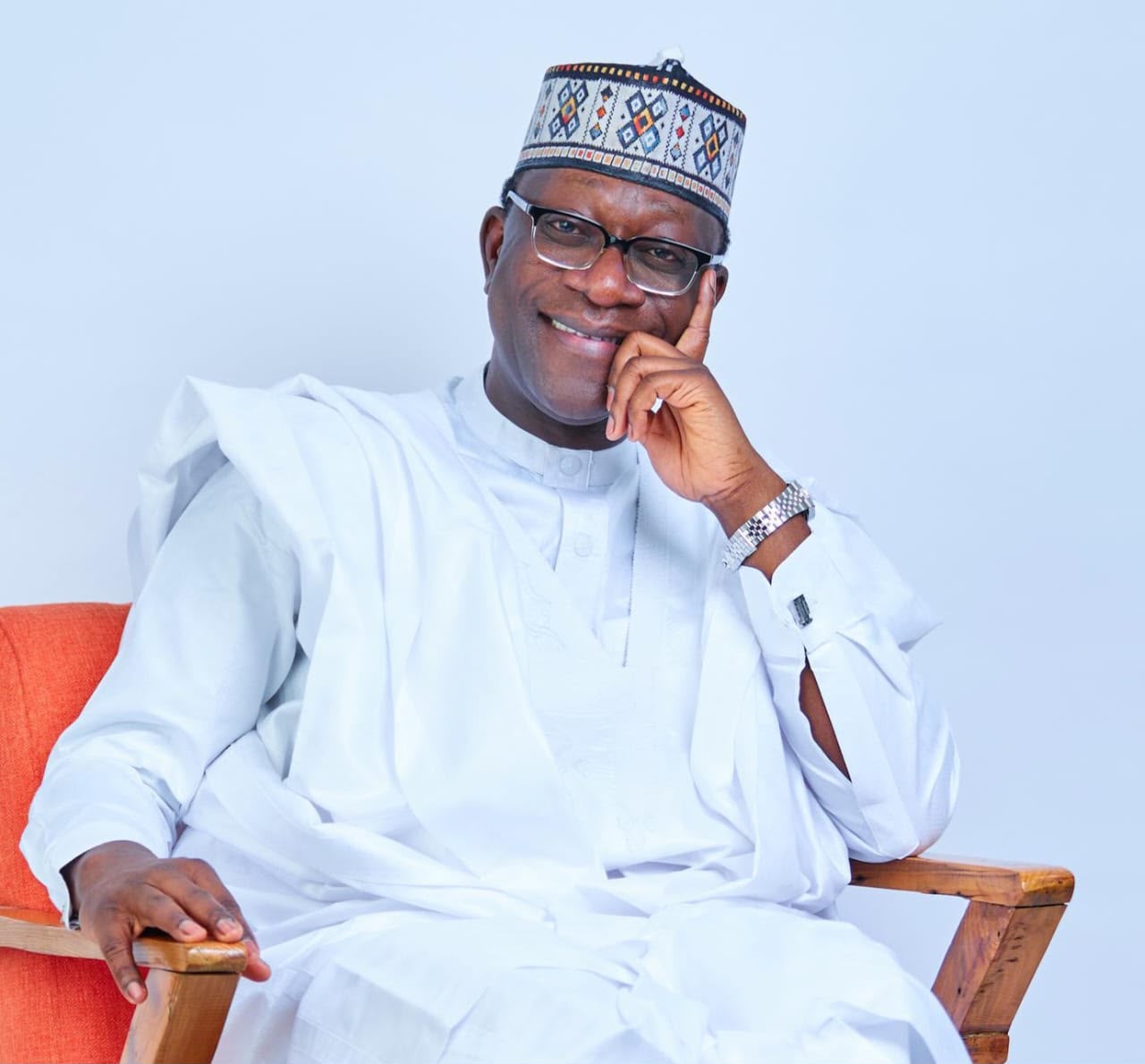
Today, I celebrate my colleague and friend, Hon. Abdulmumin Jibrin Kofa, as he attains the golden milestone of 50.
Turning 50 is more than a birthday; it is a moment to pause, reflect and appreciate a journey already rich in accomplishment, service and impact.
Over four terms in the House of Representatives, Abdulmumin has brought to our legislative enterprise a rare combination of intellectual depth, business experience, courage and an unmistakable independence of mind. From his leadership of key committees, including Finance, Appropriations, Land Transport, Foreign Affairs, and Housing and Habitat, his contributions have reflected a strong grasp of public finance and a broad understanding of national affairs.
He is, without doubt, one of the sharpest minds in our Parliament. His academic accomplishments, including two PhDs and an MBA, his experience in business and academia, his executive education at leading institutions, and his service at the Federal Housing Authority have all contributed to the distinctive perspective he brings to public service.
But beyond the degrees, positions and accomplishments is a man who has never been afraid to speak his mind.
Abdulmumin is forthright. He is courageous. He is independent-minded. And he is never one to hide his convictions.
In a Parliament, such voices matter. A healthy legislature must have room for principled disagreement, robust debate and legislators willing to speak for what they believe is right and in the interest of their constituents.
As you celebrate 50, dear Abdulmumin, I celebrate not only the milestones behind you but also the possibilities ahead.
On behalf of the leadership and the entire membership of the House of Representatives, I wish you good health, renewed strength, greater accomplishments and many more years of impactful service to your constituents and our dear nation.
May the next chapter be even greater than the first five decades.
Happy 50th Birthday, Hon. Abdulmumin Jibrin Kofa.

KANSIEC Chairman Advises Fruits Sellers Association to Modernize Business

Breaking :Former PDP National Chairman Alhaji Bamanga Tukur Is Dead

Nigeria’s Oil Output Hits 1.573m bpd as OPEC Production Rises–Report Says

Subsidy Removal: Governors, Not Tinubu, Should Account for Funds — Gov Abiodun

Sokoto Islamic Cleric Stabbed After Friday Prayers; Suspected Attacker Killed by Followers

From World’s 9th Most Populous City to Perfect: As Gov Yusuf Revisits Kano Master Plan

95% of Governor Abba Kabir Yusuf’s Promises Have Been Fulfilled — CPS Interview By Musa Diso, In Kano

Bello Sharada: A Great Writer, A Bookish Soul, Gone Too Soon

Call Me Chairman, Not Tony!’: Elumelu’s Blunt Correction of Trainee Splits Internet as Old Video Sparks Double Standard Fury

Nigerians Are Tired of Promises’ — CAN Demands Action on Insecurity, Hardship In Eid-el-Maulud Message
KANSIEC Chairman Advises Fruits Sellers Association to Modernize Business
Breaking :Former PDP National Chairman Alhaji Bamanga Tukur Is Dead
Nigeria’s Oil Output Hits 1.573m bpd as OPEC Production Rises–Report Says
Subsidy Removal: Governors, Not Tinubu, Should Account for Funds — Gov Abiodun
Sokoto Islamic Cleric Stabbed After Friday Prayers; Suspected Attacker Killed by Followers
From World’s 9th Most Populous City to Perfect: As Gov Yusuf Revisits Kano Master Plan
95% of Governor Abba Kabir Yusuf’s Promises Have Been Fulfilled — CPS Interview By Musa Diso, In Kano
Bello Sharada: A Great Writer, A Bookish Soul, Gone Too Soon
Call Me Chairman, Not Tony!’: Elumelu’s Blunt Correction of Trainee Splits Internet as Old Video Sparks Double Standard Fury
Nigerians Are Tired of Promises’ — CAN Demands Action on Insecurity, Hardship In Eid-el-Maulud Message
-

 Opinion5 years ago
On The Kano Flyovers And Public Perception
-

 Features5 years ago
How I Became A Multimillionaire In Nigeria – Hadiza Gabon
-

 Opinion6 years ago
Kano As future Headquarters Of Poverty In Nigeria
-

 History5 years ago
Sheikh Adam Abdullahi Al-Ilory (1917-1992):Nigeria’s Islamic Scholar Who Wrote Over 100 Books And Journals
-

 Opinion5 years ago
My First Encounter with Nasiru Gawuna, the Humble Deputy Governor
-

 History5 years ago
The History Of Borno State Governor Professor Babagana Umara Zulum
-

 History5 years ago
The Origin Of “Mammy Market” In Army Barracks (Mammy Ochefu)
-

 News4 years ago
Federal University Of Technology Babura To Commence Academic Activities September