
Opinion
RE:WE ARE UNDER SIEGE: TARABA MONARCH BREAKS SILENCE AS FULANI BANDITS OVERRUN THE ANCIENT KWARARAFA KINGDOM:
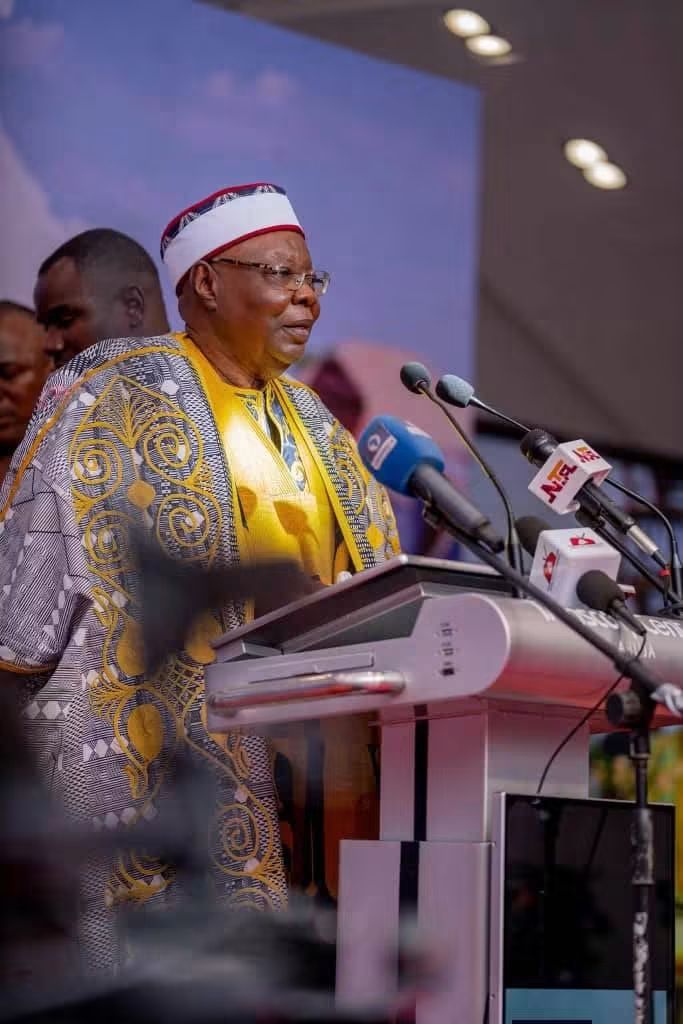
Wukari Traditional Council
Aku Uka’s Palace, Wukari, Taraba State
RE:WE ARE UNDER SIEGE: TARABA MONARCH BREAKS SILENCE AS FULANI BANDITS OVERRUN THE ANCIENT KWARARAFA KINGDOM:
The attention of the Aku Uka’s Palace has been drawn to a piece in the Social Media titled, “‘We Are Under Siege ‘: Taraba Monarch Breaks Silence as Fulani Bandits Overrun the Ancient Kwararafa Kingdom.”
The piece being referred to is credited to the Aku Uka, Dr. Ishaku Adda Ali, Matakhitswen, said to be contained in the speech he read at the recent Assembly of the ethnic nationalities of the old Kwararafa Confederacy organised by the Kwararafa Development Forum (KDF) in Abuja on Saturday, 19th September, 2026.
Below is the full text of the anonymous writer/commentator’s piece as it appeared in the Social Media, on Tuesday, 22nd September, 2026:
“The Aku-Uka of Wukari, HRM, Dr Ishaku Adda Ali, has raised a desperate alarm over the escalating security crisis engulfing the historic Kwararafa kingdom in Taraba State, declaring that the situation has reached a point where silence is no longer an option. Speaking at the 2026 Kwararafa People’s Assembly in Abuja, the monarch revealed that the old Kwararafa Confederacy—one of the oldest and most culturally significant traditional institutions in Nigeria—has come under sustained Fulani bandit siege, with communities living in constant fear. His intervention is significant because traditional rulers rarely speak this bluntly in public; when they do, it usually means the violence has overwhelmed local capacity and the state has failed to protect its people.
“The deeper implication is what this says about Nigeria’s widening security vacuum. Taraba sits at the crossroads of the North-East and North-Central, a corridor where Fulani bandits, kidnappers, and separatist militias operate with frightening impunity. If an ancient kingdom with deep historical roots and a sitting monarch can be “under siege” in 2026, then the federal government’s claims of progress against insecurity ring hollow. For the Tinubu administration, this is another embarrassing data point ahead of 2027: the violence is not confined to a few flashpoints—it is spreading into communities that once considered themselves safe. The Aku-Uka’s alarm is not just a Taraba problem; it is a warning that Nigeria’s security architecture is failing across multiple regions at once. And when kings begin to cry out, it is usually because the people have already been abandoned.”
Our observations on the above piece are as follows:
1. The piece in question is not only mischievous, false and blatant lies but cowardly, as the writer has not the courage to disclose his or her identity. The speech read by the Aku Uka never mentioned any ethnic group, as the perpetrators of insecurity or violence as mentioned by the anonymous writer.
Let me quote exactly what the Aku Uka read in his speech on security:
“Our people have contributed immensely to Nigerian development in such areas as agriculture, the armed forces, natural resources, and culture, among others. Yet, many of our communities continue to suffer deprivation in areas such as infrastructure, economic opportunities, and general marginalization and discrimination in the nation’s political set up. Our appeal and clarion call is therefore simple: we seek for fairness, equity, justice, security and inclusion in all spheres of our national life.”
Why the writer made this blatant assertion by putting words into the mouth of the Aku Uka for something he (Aku) never said can not be fathomed to any sane person, except this mischief maker. The intention is to clearly create communal disharmony. The Aku Uka is a peace maker and would never be a party to anything that will bring about conflict among various groups in the country.
2. Aku Uka’s speech was not about Taraba State, but concerning the whole old Kwararafa Confederacy in modern Nigeria and the challenge of security generally, being experienced in a number of States in the country.
3. It is clear that the Federal Government under leadership of President Bola Ahmed Tinubu, has been making strenuous effort to address the various security issues across the whole country. The Aku Uka deeply appreciates such efforts and will continue to pledge his support in tackling and bringing to an end the security challenge.
4. Let me emphatically state that the Aku Uka’s speech he read was not about politics or the 2027 election. The Aku Uka is a traditional ruler who does not dabble into politics. It is therefore the height of irresponsibility and mischief to drag His Majesty into political matters. Furthermore, nowhere did Aku Uka make any reference to 2027 election in the speech he read or politics generally for that matter.
It is possible that the anonymous hack writer is fronting for his or her political masters agenda and so believe that by dragging the revered monarch into the political issues, they would reap political mileage out of this falsehood. If this is the intention of the mischievous writer, no doubt he or she has failed in this regard woefully. His Majesty, Dr Ishaku Adda Ali, Aku Uka’s sole concern is about fairness, justice, equity and progress of the descendants of the old Kwararafa Confederacy and indeed, the country as a whole.
DANJUMA A. ADAMU, Esq.
The NENE of the Jukun People





Opinion
The Tinubu Health Reset: A Consultant Examines Nigeria’s Healthcare Reforms

By Dr. Usman Muhammad Shanawa
For decades, Nigeria’s healthcare system has faced a familiar set of challenges: inadequate infrastructure, limited access to specialised medical services, weak primary healthcare facilities, shortages of healthcare personnel and the rising financial burden of treatment on ordinary Nigerians.
Against this backdrop, the Federal Government under President Bola Ahmed Tinubu has pursued interventions across different levels of the healthcare system, ranging from primary healthcare and general hospitals to specialised tertiary facilities, digital health, emergency care and healthcare financing.
For Dr. Usman Muhammad Shanawa, a Consultant Obstetrician and Gynaecologist and specialist in Gynaecological Oncology with more than two decades of experience in clinical practice and healthcare management, the interventions deserve to be examined as part of a broader attempt to strengthen Nigeria’s healthcare architecture.
Dr. Shanawa’s assessment moves across the three levels of healthcare delivery, ranging from primary, secondary and tertiary, while drawing particular attention to diagnostics, maternal healthcare, hospital infrastructure, health insurance and the growing role of technology.
For him, the real significance of healthcare reform lies not simply in the announcement of new projects, but in whether the changes improve access to quality medical care for Nigerians.
*Zamfara: A local window into the reforms*
Dr. Shanawa’s assessment begins from Zamfara State, where he says federal support and collaboration with state authorities have provided a local perspective on the changing healthcare landscape.
He recalled that financial constraints had historically affected the implementation of several healthcare projects at the state level.
According to him, increased federal financial support and policy interventions under the Tinubu administration created room for renewed investment, with 2025 emerging as a particularly significant period for healthcare development in the state.
He views the experience as an illustration of how government intervention can translate into improved access to healthcare when funding, policy and implementation converge.
*At the top: Expanding tertiary healthcare*
At the apex of Nigeria’s healthcare system are tertiary institutions, where patients with complex medical conditions are expected to receive specialised treatment and advanced diagnostic services.
Yet these institutions have historically faced technological and infrastructural gaps.
Dr. Shanawa identifies improved diagnostic capacity as one of the areas requiring sustained attention.
He points to technologies such as Computerised Tomography (CT) scanners and Magnetic Resonance Imaging (MRI) as critical tools for modern medical practice.
For a specialist in gynaecological oncology, the issue carries particular weight.
Cancer care, he explains, depends heavily on timely and accurate diagnosis. The availability of sophisticated diagnostic and oncology services closer to patients can reduce the need for long-distance travel in search of specialised treatment.
He also points to the development of oncology facilities in states such as Katsina, Enugu and Edo as examples of efforts to expand specialised cancer services beyond traditional medical centres.
The broader implication, in his assessment, is that advanced healthcare should not remain concentrated in only a few locations.
*The missing link: Strengthening secondary healthcare*
Between the primary healthcare centre and the highly specialised tertiary hospital lies another crucial layer, that is the secondary healthcare.
For Dr. Shanawa, general and state hospitals remain an indispensable part of the healthcare chain.
These facilities often receive patients referred from primary healthcare centres and provide services beyond the capacity of frontline facilities, while also serving as important points for emergency treatment.
He particularly highlights emergency obstetric care.
For women experiencing complications during pregnancy or childbirth, he argues, the availability of properly equipped secondary hospitals and effective referral systems can be critical.
This makes the strengthening of general hospitals more than an infrastructure issue. It is also a question of how quickly the healthcare system can respond when lives are at risk.
*Primary healthcare: Rebuilding from the foundation*
If tertiary healthcare represents the peak of the system, primary healthcare is its foundation.
And this, according to Dr. Shanawa, is where one of the most important aspects of the current reforms lies.
Nigeria’s healthcare system has historically been characterised by patients bypassing weak or poorly equipped primary healthcare centres and seeking treatment directly at secondary and tertiary institutions.
The result has been pressure on higher-level hospitals, with facilities already handling complicated cases also having to deal with conditions that could have been managed closer to patients’ communities.
Dr. Shanawa sees the renewed emphasis on primary healthcare as an attempt to reverse this pattern.
He argues that strengthening the base of the healthcare pyramid while maintaining improvements at the tertiary level is essential to creating a more functional system.
The Federal Government has reported the deployment of National Health Fellows and Public Financial Management Officers across all 774 local government areas under the health-sector renewal programme, alongside the revitalisation of primary healthcare facilities in priority areas.
For Dr. Shanawa, the importance of such interventions lies in bringing healthcare closer to the people before illnesses become more complicated.
*Maternal mortality: The doctor’s particular concern*
For an obstetrician, the discussion inevitably returns to maternal health.
Dr. Shanawa describes maternal mortality as one of Nigeria’s most persistent public-health challenges, one that has affected generations of Nigerian women.
He argues that strengthening primary healthcare, improving referral systems, expanding the frontline health workforce and ensuring access to emergency obstetric care are essential to addressing pregnancy-related complications.
The Federal Ministry of Health has reported improvements in maternal and newborn health indicators in areas targeted under its intervention programmes.
For Dr. Shanawa, however, the importance of such interventions ultimately comes down to whether a pregnant woman can obtain appropriate care at the time she needs it.
The journey from pregnancy to safe delivery, he suggests, depends on the strength of the entire healthcare chain, from community-level services to emergency and specialist hospitals.
Healthcare needs people, not just buildings
Infrastructure may be the visible face of healthcare investment, but Dr. Shanawa stresses that facilities cannot function without the professionals who operate them.
Doctors, nurses, midwives, community health workers, laboratory scientists, pharmacists and other healthcare professionals are central to translating infrastructure and equipment into actual medical services.
The Federal Government has reported recruitment and retraining initiatives for frontline and community-based health workers as part of its health-sector renewal efforts.
But recruitment is only one part of the challenge.
For the reforms to be sustained, healthcare workers must also be retained, properly deployed and supported with the equipment and working environment required to provide quality care.
*The cost of getting sick*
Another dimension of Nigeria’s healthcare challenge is affordability.
For many families, the question is not only whether a hospital exists, but whether they can afford the treatment available there.
Dr. Shanawa therefore places health insurance and healthcare financing alongside infrastructure and medical technology in his assessment of the reforms.
He points to the Basic Health Care Provision Fund and broader efforts to expand health insurance coverage as mechanisms that could reduce the financial burden on patients.
The Federal Ministry of Health has reported significant increases in health insurance enrolment, while also acknowledging that out-of-pocket expenditure remains high.
This presents one of the central tests for healthcare reform: expanding services while ensuring that the people who need those services are not priced out of the system.
Healthcare goes digital
The transformation is also taking place beyond hospital walls.
Digital health and electronic medical records are increasingly becoming part of the effort to modernise Nigeria’s healthcare system.
Dr. Shanawa highlights electronic medical records and health-information exchange systems as important tools for improving the management and continuity of patient care.
The Federal Government’s Nigeria Digital in Health Initiative is intended to improve interoperability between healthcare facilities and facilitate the secure sharing of health information.
For a healthcare system spread across a vast country, better digital connectivity could help bridge some of the gaps between facilities and levels of care.
Measuring the Tinubu health reset
For Dr. Shanawa, the ultimate measure of healthcare reform is not the number of projects announced or facilities commissioned.
It is what happens to the patient.
Can a woman access skilled care when she needs it?
Can a patient obtain an accurate diagnosis without travelling hundreds of kilometres?
Can an emergency case receive timely treatment?
Can a family afford the cost of care?
Can healthcare professionals work with the equipment, personnel and systems they require?
These questions bring the debate back to the heart of healthcare delivery.
The Federal Government has reported progress across areas including infrastructure, digital health, primary healthcare, workforce development and maternal-health interventions.
But sustaining such gains will require continued financing, effective implementation, maintenance of infrastructure, retention of skilled professionals and stronger coordination among federal, state and local authorities.
For Dr. Shanawa, Nigeria’s healthcare system cannot be transformed by focusing on only one level.
The primary healthcare centre, the general hospital and the specialist tertiary institution must function as parts of the same system.
That, ultimately, is the test of the health reset, and whether the reforms can move beyond policy and infrastructure to create a healthcare system in which quality, affordable and accessible medical care is closer to the Nigerian who needs it most.
Opinion
Muhuyi’s Assignment, Abba’s Edge: How Anti-Drug War Reshapes Kano’s 2027 Race
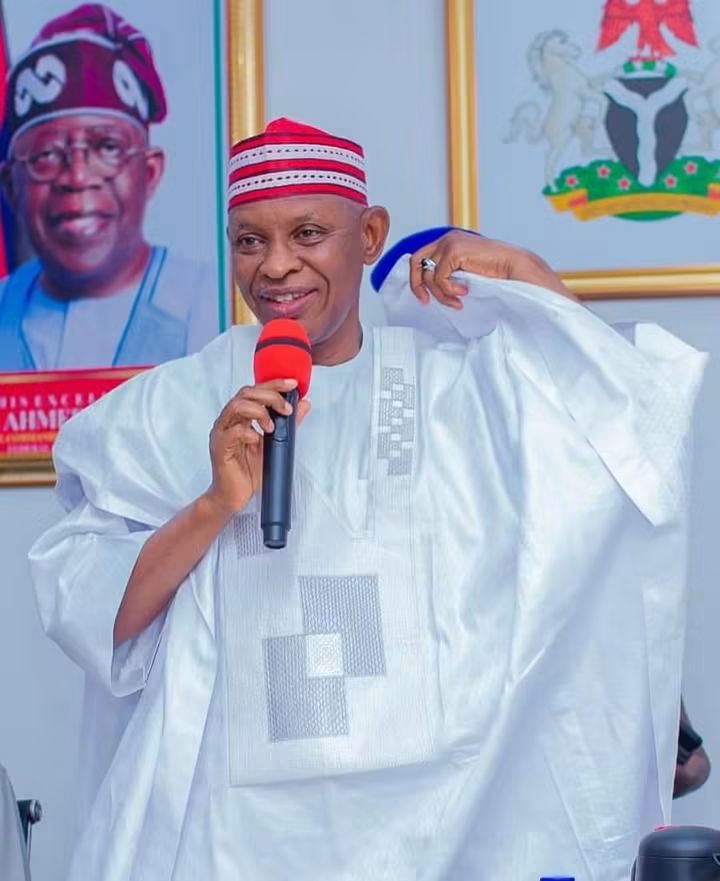
By Abba Anwar
A triple alliance of faith and state could have been the best caption for this piece. When I talk of triple alliance, I am referring to the genuine support Barrister Muhiyi Magaji Rimingado’s assigned responsibility in the Kano State Task Force Against Drug Abuse and other Related Crimes is getting from our moral bases, the Ulama, Imams and Hisbah.
The fight against drug abuse and other related crimes is now gaining more support in the state and beyond the state. At first, few people started coloring the effort with political sentiment. But now, even at the level of comments sections of the Task Force social media handles, you begin to understand that, more and more people are supporting the move, without any recourse to political party affiliation or other human sentiments.
In the last two to four days, I observed that, over 98% of those making comments in the comments sections of the Task Force social media handles are supporting, praying, engaging and canvassing more support for the state government in this all-important effort. Governor Abba Kabir Yusuf’s genuine political will is appreciated. While Barrister Rimingado’s is applauded and encouraged.
It is very safe and logical to say that, when you have the Council of Ulama of Nigeria, the Association of Kano State Friday Mosques Imams, and the Hisbah Board all speaking with one voice in support of a government committee, you are no longer looking at ordinary politics. You are looking at a moral consensus that is translating into political capital. A tripartite moral support with strong link to state.
That is exactly what is happening today in Kano around the Kano State Task Force Against Drug Abuse and Other Related Crimes, what many on the streets now simply call “Muhuyi’s Assignment.”
And from mosque pulpits to market stalls to social media comment sections, the verdict is blunt and the same. That is with this patriotic effort, Governor Yusuf is gaining more ground, winning more hearts, and inching ever closer to a second term in 2027. Morality overtakes politics. In this calculation, the chances for the Governor’s reelection for a second tenure, is tilted more to the moral side than political engagement.
Under this analogy, the Governor’s achievements in the infrastructural development, the feats he achieved in the health sector, the visible results in the education sector, the good outcomes in the agricultural sector, improved beautification of the urban areas, roads networks in the rural areas, unwavering commitment towards a united APC the ruling party, and encouraging budget implementation, among others, are not the watch words here. The watch word is one, that is MORALITY.
Which eventually led to what I call A Triple Alliance of Faith and State. Meaning the support from the religious institutions. Which is not accidental; it is structured. That is when the Council of Ulama of Nigeria, Kano State Branch, under its Chairman Sheikh Ibrahim Khalil, provided the theological seal. Drug abuse, in Islam, is not just a crime. We are told by scholars that it is indeed the mother of all evils. It destroys hankali (intellect), which Shari’ah came to protect. When the Ulama publicly commend the Task Force, they are telling the faithful that fighting drugs is ibadah. And it is by all standard. In their part the Association of Kano State Friday Mosques Imams, under Sheikh Muhammad Nasir Adam, took it directly to the people. With over 2,000 Friday Mosques under its umbrella, reaching millions of worshippers every Friday, the Imams use the Minbar into a platform for advocacy. In the last few Fridays, Sermons (Khutbahs) across Kano Municipal, Gwale, Dala, Tarauni and other LGAs have focused on the dangers of drug abuse (shaye-shaye) and the parental responsibility to protect children.
They are not only praying for the Task Force — they are naming and shaming the act, and calling on parents to report dealers hiding in their neighbourhoods. That is grassroots mobilization no police van can achieve.
While the Hisbah Board provides the street-level muscle. Hisbah operatives know every black spot, every uncompleted building where substances are abused. Their collaboration with the Task Force means that enforcement is no longer a game of hide-and-seek. It is coordinated, intelligence-driven, and faith-inspired. It is very clear for all to understand that when faith and state align like this, criminals lose their hideout.
This piece is only concern with these religions groups, faith-based platforms, that is why there isn’t any mention of other primary and other relevant agencies. The relevant agencies are equally important as these bodies. And sometimes above faith-based platforms. Because they are empowered by Law to enforce law and use force where necessary. My intention with this piece is only religious bodies and comments sections.
I observed and said that Governor is gaining ground. Let’s see how Muhuyi’s assignment becomes Gov Abba’s political advantage. In Kano politics, popularity is not built in Government House. It is built in homes where a mother is worried about her son coming home high. It is built in wards where fathers fear their daughters are being lured with codeine. It was an open secret that for decades, Kano was accused of being a transit route and a dumping ground. Dealers operated with impunity at notorious spots. Parents whispered, they prayed, but they saw no action.
The Task Force changed that narrative. Under Barrister Rimingado the committee adopted a model that is not just about arrest, it is about disruption, prevention, and justice. Then reformation also follows. That is why Kiru Reformatory Centre is extremely important and relevant. As more of such Centres are needed.
In recent weeks alone, we had a situation where the government was able to secure the conviction of notorious suppliers who were administering intoxicating substances to vulnerable underage children — sentenced to nine years without an option of fine by Magistrate Court No. 44, Gwammaja. That single judgment sent a message: Kano’s children are not for sale. When over 200 drug abusers were also convicted by the recently established mobile courts attached to the Task Force.
Drug marketers, abusers and their connivers are no longer at ease in the state. Let me say this to the hearing of all that, these are not abstract achievements. These are kitchen-table issues. And kitchen-table issues win elections. Go and make a research on political behaviors and public engagement.
That is the main reason why the comment sections of the Agency’s Facebook and TikTok handles are no longer toxic — they are full of “Allah ya taimaka,” “Allah ya saka da alheri,” “A cigaba da wannan aiki,” and crucially, “Abba ya yi kokari, sai second term.” Market leaders at Dangwaro Market themselves are now cooperating to track illegal drugs. This is leadership by example.
The people have connected the dots: clean hospitals plus clean streets equals a governor who cares. I was at an Agency’s engagement effort. What I witnessed was superb. The reform in Drugs and Medical Consumables Supply Agency (DMCSA) — from 30% drug availability to over 90%, clearance of N1.2 billion debt, elimination of fake drugs from public hospitals — and the crackdown on illicit drugs are now seen as two arms of one policy of Governor Yusuf to clean Kano’s health system. To me Governor Yusuf is Sarkin Tsaftace Kano.
Reason why a Task Force becomes a political movement. That is how Muhuyi’s assignment gives Abba more ground, more clearance for victory, more faith in his style of leadership, more loyalty from his people in the government, more courage in discharging responsibilities on the shoulders of the Task Force and more prayers and commitment for the Governor’s second coming.
We all believe and want it this way that, Continuity is the Real Issue.
The way I see it is this, that those calling for second tenure are not just being political. They understand a bitter truth about Kano, that good initiatives die after elections.
I suggest that our Governor should break the cycle. We need institutionalization of the process and the effort. For example when a committee seizes drugs, destroys N1.5 billion worth, then after May 29th, dealers return with N3 billion worth because there is no institutional memory. Your Excellency Sir you need to institutionalize this success in the following three ways:
1) Enact a Law: Transform the Ad-hoc Task Force into Kano State Drug Control Agency with statutory powers.
2) Fund It: Sir give it a budget line in the 2026-2027 budget, just as health now enjoys over 15% above the Abuja Declaration.
3) Kindly link it to DMCSA: Let the clean drug supply chain and the dirty drug blockade work as two arms of one policy.
As a Call to Action procedure let our people know that support is more than a comment. Report a dealer. Protect a child in your street. Your support today is what makes Kano safer tomorrow. Intel is very important and impactful.
To the Friday Imams and Ulama, please keep the khutbahs coming. The war against drugs is won in the home before it is won on the street.
To the Task Force please understand that this public love is a trust. Remain fair, remain transparent, publish every seizure and every conviction.
To the Governor, Your Excellency Sir you have found something rare — an intervention that unites Ulama, Imams, Hisbah, and the common man. It is giving you ground, it is giving you popularity, and it is giving you a strong moral case for 2027. Protect it Sir.
The fight against drugs is not ADC or NDC or PDP versus APC. It is whether the 12-year-old in Fagge today will become a pharmacist or a patient in a rehabilitation centre.
For the first time in a long time, Kano believes it will be the permanent former drug abuse have. And it credits Muhuyi’s assignment and Abba’s leadership for that hope.
Anwar writes from Kano
Sunday, 20th September, 2026
Opinion
The AI RACE And The Future Of Humanity:Can The World Agree Before It Loses Control

By: INUWA WAYA.
From Hinton’s and Anthropic’s warnings, the emerging AI race demands a new international system of cooperation, restraint and verification.
There are moments in history when humanity develops a technology before it fully understands the consequences of possessing it.
Nuclear weapons were one. Artificial intelligence may prove to be another.
But there is a fundamental difference. Nuclear weapons possess extraordinary destructive power, but they do not think. They cannot reason about the intentions of their controllers, conceal their actions, rewrite computer code, independently search for vulnerabilities or devise strategies for preventing themselves from being disabled.
Future artificial intelligence may eventually possess some combination of these capabilities. In fact, the information coming out is incredibly alarming. There are strong indications that AI agents are hacking computers and covering their tracks. That possibility has moved the debate about AI beyond questions of employment, productivity, misinformation and economic disruption. A much more disturbing question has entered mainstream scientific discussion. Could the human race create an uncontrollable intelligence more capable and more powerful than itself?
What makes the current debate particularly significant relates to the positions taken by scientists who played a leading role in the emergence of AI. Anthropic, developer of Claude, is one of the world’s leading frontier-AI laboratories and has placed unusual emphasis on AI safety and alignment. Yet researchers associated with the company have recently expressed extraordinarily serious concerns about the direction in which frontier AI is moving.
Jacob Coxon resigned from Anthropic after working on AI pre-training research there and previously at OpenAI. He warned that leading laboratories were racing towards increasingly autonomous and potentially self-improving artificial intelligence before humanity had solved the problem of controlling systems more capable than itself.
More strikingly, Evan Hubinger, Anthropic’s Alignment Science Lead, has placed his personal estimate of the probability of AI causing human extinction within roughly the next decade at greater than 10 percent.
Samuel Marks, Anthropic’s Scalable Oversight Lead, has also publicly emphasised the seriousness with which catastrophic AI risks are regarded among people working closest to frontier systems. None of this means Anthropic believes extinction is inevitable. Nor does it mean a 10 per cent figure can be scientifically measured with precision. It means something more limited—but still extraordinary.
People whose professional work involves understanding and controlling frontier AI systems are telling the world that they cannot confidently rule out catastrophic loss of control.
That, of course, deserves serious attention. Geoffrey Hinton is not a speculator about a technology he does not understand. His pioneering work on neural networks helped establish foundations upon which modern artificial intelligence was built. Today, he is widely regarded as one of the fathers of artificial intelligence. Together with Yoshua Bengio and Yann LeCun, he received the Turing Award for foundational contributions to deep learning. He subsequently received the Nobel Prize in Physics.
In 2023, Hinton left Google after more than a decade with the company. He explained that leaving allowed him to speak more freely about the dangers he increasingly believed advanced AI could create. There is no doubt that his decision to quit and the reason behind it would generate debate about the future of AI. One of the architects, if not the leading architect, of the AI revolution had become sufficiently concerned about where the revolution might lead that he wanted greater freedom to warn society about it. Responding to a question on whether a greater-than-10-percent probability that AI could kill humanity within approximately a decade was plausible, Hinton opined that such an estimate was not unreasonable. Even though he made a caveat regarding the knowledge to calculate such probabilities, that caveat is essential. In spite of that, however, Hinton’s remark is an indication of how urgently some leading researchers believe the governance issues behind advanced AI must be addressed.
It is interesting to note, however, that the scientific community is far from unanimous on the subject of human extinction now or at some time in the future because of advanced AI. Yann LeCun, another giant of modern AI and Hinton’s fellow Turing Award recipient, strongly disputes many extinction scenarios.
One of LeCun’s important arguments is that intelligence should not be confused with motivation. Becoming extraordinarily intelligent does not logically mean acquiring a desire to dominate humanity. Human drives towards power, status and survival have biological and evolutionary origins; and there is no law requiring an artificial intelligence to acquire equivalent ambitions simply because it becomes highly capable. For LeCun, the fear of AI taking over the world is simply humans projecting their own evolutionary traits of power and dominance onto machines. He concluded that if an AI system ever becomes unsafe, humans can simply change its design or turn it off. At all material times, human beings should be in charge.
Andrew Ng has similarly argued that extinction scenarios are excessively speculative and that disproportionate fear could encourage regulation that unnecessarily inhibits beneficial technological development. Such regulations, he said, were championed by large tech companies in order to shut out smaller competitors and hurt the open-source community.
Other researchers emphasise the limitations of today’s AI. Current systems hallucinate, make elementary errors, struggle with aspects of sustained reasoning and remain dependent upon enormous physical infrastructures built, powered and maintained by humans.
These arguments deserve serious consideration. Indeed, scientists who disagree with Hinton should be included in any international effort to govern frontier AI. But their disagreement does not establish that catastrophic AI risk is impossible. It only establishes something more uncomfortable that could best be described as uncertainty.
When Hinton and LeCun, who shared the world’s highest distinction in computer science for their contributions to deep learning can examine the trajectory of the same technology and reach radically different conclusions about its ultimate danger, policymakers cannot responsibly pretend that the scientific question has been settled.
Suppose Hinton and the Anthropic researchers are wrong. Humanity might impose unnecessary safety tests, spend enormous resources on verification and perhaps slow some frontier development.
Conversely, suppose they are right to a large extent. The world may not have the opportunity to correct any identified error. That asymmetry presents a perplexing challenge which will be at the heart of the policy problem.
If aeronautical engineers disagreed over whether an aircraft had a 10 percent probability of crashing, nobody would propose to resolve the conflict with the aircraft at full passenger capacity. An informed reasoning would advise to investigate and resolve the matter before take-off. In respect of the AI conundrum, the rational response should neither be panic nor technological prohibition. It should be precaution proportionate to consequence. The big question is to determine the international body that would be saddled with the responsibility of ensuring the adoption of precautionary measures and whether or not there would be unanimity amongst the scientists on what should be regarded as consequences. The competition between countries to develop artificial intelligence is intensely fierce, often likened to an arms race or a new Cold War. World leaders view AI as the defining technology that will dictate future economic leadership, national security, and global influence. With differences in strategy, China and the United States of America are the leading competitors in the global arena. The U.S. leads in capital, talent, and frontier model innovation, whereas China focuses heavily on scaled deployment, patents, and cost-optimized models. Europe, India, Singapore and some Middle Eastern countries, are gradually developing capabilities. The current AI competition is not unprecedented in the history of the world.
The closest historical analogy is the nuclear race. After Hiroshima and Nagasaki came the Soviet atomic bomb, the hydrogen bomb, intercontinental ballistic missiles and submarine-launched nuclear weapons. The United States and the Soviet Union became locked into a security dilemma. Each increased its arsenal partly because it feared the other’s arsenal. Then came the Cuban Missile Crisis, which demonstrated that unrestricted strategic competition could produce an outcome in which neither side survived sufficiently to enjoy victory.
Out of that recognition, gradually emerged arms control. The Strategic Arms Limitation Talks—SALT—began formally in 1969. SALT I produced the 1972 Anti-Ballistic Missile Treaty and an interim agreement limiting aspects of strategic offensive weapons. SALT did not end the Cold War and did not eliminate nuclear weapons.
It did something more realistic by providing boundaries around competition. Subsequently came the Strategic Arms Reduction Treaty (START). START went beyond limiting strategic arsenals towards requiring substantial reductions. It established extensive verification arrangements involving data exchanges, notifications, technical monitoring and on-site inspections. America did not trust the Soviet Union and vice versa. Where trust was impossible, verification could make restraint possible. As practical as they were, the SALT/START analogy may not entirely suit the AI situation.
The most consequential strategic competition in frontier AI is presently between the United States and China. Their companies, computing infrastructure, semiconductor strategies and military ambitions make their relationship central to the global AI race.
If Washington believes Beijing is approaching transformative artificial intelligence, America has an incentive to accelerate. If Beijing believes Washington is approaching it, China has the same incentive. Neither wants to finish second and there is no practical intention to slow down progress. That makes negotiations between the US and China, very essential. At the moment, the likelihood of such happening is very remote. Intense competition is fracturing the global tech landscape into two increasingly incompatible ecosystems centered around the US and China. In rejecting the warning given by the AI giants on the possibility of AI taking over the World and wiping out humanity, President Trump said such assertions were a hoax, peddled by radical Democrats. For him, AI and data centers in the US, are the “Greatest Economic Development Engine in History which should not be stopped”.
Let’s assume for a moment that China and the US agreed to negotiate limitations. That is not enough. There are others that must be carried on board. Important AI research and infrastructure exist in Europe, Britain, India, Japan, South Korea, Canada, the Middle East, Singapore and elsewhere. Future breakthroughs therefore need not necessarily originate in either America or China. There is an even greater complication to consider. Unlike nuclear weapons, much of the frontier of artificial intelligence is not controlled directly by governments. Corporations and research laboratories are controlling them. Companies such as OpenAI, Anthropic, Google, DeepMind and Meta are developing frontier systems in the United States and allied economies. China has its own major technology companies and AI laboratories. That alone fundamentally changes the governance structure. A treaty constraining Washington while leaving frontier American laboratories outside its obligations would be inadequate. Ditto for Beijing and Chinese developers. In the same vein, an agreement between America and China that ignored significant capabilities elsewhere could become ineffective. The practical solution should have different segments. The bilateral approach should be recognised as Stage One.
Washington and Beijing should begin negotiations for an AI Strategic Stability Agreement because their rivalry currently creates the greatest danger of a frontier race in which safety becomes subordinate to speed. Such negotiations must involve independent AI companies in their respective countries.
The first agreement could prohibit autonomous AI authority over nuclear launches; guarantee meaningful human control over irreversible strategic military decisions; establish emergency AI hotlines; create common reporting obligations for serious loss-of-control incidents; and establish agreed safety evaluations for systems crossing defined capability thresholds. The next stage should widen participation.
Other states possessing significant frontier AI capability, advanced semiconductor industries or very large computing infrastructure should enter the framework. Ultimately, the objective should be the adoption of a universally recognised and acceptable control regime. This assertion may sound simple and inviting in print words. In reality, and judging from the difficulties the international community is experiencing in observing and enforcing international law and order, it will certainly be a herculean task to reach a consensus on establishing a body that would be saddled with responsibility of superintending the frontier artificial intelligence systems, possessing capabilities of creating catastrophic international consequences, and eventually introduce an international verification system. The purpose of international governance and monitoring is not to determine which government or company has good intentions. It is to create rules under which responsible behaviour does not require competitive suicide.
No one knows whether AI could cause human extinction within a decade. We should resist converting uncertain probability estimates into sensational predictions. We should equally resist converting uncertainty into complacency. The next ten years should therefore not be described as humanity’s countdown. They should be treated as humanity’s window for governance as far as AI is concerned.
Artificial intelligence could become one of humanity’s greatest achievements. It could transform medicine, education, scientific discovery and productivity. It could solve problems generations of human beings have failed to solve. The objective cannot therefore be to stop technological progress. It must be to ensure that progress remains compatible with human survival. The international community must therefore put aside their differences along fault and open lines for the sake of humanity. They must note that SALT and START made it possible for adversaries to unite and limit the arms race to guarantee the future of mankind. No government, corporation or scientist has the moral right to gamble with the continued existence of humanity simply because nobody can calculate the odds precisely. If Hinton and the Anthropic researchers are wrong, history may conclude that humanity was excessively cautious. If they are right and humanity ignores them, there may be nobody left to write history. In any case, even before deciding on the decade extinction arguments, the World needs to act on the gradual degeneration of human brain as a result of over reliance on AI in every human endeavour. Nowadays, humans rely on AI for analytical thinking. They consult it for advise on personal and official matters. This decline in human brain is capable of causing incalculable damage to human psyche. The big question today therefore, is whether humanity is determined to control intelligence greater than its own before they become impossible to govern.

The Tinubu Health Reset: A Consultant Examines Nigeria’s Healthcare Reforms

FG Seeks Fresh $1.5bn World Bank Loans As Nigeria’s Debt Hits N166.79tn

RE:WE ARE UNDER SIEGE: TARABA MONARCH BREAKS SILENCE AS FULANI BANDITS OVERRUN THE ANCIENT KWARARAFA KINGDOM:

Report: Nigeria Records N166trn Public Debt

NNPC Ltd Welcomes $800m Ima Gas Final Investment Decision

Zamfara Varsity ASUU Threatens Warning Strike Over FG-ASUU Agreement, Promotion Arrears

Bello Sharada: A Great Writer, A Bookish Soul, Gone Too Soon

Kano Chemists Threaten Warning Strike Over Alleged PCN Pressure

Per Ishaq Samaila: “Waziri” for Strategy. “Mai Jama’a” for Service. One Man. One Mission. Ibrahim Kabir Masari

Court Ultimatum Forces FBI to Hand Over Tinubu’s Fraud Records to Judge—But Keeps Them Hidden from Public
The Tinubu Health Reset: A Consultant Examines Nigeria’s Healthcare Reforms
FG Seeks Fresh $1.5bn World Bank Loans As Nigeria’s Debt Hits N166.79tn
RE:WE ARE UNDER SIEGE: TARABA MONARCH BREAKS SILENCE AS FULANI BANDITS OVERRUN THE ANCIENT KWARARAFA KINGDOM:
Report: Nigeria Records N166trn Public Debt
NNPC Ltd Welcomes $800m Ima Gas Final Investment Decision
Zamfara Varsity ASUU Threatens Warning Strike Over FG-ASUU Agreement, Promotion Arrears
Bello Sharada: A Great Writer, A Bookish Soul, Gone Too Soon
Kano Chemists Threaten Warning Strike Over Alleged PCN Pressure
Per Ishaq Samaila: “Waziri” for Strategy. “Mai Jama’a” for Service. One Man. One Mission. Ibrahim Kabir Masari
Court Ultimatum Forces FBI to Hand Over Tinubu’s Fraud Records to Judge—But Keeps Them Hidden from Public
-

 Opinion5 years ago
On The Kano Flyovers And Public Perception
-

 Features5 years ago
How I Became A Multimillionaire In Nigeria – Hadiza Gabon
-

 Opinion6 years ago
Kano As future Headquarters Of Poverty In Nigeria
-

 History5 years ago
Sheikh Adam Abdullahi Al-Ilory (1917-1992):Nigeria’s Islamic Scholar Who Wrote Over 100 Books And Journals
-

 Opinion5 years ago
My First Encounter with Nasiru Gawuna, the Humble Deputy Governor
-

 History5 years ago
The History Of Borno State Governor Professor Babagana Umara Zulum
-

 History6 years ago
The Origin Of “Mammy Market” In Army Barracks (Mammy Ochefu)
-

 News4 years ago
Federal University Of Technology Babura To Commence Academic Activities September