
News
FG Denies N8trn Off-budget Spending
By Yusuf Danjuma Yunusa
The Federal Government has denied the allegation that it spent more than ₦8 trillion outside the 2026 budget, asking those who believe this to show evidence.
This follows comments by IMF Resident Representative in Nigeria, Christian Ebeke, who said about two per cent of Nigeria’s GDP was spent outside the budget in 2025, making the country’s fiscal deficit appear smaller than its actual borrowing requirements.
The IMF official said the discrepancy suggested that the government’s financing needs were higher than reflected in official budget figures.
The comment had stirred reactions from opposition leaders, civil society groups and critics of the Tinubu administration.
Former Vice President Atiku Abubakar had called on the Economic and Financial Crimes Commission (EFCC) and the Independent Corrupt Practices and Other Related Offences Commission (ICPC) to investigate the off-budget spending allegation.
Peter Obi, Presidential Candidate of Nigeria Democratic Congress (NDC), demanded the resignation of the President.
But in a statement issued on Sunday, the Federal Ministry of Finance said reports suggesting that about two per cent of Nigeria’s Gross Domestic Product was spent through a “shadow budget” lacked evidence.
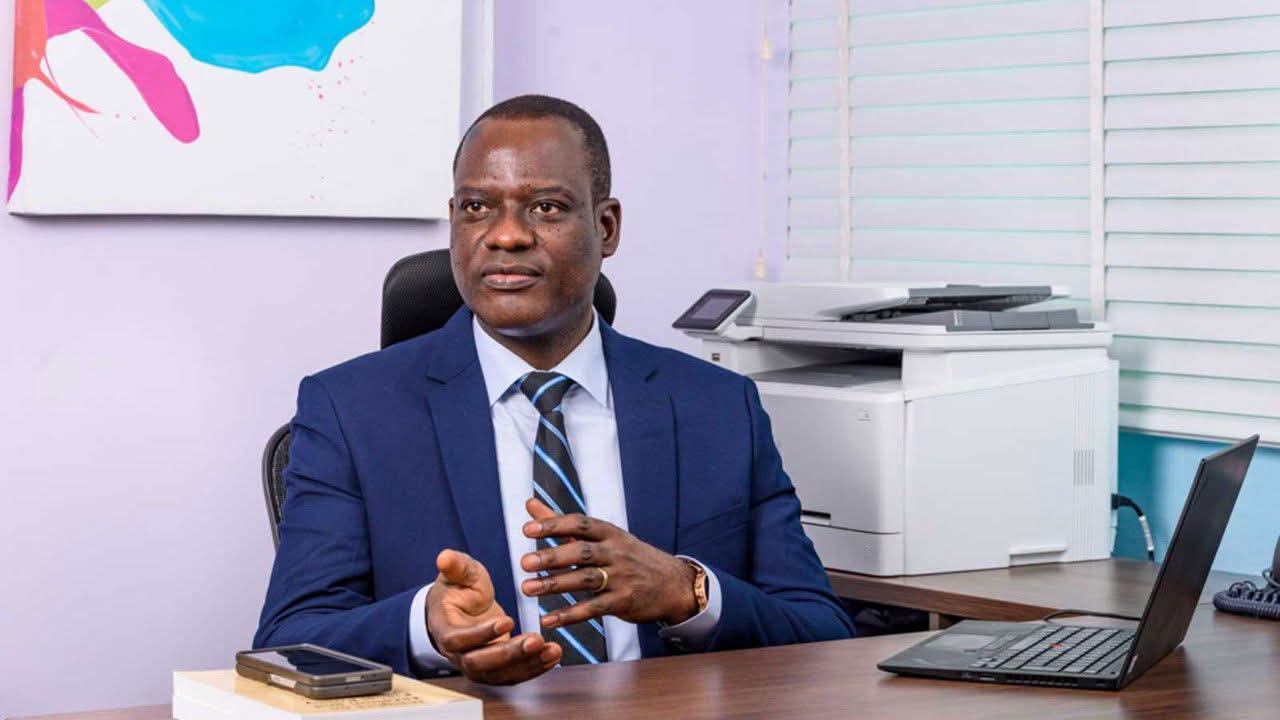
The statement personally signed by Taiwo Oyedele, Minister of Finance, said the comments of the International Monetary Fund (IMF) official was misrepresented.
Oyedele emphasised that the Federal Government does not operate any unofficial budget, arguing that all withdrawals and spending of public funds were authorised through Appropriation Acts, Supplementary Appropriation Acts and other laws passed by the National Assembly.
He clarified some capital projects extend across multiple budget cycles and are implemented through approved rollover provisions, adding that such expenditures should not be interpreted as spending outside the budget.
“The Federal Government has noted recent public commentary alleging that approximately two percent of GDP amounting to over ₦8 trillion was spent outside the approved budget based on references to the IMF Representative in Nigeria and the Fund’s 2026 Article IV Consultation Report. These claims are incorrect and risk misleading the public regarding the government’s financial management.”
“For the avoidance of doubt, the Federal Government does not operate a “shadow budget” or expend public funds outside the constitutional and statutory framework established for public finance.
“Under Sections 80 – 83 and 162 of the Constitution of the Federal Republic of Nigeria, 1999 (as amended), public funds may only be withdrawn and expended in accordance with the Constitution and laws enacted by the National Assembly. Accordingly, Federal Government expenditure is incurred pursuant to duly enacted Appropriation Acts, Supplementary Appropriation Acts, and other statutory authorities enacted by the National Assembly. In addition, multi-year capital projects which necessarily span multiple budgets are implemented in accordance with extant laws and approved provisions for capital rollovers where applicable. These are recognised features of public financial management and should not be misconstrued as expenditures outside the budget.
“It is inaccurate to suggest that trillions of naira have been secretly spent outside legislative approval. Such allegations should have identified the specific projects purportedly executed without appropriation or legal authority and present credible evidence in support of the claim. To be meaningful, assertions of this magnitude must be supported by verifiable facts rather than conjecture.
“For the purpose of public education, it is important to distinguish between appropriation, expenditure authorisation, financing, and fiscal reporting. Nigeria’s public finance framework contains several statutory transfers, first-line charges and intervention mechanisms established by Acts of the National Assembly.”
Oyedele said the Federal Government remained firmly committed to prudent fiscal management, transparency and accountability.
He added that recent reforms have significantly strengthened public financial management with ongoing improvements in budget assumptions and credibility, transparent revenue administration, digitalisation of government financial processes, and stronger treasury management.









News
Emir of Gumel, Ahmad Muhammad Sani, Dies After 45 Years on the Throne
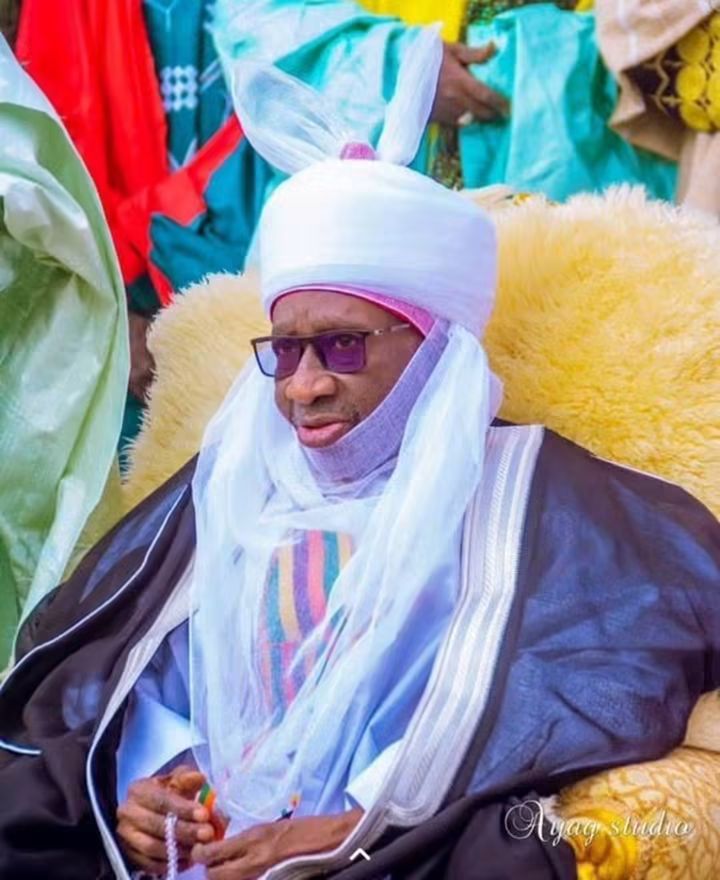
The Emir of Gumel, His Royal Highness Alhaji Ahmad Muhammad Sani II, has died after more than four decades on the throne, bringing to an end the reign of one of Northern Nigeria’s longest-serving traditional rulers.
Ahmad Muhammad Sani II, who became the 16th Emir of Gumel, ascended the throne in 1980 following the death of his father, the late Emir Maina Muhammad Sani II. He subsequently received his staff of office from the then Governor of Kano State, the late Alhaji Abubakar Rimi, in 1981.
His death marks the end of a historic reign that spanned more than 45 years and covered some of the most significant political, social and administrative changes in the old Kano State and, later, Jigawa State.
Before ascending the traditional throne, the late Emir was actively involved in public service and politics. He served as Commissioner for Information, Internal Affairs and Culture in the Kano State Government during the administration of Governor Abubakar Rimi between 1979 and 1980.
His transition from political office to the traditional institution came after the death of his father in December 1980. Historical records indicate that Ahmad Muhammad Sani was selected to succeed his father on December 16, 1980, while his formal presentation with the staff of office followed on May 29, 1981.
As Commissioner for Information, he was associated with important developments in the media sector of the then Kano State. Records indicate that during his tenure, he played a role in the establishment of Triumph newspaper and CTV67 television station, now associated with the state’s television broadcasting history, while also overseeing the expansion of Radio Kano.
His educational background was also notable. He attended Gumel Primary School and Hadejia Middle School before graduating from Kano High School at Rumfa College in 1961. He later obtained qualifications in Public Administration from the Institute of Administration in Zaria, now part of Ahmadu Bello University, and pursued further studies in Political Science and International Relations at Ohio University in the United States.
Before entering politics, Ahmad Muhammad Sani had worked with the Gumel Native Authority and later joined the Immigration Department, where he was posted to Ngamboru Ngala in present-day Borno State. He subsequently served as a senior government official in the Kazaure Divisional Office before moving into politics in 1978.
His long reign as Emir of Gumel made him one of the most experienced traditional rulers in Northern Nigeria. The Jigawa State Government describes him as the 16th Emir of Gumel and records that he had remained on the throne since 1981.
Over the years, the Emir became associated with efforts to promote peace, education, community development and the preservation of traditional values. His palace also played a role in mobilising communities around government programmes, including public health initiatives.
The World Health Organisation, for instance, previously identified the Emir of Gumel as one of the traditional rulers who played an active role in promoting immunisation activities in his emirate. The organisation reported that he publicly vaccinated his own children as part of efforts to reassure communities about the safety of polio vaccination.
Even in the later years of his reign, the Emir continued to participate in peace-building and community affairs. In 2025, he was represented at a farmers-herders peace meeting in Jigawa, where his message emphasised dialogue and mutual understanding as essential to achieving lasting peace.
In December 2025, the Emirate marked his 45th anniversary on the throne, with prominent national and traditional figures, including Vice President Kashim Shettima and the Sultan of Sokoto, participating in activities associated with the anniversary.
His death therefore comes after a reign that began in the final years of the Second Republic and continued through successive military governments, the return to democratic rule in 1999, the creation of Jigawa State and several generations of political leadership.
The Emir of Gumel’s reign also represented a unique bridge between political administration and traditional leadership. Having served as a senior political office holder before becoming a monarch, he brought extensive experience of government and public administration to the traditional institution.
With his passing, the Gumel Emirate loses a monarch whose tenure lasted more than four decades and whose public career had already begun before his accession to the throne.
Details concerning his burial arrangements, the circumstances surrounding his death and the process for selecting his successor are expected to be announced by the Gumel Emirate Council and the Jigawa State Government
News
Uber Shutdowns Operations in Nigeria

By Yusuf Danjuma Yunusa
Ride-hailing company, Uber, has shut down its operations in Nigeria.
In a statement, the company, which came into Nigeria in 2014, said its exit is effective from September 2, 2026.
“We are writing to share some difficult news. After a thorough review of our business, we have made the tough decision to wind down our operations in Nigeria, effective 2 September 2026.
“Since we first launched in Lagos in 2014, it has been an absolute privilege to be a part of your daily life connecting you with independent transportation providers.
“Whether it was a morning commute, a ride to see loved ones, or exploring the city, thank you for trusting the platform to connect you to a driver to get you there safely. We know this may cause disruption to your routine, and we sincerely apologize for the inconvenience.”
In a memo on Wednesday, the ride-hailing company also announced elimination of roughly 3,300 positions.
The job cuts focused on management and coordination roles, according to its CEO, Dara Khosrowshahi.
“Today, we’re making a number of significant organizational changes across Uber. We are removing layers, simplifying team structures, refining our global location strategy, and focusing our people and investments against the biggest opportunities ahead of us.”
“As a result, we will be reducing the size of our team by about 10%. Everyone whose role has been affected has already been notified, except in countries where we will follow the required local process.
“This wasn’t a decision we made lightly, because it will have a real impact on our teammates and friends who have worked hard for Uber. It’s important to say that these changes are about how we’re organized and what we’re prioritizing, not about anyone’s contributions to Uber, which we will always value.
“I’m sure you’re asking, ‘Why, and why now?’ particularly since our business is performing so well. Over the last 5+ years, Uber has grown by orders of magnitude, with our top line nearly tripling. We’ve built new products, expanded into new businesses, reached more consumers and supported more earners, and become a much larger and stronger company. But that growth has also brought complexity: more layers, more coordination, more fragmented ownership, and in some cases structures that made sense when businesses were smaller but no longer serve us well at our current scale.
“Our opportunity from here is enormous: we have the chance to bring Uber to hundreds of millions more people; to invest even more in drivers, couriers and merchants; and to innovate across our core businesses and build the autonomous future.
“The changes we’re making today are designed to do two things: make Uber simpler and faster, and create more capacity to invest in our future. A leaner organization will mean clearer ownership, faster decisions, and more time spent building rather than coordinating. It will also generate savings that we intend to reinvest in growth, innovation, and the capabilities that will matter most over the coming years.
“It’s our job as leaders to make these difficult calls, and to give you transparency into our thinking and our decision-making process.”
The layoffs are the latest round of job cuts for Uber, which eliminated roles in customer service and HR earlier this year.
News
Author of ‘Rich Dad Poor Dad’ Languishes in Billion Dollar Debt
By Yusuf Danjuma Yunusa
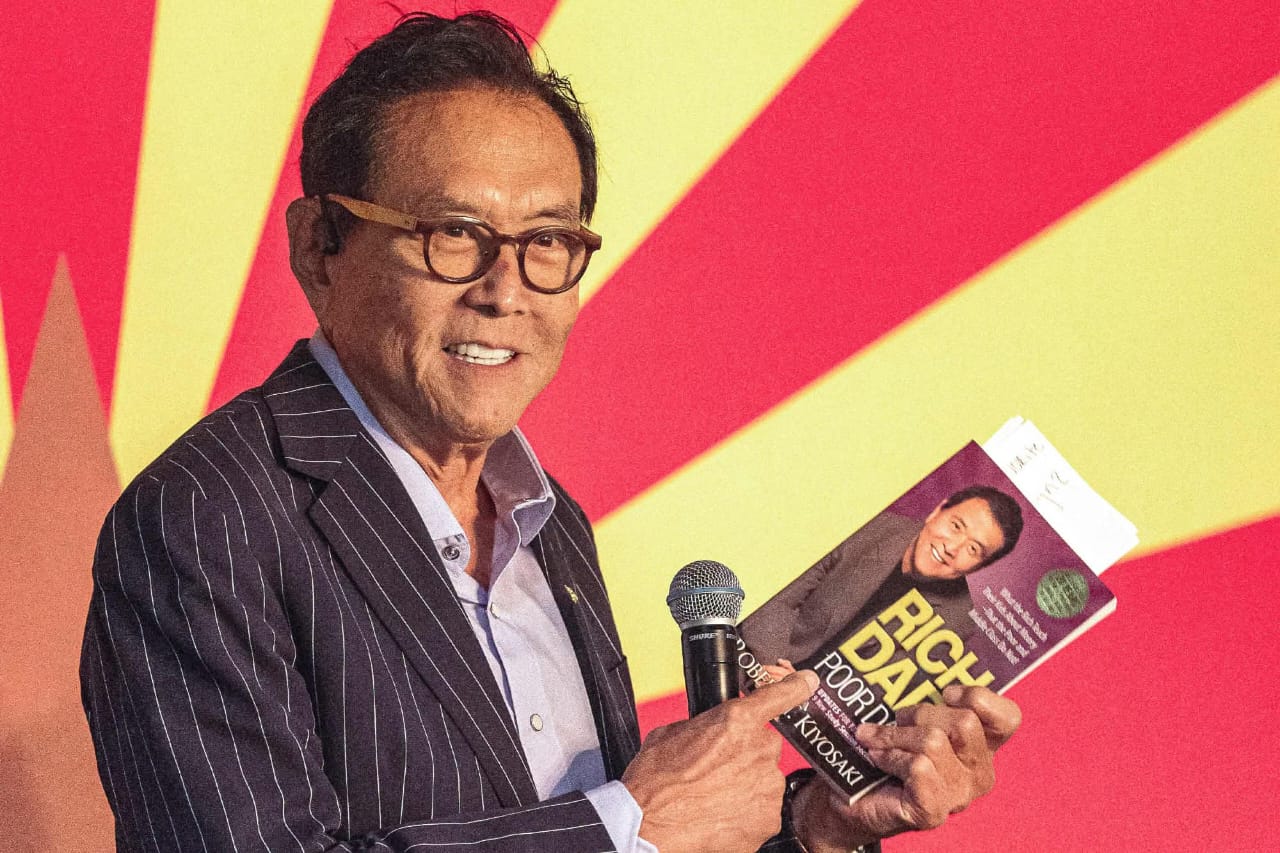
Robert Kiyosaki, the author of the bestselling ’Rich Dad Poor Dad’ book, has accumulated an estimated $1.2 billion debt connected to his aggressive real estate investment.
According to reports, the debt is the estimated amount the 79-year-old author and his business partners borrowed to acquire approximately 1,500 property units as Mr Kiyosaki continues to expand his real estate holdings.
Despite the significant debt, Mr Kiyosaki does not appear apprehensive about the liabilities, maintaining that borrowing money to acquire income-generating assets is a strategy commonly used by wealthy individuals.
“So, I’m a billion two in debt,” the author said on the ‘Get Rich Education’ podcast recently, adding that people “should not do what I do, right? But I studied it since 1974… If you’re going to learn to use debt, you’d better take some education.”
In a recent interview with Vanity Fair, Mr Kiyosaki’s ex-wife and business partner, Kim Kiyosaki, revealed that the debt did not reflect the amount her ex-husband personally owes.
She stressed that it is connected to the real estate properties owned by them and their business partners, adding that Mr Kiyosaki’s personal share of the liabilities is small.
Vanity Fair estimated Mr Kiyosaki’s share of the debt at around $30 million to $60 million.
“We have a lot of apartment houses with our partners. So technically, yes, we have all this debt,” the ex-wife told Vanity Fair.
Speaking to the magazine, Mr Kiyosaki stated, “If it all comes to hell, you can talk to my attorney. Firewalls—that’s the way the rich play the game.”

Emir of Gumel, Ahmad Muhammad Sani, Dies After 45 Years on the Throne

Uber Shutdowns Operations in Nigeria

Author of ‘Rich Dad Poor Dad’ Languishes in Billion Dollar Debt

Maulud: Best Choice Specialist Hospital Congratulates Kano Governor, Muslims Globally

Kenyan Newspaper Links Editor’s Abduction to President Ruto

From World’s 9th Most Populous City to Perfect: As Gov Yusuf Revisits Kano Master Plan

95% of Governor Abba Kabir Yusuf’s Promises Have Been Fulfilled — CPS Interview By Musa Diso, In Kano

Kano Islamic Scholar Declares Kano Widow Marriage Programme ‘Haram’, Urges Government to Stop It

We’re aware of your clandestine meetings with Lulu-Briggs, 𝐏𝐢𝐝𝐨𝐦𝐬𝐨𝐧, CRP uncovers ex-MD of NDDC, Nunieh

Review of Police Officers’ Salaries Underway–FG
Emir of Gumel, Ahmad Muhammad Sani, Dies After 45 Years on the Throne
Uber Shutdowns Operations in Nigeria
Author of ‘Rich Dad Poor Dad’ Languishes in Billion Dollar Debt
Maulud: Best Choice Specialist Hospital Congratulates Kano Governor, Muslims Globally
Kenyan Newspaper Links Editor’s Abduction to President Ruto
From World’s 9th Most Populous City to Perfect: As Gov Yusuf Revisits Kano Master Plan
95% of Governor Abba Kabir Yusuf’s Promises Have Been Fulfilled — CPS Interview By Musa Diso, In Kano
Kano Islamic Scholar Declares Kano Widow Marriage Programme ‘Haram’, Urges Government to Stop It
We’re aware of your clandestine meetings with Lulu-Briggs, 𝐏𝐢𝐝𝐨𝐦𝐬𝐨𝐧, CRP uncovers ex-MD of NDDC, Nunieh
Review of Police Officers’ Salaries Underway–FG
-

 Opinion5 years ago
On The Kano Flyovers And Public Perception
-

 Features5 years ago
How I Became A Multimillionaire In Nigeria – Hadiza Gabon
-

 Opinion6 years ago
Kano As future Headquarters Of Poverty In Nigeria
-

 History5 years ago
Sheikh Adam Abdullahi Al-Ilory (1917-1992):Nigeria’s Islamic Scholar Who Wrote Over 100 Books And Journals
-

 Opinion5 years ago
My First Encounter with Nasiru Gawuna, the Humble Deputy Governor
-

 History5 years ago
The History Of Borno State Governor Professor Babagana Umara Zulum
-

 History5 years ago
The Origin Of “Mammy Market” In Army Barracks (Mammy Ochefu)
-

 News4 years ago
Federal University Of Technology Babura To Commence Academic Activities September