
News
Ajiya Expresses Concern Over Rising Insecurity, Banditry, and Cattle Rustling
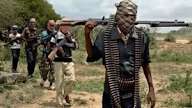
Elder statesman Umar Ajiya has raised fresh concerns over Nigeria’s worsening security situation, warning that the country’s persistent insecurity could escalate into a national crisis if citizens fail to actively support government efforts in tackling the menace.
Speaking in a statement issued to journalists, Ajiya noted that Nigeria has been grappling with multiple security challenges for more than two decades, ranging from insurgency by Boko Haram to widespread kidnapping, banditry, cattle rustling, and other violent crimes that have continued to threaten national stability and economic growth.
According to him, while the Federal Government and several state governments have made considerable efforts to address the situation, it has become increasingly evident that government intervention alone cannot solve the problem. He stressed that every responsible citizen has a role to play by providing credible intelligence, contributing resources where possible, and offering constructive ideas and advice to support security agencies.
Ajiya emphasized that history has repeatedly shown that when the majority of law-abiding citizens remain silent in the face of growing societal challenges, such problems often worsen and become more difficult to resolve.
“Throughout history, the failure of the good majority to speak up has allowed systemic issues to thrive, whether in civic life or spiritual matters. If this trend continues, Nigeria stands the risk of a national meltdown that Africa cannot swallow,” he warned.
The elder statesman said the gravity of the current security challenges compelled him, as a concerned private citizen, to propose a number of policy options and practical solutions that government authorities may consider in their efforts to restore peace and security across the country.
Among his recommendations was the need for adequate and timely funding of security agencies, backed by measurable Key Performance Indicators (KPIs) and accountability mechanisms to ensure efficient utilization of resources.
He also called for improved intelligence gathering and the effective deployment of technology, particularly drones, to enhance surveillance operations. According to him, security agencies should be held accountable for failure to act on intelligence provided by relevant agencies, including the Department of State Services (DSS).
On community policing, Ajiya advocated the establishment of state police or, alternatively, the deployment of police officers below the rank of Deputy Commissioner of Police to their respective states of origin under the existing federal policing structure. He further recommended the compulsory registration of all citizens under the National Identification Number (NIN) scheme, with links to phone numbers and bank accounts to improve traceability and intelligence gathering.
To address the growing trend of kidnappings, he proposed a nationwide ban on ransom payments and encouraged a gradual transition to a cashless economy, supported by strict enforcement measures against violators.
The elder statesman also expressed concern over alleged political interference in security matters, urging authorities to closely monitor political actors suspected of maintaining links with criminal elements. He called for the prosecution of anyone found aiding or collaborating with bandits and other criminal groups.
Ajiya highlighted the need for stronger coordination among security agencies, recommending the establishment of centralized Command and Control Centres (CCC) in every state. Such centres, he said, should be supported by Rapid Response Squads in all local government areas and vulnerable zones to facilitate swift and coordinated responses to security threats.
He further advocated improved welfare packages for frontline security personnel, insisting that benefits and allowances should be paid directly into the accounts of officers rather than through administrative channels that could delay or distort payments.
On border security, Ajiya urged Nigeria to strengthen collaboration with neighbouring countries through the creation of a regional joint task force equipped with drone technology and air power to monitor and secure porous border regions.
In a recommendation likely to generate public debate, he suggested that responsible citizens should be permitted to own firearms under a carefully regulated licensing framework. He also proposed empowering state forest guards and retired military personnel willing to serve in protecting their local communities.
Addressing infrastructure-related security concerns, Ajiya called for the urgent rehabilitation of major roads by both federal and state governments. He proposed the installation of scanners and security checkpoints at key entry and exit points into towns and cities to improve monitoring and crime detection.
On the issue of cattle rustling, he recommended that the Federal Government establish a comprehensive animal transaction registry requiring detailed records of buyers and sellers, including photographs and contact information, while also taking steps to prevent the sale of stolen livestock in markets across the country.
Ajiya further urged both government authorities and citizens to work collectively to confront the country’s security challenges, stressing that national security should be regarded as a shared responsibility requiring commitment from all stakeholders.
He expressed optimism that with stronger collaboration, accountability, technology-driven solutions, and active citizen participation, Nigeria can overcome its current security challenges and build a safer future for all.













News
APC Youths Demand Nationwide Ban on Rarara’s Songs at Party Activities
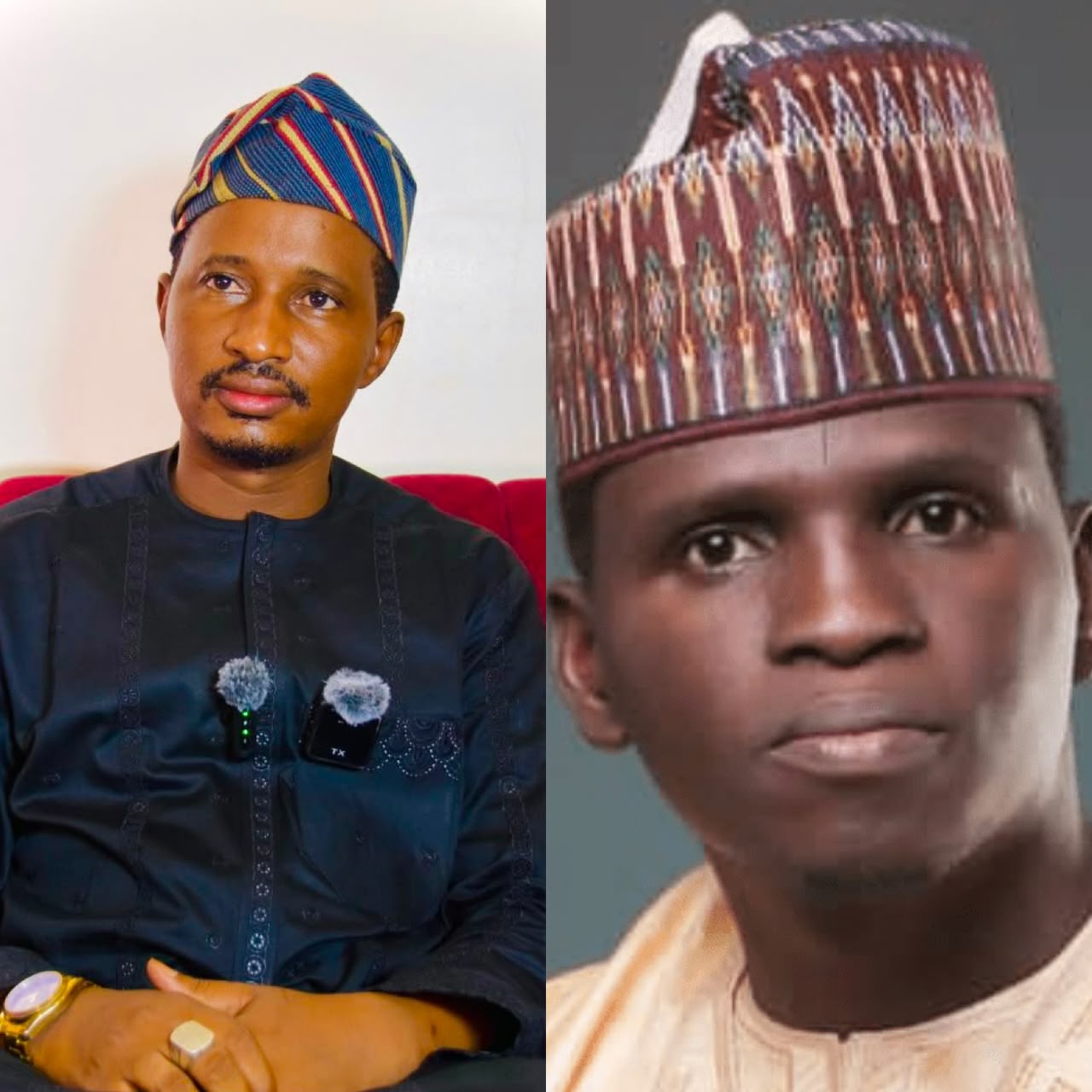
The Coalition of APC Progressive Youths has called on the leadership of the All Progressives Congress (APC) to prohibit the use of songs by popular political singer Dauda Adamu Kahutu, popularly known as Rarara, at all party activities across the national and state levels.
The group’s National Chairman, Hon. Sadiq Ali Sango, made the call in a statement issued to journalists in Abuja on Monday.
Sango alleged that Rarara’s songs have become more detrimental than beneficial to the ruling party, accusing the singer of using abusive language and divisive messages that undermine unity within the APC.
According to him, rather than promoting harmony among party members, Rarara’s style of political music has fueled hatred and deepened internal divisions.
He further alleged that the singer has repeatedly targeted senior party leaders and elders with insulting lyrics, describing such conduct as inconsistent with the values and principles of the APC.
The coalition also accused Rarara of sponsoring campaigns against the Deputy President of the Senate, Senator Barau I. Jibrin, claiming that the campaign encouraged some youths to launch personal attacks against the senator and make what it described as unfounded allegations against him.
The youth group condemned what it called Rarara’s “continuous politics of insults and character assassination,” warning that such actions could damage the party’s image ahead of future political contests.
Sango urged the APC National Working Committee (NWC) and other party stakeholders to immediately ban the use of Rarara’s songs at official party functions, rallies, and other political activities nationwide.
He added that the coalition would pursue all lawful and necessary measures to challenge what it described as conduct capable of causing disunity within the APC.
News
Hon. Abubakar Bichi Commissions 120 Health Workers in Bichi
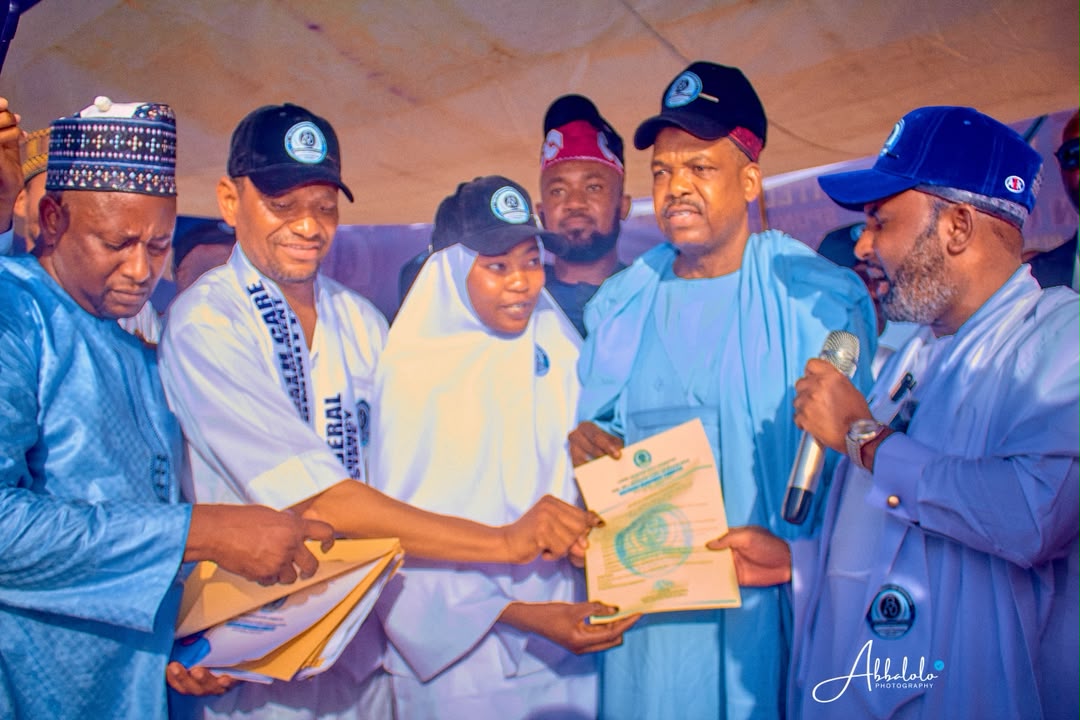
The Kabir Abubakar Bichi Foundation has commissioned 120 temporary health workers who will be deployed across primary healthcare centres in Bichi Local Government Area of Kano State.
The commissioning ceremony was led by the Member representing Bichi Federal Constituency, Hon. Abubakar Kabir Abubakar, on Saturday in Bichi. The event was attended by the Kano State Commissioner for Health, Dr. Abubakar Labaran Yusuf, alongside other dignitaries.
Speaking at the event, Hon. Abubakar Kabir Abubakar announced that the Federal Government is set to establish a new teaching hospital in Bichi Local Government Area to improve healthcare delivery.
“I recently attended meetings on education and healthcare development. As you know, we have Aminu Kano Teaching Hospital, and I want to assure you that we are working closely with the Minister of Health and the Chief Medical Director of Aminu Kano Teaching Hospital to facilitate the establishment of a new teaching hospital in Bichi,” he said.
Abubakar Kabir Abubakar added that the project is receiving strong support from President Bola Ahmed Tinubu.
“We must appreciate President Bola Ahmed Tinubu for his unwavering support for the development of the healthcare sector. We are currently working towards securing the President’s final approval for the project under this year’s budget,” he said.
Hon. Abubakar Kabir Abubakar, who also serves as the Chairman of the House Committee on Appropriations, reaffirmed his commitment to improving healthcare delivery. He disclosed that efforts are underway to upgrade Bichi General Hospital to the status of a specialist hospital in order to provide more advanced medical services and reduce pressure on major referral hospitals in Kano State.
He said “We are pleased to inform the Commissioner that we have completed the installation of equipment for the radiology department at Bichi General Hospital. The equipment includes a digital X-ray machine, 40 oxygen machines, and four dialysis machines, with an additional four dialysis machines expected soon.
“We are now awaiting the arrival of a 64-slice CT scan machine to complete the project. Once the remaining equipment arrives, we will be honoured to invite you and Governor Abba Kabir Yusuf to officially commission the upgraded facilities.
“We also plan to upgrade the surgical and operating theatre of Bichi General Hospital to meet the standards of leading hospitals across Kano State. Our goal is to strengthen healthcare delivery by reducing congestion at major referral hospitals in Kano metropolis, particularly Murtala Muhammad Specialist Hospital and Muhammad Abdullahi Wase Specialist Hospital, Nasarawa, where increasing patient numbers are placing pressure on healthcare personnel and facilities.
“As Kano’s population continues to grow, expanding and equipping secondary healthcare facilities such as Bichi General Hospital has become essential to ensuring timely access to quality healthcare for our people.”
Hon. Abubakar Kabir Abubakar also appealed to the Kano State Government to upgrade Danzabuwa and Saye Primary Healthcare Centres to General Hospitals, assuring the government of his full support in providing infrastructure and medical equipment for the facilities.
He commended the health committee, led by Professor Yusuf Muhammad, for conducting a transparent screening exercise for the newly recruited health workers.
He urged the newly commissioned workers to discharge their responsibilities with professionalism, dedication, and integrity in the service of their communities.
The lawmaker further appealed to the Kano State Government, under the leadership of Governor Abba Kabir Yusuf, to absorb the 120 temporary health workers into the state’s permanent and pensionable workforce.
He also praised Governor Yusuf for his investments in the health and education sectors, describing them as significant contributions to improving the welfare and well-being of the people of Kano State.
News
85 Religious Leaders Graduate from JNI-Alkalanci Fact-Checking Training in Gombe
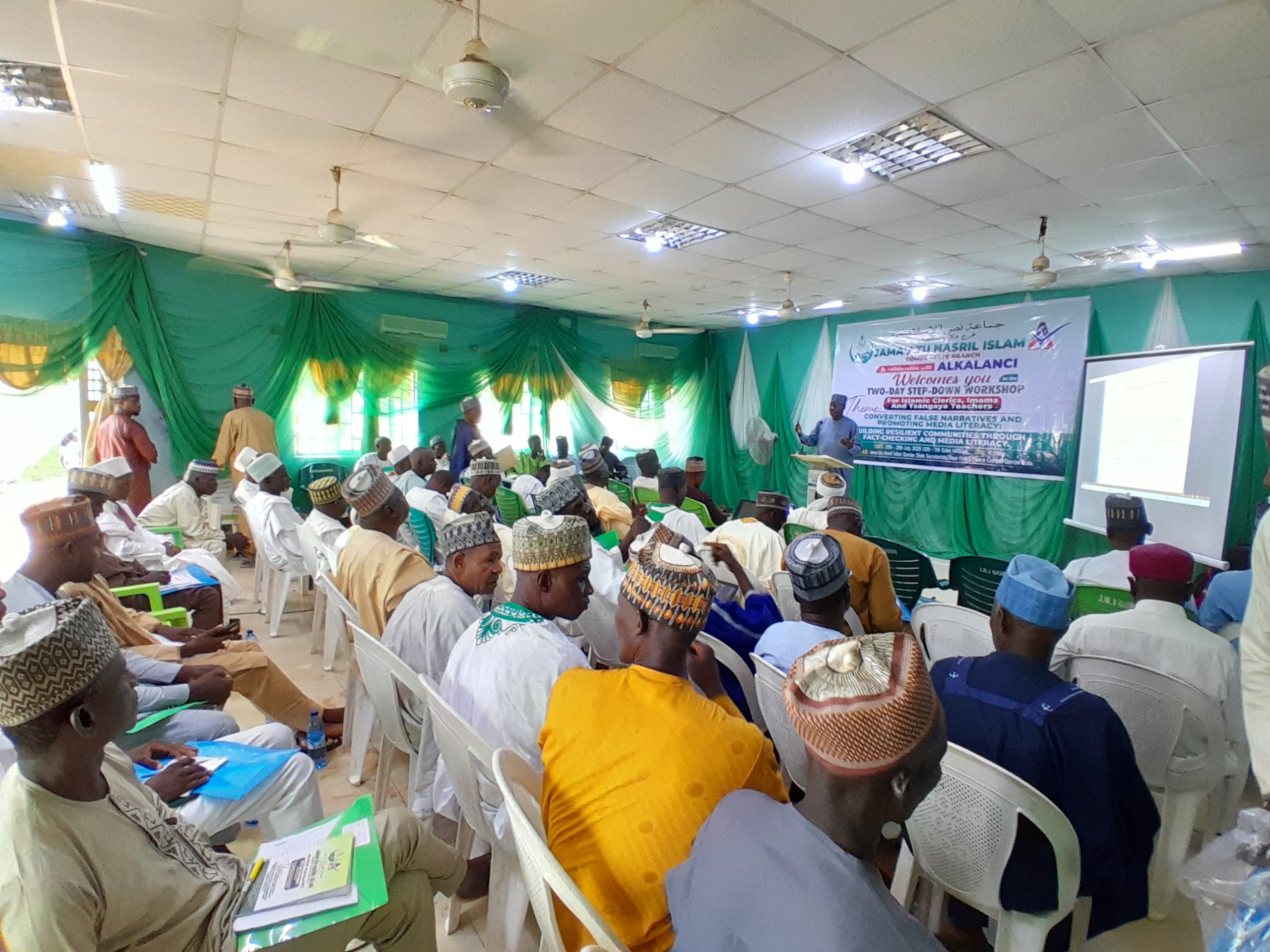
The Jama’atul Nasrul Islam (JNI), Gombe State chapter, in collaboration with Alkalanci, has trained 85 Islamic clerics, Imams and Tsangaya teachers drawn from across all local government areas of the state on fact-checking, media and information literacy, as part of efforts to curb the spread of Misinformation/disinformation ahead of the 2027 general election.
The two-day step-down training, which held in Gombe, brought together religious leaders who serve as trusted voices in their communities, with organisers stressing their unique position to either check or amplify the spread of false information.
This is one of the impact of the fact-checking and media literacy training done by Alkalanci in April 2026 in Gombe, where some JNI members were in attendance.
Speaking at the event, the Secretary General of JNI, Prof. Khalid Aliyu, represented by Ustaz Yusuf Sa’id, underscored the critical role religious leaders play in combating disinformation, particularly as the country approaches the 2027 election.
He admitted that politicians often exploit clerics and religious platforms to spread disinformation for political gain, warning that such practices could deepen social division and mislead the public if left unchecked. He urged the participants to be more discerning and to use the knowledge gained from the training to protect their congregations from manipulation.
Also speaking, the Sarkin Bai of Gombe, Amb. Yerima Abdullahi, urged religious leaders to be cautious in their sermons and public engagements, warning against the inclusion of unverified propaganda or false narratives in their preaching.
He emphasized the importance of training religious leaders in fact-checking and media and information literacy, noting that as custodians of public trust, clerics and imams have a responsibility to verify information before disseminating it to their followers.
In his remarks, the Editor of Alkalanci, Alhassan Bala, commended the Gombe chapter of JNI for partnering with Alkalanci to organise the step-down training, describing it as part of broader efforts to combat misinformation and disinformation.
“Gombe was one of the states we conducted training this year, and I am happy to say you are now the first to hold step-down training this is another impact of what we have been doing.”
He noted that some individuals, both within and outside the country, deliberately create false information and use emotional appeals to manipulate religious leaders and their followers into believing and spreading such content.
The training, which concluded on Sunday, featured sessions on identifying fake news, verifying sources, and understanding the dangers of unchecked information sharing, especially in the lead-up to elections.
At the end of the programme, participants pledged to disseminate the knowledge acquired to their various communities and to cautioned the public to always verify information before sharing, noting that this is in line with Islamic teachings on truthfulness and the avoidance of falsehood.

APC Youths Demand Nationwide Ban on Rarara’s Songs at Party Activities

Hon. Abubakar Bichi Commissions 120 Health Workers in Bichi

85 Religious Leaders Graduate from JNI-Alkalanci Fact-Checking Training in Gombe

From the struggle for Gombe State to life in the Senate: Senator Umar Usman Dukku reflects on politics, democracy, and his relationship with the late General Sani Abacha.

Major Hamza Al-Mustapha: “Abacha Did Not Die on Top of a Woman; I Have CCTV Footage

Alhaji Tijjani Rabiu Spikin: A Neighbour, Philanthropist, and Friend of Children

AI Delusion Among Students: When Smart Tools Start Replacing Real Connections, The Truth About AI And Student Life

BUK Emerges Top Performing Nigerian University In Global Ranking

From Corruption to Cannabis: As Governor Yusuf Puts Muhiyi, Anti-Graft Czar, in Charge of Kano Drug Crackdown

Open letter to Governor Abba Kabir Yusuf on the Need To Include PCN, NAFDAC In Special Task Force On Drug Abuse And Illicit Trafficking
APC Youths Demand Nationwide Ban on Rarara’s Songs at Party Activities
Hon. Abubakar Bichi Commissions 120 Health Workers in Bichi
85 Religious Leaders Graduate from JNI-Alkalanci Fact-Checking Training in Gombe
From the struggle for Gombe State to life in the Senate: Senator Umar Usman Dukku reflects on politics, democracy, and his relationship with the late General Sani Abacha.
Major Hamza Al-Mustapha: “Abacha Did Not Die on Top of a Woman; I Have CCTV Footage
Alhaji Tijjani Rabiu Spikin: A Neighbour, Philanthropist, and Friend of Children
AI Delusion Among Students: When Smart Tools Start Replacing Real Connections, The Truth About AI And Student Life
BUK Emerges Top Performing Nigerian University In Global Ranking
From Corruption to Cannabis: As Governor Yusuf Puts Muhiyi, Anti-Graft Czar, in Charge of Kano Drug Crackdown
Open letter to Governor Abba Kabir Yusuf on the Need To Include PCN, NAFDAC In Special Task Force On Drug Abuse And Illicit Trafficking
-

 Opinion4 years ago
On The Kano Flyovers And Public Perception
-

 Features5 years ago
How I Became A Multimillionaire In Nigeria – Hadiza Gabon
-

 Opinion6 years ago
Kano As future Headquarters Of Poverty In Nigeria
-

 History5 years ago
Sheikh Adam Abdullahi Al-Ilory (1917-1992):Nigeria’s Islamic Scholar Who Wrote Over 100 Books And Journals
-

 Opinion5 years ago
My First Encounter with Nasiru Gawuna, the Humble Deputy Governor
-

 History5 years ago
The History Of Borno State Governor Professor Babagana Umara Zulum
-

 History5 years ago
The Origin Of “Mammy Market” In Army Barracks (Mammy Ochefu)
-

 News4 years ago
Federal University Of Technology Babura To Commence Academic Activities September