
Politics
The Questions Peter Obi Owes Nigerians Answer
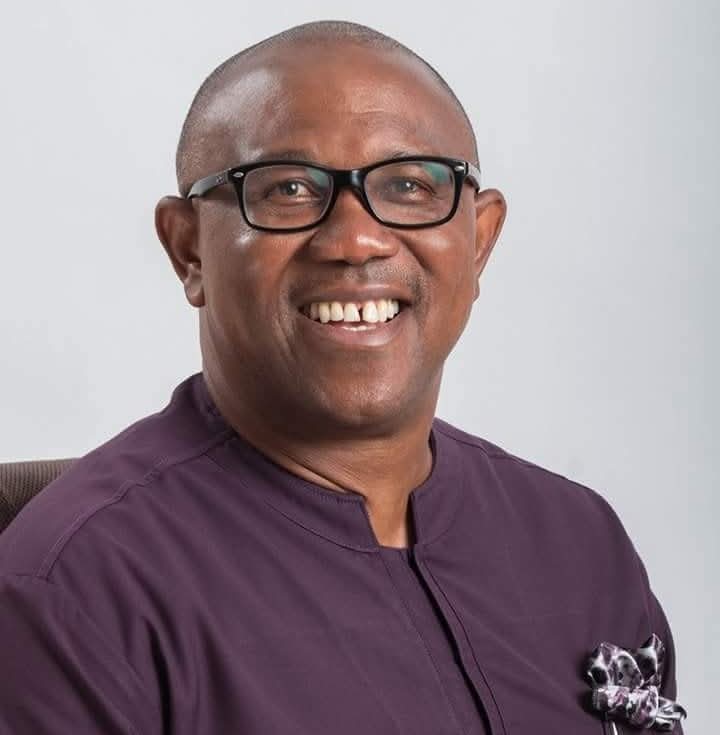
By Onyedikachi Chinatu
“The only thing I disagree with is naming IPOB terrorist; they are not terrorists.”
“I stay in Onitsha, and I can tell you that they are people I pass them on the road every day.”
No doubt emotions has eroded the minds of some Nigerians making them vulnerable to politicians who feeds on these emotions but more importantly is that our reasoning should not let this be, it is for this purpose that I have tried in providing evidences to these issues and as Peter Obi himself will always chant “go and verify” I have tried to make these verifications easier. The words above were the very words of Peter Obi, during a 2022 interview while reacting to the designation of IPOB as a terrorist organization. (https://www.vanguardngr.com/2022/10/ipob-members-not-terrorists-i-live-with-them-peter-obi/amp/ )
Years later, these comments continue to raise questions, not because Nigerians are opposed to free speech or alternative opinions, but because insecurity has left deep wounds across the country and especially within parts of the South-East where many families, businesses, and communities have directly or indirectly suffered from violence, fear, and economic disruptions.
Across several South-East states, sit-at-home orders and their enforcement have disrupted commercial activities, education, transportation, and everyday life. Major commercial cities once known for nonstop economic activities have repeatedly witnessed closures, empty streets, and declining investor confidence. ( https://businessday.ng/news/article/nigerias-south-east-region-losses-n7-6trn-on-ipobs-sit-at-home-order/ )
The insecurity situation also produced tragic incidents that shaped national conversations. On April 5, 2021, gunmen attacked the correctional facility and police formations in Owerri, Imo State, leading to mass prison breaks and widespread security concerns. Nigerian authorities linked the incident to IPOB and its armed wing, though the group denied involvement. ( https://www.channelstv.com/2021/04/05/imo-prison-attack-1844-inmates-escaped-corrections-authorities/ )
Beyond isolated attacks, reports have documented hundreds of deaths, repeated disruptions, and severe economic losses connected to insecurity and the enforcement of sit-at-home actions across the region. ( https://www.reuters.com/world/africa/separatists-sit-at-home-protests-lead-700-deaths-nigerias-southeast-report-says-2025-05-26/ )
This is why public figures seeking national leadership are often judged not only by what they criticize, but also by what they defend, how they frame sensitive issues, and the clarity of the alternatives they provide.
Peter Obi has consistently criticized the current administration over insecurity and the economy. Criticism itself is not a problem. In democracy, governments should be questioned and challenged. In fact, opposition politics exists partly for that reason.
However, difficult questions also deserve difficult answers.
When insecurity in parts of the South-East escalated, did his public comments provide enough reassurance to victims and families affected by violence?
When discussing groups and movements that government institutions view differently, could such statements have been interpreted differently by people living with fear and uncertainty?
And perhaps more importantly, beyond repeatedly pointing out failures, what specific pathways has he consistently placed before Nigerians as solutions?
Supporters often describe Peter Obi as disciplined, prudent, and accountable. Critics argue that he sometimes appears quicker at identifying problems than communicating practical implementation strategies. Both viewpoints deserve consideration.
Politics should not simply be about who criticizes more effectively. It should also be about who provides clearer answers.
Because in a country battling insecurity, unemployment, economic hardship, and growing divisions, Nigerians have a right to question those in government.
They equally have a right to question those asking to replace them.
Onyedikachi Chinatu writes from Kano onyedikachichinatu7@gmail.com











Politics
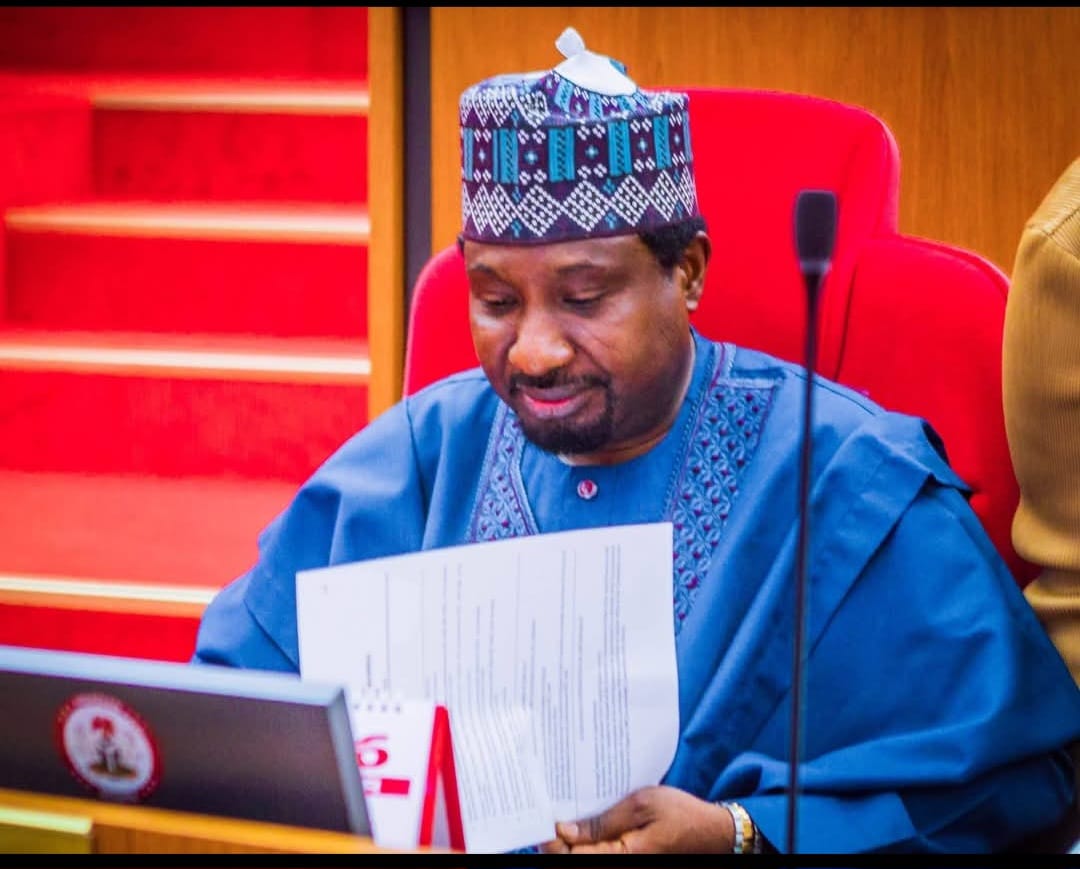
Defamation Against DSP Barau, Institutional
By Abba Anwar
Any act of defamation of character against His Excellency the Deputy President of the Senate and First Deputy Speaker of ECOWAS Parliament, Distinguished Senator Barau I Jibrin, PhD, CFR, more of allegations of terrorism and aiding the national tragedy, is automatically a defamation against democratic institutions.
I know DSP knows glaringly clear that, the current malicious and defamatory allegation against his personality goes beyond his own self as a Distinguished Senator representing Kano North alone. To me, dropping petition against the perpetrators of such act is not only unnecessary, it is deconstruction of democratic institutions and processes.
I came across a petition from DSP’s Solicitors, West-Wig Attorneys, to the Inspector General of Police, dated 22nd July, 2026 and singed by S. Y. Gama Esq and Sani Ibrahim Esq, requesting for “… the immediate investigation, identification and prosecution of persons appearing in the viral video for the alleged, false, malicious and defamatory publication against His Excellency Senator Barau I Jibrin, Deputy President of the Senate of the Federal Republic of Nigeria, and for related offences including cyberstalking.”
As the petition concurs with my understanding of the case at hand, that defamation against Senator Jibrin is defamation against institutions, it says, “The gravity of this matter is further accentuated by the constitutional office occupied by our Client as the Deputy President of the Senate of the Federal Republic of Nigeria.
False allegations of terrorism directed against the holder of such a high public office possess the capacity to undermine public confidence in democratic institutions, diminish the integrity of constitutional governance and unjustifiably expose the occupant of that office to avoidable security concerns.”
The core content of the issue at hand as explained by the petition typifies that, “Our Client’s attention has been drawn to a video presently in widespread circulation across various social media platforms wherein a group of adult women are seen and heard repeatedly referring him as “terrorist” in what appears to be a coordinated public rendition.
The publication has since attracted considerable public attention and has exposed our Client to public odium, ridicule, contempt, opprobrium and immeasurable reputational injury both within and outside the Federal Republic of Nigeria.”
With Senator Jibrin’s position as a global citizen, such grave allegation against his personality sends bad signal to the world against the entire democratic process and institutions in the country. I understand that any decision he takes, if it falls below the protection of his image, which ultimately means protecting our democratic values and institutions, could be a negation of bravery, self-esteem and entrenched democratic mind and might.
I don’t give a damn to the states of origin of those who appeared in the said video or their sponsors, the fact remains, offence is offence wherever perpetrated, hatched or birthed. So discussing about the origins of those people, seen, suspected and invisible for now, is secondary. But I am confident that DSP’s political opponents perceived and real, from Kano state would not engage in this high level defamation of character.
It is only in Kano where you see people from other places coming to the state to castigate their elders, religious, political, traditional etc and go scot-free with the full cooperation of the indigenes. I’m not a proponent of state-of-origin chauvinism, but it hurts and is highly pathetic. It is only in Kano where you see trash being treated as pure or honey. Too pathetic and unfortunate!
Some years back, I have a friend, who is also a journalist, from a popular radio station, who was transferred to Katsina state, during his first political programmes, as he started new rounds of political programmes in Katsina, he met with the serious anger of the then Governor of Katsina state. I think it was either Ibrahim Shema or Aminu Bello Masari. The Governor made it categorically clear to him that, in Katsina they would not take that trash, as obtained in Kano.
But in Kano, when some democratic liabilities, who migrated to Kano, were castigating former Governor Malam Ibrahim Shekarau, the supporters of His Excellency Rabi’u Musa Kwankwaso and His Excellency Abdullahi Umar Ganduje were clapping hands. After Shekarau, the same noisemakers faced Kwankwaso calling him names, Ganduje’s supporters were clapping and smiling. After abuses on Kwankwaso reached peak and subsided, Ganduje’s turn came on board. The same illiterate nuisance who abused Shekarau and Kwankwaso, jumped down harshly on Ganduje. For God sake, what is wrong with Kano people?!
Half of what is obtained in Kano cannot, by any standard, be tolerated elsewhere. The illiterate migrants to Kano, (reader forgive my expression, it isn’t deliberate) always preserve their elders back home. Why Kano is indifferent?
I’m not an advocate of Kano Alone, or the superiority of Kano, all I’m saying is, why it is only in Kano, elders are not seen as elders? Elders from all walks of life. Not only political elders or leaders, anyway.
I know for sure Kano reached its peak, because of her hospitality and receptive atmosphere. In Kano all people are welcomed. This is a good sign of pride and trustworthiness. I will always be happy when more and more people that are non-indigenes and not citizens of Nigeria continue to troop Kano. Wisdom behind Kano’s greatness and development. Without non-indigenes Kano wouldn’t have achieved that feat of commercial hub for the North and sub-Saharan Africa.
Coming back to the main issue at hand, DSP’s Solicitors called the attention of the IGP that, “While the identities and present locations of the persons appearing in the video are presently unknown to our Client, we firmly believe that the investigative, forensic, cyber intelligence and technological capabilities of the Nigeria Police Force are more than sufficient to uncover the identities of every person appearing in the video together with every individual who conceived, sponsored, financed, coordinated, produced, published, transmitted, promoted or otherwise facilitated the dissemination of the offending publication.”
If we believe that DSP’s seek for justice and redress is elegantly needed, to better our today and reshape the integrity of our democratic values and institutions, we should encourage him to pursue this issue to its logical conclusion.
Some of the demands of the petition request the good office of the IGP to, “Commence an immediate, comprehensive and impartial investigation into the viral video and every circumstance surrounding its production, publication and dissemination, and invite, interview and investigate all persons connected with the publication and obtain all relevant electronic and digital evidence necessary for a comprehensive investigation.”
Other requests among others are, “Determine whether the publication and dissemination of the viral videos disclose offences under the Cybercrimes (Prohibition, Prevention, etc) Act, 2015 as amended, the Criminal Code Act, the Penal Code, or any applicable law, and take every other lawful measure considered necessary to preserve, the integrity of public discourse, uphold the rule of law, Cyberstalking and malicious online publications and ensure that the allegation of terrorism are never trivialized or weaponised against any citizen without lawful justification.”
His Excellency DSP should kindly understand that, this defamation is beyond him alone, therefore shelving it aside has serious consequences on democratic institutions. Sir injury on you is injury on institutions. Putting this grave allegation under the carpet, is minus and abhorable. Many of your people, supporters and well wishers are standing by, watching your steps Sir. Is not about you alone Sir. It is also about our institutions.
Anwar writes from Kano
Thursday 23rd, July 2026
Politics
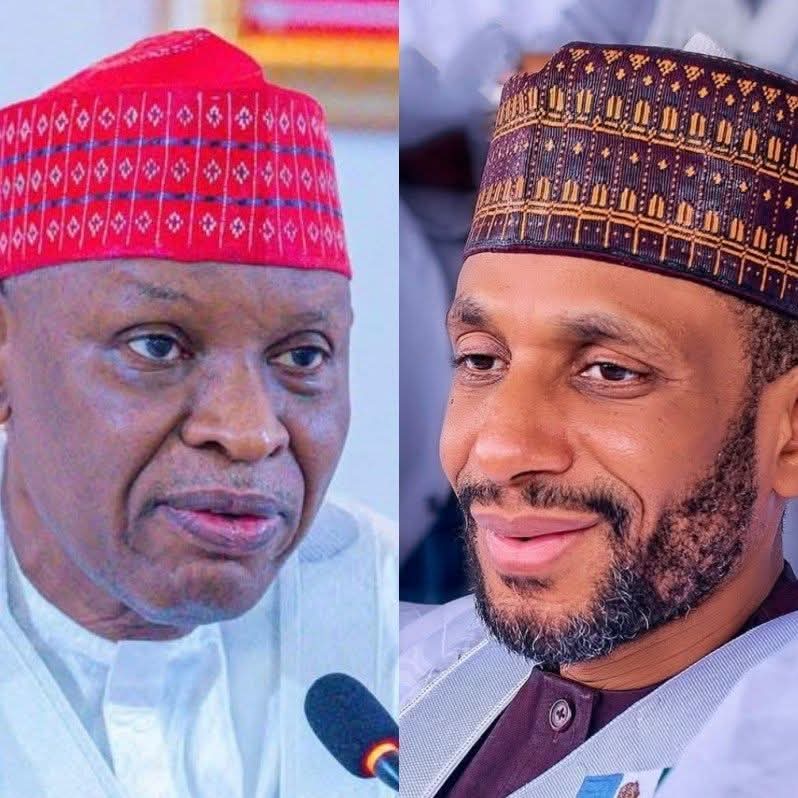
2027: Loyalty Reloaded As Gov Yusuf Picks Deputy Garo As Running Mate
By Abba Anwar
I chose to caption this piece “2027 Loyalty Reloaded…” bearing in mind what His Excellency Governor of Kano State, Abba Kabir Yusuf said, to show his absolute confidence in his Deputy His Excellency Murtala Sule Garo, as governance pays back for loyalty.
It was at the instance of all federal political appointees meeting with the governor at Governor’s Lodge, Asokoro, Abuja, when the Governor bluntly announced to the faces and hearing of all that, “I have no regrets for choosing Garo as my Deputy in the last few months, and he has proven to be the right choice so far. I want to confirm to you that I have every confidence in him.”
This puts a halt to all speculations before picking HE Garo as Deputy Governor that, his loyalty could be divided when appointed as the Deputy Governor after the resignation of the former Governor, His Excellency Aminu Abdussalam Gwarzo.
To zip the mouth and bad intention of some politicians and to let everyone who cares to listen that, in less than four months, Governor Yusuf believes in HE Garo’s total and absolute loyalty, he picks him again to become his running mate come 2027.
He disclosed this during the meeting as disclosed by Sunusi Bature Dawakin Tofa Director General Media and Publicity, in a press release issued, that “Kano State Governor, Alhaji Abba Kabir Yusuf, has officially announced the nomination of his Deputy, His Excellency Murtala Sule Galadima Garo, as his running mate for the 2027 governorship election.”
The release discloses that, “He expressed satisfaction with the working relationship between them, noting that Garo had demonstrated competence, dedication, and a strong sense of responsibility in the discharge of his duties.” I now understand the main reason and wisdom behind Governor’s bold decision in sending his Deputy as his representative, in major events. Within and outside Kano.
If not because of this trust and confidence the Governor has in his Deputy he wouldn’t have sent the Deputy to stand for him, during the visit of the high-powered delegation from European Union Ambassadors, USA Independence Day held in US Embassy Abuja and the just concluded Northern Governors Security Summit, among many other equally important events. Only loyalty, from Deputy’s side and confidence from Governor’s side, give this golden opportunity.
Part of the testimony given by the Governor for his choice in HE Garo, as running mate for 2027 is for his “… outstanding loyalty, commitment, and unwavering passion for the development of Kano State since assuming office as Deputy Governor,” speaks volumes about Deputy’s place in both the heart of his principal, the Governor and the art of governance in the state. By now HE Garo understands most significantly and clearly that, loyalty pays. What pays the most, is trust in Allah’s overall decisions, as says repeatedly by the Deputy. All those close to him know what I’m saying exactly.
The release reiterated that, the Governor has all the backing and goodwill support for the Deputy, indicating the nadir of the confidence of the Governor in his Deputy. As the release reads, “The Governor also passed a vote of confidence on the Deputy Governor, describing him as a dependable partner whose contributions have strengthened the administration’s drive to deliver meaningful development across Kano State.”
As a responsible leader who cares about the the unity, strength and the survival of the party beyond election periods, he urged, “… party leaders, political appointees, and supporters to remain united and committed as the administration continues to consolidate on its achievements while preparing for the 2027 general elections.”
By whatever standard and measurement, the union between Governor Yusuf and his Deputy, Garo, started on sound footing with the full support, cooperation and honest engagement of the Governor. While the Deputy is paying back with true loyalty embedded with good substance.
This features stronger administration and focused leadership. The way HE Garo responds to party demands and governance, with the consent of his principal, the Governor, it becomes clearer that, it will be a finer, healthier and merrier 2027 and beyond.
Anwar writes from Kano
Tuesday, 14th July, 2026
Politics
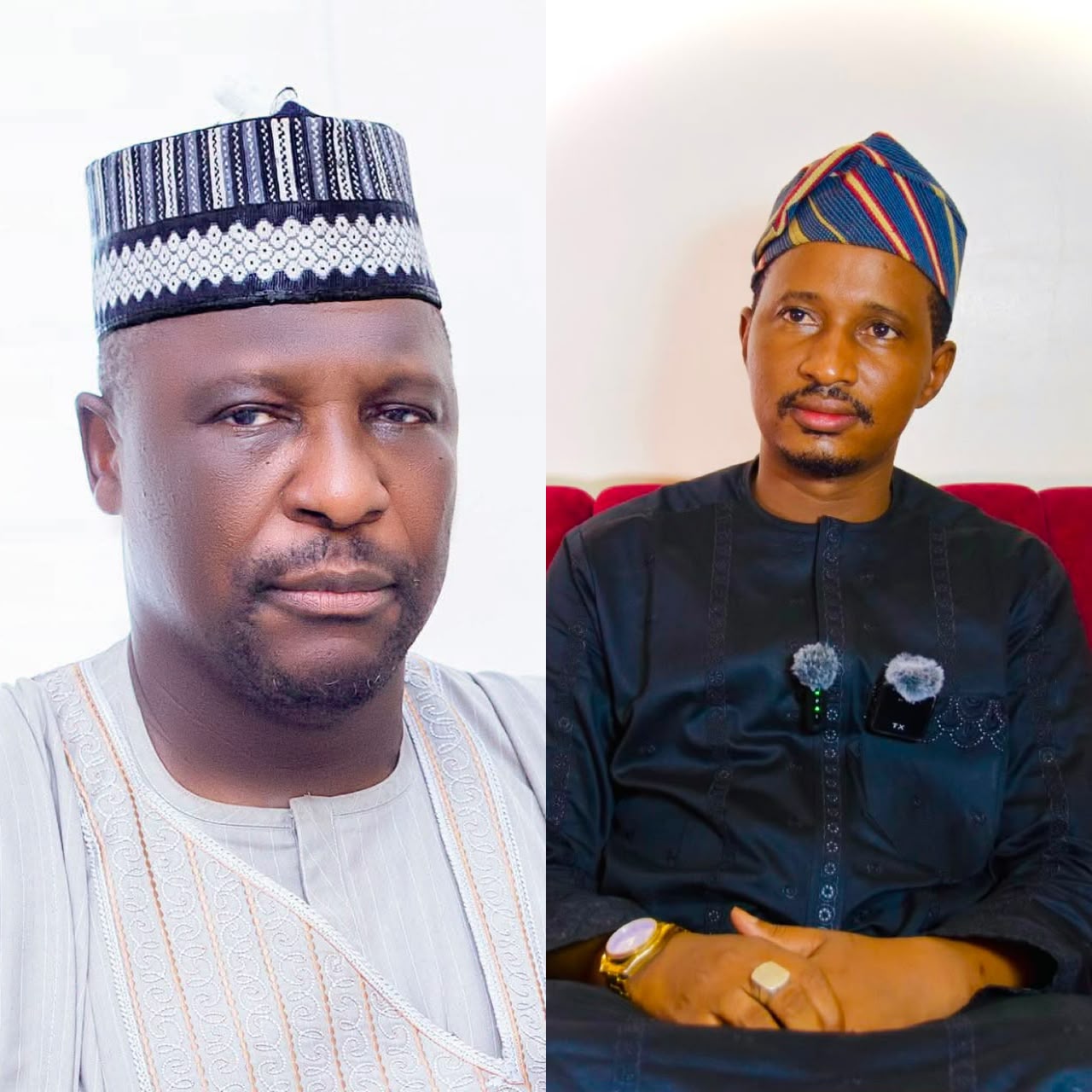
How Umar Haruna Doguwa Is Uniting Kano APC for Tinubu and Governor Abba to Succeed in 2027 Elections
By Sadiq Ali Sango
As political activities gradually gather momentum ahead of the 2027 general elections, the importance of party unity cannot be overstated. Political parties that enter elections divided often struggle to achieve their objectives, regardless of the popularity of their candidates.
In Kano State, one of Nigeria’s most politically influential states, the Chairman of the All Progressives Congress (APC), Umar Haruna Doguwa, appears to have made unity the cornerstone of his leadership.
Since assuming office as chairman of the Kano APC, Doguwa has devoted considerable energy to reconciling party members, strengthening internal structures and restoring confidence among stakeholders.
His leadership style has been characterised by consultation, inclusiveness and constant engagement with party leaders and grassroots members across the state.
One of the notable developments under his leadership has been the return of key political figures to the APC.
The decision of former Kano State Governor, Ibrahim Shekarau, and prominent politician Bello Hayatu Gwarzo to join the party has been widely interpreted by supporters as evidence of renewed confidence in the APC’s leadership and direction in Kano.
Another important test of leadership came during the party’s primary elections. In many states, party primaries often end in prolonged disputes and defections.
In Kano, however, the APC leadership worked to minimise disagreements. Where misunderstandings arose, Doguwa reportedly prioritised dialogue and reconciliation, meeting with stakeholders and encouraging peaceful resolutions.
These efforts helped the party move forward with fewer internal divisions.
His commitment to party cohesion is perhaps most visible in his ongoing tour of Kano’s 44 local government areas. Rather than limiting his engagements to state-level meetings, he has chosen to visit local party structures, meeting with elders, women, youth groups and ward executives.
The objective is to strengthen relationships, address concerns, encourage unity and prepare the party’s grassroots machinery well ahead of the next elections.
Supporters believe this grassroots mobilisation is essential because Kano has historically played a decisive role in Nigeria’s electoral politics.
A united and well-organised party structure, they argue, will be better positioned to mobilise voters and conduct effective campaigns.
Doguwa’s political mission extends beyond managing the affairs of the APC. His ambition is to build a united platform capable of supporting President Bola Ahmed Tinubu, Governor Abba Kabir Yusuf and all APC candidates in achieving success in the 2027 elections. This objective explains his emphasis on reconciliation, inclusion and grassroots engagement.
Doguwa believes that electoral success begins long before campaigns officially commence. It starts with building trust among party members, resolving differences early and ensuring that every stakeholder feels valued. His consultations across the state reflect that philosophy.
Politics is ultimately about organisation as much as popularity. Elections are won not only through campaign rallies but also through strong party structures, disciplined members and effective grassroots mobilisation.
As the countdown to the next general elections continues, sustaining internal cohesion may prove to be one of the APC’s greatest assets. If the current reconciliation efforts are maintained and the party continues to consolidate its support base, Kano APC could approach the 2027 elections with greater confidence and organisational strength than it has enjoyed in recent years.
Sadiq Ali Sango is an APC Youth Activist based in Kano

ADC Accuses APC of Avoiding Performance Record, Shifting Focus to Personalities Ahead of 2027

Atiku Fires Back at the Presidency: “767 Factories Shut, 335 Others in Distress Under Tinubu”

WARAKA: The Story of Kano Sexual Assault Referral Centre (SARC)

Presidency Sets Seven-Week Deadline for State Police Bill Draft

How Kano Digitized Land Turns N50m to N750m Monthly

Alhaji Tijjani Rabiu Spikin: A Neighbour, Philanthropist, and Friend of Children

Is N100,000 Worth the Risk?’ Nigerians React to Soldiers’ Salary Increase

Goodwill, Visibility, and Operational Security: A Strategic Communication Reading of Senator Ahmad Lawan’s DIA Post

MAAUN Clarifies Status of Former Visiting Lecturer, Reaffirms Zero-Tolerance Policy on Sexual Harassment
Kano Governor Yusuf Shortlisted for Africa’s SANKOFA Award of Excellence in Infrastructural Development
ADC Accuses APC of Avoiding Performance Record, Shifting Focus to Personalities Ahead of 2027
Atiku Fires Back at the Presidency: “767 Factories Shut, 335 Others in Distress Under Tinubu”
WARAKA: The Story of Kano Sexual Assault Referral Centre (SARC)
Presidency Sets Seven-Week Deadline for State Police Bill Draft
How Kano Digitized Land Turns N50m to N750m Monthly
Alhaji Tijjani Rabiu Spikin: A Neighbour, Philanthropist, and Friend of Children
Is N100,000 Worth the Risk?’ Nigerians React to Soldiers’ Salary Increase
Goodwill, Visibility, and Operational Security: A Strategic Communication Reading of Senator Ahmad Lawan’s DIA Post
MAAUN Clarifies Status of Former Visiting Lecturer, Reaffirms Zero-Tolerance Policy on Sexual Harassment
Kano Governor Yusuf Shortlisted for Africa’s SANKOFA Award of Excellence in Infrastructural Development
-

 Opinion4 years ago
On The Kano Flyovers And Public Perception
-

 Features5 years ago
How I Became A Multimillionaire In Nigeria – Hadiza Gabon
-

 Opinion6 years ago
Kano As future Headquarters Of Poverty In Nigeria
-

 History5 years ago
Sheikh Adam Abdullahi Al-Ilory (1917-1992):Nigeria’s Islamic Scholar Who Wrote Over 100 Books And Journals
-

 Opinion5 years ago
My First Encounter with Nasiru Gawuna, the Humble Deputy Governor
-

 History5 years ago
The History Of Borno State Governor Professor Babagana Umara Zulum
-

 History5 years ago
The Origin Of “Mammy Market” In Army Barracks (Mammy Ochefu)
-

 News4 years ago
Federal University Of Technology Babura To Commence Academic Activities September