
News
Inside Nigeria’s Alleged Coup Plot: Rumours, Arrests, and the Shake-Up in Tinubu’s Security Leadership
By Yusuf Danjuma Yunusa
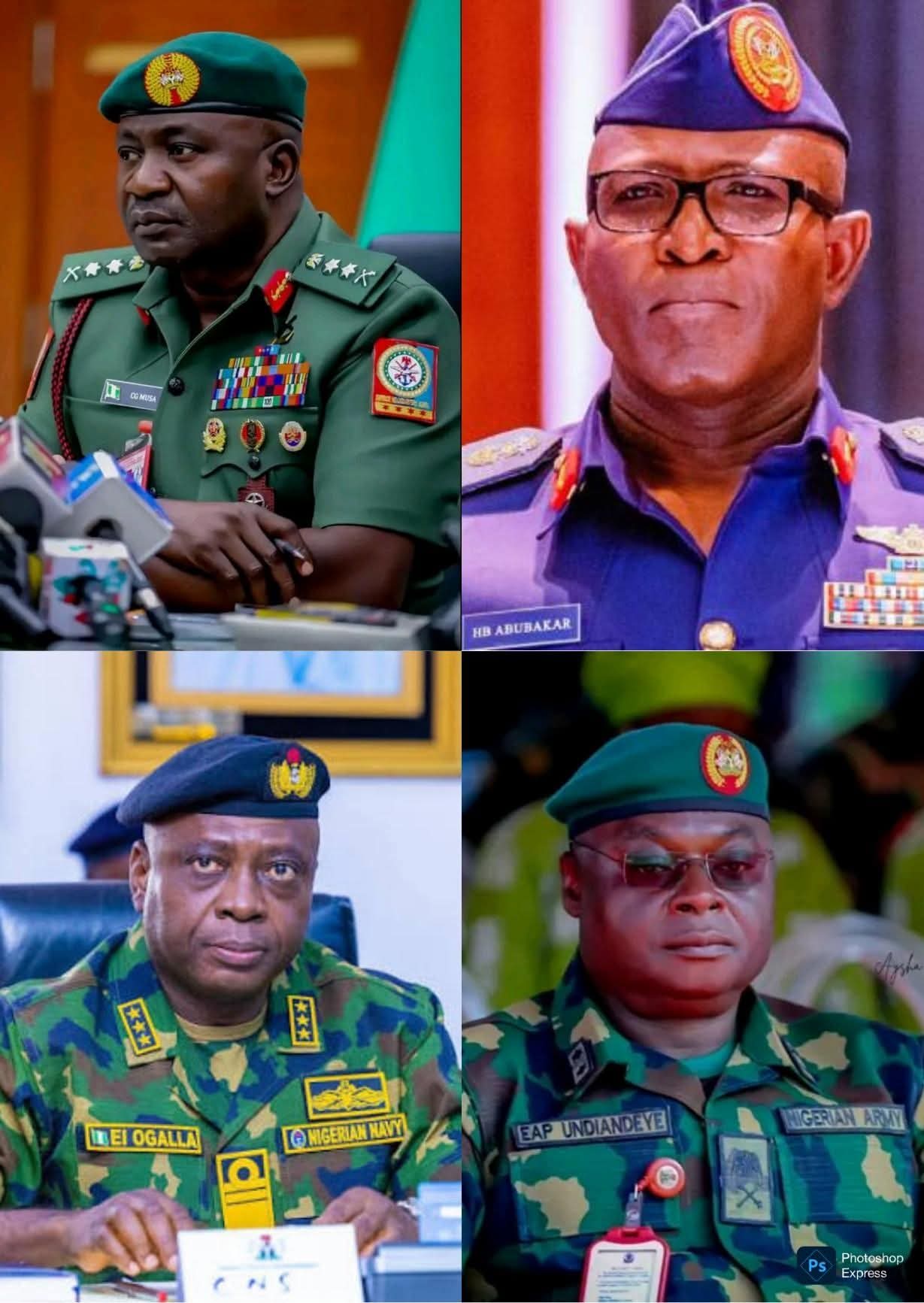
On Friday, 24th of October, 2025, president Tinubu shocked the nation with the announcement of the removal of the service chiefs amidst the growing speculations about coup in the country.
Parts of the press statement as released and signed by the president’s special adviser on Media and Public Communication, Sunday Dare, read:
“President Bola Tinubu has made changes in the hierarchy of the Service Chiefs in furtherance of the effort of the Federal Government of Nigeria to strengthen the national security architecture.
The President appointed General Olufemi Oluyede to replace General Christopher Musa as the new Chief of Defence Staff. The new Chief of Army Staff is Major-General W. Shaibu. Air Vice Marshall S.K Aneke is Chief of Air Staff while Rear Admiral I. Abbas is the new Chief of Naval Staff. Chief of Defence Intelligence Major-General E.A.P Undiendeye retains his position.
The President, Commander-in-Chief of the Armed Forces, expresses most profound appreciation to the outgoing Chief of Defence Staff, General Christopher Musa and the other Service Chiefs for their patriotic service, and dedicated leadership.”
However, fresh and subsequent report from Premium Times revealed that more people believed by the Nigerian Defense to have connection with the detained officers have also been arrested.
The report is true,” a military source familiar with the matter said to PREMIUM TIMES after the report. “More have been picked up since the initial arrests.”
The source said the officers allegedly planned a bloody pustch in which some top government officials were marked for assassination.
The Genesis Of The Coup Speculations
The Nigerian Tracker News recalled that on October 4, 2025, the military high command issued a statement titled “update/press statement on the breach of security in the country: Sixteen officers to face military justice for indiscipline, breach of service regulations”.
The statement, signed by Brigadier General Gusau, opened the floodgate for the stories on the alleged coup plot.
“Armed Forces of Nigeria wishes to inform the public that a routine military exercise has resulted in the arrest of sixteen officers over issues of indiscipline and breach of service regulations. Investigations have revealed that their grievances stemmed largely from perceived career stagnation caused by repeated failure in promotion examinations, among other issues,” it said.
Further investigation into the matter revealed that the said coup plot is being funded and engineered by a certain former governor from the south as he has been placed on watch, and being investigated for any involvement with the 16 army officers detained.
Investigation and reports also revealed that if everything had gone well the way they planned, the coup would have happened on the 1st of October, 2025. Detailing that the plan was to use the parade as a stage to attack the president and senior politicians, before announcing a new government which, of course, would have been military one. Also, had their plan gone wrong, report from Premium Times revealed that they would have re-strategised on 25th of October, 2025. But fortunately for the administration of president Tinubu, the Defense Headquarters aborted the plans by arresting the officers involved in the orchestration.
Moreover, when the federal government of Nigeria and Defense Headquarters came up with their refutation and the crafted excuses, the rumor became more concerning owing to the fact that, no where in the constitution of the country or the armed forces regulation is it stated for officers to be detained simply for failing promotional exams.
Under the Armed Forces Act(Cap A20, Laws of the Federation 2004), detention is only permitted for offences like mutiny, disobedience, treason, corruption or conduct prejudicial to discipline, not exam failure.
It even became more concerning when Sahara Reporters made its exclusive report on the matter where it stated that “while the Nigerian military in a statement few days ago claimed the detention of the officers was linked to “repeated failure in promotion examinations and perceived career stagnation”, top sources revealed that they were actually arrested over a coup plot.”
It further disclosed that a senior official of the Defence Intelligence Agency involved in the arrest told their correspondent that the officers led by an Army Brigadier General were planning to stage a coup and take over government from “selfish politicians”.
The coup attempt, according to the source interacted with by Sahara Reporters, was thwarted after an intelligence gathering by DIA and sister agencies.
“The 16 officers were planning a coup. The military authorities were just being diplomatic in the statement released by the spokesperson. They have started doing secret meetings on how to overthrow the President and other top government officials,” the source told SaharaReporters.
The source continued, “they’re all officers within the rank of Captain to Brigadier-General and are still in detention at DIA as we talk. They were picked recently at their various houses around the country. Their main objective was to overthrow President Tinubu and announce a military government.”
Another source added that the October 1 Independence Day parade was cancelled because of the coup attempt.
The source told Sahara Reporters, “Yes, they were arrested for planning to stage a coup and take over government. That was the main reason why the Independence Day parade scheduled to hold on Wednesday, October 1 as part of activities marking the country’s 65th Independence Anniversary was cancelled.
This was because intelligence reports showed they planned the coup on October 1st during a military parade.
So the National Security Adviser and other service chiefs asked the Tinubu-led government to cancel the parade earlier scheduled to mark the day.
Their plan was to shoot at the President and other top politicians during the event. The move by the military authorities announcing their arrests was to douse tension,” the source concluded.
How Credible Is The Rumor/Speculation
Although the Defence Headquarters and the federal government of Nigeria refuted the reports as regard the real reason behind the officers detained:
“The attention of the Defence Headquarters (DHQ) has been drawn to a false and misleading report by an online publication insinuating that the cancellation of activities marking Nigeria’s 65th Independence anniversary was linked to an alleged attempted military coup. The report also made spurious references to the recent DHQ press release announcing the arrest of 16 officers currently under investigation for professional misconduct.
The Armed Forces of Nigeria (AFN) wishes to categorically state that the claims by the said publication are entirely false, malicious and intended to cause unnecessary tension and distrust among the populace. The decision regarding the cancellation of 65th Independence anniversary parade was to allow Mr President attend a strategic bilateral meeting outside the country…”
But an exclusive report from Sahara Reporters, Premium Times and that of Daily Trust cemented the rumor to be factual. Three separate media and investigative news companies carried out investigation, distinctively, about the coup plot, only to come out with the same story, that sounds so convincing.
In fact, one of the sources spoken to by the Daily Trust correspondent admitted to the fact that the leadership of the Nigerian Armed Forces crafted the statement released, carefully, after wide consultations with stakeholders:
“Based on the advice by the Attorney General of the federation, the whole thing was toned down so that it doesn’t create apprehension for the citizens, investors and the international community.
“It was doctored to appear routine. However, investigation and prosecution must still take place. The COAS (chief of army staff) went to see Mr President in Lagos yesterday (October 3) and returned. He showed him (Tinubu) the preliminary report and the press release before he authorized it,” the source said.
Records Of Military Coup In Nigeria
Since Nigeria became independent in 1960, there have been five successful military coups.
The first of them all which was the January 15, 1966, primarily led by Major Chukwuma Kaduna Nzeogwu and other junior Army officers. The government it ousted was the first Nigerian Republic which was led by late Sir Abubakar Tafawa Balewa, the then prime Minister.
The second of all was the counter coup which took place in July 29, 1966. Northern military officers, primarily led by Major Murtala Muhammed and many others carried out the operation. The military government of General Johnson Aguiyi-Ironsi was ousted, and he was assassinated while on a tour in Ibadan.
Following the second was that of July 29, 1975 coup. A group of senior military officers, including the Chief of Army Staff, Colonel (later General) Joseph Nanven Garba, and General Murtala Muhammed, executed the coup plot. The government of General Yakubu Gowon, while he was attending an OAU summit in Kampala, Uganda was overthrown.
The fourth on the list was the February 13th, 1976 coup carried out by a group of mid-level officers led by Lieutenant Colonel Buka Suka Dimka. The government of General Murtala Muhammed was ousted in this coup. While the specific plotters failed, the coup successfully decapitated the government by killing the sitting Head of State and installing a new one (Obasanjo). Therefore, it resulted in a change of the country’s leadership, hence the reason for it being considered as a successful coup.
And lastly, the coup of December 31, 1983, which was executed by senior army officers including Major General Muhammadu Buhari, Major General Tunde Idiagbon, and Brigadier Sani Abacha. The government ousted was the Second Nigerian Republic, led by President Shehu Shagari.
Ironsi ignored early warning signals from within his ranks and was overthrown. Gowon dismissed murmurs of discontent until Colonel Joe Garba and others struck in 1975 while he was abroad. Shagari did not imagine that the same Buhari he trusted would emerge as the new Head of State on December 31, 1983. And Buhari himself, two years later, fell to Babangida’s quiet schemes.
The chances which those past leaders failed to take amidst rumor as the one presently circulating was what led to the successful execution of the coup plot against their governments, and it’s glaring that president Tinubu doesn’t want to toe their path, hence the security architecture shake-up.
That is why the so-called professors of coups(Babangida and Abacha) survived where others fell. They understood that allegations of coup are as dangerous as coup itself.
Do The Service Chiefs Deserve To Be Sacked?
This has been one of the questions that have been making rounds on the social media space since the removal of the service chiefs. Due to their dedication to work, making decisive decision and reforms in the effort to strengthen the country’s security architecture, especially for General Christopher Musa, some people are of the opinion that they are not supposed to be treated the way they were. That if for anything, they were the ones who made it possible for the president to be aware of the coup plot which, out of loyalty and patriotism, they had it thwarted.
The Nigeria’s security architecture is known to build on the templates of focusing on internal reorganization, rebuilding morale from within, and halting the downward spiral. Here, success is measured in institutional recovery and preventing catastrophic losses. This has been the hallmark of the past Chief of Defense Staff until General Christopher Musa who built on their template but focused on leveraging the stabilized institution to launch aggressive, public-facing operations. Unlike in the case of the previous Chief of Defense Staff, the spirit here, as portrayed by General Christopher, was success is measured in kinetic results and the restoration of public confidence.
He significantly boosted troop and public morale through his leadership style. General Christopher intensified kinetic operations across multiple fronts, leading to the death of several high-value terrorist/bandit leaders. He became the public “face” of the military’s fight against insecurity.
A critical observation of the style of leadership of the immediate past Chief of Defense Staff, General Christopher Musa, and his predecessor, Lucky Irabo, would have one agree to the fact that while the late General Irabo was more measured, diplomatic and systemic oriented, General Christopher on the other hand was charismatic, publicly assertive, and media-savy. He was a public-facing commander.
The General brought so much exposure to the office that one would question if there had been an office designated as the Chief of Defense Staff before his time. Of course yes, the office has been in existence since 1990:
We had Admiral Augustus Aikhomu as the Chief of Defense Staff in 1990. Air Marshal N. A. E Eduok in 1992, General Sani Abacha in 1993, Admiral Murtala Nyako in 1993, General Aliyu Gusau Mohammed also in 1993, General Frederick E. O Chijuka in 1995, General John Shagaya in 1996, General Abdulsalami Abubakar in 1998, General Al-amin Daggash also in 1998, Admiral Ibrahim Ogohi in 1999.
Then we had General Alexander O. Ogomudia in 2003, General Martin-Luther Agwai in 2006, General Andrew Azazi in 2007, Air Chief Marshal Oluseyi Petinrin in 2010, Admiral Ola Sa’ad Ibrahim in 2012, Air Chief Marshal Alex Badeh in 2014, General Abayomi G. Olonisakin in 2015, General Lucky Irabor in 2021, General Christopher G. Musa in 2023, and currently General Olufemi Oluyede whom was appointed just recently on Friday, 24th of October, 2025.
A deliberate and careful observation of the administration of the listed Chief of Defense Staff, one wouldn’t doubt that General Christopher Musa’s tenure is viewed very favorably in comparison, especially in the realm of perception and morale. He is often described as one of the most effective and popular CDS in recent memory. However, this assessment comes with the critical caveat that he stood on the foundation built by General Irabor. The enduring security challenges show that no single CDS can “solve” Nigeria’s insecurity, but General Musa’s year in charge is widely seen as a period of positive and aggressive leadership that made a tangible difference.
Conversely, there are those who felt indifferent at the pronouncement of their removal; illustrating how the past leaders who were victims of coup plot treated the allegations and rumors of it with kid gloves and later paid the price severely. They argued that president Tinubu, in his wisdom of being on a safer side, decided to let the service chiefs go before the unimaginable would happen.









News
Report: Nigeria Records N166trn Public Debt
By Yusuf Danjuma Yunusa
The Debt Management Office (DMO) says Nigeria’s total public debt rose to N166.79 trillion as of June 30, 2026.
The DMO published the latest public debt portfolio report on Friday.
The figure represents a 9.4 percent or N14.39 trillion increase from the N152.4 trillion recorded at the end of June 2025.
It also represents an increase of N7.44 trillion or 4.7 percent compared with the N159.35 trillion recorded at the end of the first quarter (Q1) of 2026.
According to the latest report, the debt stock comprises N91.59 trillion in domestic debt, which accounts for 54.91 percent of the total debt stock, and N75.2 trillion in external debt, representing 45.09 percent.
The debt office said domestic debt increased by N11.04 trillion (13.7 percent) from N80.55 trillion recorded in June 2025.
The office said external debt also rose by N3.35 trillion (4.7 percent) from N71.85 trillion in the same period.
According to the DMO, the federal government accounted for N152.77 trillion of the total debt stock, comprising N86.99 trillion in domestic debt and N65.77 trillion in external debt.
On the other hand, states and the Federal Capital Territory (FCT) accounted for the remaining N14.01 trillion — N4.59 trillion in domestic debt and N9.42 trillion in external debt.
In dollar terms, the agency said Nigeria’s total public debt stood at $120.93 billion as of June 30, 2026 — up from $99.66 billion recorded in June 2025.
The DMO said the Central Bank of Nigeria (CBN) official exchange rate of N1,379 per dollar as of June 30 was used to convert the external debt to naira.
News
NNPC Ltd Welcomes $800m Ima Gas Final Investment Decision
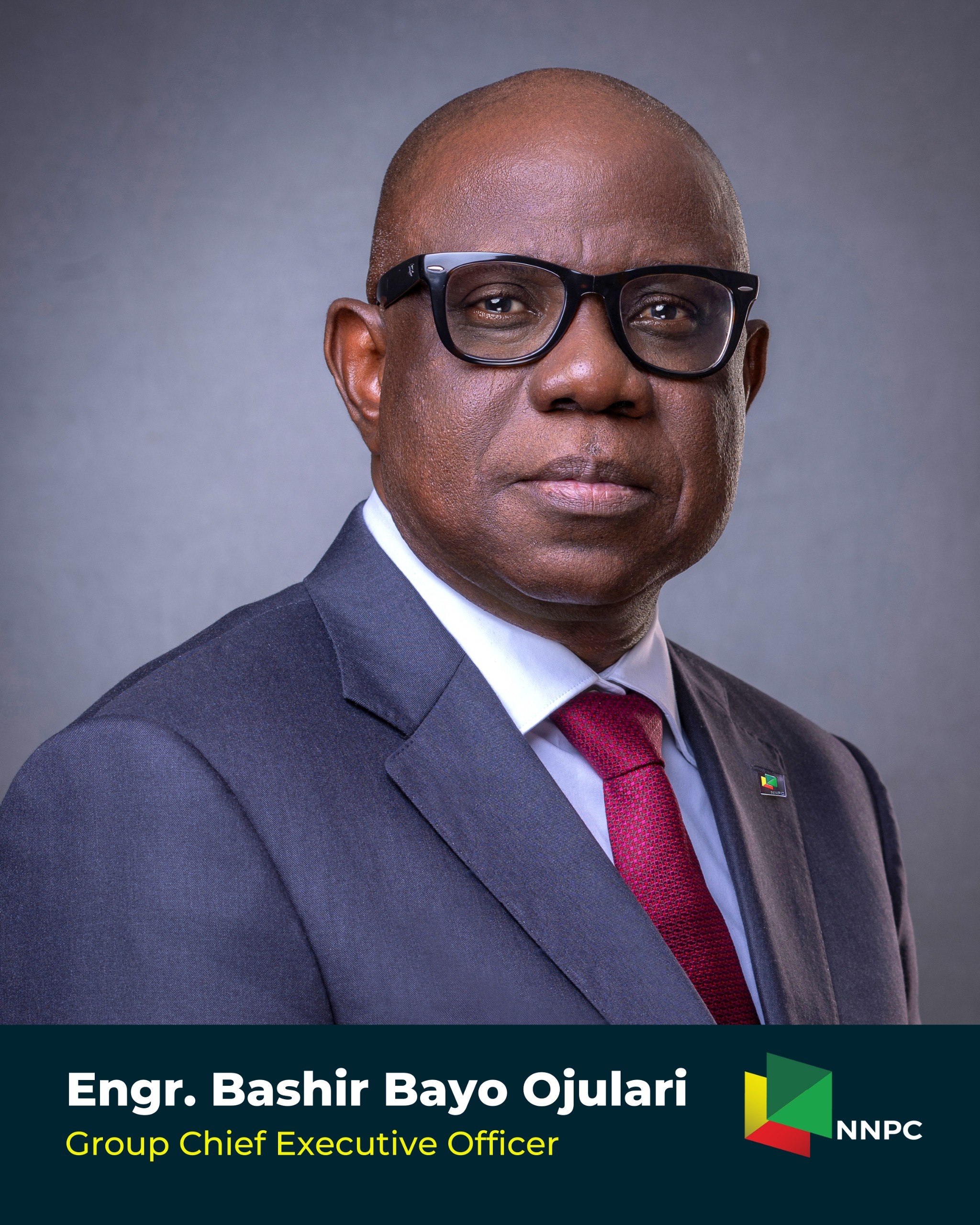
The Nigerian National Petroleum Company Limited (NNPC Ltd) has welcomed the $800 million Final Investment Decision (FID) on the Ima Gas Project, describing it as a landmark development that affirms the growing viability of Nigeria’s upstream gas sector.
The project, located offshore in OMLs 112 and 117 and developed by AMNI International in partnership with TotalEnergies, will produce about 300 million standard cubic feet of gas per day at peak. The output will supply critical feedgas to Nigeria LNG Limited in support of its Train 7 expansion, which will increase capacity at the Bonny Island plant from 22 million tons per annum to 30 Mtpa.
The FID was enabled by the Presidential Directives of 2024, which provided fiscal incentives for non-associated gas, streamlined contracting and lowered development costs. Ima is the fourth major gas project to reach FID under President Bola Ahmed Tinubu, after Iseni, Ubeta and HI.
Group Chief Executive Officer, NNPC Ltd., Engr. Bashir Bayo Ojulari described it as “a decisive vote of confidence in Nigeria’s gas sector and in the bold reforms” that have created competitive terms and a predictable investment environment.
NNPC Ltd. also commends the collaboration between AMNI, TotalEnergies and the Nigerian financial sector, saying the model of indigenous operator, international partner and domestic capital is a template for future developments.
In a statement signed by Andy Odeh Chief corporate communications officer of NNPC Ltd. reaffirms its commitment to work with government, regulators and industry partners to sustain investment momentum and deploy Nigeria’s gas resources for industrialisation, job creation and long-term prosperity.
News
At MAN AGM In Kano, Manufacturers Throng Dangote Pavilion Over ‘Peoples IPO’
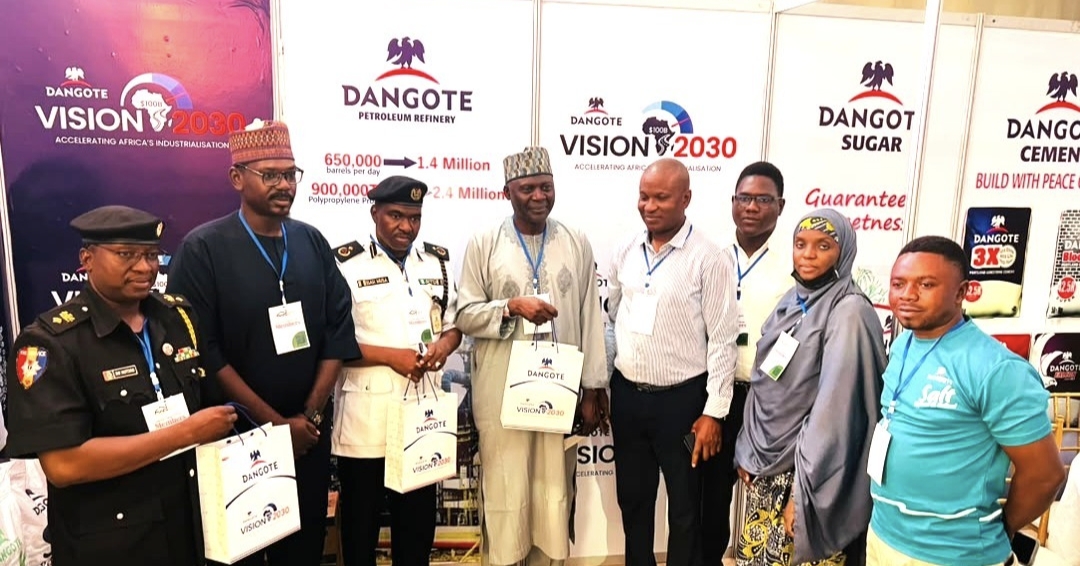
Manufacturers under the aegis of the Manufacturers Association of Nigeria (MAN) thronged the Dangote Group’s pavilion at the exhibition to seek information and clarification on the ongoing Public Initial Public Offering (IPO) of the Dangote Petroleum Refinery and Petrochemicals (DPRP).
The three-day Annual General Meeting (AGM) of the Kano-Jigawa Branch of the Manufacturers Association of Nigeria (MAN), the 54th in the series, ended on Thursday, with the Dangote Group’s representative hosting participants and engaging manufacturers who expressed keen interest in the ongoing Initial Public Offering (IPO) of the Dangote Refinery.
The Dangote Refinery Peoples’ IPO offers Nigerians and other eligible investors an opportunity to buy shares in the Dangote Petroleum Refinery and Petrochemicals, thereby becoming part-owners of one of Africa’s largest industrial projects and participating in its future growth.
The Dangote Refinery IPO runs from 14 September to 13 October 2026.
Dangote Industries Limited is one of the sponsors of the 54th MAN AGM.
Earlier, in his opening remarks, the Chairman of the Manufacturers Association of Nigeria (MAN), Sharada/Challawa Branch, Alhaji Nura S. Madugu, highlighted the mounting burden of multiple taxes, levies and charges on manufacturers, warning that the situation is increasing the cost of doing business and undermining the competitiveness of local industries.
Madugu urged the Kano State and Federal Governments to ease the tax burden on manufacturers and accelerate efforts to harmonise taxes and levies imposed on businesses.
He particularly decried the practice of double and multiple taxation, which he said continued to place additional financial pressure on manufacturers already grappling with high energy costs, inadequate infrastructure, expensive financing, insecurity, foreign exchange challenges and unfair competition from imported goods.
“We are especially concerned about instances of double and even multiple taxation, where the three tiers of government impose what is essentially the same levy under different names and different guises. This practice places our products at a serious disadvantage in their constant competition with imported goods, a disadvantage made worse by the high cost of alternative power supply and the volatility of the foreign exchange rate.
Madugu reminded the meeting of MAN’s enormous contribution to the society and provide employment to thousands of Nigerians, as well as participating actively in tax revenue generation for the country.
“We provide employment to thousands of Nigerians. We participate actively in tax revenue generation for the states and the federation through the deduction of Value Added Tax on our products, the remittance of Pay-As-You-Earn on behalf of our staff, and the payment of Withholding Tax, Education Tax, Tertiary Education Tax, Company Income Tax, and a whole host of other levies too numerous to mention individually. Beyond taxation, we also discharge our Corporate Social Responsibility diligently to the communities in which we operate.
“Even though what we receive in return remains modest, we continue, in strength and in good faith, to serve this nation and to hold up its economy. We do this because we believe in Nigeria and in Kano State. But it must be said plainly,” Madugu added.
In his remarks also, MAN Chairman, Bompai/Jigawa Branch, Mohammed Bello I. Umar, appreciated the association’s members for their resilience, commitment and continued investment in the Nigerian economy despite the difficult operating environment.
He pointed out that the meeting provides the members of the association with an opportunity to reflect on its activities, review the challenges confronting their businesses, acknowledge the progress they have made, and chart a stronger course for the future of manufacturing in the country.
However, he said, the members must acknowledge that manufacturing remains under serious pressure.
He highlighted that the high cost of energy, multiple taxes and levies, inadequate infrastructure, high financing costs, insecurity, foreign exchange challenges and unfair competition from imported goods continue to affect our competitiveness.
“One issue that requires our collective attention is the importation of contraband and substandard goods. These products undermine local manufacturers who invest heavily
“Reliable and affordable electricity remains one of the most important requirements for industrial development.
He however welcomed the ongoing electricity reforms and efforts by the Kano State Government and the State House of Assembly towards establishing a more effective electricity framework for the State.
He called for the swift implementation of reforms that will create a more reliable, competitive and affordable electricity market for industries.
He noted that manufacturers continue to provide employment, generate wealth, support local communities and contribute significantly to government revenue in production, employ Nigerians and comply with government regulations.
“We must therefore stand together and call for stronger enforcement at our borders and markets.
He urged the relevant government agencies to intensify the fight against smuggling, counterfeiting and the importation of goods that compete unfairly with locally

Report: Nigeria Records N166trn Public Debt

NNPC Ltd Welcomes $800m Ima Gas Final Investment Decision

At MAN AGM In Kano, Manufacturers Throng Dangote Pavilion Over ‘Peoples IPO’

NLC President Ajaero: It Is Wrong to Negotiate Minimum Wage Without Minimum Pension

Prof Yusuf Adamu Delivers BUK’s 63rd Professorial Inaugural Lecture, Reflects on Medical Geography and Academic Legacy

Zamfara Varsity ASUU Threatens Warning Strike Over FG-ASUU Agreement, Promotion Arrears

Bello Sharada: A Great Writer, A Bookish Soul, Gone Too Soon

Kano Chemists Threaten Warning Strike Over Alleged PCN Pressure

Per Ishaq Samaila: “Waziri” for Strategy. “Mai Jama’a” for Service. One Man. One Mission. Ibrahim Kabir Masari

Court Ultimatum Forces FBI to Hand Over Tinubu’s Fraud Records to Judge—But Keeps Them Hidden from Public
Report: Nigeria Records N166trn Public Debt
NNPC Ltd Welcomes $800m Ima Gas Final Investment Decision
At MAN AGM In Kano, Manufacturers Throng Dangote Pavilion Over ‘Peoples IPO’
NLC President Ajaero: It Is Wrong to Negotiate Minimum Wage Without Minimum Pension
Prof Yusuf Adamu Delivers BUK’s 63rd Professorial Inaugural Lecture, Reflects on Medical Geography and Academic Legacy
Zamfara Varsity ASUU Threatens Warning Strike Over FG-ASUU Agreement, Promotion Arrears
Bello Sharada: A Great Writer, A Bookish Soul, Gone Too Soon
Kano Chemists Threaten Warning Strike Over Alleged PCN Pressure
Per Ishaq Samaila: “Waziri” for Strategy. “Mai Jama’a” for Service. One Man. One Mission. Ibrahim Kabir Masari
Court Ultimatum Forces FBI to Hand Over Tinubu’s Fraud Records to Judge—But Keeps Them Hidden from Public
-

 Opinion5 years ago
On The Kano Flyovers And Public Perception
-

 Features5 years ago
How I Became A Multimillionaire In Nigeria – Hadiza Gabon
-

 Opinion6 years ago
Kano As future Headquarters Of Poverty In Nigeria
-

 History5 years ago
Sheikh Adam Abdullahi Al-Ilory (1917-1992):Nigeria’s Islamic Scholar Who Wrote Over 100 Books And Journals
-

 Opinion5 years ago
My First Encounter with Nasiru Gawuna, the Humble Deputy Governor
-

 History5 years ago
The History Of Borno State Governor Professor Babagana Umara Zulum
-

 History6 years ago
The Origin Of “Mammy Market” In Army Barracks (Mammy Ochefu)
-

 News4 years ago
Federal University Of Technology Babura To Commence Academic Activities September