
News
10 Solar-Powered Boreholes: Kano ACReSAL Sets the Record Straight
The Kano State Agro-Climatic Resilience in Semi-Arid Landscapes (ACReSAL) Project has announced significant milestones in its water infrastructure and community strengthening agenda, with the successful completion of 10 solar-powered boreholes across strategic locations in the state.
This development falls under Component A2: Landscape Investment – Water Resources Management, aimed at enhancing year-round access to clean water for irrigation and domestic use.
According to Maryam Abdulqadir, Communications Officer for Kano ACReSAL, these interventions are critical for improving food security and building climate resilience in northern Nigeria’s short rainy season environment.
Speaking on the details of the water infrastructure rollout, Abdulqadir confirmed that the project has invested in the construction and rehabilitation of small dams, reservoirs, and boreholes—including installation of pumps, meters, and borehole heads. “In addition to water supply, we are mobilizing communities to participate in erosion control and disaster prevention efforts,” she said, emphasizing the project’s integrated approach to environmental management.
Addressing questions raised in a recent video about the use of hand pumps instead of solar-powered boreholes, the Communications Officer clarified that all boreholes were implemented according to World Bank Procurement Procedures, ensuring quality and transparency. She noted that construction costs reflect taxes, contractor margins, and the inclusion of value-added infrastructure such as fencing, solar streetlights, and dedicated water-fetching areas.
The completed boreholes commissioned between October and December 2024 span 10 locations across Kano State, including the School of Midwifery in Danbatta, Tsamiya Babba in Gezawa, and Kofar Mata in Kano Municipal. Abdulqadir provided precise geographic coordinates and assured the public that all sites are verifiable. “We encourage journalists and citizens to independently confirm these boreholes. This is about accountability,” she added.
Under Component B1: Community Climate Resilience – Community Strengthening, the project also empowers communities through access to Community Revolving Funds (CRF). On February 6, 2025, a landmark ₦375 million (USD $250,000) was disbursed by Governor Abba Kabir Yusuf to 10 beneficiary communities from Gwale, Dala, Madobi, and Kabo LGAs. The funds are designed to help residents process and market agricultural goods, develop business plans, and invest in sustainable value chains. “This support goes beyond water it’s about livelihoods and long-term resilience,” stated Abdulqadir.
Further bolstering environmental protection, Component C: Institutional and Policy Strengthening led to the procurement of 10 refuse trucks and 2 pay loaders for REMASAB (Refuse Management and Sanitation Board) under the Ministry of Environment and Climate Change. Abdulqadir confirmed that the vehicles are operational and visibly contributing to waste management across Kano. “You can see the trucks working across the city this investment is already making an impact,” she remarked.
The Kano ACReSAL Project continues to position the state as a model of climate adaptation and sustainable development in Nigeria. As Abdulqadir concluded, “Every intervention we implement is a step toward a cleaner, greener, and more resilient Kano.”









News
Oil Prices Rise After Saudi Pipeline Halt and Delayed Hormuz Talks

By Yusuf Danjuma Yunusa
Oil prices climbed on Monday after talks on the Strait of Hormuz were postponed and Saudi Arabia shut down a major oil pipeline.
Brent crude for November delivery gained nearly three per cent to $107.60 per barrel, approaching the $110 level.
The increase came after prices edged lower on Friday following sharp gains in the preceding days.
Oman announced on Sunday that planned talks between Iran and several Gulf States over the Strait of Hormuz had been postponed.
Omani foreign minister Badr al-Busaidi said the postponement aimed to create conditions for consensus.
Saudi Arabia, the world’s largest oil exporter, has come under pressure following disruptions to major shipping routes and attacks on its oil infrastructure.
The kingdom suspended operations on its East-West pipeline as a precaution after drone attacks in the Riyadh and Medina regions.
The pipeline carries oil from the Persian Gulf to the Red Sea and provides an alternative export route that avoids the Strait of Hormuz.
Analysts warned that any further reduction in Saudi oil exports could drive crude prices higher.
Brent crude has gained nearly 80 per cent since the start of the year, although it remains below its late-April peak of more than $126 per barrel.
News
Atiku Accuses Tinubu of ‘Economic Deception’ Over Subsidy Savings, Demands ‘Where Is the Money?’ as ASUU Threatens Fresh Strike
By Yusuf Danjuma Yunusa
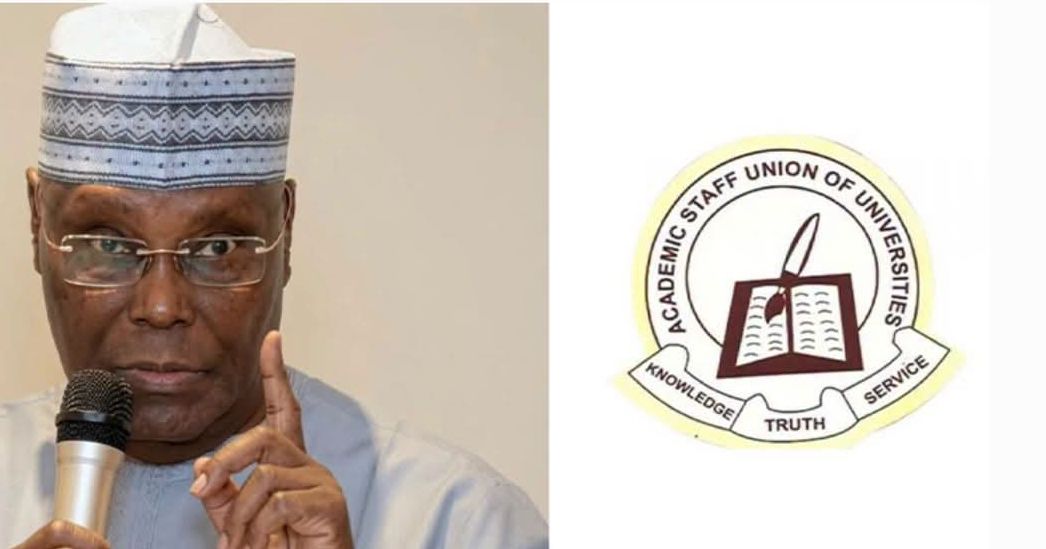
Former Vice President Atiku Abubakar has accused the Bola Tinubu administration of what he called one of the most cynical economic deceptions in Nigeria’s recent history, saying it removed fuel subsidy, imposed crushing hardship on millions of families, promised that savings would transform education and other essential services, and has now failed to meet basic obligations to university lecturers or prevent another round of industrial action.
In a statement issued by his Senior Special Assistant on Public Communication, Phrank Shaibu, Atiku said Nigerians had already paid the price through higher fuel costs, transport fares, food prices, energy bills and school fees. Yet, he said, public universities remain underfunded, lecturers are complaining about unpaid entitlements and unresolved agreements, and students once again face the threat of disruption to the academic calendar.
“If the subsidy is gone and Nigerians have paid for that decision through unprecedented hardship, then President Tinubu owes the country a simple answer: where is the money?” Atiku said.
He said the government sold subsidy removal to Nigerians on the promise that the enormous sacrifice imposed on families would release resources for education, healthcare, infrastructure and other essential services.
“The house of cards of falsehoods erected by the Tinubu administration to justify the suffering of Nigerians is collapsing before our eyes,” he said. “A government that strips citizens of relief, denies them meaningful social protection and fails to deliver the basic improvements it promised has forfeited the moral credibility to continue preaching sacrifice.”
Atiku accused the administration of imposing an unprecedented cost-of-living crisis, saying families are struggling with soaring food prices, punishing transport costs, expensive energy and shrinking incomes. Instead of cushioning the consequences of its own economic decisions, he said, the government has largely abandoned Nigerians to carry the burden alone.
“That is what makes the present university crisis indefensible. Government removed the cushion, collected the supposed savings and imposed the hardship, but Nigerians cannot see the corresponding improvement in their schools, hospitals or everyday lives,” he said.
“More than three years later, lecturers are still raising concerns about unpaid salaries and unresolved agreements. ASUU is again warning of industrial action. University infrastructure remains inadequate, while millions of young Nigerians compete every year for limited admission spaces. So where is the money?”
Atiku also rejected the administration’s defence that subsidy removal has led to increased allocations to state governments, saying it raises an even more troubling question about the condition of public education across the federation.
“Government officials repeatedly tell Nigerians that subsidy savings have translated into larger allocations to states. But if substantially more money is supposedly flowing to the states, why has the condition of public education not improved accordingly?” he asked.
He said public education remains under severe pressure across the country, with several state-owned universities experiencing industrial disputes and disruptions, even as the Federal Government continues to advertise stability in the tertiary education calendar.
“The crisis is therefore not merely a federal university problem. It exposes a wider contradiction between the enormous revenues government celebrates and the deteriorating public services Nigerians actually experience,” he said.
“You cannot boast about record allocations while students sit at home because lecturers are on strike. You cannot celebrate higher revenues when classrooms, laboratories, hostels and teaching facilities remain inadequate. If more money is reaching both the Federal Government and the states, Nigerians are entitled to ask why the quality and capacity of public education remain so painfully deficient.”
Atiku said the crisis also exposes the contradiction at the heart of the administration’s student loan policy.
News
Al-Istiqama University to Hold Convocation, Honours Late Aminu Dantata, Sheikh Ibrahim Khalil
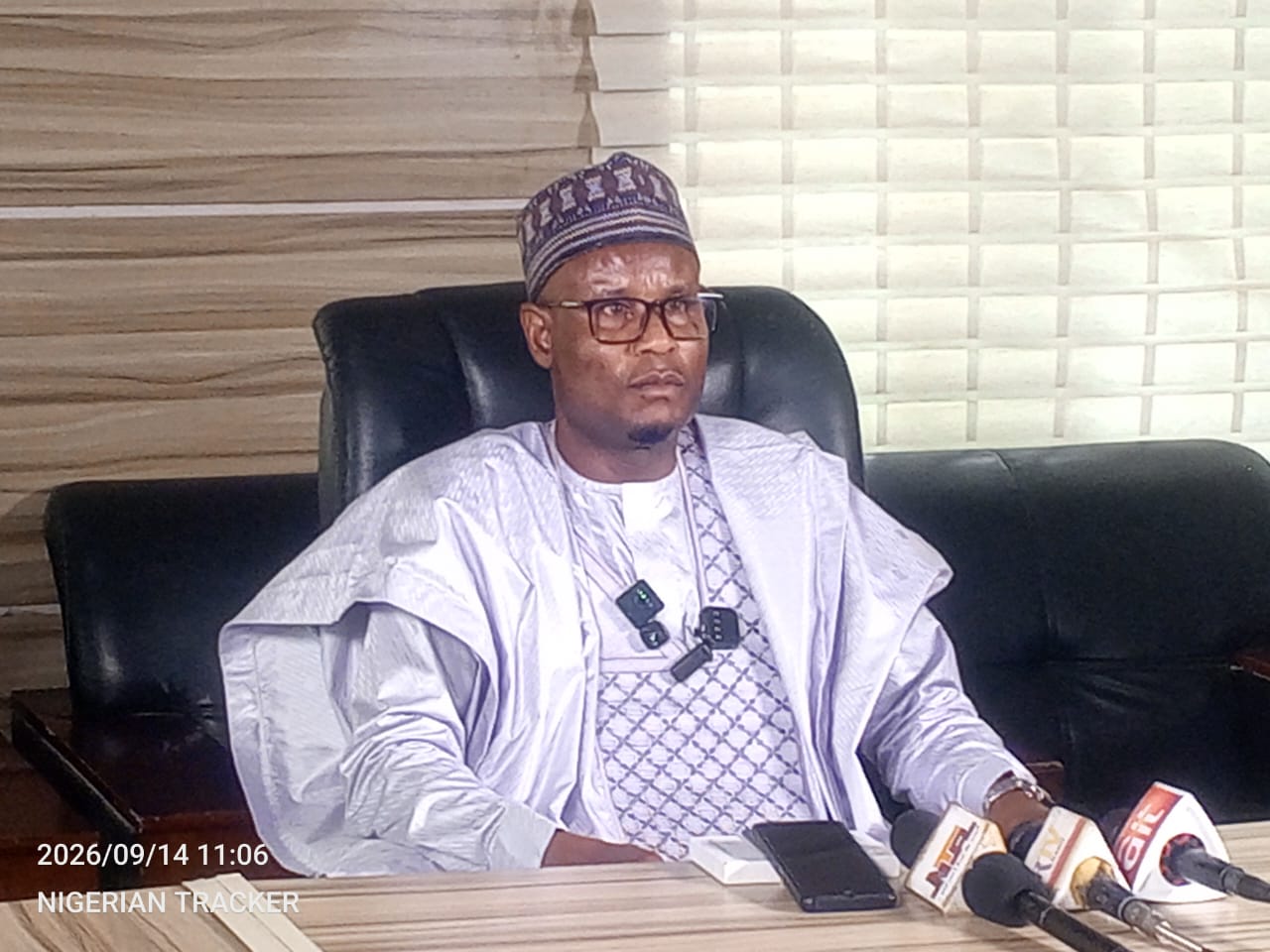
Al-Istiqama University, Sumaila, Kano State, is set to hold its 2nd and 3rd combined convocation ceremony, during which the institution will graduate 1,104 students and confer honorary and posthumous doctorate degrees on distinguished Nigerians.
The Vice-Chancellor of the university, Professor Abdulhadi Sale Kumurya, disclosed this while addressing journalists ahead of the combined convocation ceremony, describing the event as a significant milestone in the development of the institution.
Professor Kumurya said the ceremony would be particularly significant because it would be the first convocation he would preside over since becoming the second substantive Vice-Chancellor of Al-Istiqama University.
According to him, the convocation would also feature a pre-convocation lecture to be delivered by the Vice-President of Nigeria, Senator Kashim Shettima, GCON, who is expected to grace the occasion as the guest lecturer.
The Vice-Chancellor said another major highlight of the ceremony would be the graduation of the university’s first-ever set of postgraduate students, describing their graduation as a historic moment in the academic development of the institution.
Professor Kumurya explained that three postgraduate students who had successfully completed their programmes would be awarded their respective higher degrees during the ceremony.
He said although the number of pioneer postgraduate graduands was small, their graduation represented the foundation upon which the university’s postgraduate academic legacy would be built.
The Vice-Chancellor further disclosed that the university would confer honorary doctorate degrees on three distinguished Nigerians in recognition of their contributions and achievements in their respective fields.
Professor Kumurya said Alhaji Abdulmumini Maishanu, popularly known as A.Y. Shafa, would be conferred with an Honorary Doctor of Business Administration, Honoris Causa, for his achievements and contributions in the business sector.
He added that Sheikh Malam Ibrahim Khalil would receive an Honorary Doctor of Divinity, Honoris Causa, in recognition of his contributions to religious scholarship and other areas of service to society.
According to Professor Kumurya, the late business magnate Alhaji (Dr.) Aminu Alhassan Dantata would also be honoured posthumously with a Doctor of Business Administration, Honoris Causa.
The Vice-Chancellor said the posthumous recognition of the late Dantata was part of the university’s decision to acknowledge distinguished Nigerians whose contributions had made a lasting impact on society.
Professor Kumurya also described the presentation of certificates to graduands during the convocation as another major departure from merely symbolic graduation ceremonies.
He said the graduands would not only be formally admitted to their respective degrees but would also receive their academic certificates during the ceremony, stressing that certificates were essential documents required by graduates for employment, further education and professional advancement.
The Vice-Chancellor disclosed that a total of 1,101 students would graduate with first degrees from 12 academic programmes spread across three faculties of the university.
According to him, the graduating class comprises 44 First Class graduates, 271 Second Class Upper Division graduates, 443 Second Class Lower Division graduates, 100 Third Class graduates and two graduates in the Pass category.
Professor Kumurya further stated that another 241 graduates from the Faculty of Health Sciences fell under the unclassified category, bringing the total number of first-degree graduands to 1,101.
He added that the three postgraduate graduands would bring the total number of students receiving degrees at the combined convocation to 1,104.
The Vice-Chancellor said all the 1,104 graduands had fulfilled the academic requirements prescribed by the university’s Senate and had consequently been found worthy of being admitted to their respective degrees.
Professor Kumurya said the university was proud of the achievement because the graduating students represented an addition to the human-resource base required for national, continental and global development.
He therefore appealed to journalists and other media organisations to publicise the convocation and its activities widely so that the achievements of Al-Istiqama University and its graduands could reach a wider audience.
The Vice-Chancellor also disclosed that the university had commenced the development of its medical education programme, noting that students had already been admitted to study Medicine and Surgery, with the pioneer MBBS students now in their second year.
Professor Kumurya said the admission of MBBS students was part of the institution’s broader effort to expand its academic programmes and contribute to the training of professionals needed in the health sector.
He further stated that the university had also commenced admitting students into its doctorate programmes, indicating that the institution was gradually expanding its postgraduate education and research capacity.
The Vice-Chancellor described the combined convocation as an important chapter in the history of Al-Istiqama University, particularly because it would showcase the institution’s progress in undergraduate, postgraduate and professional education.
Professor Kumurya said the management of the university remained committed to producing graduates who would contribute meaningfully to the development of Nigeria and the wider world.
He expressed appreciation to journalists for their continued partnership with the institution and urged them to help project the achievements of the university and its graduates to the public.
Professor Kumurya concluded by thanking members of the press for attending the briefing and prayed for the continued progress of the university, its students and staff.

Oil Prices Rise After Saudi Pipeline Halt and Delayed Hormuz Talks

Atiku Accuses Tinubu of ‘Economic Deception’ Over Subsidy Savings, Demands ‘Where Is the Money?’ as ASUU Threatens Fresh Strike

Al-Istiqama University to Hold Convocation, Honours Late Aminu Dantata, Sheikh Ibrahim Khalil

Ex-UK PM Boris Johnson Narrowly Escapes as Russian Drone Hits Warsaw-bound Train

From Desks to Degrees: How Governor Yusuf Is Bankrolling A Generation’s Future
From World’s 9th Most Populous City to Perfect: As Gov Yusuf Revisits Kano Master Plan

95% of Governor Abba Kabir Yusuf’s Promises Have Been Fulfilled — CPS Interview By Musa Diso, In Kano

Bello Sharada: A Great Writer, A Bookish Soul, Gone Too Soon

Call Me Chairman, Not Tony!’: Elumelu’s Blunt Correction of Trainee Splits Internet as Old Video Sparks Double Standard Fury

NUT Launches ‘Go Public’ Campaign to Promote Public Education in Nigeria
Oil Prices Rise After Saudi Pipeline Halt and Delayed Hormuz Talks
Atiku Accuses Tinubu of ‘Economic Deception’ Over Subsidy Savings, Demands ‘Where Is the Money?’ as ASUU Threatens Fresh Strike
Al-Istiqama University to Hold Convocation, Honours Late Aminu Dantata, Sheikh Ibrahim Khalil
Ex-UK PM Boris Johnson Narrowly Escapes as Russian Drone Hits Warsaw-bound Train
From Desks to Degrees: How Governor Yusuf Is Bankrolling A Generation’s Future
From World’s 9th Most Populous City to Perfect: As Gov Yusuf Revisits Kano Master Plan
95% of Governor Abba Kabir Yusuf’s Promises Have Been Fulfilled — CPS Interview By Musa Diso, In Kano
Bello Sharada: A Great Writer, A Bookish Soul, Gone Too Soon
Call Me Chairman, Not Tony!’: Elumelu’s Blunt Correction of Trainee Splits Internet as Old Video Sparks Double Standard Fury
NUT Launches ‘Go Public’ Campaign to Promote Public Education in Nigeria
-

 Opinion5 years ago
On The Kano Flyovers And Public Perception
-

 Features5 years ago
How I Became A Multimillionaire In Nigeria – Hadiza Gabon
-

 Opinion6 years ago
Kano As future Headquarters Of Poverty In Nigeria
-

 History5 years ago
Sheikh Adam Abdullahi Al-Ilory (1917-1992):Nigeria’s Islamic Scholar Who Wrote Over 100 Books And Journals
-

 Opinion5 years ago
My First Encounter with Nasiru Gawuna, the Humble Deputy Governor
-

 History5 years ago
The History Of Borno State Governor Professor Babagana Umara Zulum
-

 History5 years ago
The Origin Of “Mammy Market” In Army Barracks (Mammy Ochefu)
-

 News4 years ago
Federal University Of Technology Babura To Commence Academic Activities September