
News
International Day Of Access to Information:CITAD condemns hoarding by MDA’S

The Centre for Information Technology and Development (CITAD), a National nongovernmental organization using ICT for development and information sharing to promote transparency and accountability in public and private sector, promote peace and mitigate conflict, foster good governance and societal wellbeing is joining millions of people over the world in celebrating the 2020 International Day for Universal Access to Information with the theme “In times of crisis, constitutional, statutory and/or policy guarantees for public access to information save lives, build trust and help develop sustainable policies”.
In a statement by Ibrahim Nuhu Acting Programmes Coordinator of the centre said each year the World Access to Information day is observed around the world on 28 September.
International Day Of Peace: CITAD calls for Use of Technology to enhance Peace
The UN General Assembly has declared this as a day devoted to compliance of the release of information, as a critical tool for accountability and transparency which are the ingredients for every growth and development.
According to Ibrahim Nuhu the Freedom of Information Act was a product of collaboration between citizens, organised civic actors and government.
It was passed by both chambers of the 6th National Assembly on 24th May 2011 and assented by the then President on 28th May, 2011.
The underlying philosophy of the Act is that public servants are custodians of a public trust on behalf of a population who have a right to know what they do.
In particular, the FOI Act promises to remove the aura of mystery and exclusion with which public servants cloak the ordinary operations of government and public institutions.
It also seeks to change the manner in which public records and information are managed.
The Act builds on an assumption of openness, by placing on those who wish to keep public information away from the people, the onus of justifying why they have to do so.
If fully implemented, the FOI Act will transform quite fundamentally the way in which government conducts business and the perception of the people towards the government.
The Freedom of Information Act has two main objectives, namely
Promote accountability
Enable citizens participation in decision making
Both of these cannot be achieved without information.
In particular, decision making is based on having the right information to make an informed contribution to debate. It is important to remember that accountability is at the root of modern representative democracy.
Because of scale and complexity of issues, we cannot all directly take part in decision making and therefore have to surrender this right to our representatives who in turn must render accountability in return.
The three dimensions of Accountability; Representation, Resource management and Information flow require exchange of information between the governments and givers of mandate.
In particular, lack of information makes it difficult to assess the extent to which governments manage resources and determine what the benefits of the people are.
It is this opacity of information that creates the condition for corruption to strive. Information flow is thus a critical condition for transparency and for curtailing corruption in governance.
In accordance with FOI, Public and Private Institutions have the responsibilities to
Capture records and keep information about all its activities, operations and businesses
Keep records by proper organization and maintenance of all information in its custody, and make it available by publishing or otherwise make this information to the public In Nigeria, often government officials are reluctant to provide even the most elementary information at their disposal.
It is very disheartening seeing the behaviour and attitudes of government officials when it comes to prior disclosure and even with the written request of information at their disposal by the citizens. These make it difficult in bringing sanity to the governments’ expenditures when tracking and accountability as well as transparency in governance.
The refusal of the prompt disclosure and request of the information by the government officials is a clear violation of the FOI Act and denial of growth and development.
To this end, CITAD strongly condemn the lack of respect of the law and FOI Act by the MDAs.
CITAD has been tracking various projects at national and state levels using the FOI requesting relevant information for the tracking but unfortunately some of the MDAs concerned are refusing us access.
As part of our effort in tracking government uncompleted projects, youth are involved and given prizes by reporting any uncompleted project in their communities, and we ensure publication of such and reporting it to the relevant authorities for action. Here are our recommendations:
All MDAs should secure and update their websites and ensure functionality at all times
Proactive Disclosure of real and relevant information or records must be made available always
Total compliance to the citizens requests must be emphasized by the authorities and legal sector should facilitate the sanctions and punishment in case of failure .
Civil Society Organizations (CSOs) should plan to create pressure on the agency in case it fails to provide the information within the stipulated time and prepare to share the request with media organizations, other groups who may have interest in the information and relevant communities who are affected by what the information tells.
This is important because failure to provide the information means you can challenge that in a court of law.
Adopting a comprehensive FOI Act is a major step towards entrenching an open government, one in which Nigerians can have an active voice in the process of governance and policy decisions. This can only happen with full and effective implementation of the law. The success of the Freedom of Information Act is dependent on a partnership between the government, the media, civil society and the private sector.
The general populace would need to be less resistance to openness as continued resistance would severely impede the effectiveness of the law. Opening up government would greatly enhance the lives of Nigerians and can only bring about positive changes. Transparency in government would streamline government processes, improve bureaucratic efficiency, reduce corruption and support economic growth and foreign investments.
So, we are using this day to call on government officials, Civil Society Organizations (CSOs), individuals, Community Based Organizations (CBOs) to partner one another in ensuring ease flow of information for progress, growth and development.
CITAD wants to end this statement by enjoining people of Nigeria to be tracking all government projects and report any deviation to the authority concern so that we strengthen access to health, education and justice, and can contribute towards reduced inequalities.
News
Kano Gov Abba Kabiru Yusuf bags international sports award in UK

Kano state governor, Abba Kabir Yusuf , Saturday was honoured in the United Kingdom for his commitment and support to sports development in the state.
Our correspondent reports that the award presentation ceremony took place at the Feel Good Too , Ive Farm sports arena located at the Pavilion Walk in London.
The patron W O. Sports, Moses Andishu , while making the presentation, said the award is aimed at appreciating the governor for his consistency towards the development of sports in Kano.
Moses who doubles as SWAN national patron said “this is our token way of saying kudos to mr governor and our aim is to encourage him to do more for the growth of the industry .
He added that “ we have noticed the reforms been carried out in Kano Pillars football club , we are aware of the efforts ongoing at the Kano state Sports Commission, KSSC and Kano Pillars is taking a new shape again, the state various sports teams now honor national invitations to major competitions, this is worth encouraging.
“we are very much aware of the plans by the governor, who is investing massively in the area of the provision of infrastructure, likewise we have seen investments made to renovate and upgrade major sports facilities, in the state, we just want to say thank you to his excellency and encourage him to invest more in sports
The special adviser to the governor on Youths and Sports, Sani Musa Danja , who received the award on behalf of the state governor said , “we are very delighted and happy, his excellency does not joke with anything that has to do with the development of the youths and he has always assured that he will always do everything possible to support the growth of Kano youths.
“I receive this award on behalf of his excellency with humility and honour for my governor , eng Abba Kabiru Yusuf, his works testify for his passion and commitment to sports development, his agenda is to always ensure Kano athletes competes amongst the best of the best by providing all the requirements that is needed for the state to excel in sports , and be rest assured that with my governor in charge sports development will always remain on the burner of the Kano First Agenda.
News
President Tinubu Salutes Hon. Kabir Bichi, Chair Appropriation Committee Of The House Of Representatives On His 45th Birthday
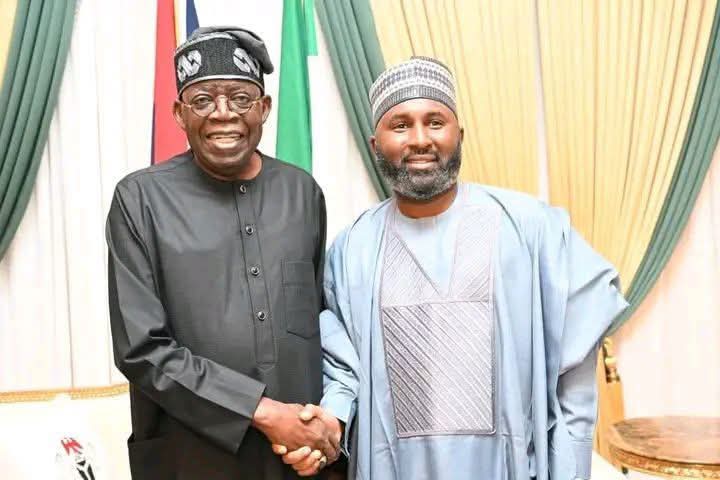
President Bola Ahmed Tinubu celebrates the Chairman, House of Representatives Committee on Appropriation, Hon. Abubakar Kabir Bichi, on his 45th birthday today.
President Tinubu describes Hon. Bichi, who represents Bichi Federal Constituency of Kano State, as a vibrant, resourceful and dedicated lawmaker whose commitment to legislative duties and national development stands out.
President Tinubu remarks: “ As Chairman of one of the most strategic committees of the House, Hon. Bichi has demonstrated uncommon capacity, grit, and leadership in steering the consideration, scrutiny, and passage of the nation’s annual budget, a role central to implementing the Renewed Hope Agenda.
“I commend him for his effective representation of his constituents and his impactful interventions in education, infrastructure, and youth empowerment, which have endeared him to his people.
“Bichi has distinguished himself since his first election to the House in 2019, where he served as Chairman of the House Committee on Works in the 9th Assembly and now as Chairman of Appropriation in the 10th Assembly.
“ As he marks his birthday today, I urge him to rededicate himself to serving his people and his fatherland.
“ And I pray to Almighty God to continue to bless him with good health, wisdom and strength.”
Bayo Onanuga
Special Adviser to the President
(Information & Strategy)
October 3, 2026
News
Yari Urges North to Respect Power Rotation, Back Tinubu’s 8-Year Presidency
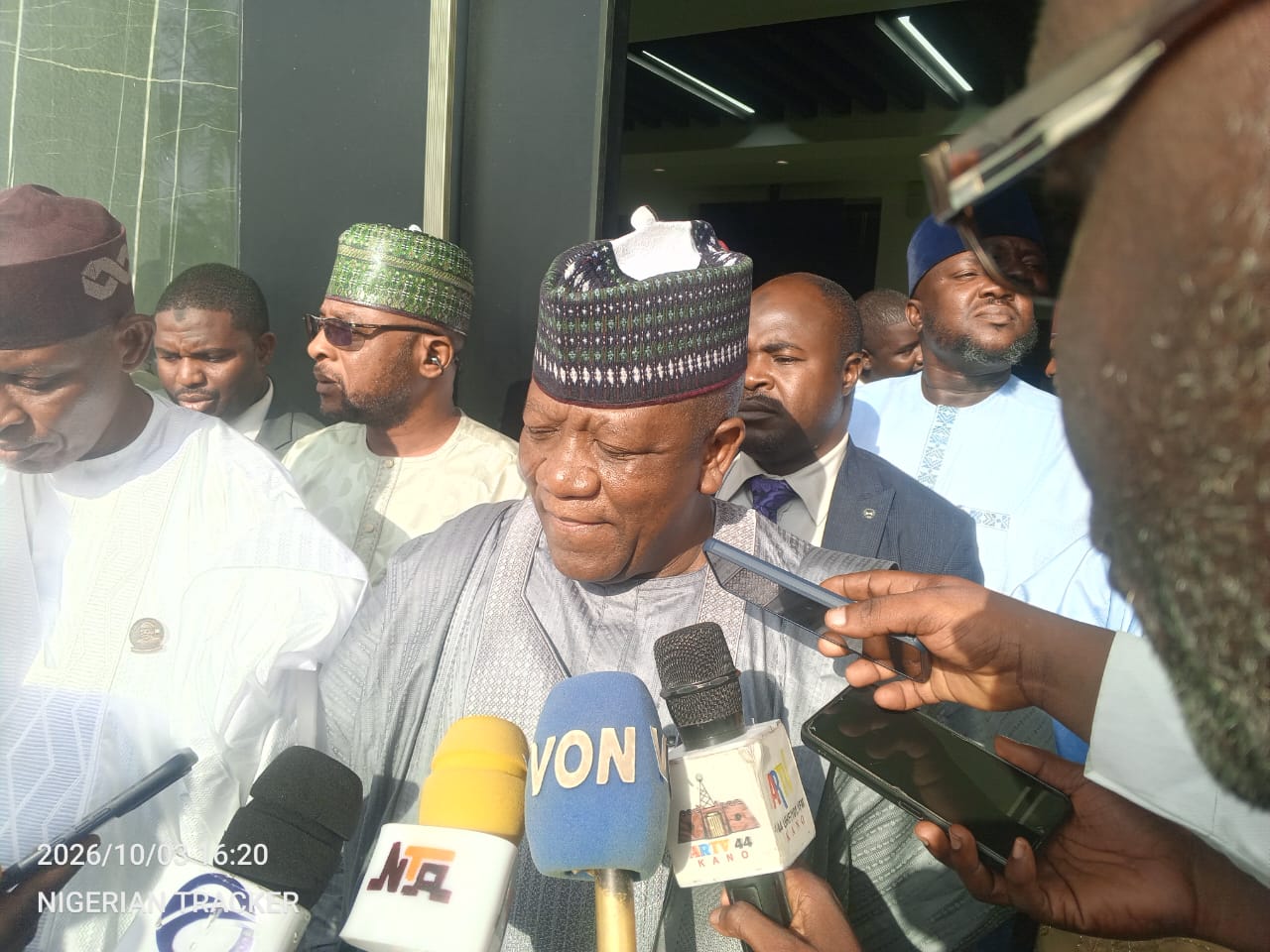
The Director-General of the APC Presidential Campaign Council, Senator Abdul Aziz Yari Abubakar, has called on Nigerians in the North to respect the informal power-rotation arrangement and allow President Bola Ahmed Tinubu to complete his constitutionally permitted eight-year tenure.
Yari made the call while addressing journalists at the Kano Government House after a meeting with Kano State Governor Abba Kabir Yusuf.
The former Zamfara State governor said the North should understand and respect the political arrangement that brought the presidency to the South in 2023, arguing that the presidency had been held by a northerner for several years before the emergence of Tinubu.
Yari said, “66 years ago since independence, the country was led by northerners for 47 years,” adding that Nigerians should recognise the importance of maintaining unity and understanding how the country’s political system operates.
According to him, Nigeria remains a country that all citizens must work together to protect, regardless of regional or political differences.
“As we love this country, we don’t have any country other than Nigeria. Nigerians should come and understand how this country works. It is also better than many nations,” Yari said.
The APC chieftain explained that his role as Director-General of the campaign council was not limited to promoting President Tinubu but also included promoting national unity and understanding among Nigerians.
Yari said the current political arrangement should be respected, noting that former President Muhammadu Buhari, a northerner, governed the country between 2015 and 2023 before power shifted to Tinubu from the South in 2023.
“Having said this, this country, Nigeria, from 2015 to 2023 was led by a northerner, and now from 2023 to 2026 it is led by a southerner,” he said.
He therefore appealed to northerners not to seek to overturn the existing zoning arrangement on the basis of the region’s population, saying the political understanding was important for national stability.
“If we say we want to uproot the zoning arrangement because of our numbers, then my call for northerners is to understand how it works. They even understand more than I do,” Yari said.
He acknowledged that President Tinubu’s administration, like every government, was not perfect, but argued that the challenges facing Nigeria should not solely be attributed to the administration.
“Nobody is perfect. The southerners have also experienced what we are complaining about today when President Buhari was in power,” he said.
Yari also argued that insecurity was not peculiar to Nigeria, saying countries across the world, including the United States, continue to grapple with security challenges despite their level of development.
“On problems, no problem of a country is solved by any government, including even in the United States. They are managing insecurity as we are managing it,” he said.
The APC campaign council director-general further cited gun violence in Chicago as an example of the security challenges faced by other countries, stressing that every nation has its own problems that require continuous efforts to address.
Turning to the economy, Yari said Nigerians should assess the Tinubu administration based on economic indicators and compare the situation at the time the president assumed office in 2023 with the current position.
“When you look at when Asiwaju Bola Ahmed Tinubu came to power in 2023, go and check what was the state of our reserves and what it is today, and what was the rate of inflation in 2023 and what it is today,” he said.
Yari maintained that the administration was making efforts to address the country’s economic and security challenges, while acknowledging that governments at both federal and state levels were working to improve the situation.
He urged Nigerians, particularly those in the North, to give the political arrangement time, arguing that the presidency would return to the region after Tinubu’s tenure if the existing rotation principle was maintained.
“I am calling on northerners to note that by the time Bola Ahmed Tinubu finishes in 2031, it will definitely come back to the North. So, this is how the arrangement is,” Yari said.
He added that federal and state governments were making efforts to address the challenges confronting the country and urged Nigerians to support measures aimed at strengthening national unity and development.

Kano Gov Abba Kabiru Yusuf bags international sports award in UK

President Tinubu Salutes Hon. Kabir Bichi, Chair Appropriation Committee Of The House Of Representatives On His 45th Birthday

Yari Urges North to Respect Power Rotation, Back Tinubu’s 8-Year Presidency

Muhuyi Raided Our Area: Encomiums, Prayers and Solidarity Trail Operation

Scrap Dealers Begin 15-Day Strike, Blame Chinese, Foreign Firms for Market Crisis

Zamfara Varsity ASUU Threatens Warning Strike Over FG-ASUU Agreement, Promotion Arrears

Kano Chemists Threaten Warning Strike Over Alleged PCN Pressure

Per Ishaq Samaila: “Waziri” for Strategy. “Mai Jama’a” for Service. One Man. One Mission. Ibrahim Kabir Masari

Goje’s Electoral War:The Confrontation With Tinubu,Governor Inuwa,Usman Kumo And APC candidates Ahead Of 2027

Prof Yusuf Adamu Delivers BUK’s 63rd Professorial Inaugural Lecture, Reflects on Medical Geography and Academic Legacy
Kano Gov Abba Kabiru Yusuf bags international sports award in UK
President Tinubu Salutes Hon. Kabir Bichi, Chair Appropriation Committee Of The House Of Representatives On His 45th Birthday
Yari Urges North to Respect Power Rotation, Back Tinubu’s 8-Year Presidency
Muhuyi Raided Our Area: Encomiums, Prayers and Solidarity Trail Operation
Scrap Dealers Begin 15-Day Strike, Blame Chinese, Foreign Firms for Market Crisis
Zamfara Varsity ASUU Threatens Warning Strike Over FG-ASUU Agreement, Promotion Arrears
Kano Chemists Threaten Warning Strike Over Alleged PCN Pressure
Per Ishaq Samaila: “Waziri” for Strategy. “Mai Jama’a” for Service. One Man. One Mission. Ibrahim Kabir Masari
Goje’s Electoral War:The Confrontation With Tinubu,Governor Inuwa,Usman Kumo And APC candidates Ahead Of 2027
Prof Yusuf Adamu Delivers BUK’s 63rd Professorial Inaugural Lecture, Reflects on Medical Geography and Academic Legacy
-

 Opinion5 years ago
On The Kano Flyovers And Public Perception
-

 Features5 years ago
How I Became A Multimillionaire In Nigeria – Hadiza Gabon
-

 Opinion6 years ago
Kano As future Headquarters Of Poverty In Nigeria
-

 History5 years ago
Sheikh Adam Abdullahi Al-Ilory (1917-1992):Nigeria’s Islamic Scholar Who Wrote Over 100 Books And Journals
-

 Opinion5 years ago
My First Encounter with Nasiru Gawuna, the Humble Deputy Governor
-

 History5 years ago
The History Of Borno State Governor Professor Babagana Umara Zulum
-

 History6 years ago
The Origin Of “Mammy Market” In Army Barracks (Mammy Ochefu)
-

 News4 years ago
Federal University Of Technology Babura To Commence Academic Activities September