
News
Lawmakers Back Dangote’s Industrialization Stride
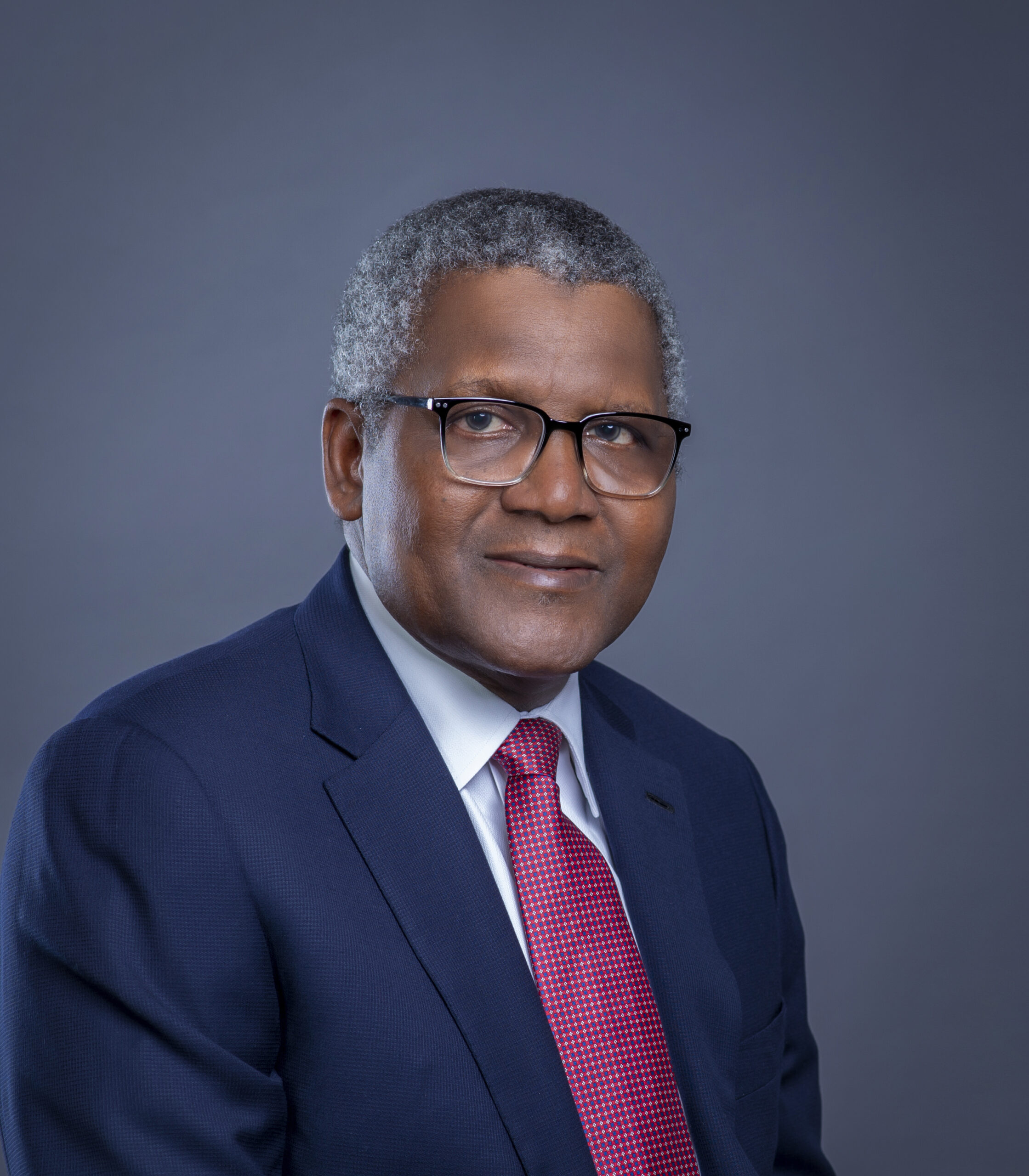
Dangote Group’s industrialization stride in Nigeria has received yet another momentum as federal lawmakers back the company’s stride.
Members of the House of Representatives who visited Dangote Cement Plc in Obajana, Kogi State, expressed their delight at the significant economic impact the company has made in Nigeria’s cement subsector.
Speaking during the visit, Hon. Gaza Jonathan Gbefwi, Chairman of the House Committee on Solid Minerals, who led his team to the Dangote cement plant, emphasized the need for collaboration between Nigeria’s political leaders and investors to drive the country’s industrialization.
He noted that Dangote Cement has paved the way with its substantial investments, job creation, tax contributions, and more.
He emphasized that everyone must work together to ensure Nigeria’s progress.
He stated that the visit by the joint subcommittee on Solid Minerals and Commerce was partly aimed at investigating the reasons behind the current cement prices and collaboratively seeking solutions.
Responding to the visiting lawmakers about the current prices, Mr. Arvind Pathak, Group Managing Director of Dangote Cement Plc, stated that cement inputs are dollar driven except limestone which is found in Nigeria.
Some of these inputs, according to him include: machineries, spare parts, the gas for fuel and Gypsum which is one of the raw materials.
Mr. Pathak explained that the rise and instability in foreign exchange rates have been significant factors contributing to the current prices of cement products.
He said Dangote Group is Nigeria’s largest employer outside of government.
He also explained that compared to 2021, the salaries of the company’s employees have been increased by 21.3% in 2022 to 47.5% in 2023 and 63.2% in 2024.
The salary increase was meant to meet up the inflation in the country.
Reacting also, Plant Director, Dangote Cement Plc, Obajana, emphasized that the transport segement of the Cement company has introduced CNG trucks to its fleet.
He also said that the company has invested in alternative fuel projects to demonstrate its initiatives to cleanup Nigeria.
The Alternative fuel project uses biomass waste which is blocking the fertile land as a source of clean energy. The ambition of the company is to make Nigeria visible for its contribution towards reduction in Global warming.
Engr Azad Nawabuddin, who also spoke to newsmen on the sideline of the tour by the lawmakers, said the social intervention schemes of the company run into billions of naira, adding that the company would not rest on its oars.
The Plant Director said that by incorporating advanced technologies and maintenance strategies, Dangote Cement has upheld operational efficiency while upholding its social commitments.
Some of the community related intervention schemes embedded in the Community Development Agreement (CDA), he said, include: provision of scholarship, construction of blocks of classrooms, construction of boreholes, building of hospitals and construction, and rehabilitation road networks.
Engr. Azad Nawabuddin explained that the company has delivered a multimillion naira health facility at Iwaa, one of the mining communities, as well as launched several other empowerment schemes.
He also told newsmen that the Dangote Cement Plc is set to deliver a multimillion naira Aliko Dangote Skills Development Centre in Lokoja, the Kogi State capital.
According to him, the company is one of the biggest tax payers in the country, surpassing the banking sector in 2023.
The lawmakers also visited the Dangote Plant at Okpella Edo State
Plant Director, Dangote Cement Plc, Okpella, Edo State, Engr Ismail Muhammad, said the company has invested hugely in state-of-the art facility in is bid achieve operational efficiency.












News
Scrap Dealers Begin 15-Day Strike, Blame Chinese, Foreign Firms for Market Crisis
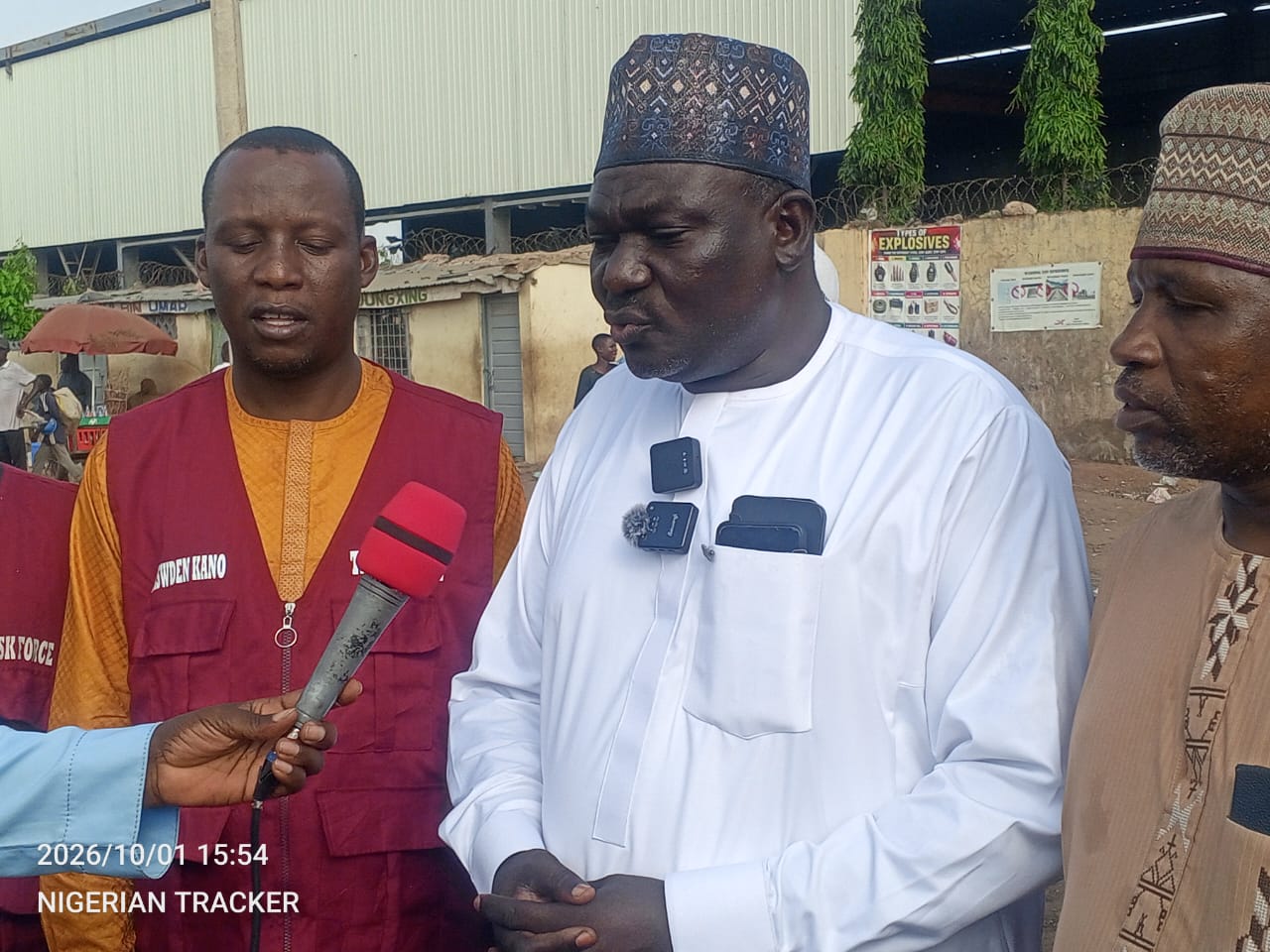
The National Association of Scrap and Waste Dealers Employers of Nigeria has commenced a 15-day nationwide warning strike over what it described as the devaluation of its members’ businesses by Chinese and other foreign companies operating in Nigeria.
The association announced the commencement of the strike on Thursday, saying its members were withdrawing their services to draw the attention of the Federal Government and relevant authorities to what it described as unfair practices threatening the survival of the scrap and waste recycling industry.
The Vice President of the association, Aminu Hassan Soja, popularly known as Sarkin Karafan Kasar Hausa, disclosed the decision while addressing journalists in Kano on Thursday.
Hassan said members of the association were losing between ₦2 million and ₦3 million on every truckload of scrap materials as a result of what he alleged were activities of Chinese and other foreign companies in the sector.
According to him, the situation had significantly affected the prices of scrap materials and was making it increasingly difficult for Nigerian-owned businesses to remain viable.
The association’s vice president further alleged that some foreign operators were involved in practices that were affecting the quality of construction materials produced from recycled metals.
Hassan specifically alleged that 12-millimetre iron rods were being presented or processed as 10-millimetre rods, a development he linked to concerns over the quality of building materials and the reported collapse of buildings in different parts of the country.
He said the alleged practices were taking place despite existing laws and regulations governing the production and marketing of construction materials in Nigeria.
The association’s leader expressed concern that foreign companies were allegedly operating as though there were no effective laws regulating their activities in the country.
Hassan said the decision to embark on the 15-day strike followed efforts by the association to draw the attention of relevant authorities to the challenges facing its members.
He said the association had written to relevant government agencies as well as security agencies to formally notify them of the warning strike and its implications.
According to him, the association has a membership of more than two million people across the country, stressing that its members had complied with the directive to withdraw their services.
Hassan described the association as one of the largest employers of labour in the country outside the agricultural sector, saying the activities of its members contribute significantly to employment and the recycling economy.
He said the strike was therefore intended to compel the authorities to address the concerns raised by the association and protect local operators in the scrap and waste business.
Soja says the association’s leadership had information that some individuals could attempt to act as saboteurs from within the association.
Hassan urged members to remain united and adhere to the directive throughout the 15-day warning strike, while calling on government agencies to intervene in the issues raised by the association.
He said the association remained open to dialogue with the Federal Government and other stakeholders, but insisted that the concerns of its members must be addressed to prevent further losses and protect businesses operating in the sector.
News
Kaduna Court Dismisses El-Rufai Trial Judge Recusal Application, Orders Accelerated Hearing

The Kaduna State High Court has dismissed an application seeking the recusal of Justice Darius Khobo from the trial of former Kaduna State Governor, Mallam Nasir Ahmed El-Rufai.
The court, in its ruling last week on the application, held that the applicant had not waived his right to complain of alleged bias by his conduct.
Justice Khobo, however, ruled that the multiple processes filed by the applicant before the Court of Appeal and the Kaduna State High Court constituted an abuse of court processes.
The court also held that the applicant failed to establish a likelihood of bias against him.
The court formulated three issues for determination in resolving the application.
On whether the applicant had waived his right to complain of bias by his conduct, the court resolved the issue in favour of the applicant, holding that the right had not been waived by mere conduct.
However, in the second issue, whether the applicant had abused the processes of the court, the court ruled in favour of the respondent, finding that the multiple processes filed before the Court of Appeal and the State High Court constituted an abuse of court process.
The third issue, which concerned whether there was a likelihood of bias against the applicant, was also resolved in favour of the respondent, with the court holding that the applicant failed to prove such likelihood.
In its final analysis, the court held that the application for recusal lacked merit and consequently refused and dismissed it.
The court directed that the trial on the substantive charge should continue on a day-to-day basis, as practicable in the circumstances.
It further ordered that the defendant remain in the custody of the Independent Corrupt Practices and Other Related Offences Commission, ICPC, pending the continuation of the trial.
The case was adjourned to October 12 and 13, 2026, for accelerated hearing.
News
Chinese, Nigerian workers celebrate Mid-Autumn Festival
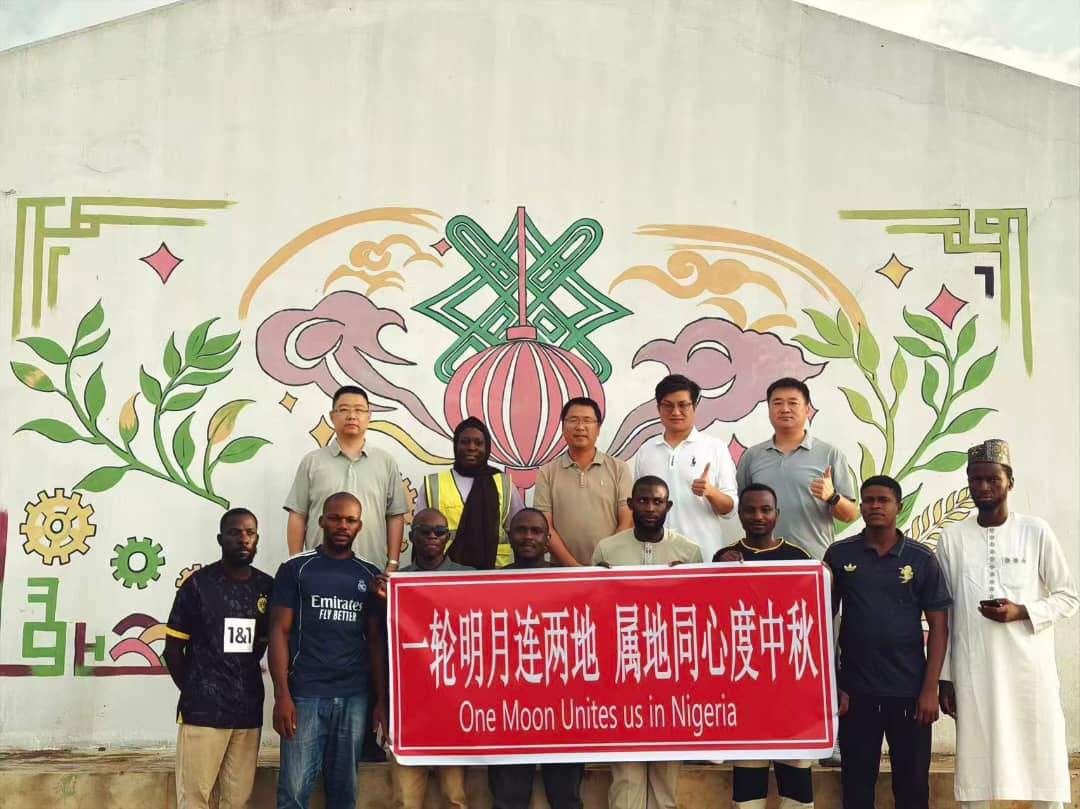
Chinese and Nigerian workers at a project site in Nigeria have celebrated the Mid-Autumn Festival with storytelling, poetry, traditional food and discussions aimed at promoting cultural understanding between the two countries.
The celebration, organised by the project team, brought Chinese and Nigerian colleagues together under the theme of cultural exchange, with participants sharing traditions and beliefs associated with the moon in their respective societies.
The event featured lantern displays, mooncakes, poetry recitals and presentations on the history and customs of the Chinese Mid-Autumn Festival.
Chinese staff introduced their Nigerian colleagues to traditional stories associated with the festival, including the legend of Chang’e flying to the moon and the story of Wu Gang and the cassia tree.
They also explained customs such as moon-gazing, eating mooncakes, displaying lanterns and solving riddles.
A major focus of the presentation was the Chinese cultural understanding of the festival as a time for family reunion.
The Chinese team explained that, even when family members are separated by distance, the full moon provides a symbolic connection as people look at the same moon and share thoughts and blessings with their loved ones.
The Nigerian participants said the emphasis on family togetherness resonated with values deeply rooted in Nigerian communities.
Sharing Nigerian moon traditions
The cultural exchange continued with a session in which Nigerian colleagues shared stories and traditions surrounding the moon in different Nigerian communities.
Participants spoke about local beliefs linking the moon with harvest, love, time and seasonal changes, while others explained how the moon has traditionally featured in communal gatherings and storytelling.
One of the Nigerian participants observed that full-moon nights in some communities are occasions for gathering, singing, dancing and storytelling, drawing parallels with the Chinese Mid-Autumn Festival.
The observation attracted laughter and applause from the participants, who noted the similarities between the two cultures despite their geographical distance.
Chinese staff also discussed the place of the moon in Chinese poetry and folk traditions, with participants agreeing that the shared appreciation of the moon provided a common cultural connection.
Poetry brings colleagues together
The celebration also featured a Chinese poetry session during which Nigerian colleagues were introduced to poems by renowned Chinese poets Su Shi and Li Bai.
The participants recited lines from Shui Diao Ge Tou and Jing Ye Si, with Chinese colleagues explaining the meanings of the verses and helping their Nigerian counterparts with pronunciation.
Particular attention was given to the famous sentiment wishing that loved ones would live long enough to share the beauty of the same moon despite being separated by distance.
The participants described the message as a universal expression of love, friendship and longing that transcends cultural boundaries.
Mooncakes symbolise friendship
The celebration ended with the presentation and sharing of mooncakes, a major traditional food associated with the festival.
Chinese staff explained that the round shape of the mooncake symbolises reunion and completeness before inviting their Nigerian colleagues to taste different varieties, including lotus seed, red bean and mixed-nut fillings.
For some of the Nigerian participants, it was their first experience of eating mooncakes.
One participant described the experience as more than tasting a new food, saying the gesture reflected the care and thoughtfulness of the project team.
The organisers said the celebration provided an opportunity for Nigerian colleagues to experience Chinese culture while enabling Chinese staff to learn more about Nigerian traditions.
They said such activities could strengthen mutual understanding, friendship and cooperation between Chinese and Nigerian workers.
The project team said it would continue to use traditional festivals and other cultural activities as platforms for people-to-people exchanges, with the aim of deepening China-Nigeria relations at the community and workplace levels.
The celebration, they added, demonstrated how cultural traditions can provide a bridge between people from different backgrounds and promote greater understanding and cooperation.

Scrap Dealers Begin 15-Day Strike, Blame Chinese, Foreign Firms for Market Crisis

Kaduna Court Dismisses El-Rufai Trial Judge Recusal Application, Orders Accelerated Hearing

Chinese, Nigerian workers celebrate Mid-Autumn Festival

Muhuyi and the Fight for Kano’s Future-Ismail Auwal

Independence Day: FG Declares October 1 Public Holiday

Zamfara Varsity ASUU Threatens Warning Strike Over FG-ASUU Agreement, Promotion Arrears

Kano Chemists Threaten Warning Strike Over Alleged PCN Pressure

Per Ishaq Samaila: “Waziri” for Strategy. “Mai Jama’a” for Service. One Man. One Mission. Ibrahim Kabir Masari

Goje’s Electoral War:The Confrontation With Tinubu,Governor Inuwa,Usman Kumo And APC candidates Ahead Of 2027

Emir of Gumel, Ahmad Muhammad Sani, Dies After 45 Years on the Throne
Scrap Dealers Begin 15-Day Strike, Blame Chinese, Foreign Firms for Market Crisis
Kaduna Court Dismisses El-Rufai Trial Judge Recusal Application, Orders Accelerated Hearing
Chinese, Nigerian workers celebrate Mid-Autumn Festival
Muhuyi and the Fight for Kano’s Future-Ismail Auwal
Independence Day: FG Declares October 1 Public Holiday
Zamfara Varsity ASUU Threatens Warning Strike Over FG-ASUU Agreement, Promotion Arrears
Kano Chemists Threaten Warning Strike Over Alleged PCN Pressure
Per Ishaq Samaila: “Waziri” for Strategy. “Mai Jama’a” for Service. One Man. One Mission. Ibrahim Kabir Masari
Goje’s Electoral War:The Confrontation With Tinubu,Governor Inuwa,Usman Kumo And APC candidates Ahead Of 2027
Emir of Gumel, Ahmad Muhammad Sani, Dies After 45 Years on the Throne
-

 Opinion5 years ago
On The Kano Flyovers And Public Perception
-

 Features5 years ago
How I Became A Multimillionaire In Nigeria – Hadiza Gabon
-

 Opinion6 years ago
Kano As future Headquarters Of Poverty In Nigeria
-

 History5 years ago
Sheikh Adam Abdullahi Al-Ilory (1917-1992):Nigeria’s Islamic Scholar Who Wrote Over 100 Books And Journals
-

 Opinion5 years ago
My First Encounter with Nasiru Gawuna, the Humble Deputy Governor
-

 History5 years ago
The History Of Borno State Governor Professor Babagana Umara Zulum
-

 History6 years ago
The Origin Of “Mammy Market” In Army Barracks (Mammy Ochefu)
-

 News4 years ago
Federal University Of Technology Babura To Commence Academic Activities September