
Friday Sermon
Our Power And Strength Is In Unity In Truth And Our Weakness And Destruction Is In Division!
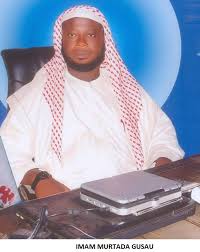
By Imam Murtadha Gusau
In the name of Allah, the Most Merciful, the Bestower of Mercy
And all praise is for Allah, Lord of all creation, who guided us to Islam and the Sunnah. May the peace, blessings and salutations of Allah be upon our noble Messenger, Muhammad, and upon his family, his Companions and his true and sincere followers.
Dear brothers and sisters! What does unity within the Muslim community mean, and who bears responsibility for achieving unification?
Respected servants of Allah! Know that, as Muslims, our power and strength is in our numbers. How we live our lives and how we engage with the wider Muslim community is paramount to achieving this strength.
My beloved people! Our religion (Islam) is a communal faith. Without a high level of cooperation, unity, discipline, and hierarchy, its obligations cannot be fulfilled. The Salatul-Jama’ah (Congregational prayer) is performed in congregation behind an Imam who is to be strictly followed. Any attempt to precede the Imam nullifies the prayer. The collection and distribution of Zakah (Charity) is supposed to be centralised in order to prioritise the categories of recipients and to prevent the misuse of funds. The fasting of Ramadan is supposed to begin and end with the approval of a central authority, or we end up experiencing the chaos of some people still fasting while others are celebrating Eid on the same day in the same area. Hajj cannot possibly be managed without a central authority that manages the movement of peoples and certifies the days of Hajj.
In fact, the Prophet (Peace be upon him) placed so much importance on unity and hierarchy, that even in the mundane worldly matter of travelling, there is an obligation to select a leader. The Prophet (Peace be upon him) said:
“When three persons set out on a journey, they should appoint one of them as their leader.” [Abu Dawud]
Consider how the care of the Prophet (Peace be upon him) for this Ummah extends to ensuring three Muslims on a journey remain united and maintain discipline and cooperation. So, what about major matters of religion and the well-being of the Ummah on a global scale?
The Qur’an places a great emphasis on the unity of Allah (Tawhid) and the unity of those who believe in the unity of Allah. It is one of the greatest obligations and the only way to actualise the Tawhid of Allah on a societal level. Allah Almighty says:
“And hold firmly to the rope of Allah and do not be divided. Remember Allah’s favour upon you when you were enemies, then He united your hearts, so you—by His grace—became brothers. And you were at the brink of a fiery pit and He saved you from it. This is how Allah makes His revelations clear to you, so that you may be rightly guided.” [Ali-Imran: 103]
And He Most High says:
“The believers are but one brotherhood, so make peace between your brothers. And be mindful of Allah, so you may be shown mercy.” [Al-Hujurat: 10]
Unity attracts the Mercy of Allah in the Ummah and disunity brings suffering among them. This is something we know and understand through the divine texts and through bitter experience, but our actions and behaviours reveal a desire to maintain the status quo of factions, enmity, chaos, and disorder.
Dear brothers and sisters! Unity is often relegated in Muslim discourse to a warm fuzzy feeling where Muslims generally respect each other and avoid conflict. As a result, we fail to establish structures within our community to actualise unity and we neglect the mechanisms that are needed to maintain order and exercise discipline in decision making. One after another, we face crises and important decisions in a chaotic manner with fractured responses that often disintegrate into internal strife.
Consider for a moment, the greatest crisis that has ever faced the Ummah and the importance placed by the Companions on unity. When the Prophet (Peace be upon him) took his last breath and the Companions faced a trauma the likes of which they had never faced before, it was Abu Bakr (RA) who kissed the forehead of the Prophet (Peace be upon him) and said:
“You are as beautiful in death as you were in life.”
He suffered a deeper grief than any of the Companions, but he immediately set about unifying the Companions and returning order and discipline to their decision making. He gave his famous speech declaring that:
“Whoever worshipped Allah, then Allah is Ever-living and does not die.”
And in doing so, he warded off the threats that Umar (RA) had made to anybody who claimed the Prophet (Peace be upon him) had passed away. He then took Abu Ubaidah Ibn al-Jarrah (RA) and went to the orchard of Saqifah Banu Sa’idah, where the Ansar had gathered to select a leader. When Sa’ad Ibn Ubadah proposed that the Successor to the Prophet (Peace be upon him) should be from the Ansar, he reminded him of the Hadith of the Prophet (Peace be upon him) that Imarah (leadership) of the Ummah remains amongst the Quraish. And when Sa’ad proposed a compromise of a leader from Quraish and a leader from Ansar, he rejected this proposal to maintain unity, discipline and hierarchy within the Ummah. Unity of the Ummah was a priority that took precedence over grieving for the Prophet (Peace be upon him), offering condolences to the family of the Prophet (Peace be upon him), and even preparing the janazah of the Prophet (Peace be upon him) and yet for us today it has become an afterthought. We need to realise that until we have communal structures for decision-making, and a sense of discipline and hierarchy, we will be trapped in a cycle of chaotic decision-making, argumentation, blame, and self-interest.
Take a closer look at the incident of Saqifah Banu Sa’idah and it is clear that Abubakar (RA) was not motivated by self-interest or a love of leadership. His initial proposal was for either Umar (RA) or Abu Ubaidah (RA) to be appointed as successor. The priority for Abubakar (RA) was the welfare of the Ummah and the need for unity in the face of existential threats from the hypocrites, the Bedouins, the Byzantines, and the Persians. Abubakar’s grief over the loss of the Prophet (Peace be upon him) was so great that he remained in this world little more than two years after the passing of the Prophet (Peace be upon him). In that short time, he steered the Ummah successfully through one crisis after the other, from the apostasy wars (Riddah) that engulfed the entire Arabian Peninsula to the preservation of the Qur’an in a single manuscript. He laid the foundations upon which expansion took place in the khilafah of Umar and Uthman (RA). And his legacy is primarily one of achieving unity in the face of extraordinary challenges.
The default mechanism of decision-making for the Ummah is through Shurah (consultation). Allah ordered the Prophet (Peace be upon him) to consult with the Companions, even though he was protected from error by divine revelation (Wahy) and he is the best of human beings. At the battle of Uhud, the Prophet (Peace be upon him) consulted with the Companions to the extent that he gave preference to the views of the younger Companions to meet the Quraish in battle outside Madinah, rather than his own view to fortify Madinah. The consequences of this decision were devastating. The Prophet’s (Peace be upon him) uncle was martyred and mutilated, seventy Companions were martyred and the Prophet (Peace be upon him) came closest to losing his own life, but at no point was there any censure for this decision because when Muslims follow a process of Shurah and make a collective decision and put their trust in Allah, then there will always be good from that decision. In fact, Allah revealed numerous verses in the last third of Surah Ali-Imran expounding on the great lessons from the Battle of Uhud and the only censure is that the archers disobeyed the Prophet (Peace be upon him), seeking material gain while disuniting the collective resolve of the army. Allah Almighty says:
“Indeed, Allah fulfilled His promise to you when you initially swept them away by His Will, then your courage weakened and you disputed about the command and disobeyed, after Allah had brought victory within your reach. Some of you were after worldly gain while others desired a heavenly reward. He denied you victory over them as a test, yet He has pardoned you. And Allah is gracious to the believers.” [Ali-Imran: 152]
Often times the call to unity is seen through the prism of the need for a single global leader to represent the interests of Muslims. We are a considerable way from achieving this, but we first need to look at our localised structures for decision-making within our community. This starts with our scholars and Imams. Allah states in the Qur’an:
“O believers! Obey Allah and obey the Messenger and those in authority among you. Should you disagree on anything, then refer it to Allah and His Messenger, if you truly believe in Allah and the Last Day. This is the best and fairest resolution.” [An-Nisa: 59]
The scholars of Tafsir state that ‘those in authority among you’ are the scholars and the leaders. As a community, we need to look to our scholars and Imams for real decision-making in matters of public welfare, instead of turning to them occasionally to conduct religious rituals and offer blessings at weddings and funerals. The scholars and Imams in turn need to demonstrate unity through their discourse and avoid the drama and entertainment of polemics. They need to ensure their decision-making undergoes the rigour of Shurah and proper scrutiny. Unfortunately, social media has propelled the scholar or student with a messiah complex who believes that they alone have the integrity, knowledge, and charisma to guide the Ummah to the truth. Scholars and Imams need to represent themselves through fiqh councils, scholarly boards, and committees where their discourse will undergo the scrutiny of peers and the excesses of their views will be carefully filtered out before public consumption.
We respect our scholars and Imams as people of truth, motivated by truth and seeking the truth, but they must realise that the truth in a specific matter is not always worthy of being pursued to the extent that it undermines the unity and discipline of the Muslims. They must carefully consider before publicly criticising fellow scholars, especially when the effect of this will only be to undermine their fellow scholars amongst their own congregation and breed resentment and hatred. Consider for a moment the discourse in some Shafi’i books of fiqh. Their jurists will often discuss a matter where there is no clear unequivocal text and state their preferred opinion, but then recommend their students follow an alternative opinion, i.e. ‘khurujun minal-khilaf’ (the safer opinion that will maintain unity). They beautifully illustrate a principle of seeking the greater good that invariably lies with maintaining unity.
Muslim organisations need to have a collective consciousness where they evaluate the impact of their decisions on the interests of the collective body and not just look through the narrow lens of self-interest. There have been countless examples of Muslim schools, mosques, charities, and politicians taking unilateral decisions that they have perceived will benefit them in the short term or achieve an objective, only to lead to a detrimental impact on thecommunity at large. It is the responsibility of the congregation to hold their organisations and community leaders to account when they act in their own self-interest and undermine unity.
We need to realise that virtually all the challenges we face as a community can only be faced as a collective, through disciplined and strategic thinking that requires hierarchy. We are in the midst of a major cost-of-living crisis that will adversely affect the Muslim community. Muslims suffer disproportionately from socio-economic deprivation yet we seem completely unprepared. Masjid Al-Aqsa faces an existential threat with extreme Zionists making no secret of their ambition to demolish the Masjid. We all witnessed the horrific scenes of the Masjid set on fire in Ramadan while the arsonists celebrated outside. The Uyghur people are having their identity and existence erased by an economic and military superpower that has used concentration camps, organ harvesting and rape as a weapon. None of these challenges and those like them can be faced without unity.
Above all, our religion is a religion of unity and obligates unity as the greatest obligation that underpins all other obligations. Agreement on every aspect of religion is not a prerequisite for unity. This did not exist, even in the time of the Companions of the Prophet (Peace be upon him), but there needs to be a shared consciousness that what we unanimously agree on in matters of creed is far greater than what we disagree on. There needs to be a shared consciousness that even in terms of fiqh (jurisprudence) what we perceive as multiple differences ultimately return back to fundamental over-arching principles (qawa’idul fiqh) that have a high degree of agreement. There needs to be a shared awareness of the seriousness of the challenges we face, and an understanding that religious, political, financial and social structures need to exist within our community that incorporate all its stakeholders. And that these stakeholders will need to give priority to the collective benefit over personal autonomy.
O Allah, guide us with those whom You have guided, grant us well-being among those You have granted well-being, be an ally to us along with those whom You are an ally to, and bless what You have bestowed upon us, and save us from the evil of what You have decreed. For verily You decree and none can decree over You. He whom You support can never be humiliated. Glory is to You, our Lord, You are Blessed and Exalted.
O Allah, We ask You for all that is good, in this world and in the Hereafter, what we know and what we do not know.
O Allah, we seek refuge with You from all evil, in this world and in the Hereafter, what we know and what we do not know.
O Allah, we ask You for the good that Your servant and Prophet has asked You for, and we seek refuge with You from the evil from which Your servant and Prophet sought refuge.
O Allah, we ask You for Paradise and for that which brings one closer to it, in word and deed, and we seek refuge in You from Hell and from that which brings one closer to it, in word and deed. And we ask You to make every decree that You decree concerning us good.
All praises and thanks are due to Allah alone, Lord of the worlds. May the peace, blessings and salutations of Allah be upon our noble Messenger, Muhammad, and upon his family, his Companions and his true and sincere followers.
Murtadha Muhammad Gusau is the Chief Imam of Nagazi-Uvete Jumu’ah and the late Alhaji Abdur-Rahman Okene’s Mosques, Okene, Kogi State, Nigeria. He can be reached through: gusauimam@gmail.com or +2348038289761.
This Jumu’ah Khutbah (Friday sermon) was prepared for delivery today Friday, Rabi’ul Awwal 11, 1444 AH (October 07, 2022).













Friday Sermon
Friday Sermon: True Dignity Comes Not From Possessions Or Power, But From Submission To Allah Almighty!

By Imam Murtadha Gusau-Okene
Thursday, September 04, 2025
In the Name of Allah, the Beneficent, the Merciful
All praise is due to Allah, Who guided us to Islam, and prayers and peace of Allah be upon the best of all Prophets and Messengers, our beloved Prophet, Muhammad, and upon all his family members and Companions.
Dear brothers and sisters! One of the most profound aspects of the Prophet Muhammad (Peace be upon him) is that despite being Allah’s beloved, the final Messenger, leader of nations, and the most influential human in history, he always identified himself first as a servant of Allah (Abdullah).
Servitude (Ubudiyyah) to Allah is the highest rank a believer can attain higher than kingship, leadership, fame, or wealth. The Prophet Muhammad (Peace be upon him) embodied this perfectly. While rulers of history gloried in palaces and armies, he (Peace be upon him) gloried in humility, worship, and obedience.
This identity is especially relevant today. In an age of self-promotion, materialism, and status-seeking, people measure worth by wealth, titles, or followers. The Prophet Muhammad (Peace be upon him) showed that true dignity comes not from possessions or power but from submission to Allah Almighty.
By studying him as a servant of Allah, we learn how to surrender the ego, seek Allah’s pleasure in all actions, and live an Allah-centred life.
The Noble Qur’an repeatedly honours the Prophet Muhammad (Peace be upon him) by calling him a servant (Abd). Allah the Most High says:
“Exalted is He who took His servant by night from al-Masjid al-Haram to al-Masjid al-Aqsa…” [Qur’an, 17:1]
“And indeed, when the servant of Allah stood up supplicating Him, they almost became about him a compacted mass.” [Qur’an, 72:19]
“Blessed is He who sent down the Criterion upon His servant that he may be to the worlds a warner.” [Qur’an, 25:1]
Notice that at the moments of greatest honour the Isra’i and Mi‘raj, the revelation of the Qur’an, and his Da‘awah Allah described him first as His servant. This shows that servitude is the most dignified identity.
The Prophetic Hadith further reinforces this:
The Prophet Muhammad (Peace be upon him) said:
“Do not exaggerate in praising me as the Christians praised the son of Mary (Isa/Jesus), for I am only a servant. So call me the servant of Allah and His Messenger.” [Bukhari]
Aisha (may Allah be pleased with her) reported that:
“The Messenger of Allah would be in the service of his family, and when the time for prayer came, he would go out to pray.” [Bukhari]
His greatness was not in worldly kingship, but in being Allah’s devoted servant.
Although he (Peace be upon him) was the Messenger of Allah, the leader of all believers, and followed by thousands, the Prophet Muhammad (Peace be upon him) lived with extraordinary simplicity. He never considered himself above ordinary people, nor did he surround himself with the luxuries of kings and rulers. Instead, his life reflected humility, detachment from worldly possessions, and complete servitude to Allah.
His home was made of modest mud-brick rooms, roofed with palm branches. His furniture was minimal often a mat of woven palm fibres or a leather cushion filled with palm leaves. Many nights passed with no cooked food in his household. Aisha (may Allah be pleased with her) once said that sometimes a whole month would pass with nothing in the Prophet’s house but water and dates. Yet he (Peace be upon him) never complained. Rather, he thanked Allah and remained patient.
One of the most touching moments was when Umar Ibn Al-Khattab (may Allah be pleased with him) entered the Prophet’s room and saw him lying on a rough mat. The mat had left deep marks on his back, and there was little else in the room just a few barley grains, a hanging water skin, and some simple belongings. Umar (RA) could not hold back his tears. He said:
“O Messenger of Allah, the kings of Persia and Byzantium live in splendour, resting on silk and surrounded by wealth, while you the Messenger of Allah sleep on this rough mat?” The Prophet (Peace be upon him), however, smiled calmly and replied: “What have I to do with this world? My relationship with this world is like that of a traveller who stops under the shade of a tree for a short while, then rises and leaves it behind.” [Tirmidhi]
This single statement captures his entire outlook on life. The world was temporary, like a tree offering shade on a long journey. His real focus was the Hereafter, and he lived as a humble servant of Allah, not as a king seeking luxury.
His humility was not only in his possessions but in his daily conduct. He (Peace be upon him) sat with his companions on the ground, ate simple food, and never separated himself from the poor. He would accept invitations even from the humblest in society. At home, he mended his own clothes, milked goats, and carried out chores. Aisha (RA) said:
“He was in the service of his family.”
Visitors to Madinah often could not distinguish him from his companions because of his modest dress and simple manner. He was approachable, gentle, and without arrogance. Even when wealth from victories and conquests flowed into Madinah, he did not keep it for himself but gave it to the poor, needy, widows, and orphans.
The Prophet Muhammad (Peace be upon him) could have chosen grandeur. He was offered kingship and wealth but chose to live as a servant of Allah. His life was a living reminder that dignity lies not in possessions but in closeness to Allah.
In our today’s society, success is often measured by positions, possessions, titles, or public recognition. Servitude is misunderstood as weakness, instead of recognising it as ultimate strength. Pride is rooted in wealth and status, rather than in submission to Allah.
The Prophet Muhammad (Peace be upon him) offered a radically different vision: the highest honour is being a servant of Allah.
Pride and arrogance rooted in wealth and status.
Neglect of family and community service due to career pressures.
Misunderstanding servitude as weakness, instead of recognising it as ultimate strength.
Prophet Muhammad (Peace be upon him) taught his followers that:
● Humility is strength, not weakness.
● Serving family and community is worship.
● True leadership is rooted in servitude.
● Every believer’s ultimate identity is Abdullah — the servant of Allah.
By embracing this role, we find dignity not in worldly recognition, but in closeness to Allah. The Prophet Muhammad (Peace be upon him) showed that the path to greatness lies in humility, obedience, and service.
In summary, our beloved leader, Prophet Muhammad (Peace be upon him) said about himself that he was a “servant and Messenger of Allah.” He emphasised his humanity and servitude to Allah, even stating he was not a new thing among Messengers but a plain warner following Allah’s revelations. He also taught that his followers should love him more than themselves but not to elevate him beyond his true position as a human Messenger and servant of Allah.
He (Peace be upon him) said:
“I am only a servant and Messenger of Allah.”
When praised by his companions, Prophet Muhammad (Peace be upon him) would remind them of his status, preventing them from raising him above his divinely assigned position.
In the Noble Qur’an, he is described as saying:
“I am not a new thing among the Messengers of Allah nor do I know what will be done with me or with you. I only follow that which is revealed to me, and I am but a plain warner.” [Qur’an, 46:9]
His message was for the afterlife and to inform people about the good message of Islam, rather than seeking worldly power or kingship.
He stated that his sole role was to follow the revelations sent to him by Allah, as he was a Messenger to all people of the world.
The Prophet Muhammad (Peace be upon him) taught that a true believer must love him more than they love themselves to perfect their Iman (faith).
However, he simultaneously stressed that this love should not elevate him beyond his position as a human Messenger, a point he would reiterate to his followers.
Finally, let us all understand that, our beloved Master, Prophet Muhammad (Peace be upon him) described himself as a warner and not a new thing among Messengers, emphasising that he was just a Messenger following Allah’s revelations, not the originator of the message. He also stated that he had no special knowledge of the future, only the revealed message he was tasked to deliver. He was not divine, but rather a servant of Allah and one who submitted to Allah’s will.
Therefore the Prophet Muhammad (Peace be upon him) is:
● A Plain Warner: The Qur’an states that he said:
“I am but a plain warner.”
● Not a New Messenger: He declared:
“I am not a new thing among the Messengers.”
● No Divine Knowledge: He stated that he did not know what would be done with him or with others.
● A Follower of Revelation: He was clear that he only followed what was revealed to him by Allah.
● A Human Servant of Allah: He presented himself as a human being, the final Prophet in a long chain of Messengers, and a servant of Allah.
The Prophet Muhammad (Peace be upon him) said:
“I’m but a servant of Allah. I eat as a servant eats and sit as a servant sits.” [Imam Al-Baihaqi in Shu’ab al-Iman]
Wassalamu alaikum wa rahmatullah wa bara ka tuh
All praise is due to Allah, the Lord of the worlds. Prayers, peace and mercy are upon our beloved master, Muhammad, the son of Abdullah (Peace be upon him), his family and Companions.
Murtadha Muhammad Gusau is the Chief Imam of Nagazi-Uvete Jumu’ah and the late Alhaji Abdur-Rahman Okene’s Mosques, Okene, Kogi State, Nigeria. He can be reached via: gusauimam@gmail.com or +2348038289761 or +2348024192217.
Friday Sermon
Friday Sermon: How Selfishness Poses A Great Dangers To Our Nations!

Friday Sermon
Friday Sermon: The Important Message On Sacrificing An Animal During Eid-ul-Adha

Senate Passes Barau’s Bill to Provide Legal Framework for Yusuf Maitama Sule Federal University of Education, Kano

APC London branch confers development award on Gov Abba Kabiru Yusuf

Kano Monitors ₦48.9bn Projects Across Six LGAs

Muhammad Hussari Makes INEC Final List as APM Governorship Candidate in Kano

Nonagenarian Zulai Yusuf Is Dead

Zamfara Varsity ASUU Threatens Warning Strike Over FG-ASUU Agreement, Promotion Arrears

PCACC Arrests Man Over Alleged ₦4.5m Sale, Illegal Leasing of Kano Government Horse Stable

Goje’s Electoral War:The Confrontation With Tinubu,Governor Inuwa,Usman Kumo And APC candidates Ahead Of 2027

Prof Yusuf Adamu Delivers BUK’s 63rd Professorial Inaugural Lecture, Reflects on Medical Geography and Academic Legacy

Al-Istiqama University to Hold Convocation, Honours Late Aminu Dantata, Sheikh Ibrahim Khalil
Senate Passes Barau’s Bill to Provide Legal Framework for Yusuf Maitama Sule Federal University of Education, Kano
APC London branch confers development award on Gov Abba Kabiru Yusuf
Kano Monitors ₦48.9bn Projects Across Six LGAs
Muhammad Hussari Makes INEC Final List as APM Governorship Candidate in Kano
Nonagenarian Zulai Yusuf Is Dead
Zamfara Varsity ASUU Threatens Warning Strike Over FG-ASUU Agreement, Promotion Arrears
PCACC Arrests Man Over Alleged ₦4.5m Sale, Illegal Leasing of Kano Government Horse Stable
Goje’s Electoral War:The Confrontation With Tinubu,Governor Inuwa,Usman Kumo And APC candidates Ahead Of 2027
Prof Yusuf Adamu Delivers BUK’s 63rd Professorial Inaugural Lecture, Reflects on Medical Geography and Academic Legacy
Al-Istiqama University to Hold Convocation, Honours Late Aminu Dantata, Sheikh Ibrahim Khalil
-

 Opinion5 years ago
On The Kano Flyovers And Public Perception
-

 Features5 years ago
How I Became A Multimillionaire In Nigeria – Hadiza Gabon
-

 Opinion6 years ago
Kano As future Headquarters Of Poverty In Nigeria
-

 History5 years ago
Sheikh Adam Abdullahi Al-Ilory (1917-1992):Nigeria’s Islamic Scholar Who Wrote Over 100 Books And Journals
-

 Opinion5 years ago
My First Encounter with Nasiru Gawuna, the Humble Deputy Governor
-

 History5 years ago
The History Of Borno State Governor Professor Babagana Umara Zulum
-

 History6 years ago
The Origin Of “Mammy Market” In Army Barracks (Mammy Ochefu)
-

 News5 years ago
Federal University Of Technology Babura To Commence Academic Activities September