
News
Kano Government Reports ₦996bn Project Portfolio, 867 Completed Across 44 LGAs
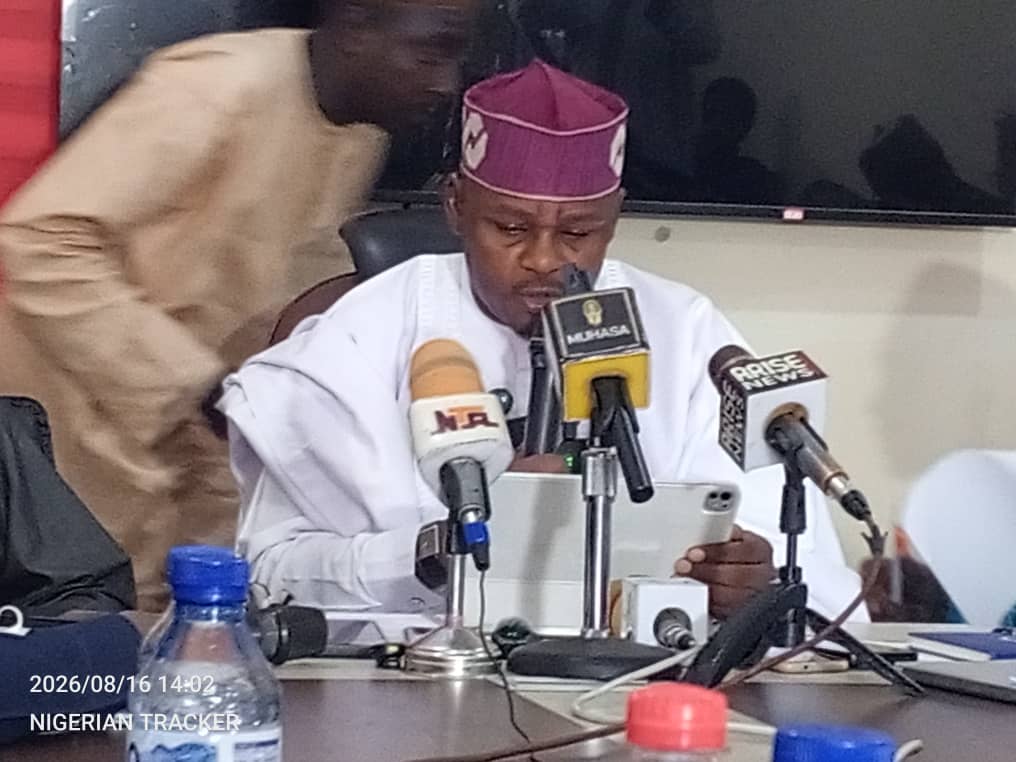
The Kano State Government says it has committed nearly ₦1 trillion to development projects across the state, with more than half of its 1,557 clearly classified projects already completed.
The figures were contained in an international press briefing, by Comrade Nura Maaji Sumaila, Commissioner for Public Procurement, Projects Monitoring and Evaluation. The briefing provided an update on project implementation, geographical distribution, procurement compliance and financial performance under the administration of Governor Abba Kabir Yusuf.
According to the ministry’s project database, the cumulative contract value stands at ₦996.29 billion, while ₦695.20 billion has received No Objection Certificate (NOC) approval and ₦444.75 billion represents payment certificates vetted by the ministry.
Of the 1,557 projects classified by the ministry, 867 projects, representing 55.68 per cent, have been completed. Another 654 projects, or 42 per cent, are ongoing, while 26 projects are at the award stage and 10 are planned and ready for award.
The ministry said some high-value projects are still awaiting the establishment of relevant due-process procedures. They include an approximately ₦113.19 billion mass-housing project at Dawakin Kudu and a ₦22 billion Rural Model City housing project covering the state’s 36 rural local government areas.
According to Maaji the geographical spread of the projects, stressing that government investment is not concentrated in Kano metropolis.
For its analysis, the ministry classified projects into single-LGA, cross-cutting and statewide/other interventions to avoid double-counting projects that serve several local government areas.
The eight metropolitan LGAs account for 598 projects valued at ₦299.36 billion, representing 30.01 per cent of the total contract value. The 36 rural LGAs account for 653 projects valued at ₦287.90 billion, or 28.90 per cent. Cross-cutting projects account for ₦159.50 billion, while statewide and other interventions represent ₦249.54 billion.
The government said the figures demonstrate substantial investment beyond the state capital, covering rural roads, healthcare facilities, schools, housing, feeder roads and other infrastructure.
According to the commissioner Cross-cutting projects account for approximately ₦159.50 billion, or 16.01 per cent of the cumulative contract value. The projects include solar-powered street lighting, wireless solar traffic lights, traffic-management systems, major road expansions, pedestrian bridges, metropolitan road corridors and inter-LGA roads and bridges.
Among the projects identified are the Dakata–Yadakunya Road, Airport Gate–Triumph–Murtala Muhammad corridor, Katsina Road expansion, Airport Junction–Ashton/Club Road corridor, Kura–Kubarachi–Madobi road and bridges, and the Janguza–Durum–Kabo–Karaye road.
The ministry said such projects should not be assessed solely according to the local government in which they are located because their benefits extend across administrative boundaries.
The briefing identified several high-value investments contributing significantly to the state’s overall project portfolio.
These include the approximately ₦113.19 billion mass-housing scheme at Rijiyar Gwangwan in Dawakin Kudu, the ₦24.77 billion Katsina Road expansion covering Fagge and Dala, and about ₦21.90 billion for the Modern Cities infrastructure programme across Dawakin Kudu, Dawakin Tofa and Kumbotso.
The ministry also identified approximately ₦27.74 billion for the Madobi–Yako–Kafin Maiyaki/Kiru Road intervention and about ₦22 billion for prototype mass-housing units under the Rural Model City Project covering all 36 rural LGAs.
Beyond project delivery, the ministry said its mandate includes ensuring that public procurement and implementation are subject to appropriate review, monitoring and financial controls.
The ₦996.294 billion cumulative contract sum represents 100 per cent of the portfolio. Of this amount, ₦695.196 billion, or 69.78 per cent, has received NOC approval, while ₦444.747 billion, equivalent to 44.64 per cent of the contract value, represents vetted payments. Vetted payments amount to approximately 63.97 per cent of the NOC-approved figure.
The ministry said the figures reflect the fact that the portfolio includes completed, ongoing, recently awarded and planned projects, making continued monitoring, certification, cash-flow planning and prioritisation necessary.
The government said it would continue monitoring ongoing projects, addressing implementation bottlenecks, strengthening certification processes and ensuring that public resources are deployed responsibly and with value for money.
It also reaffirmed commitments to transparency in procurement, monitoring projects from procurement through completion, linking payment certification to verified implementation, and providing objective information to citizens, development partners and the international community.
Nura Iro Maaji said the project portfolio demonstrates interventions across all 44 local government areas, covering urban and rural infrastructure, mass housing, roads, bridges, healthcare, education, climate-resilient infrastructure and traffic management.
News
Court Battles May Dismantle Opposition Ahead of 2027, Lawyer Warns

By Yusuf Danjuma Yunusa
An Awka-based legal practitioner, Chibunna Okoli-Akirika, has feared that the ongoing court battles and internal party squabbles may dismantle opposition political parties ahead of the upcoming General Elections.
He expressed his feeling in an interview with the News men in Owerri, describing recent judicial judgments as early warning signs of a looming wider political storm.
Okoli-Akirika, a former Anambra Commissioner for Lands and Secretary of the Labour Party, was reacting to Thursday’s court judgment that sacked the David Mark-led African Democratic Congress (ADC).
“The court judgment, though of first instance, has in the interim expectedly devastated ADC in structure and decimated it in spirit,” he said.
He said the court decision signalled looming political hurdles for the opposition parties ahead of the 2027 polls.Follow Politics
The lawyer advised that major political actors must not view the judicial outcome as an isolated ADC setback, but an urgent call to forge a broad opposition coalition.
He further warned against the fragmentation of the opposition political parties.
He highlighted previous disruptions targeting opposition interests in Delta, Akwa Ibom, and Sokoto States, alongside emerging controversies surrounding party registers in Kano and Kaduna.
Join Daily Nigerian WhatsApp Channel
“Furthermore, INEC’s public admission of the existence of officially invented ghost voters in the voters register is a pointer that all will be fair,” Okoli-Akirika said.
He argued that while key opposition figures face legal and administrative pressure, no platform remained completely immune from the political friction currently afflicting the ADC.Follow Politics
“Today, it is ADC, tomorrow it could be any other party or individual,” Okoli-Akirika said.
He said that sections 6 and 287 of the 1999 Constitution made court decisions binding, leaving affected parties with no choice but to comply, while appeals pend.
He urged frontline opposition leaders, who placed second, third, and fourth in the 2023 Presidential Election to “quickly fuse their structures into a single political bloc.
“What is stopping the fusion of the then second runner-up with the then third and fourth runners-up?” he asked.
Okoli-Akirika urged opposition leaders to put national interest above personal political ambitions to guarantee Nigerians a viable democratic choice during the 2027 polls. Nigeria travel guide
News
Nigeria’s GDP Growth, Drop in Inflation Not Translating into Poverty Reduction – BUK Deputy VC
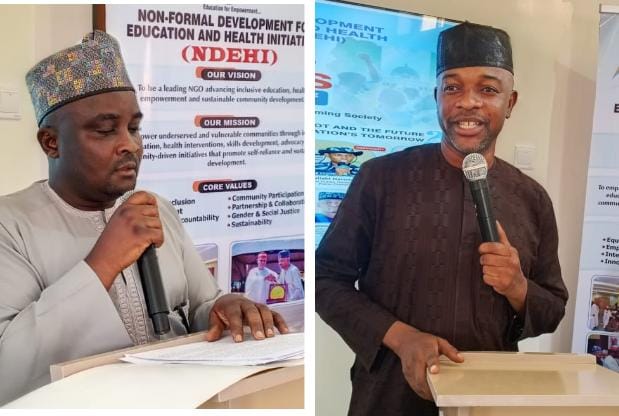
The Deputy Vice-Chancellor (Academics) of Bayero University Kano (BUK), Professor Ahmad Muhammad Tsauni, has said that Nigeria’s recent economic growth and decline in inflation have yet to translate into a meaningful reduction in poverty among citizens.
Professor Tsauni, an economist, made this observation during a gathering organised by the Non-Formal Development for Education and Health Initiative, with the theme, “Nigeria at a Crossroad: Who Is to Fix It?”
He said that although Nigeria had recorded some level of growth in its Gross Domestic Product (GDP) and improvements in certain economic indicators, the development had not significantly improved the living conditions of ordinary Nigerians.
According to him, the country continues to grapple with complex economic and social challenges that require collective efforts and practical solutions to overcome.
“We want to show that Nigeria is a country that, in spite of its challenges, has complex problems that will not really allow it to address them easily. Recently, we have been experiencing some level of growth in GDP, but those indices are not translating into a reduction in poverty, and so we are at a crossroads,” he said.
The BUK Deputy Vice-Chancellor explained that addressing the country’s challenges required more than government interventions, stressing that every Nigerian had a responsibility to contribute to rebuilding the country.
He maintained that the responsibility of finding solutions to Nigeria’s problems should not be left to individuals, political leaders or organisations alone, but should involve citizens from all sectors of society.
Professor Tsauni also called on the government to formulate and implement pragmatic policies capable of addressing the country’s challenges, while emphasising the importance of building public trust.
He, however, identified negative societal attitudes and a lack of commitment to national development as some of the major obstacles preventing Nigeria from achieving the desired results from its policies.
According to him, Nigeria has developed several sound policies over the years, but poor attitudes and the failure of citizens to demonstrate the necessary commitment have continued to undermine their implementation.
“We have beautiful policies in Nigeria, but they cannot work because of our attitude. We should not apportion blame to anybody because we created the problem together, so everybody should contribute,” he said.
The university don urged Nigerians across different professions and institutions to examine their conduct and take responsibility for improving the country.
He specifically noted that classroom teachers, judges, public servants and other professionals must reflect on their individual responsibilities, adding that positive changes in societal attitudes were essential to national development.
Professor Tsauni further stressed that Nigeria’s current situation required collective reflection and a change in citizens’ approach to public responsibilities rather than continuous blame-shifting.
Earlier, the Technical Lead of the Non-Formal Development for Education and Health Initiative, Dr Auwal Halilu, called on Nigerians to demonstrate patriotism and contribute towards revitalising the country.
Dr Halilu said Nigeria was facing numerous challenges as the country approached the 2027 general elections, stressing the need for citizens to reflect on how to secure the country’s future through responsible participation in the electoral process.
He urged Nigerians to embrace positive values, transparency and accountability, noting that national development could only be achieved when citizens and leaders demonstrated genuine commitment to the country’s progress.
“We should take into consideration that we are going to revitalise this country. Every Nigerian should be patriotic. There are a lot of challenges in Nigeria as we approach the 2027 elections. How can we help to get the best in Nigeria? We should change our values for good and be transparent,” he said.
Dr Halilu also challenged Nigerians to consider how they could support leaders in addressing the country’s challenges, rather than leaving the responsibility of national development entirely to those in government.
He emphasised that rebuilding Nigeria required a collective commitment to good values, transparency and patriotism, particularly as the country prepares for another general election in 2027.
The gathering provided an opportunity for discussions on Nigeria’s economic and social challenges, the responsibilities of citizens and the need for collective action towards national development.
News
Dala Chairman Marks Two Years In Office With Prayers For Peace,Leaders
By Abdu Saidu
The Chairman of Dala Local Government Area of Kano State, Hon. Suraj Ibrahim Imam, has marked his second anniversary in office with a special prayer session for peace, stability and good governance in Dala, Kano State and Nigeria at large.
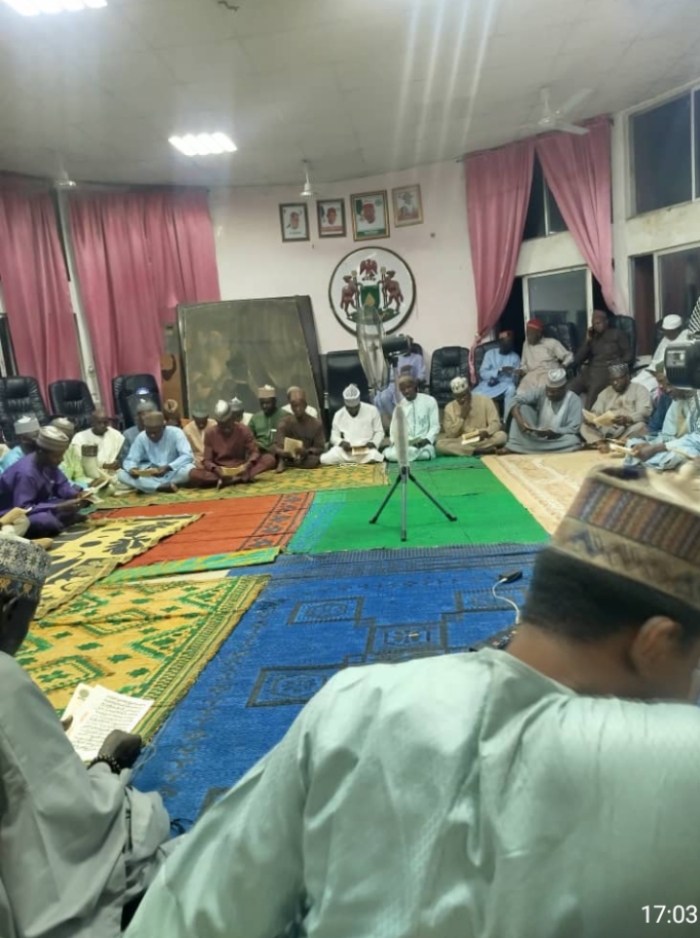
The prayer session, held on Saturday at the local government secretariat, featured the recitation of the Holy Qur’an by about 60 Islamic scholars and Qur’anic memorizers drawn from different parts of the council area.
The participants offered prayers for divine guidance, wisdom and success for Governor Abba Kabir Yusuf, President Bola Ahmed Tinubu, members of the National Assembly and the Kano State House of Assembly, as well as other political leaders.
Speaking at the event, Imam said the prayer session was organised to express gratitude to Almighty Allah for the opportunity to serve the people of Dala for two years and to seek His continued guidance and blessings for the council, the state and the country.
He added that the gathering was also an opportunity to pray for the success of Governor Yusuf and other political leaders in their future political engagements.
On his administration’s performance, the chairman disclosed that several development projects had been executed across the 12 wards of Dala Local Government Area within the past two years, with the support and approval of Governor Yusuf.
He commended the governor for his development initiatives across the state’s 44 local government areas, particularly in healthcare, education, security, road construction, potable water supply, agriculture and employment generation.
According to Imam, the interventions have contributed to improving the living conditions of residents and strengthening development at the grassroots.
He expressed confidence in the governor’s leadership and called on residents and political stakeholders to support his re-election in 2027. He also expressed support for President Tinubu and other APC candidates ahead of the next general elections.
The event was attended by Alhaji Bashir Ibrahim Al-Mustapha, OON, councillors, Islamic scholars, Qur’anic memorizers, political advisers, the local government secretary and other stakeholders from across Dala Local Government Area.

Court Battles May Dismantle Opposition Ahead of 2027, Lawyer Warns

Begging in Northern Nigeria: What Future Are We Preparing for Our Society?

Nigeria’s GDP Growth, Drop in Inflation Not Translating into Poverty Reduction – BUK Deputy VC

Dala Chairman Marks Two Years In Office With Prayers For Peace,Leaders

NNPC Confirms Gas Supply & Network Availability

Kano Monitors ₦48.9bn Projects Across Six LGAs

Open The Social Sciences “A Tribute to a Heterodox Scholar: Mallam Ibrahim Muazzam

Senate Passes Barau’s Bill to Provide Legal Framework for Yusuf Maitama Sule Federal University of Education, Kano

Gov. Yusuf Appoints Inuwa Waya Director of International Corporations Engagement

APC Presidential Campaign Council: Nigerians Devoid Of Party Affiliations Endorses Tinubu’s 2nd Term-Kwankwaso
Court Battles May Dismantle Opposition Ahead of 2027, Lawyer Warns
Begging in Northern Nigeria: What Future Are We Preparing for Our Society?
Nigeria’s GDP Growth, Drop in Inflation Not Translating into Poverty Reduction – BUK Deputy VC
Dala Chairman Marks Two Years In Office With Prayers For Peace,Leaders
NNPC Confirms Gas Supply & Network Availability
Kano Monitors ₦48.9bn Projects Across Six LGAs
Open The Social Sciences “A Tribute to a Heterodox Scholar: Mallam Ibrahim Muazzam
Senate Passes Barau’s Bill to Provide Legal Framework for Yusuf Maitama Sule Federal University of Education, Kano
Gov. Yusuf Appoints Inuwa Waya Director of International Corporations Engagement
APC Presidential Campaign Council: Nigerians Devoid Of Party Affiliations Endorses Tinubu’s 2nd Term-Kwankwaso
-

 Opinion5 years ago
On The Kano Flyovers And Public Perception
-

 Features5 years ago
How I Became A Multimillionaire In Nigeria – Hadiza Gabon
-

 Opinion6 years ago
Kano As future Headquarters Of Poverty In Nigeria
-
 History6 years ago
Sheikh Adam Abdullahi Al-Ilory (1917-1992):Nigeria’s Islamic Scholar Who Wrote Over 100 Books And Journals
-
 Opinion5 years ago
My First Encounter with Nasiru Gawuna, the Humble Deputy Governor
-
 History5 years ago
The History Of Borno State Governor Professor Babagana Umara Zulum
-
 History6 years ago
The Origin Of “Mammy Market” In Army Barracks (Mammy Ochefu)
-
 News5 years ago
Federal University Of Technology Babura To Commence Academic Activities September