
News
World Bank Rewards Nigerian States with $27m for Reforms
By Yusuf Danjuma Yunusa
The World Bank has marked five states to receive a combined $15 million in performance-based incentives under the World Bank-supported HOPE Governance Programme after emerging as the best-performing states in the implementation of key education and healthcare reforms.
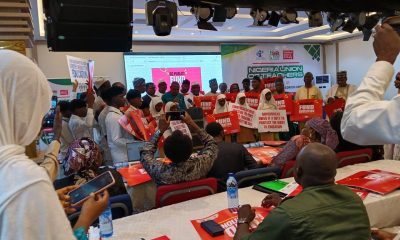
The National Coordinator of the HOPE Governance Programme, Assad Hassan, disclosed this on Tuesday in Abuja during a retreat for commissioners, permanent secretaries and directors of budget and planning from the 36 states and the Federal Capital Territory.
This was contained in a statement issued on Tuesday by the Communications Officer of the HOPE Governance Programme, Joe Mutah.
The programme, domiciled in the Federal Ministry of Budget and Economic Planning, approved a total of $27 million in incentives for states that successfully achieved the Year Zero Disbursement-Linked Results under the programme.
The incentives are based on the findings and recommendations of the Interim Independent Verification Agent, which assessed states’ performance in meeting the programme’s Disbursement-Linked Indicators.
The statement read, “The World Bank-supported HOPE Governance Programme, domiciled in the Federal Ministry of Budget and Economic Planning, is set to disburse $27 million as performance-based incentives to states that successfully achieved the Year Zero Disbursement-Linked Results.”
A breakdown of the incentives showed that Bayelsa, Borno, Kano, Kebbi and Yobe states emerged as the biggest beneficiaries.
The five states will receive $1.5 million each for meeting the requirements under Disbursement-Linked Result (DLR) 2.1, which focuses on the adoption of comprehensive guidelines for the preparation and submission of consolidated work plans for state basic education budgets.
The same five states also qualified for another $1.5 million each under Disbursement-Linked Result (DLR) 2.2, which measures the adoption of comprehensive guidelines for the preparation and submission of consolidated work plans for state primary healthcare budgets.
Together, the five states are expected to receive $15 million from the two indicators alone.
Under Disbursement-Linked Result (DLR) 2.3, which centres on the adoption of harmonised budget guidelines and a chart of accounts by local governments, Adamawa, Bayelsa, Borno, Delta, Gombe, Kano, Plateau, Taraba and Yobe states qualified for incentives of $500,000 each.
Similarly, under Disbursement-Linked Result (DLR) 4.1, which focuses on the publication of the 2025 Citizens Budget for basic education and primary healthcare by February 28, 2025, 15 states qualified for incentives.
The states are Abia, Bayelsa, Borno, Edo, Ekiti, Enugu, Imo, Jigawa, Kano, Kebbi, Kogi, Nasarawa, Ondo, Plateau and Yobe.
Each of the states will receive $500,000.
Explaining the basis for the disbursement, Hassan said only states that met the stipulated conditions within the specified timelines qualified for the incentives.
The statement noted: “The incentives are based on the findings and recommendations of the Interim Independent Verification Agent, which carried out a rigorous assessment of states’ performances against the Year Zero Disbursement-Linked Indicators.
“For DLR 2.1 and DLR 2.2, Bayelsa, Borno, Kano, Kebbi and Yobe states met all the requirements and are therefore eligible to receive $1.5 million each for both indicators.
“For DLR 2.3, nine states successfully adopted harmonised budget guidelines and a chart of accounts for local governments and will receive $500,000 each.
“Also, under DLR 4.1, 15 states met the conditions relating to the publication of the Financial Year 2025 Citizens Budget for basic education and primary healthcare and will equally receive $500,000 each.”
He added that many participating states failed to qualify for the incentives because they either missed the stipulated deadlines or failed to meet the programme’s requirements.
“Other participating states were not eligible for the incentives because they either published the required guidelines after the March 31, 2025 deadline, failed to meet most of the stipulated criteria, or did not publish the required results on their official state websites,” he said.
The coordinator identified weak institutional coordination as one of the major factors responsible for the poor performance recorded by some states.









News
Uber Shutdowns Operations in Nigeria

By Yusuf Danjuma Yunusa
Ride-hailing company, Uber, has shut down its operations in Nigeria.
In a statement, the company, which came into Nigeria in 2014, said its exit is effective from September 2, 2026.
“We are writing to share some difficult news. After a thorough review of our business, we have made the tough decision to wind down our operations in Nigeria, effective 2 September 2026.
“Since we first launched in Lagos in 2014, it has been an absolute privilege to be a part of your daily life connecting you with independent transportation providers.
“Whether it was a morning commute, a ride to see loved ones, or exploring the city, thank you for trusting the platform to connect you to a driver to get you there safely. We know this may cause disruption to your routine, and we sincerely apologize for the inconvenience.”
In a memo on Wednesday, the ride-hailing company also announced elimination of roughly 3,300 positions.
The job cuts focused on management and coordination roles, according to its CEO, Dara Khosrowshahi.
“Today, we’re making a number of significant organizational changes across Uber. We are removing layers, simplifying team structures, refining our global location strategy, and focusing our people and investments against the biggest opportunities ahead of us.”
“As a result, we will be reducing the size of our team by about 10%. Everyone whose role has been affected has already been notified, except in countries where we will follow the required local process.
“This wasn’t a decision we made lightly, because it will have a real impact on our teammates and friends who have worked hard for Uber. It’s important to say that these changes are about how we’re organized and what we’re prioritizing, not about anyone’s contributions to Uber, which we will always value.
“I’m sure you’re asking, ‘Why, and why now?’ particularly since our business is performing so well. Over the last 5+ years, Uber has grown by orders of magnitude, with our top line nearly tripling. We’ve built new products, expanded into new businesses, reached more consumers and supported more earners, and become a much larger and stronger company. But that growth has also brought complexity: more layers, more coordination, more fragmented ownership, and in some cases structures that made sense when businesses were smaller but no longer serve us well at our current scale.
“Our opportunity from here is enormous: we have the chance to bring Uber to hundreds of millions more people; to invest even more in drivers, couriers and merchants; and to innovate across our core businesses and build the autonomous future.
“The changes we’re making today are designed to do two things: make Uber simpler and faster, and create more capacity to invest in our future. A leaner organization will mean clearer ownership, faster decisions, and more time spent building rather than coordinating. It will also generate savings that we intend to reinvest in growth, innovation, and the capabilities that will matter most over the coming years.
“It’s our job as leaders to make these difficult calls, and to give you transparency into our thinking and our decision-making process.”
The layoffs are the latest round of job cuts for Uber, which eliminated roles in customer service and HR earlier this year.
News
Author of ‘Rich Dad Poor Dad’ Languishes in Billion Dollar Debt
By Yusuf Danjuma Yunusa
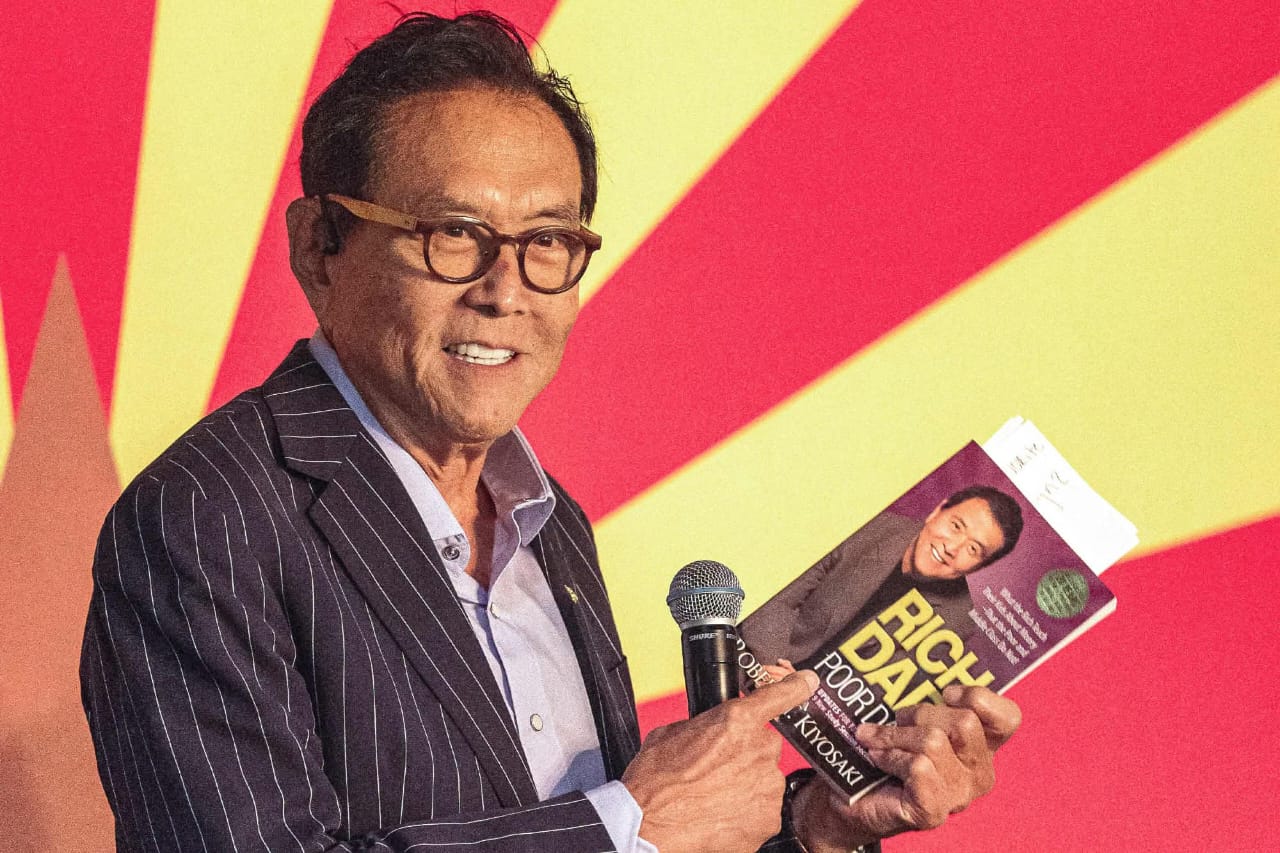
Robert Kiyosaki, the author of the bestselling ’Rich Dad Poor Dad’ book, has accumulated an estimated $1.2 billion debt connected to his aggressive real estate investment.
According to reports, the debt is the estimated amount the 79-year-old author and his business partners borrowed to acquire approximately 1,500 property units as Mr Kiyosaki continues to expand his real estate holdings.
Despite the significant debt, Mr Kiyosaki does not appear apprehensive about the liabilities, maintaining that borrowing money to acquire income-generating assets is a strategy commonly used by wealthy individuals.
“So, I’m a billion two in debt,” the author said on the ‘Get Rich Education’ podcast recently, adding that people “should not do what I do, right? But I studied it since 1974… If you’re going to learn to use debt, you’d better take some education.”
In a recent interview with Vanity Fair, Mr Kiyosaki’s ex-wife and business partner, Kim Kiyosaki, revealed that the debt did not reflect the amount her ex-husband personally owes.
She stressed that it is connected to the real estate properties owned by them and their business partners, adding that Mr Kiyosaki’s personal share of the liabilities is small.
Vanity Fair estimated Mr Kiyosaki’s share of the debt at around $30 million to $60 million.
“We have a lot of apartment houses with our partners. So technically, yes, we have all this debt,” the ex-wife told Vanity Fair.
Speaking to the magazine, Mr Kiyosaki stated, “If it all comes to hell, you can talk to my attorney. Firewalls—that’s the way the rich play the game.”
News
Maulud: Best Choice Specialist Hospital Congratulates Kano Governor, Muslims Globally
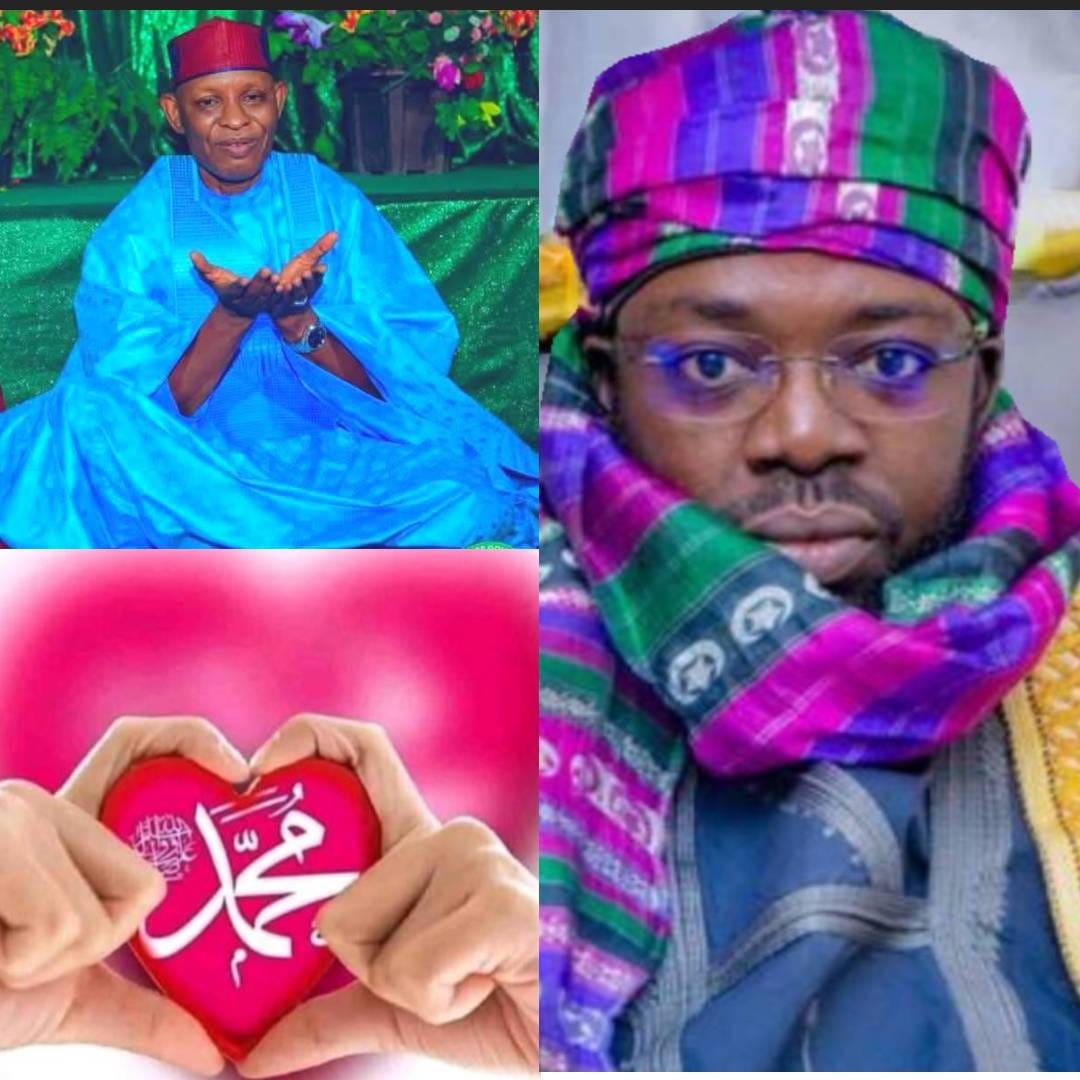
The Chairman of Best Choice Specialist Hospital, Kano, Auwal Lawal Muhammad (Dan Malikin Garo), has congratulated the executive governor of Kano State Alhaji Abba Kabir Yusuf, the good people of Kano State and Muslims across the world on the occasion of the Maulud celebration commemorating the birth of Prophet Muhammad (SAW).
In a statement he personally signed, Lawal commended Governor Abba Kabir Yusuf for his efforts towards fostering unity among the people of Kano State.
According to the statement, the chairman was amazed on how governor Yusuf placing emphasis on the development to the state particularly in matters concerning religion, saying such initiatives would help reduce divisions, promote mutual understanding and strengthen peaceful coexistence across the state.
He urged Muslims to use the occasion of Maulud to strengthen their relationship with Allah through increased devotion and prayers for peace, stability and prosperity in Nigeria and Kano State.
The Chairman of Best Choice also praised the Governor for his efforts to improve the healthcare sector in the state.
He cited the renovation and upgrading of healthcare facilities, provision of modern medical equipment, as well as the training and development of healthcare workers as some of the administration’s efforts towards improving healthcare delivery in Kano.
Auwal Lawal further commended Governor Yusuf for his dedication, compassion and commitment to the wellbeing of the people, noting that his efforts continue to have a positive impact on the lives of residents across the state.
He prayed for continued peace, unity and prosperity in Kano State and Nigeria, while wishing the Governor and the people of Kano a blessed Maulud celebration now and beyond.

Uber Shutdowns Operations in Nigeria

Author of ‘Rich Dad Poor Dad’ Languishes in Billion Dollar Debt

Maulud: Best Choice Specialist Hospital Congratulates Kano Governor, Muslims Globally

Kenyan Newspaper Links Editor’s Abduction to President Ruto

UN Assembly: Nigeria Affirms Nuclear-Free Status, Seeks Overhaul of UN Domestic Jurisdiction Rule

From World’s 9th Most Populous City to Perfect: As Gov Yusuf Revisits Kano Master Plan

95% of Governor Abba Kabir Yusuf’s Promises Have Been Fulfilled — CPS Interview By Musa Diso, In Kano

Kano Islamic Scholar Declares Kano Widow Marriage Programme ‘Haram’, Urges Government to Stop It

We’re aware of your clandestine meetings with Lulu-Briggs, 𝐏𝐢𝐝𝐨𝐦𝐬𝐨𝐧, CRP uncovers ex-MD of NDDC, Nunieh

Review of Police Officers’ Salaries Underway–FG
Uber Shutdowns Operations in Nigeria
Author of ‘Rich Dad Poor Dad’ Languishes in Billion Dollar Debt
Maulud: Best Choice Specialist Hospital Congratulates Kano Governor, Muslims Globally
Kenyan Newspaper Links Editor’s Abduction to President Ruto
UN Assembly: Nigeria Affirms Nuclear-Free Status, Seeks Overhaul of UN Domestic Jurisdiction Rule
From World’s 9th Most Populous City to Perfect: As Gov Yusuf Revisits Kano Master Plan
95% of Governor Abba Kabir Yusuf’s Promises Have Been Fulfilled — CPS Interview By Musa Diso, In Kano
Kano Islamic Scholar Declares Kano Widow Marriage Programme ‘Haram’, Urges Government to Stop It
We’re aware of your clandestine meetings with Lulu-Briggs, 𝐏𝐢𝐝𝐨𝐦𝐬𝐨𝐧, CRP uncovers ex-MD of NDDC, Nunieh
Review of Police Officers’ Salaries Underway–FG
-

 Opinion5 years ago
On The Kano Flyovers And Public Perception
-

 Features5 years ago
How I Became A Multimillionaire In Nigeria – Hadiza Gabon
-

 Opinion6 years ago
Kano As future Headquarters Of Poverty In Nigeria
-

 History5 years ago
Sheikh Adam Abdullahi Al-Ilory (1917-1992):Nigeria’s Islamic Scholar Who Wrote Over 100 Books And Journals
-

 Opinion5 years ago
My First Encounter with Nasiru Gawuna, the Humble Deputy Governor
-

 History5 years ago
The History Of Borno State Governor Professor Babagana Umara Zulum
-

 History5 years ago
The Origin Of “Mammy Market” In Army Barracks (Mammy Ochefu)
-

 News4 years ago
Federal University Of Technology Babura To Commence Academic Activities September