
News
Army Approves Strategic Redeployment, Names New GOCs for 3 and 6 Divisions
By Yusuf Danjuma Yunusa
The Nigerian Army has announced a major reshuffle of its senior officers, with changes affecting key operational, command, training and staff appointments.
According to a statement issued on Saturday by the Acting Director of Army Public Relations, Colonel Appolonia Anele, the reshuffle is part of efforts to strengthen national security and improve operational effectiveness across the country.
The statement added that the postings affected field commanders, school commandants and principal staff officers at the Army Headquarters.
It noted that the Chief of Army Staff, Lieutenant General Waidi Shaibu, approved the strategic redeployment of senior officers, saying the move was aimed at enhancing the Army’s capacity to address emerging security challenges.
Under the new appointments, Major General WM Dangana has been named the General Officer Commanding (GOC) 3 Division Nigerian Army and Commander of Joint Task Force Operation ENDURING PEACE, replacing Major General EF Oyinlola.
Similarly, Major General EI Okoro has been appointed GOC 6 Division Nigerian Army and Land Component Commander of Joint Task Force South-South Operation DELTA SAFE, succeeding Major General EE Emeka.
The statement also announced the appointment of Major General JR Lar as Commander, Army Headquarters Garrison, while Brigadier General OM Oyekola will serve as Acting Military Secretary (Army). Brigadier General I Waziri retains his position as Chief of Staff in the Office of the Chief of Army Staff.
As part of efforts to strengthen operational leadership and combat readiness, Brigadier General IB Buhari was appointed Commander of Headquarters 63 Brigade, while Brigadier General K Rabiu was named Commander of Headquarters 31 Artillery Brigade.
In a move reflecting the Army’s growing emphasis on technology and emerging security threats, Major General SA Emmanuel was appointed Commander of the Nigerian Army Space Command.
The statement noted that the appointment “reinforces the Army’s growing focus on emerging domains of warfare and technology-driven security operations.”
Major General O Adegbe was also appointed Director of Intelligence and Security at Defence Headquarters.
In the area of military education and institutional development, Major General KE Chigbu was appointed Deputy Commandant of the National Defence College, while Major General SD Makolo became Commandant of the Nigerian Army Armour School.
Other appointments include Major General SO Adejimi as Commandant of the Nigerian Army School of Supply and Transport and Major General FS Etim as Chief of Training at the Headquarters Training and Doctrine Command, Nigerian Army (TRADOC).
Brigadier General U Ahmad has also been appointed Commandant of Depot Nigerian Army, Zaria.
The reshuffle further saw Major General KO Ukandu appointed Managing Director and Chief Executive Officer of Post Housing Development Limited, while Major General AI Allison was named Managing Director of Defence Properties Limited.
The statement added, “The COAS charged the newly appointed senior officers to justify the confidence reposed in them by demonstrating exemplary leadership, professionalism, innovation and unwavering commitment to the Nigerian Army’s constitutional mandate of defending Nigeria’s sovereignty, protecting its territorial integrity and supporting civil authority in maintaining peace and security across the nation.
“The Nigerian Army remains resolute in its transformation drive and commitment to building a highly professional, combat-ready and people-oriented force capable of effectively addressing contemporary and future security challenges in pursuit of Nigeria’s national security objectives.”









News
You’re a Hypocrite!” – Bashir el-Rufai Goes Nuclear on Brother Bello Over Uba Sani Loyalty
”
By Yusuf Danjuma Yunusa
Bashir el-Rufai, son of former Kaduna governor Nasir el-Rufai, unleashed a barrage of slurs at his brother, Bello, on Saturday morning.
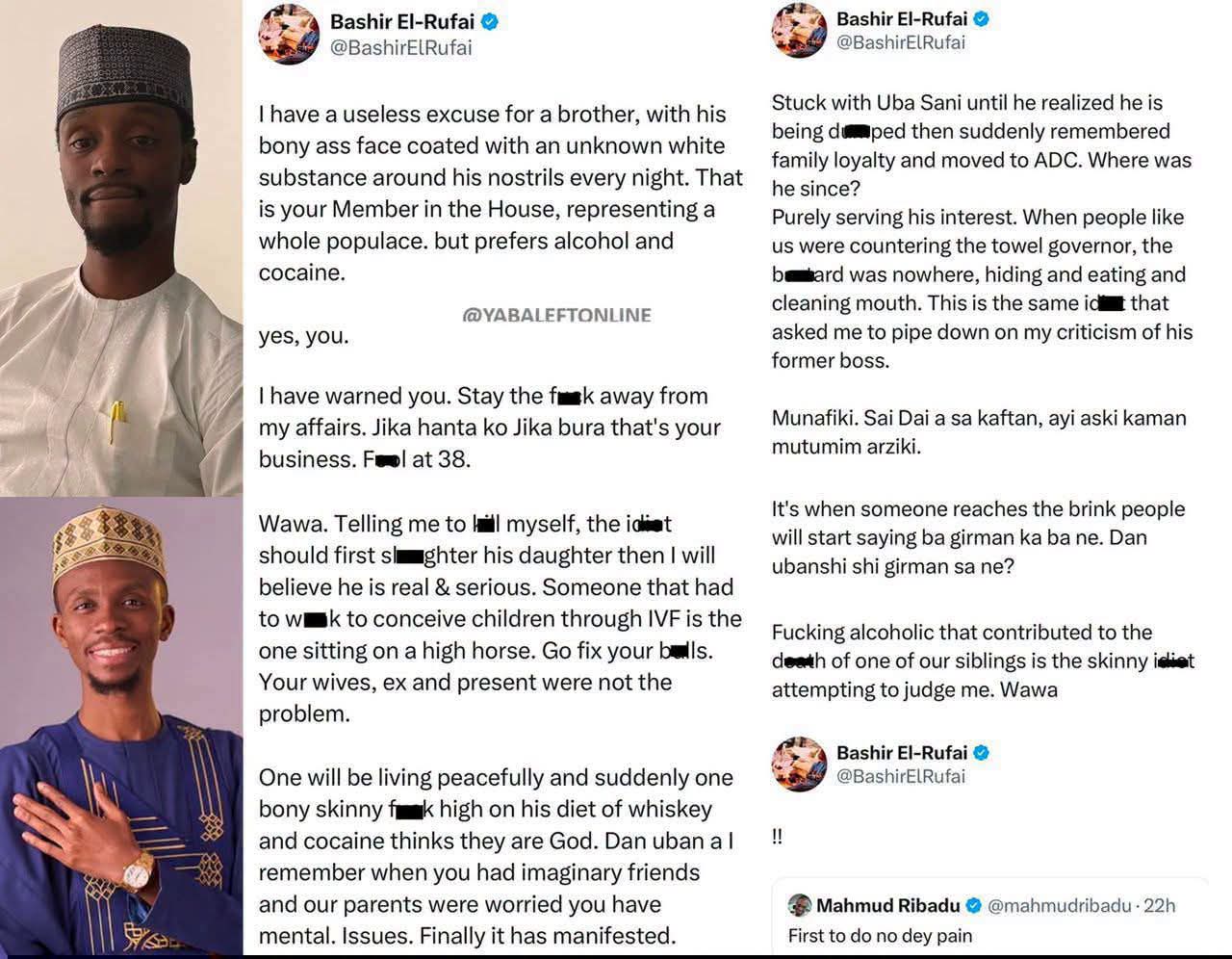
Bashir, in a series of expletive-laden posts on X, attacked Bello over his recent political moves, accusing him of abandoning the family while he was aligned with Uba Sani, his father’s successor.
Sani, the incumbent governor of Kaduna, was a former ally of el-Rufai, but both men fell out after the former won the 2023 governorship election.
Following el-Rufai’s resignation from the All Progressives Congress (APC) in March 2025, Bello, who represents Kaduna north federal constituency, remained in the ruling party.
However, on May 7, 2026, Bello eventually defected from the APC to join his father in the African Democratic Congress (ADC).
Commenting on Saturday, Bashir alleged that his brother remained loyal to Sani until he realised he was being “dumped”, after which he began talking about family loyalty.
“Stuck with Uba Sani until he realized he is being dumped then suddenly remembered family loyalty and moved to ADC. Where was he since? Purely serving his interest,” Bashir wrote.
He accused his brother of being neutral while others criticised the Kaduna state governor.
Bashir also alleged that Bello asked him to “pipe down my criticism of his former boss,” presumably Sani.
One of Bashir’s tweets. The expletives have been redacted.
“At this stage in my life, I hate nonsense,” he added, while calling his brother a hypocrite.
Bashir also made several other allegations against his brother in the X posts, some of which were later deleted.
The allegations bordered on fertility status and unsubstantiated drug use.
Their father, el-Rufai, has been in custody since February 2026 over alleged financial impropriety during his tenure as governor of Kaduna between 2015 and 2023.
On April 13, the Independent Corrupt Practices and Other Related Offences Commission (ICPC) arraigned him at the Kaduna high court on an amended nine-count charge bordering on alleged fraud and abuse of office.
The Department of State Services (DSS) is also prosecuting el-Rufai before the federal high court in Abuja over allegations of wiretapping.
News
Court Ultimatum Forces FBI to Hand Over Tinubu’s Fraud Records to Judge—But Keeps Them Hidden from Public
By Yusuf Danjuma Yunusa
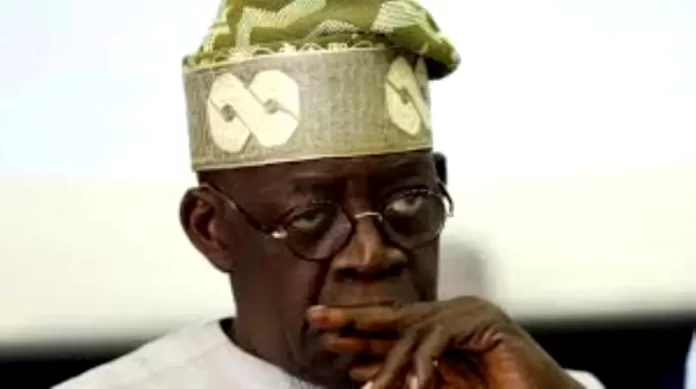
The Federal Bureau of Investigation has hand delivered records of President Bola Tinubu’s 1993 drug-trafficking and money-laundering case to Judge Howell Beryl of the U.S. District Court for the District of Columbia, saying they are for her eyes only, court filings seen by Peoples Gazette indicated.
The FBI secretly submitted the records on Friday to avoid disobeying a court order while sidelining transparency campaigner, Aaron Greenspan, who petitioned the Bureau for the Nigerian leader’s records in a Freedom of Information Act lawsuit.
Following years of foot-dragging on a FOI petition filed by Mr Greenspan in 2023, the FBI on Friday complied with a court order directing it to release Mr Tinubu’s records. Mr Greenspan worked with Nigerian journalist, David Hundeyin, to file the petition in 2023.
The records submitted as “under seal, ex parte, in camera declarations were hand delivered to the Court on August 28, 2026 in compliance with this Court’s Minute Order dated August 20, 2026,” filings showed.
Mrs Beryl lost her patience with the FBI after the bureau missed several deadlines , giving excuses on why it could not immediately provide the records.
She issued August 28 as the final ultimatum to the FBI, which prompted the FBI’s decision to comply, showing it “in camera” to the judge alone, without carrying along the petitioner.
Earlier this week , FBI claimed that submitting the records would violate Mr Tinubu’s privacy and argued that FOI was established to screen the operations and records of government institutions, not necessarily private individuals.
For decades, Mr Tinubu has avoided speaking on the drug affair, refusing to clarify controversies surrounding his involvement in a case that saw him forfeit hundreds of thousands of dollars to the U.S. government.
Mr Tinubu also sought to block the release of his records, asserting his rivals only sought to use them to discredit him in a Nigerian presidential election. He begged the court to protect his privacy rights.
The United States District Court for the Northern District of Illinois in 2023 released documents holding Mr Tinubu’s encounter with American authorities over allegations of narcotics trafficking and money laundering.
News
NFF President Gusau Resigns
By Yusuf Danjuma Yunusa
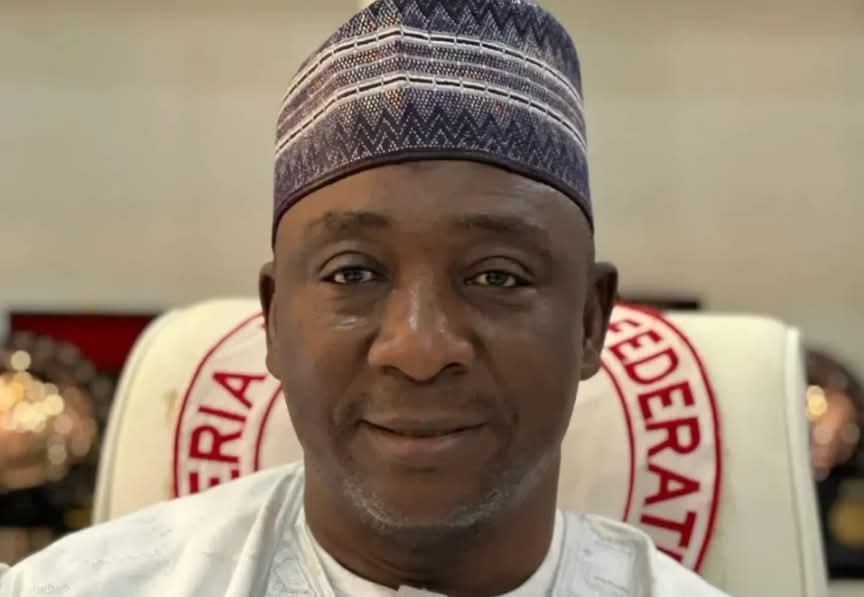
Nigeria Football Federation President, Ibrahim Gusau, has resigned from office, announcing his decision during a press conference in Abuja on Thursday.
According to the Super Eagles news account on X (@SSE_NGA), Gusau was joined by board members of the Executive Committee in resignation.
The crisis follows the Super Falcons’ failure to qualify for the 2027 FIFA Women’s World Cup, a first in Nigeria’s history, after a 2-1 defeat to South Africa in the play-off.
The Falcons had earlier been knocked out of the Women’s Africa Cup of Nations at the quarter-final stage by Cameroon. The Super Eagles also failed to qualify for the 2026 World Cup.
The NFF has separately faced scrutiny over its handling of a ₦17bn Federal Government intervention fund released in 2024, as well as a fact-finding committee report alleging that board members and officials influenced national team invitations for financial gain.
Gusau’s exit comes ahead of the NFF’s elective congress, scheduled for September 27 in Lafia, Nasarawa State.

You’re a Hypocrite!” – Bashir el-Rufai Goes Nuclear on Brother Bello Over Uba Sani Loyalty

Court Ultimatum Forces FBI to Hand Over Tinubu’s Fraud Records to Judge—But Keeps Them Hidden from Public

Ratko Mladić: The Butcher of Bosnia and the Shadow He Leaves Behind

NFF President Gusau Resigns

NUT Launches ‘Go Public’ Campaign to Promote Public Education in Nigeria

How Kano Digitized Land Turns N50m to N750m Monthly

Borders, Visas and the Beautiful Game: How U.S. Immigration Policies Shaped Global Perceptions During the 2026 FIFA World Cup

I Gave Tijjani Gandu N10 Million to Support Musicians, Media but Funds Were Allegedly Not Distributed – Governor Yusuf’s Spokesperson

Atiku Replies Obasanjo, Says He Has No Regret Thwarting the Third Term Agenda

From World’s 9th Most Populous City to Perfect: As Gov Yusuf Revisits Kano Master Plan
You’re a Hypocrite!” – Bashir el-Rufai Goes Nuclear on Brother Bello Over Uba Sani Loyalty
Court Ultimatum Forces FBI to Hand Over Tinubu’s Fraud Records to Judge—But Keeps Them Hidden from Public
Ratko Mladić: The Butcher of Bosnia and the Shadow He Leaves Behind
NFF President Gusau Resigns
NUT Launches ‘Go Public’ Campaign to Promote Public Education in Nigeria
How Kano Digitized Land Turns N50m to N750m Monthly
Borders, Visas and the Beautiful Game: How U.S. Immigration Policies Shaped Global Perceptions During the 2026 FIFA World Cup
I Gave Tijjani Gandu N10 Million to Support Musicians, Media but Funds Were Allegedly Not Distributed – Governor Yusuf’s Spokesperson
Atiku Replies Obasanjo, Says He Has No Regret Thwarting the Third Term Agenda
From World’s 9th Most Populous City to Perfect: As Gov Yusuf Revisits Kano Master Plan
-

 Opinion5 years ago
On The Kano Flyovers And Public Perception
-

 Features5 years ago
How I Became A Multimillionaire In Nigeria – Hadiza Gabon
-

 Opinion6 years ago
Kano As future Headquarters Of Poverty In Nigeria
-

 History5 years ago
Sheikh Adam Abdullahi Al-Ilory (1917-1992):Nigeria’s Islamic Scholar Who Wrote Over 100 Books And Journals
-

 Opinion5 years ago
My First Encounter with Nasiru Gawuna, the Humble Deputy Governor
-

 History5 years ago
The History Of Borno State Governor Professor Babagana Umara Zulum
-

 History5 years ago
The Origin Of “Mammy Market” In Army Barracks (Mammy Ochefu)
-

 News4 years ago
Federal University Of Technology Babura To Commence Academic Activities September