
News
ADC crisis rooted in legal process, not external influence — lawyers explain
Two Nigerian lawyers, Inibehe Effiong and Bodunde Opeyemi, have offered detailed legal explanations of the ongoing leadership crisis within the African Democratic Congress (ADC), pointing to procedural decisions and binding court rulings as the root of the dispute.
Their interventions come amid growing public debate over the role of the electoral commission and speculation about possible political interference.
Mr Effiong, a public interest and human rights lawyer, criticised the legal approach taken by the faction led by former Senate President David Mark, describing it as procedurally questionable.
He said the Federal High Court did not issue any restraining order against the leadership, but instead directed that all parties be put on notice — a standard legal step requiring both sides to present their arguments.
According to him, the appropriate response would have been to contest the case at the trial court rather than file an interlocutory appeal.
“It became a motion on notice. They should have filed processes in opposition,” he said, adding that the decision to appeal at that stage was “unusual” and “untidy”.
He warned that pursuing further appeals could complicate the matter further instead of resolving it.
*Court ruling shapes situation*
Legal practitioner Mr Opeyemi traced the dispute to a leadership contest that followed a party meeting in July 2025, which produced a new executive.
The situation escalated when a party official challenged the process in court, asking the Federal High Court to stop both the new leadership and the electoral body from recognising the outcome.
While the court declined to grant an interim order, the case later reached the Court of Appeal.
In March 2026, the appellate court directed all parties to maintain the status quo ante bellum — meaning the situation must remain as it was before the case was filed.
Mr Opeyemi said this order is clear and binding.
“It requires a strict preservation of the state of affairs before the dispute,” he explained, adding that no party is allowed to take actions that could influence the outcome of the case.
Why the electoral body acted
The lawyers say this court order explains the position taken by the electoral commission, which has declined to recognise any faction of the party.
According to Mr Opeyemi, the commission is legally bound to comply with the directive and cannot take sides while the case is still before the court.
He said any attempt to recognise a leadership or engage with party activities under dispute could amount to a violation of a valid court order.
*Focus on internal legal process*
Both lawyers suggest that the situation is the result of internal disagreements and legal strategy within the party.
Their analysis indicates that the current impasse is being shaped by court processes rather than actions from outside the party.
The dispute is expected to remain unresolved until the Federal High Court delivers a final judgment on the substantive case.
News
UNGA81: Shettima Leads Nigeria’s Delegation to New York
By Yusuf Danjuma Yunusa
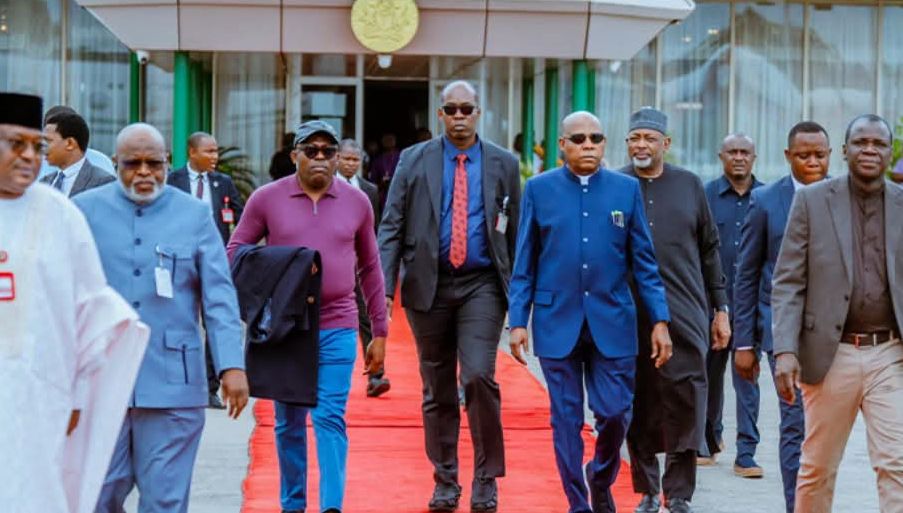
President Bola Tinubu has directed Vice President Kashim Shettima to lead Nigeria’s delegation to the 81st Session of the United Nations General Assembly, UNGA, in New York, United States.
Stanley Nkwocha, senior special assistant to the president on media and communications, made this known in a statement on Sunday in Abuja.
The 81st UNGA general debate will be held from September 22 to 28.
The theme of the UNGA is “Restoring trust, managing transformation: A United Nations that delivers for all.”
Mr Nkwocha said Mr Shettima would deliver Nigeria’s national statement at the general debate.
He said the statement would outline Nigeria’s position and priorities on major global issues with implications for national development, peace and security, economic growth and international cooperation.
The presidential aide also said that Shettima would participate in high-level meetings during the UNGA week.
Mr Nkwocha added that VP Shettima’s engagements would focus on the right to development, climate action, and other issues of strategic importance to Nigeria and the African continent.
Similarly, he said Mr Shettima is also expected to join other world leaders at the traditional reception for Heads of Delegation and participate in a series of bilateral meetings with leaders of other countries and international organisations, as well as development partners on the sidelines of the General Assembly.
“The engagements will provide Nigeria an opportunity to advance President Tinubu’s economic diplomacy, deepen strategic partnerships and strengthen the country’s voice on reform of the global financial architecture, sustainable development, climate finance and multilateral cooperation,” he said.
Mr Nkwocha said VP Shettima will return to Nigeria after concluding his engagements in New York.
News
Former Kogi Governor Ibrahim Idris Dies In UK At 77
By Yusuf Danjuma Yunusa
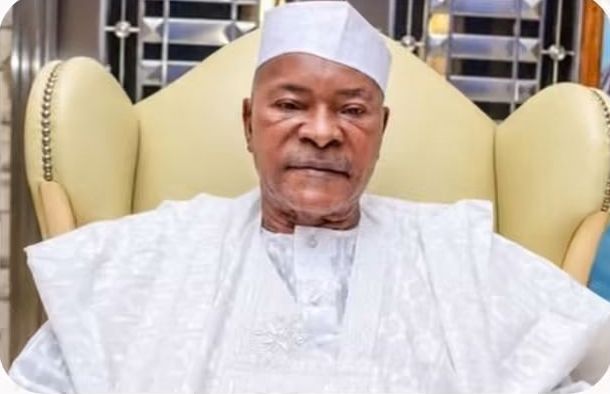
Former Kogi State Governor, Alhaji Ibrahim Idris, has reportedly died in the United Kingdom at the age of 77.
Reliable sources broke the shocking news of Idris’s death on Sunday; further details of his reported death were still being awaited as of press time.
Idris served as governor of Kogi State from 2003 to 2008 and again from 2008 to 2012 on the platform of the Peoples Democratic Party (PDP). He was succeeded by his brother-in-law, Captain Idris Wada, in January 2012.
Born in 1949 in Idah, Kogi State, Idris began his education in Onitsha, Anambra State, before moving to Kano, where he completed his primary education.
He later attended King’s Commercial College in Buguma, Rivers State, and obtained a bachelor’s degree from the University of Abuja.
Before venturing into politics, Idris was a businessman. He established Ibro Trading Company, with interests including construction, furniture manufacturing and hospitality.
He later established a furniture factory in Sokoto and the Ibro Hotel, described in available biographical records as the first three-star hotel in the old Sokoto State.
Idris emerged as the PDP governorship candidate for Kogi State ahead of the 2003 election and defeated the incumbent governor, Prince Abubakar Audu.
He was sworn in as governor on May 29, 2003.
Idris was re-elected in 2007, but the election was later nullified following a legal challenge over the exclusion of the All Nigeria Peoples Party (ANPP) candidate, Abubakar Audu, from the poll.
The Court of Appeal upheld the decision in February 2008 and ordered a fresh election.
Idris subsequently contested the March 2008 re-run and was returned as governor. His victory was challenged by Audu, who alleged electoral irregularities.
Idris eventually completed his tenure in January 2012 and was succeeded by Wada.
The former governor also attracted national attention in 2006 when three of his daughters survived the ADC Airlines Flight 53 crash, which claimed numerous lives.
Following the incident, Idris described the survival of his daughters as a “superlative show of mercy” from God and called for thanksgiving.
In April 2024, Idris suffered the loss of his son, Mohammed Ibrahim Idris, a former member of the House of Representatives representing Ankpa, Olamaboro and Omala Federal Constituency of Kogi State. Mohammed died in Abuja shortly after observing Eid-el-Fitr prayers.
News
Mahanga TV Launches in Nigeria to Take Hausa Storytelling, Northern Talent to Global Audiences

Kano-based media platform combines broadcasting, original productions, current affairs, culture and digital media in a new chapter for Northern Nigerian storytelling
A new voice has entered Nigeria’s evolving media landscape with the launch of Mahanga TV, a Kano-based Hausa media and broadcasting platform established to bring together original storytelling, journalism, drama, film, culture and entertainment while giving Northern Nigerian stories a wider audience.
Operating under Mahanga Media and Productions Ltd., the platform is positioning itself at the intersection of television, digital media and modern content production, with an ambition to inform, entertain and connect audiences through professionally produced content.
Mahanga TV is available as a Free-to-Air television service on Amos 17 at a frequency of 11,882 MHz, providing viewers with access to its growing range of Hausa-language programming and original content.
The company describes its philosophy in a simple phrase: “Born in Kano. Built for the world.” Its stated mission is to deliver innovative media solutions that inform, inspire and connect audiences through storytelling and technology, while its broader vision is to build a media and broadcasting company recognised for excellence, creativity and impact in Nigeria and beyond.
For Nuhu Abdullahi Balarabe, Founder and Chief Executive Officer of Mahanga TV, the platform was created from a belief that Northern Nigeria possesses a wealth of stories, talent and cultural perspectives that deserve a larger platform.
“Mahanga TV was established from a deep conviction that Northern Nigeria has a wealth of stories, talent, culture and perspectives that deserve to be told with professionalism, creativity and global relevance. Our vision is to build a modern Hausa media platform that informs, entertains and connects audiences while creating opportunities for Northern talent and amplifying stories that reflect who we are and where we are going.
“At Mahanga TV, we are combining contemporary broadcast technology with original storytelling, current affairs, drama, film, music, culture and entertainment to create a platform that goes beyond traditional television. We are proud to be born in Kano, but our ambition is to take the stories and voices of Northern Nigeria to audiences across Nigeria and the world.”
— Nuhu Abdullahi Balarabe, Founder & Chief Executive Officer, Mahanga TV
That vision is reflected in the platform’s programming structure, which spans talk shows, drama series, feature films, current affairs, music and culture, and family-friendly entertainment. Its published programming slate includes talk formats such as Labaran Yau, Sahel Circle, Kano After Dark and Arewa Dialogues, alongside drama productions, feature films, current-affairs programmes and music and cultural shows.
Its drama offering focuses on stories grounded in Hausa-Fulani heritage, with the company highlighting writers, directors and actors from across Northern Nigeria. Its feature-film programming similarly seeks to showcase Northern Nigerian filmmaking and artistry, while its music and culture programming brings together traditional cultural expressions and contemporary Northern sounds.
The platform’s current-affairs offering is another important part of its identity, with programmes listed under the Mahanga Newshour, Northern Report, Frontline and Market Day brands. The programming is designed around issues and conversations relevant to audiences in Northern Nigeria, complementing the platform’s entertainment and cultural content.
Behind the programming is an investment in production infrastructure. Mahanga’s facility at Farm Centre, Tarauni, Kano, includes professional studios, editing and post-production suites, audio recording booths, a live-streaming control room, meeting rooms and high-speed internet. Its listed production equipment includes high-definition cameras, professional lighting, audio recording systems, live-streaming equipment, editing facilities and broadcast transmission gear.
The company’s production model covers the entire process from concept and scripting to filming, editing and distribution, allowing projects to be developed with a unified creative and production direction. Its delivery platforms include television, online broadcasting, social media and live streaming.
Beyond its programming, Mahanga Media and Productions also positions itself as a full-service media company serving brands, institutions and individuals. Its services include television and online broadcasting, video production, social-media campaigns, online media campaigns, event coverage and live streaming.
The company’s development has also been marked by a gradual expansion of its production and digital capabilities. According to its published corporate timeline, Mahanga TV was founded in Kano in 2025, expanded its studio and live-streaming infrastructure in 2026, moved into digital campaigns and online broadcasting in 2026 and produced its original Baya da Kura series in 2026. In 2026, the company describes itself as operating as a full-service media organisation covering broadcasting, production, events and live streaming.
The digital component of the platform is also being expanded. Mahanga says a dedicated mobile application for iOS and Android is currently in development, with plans to allow audiences to watch programmes, receive updates and access Mahanga TV content directly from their mobile devices.
For Northern Nigeria’s creative industry, the emergence of a platform built around local storytelling, production and talent creates another avenue through which filmmakers, journalists, actors, musicians, presenters and other creatives can reach audiences.
More broadly, Mahanga’s launch comes at a time when the distinction between television and digital media is becoming increasingly fluid. Audiences now consume news, entertainment and cultural content across television, social media, streaming platforms and mobile devices. Mahanga’s stated strategy reflects that changing media environment by combining conventional broadcasting with digital distribution and original content production.
At the centre of the platform, however, remains storytelling.
From current affairs and long-form conversations to drama, film, music and cultural programming, Mahanga is seeking to build a media identity that is distinctly Northern while remaining accessible to audiences beyond the region.
Its launch therefore represents more than the arrival of another television platform in Kano. It marks the beginning of an effort to create a modern Hausa media brand capable of bringing together Northern identity, professional production, contemporary broadcasting and digital storytelling.
And with its ambition captured in its own words — “Born in Kano. Built for the world.” — Mahanga TV is setting out to give the stories, voices and talent of Northern Nigeria a wider stage.
Mahanga TV — Free-to-Air Broadcast Information
Satellite: AMOS-17
Transponder: K7113
Frequency: 11,882 MHz
Polarization: V (Vertical)
Symbol Rate: 30 Msps
Modulation: QPSK
FEC: 2/3

UNGA81: Shettima Leads Nigeria’s Delegation to New York

Former Kogi Governor Ibrahim Idris Dies In UK At 77

Muhuyi’s Assignment, Abba’s Edge: How Anti-Drug War Reshapes Kano’s 2027 Race

Mahanga TV Launches in Nigeria to Take Hausa Storytelling, Northern Talent to Global Audiences

Kano Online Media Chapel Urges Members to Uphold Ethics,Mulls Financial Independence

95% of Governor Abba Kabir Yusuf’s Promises Have Been Fulfilled — CPS Interview By Musa Diso, In Kano

Bello Sharada: A Great Writer, A Bookish Soul, Gone Too Soon

NUT Launches ‘Go Public’ Campaign to Promote Public Education in Nigeria

Nigerians Are Tired of Promises’ — CAN Demands Action on Insecurity, Hardship In Eid-el-Maulud Message

Imam Jingir Sells Out, Deploys Muslim-Muslim Chants Minutes After ₦600 Million APC Windfall
UNGA81: Shettima Leads Nigeria’s Delegation to New York
Former Kogi Governor Ibrahim Idris Dies In UK At 77
Muhuyi’s Assignment, Abba’s Edge: How Anti-Drug War Reshapes Kano’s 2027 Race
Mahanga TV Launches in Nigeria to Take Hausa Storytelling, Northern Talent to Global Audiences
Kano Online Media Chapel Urges Members to Uphold Ethics,Mulls Financial Independence
95% of Governor Abba Kabir Yusuf’s Promises Have Been Fulfilled — CPS Interview By Musa Diso, In Kano
Bello Sharada: A Great Writer, A Bookish Soul, Gone Too Soon
NUT Launches ‘Go Public’ Campaign to Promote Public Education in Nigeria
Nigerians Are Tired of Promises’ — CAN Demands Action on Insecurity, Hardship In Eid-el-Maulud Message
Imam Jingir Sells Out, Deploys Muslim-Muslim Chants Minutes After ₦600 Million APC Windfall
-

 Opinion5 years ago
On The Kano Flyovers And Public Perception
-

 Features5 years ago
How I Became A Multimillionaire In Nigeria – Hadiza Gabon
-

 Opinion6 years ago
Kano As future Headquarters Of Poverty In Nigeria
-

 History5 years ago
Sheikh Adam Abdullahi Al-Ilory (1917-1992):Nigeria’s Islamic Scholar Who Wrote Over 100 Books And Journals
-

 Opinion5 years ago
My First Encounter with Nasiru Gawuna, the Humble Deputy Governor
-

 History5 years ago
The History Of Borno State Governor Professor Babagana Umara Zulum
-

 History5 years ago
The Origin Of “Mammy Market” In Army Barracks (Mammy Ochefu)
-

 News4 years ago
Federal University Of Technology Babura To Commence Academic Activities September