
Opinion
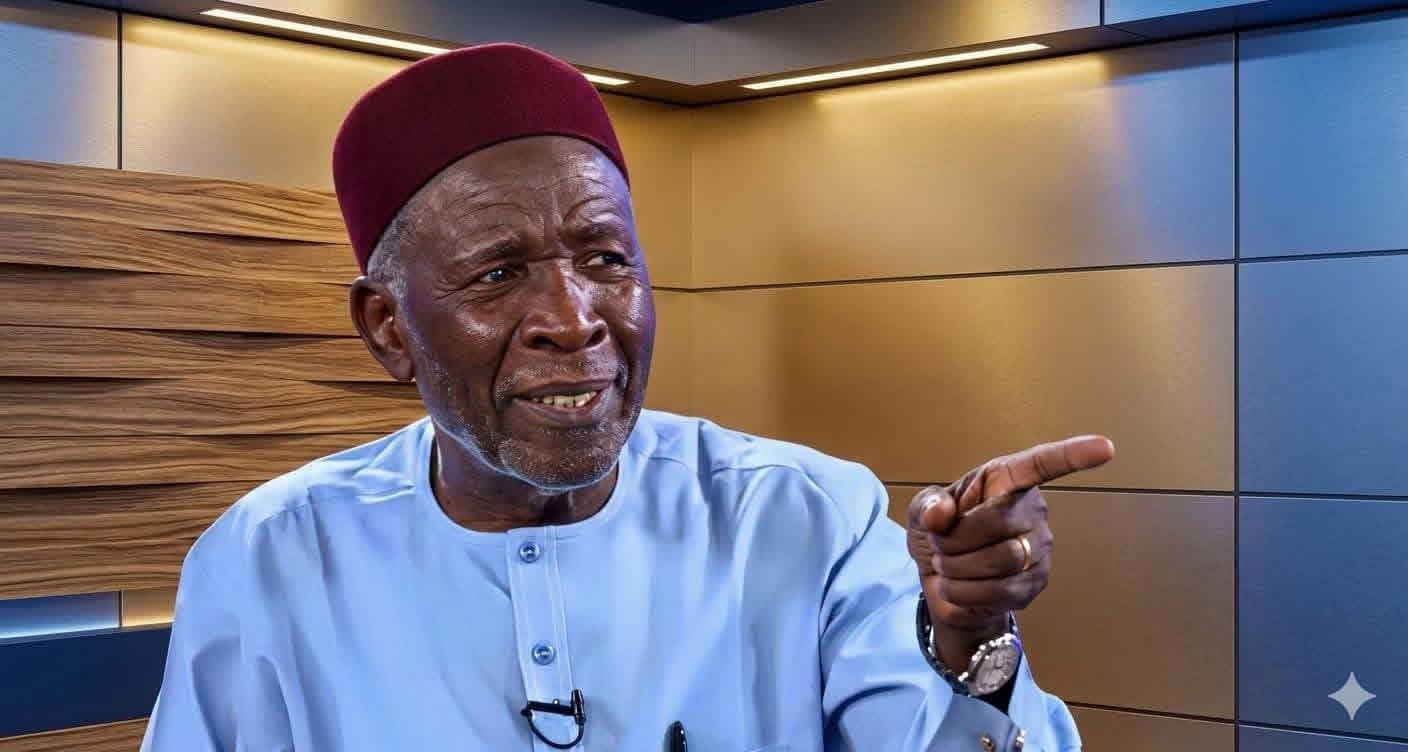
FROM APPOINTEE TO AGITATOR: DECODING THE REAL MOTIVES BEHIND GALADIMA’S ATTACKS ON GOVERNOR YUSUF AND THE DSS
By Mohammed Babagana Abubakar
28 February 2026
In the theatre of Nigerian politics, certain actors have mastered what analysts call the distraction technique: generating maximum noise about injustice at precisely the moment their own relevance is slipping away. The recent outbursts by Alhaji Buba Galadima against His Excellency, Governor Abba Kabir Yusuf, and the Director of the Department of State Services (DSS) in Kano State is a clear demonstration of this manoeuvre. The claims of midnight justice and the systematic arrest of opposition voices paint a dramatic picture of a state in crisis. The facts, examined honestly, tell a fundamentally different story.
It is not coincidental that Galadima’s public offensive against the Governor and the DSS intensified immediately following his removal as Chairman of the Governing Council of Kano State Polytechnic in February 2026. Governor Yusuf, acting under the stated policy of his Kano First Agenda, a governance framework oriented toward institutional performance and the prioritisation of Kano’s developmental interests, relieved Galadima of the position, citing the need for optimal performance and institutional repositioning. The role was subsequently conferred on the Emir of Gaya, Alhaji Aliyu Abdulkadir, a figure whose stature and local relevance align directly with the Governor’s repositioning objectives.
For a public figure who held a senior institutional appointment in a state of which he is not an indigene, a graceful and dignified exit would have been the appropriate response. Instead, Galadima chose retribution. His subsequent media campaign, escalating in intensity and in the seriousness of its allegations with each successive interview, is not the behaviour of a disinterested democratic advocate. It is the behaviour of a man whose access to institutional privilege has been withdrawn, and who is determined to exact a political cost for that withdrawal.
The specific allegations Galadima has advanced, including claims about the arrest of a radio personality and the characterisation of security agency actions as politically motivated persecution, represent a calculated misrepresentation of the constitutional and operational realities of governance in Kano State. Kano is navigating a complex security and political environment, one shaped by the Governor’s strategic realignment with the APC and the accompanying need to stabilise the state’s politics within a new national power configuration. In that context, the actions of the DSS have been directed, as they should be, by federal law, institutional mandate, and specific credible complaints, not by partisan instruction.
Freedom of expression, guaranteed under Section 39 of the Constitution of the Federal Republic of Nigeria, is a right the Governor’s administration has consistently respected. However, no constitutional guarantee of free expression extends to the use of media platforms to incite public disorder, spread demonstrably false information, or engage in conduct that, under the Cybercrime (Prohibition, Prevention, etc.) Act of 2015, constitutes a criminal offence. When security agencies invite individuals for questioning in response to credible complaints under these provisions, that is the rule of law functioning as designed. Characterising it as political kidnapping is not democratic advocacy. It is deliberate and legally questionable misrepresentation.
While Galadima has been constructing his narrative of persecution, the administration of Governor Abba Kabir Yusuf has been constructing something considerably more consequential: a governance record. The administration has pursued the reform of Kano’s tertiary institutions, addressing years of accumulated structural dysfunction. It has moved to clear long-overdue gratuity obligations to retired civil servants, a commitment to public workers that previous administrations allowed to languish. And it has taken deliberate steps to dismantle the architecture of godfatherism, the entrenched system of patronage-based political control that has historically subordinated Kano’s public institutions to the interests of political power brokers rather than the citizens those institutions exist to serve.
It is precisely this dismantling of godfatherism that illuminates the deeper logic of Galadima’s campaign. His objection is not fundamentally to the governance philosophy of the Yusuf administration. It is to a system in which access to public institutional positions, and the patronage and influence those positions confer, is no longer guaranteed by political connection alone. The removal from the Polytechnic board was not merely an administrative decision. It was a signal that the old arrangements no longer apply. Galadima’s response has been to attempt to demonstrate, through sustained public aggression, that such decisions carry a political cost. Governor Yusuf and his administration must, and should, remain undeterred by that calculus.
The people of Kano are neither passive observers nor easily manipulated audiences. They are a politically sophisticated electorate with a long institutional memory and a demonstrated capacity to distinguish between genuine democratic advocacy and the grievance politics of displaced privilege. Galadima is not fighting for the common people of Kano. He is fighting for a lost title, a withdrawn appointment, and a diminished political footprint. That is his right. But it should be named honestly for what it is.
Governor Abba Kabir Yusuf was elected to govern Kano in the interest of its people, not to preserve the access arrangements of those who regard public office as personal entitlement. His administration, the DSS, and all institutions operating within their constitutional mandates must remain focused on that mission, undistracted by the noise of those whose loudness is inversely proportional to the credibility of their arguments. Kano’s future will be built on governance, performance, and accountability, not on the manufactured grievances of those left behind by the end of an era they benefited from and now seek to restore.
ABOUT THE AUTHOR
Mohammed Babagana Abubakar is a political commentator and analyst with a keen interest in governance, accountability, and the democratic development of Kano State and Northern Nigeria.
The views expressed in this article are those of the author alone and do not represent the position of any organisation, party, or institution.



Opinion
Amupitan and the Credibility of the 2027 Elections-Salihu Tanko Yakasai
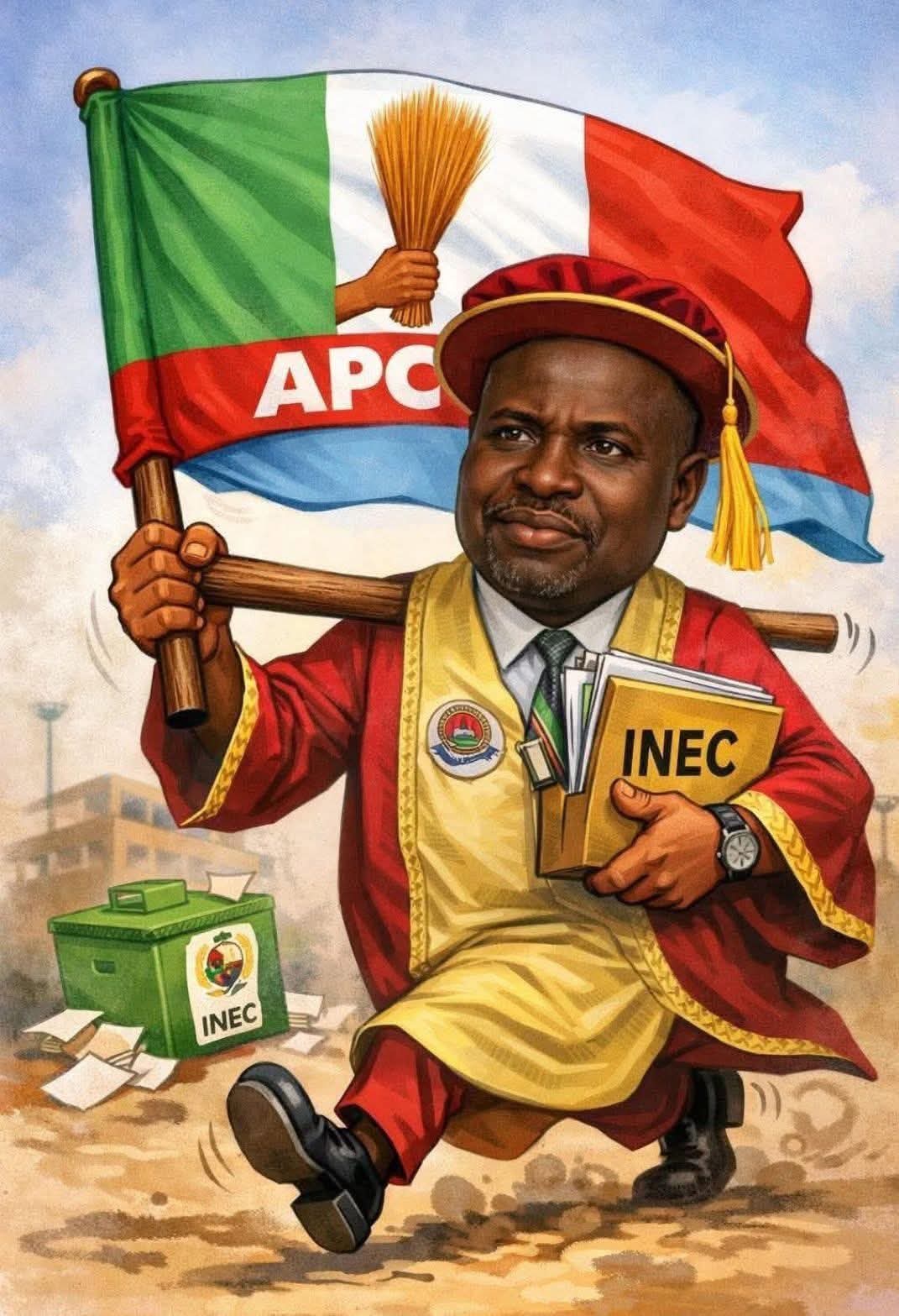
By Salihu Tanko Yakasai.
In any election, the most important stakeholder is the electoral umpire. Whoever is chosen to lead the electoral body carries a heavy burden, particularly in how key players and observers perceive the independence of that umpire, whether he will be fair and just or take sides with those who appointed him.
Typically, the person appointed to head the Independent National Electoral Commission (INEC) is expected to ensure a level playing field for all candidates, irrespective of whether they belong to the ruling party or the opposition. Over the years in Nigeria, however, some INEC chairmen have been found wanting in the discharge of their duties.
Maurice Iwu is widely regarded as one of Nigeria’s most controversial INEC chairmen, largely because the 2007 elections under his leadership were heavily criticized for irregularities and lack of credibility. Even Umaru Musa Yar’Adua, who won that election, admitted the process was flawed. While some argue he operated within a weak system, his tenure is still often seen as a low point for electoral integrity in Nigeria.
If you’re looking at credibility, transparency, and public trust, his tenure is often seen as a low point for Nigeria’s electoral process.
But from all indications, the current INEC chairman, Joash Amupitan, seems to be on the verge of becoming even worse than Maurice Iwu, as his tenure has been marked by one controversy after another since his appointment.
1- Religious bias allegation
The current INEC chairman, Amupitan, has faced criticism over a past petition in which he reportedly raised concerns about what he described as “Christian genocide.” This has drawn objections from groups such as the Supreme Council for Islamic Affairs, who argue that such a position raises questions about his neutrality in a religiously diverse country and have called for his removal.
2- ADC leadership portal controversy
While citing a court order, the INEC chairman reportedly derecognized David Mark and Rauf Aregbesola as Chairman and Secretary of the African Democratic Congress, respectively. This removal from INEC’s official portal could undermine the party’s ability to field candidates. Critics see this as a move that may disadvantage opposition parties in favor of the ruling All Progressives Congress.
3- Voter revalidation exercise concerns
Another major issue was the proposed voter revalidation exercise introduced close to the election timeline, which sparked backlash. Many argued that attempting to revalidate tens of millions of voters within a short period could disenfranchise many Nigerians in the 2027 general elections. Following public pressure, the commission suspended the exercise.
4- Social media partisanship allegation
Questions have been raised about an alleged social media account linked to Amupitan, said to contain posts supportive of the APC and critical of opposition movements such as the “Obidient” movement. Although he denied ownership, some online claims suggest links to personal identifiers such as an email address and phone number, leaving the issue contested.
All these controversies are happening even before the elections. If Maurice Iwu is the yardstick for a poor election umpire, then by all accounts, Amupitan appears to be on track to surpass that record. If he can be perceived as this compromised before the elections, what should be expected on election day?
When the credibility of an election collapses, the consequences go far beyond the ballot box. Voter turnout drops as people begin to feel their votes no longer count, and the legitimacy of whoever emerges as winner is immediately questioned. This often fuels political tension, deepens divisions, and in some cases can trigger unrest. Ultimately, a flawed electoral process does not just produce disputed outcomes, it weakens public trust in democracy itself and makes governance far more difficult.
This is why all well-meaning Nigerians, as well as the international community, must lend their voices to calls for the removal of such a controversial INEC chairman. The credibility of the elections is already being questioned even before they are held. It is like a referee in a football match wearing the jersey of one of the teams, you do not need anyone to tell you that such a referee cannot be neutral.
As Kofi Annan once said, “Credible elections are the cornerstone of democracy.” When that credibility is in doubt, the very foundation of the democratic process is weakened. Nigeria cannot afford to gamble with that foundation in 2027.
Opinion
The Final Betrayal Of A Red Neck?-Martin Yakwo
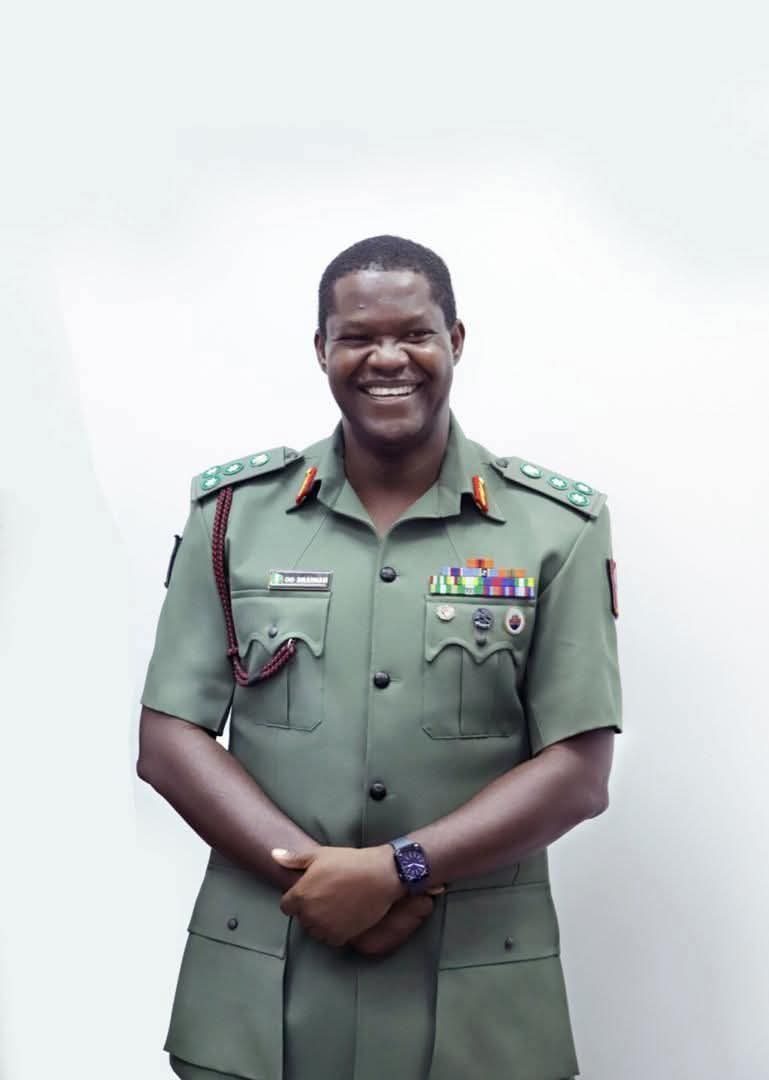
By Martin Yakwo
The humid air of Benisheikh felt heavy yesterday, not with rain, but with the silence of a trap. Brigadier General Oseni Braimah stood in the center of the 29 Task Force Brigade’s perimeter, his thumb tracing the jagged edge of a radio that hadn’t caught a clear signal in three days.
He had surely sent five memos to Abuja in a month. He’d asked for the T-72 tanks promised in the quarterly budget and the thermal optics needed to see through the encroaching Sahel dust. After all the general in his youth was trained in the annals of red house aka octopus house..where being on point was a religion? Sharp thinking was necessary to survive and being resourceful was mandatory.
But alas, The replies from the High Command via the buffoons in the villa were always the same: “Resources are being deployed. Maintain your position.” But Braimah knew where the resources were. He had seen the photos of the new mansions in Lakeview, Abuja, owned by men who had never heard a shot fired in anger. He knew the “superior firepower” touted in the morning press releases was sitting in a shipping container in Lagos, held up by a kickback dispute between greedy politically inclined morons and the compromised analogue generals who have become their partners in crime and corruption.
“General,” his adjutant whispered, pointing toward the tree line. “The scouts didn’t return.” how could they have returned? They had already been betrayed by some rehabilitated sons and daughters of Satan with the blessing of the NSA and his clowns in control of the nations security apparatus a long time ago.
Braimah reached for his rifle. It was a decades-old weapon, the ubiquitous AK 47? its barrel worn smooth. He knew the political will to end this war didn’t exist; a forever war was too profitable for the men/agbayas in flowing agbadas, multi million naira watches and their paramilitary gang members in well starched khakis who the general answered to. If the insurgency died, the “security votes”—those unvetted billions—would vanish. After all, the dirty, stinky, drug addled vermin known as Boko Haram are the prodigal sons of some of the hierarchy as well as the politicians. These boys are cash in the bank as it is and so must be protected and supplied more than the military itself.
Then, the darkness erupted.
The terrorists didn’t come with swords; they came with brand-new technicals and night-vision goggles—gear better than anything Braimah’s men possessed. The General sprinted toward the front trench, shouting orders that were drowned out by the screams of boys holding jammed rifles.
He picked up a Light Machine Gun from a fallen soldier, but after three bursts, it seized.
The procurement officers had bought “refurbished” ammunition that was actually decades-old surplus. “Request air support!” Braimah roared over the thunder of RPGs.
“The jets are grounded in Maiduguri, sir!” the comms officer yelled back, tears streaking his dusty face. “They say there’s no fuel budget cleared for night Sorties!”
Braimah looked at the sky, vast and empty. No air support? No night time drones? It wasn’t the enemy that had defeated him. It was the ink on the diverted contracts and the shrugs in the air-conditioned boardrooms of the capital. He stood tall, a silhouette of defiance against the muzzle flashes. He was a lion led by sheep, a guardian sold for a percentage. As the perimeter collapsed, he didn’t retreat. He fired his sidearm until the slide locked back. By then the scene must have looked like a scorched earth with bodies strewn across each other, blood and dust mixing with bullets and shrapnel as the constant staccato of gunfire mixed with Islamic chants by the evil killers of his colleagues rent the air, getting closer, and closer by the mili second?
The last thing Oseni Braimah felt wasn’t the sting of the bullet, but the “cold weight of a betrayal that started a thousand miles away from the battlefield in an air conditioned suite in the villa and freezing office in the MOD.” The desire to gaze upon the faces of his beautiful wife and kids once more must have driven him to jump into the last remaining MRAP vehicle in order to save himself and the wounded left alive to try to salvage their dire situation and protect us the citizens who slept underneath the covers while simultaneously living in order to fight another day?
But alas….it wasn’t meant to be…”oga the MRAP has no fuel and the engine is faulty?” What manner of government allows a red neck to be in charge of a command with such a logistical nightmare? The Nigerian government of course. Better to turn our brightest and bravest into sitting ducks in borno for the bandits as long as the allowances can be exchanged in zone 4 for dollars but not sense!
The next morning, the DHQ would release a statement praising his “heroism” and “the military’s successful repelling of the attack.” The mansions in Abuja would remain quiet, their walls thick enough to drown out the sound of the desert wind while also buck passing in order to avoid any form of official scrutiny. Maybe tomorrow morning the mong from bourdillion would hurriedly fly into an airfield in Maiduguri for 10 minutes to extol the virtues of my red house brother and his fallen comrades in arms as he did in jos? He would make his usual regurgitated speech about “never again or we will crush these bandits?” He may also demand that they bring omos twin brother and his grieving wife and kids for a photo op? To show that he cares? Typical.
Mr President , your high command and your useless Boko Haram trainee ministers and the safari suit wearing boy scout from kaduna . You have all sacrificed an innocent man’s life and that of his brave platoon with your incompetence, blinding stupidity and lack of political will to face this menace head on. Nigerians are now on par with somalians as regards to insecurity and it is all happening under your bleary-eyed watch.
The betrayal of all the remaining red necks and their subordinates rests on your shoulders. May all of you responsible for the current state of this nations capitulation choke on your wealth and die off in penury after being haunted by the visions of all those who have been sent to the upper room by your inaction greed and lack of foresight.
As for “Le deux, tallest, Omo bee and the general?”…..I wish you a peaceful journey
I will see you when it’s my turn . Rest in peace……Salute.
[“The final betrayal of a red neck” is a SEMI BIOGRAPHICAL EPITAPH written by me based on the events of the last 24 hours of oseni braimahs life, as a dedication to his bravery and that of his men, the current inefficiency affecting our nations military offensive against terrorists in nigeria, the debilitating federal corruption as well as our 32 year association via our journey through the hallowed halls of CSSKD”]
© God of words productions. 2026
Opinion
Shekarau In APC, Morale Booster For Governor Abba
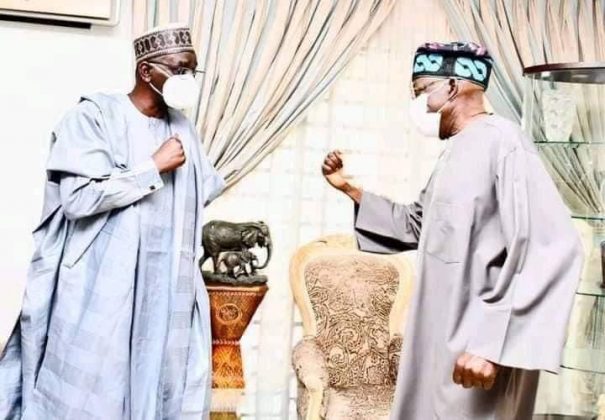
By Abba Anwar
It is no longer a news or something strange for Kano people, for one to comfortably advance a stance that, among all the former Governors of Kano, who are still alive, including Military Administrators during Military regime, Malam Ibrahim Shekarau, Sardaunan Kano and a one time Distinguished Senator of the Federal Republic of Nigeria, is the most focused, most honest, most humane, most humble and most lenient, with high sense of spiritual touch.
Just like the former Governor Rabi’u Musa Kwankwaso, whose political structure cuts across all the 44 local government areas in the state, Malam Shekarau has that political spread for sure. Shekarau’s structure, under what is called Shurah Council /Committee, is more genuine and democratic, than that of Kwankwaso.
For the simple reason that, nowhere in his political life, before, during and after his days in office, it was reported that he takes decisions without consultation. The cardinal essence of the true meaning of Shurah. Consultation before action. The concept of Shurah became more prominent in his post administration era.
Even the Shurah Council /Committee, is under the leadership of another respected and down – to-earth personality, Dr Umar Mustapha, popularly known and called Mai Mansaleta (Mentholatum). An ocean difference between Kwankwaso’s Kwankwasiyya and Shekarau’s Shurah. Under Shurah, immediately after Shekarau, there is the Chairman of the body of decision makers, Shurah. Unlike in Kwankwasiyya where you have Kwankwaso and only him, as the alpha and omega. Below him in the chain of decision making and command? Nobody! Absolute totalitarianism!
With the cross over of Shekarau to the ruling All Progressives Congress (APC), the chances and influence of Kano state, Abba Kabir Yusuf, against 2027 election, are becoming more visible, predictable and waxing stronger. Even the consolidation of the party and governance are becoming increasingly focused. Shekarau is respected by almost all Kano elders and responsible individuals.
One good thing about Shekarau’s political empire, is, almost all those who are following his political direction, have it at the back of their mind that, they are duty bound, to be loyal, as a symbol of duty of followership. No blind loyalty, no deceit and no double-speak. He, as an overall leader of the dynasty, if I can use the term, consults, before any decision is reached.
Shekarau in APC, means governor Yusuf’s decisive political spread across all the 44 local governments. I also hope that, Shekarau’s people will not be sidelined in the party activities and governance. As it was the case during the immediate past governor Dr Abdullahi Umar Ganduje, CON.
If and only if governor Yusuf wants to display practical relationship with Shekarau, I suggest, he should incorporate Shekarau’s loyalists in governance, more than any other section or camp of the traditional APC. Why? Because, Shekarau, as it appears now, has no single individual in the party leadership. Right form the ward to local government up to state. Congresses across wards, local governments and state took place few weeks back. Before Shekarau joins the party. So he should be compensated, anyway.
It is governor Yusuf, Malam Shekarau, Baba Ganduje and His Excellency, Deputy Senate President, Distinguished Senator Barau I Jibrin, CFR, who are now on the table. A round table, if you wish. Is not for roundtable discussion. But for redesign, refocus, rejig, realignment and rehearsal of current political reality in Kano, against 2027.
Without fear of contradiction and exaggeration, Shekarau is still one of the very few politicians in the country, whom, when you look at their faces, you see faith, seriousness, straightforwardness, focus, commitment and humility. So as a matter of fact, APC under the governor, in Kano, is lucky to woo Sardaunan Kano, ahead of such stiffer elections, come 2027. Which is just some miles away.
I suggest that, Shekarau people, as he joins APC, should be involved in governance from local governments to state level. Failure to do that, may as well mean, APC looks at him (Shekarau), alone, not alongside his people. And this could mean a bad political approach. Let Shekarau and his people know that, their relevance and influence are spotted and appreciated, by the present state government. Unlike what was obtained in the past. When their hardwork, commitment and loyalty were thrown to the dogs.
As important as Shekarau is, in normalizing and consolidating the strength of APC, not only in Kano, it is expected that, his people would not be neglected after joining the party. Yes, Shekarau still enjoys grassroot supporters, real and genuine, for that matter. The ball, I believe, is in the court of both President Bola Ahmed Tinubu, GCFR, and governor Yusuf.
So governor Yusuf should facilitate the fixing of Shekarau people in some chosen federal government spaces. Consolidation of power, is rewarding, when realities on ground are not deliberately neglected.
Shekarau’s influence cuts across many states, especially, in the North. More importantly, people that are religious, in the true sense of the word religion, gentlemen and other community leaders across our traditional settings. Humility and approachable posture, are two major attitudes that endear him to many.
Without being economical with the truth, I can say, governor Yusuf finds a new political father in Shekarau. Take it or leave it.
Anwar writes from Kano
Wednesday, 8th April, 2026

Calls for INEC Chairman’s Resignation, Premature, Risky-Oluwafemi

Stakeholders Back Murtala Sule Garo For Kano Deputy Governor

Turaki-led PDP Faction Rejects Secretariat Takeover by Wike Group, Accuses Police of Bias

Many Feared Dead as NAF Deadly Airstrike Hits Borno-Yobe Border Market

Malam Inuwa Waya Commends Governor Yusuf’s Reforms in Kano Land Administration

ADC Leadership Crisis: State Chairmen to Elect Caretaker Committee on Tuesday

Governor Abba Kabir Yusuf Holds Exclusive Prerogative to Choose Deputy – Malam Inuwa Waya

NUJ Kano Online Chapel Tightens Membership Standards, Approves 31 Applicants After Rigorous Screening

APC National Convention : How DSP Barau Displays Political Sagacity, Deep Knowledge of Democracy Before President Tinubu, Others

Radiographers Kick Against Controversial Health Bills, Demand Immediate Withdrawal
Calls for INEC Chairman’s Resignation, Premature, Risky-Oluwafemi
Stakeholders Back Murtala Sule Garo For Kano Deputy Governor
Turaki-led PDP Faction Rejects Secretariat Takeover by Wike Group, Accuses Police of Bias
Many Feared Dead as NAF Deadly Airstrike Hits Borno-Yobe Border Market
Malam Inuwa Waya Commends Governor Yusuf’s Reforms in Kano Land Administration
ADC Leadership Crisis: State Chairmen to Elect Caretaker Committee on Tuesday
Governor Abba Kabir Yusuf Holds Exclusive Prerogative to Choose Deputy – Malam Inuwa Waya
NUJ Kano Online Chapel Tightens Membership Standards, Approves 31 Applicants After Rigorous Screening
APC National Convention : How DSP Barau Displays Political Sagacity, Deep Knowledge of Democracy Before President Tinubu, Others
Radiographers Kick Against Controversial Health Bills, Demand Immediate Withdrawal
-

 Opinion4 years ago
On The Kano Flyovers And Public Perception
-

 Features5 years ago
How I Became A Multimillionaire In Nigeria – Hadiza Gabon
-

 Opinion5 years ago
Kano As future Headquarters Of Poverty In Nigeria
-

 History5 years ago
Sheikh Adam Abdullahi Al-Ilory (1917-1992):Nigeria’s Islamic Scholar Who Wrote Over 100 Books And Journals
-

 Opinion4 years ago
My First Encounter with Nasiru Gawuna, the Humble Deputy Governor
-

 History5 years ago
The Origin Of “Mammy Market” In Army Barracks (Mammy Ochefu)
-

 History4 years ago
The History Of Borno State Governor Professor Babagana Umara Zulum
-

 News4 years ago
Federal University Of Technology Babura To Commence Academic Activities September