
News
Tangale TCDA Jos Branch calls for unity and teaches culture to the young ones
By Asile Abel, Jos
The background of man is very key, hence one cannot ignore his past. People are increasingly becoming conscious and concerned about their roots or beginning because one’s feeling of sense of belonging in most cases depends on his history or background.
Chairman, Tangale Community Development Association (TCDA) Jos branch, Mr. Atiku Useni, has charged all Tangale-speaking natives to ensure that they teach their children culture and dialect as a means of preserving their traditional heritage.
Mr. Atiku gave the advice in Jos, Plateau State at the occasion of the maiden edition of an end-of-year event, organized by TCDA Jos branch to appreciate God for His faithfulness throughout the outgoing year 2025 and seek blessings in the coming year 2026. Atiku added that Tangale are peace-loving and hardworking.
Mr. Atiku said next year, 2026, TCDA shall focus its activities on youth development, training of youths, and will begin intensive teaching of Tangale language and culture. He stressed that during monthly meetings, there would be hours dedicated to teaching Tangale dialect and culture.
He stressed further that the need to teach the mother tongue has become necessary because some tribes are going extinct, and he would not want Tangale to fall prey to it. Speaking on insecurity in Nigeria, the TCDA chairman noted sadly that Nigeria’s insecurity challenges have escalated; however, he commended the Gombe State government for nipping the situation in the bud. Atiku thanked Tangale elders and the entire people for the unity and peace they have enjoyed in the Jos branch.
On his part, the traditional leader of the Tangale, John Sheget, while speaking to his subjects, sued for enduring peaceful coexistence.
Reading the history of Tangale people, elder statesman Abel Mairuwa revealed that Tangale natives’ kingdom had its roots right in the pre-jihad (pre-colonial era). Tangale state system was uprooted by the British spoils. Hence, it was one of the British-recognized traditional institutions in Nigeria.
He further said that the land is the mainstay of the people and so the people are mainly farmers. Tangale are good pottery makers, blacksmiths, wood carvers, and weavers. Trading is fast being adopted, he added.
It was learnt that currently, Tangale people are not at peace with their traditional ruler at home in Gombe, because it was alleged that the present Paramount ruler was imposed on them by some government authorities. It was gathered also that Tangale people practice Christianity and Islam, while some still practice forefathers’ religion.
Earlier, chairman of the planning committee of the end-of-year celebration, Tamsaga Yaro, in a welcome address emphasized the need for peace and unity; however, he noted that Jos branch has indeed been peaceful. “Our community in Jos is a testament to the ingenuity and determination of the Tangale people. We have built a vibrant community, with rich achievements.” He revealed the reason for the gathering: “We gather to rejoice for the outgoing year, and pray for better days in the coming year.”
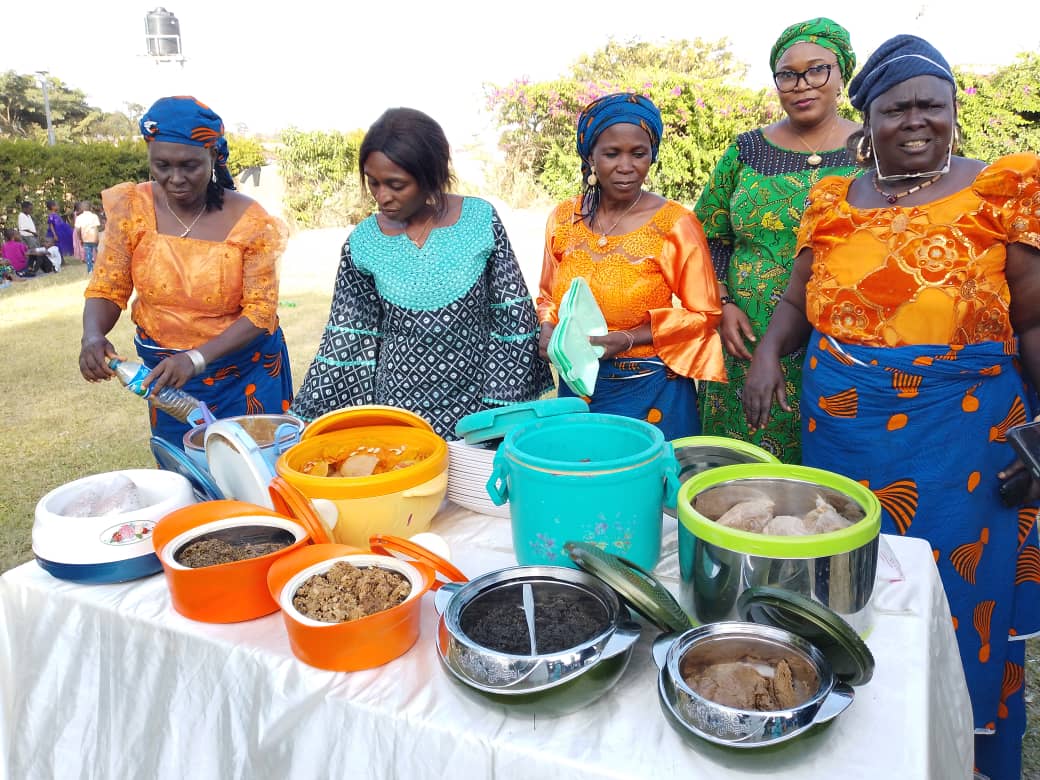
There was a fundraising through the display of Tangale traditional cuisines prepared for the maiden end-of-year 2025 celebrations. The occasion was packed full, graced by Tangale people across Nigeria, including non-Tangale-speaking people.










News
NFF Appoints Eguavoen as Interim Head Coach of Super Falcons

By Yusuf Danjuma Yunusa
Augustine Eguavoen has been appointed the interim head coach of the Super Falcons.
The former Super Eagles head coach will lead the Falcons for their 2028 Olympic Games double-legged qualifier against Comoros in October.
Eguavoen will be assisted by Christopher Danjuma, head coach of Nasarawa Amazons, alongside a supporting cast that includes Ayisat Yusuf, a former Super Falcons defender; Olatunji Baruwa, former Super Eagles goalkeeper trainer.
The Falcons will kick off their Olympic qualifying campaign in the second round against Comoros, with both legs taking place at the Remo Stars Stadium in Ikenne-Remo on October 9 and 13.
Nigeria had received a bye into the second round as one of the top-ranked teams, while Comoros qualified after a 30-0 aggregate victory over Sudan.
Falcons must navigate four rounds of two-legged knockout ties to secure of Africa’s two slots for the women’s football event at the Olympics. A win over Comoros will advance the team to the third round in early 2027 to face either DR Congo or Morocco.
Eguavoen will be handling women’s football team for the first time in his managerial career.
His appointment comes a few weeks after Justine Madugu was sacked as Falcons’ head coach alongside his technical crew.
The dismal follows the Falcons failure to qualify for the 2027 women’s World Cup.
The first time the team will miss the World Cup since its inception in 1991.
News
Dependable political ally’ — Tinubu celebrates Abdulmumin Jibrin at 50
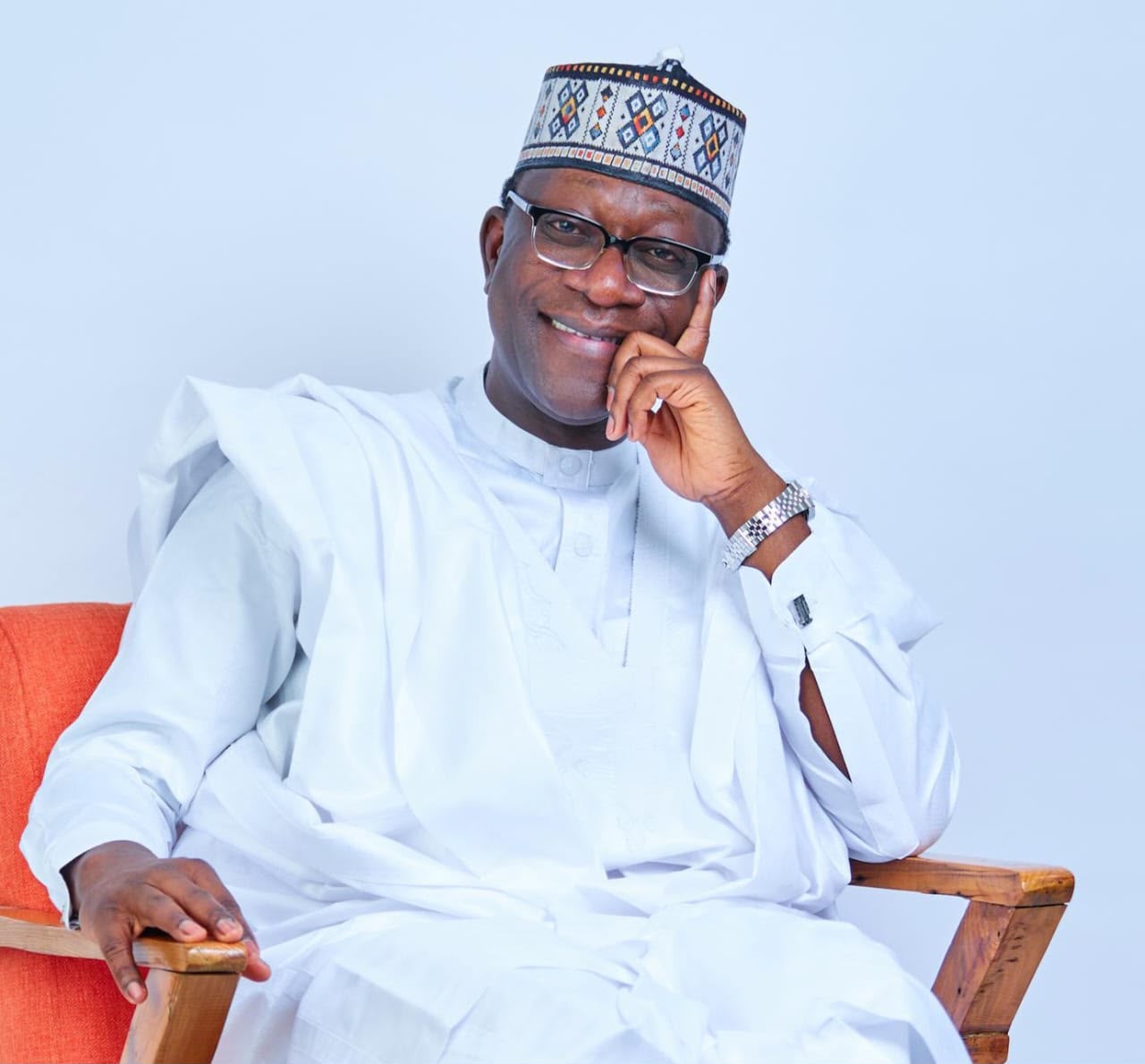
President Bola Tinubu has congratulated Abdulmumin Jibrin, the member representing the Kiru/Bebeji federal constituency in the house of representatives, on his 50th birthday.
In a statement issued on Tuesday by Bayo Onanuga, special adviser to the president on information and strategy, Tinubu described Jibrin as a dependable political ally and commended his intellectual rigour, entrepreneurial drive and commitment to public service.
The president praised Jibrin’s pursuit of knowledge, noting that his academic background at the University of Abuja, Ahmadu Bello University, Zaria, SBS Swiss Business School in Switzerland, Bayero University, Kano, and other institutions has shaped his approach to leadership and public service.
Jibrin holds two PhDs in international relations and economics, as well as an MBA from Bayero University. He also attended executive education programmes at Harvard Business School, Oxford and London Business Schools, and INSEAD in France.
Tinubu also acknowledged Jibrin’s record in public service, including his leadership of the house committees on finance, appropriations, land transport, foreign affairs, and housing and habitat.
According to the president, the lawmaker has contributed to debates and policies on public finance, fiscal policy, infrastructure and housing.
Jibrin also served as executive director at the Federal Housing Authority (FHA).
“Abdulmumin Jibrin represents a generation of Nigerians whose pursuit of knowledge, enterprise, and public service has been driven by a desire to make a difference,” the president said
His journey from scholarship and business into national politics reflects intellectual curiosity, resilience, and a deep commitment to Nigeria.
“At 50, he has much to celebrate, but I am confident that his most consequential contributions to our nation are still ahead.”
The president wished Jibrin renewed strength, good health, wisdom and fulfilment as he marked the milestone.
He also urged him to continue using his experience and knowledge to mentor younger Nigerians, strengthen democratic institutions and contribute to the development of Kano state and Nigeria.
Jibrin rejoined the All Progressive Congress (APC) in 2025 after he was expelled from the New Nigerian People’s Party (NNPP).
News
Ibrahim Little Condemns Attack on Journalists, Calls for Government Commitment to Ending Thuggery
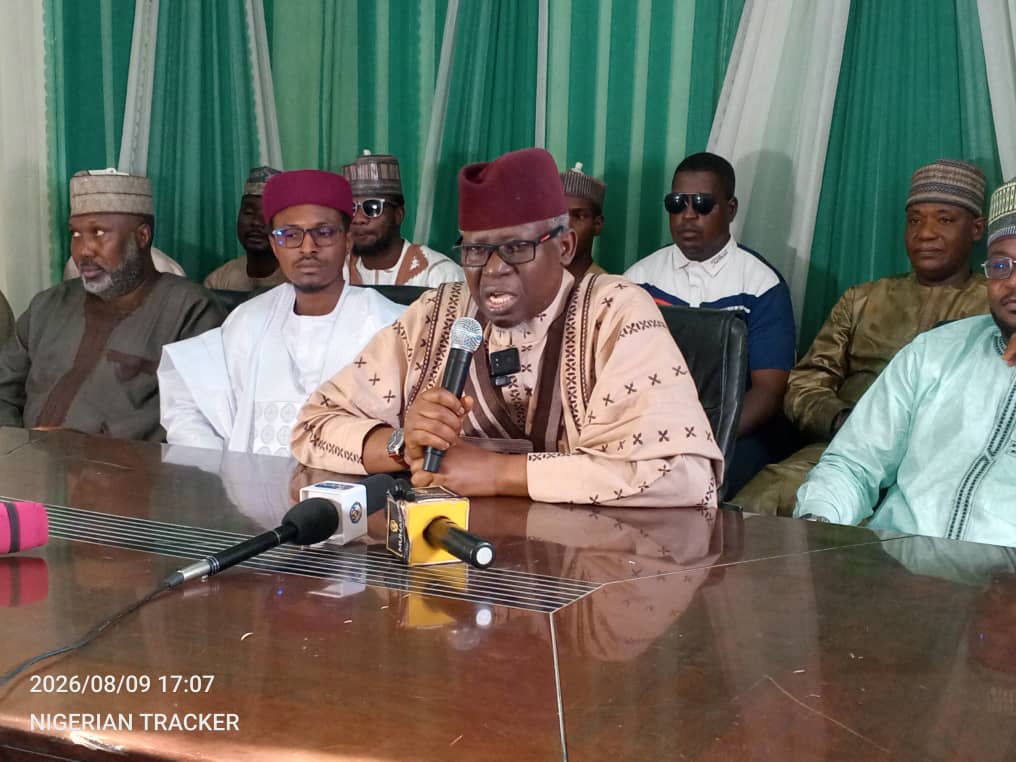
The gubernatorial candidate of the African Democratic Congress (ADC), Alhaji Ibrahim Ali Amin Little, has condemned the recent attack on journalists covering the All Progressives Congress (APC) rally at the Sani Abacha Stadium in Kano on Saturday
Little, in a statement signed by his Executive Assistant, Adnan Mukhtar, described the attack as unfortunate and unacceptable, calling on security agencies to demonstrate greater commitment to ending political thuggery in the state.
“Politicians are guilty of recruiting and using thugs during political rallies, and I believe this is absolutely wrong. Such actions contribute to the destruction of the future of our young people by exposing them to immoral and criminal activities.
“It is important that we tell ourselves the truth. A government that claims to be fighting thuggery, phone snatching and drug abuse should not be seen sponsoring or encouraging thugs to attend political rallies. This is unfortunate, unacceptable and uncalled for.
“Political rallies should be platforms for presenting ideas, engaging citizens and seeking their support, rather than breeding grounds for violence and criminality.”
Little extended his sympathy to the Nigerian Union of Journalists (NUJ), the affected journalists and all other victims of the incident.
He assured the people of Kano that, if elected, his administration would have zero tolerance for political thuggery and other forms of violence, stressing that his government would prioritise the protection of lives and property and create an environment where journalists and citizens can carry out their legitimate activities without fear.

Fifty Years, Four Terms. A Life Of Enterprise, Scholarship And Public Service-By Abbas Tajuddin

NFF Appoints Eguavoen as Interim Head Coach of Super Falcons
Dependable political ally’ — Tinubu celebrates Abdulmumin Jibrin at 50

A FRIEND’S LETTER TO ABDULMUMIN AT FIFTY

Ibrahim Little Condemns Attack on Journalists, Calls for Government Commitment to Ending Thuggery

From World’s 9th Most Populous City to Perfect: As Gov Yusuf Revisits Kano Master Plan

95% of Governor Abba Kabir Yusuf’s Promises Have Been Fulfilled — CPS Interview By Musa Diso, In Kano

Kano Islamic Scholar Declares Kano Widow Marriage Programme ‘Haram’, Urges Government to Stop It

Between Sabotage and Scepticism: Why Nigeria’s Oil Dream Keeps Stalling

Bello Sharada: A Great Writer, A Bookish Soul, Gone Too Soon
Fifty Years, Four Terms. A Life Of Enterprise, Scholarship And Public Service-By Abbas Tajuddin
NFF Appoints Eguavoen as Interim Head Coach of Super Falcons
Dependable political ally’ — Tinubu celebrates Abdulmumin Jibrin at 50
A FRIEND’S LETTER TO ABDULMUMIN AT FIFTY
Ibrahim Little Condemns Attack on Journalists, Calls for Government Commitment to Ending Thuggery
From World’s 9th Most Populous City to Perfect: As Gov Yusuf Revisits Kano Master Plan
95% of Governor Abba Kabir Yusuf’s Promises Have Been Fulfilled — CPS Interview By Musa Diso, In Kano
Kano Islamic Scholar Declares Kano Widow Marriage Programme ‘Haram’, Urges Government to Stop It
Between Sabotage and Scepticism: Why Nigeria’s Oil Dream Keeps Stalling
Bello Sharada: A Great Writer, A Bookish Soul, Gone Too Soon
-

 Opinion5 years ago
On The Kano Flyovers And Public Perception
-

 Features5 years ago
How I Became A Multimillionaire In Nigeria – Hadiza Gabon
-

 Opinion6 years ago
Kano As future Headquarters Of Poverty In Nigeria
-

 History5 years ago
Sheikh Adam Abdullahi Al-Ilory (1917-1992):Nigeria’s Islamic Scholar Who Wrote Over 100 Books And Journals
-

 Opinion5 years ago
My First Encounter with Nasiru Gawuna, the Humble Deputy Governor
-

 History5 years ago
The History Of Borno State Governor Professor Babagana Umara Zulum
-

 History5 years ago
The Origin Of “Mammy Market” In Army Barracks (Mammy Ochefu)
-

 News4 years ago
Federal University Of Technology Babura To Commence Academic Activities September