
News
UK Denies Nigerian Appeal for Ekweremadu’s Prison Transfer

By Yusuf Danjuma Yunusa
In a significant diplomatic development, the United Kingdom has turned down a formal appeal from the Federal Government of Nigeria to repatriate convicted former Deputy Senate President Ike Ekweremadu.
Ekweremadu was sentenced in the UK to nine years and eight months imprisonment for organ trafficking, specifically for conspiring to bring a 21-year-old Nigerian street trader to London to exploit him for a kidney.
The decision underscores the UK’s firm stance on the crime, despite high-level diplomatic efforts from Nigeria. Earlier this month, President Bola Tinubu had dispatched a senior delegation to engage with UK authorities in a bid to secure the transfer.
The delegation, which met with officials at the UK Ministry of Justice in London, included Nigeria’s Minister of Foreign Affairs, Yusuf Maitama Tuggar, and the Attorney General and Minister of Justice, Lateef Fagbemi.
The team was later received at the Nigerian High Commission in London by Ambassador Mohammed Maidugu, the Acting High Commissioner to the United Kingdom.
According to credible sources, the meeting formed part of President Bola Tinubu’s efforts to secure either Ekweremadu’s early release or a review of his sentence on humanitarian and legal grounds.
But UK Guardian reported on Monday that British government rejected the request.
A source at the Ministry of Justice was quoted confirming that the request was rejected.
“It is understood the UK government was concerned that Nigeria could offer no guarantees that Ekweremadu would continue his prison sentence after being deported,” the report read.
A government spokesperson said it could not comment on individual prisoners. They added: “Any prisoner transfer is at our discretion following a careful assessment of whether it would be in the interests of justice.”
A source said: “The UK will not tolerate modern slavery and any offender will face the full force of UK law.”
The wife of Ekweremadu, Beatrice, who was sentenced to four years and six months, with half spent in custody, was released earlier this year and has since returned to Nigeria.










News
Waiya’s Removal: Veteran Journalist Urges Yusuf to Appoint Professional as Information Commissioner
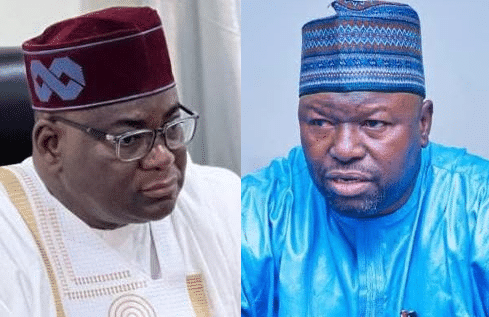
A veteran journalist, Dr. Garba Ubale Danbatta, has commended Kano State Governor, Engr. Abba Kabir Yusuf, for removing Comrade Ibrahim Abdullahi Waiya from his position as Commissioner for Information in the state’s recent cabinet reshuffle.
Danbatta, who has more than 30 years of experience in journalism, made the commendation in a statement issued to the press, arguing that Waiya’s approach to managing the Ministry of Information was more reflective of civil society activism and advocacy than professional journalism.
According to the veteran journalist, the former commissioner’s activities did little to strengthen professional journalism standards and improve the reputation of the media industry in Kano State.
“As someone who has spent over 30 years in the field of journalism, I commend Kano State Governor, Engr. Abba Kabir Yusuf, for his decision to remove the former Commissioner for Information. His approach was not that of a journalist; rather, he operated like an activist, an approach that essentially distorted the profession because it conflicted with the established ethics and standards of journalism,” Danbatta said.
He further alleged that Waiya’s activities had created a negative perception of Kano State among organisations monitoring media freedom, professional standards and the rights of journalists.
“His actions created a negative perception of Kano State among organisations that monitor the media industry and the rights of journalists. It is truly regrettable,” he added.
Danbatta expressed hope that Governor Yusuf would appoint a suitably qualified and experienced professional to head the Ministry of Information, stressing the importance of appointing someone with a solid background in journalism and a cordial working relationship with media practitioners.
He said the next commissioner should prioritise the development of the media industry, promote professional ethics and work towards restoring the reputation of journalism in Kano State.
The veteran journalist also expressed his readiness to offer professional advice and support to the state government towards improving the media sector.
“If the Governor of Kano State takes this step, we, for our part, are prepared to continue offering our full support and advice to help improve the profession and elevate its standing in Kano State in the eyes of the world,” he stated.
Dr. Garba Ubale Danbatta has over three decades of experience in journalism, having worked with several media organisations in Nigeria and abroad.
His professional career includes service with the Hausa Service of Deutsche Welle (DW) in Bonn, Germany; the Hausa section of Daily Trust newspaper; and as Deputy Editor of Rariya newspaper.
He also served as an editor at Hamada Radio in Abuja and Head of the Hausa Service at Kiss FM, Abuja, before joining Radio Nigeria in a managerial capacity.
Waiya was recently reassigned from the Ministry of Information to the Ministry of Youth as part of Governor Yusuf’s cabinet reshuffle.
News
Four States Adopt Play-Based ECCD Model to Tackle Out-of-School Children Crisis
In a major boost for early childhood education in conflict-affected regions, four states Borno, Niger, Benue and Sokoto have endorsed the community-based Early Childhood Care and Development (ECCD) school model as a cost-effective strategy to enroll under-five children who are out of school.
The commitment was made at a National ECCD Roundtable convened by the Development Research and Projects Centre (dRPC) in collaboration with the National Institute for Policy and Strategic Studies (NIPSS). The high-level dialogue was held at the Shehu Musa Yar’Adua Centre, Abuja.
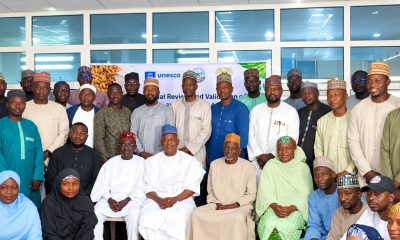
The one-day roundtable drew participation from national curriculum planners at the Nigerian Educational Research and Development Council (NERDC), the Special Adviser to the Minister of State for Education, the Director of Research at NIPSS, Prof. Musa Umar, and top education managers from Kano State.
Setting the tone for adoption, the Technical Adviser on Education Reform to the Kano State Governor, Mallam Haladu Mohammed, announced that Kano State has adopted the dRPC community-based ECCD model for play-based learning.
Speaking on the sidelines of activities marking the International Day of the Girl Child, Mohammed described the model as cost-effective and scalable for expanding access.
Corroborating him, the Director of Planning, Research and Statistics at the Kano State Ministry of Education confirmed his participation in the evaluation of dRPC’s eight-year community-based ECCD project being implemented by Prof. Bala Ado Kofar Mata of Bayero University, Kano.
According to him, the evaluation will provide empirical evidence on how play-based learning enhances child development and school readiness.
Speaking separately, the Commissioners of Education from Niger and Borno States, the Benue State Commissioner for Humanitarian Affairs, and the Chairman of the Sokoto State Universal Basic Education Board (SUBEB) said the model was timely for states grappling with insecurity and displacement.
They pledged to initiate immediate steps to replicate the Kano experiment in their respective states.
Participants at the roundtable stressed that community-based approaches offer a viable alternative in underserved and displacement-affected communities where insecurity has disrupted conventional schooling.
In a major outcome, the Commissioners from Niger and Benue States invited the dRPC team to meet with their executive governors next week to present the model for formal adoption.
The development signals growing sub-national interest in community-driven, play-based learning as a sustainable solution for Nigeria’s youngest and most vulnerable learners.
News
FCT Residents Say Extreme Heat Strains Health, Finances and Businesses as NiMet Warns of Hotter Days
By Yusuf Danjuma Yunusa
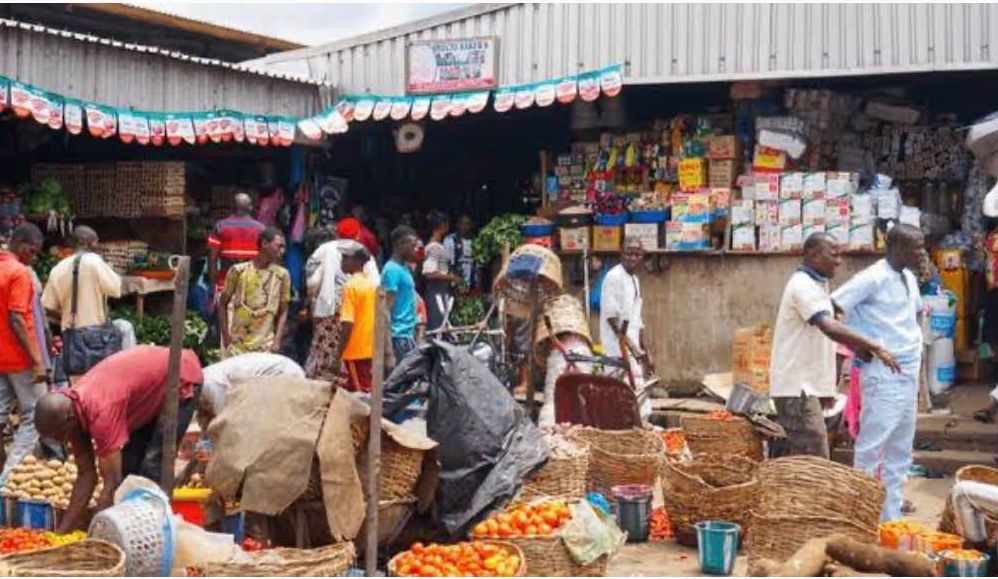
Residents and business owners in the Federal Capital Territory (FCT) say extreme heat is harming their health, raising household expenses and disrupting businesses and livelihoods.
Residents who spoke to journalists said the intense heat had increased their dependence on electricity, water and other cooling measures, while inconsistent power supply made coping more difficult. They reported food spoilage, higher operating costs, changes to working hours and heat-related discomfort, particularly among households and people whose jobs expose them to direct sunlight.
The Nigerian Meteorological Agency (NiMet), in an advisory issued on October 23, warned Nigerians to prepare for hotter days, increased heat discomfort, dust and possible water scarcity as the country transitions from the rainy to the dry season. The agency identified dehydration, heat exhaustion and heatstroke as health risks associated with excessive heat, warning that prolonged exposure could affect people’s health and productivity.
To reduce heat-related risks, NiMet advised Nigerians to drink water regularly, wear lightweight and breathable clothing, limit prolonged exposure to direct sunlight, especially during the hottest hours of the day, and schedule strenuous outdoor activities for cooler periods.
In Sokale community, Bwari Area Council, Patient Ndidi said coping with the heat had become an additional financial burden, particularly as a mother trying to keep her children comfortable while managing household expenses.
“The sun was so intense that it felt as though it was draining my blood. Even when the children returned from school, I had to tell them to go and take their baths because the heat was so much,” she said.
Mrs Ndidi said the situation had increased her household’s electricity consumption because the family needed to run fans for longer periods whenever power was available.
“We use more units now because whenever there is electricity, we tend to leave the fan on throughout the day. As a result, we are constantly recharging our prepaid meter,” she said.
She explained that inconsistent electricity supply had also made food preservation difficult, as cooked meals could easily spoil during prolonged power outages. According to her, foods such as egusi and groundnut soup, beans and other cooked meals were particularly difficult to preserve, forcing her to prepare smaller quantities that could be consumed at once. She said the adjustment had increased the frequency of cooking and sometimes resulted in food wastage, additional expenses and stress.
Mrs Ndidi added that when electricity was unavailable, members of her household sometimes poured water on their bodies for temporary relief.
“Actually, it has not helped us at all because once there is no electricity, you return to square one,” she said.
She called on the government to improve electricity supply and consider reducing tariffs to ease the financial burden on households.
Similarly, John Anthony, a resident of Kubwa, said coping with the heat was more challenging at home than at his workplace, where air-conditioning provided a comfortable environment.
“Office is not a problem at all; there is AC, so everywhere is always cool until we go home,” he said.
Mr Anthony said his family sometimes opened their windows and doors to improve ventilation while drinking sufficient water to cope with the heat. He urged the government to ensure a stable electricity supply so residents could use cooling appliances.
“Government should please help us to ensure there is stable light so that we will be able to cope and it will reduce it,” he said.
Another Kubwa resident, Ignatius Ikechukwu, a Point of Sale (POS) operator who works under the sun, described coping with the heat as challenging. He said drinking sufficient water was his main strategy for managing the situation while carrying out his daily activities.
“I do not joke with water at all,” he said.
The effects of the extreme heat have also extended to traders and other business owners, particularly those dealing in perishable goods and products requiring refrigeration.
In Jikwoyi, Lovina Obiyi, a trader dealing in provisions, foodstuffs and poultry, said the excessive heat had caused the loss of considerable quantities of poultry.
“We specialise in provisions, foodstuffs and poultry. Due to the heat, we have lost quite a good amount of chickens and turkeys to the point that we need to open the place for ventilation,” she said.

Kano’s War On Drugs: How Barr. Muhyi’s Taskforce Is Changing The Game

The Reward For Hardwork Is More Work: A Rejoinder To Dr Garba Ubale Danbatta

Waiya’s Removal: Veteran Journalist Urges Yusuf to Appoint Professional as Information Commissioner

Four States Adopt Play-Based ECCD Model to Tackle Out-of-School Children Crisis

FCT Residents Say Extreme Heat Strains Health, Finances and Businesses as NiMet Warns of Hotter Days

Kano Monitors ₦48.9bn Projects Across Six LGAs

Kano Spends ₦10.36bn on Hospitality, Sitting Allowances, Others in Six Months

Open The Social Sciences “A Tribute to a Heterodox Scholar: Mallam Ibrahim Muazzam

Senate Passes Barau’s Bill to Provide Legal Framework for Yusuf Maitama Sule Federal University of Education, Kano

Kano First Forum Petitions Police Over Alleged Inciting Statements by Aminu Babba Dan Agundi
Kano’s War On Drugs: How Barr. Muhyi’s Taskforce Is Changing The Game
The Reward For Hardwork Is More Work: A Rejoinder To Dr Garba Ubale Danbatta
Waiya’s Removal: Veteran Journalist Urges Yusuf to Appoint Professional as Information Commissioner
Four States Adopt Play-Based ECCD Model to Tackle Out-of-School Children Crisis
FCT Residents Say Extreme Heat Strains Health, Finances and Businesses as NiMet Warns of Hotter Days
Kano Monitors ₦48.9bn Projects Across Six LGAs
Kano Spends ₦10.36bn on Hospitality, Sitting Allowances, Others in Six Months
Open The Social Sciences “A Tribute to a Heterodox Scholar: Mallam Ibrahim Muazzam
Senate Passes Barau’s Bill to Provide Legal Framework for Yusuf Maitama Sule Federal University of Education, Kano
Kano First Forum Petitions Police Over Alleged Inciting Statements by Aminu Babba Dan Agundi
-

 Opinion5 years ago
On The Kano Flyovers And Public Perception
-

 Features5 years ago
How I Became A Multimillionaire In Nigeria – Hadiza Gabon
-

 Opinion6 years ago
Kano As future Headquarters Of Poverty In Nigeria
-
 History6 years ago
Sheikh Adam Abdullahi Al-Ilory (1917-1992):Nigeria’s Islamic Scholar Who Wrote Over 100 Books And Journals
-

 Opinion5 years ago
My First Encounter with Nasiru Gawuna, the Humble Deputy Governor
-

 History5 years ago
The History Of Borno State Governor Professor Babagana Umara Zulum
-
 History6 years ago
The Origin Of “Mammy Market” In Army Barracks (Mammy Ochefu)
-
 News5 years ago
Federal University Of Technology Babura To Commence Academic Activities September