
News
Kano Auditor General Hosts Maiden Local Government Audit Forum to Strengthen Transparency and Accountability
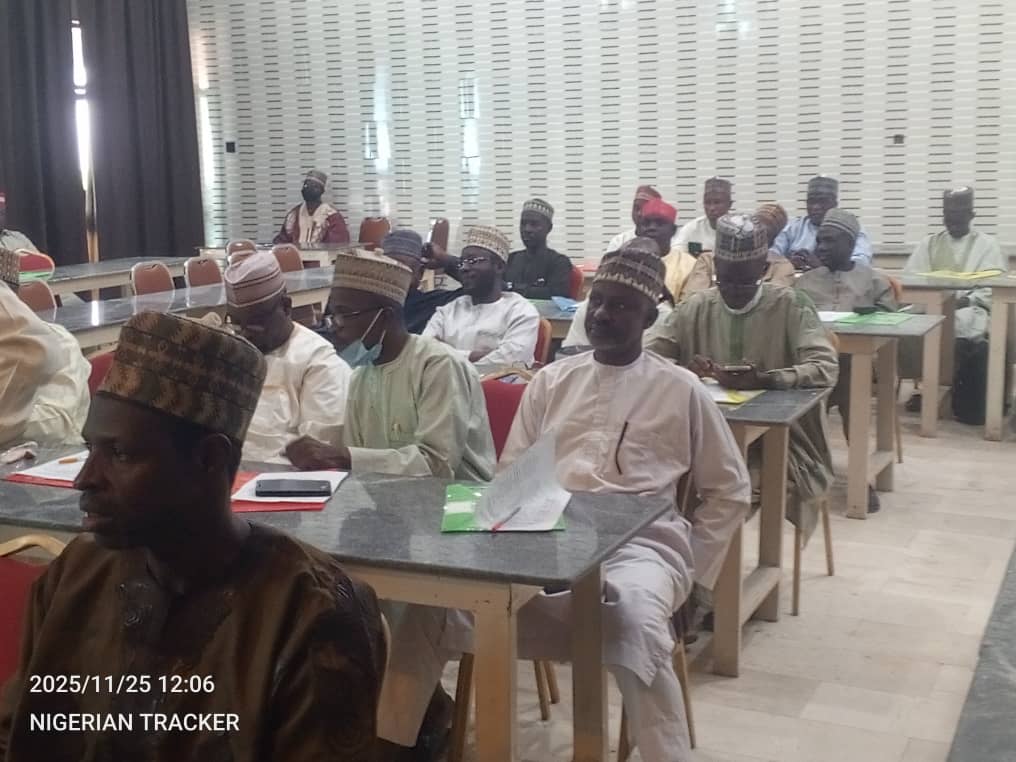
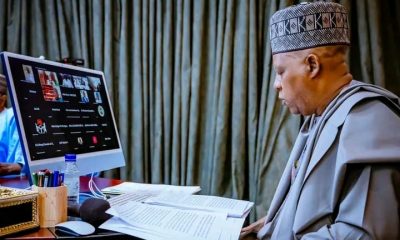
In his efforts to ensure accountability, transparency, and open government policy, the Office of the Auditor General for Local Government Councils in Kano State held the maiden edition of the Audit Forum on the 44 Local Government consolidated financial report for the year ended 31st December, 2024.
Ahmed Tijjani Abdullahi, the Auditor General for Local Government in Kano State, said the forum marked a significant step in their collective commitment to strengthening accountability, enhancing transparency, and improving the financial management systems that guide service delivery at the grassroots level in the state.
“Local government remains the closest tier of government to our people, and their ability to plan, manage, and report on public resources has a direct impact on development outcomes in our communities. As such, the accuracy, completeness, and integrity of their financial statements are not mere administrative requirements; they are essential tools for informed decision-making, public trust, and sustainable development,” said Ahmed Tijjani.
He commended the Executive Governor of Kano State, Alhaji Abba Kabir Yusuf, and the Kano State House of Assembly led by Speaker Jibrin Ismail Fargore, as well as the Public Accounts Committee, for their cordial relationship and support at all times.
In a remark, the Kano State Auditor General, Alhaji Rabi’u Yusuf, said the program was organized to analyze the audited 2024 financial statements of the 44 Local Governments, which had already been sent to the Kano State House of Assembly.
According to him, the program, which had in attendance all state and local government financial managers, civil society organizations, and journalists, thoroughly discussed all the nitty-gritty of public fund management.
“For six years, the Kano State Government has been holding the State Audit Forum. Now, with the commitment of the Executive Governor of Kano State, we are holding it at the Local Government level so that Kano residents will hold the managers of their funds accountable. As Nigerian Local Government autonomy is here to stay, this forum will support executives at the local level to ensure maximum utilization of people’s funds,” said Rabi’u Yusuf.
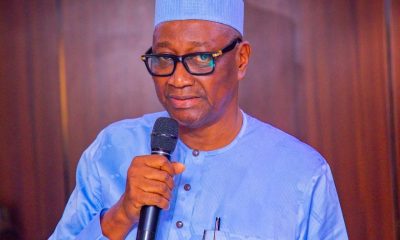
Speaking earlier, the Chairman of the Forum, Alhaji Ali Ben Umar, said the findings and recommendations contained in the Annual Report of the Auditor General are designed to strengthen Public Financial Management in the Local Government Councils of the State and help improve governance, accountability, transparency, and integrity in performance.
Ben Umar said the core objectives of the Annual Audit Forum include promoting transparency and accountability by ensuring that the Local Government Councils are accountable for their actions and use public resources responsibly; improving efficiency and effectiveness by identifying waste, promoting good practices, and evaluating performance; strengthening good governance by helping the Local Government Councils to improve service delivery; and enhancing public trust by instilling confidence among citizens and stakeholders that public resources are managed well and public services are delivered effectively.
Declaring the forum open, the Chairman of the Public Accounts Committee of the Kano State House of Assembly, Alhaji Tukur Muhammad Fagge, assured the lawmakers’ commitment to supporting both state and local government auditors in the discharge of their constitutional responsibilities.
He said the Assembly will ensure standard practices of financial management, transparency, and accountability in running the affairs of the state.













News
Calls for INEC Chairman’s Resignation, Premature, Risky-Oluwafemi

Sir Victor Walsh Oluwafemi
Public Analyst and Development Consultant has called for due process and responsible public discourse over calls for the resignation of Independent National Electoral Commission INEC’s chairman, Prof Joash Amupitan, SAN.
In a statement he personally signed, Oluwafemi noted that:
“I am compelled, as a concerned citizen and a professional engaged in governance advisory and institutional systems, to address the growing calls for the resignation of the Chairman of the Independent National Electoral Commission, Professor Joash O. Amupitan, SAN.
“While accountability remains central to any functioning democracy, the manner, tone, and timing of these demands raise serious questions about intent and consequence.
“It is important to critically examine whether such calls are grounded in verifiable institutional breaches or whether they reflect political positioning and reactionary pressure.
Oluwafemi further stressed that: “The positions recently advanced by the African Democratic Congress and the Supreme Council for Shari’ah in Nigeria, if not exercised with caution, risk projecting a troubling precedent that leadership within critical national institutions can be influenced through public agitation rather than constitutional procedure.
“When institutions begin to respond to pressure instead of process, democracy itself becomes negotiable.”
“Nigeria’s constitutional framework is unambiguous. The removal of the INEC Chairman is not a matter for public sentiment or media campaigns, but one strictly governed by law. It is therefore both prudent and necessary to advise that all grievances, allegations, or concerns be subjected to judicial scrutiny.
At this stage, restraint is not only advisable but also essential.
“In every serious democracy, accusation must travel through the courts, not through microphones.”
“Equally concerning is the growing trend of unguarded and, in some instances, uncultured utterances across television, radio, and digital platforms.
“Public commentary on matters of national importance must be measured, responsible, and evidence-based. The consequences of careless rhetoric are neither theoretical nor distant.
“Recent electoral observations in Nigeria recorded over 200 incidents of election-related violence, with multiple fatalities.
“A significant driver of such tensions has consistently been inflammatory rhetoric and the premature delegitimisation of institutions.
“Words, when recklessly deployed in a fragile political climate, can become triggers rather than expressions.”
“It is therefore imperative to caution all stakeholders. Opposition actors must ensure that their engagements strengthen democratic confidence rather than weaken institutional trust.
“Socio-religious organisations must be mindful of the weight of their voice, particularly in matters that intersect with national governance.
“Those who appear on radio and television must understand that public platforms are not merely spaces for expression, but instruments that shape national mood and direction. Discipline in speech is not a limitation; it is a responsibility.
“Freedom of expression must never become a licence for institutional erosion.”
“This is not a defence of any individual. It is a defence of process, order, and democratic stability. Where there is credible evidence of wrongdoing, it must be tested through lawful and constitutional channels. Disputes must be resolved within the framework of the judiciary.
“Until such processes have run their course, calls for resignation remain premature and potentially destabilising.
“A nation does not strengthen its democracy by removing officials through pressure, but by upholding the systems designed to hold them accountable.”
“Nigeria must choose discipline over noise, process over pressure, and stability over sentiment.
News
Turaki-led PDP Faction Rejects Secretariat Takeover by Wike Group, Accuses Police of Bias
By Yusuf Danjuma Yunusa
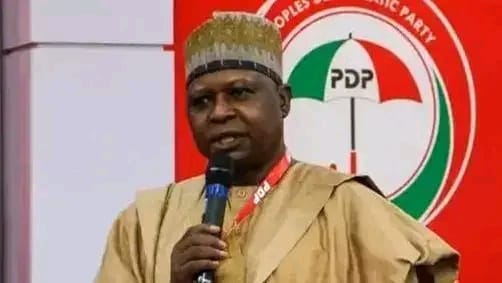
The faction of the Peoples Democratic Party (PDP) loyal to Kabiru Tanimu Turaki has formally rejected the takeover of the party’s national secretariat by a rival group aligned with Federal Capital Territory (FCT) Minister, Nyesom Wike.
The dispute over the control of Wadata Plaza, the party’s headquarters, escalated after police sealed the facility on November 18, 2025, following clashes between the two factions.
On Saturday, the Wike-aligned group announced that the police had unsealed the secretariat, allowing them to take control of the premises. However, the Turaki faction quickly dismissed the development, accusing law enforcement of partisanship and noting that the ownership dispute remains before the courts.
In a statement, Ini Ememobong, spokesperson for the Turaki faction, alleged that the police had unlawfully aided the Wike camp, describing its members as “agents of the federal government and APC apologists, masquerading as PDP members, despite a pending appeal.”
Ememobong said the court ruling the police claim to be acting upon has already been appealed. He added that the police force, as a party to the case, has been formally served with the appeal and is fully aware of the legal status.
“By their action, they have tampered with the res which could render the judgment of the Court of Appeal nugatory when it is eventually given,” Ememobong said. “It is most shameful that those entrusted with protecting the law are those disobeying the law.”
He further criticized the conduct of the police throughout the crisis, saying, “While it is not surprising that the police is acting in a clearly partisan manner, we were hopeful that they would act differently under the command of the new Inspector General of Police. From the inception of this imbroglio, the officers of the police force have consistently acted in a manner that leaves no one in doubt as to their support for the Wike-backed APC apologists.”
Despite the tensions, Ememobong urged members of his faction to remain peaceful and avoid any actions that could disrupt public order.
“As law-abiding citizens, we admonish our members to continue to maintain peace and not undertake any activity capable of breaching public peace, while we promise to take all necessary steps within the ambit of the law to protect the rights and privileges of the genuine members of the Peoples Democratic Party,” he said.
The faction assured the public that what it called “state-sponsored persecution” would not last, expressing hope for a return to genuine democratic practice in the interest of preserving the republic.
News
Many Feared Dead as NAF Deadly Airstrike Hits Borno-Yobe Border Market

By Yusuf Danjuma Yunusa
At least 56 people, mostly traders, are feared dead and 14 others hospitalized after an airstrike struck a weekly market on the Borno–Yobe border on Saturday.
The attack occurred at Jilli Market, which lies between Gubio and Geidam Local Government Areas (LGAs) of Borno and Yobe States, respectively. The market is a major hub for traders and buyers from surrounding communities, including Gubio, Chiweram, and Benisheikh in Borno, as well as Gurokayeya and Geidam in Yobe.
The airstrike is believed to have been carried out during a military operation targeting suspected Boko Haram insurgents. Multiple sources disclosed that a fighter jet was tracking a group of suspected insurgents who had reportedly come to the market to collect levies from traders and obtain supplies. However, the strike apparently missed its intended target.
An eyewitness who participated in rescue efforts described the scene:
“The incident happened around 2:46 p.m. while business activities were ongoing. Four fighter jets carried out the attack, though the fourth jet was not clearly visible. We only heard the sound of explosions.
“I counted 56 corpses myself and helped rescue two injured people, taking them to the hospital. I believe the number of casualties may be higher, as more bodies are still being recovered.”
The councillor of Fichimaram Ward, Malam Lawan Zanna, confirmed the incident to Daily Trust. He stated that about 20 people had been admitted to the Specialist Hospital in Geidam, Yobe State.
“The incident occurred at Jilli village’s weekly market under Fichimaram Ward in Geidam LGA. From the information available to us, it was an airstrike.
“When the jets launched their attack, people panicked and began to run, but the strikes continued. As we speak, over 30 people have been killed.
“More than 20 people were hospitalized in Geidam. Two were referred to the Teaching Hospital in Damaturu. Out of those receiving treatment, nine have died, bringing the death toll to over 30,” he said.
The Special Adviser to the Yobe State Governor on Security Matters, Brigadier General Abdulsalam Dahiru (rtd), confirmed the incident but stated that it occurred within Borno State.
“I have spoken with the chairman of Geidam LGA, who informed me that Jilli village falls under Gubio LGA of Borno State. You may contact officials in Maiduguri for further details,” he said.
As of the time of filing this report, the Nigerian Air Force had not issued an official statement on the incident.

Calls for INEC Chairman’s Resignation, Premature, Risky-Oluwafemi

Stakeholders Back Murtala Sule Garo For Kano Deputy Governor

Turaki-led PDP Faction Rejects Secretariat Takeover by Wike Group, Accuses Police of Bias

Many Feared Dead as NAF Deadly Airstrike Hits Borno-Yobe Border Market

Malam Inuwa Waya Commends Governor Yusuf’s Reforms in Kano Land Administration

ADC Leadership Crisis: State Chairmen to Elect Caretaker Committee on Tuesday

Governor Abba Kabir Yusuf Holds Exclusive Prerogative to Choose Deputy – Malam Inuwa Waya

NUJ Kano Online Chapel Tightens Membership Standards, Approves 31 Applicants After Rigorous Screening

APC National Convention : How DSP Barau Displays Political Sagacity, Deep Knowledge of Democracy Before President Tinubu, Others

Radiographers Kick Against Controversial Health Bills, Demand Immediate Withdrawal
Calls for INEC Chairman’s Resignation, Premature, Risky-Oluwafemi
Stakeholders Back Murtala Sule Garo For Kano Deputy Governor
Turaki-led PDP Faction Rejects Secretariat Takeover by Wike Group, Accuses Police of Bias
Many Feared Dead as NAF Deadly Airstrike Hits Borno-Yobe Border Market
Malam Inuwa Waya Commends Governor Yusuf’s Reforms in Kano Land Administration
ADC Leadership Crisis: State Chairmen to Elect Caretaker Committee on Tuesday
Governor Abba Kabir Yusuf Holds Exclusive Prerogative to Choose Deputy – Malam Inuwa Waya
NUJ Kano Online Chapel Tightens Membership Standards, Approves 31 Applicants After Rigorous Screening
APC National Convention : How DSP Barau Displays Political Sagacity, Deep Knowledge of Democracy Before President Tinubu, Others
Radiographers Kick Against Controversial Health Bills, Demand Immediate Withdrawal
-

 Opinion4 years ago
On The Kano Flyovers And Public Perception
-

 Features5 years ago
How I Became A Multimillionaire In Nigeria – Hadiza Gabon
-

 Opinion5 years ago
Kano As future Headquarters Of Poverty In Nigeria
-

 History5 years ago
Sheikh Adam Abdullahi Al-Ilory (1917-1992):Nigeria’s Islamic Scholar Who Wrote Over 100 Books And Journals
-

 Opinion4 years ago
My First Encounter with Nasiru Gawuna, the Humble Deputy Governor
-

 History5 years ago
The Origin Of “Mammy Market” In Army Barracks (Mammy Ochefu)
-

 History4 years ago
The History Of Borno State Governor Professor Babagana Umara Zulum
-

 News4 years ago
Federal University Of Technology Babura To Commence Academic Activities September