
News
Inside Nigeria’s Alleged Coup Plot: Rumours, Arrests, and the Shake-Up in Tinubu’s Security Leadership
By Yusuf Danjuma Yunusa
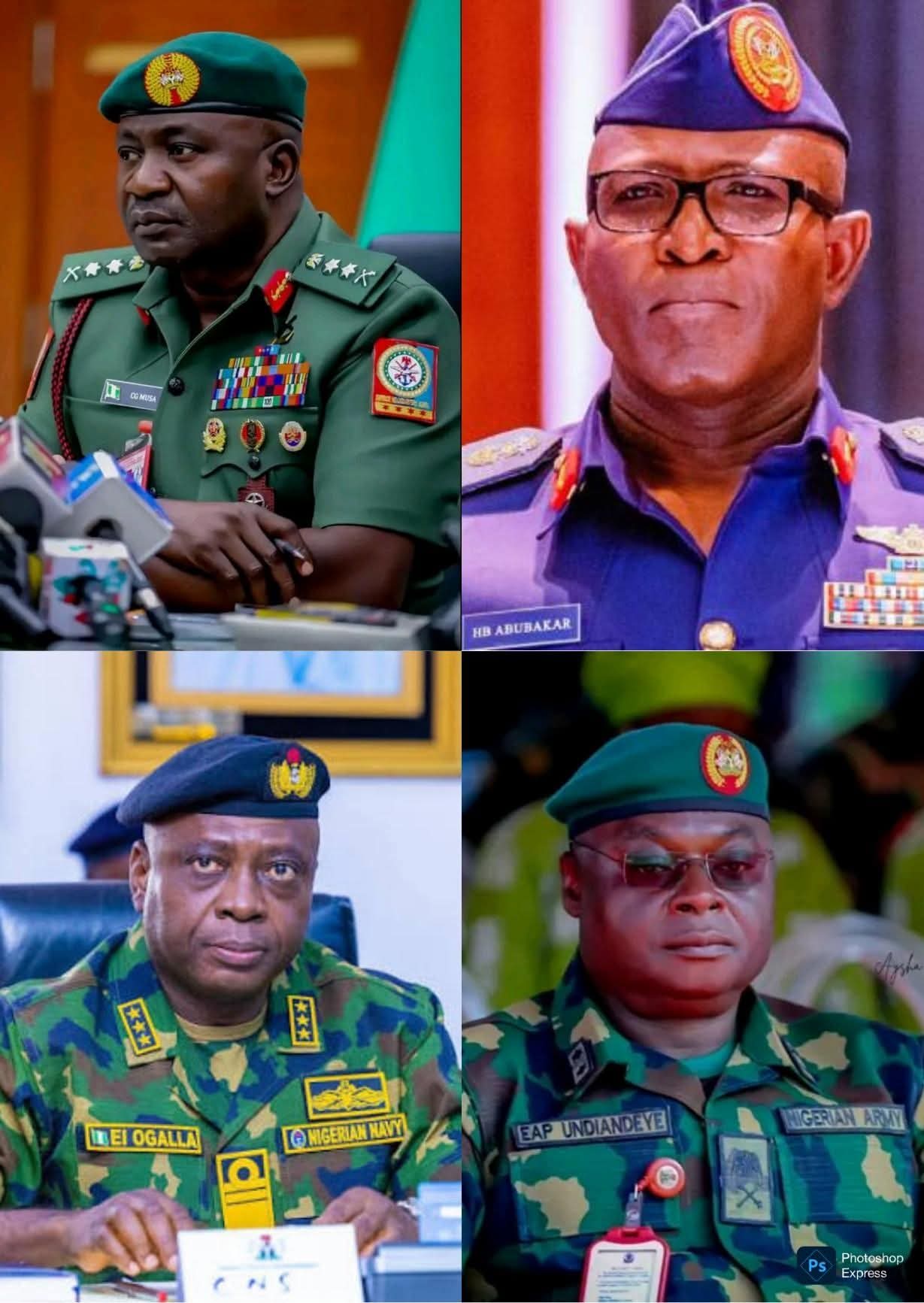
On Friday, 24th of October, 2025, president Tinubu shocked the nation with the announcement of the removal of the service chiefs amidst the growing speculations about coup in the country.
Parts of the press statement as released and signed by the president’s special adviser on Media and Public Communication, Sunday Dare, read:
“President Bola Tinubu has made changes in the hierarchy of the Service Chiefs in furtherance of the effort of the Federal Government of Nigeria to strengthen the national security architecture.
The President appointed General Olufemi Oluyede to replace General Christopher Musa as the new Chief of Defence Staff. The new Chief of Army Staff is Major-General W. Shaibu. Air Vice Marshall S.K Aneke is Chief of Air Staff while Rear Admiral I. Abbas is the new Chief of Naval Staff. Chief of Defence Intelligence Major-General E.A.P Undiendeye retains his position.
The President, Commander-in-Chief of the Armed Forces, expresses most profound appreciation to the outgoing Chief of Defence Staff, General Christopher Musa and the other Service Chiefs for their patriotic service, and dedicated leadership.”
However, fresh and subsequent report from Premium Times revealed that more people believed by the Nigerian Defense to have connection with the detained officers have also been arrested.
The report is true,” a military source familiar with the matter said to PREMIUM TIMES after the report. “More have been picked up since the initial arrests.”
The source said the officers allegedly planned a bloody pustch in which some top government officials were marked for assassination.
The Genesis Of The Coup Speculations
The Nigerian Tracker News recalled that on October 4, 2025, the military high command issued a statement titled “update/press statement on the breach of security in the country: Sixteen officers to face military justice for indiscipline, breach of service regulations”.
The statement, signed by Brigadier General Gusau, opened the floodgate for the stories on the alleged coup plot.
“Armed Forces of Nigeria wishes to inform the public that a routine military exercise has resulted in the arrest of sixteen officers over issues of indiscipline and breach of service regulations. Investigations have revealed that their grievances stemmed largely from perceived career stagnation caused by repeated failure in promotion examinations, among other issues,” it said.
Further investigation into the matter revealed that the said coup plot is being funded and engineered by a certain former governor from the south as he has been placed on watch, and being investigated for any involvement with the 16 army officers detained.
Investigation and reports also revealed that if everything had gone well the way they planned, the coup would have happened on the 1st of October, 2025. Detailing that the plan was to use the parade as a stage to attack the president and senior politicians, before announcing a new government which, of course, would have been military one. Also, had their plan gone wrong, report from Premium Times revealed that they would have re-strategised on 25th of October, 2025. But fortunately for the administration of president Tinubu, the Defense Headquarters aborted the plans by arresting the officers involved in the orchestration.
Moreover, when the federal government of Nigeria and Defense Headquarters came up with their refutation and the crafted excuses, the rumor became more concerning owing to the fact that, no where in the constitution of the country or the armed forces regulation is it stated for officers to be detained simply for failing promotional exams.
Under the Armed Forces Act(Cap A20, Laws of the Federation 2004), detention is only permitted for offences like mutiny, disobedience, treason, corruption or conduct prejudicial to discipline, not exam failure.
It even became more concerning when Sahara Reporters made its exclusive report on the matter where it stated that “while the Nigerian military in a statement few days ago claimed the detention of the officers was linked to “repeated failure in promotion examinations and perceived career stagnation”, top sources revealed that they were actually arrested over a coup plot.”
It further disclosed that a senior official of the Defence Intelligence Agency involved in the arrest told their correspondent that the officers led by an Army Brigadier General were planning to stage a coup and take over government from “selfish politicians”.
The coup attempt, according to the source interacted with by Sahara Reporters, was thwarted after an intelligence gathering by DIA and sister agencies.
“The 16 officers were planning a coup. The military authorities were just being diplomatic in the statement released by the spokesperson. They have started doing secret meetings on how to overthrow the President and other top government officials,” the source told SaharaReporters.
The source continued, “they’re all officers within the rank of Captain to Brigadier-General and are still in detention at DIA as we talk. They were picked recently at their various houses around the country. Their main objective was to overthrow President Tinubu and announce a military government.”
Another source added that the October 1 Independence Day parade was cancelled because of the coup attempt.
The source told Sahara Reporters, “Yes, they were arrested for planning to stage a coup and take over government. That was the main reason why the Independence Day parade scheduled to hold on Wednesday, October 1 as part of activities marking the country’s 65th Independence Anniversary was cancelled.
This was because intelligence reports showed they planned the coup on October 1st during a military parade.
So the National Security Adviser and other service chiefs asked the Tinubu-led government to cancel the parade earlier scheduled to mark the day.
Their plan was to shoot at the President and other top politicians during the event. The move by the military authorities announcing their arrests was to douse tension,” the source concluded.
How Credible Is The Rumor/Speculation
Although the Defence Headquarters and the federal government of Nigeria refuted the reports as regard the real reason behind the officers detained:
“The attention of the Defence Headquarters (DHQ) has been drawn to a false and misleading report by an online publication insinuating that the cancellation of activities marking Nigeria’s 65th Independence anniversary was linked to an alleged attempted military coup. The report also made spurious references to the recent DHQ press release announcing the arrest of 16 officers currently under investigation for professional misconduct.
The Armed Forces of Nigeria (AFN) wishes to categorically state that the claims by the said publication are entirely false, malicious and intended to cause unnecessary tension and distrust among the populace. The decision regarding the cancellation of 65th Independence anniversary parade was to allow Mr President attend a strategic bilateral meeting outside the country…”
But an exclusive report from Sahara Reporters, Premium Times and that of Daily Trust cemented the rumor to be factual. Three separate media and investigative news companies carried out investigation, distinctively, about the coup plot, only to come out with the same story, that sounds so convincing.
In fact, one of the sources spoken to by the Daily Trust correspondent admitted to the fact that the leadership of the Nigerian Armed Forces crafted the statement released, carefully, after wide consultations with stakeholders:
“Based on the advice by the Attorney General of the federation, the whole thing was toned down so that it doesn’t create apprehension for the citizens, investors and the international community.
“It was doctored to appear routine. However, investigation and prosecution must still take place. The COAS (chief of army staff) went to see Mr President in Lagos yesterday (October 3) and returned. He showed him (Tinubu) the preliminary report and the press release before he authorized it,” the source said.
Records Of Military Coup In Nigeria
Since Nigeria became independent in 1960, there have been five successful military coups.
The first of them all which was the January 15, 1966, primarily led by Major Chukwuma Kaduna Nzeogwu and other junior Army officers. The government it ousted was the first Nigerian Republic which was led by late Sir Abubakar Tafawa Balewa, the then prime Minister.
The second of all was the counter coup which took place in July 29, 1966. Northern military officers, primarily led by Major Murtala Muhammed and many others carried out the operation. The military government of General Johnson Aguiyi-Ironsi was ousted, and he was assassinated while on a tour in Ibadan.
Following the second was that of July 29, 1975 coup. A group of senior military officers, including the Chief of Army Staff, Colonel (later General) Joseph Nanven Garba, and General Murtala Muhammed, executed the coup plot. The government of General Yakubu Gowon, while he was attending an OAU summit in Kampala, Uganda was overthrown.
The fourth on the list was the February 13th, 1976 coup carried out by a group of mid-level officers led by Lieutenant Colonel Buka Suka Dimka. The government of General Murtala Muhammed was ousted in this coup. While the specific plotters failed, the coup successfully decapitated the government by killing the sitting Head of State and installing a new one (Obasanjo). Therefore, it resulted in a change of the country’s leadership, hence the reason for it being considered as a successful coup.
And lastly, the coup of December 31, 1983, which was executed by senior army officers including Major General Muhammadu Buhari, Major General Tunde Idiagbon, and Brigadier Sani Abacha. The government ousted was the Second Nigerian Republic, led by President Shehu Shagari.
Ironsi ignored early warning signals from within his ranks and was overthrown. Gowon dismissed murmurs of discontent until Colonel Joe Garba and others struck in 1975 while he was abroad. Shagari did not imagine that the same Buhari he trusted would emerge as the new Head of State on December 31, 1983. And Buhari himself, two years later, fell to Babangida’s quiet schemes.
The chances which those past leaders failed to take amidst rumor as the one presently circulating was what led to the successful execution of the coup plot against their governments, and it’s glaring that president Tinubu doesn’t want to toe their path, hence the security architecture shake-up.
That is why the so-called professors of coups(Babangida and Abacha) survived where others fell. They understood that allegations of coup are as dangerous as coup itself.
Do The Service Chiefs Deserve To Be Sacked?
This has been one of the questions that have been making rounds on the social media space since the removal of the service chiefs. Due to their dedication to work, making decisive decision and reforms in the effort to strengthen the country’s security architecture, especially for General Christopher Musa, some people are of the opinion that they are not supposed to be treated the way they were. That if for anything, they were the ones who made it possible for the president to be aware of the coup plot which, out of loyalty and patriotism, they had it thwarted.
The Nigeria’s security architecture is known to build on the templates of focusing on internal reorganization, rebuilding morale from within, and halting the downward spiral. Here, success is measured in institutional recovery and preventing catastrophic losses. This has been the hallmark of the past Chief of Defense Staff until General Christopher Musa who built on their template but focused on leveraging the stabilized institution to launch aggressive, public-facing operations. Unlike in the case of the previous Chief of Defense Staff, the spirit here, as portrayed by General Christopher, was success is measured in kinetic results and the restoration of public confidence.
He significantly boosted troop and public morale through his leadership style. General Christopher intensified kinetic operations across multiple fronts, leading to the death of several high-value terrorist/bandit leaders. He became the public “face” of the military’s fight against insecurity.
A critical observation of the style of leadership of the immediate past Chief of Defense Staff, General Christopher Musa, and his predecessor, Lucky Irabo, would have one agree to the fact that while the late General Irabo was more measured, diplomatic and systemic oriented, General Christopher on the other hand was charismatic, publicly assertive, and media-savy. He was a public-facing commander.
The General brought so much exposure to the office that one would question if there had been an office designated as the Chief of Defense Staff before his time. Of course yes, the office has been in existence since 1990:
We had Admiral Augustus Aikhomu as the Chief of Defense Staff in 1990. Air Marshal N. A. E Eduok in 1992, General Sani Abacha in 1993, Admiral Murtala Nyako in 1993, General Aliyu Gusau Mohammed also in 1993, General Frederick E. O Chijuka in 1995, General John Shagaya in 1996, General Abdulsalami Abubakar in 1998, General Al-amin Daggash also in 1998, Admiral Ibrahim Ogohi in 1999.
Then we had General Alexander O. Ogomudia in 2003, General Martin-Luther Agwai in 2006, General Andrew Azazi in 2007, Air Chief Marshal Oluseyi Petinrin in 2010, Admiral Ola Sa’ad Ibrahim in 2012, Air Chief Marshal Alex Badeh in 2014, General Abayomi G. Olonisakin in 2015, General Lucky Irabor in 2021, General Christopher G. Musa in 2023, and currently General Olufemi Oluyede whom was appointed just recently on Friday, 24th of October, 2025.
A deliberate and careful observation of the administration of the listed Chief of Defense Staff, one wouldn’t doubt that General Christopher Musa’s tenure is viewed very favorably in comparison, especially in the realm of perception and morale. He is often described as one of the most effective and popular CDS in recent memory. However, this assessment comes with the critical caveat that he stood on the foundation built by General Irabor. The enduring security challenges show that no single CDS can “solve” Nigeria’s insecurity, but General Musa’s year in charge is widely seen as a period of positive and aggressive leadership that made a tangible difference.
Conversely, there are those who felt indifferent at the pronouncement of their removal; illustrating how the past leaders who were victims of coup plot treated the allegations and rumors of it with kid gloves and later paid the price severely. They argued that president Tinubu, in his wisdom of being on a safer side, decided to let the service chiefs go before the unimaginable would happen.








News
NFF Appoints Eguavoen as Interim Head Coach of Super Falcons
By Yusuf Danjuma Yunusa
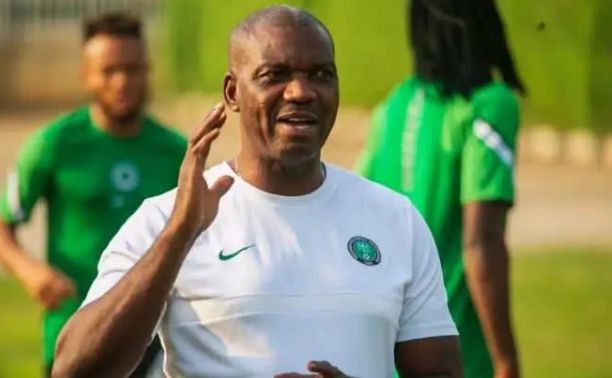
Augustine Eguavoen has been appointed the interim head coach of the Super Falcons.
The former Super Eagles head coach will lead the Falcons for their 2028 Olympic Games double-legged qualifier against Comoros in October.
Eguavoen will be assisted by Christopher Danjuma, head coach of Nasarawa Amazons, alongside a supporting cast that includes Ayisat Yusuf, a former Super Falcons defender; Olatunji Baruwa, former Super Eagles goalkeeper trainer.
The Falcons will kick off their Olympic qualifying campaign in the second round against Comoros, with both legs taking place at the Remo Stars Stadium in Ikenne-Remo on October 9 and 13.
Nigeria had received a bye into the second round as one of the top-ranked teams, while Comoros qualified after a 30-0 aggregate victory over Sudan.
Falcons must navigate four rounds of two-legged knockout ties to secure of Africa’s two slots for the women’s football event at the Olympics. A win over Comoros will advance the team to the third round in early 2027 to face either DR Congo or Morocco.
Eguavoen will be handling women’s football team for the first time in his managerial career.
His appointment comes a few weeks after Justine Madugu was sacked as Falcons’ head coach alongside his technical crew.
The dismal follows the Falcons failure to qualify for the 2027 women’s World Cup.
The first time the team will miss the World Cup since its inception in 1991.
News
Dependable political ally’ — Tinubu celebrates Abdulmumin Jibrin at 50
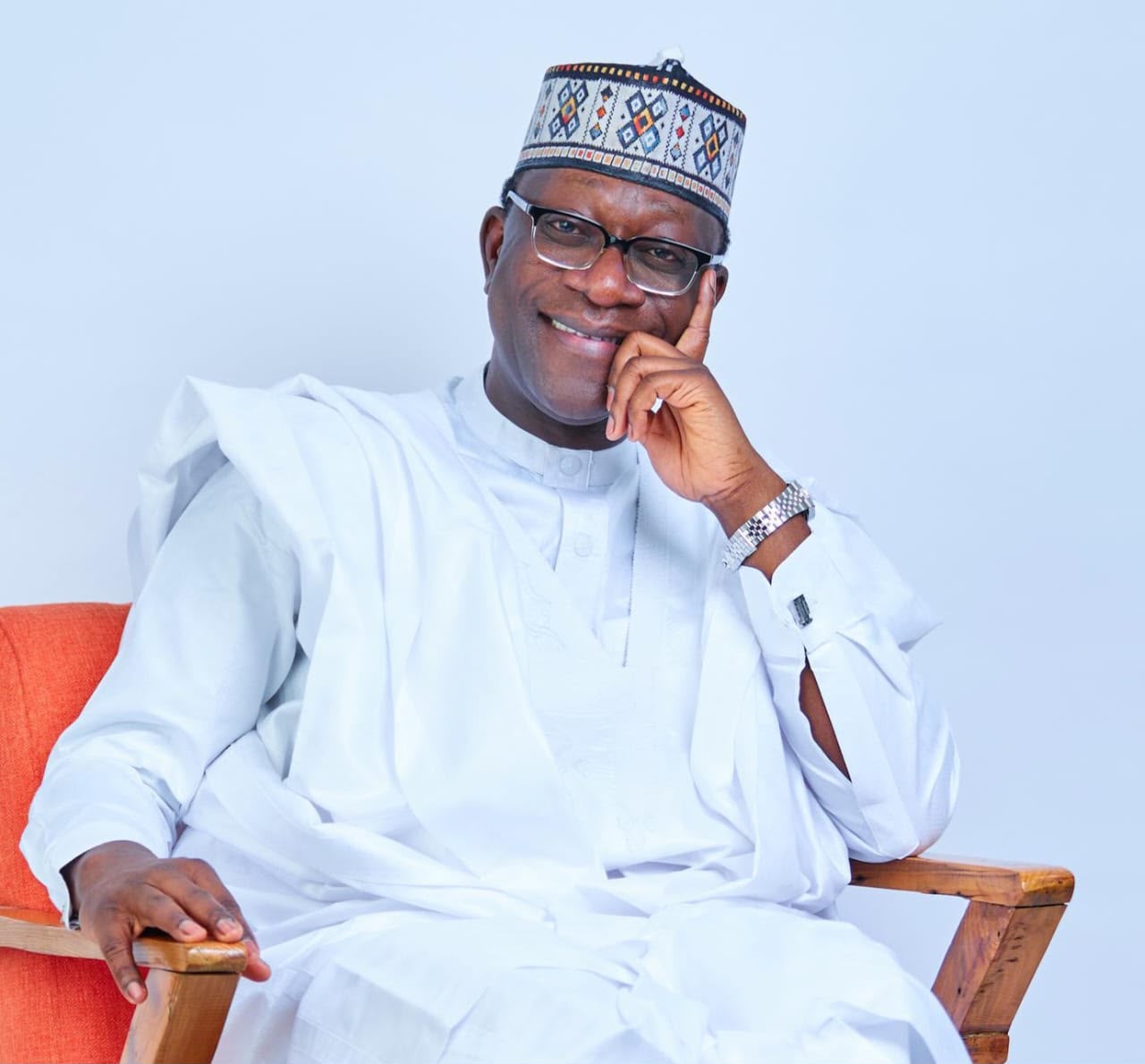
President Bola Tinubu has congratulated Abdulmumin Jibrin, the member representing the Kiru/Bebeji federal constituency in the house of representatives, on his 50th birthday.
In a statement issued on Tuesday by Bayo Onanuga, special adviser to the president on information and strategy, Tinubu described Jibrin as a dependable political ally and commended his intellectual rigour, entrepreneurial drive and commitment to public service.
The president praised Jibrin’s pursuit of knowledge, noting that his academic background at the University of Abuja, Ahmadu Bello University, Zaria, SBS Swiss Business School in Switzerland, Bayero University, Kano, and other institutions has shaped his approach to leadership and public service.
Jibrin holds two PhDs in international relations and economics, as well as an MBA from Bayero University. He also attended executive education programmes at Harvard Business School, Oxford and London Business Schools, and INSEAD in France.
Tinubu also acknowledged Jibrin’s record in public service, including his leadership of the house committees on finance, appropriations, land transport, foreign affairs, and housing and habitat.
According to the president, the lawmaker has contributed to debates and policies on public finance, fiscal policy, infrastructure and housing.
Jibrin also served as executive director at the Federal Housing Authority (FHA).
“Abdulmumin Jibrin represents a generation of Nigerians whose pursuit of knowledge, enterprise, and public service has been driven by a desire to make a difference,” the president said
His journey from scholarship and business into national politics reflects intellectual curiosity, resilience, and a deep commitment to Nigeria.
“At 50, he has much to celebrate, but I am confident that his most consequential contributions to our nation are still ahead.”
The president wished Jibrin renewed strength, good health, wisdom and fulfilment as he marked the milestone.
He also urged him to continue using his experience and knowledge to mentor younger Nigerians, strengthen democratic institutions and contribute to the development of Kano state and Nigeria.
Jibrin rejoined the All Progressive Congress (APC) in 2025 after he was expelled from the New Nigerian People’s Party (NNPP).
News
Ibrahim Little Condemns Attack on Journalists, Calls for Government Commitment to Ending Thuggery
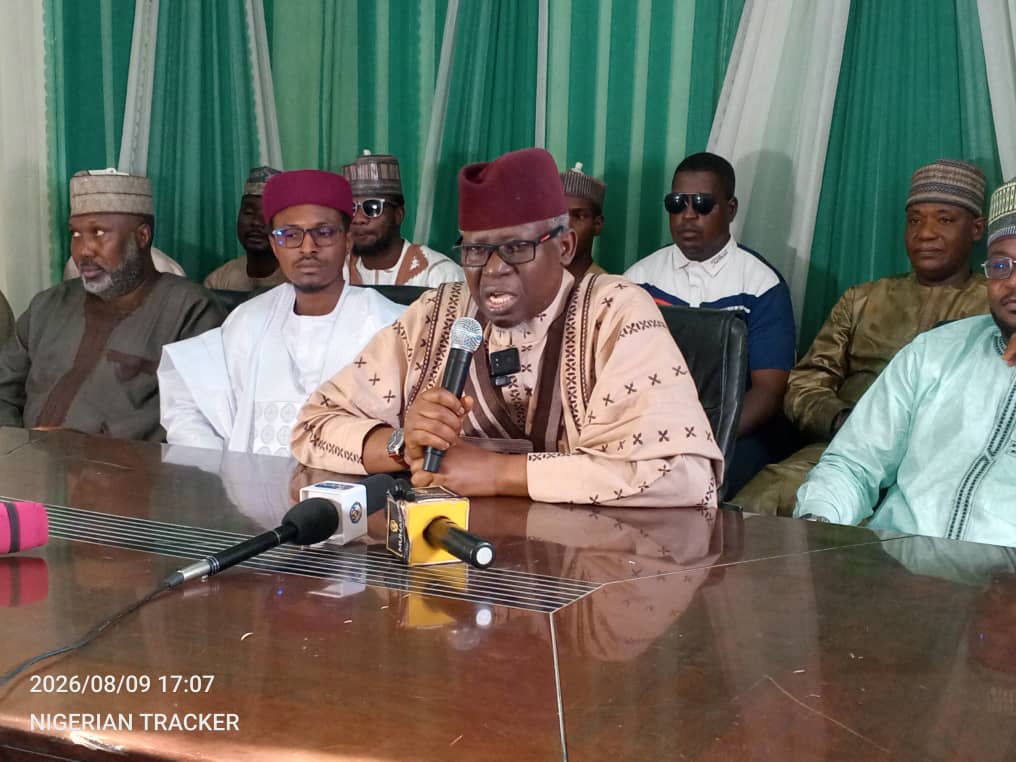
The gubernatorial candidate of the African Democratic Congress (ADC), Alhaji Ibrahim Ali Amin Little, has condemned the recent attack on journalists covering the All Progressives Congress (APC) rally at the Sani Abacha Stadium in Kano on Saturday
Little, in a statement signed by his Executive Assistant, Adnan Mukhtar, described the attack as unfortunate and unacceptable, calling on security agencies to demonstrate greater commitment to ending political thuggery in the state.
“Politicians are guilty of recruiting and using thugs during political rallies, and I believe this is absolutely wrong. Such actions contribute to the destruction of the future of our young people by exposing them to immoral and criminal activities.
“It is important that we tell ourselves the truth. A government that claims to be fighting thuggery, phone snatching and drug abuse should not be seen sponsoring or encouraging thugs to attend political rallies. This is unfortunate, unacceptable and uncalled for.
“Political rallies should be platforms for presenting ideas, engaging citizens and seeking their support, rather than breeding grounds for violence and criminality.”
Little extended his sympathy to the Nigerian Union of Journalists (NUJ), the affected journalists and all other victims of the incident.
He assured the people of Kano that, if elected, his administration would have zero tolerance for political thuggery and other forms of violence, stressing that his government would prioritise the protection of lives and property and create an environment where journalists and citizens can carry out their legitimate activities without fear.

Fifty Years, Four Terms. A Life Of Enterprise, Scholarship And Public Service-By Abbas Tajuddin

NFF Appoints Eguavoen as Interim Head Coach of Super Falcons
Dependable political ally’ — Tinubu celebrates Abdulmumin Jibrin at 50

A FRIEND’S LETTER TO ABDULMUMIN AT FIFTY

Ibrahim Little Condemns Attack on Journalists, Calls for Government Commitment to Ending Thuggery

From World’s 9th Most Populous City to Perfect: As Gov Yusuf Revisits Kano Master Plan

95% of Governor Abba Kabir Yusuf’s Promises Have Been Fulfilled — CPS Interview By Musa Diso, In Kano

Kano Islamic Scholar Declares Kano Widow Marriage Programme ‘Haram’, Urges Government to Stop It

Between Sabotage and Scepticism: Why Nigeria’s Oil Dream Keeps Stalling

Bello Sharada: A Great Writer, A Bookish Soul, Gone Too Soon
Fifty Years, Four Terms. A Life Of Enterprise, Scholarship And Public Service-By Abbas Tajuddin
NFF Appoints Eguavoen as Interim Head Coach of Super Falcons
Dependable political ally’ — Tinubu celebrates Abdulmumin Jibrin at 50
A FRIEND’S LETTER TO ABDULMUMIN AT FIFTY
Ibrahim Little Condemns Attack on Journalists, Calls for Government Commitment to Ending Thuggery
From World’s 9th Most Populous City to Perfect: As Gov Yusuf Revisits Kano Master Plan
95% of Governor Abba Kabir Yusuf’s Promises Have Been Fulfilled — CPS Interview By Musa Diso, In Kano
Kano Islamic Scholar Declares Kano Widow Marriage Programme ‘Haram’, Urges Government to Stop It
Between Sabotage and Scepticism: Why Nigeria’s Oil Dream Keeps Stalling
Bello Sharada: A Great Writer, A Bookish Soul, Gone Too Soon
-

 Opinion5 years ago
On The Kano Flyovers And Public Perception
-

 Features5 years ago
How I Became A Multimillionaire In Nigeria – Hadiza Gabon
-

 Opinion6 years ago
Kano As future Headquarters Of Poverty In Nigeria
-

 History5 years ago
Sheikh Adam Abdullahi Al-Ilory (1917-1992):Nigeria’s Islamic Scholar Who Wrote Over 100 Books And Journals
-

 Opinion5 years ago
My First Encounter with Nasiru Gawuna, the Humble Deputy Governor
-

 History5 years ago
The History Of Borno State Governor Professor Babagana Umara Zulum
-

 History5 years ago
The Origin Of “Mammy Market” In Army Barracks (Mammy Ochefu)
-

 News4 years ago
Federal University Of Technology Babura To Commence Academic Activities September