
News
News Analysis:Divergent Opinions As Nigeria’s Election Calendar Faces Overhaul
By Yusuf Danjuma Yunusa
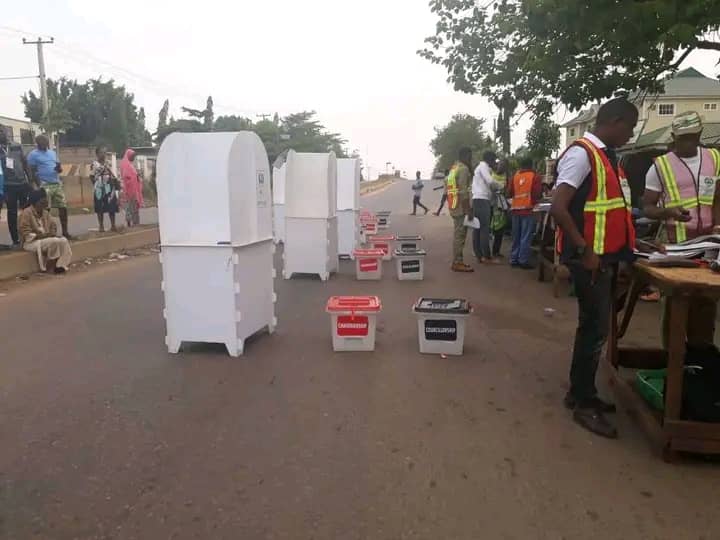
Under a new bill submitted to the National Assembly, Nigeria’s presidential, governorship, and legislative elections may be consolidated to hold in November 2026. The proposal, which aims to repeal the 2022 Electoral Act, makes this rescheduling its primary objective.
Following a one-day public hearing by the Joint Committee on Electoral Matters chaired by Senator Simon Lalong, proposing to move Nigeria’s election dates forward, widespread skepticism and acceptance have been faced at a public hearing. Electoral experts, political parties, and civil society organizations questioned and gave credence to the plan’s propriety, feasibility, and logic.
The amendment proposal was contained in the Reviewed Highlights of the Amendment of the Electoral Act during a public hearing in Abuja. It stipulates that elections into the offices of the president and governors must be conducted “not later than 185 days before the expiration of the term of office of the last holder of the office.”
According to the draft, the provision also extends to elections into the National Assembly and state Houses of Assembly, which must now be held “not later than 185 days before the date on which each of the Houses stands dissolved.”
It adds that where a vacancy occurs in any of the Houses more than 90 days before the general elections, such vacancy must be filled within 30 days of its occurrence. The amendment also seeks to align the new electoral calendar with constitutional changes to Sections 76, 116, 132, and 178, which now delegate election timelines to the Electoral Act rather than the Constitution.
Before the public hearing, it was confirmed that politicians, especially those hoping to seek elective offices in 2027, had taken it for granted that the next general elections would follow a similar pattern as previous ones, to hold either in February or March in the year of inauguration.
In the last general polls, the governorship and presidential elections were conducted in February and March 2023 respectively.
Also, part of the bill is that amendments be made to allow security personnel, INEC officials, accredited journalists, observers, ad-hoc staff to vote up to 14 days before election day.
The bill also seeks the removal of election timelines from the Constitution and their inclusion in the Electoral Act to make future adjustments more flexible.
While some are happy about the development, saying the moving of election day to 2026 will give enough time for legal issues to be settled ahead of the inauguration of new administrations, some have kicked against it, saying it would only favour incumbents, adding that it is bound to have negative effects on governance.
Chairman of the House Committee on Electoral Matters, Adebayo Balogun, said the amendment would help prevent situations where court cases linger after winners assume office.
“We are proposing that all election litigations be concluded before the swearing-in of declared winners. To achieve this, we are recommending that the current 180 days allowed for tribunal judgments be reduced to 90 days, while appellate and Supreme Court decisions should each take no more than 60 days, all within 185 days before inauguration,” he said.
In what is suspected to be a reaction to the wide interest the bill has generated, the Senate on Thursday stepped down the bill, which had earlier been slated for consideration, saying the lawmakers needed more time for wider consultations and a deeper understanding of its provisions.
The Senate President, Godswill Akpabio, who presided over the Thursday session, said sufficient details on the general principles of the bill were not given and suggested an executive session to consider it.
There were also concerns earlier raised by Senator Binos Dauda Yaroe on the procedure, wondering why a bill which has yet to scale second reading went through a public hearing.
“I support the second reading of this bill. But people will wonder. The second reading is supposed to come before the public hearing that was done last Monday. Holding a public hearing before second reading is confusing,” he said.
Following similar observations by other senators, the bill was stepped down to allow the legislators to consult widely on it.
Before then, the proposal had elicited a wide range of reactions from the political class, election monitoring bodies, and the general public.
In a statement signed by its National Publicity Secretary, Mallam Bolaji Abdullahi, the party argued that advancing the election date implies a perpetual campaign cycle, a short period for effective governance, and disruption in development planning, and further weakening of institutional focus.
“The president, ministers, governors, and other public officials vying for office or campaigning for others will shift their focus from performance to positioning. Policies will stall, projects will be abandoned, and the entire system will tilt towards 2026 instead of 2027,” part of the statement reads.
Similarly, the factions of the Labour Party differed on the proposal. While the faction led by Julius Abure said the party is fully prepared for the exercise if it holds next year, the Lamidi Apapa-led faction dismissed the idea as unconstitutional and premature.
National Publicity Secretary of the Abure-led faction, Obiora Ifoh, said the party is “100 percent ready” for any election conducted within the timeframe allowed by law. “We are ready for any election, even if it comes in November 2026. But that is not even the problem. The real issue is for INEC to put its act together and address the lapses we witnessed during the 2023 elections,” he said.
However, the coordinator of the Obidient Movement, Yunusa Tanko, faulted the proposal, saying it contradicts the constitutionally guaranteed four-year term of elected officeholders.
“Does it mean they will hold the election before the tenure of the current officeholders expires?” Tanko queried. “It’s confusing. What happens to the remaining months of their term? The constitution provides for four years, not three.”
Mr. Tanko argued that the proposal lacks its legal implications and it was “too sudden.”
Furthermore, at the time of filing this report, no reactions from the Peoples Democratic Party(PDP) as regards this issue was reported.
However, the New Nigeria Peoples Party (NNPP) spokesperson, Ladipo Johnson, also reacted to the proposal, describing it as “a good idea coming at the wrong time.”
The spokesperson of the party noted that while the intention behind the amendment could help resolve post-election litigations before the swearing-in of winners, the timing of the move would put opposition parties at a disadvantage.
The Executive Director of YIAGA Africa, Mr Samson Itodo, said the organisation is in support of the proposal because it has many advantages outside settling all disputes arising from elections.
“It provides clarity for INEC and for other institutions so that they don’t also get distracted, you know, with the whole business of settling down. It gives the institution the opportunity to conclude everything that it has to do with the post-election audit. And that can be done devoid of any sort of pressure or political interference,” he said.
Despite the interest, however, it appears that the bill will not receive an accelerated hearing now that it has been stepped down for further consultations. Added to that, a lot, Nigerian Tracker learnt, would depend on the outcome of the constitution review process which is currently ongoing.
Chairman of the House of Representatives Committee on Electoral Matters, Adebayo Balogun, in an interview with the Daily Trust correspondent, said his committee is working together with the constitution review committee to ensure synergy.
“The Electoral Act is also dragging a bit because of the constitution review. We are waiting for that because we know some of those things are still subject to the provisions of the constitution. Had it been we were not subjected to it, we would have concluded our own probably since last month. Our own does not need to go to the states. After this, we can go for third reading in the next one week and pass it, but because of their own issues, we have to slow down.”
Professor Kamilu Sani Fage, a Kano-based political scientist, in an interview with the Daily Trust also warns that, though the proposal is logical, it could tilt the playing field in favour of the ruling party, undermine democratic fairness, and expose systemic weaknesses in Nigeria’s electoral and judicial institutions.
“The idea behind the proposal is to change the timetable election period from what it used to be by six months. I think the argument they put forward is logical, the idea is that they need sufficient time so that all electoral cases will be settled before swearing in of elected people or elected leaders. I think it is a logical argument, but a wrong one,” Prof. Fage analysed.
When asked what the implications are, the professor responded thus further:
“One, it will give unnecessary advantage to the ruling party because the party that is in office will use the incumbency factor to win the election. In other words, there will be no fair level playing ground for all contestants.
Secondly, it would be a dangerous thing for the country. Imagine a situation where a ruling party fails and it remains in office for six months. Wwithin that period, it will commit all sorts of atrocities.”
If the amendment sails through, there are fears that the Independent National Electoral Commission (INEC) may find it hard to cope, given that it has lots of off-cycle elections to conduct before 2027, some of which are the Anambra, Osun, and Ekiti governorship elections as well as the FCT council elections holding next year.












News
APC Declares Tijjani Yahaya Kaura Winner of Zamfara North Primary
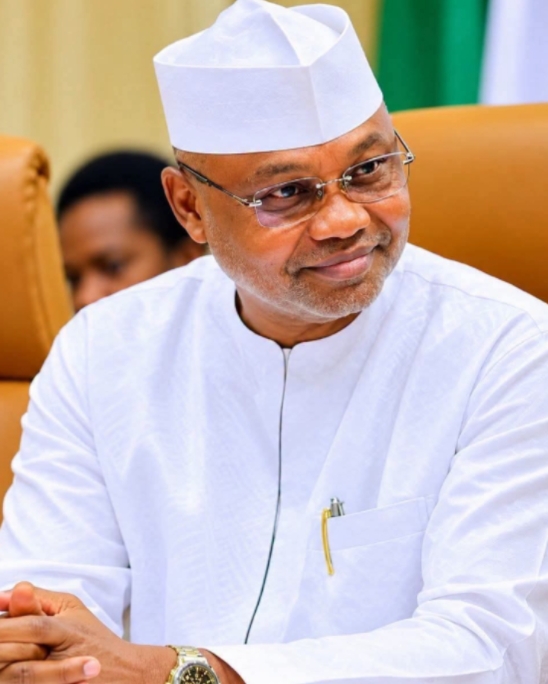
The National Primary Election Committee of the All Progressives Congress (APC) has officialized Senator Tijjani Yahaya Kaura as the party’s candidate for the Zamfara North Senatorial District in the upcoming 2027 general elections.
The declaration follows the successful conclusion of a court-mandated re-run primary election conducted on Monday, November 2, 2026.
Announcing the final results on behalf of the Senatorial Primary Election Committee, committee member Sani Abdullahi confirmed that Senator Kaura secured a decisive victory by polling 16,758 votes.
He outperformed his primary rivals, Sahabi Alhaji Yau, who secured 1,465 votes, and Sani Abdullahi Shinkafi, who received 1,447 votes.
According to the official figures released and certified by the election committee’s leadership, the electoral roll comprised 23,257 registered voters, with 19,608 delegates accredited for the exercise. A total of 19,292 valid votes were counted during the direct voting process.
Delivering the formal return, Abdullahi affirmed that Senator Kaura satisfied all statutory requirements outlined in the APC Constitution and the party’s electoral guidelines. Having amassed the highest number of lawful votes, Kaura was officially returned as the party’s candidate for the district.
The official result sheet was formally signed by the committee’s Chairman and Secretary at the close of proceedings on November 2, 2026.
This decisive primary outcome resolves a prolonged legal dispute over the nomination.
The exercise was ordered after the Court of Appeal in Sokoto upheld a ruling by the Federal High Court in Gusau, which nullified the previous primary election due to reported irregularities and mandated the party to conduct a transparent re-run.
News
2027 Elections: Ex-INEC Chair, Attahiru Jega, Warns Against Unchecked Use of AI
By Yusuf Danjuma Yunusa
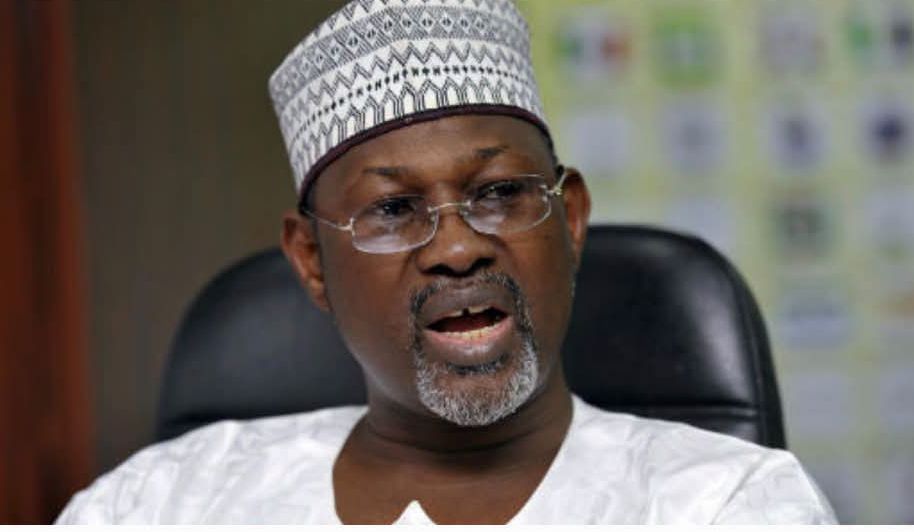
A former Chairman of Independent National Electoral Commission, INEC, Prof. Attahiru Jega, has called for proactive and robust safeguards to protect information integrity, as Nigeria moves closer to the 2027 general elections.
Mr Jega made the call in Abuja at a National Summit on Artificial Intelligence (AI), Foreign Information Manipulation and Interference, FIMI, and Electoral Information Integrity.
Speaking as the chairman of the event, with the theme: “Beyond the Ballot: Safeguarding Electoral Information Integrity in the Age of AI”, Mr Jega noted that safeguarding electoral information against digital manipulation and malicious threats had become a critical task for all stakeholders.
While acknowledging that AI holds tremendous potential to improve efficiency and effectiveness in governance and electoral processes, he warned that it also carried severe negative uses that could undermine the integrity of elections.
“What is most important, of course, is how we prepare, anticipate these challenges and take appropriate measures, including setting up a framework of rapid response to address these,” he said.
Drawing from his participation in the 2024 Cambridge Conference on Electoral Democracy, Jega recommended that Election Management Bodies (EMBs) in Africa should consider deploying AI-driven tools, such as chatbots powered by officially-verified data.
He noted that such would allow citizens to quickly access accurate information and verify the authenticity of data being circulated.
“I understand that some African EMBs have seen the utility of this in checkmating or reducing the negative effects and the impact of misinformation and disinformation during elections.
“And I would like to recommend that if INEC has not done so so far, it might be a useful issue to add to our discussions and to see as to how best to know it before the 2027 general elections,” he said.
The former INEC chairman noted that building trust and public confidence in the electoral process was important.
“The integrity of an election is so important and the building trust and ensuring that there is public confidence in what participants in the electoral process do, and other key stakeholders do, is very important,” Jega said.
He urged participants to leverage the summit’s platform to move beyond dialogue and develop actionable strategies, rapid-response frameworks and tactical solutions to secure the integrity of future elections.
Join Daily Nigerian WhatsApp Channel
Declaring the workshop open, the Minister of Information and National Orientation, Mohammed Idris, said that the integrity of 2027 elections remained a shared responsibility, noting that every institution and every citizen had a role to play.
Mr Idris, who was represented by the Executive Secretary, Nigerian Press Council (NPC), Dr Dili Ezughah, said that the President Bola Tinubu led-administration recognised the importance of credible information environment to democratic stability.
While citing Nigeria’s National Artificial Intelligence Strategy, published in 2024, which provides a framework for responsible, critical and inclusive AI development and deployment, he stated the Tinubu administration also recognised the importance of credible information in strengthening Nigeria’s democracy.
“A significant demonstration of this commitment is the establishment of the UNESCO Category 2 International Media and Information Literacy Institute in Nigeria,” he said.
The minister said that Tinubu had demonstrated the commitment by signing the amended Electoral Act 2026 into law on Feb. 18, which provided for mandatory electronic transmission of polling unit results and recognised the time-tested results viewing portal.
He, however, said that technology alone could not guarantee public confidence in the electoral process, saying it should involve all stakeholders playing their expected roles.
“Electoral institutions must communicate clearly. Journalists must verify information and citizens must know where to obtain authentic electoral updates.
“I wish to emphasise that responsible journalism must not be mistaken for favourable journalism. The media must remain free to question government, political parties, candidates and public institutions, ensuring fairness and fair distinction between facts, allegations and opinions.
“We must also protect freedom of expression and the right to information.”
News
Mahanga TV appoints former AREWA24 staff Zuwairiyah Girei as MD
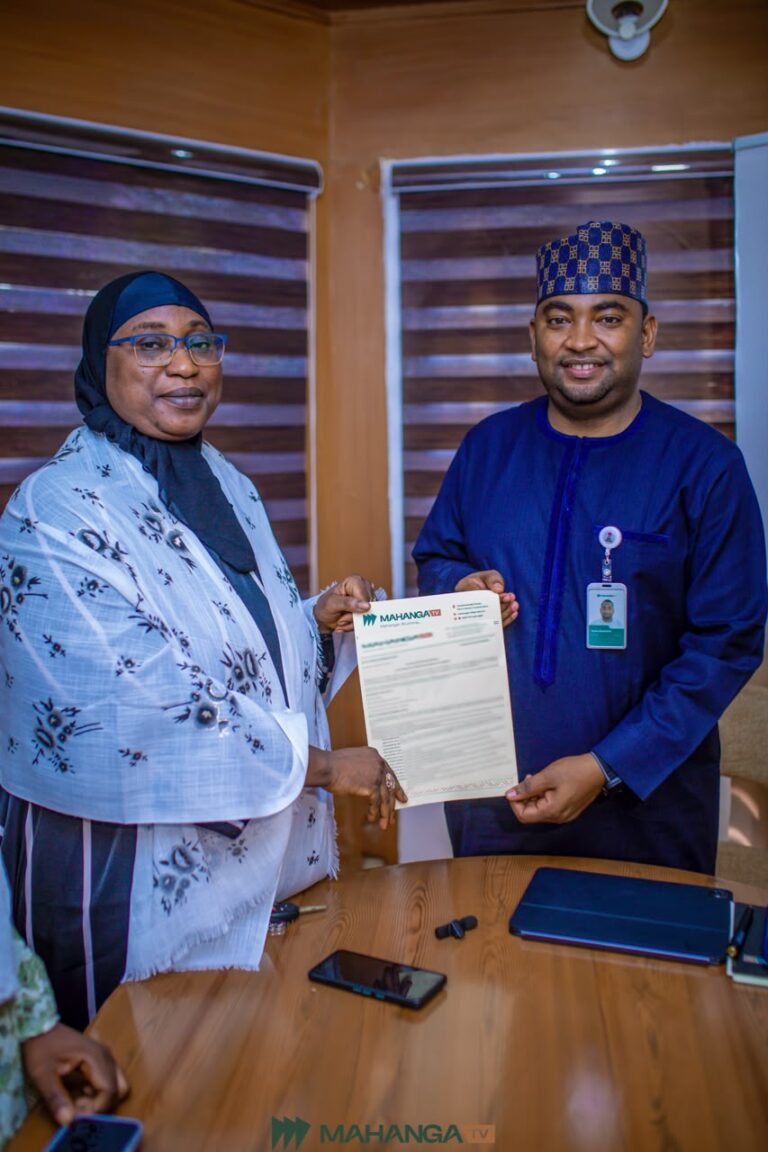
Mahanga TV, a Kano-based television station, has appointed former AREWA24 staff member Zuwairiyah Adamu Girei as its new Managing Director, bringing her more than 14 years of experience in Hausa-language television production and broadcasting to the organisation.
Girei was formally welcomed into her new role during a reception held at Mahanga TV’s premises in Kano on Monday, November 2, 2026, marking a new phase in the organisation’s growthe barely three months after its launch.
Speaking at the reception, Girei expressed excitement over her appointment, describing her experience at AREWA24 as a significant milestone in her professional journey.
She said she would draw on the knowledge and experience acquired during her time at the television station to strengthen Mahanga TV and drive it towards greater achievements.
“All the experience I have at AREWA24, I will bring here, and I think I will do extraordinary because I know what I have learnt there. I pray that we will see success beyond our expectations,” she said.
Outlining her vision for Mahanga TV, the new Managing Director said the organisation would look beyond Northern Nigeria and target audiences across Africa and the rest of the world.
She identified the large Hausa-speaking population as a major opportunity for the industry, noting that despite the challenges facing Hausa-language broadcasting, the sector has a substantial audience.
“We have over 60 million Hausa speakers in Nigeria, so I think we have a target audience we have to try to reach,” she said.
Girei said her leadership would focus on understanding audience expectations, introducing improvements and positioning Hausa productions for international recognition.
“Our thinking is pan-African; our thinking is the world. Our thinking is now how can Hausa film reach the Oscars. That is the thinking,” she said.
Looking ahead to the next decade, she expressed her ambition to see Mahanga TV secure three to four Academy Awards, earn international recognition and become a household name among viewers across different age groups.
She said she envisioned a future where Mahanga TV would be the preferred television platform in homes, with both adults and children identifying with its programmes.
The Chief Executive Officer of Mahanga TV, Nuhu Abdullahi Balarabe, said Girei’s appointment was informed by the organisation’s rapid growth and the need for experienced leadership to sustain its progress.
Balarabe explained that he initially served as both Managing Director and CEO but decided to appoint a dedicated Managing Director to oversee the organisation’s daily operations and provide the leadership required to sustain its expanding activities.
He said the organisation needed someone who could provide consistent leadership and maintain its momentum as it continued to grow.
“She is well experienced, and I’m sure she will use that experience to take the organisation further from where it is,” he said.
Balarabe disclosed that Mahanga TV had recorded progress beyond its initial expectations within three months of launching, attributing the achievement to the dedication of its staff, consultants and advisers.
He said the organisation was expanding its content offerings through original productions and partnerships with independent producers to provide audiences with engaging programmes.
He also urged viewers to continue supporting the station and sharing feedback through its social media platforms and WhatsApp channel, assuring them that the organisation remained open to suggestions as it worked to improve its services.
Reaffirming the organisation’s broader ambition, Balarabe said Mahanga TV was committed to ensuring that Hausa stories, culture and experiences reached audiences across the world.
“We have a beautiful tale happening in Northern Nigeria, and I believe it is only we that can tell our own story. We want to make sure all our stories are told and they reach every part of the world,” he said.
Also speaking, Mahanga TV’s Creative Director and Brand Manager, Abdulbasit Abanikanda, described Girei’s appointment as a timely development that would strengthen the organisation’s management structure and provide better direction for its expanding workforce.
Abanikanda recalled that Mahanga TV started with a team of just three people but had since grown considerably, making the appointment of an experienced manager necessary to coordinate its activities.
He expressed confidence in Girei’s ability to advance the station’s creative vision, noting that her ambition of taking Hausa stories to audiences across the world aligned with the organisation’s objectives.
With Girei’s appointment, Mahanga TV aims to consolidate its early progress, strengthen its content production and expand the reach of Hausa storytelling, creating opportunities for Northern Nigeria’s stories, culture and creative talent to gain wider national and international recognition.

APC Declares Tijjani Yahaya Kaura Winner of Zamfara North Primary

2027 Elections: Ex-INEC Chair, Attahiru Jega, Warns Against Unchecked Use of AI

Mahanga TV appoints former AREWA24 staff Zuwairiyah Girei as MD

Kano Governor Nominates Ex- Speaker, Spokesperson as Commissioners

2027: Rep Abubakar Kabir Bichi holds strategic meeting with Kano lawmakers

Kano Monitors ₦48.9bn Projects Across Six LGAs

Kano Spends ₦10.36bn on Hospitality, Sitting Allowances, Others in Six Months

Open The Social Sciences “A Tribute to a Heterodox Scholar: Mallam Ibrahim Muazzam

Senate Passes Barau’s Bill to Provide Legal Framework for Yusuf Maitama Sule Federal University of Education, Kano

Kano First Forum Petitions Police Over Alleged Inciting Statements by Aminu Babba Dan Agundi
APC Declares Tijjani Yahaya Kaura Winner of Zamfara North Primary
2027 Elections: Ex-INEC Chair, Attahiru Jega, Warns Against Unchecked Use of AI
Mahanga TV appoints former AREWA24 staff Zuwairiyah Girei as MD
Kano Governor Nominates Ex- Speaker, Spokesperson as Commissioners
2027: Rep Abubakar Kabir Bichi holds strategic meeting with Kano lawmakers
Kano Monitors ₦48.9bn Projects Across Six LGAs
Kano Spends ₦10.36bn on Hospitality, Sitting Allowances, Others in Six Months
Open The Social Sciences “A Tribute to a Heterodox Scholar: Mallam Ibrahim Muazzam
Senate Passes Barau’s Bill to Provide Legal Framework for Yusuf Maitama Sule Federal University of Education, Kano
Kano First Forum Petitions Police Over Alleged Inciting Statements by Aminu Babba Dan Agundi
-

 Opinion5 years ago
On The Kano Flyovers And Public Perception
-

 Features5 years ago
How I Became A Multimillionaire In Nigeria – Hadiza Gabon
-

 Opinion6 years ago
Kano As future Headquarters Of Poverty In Nigeria
-
 History6 years ago
Sheikh Adam Abdullahi Al-Ilory (1917-1992):Nigeria’s Islamic Scholar Who Wrote Over 100 Books And Journals
-
 Opinion5 years ago
My First Encounter with Nasiru Gawuna, the Humble Deputy Governor
-

 History5 years ago
The History Of Borno State Governor Professor Babagana Umara Zulum
-
 History6 years ago
The Origin Of “Mammy Market” In Army Barracks (Mammy Ochefu)
-
 News5 years ago
Federal University Of Technology Babura To Commence Academic Activities September