
News
Kano Approves More Than 6 Billion Naira for the Dualization of Dakata-Yadakunya (Bela) Road
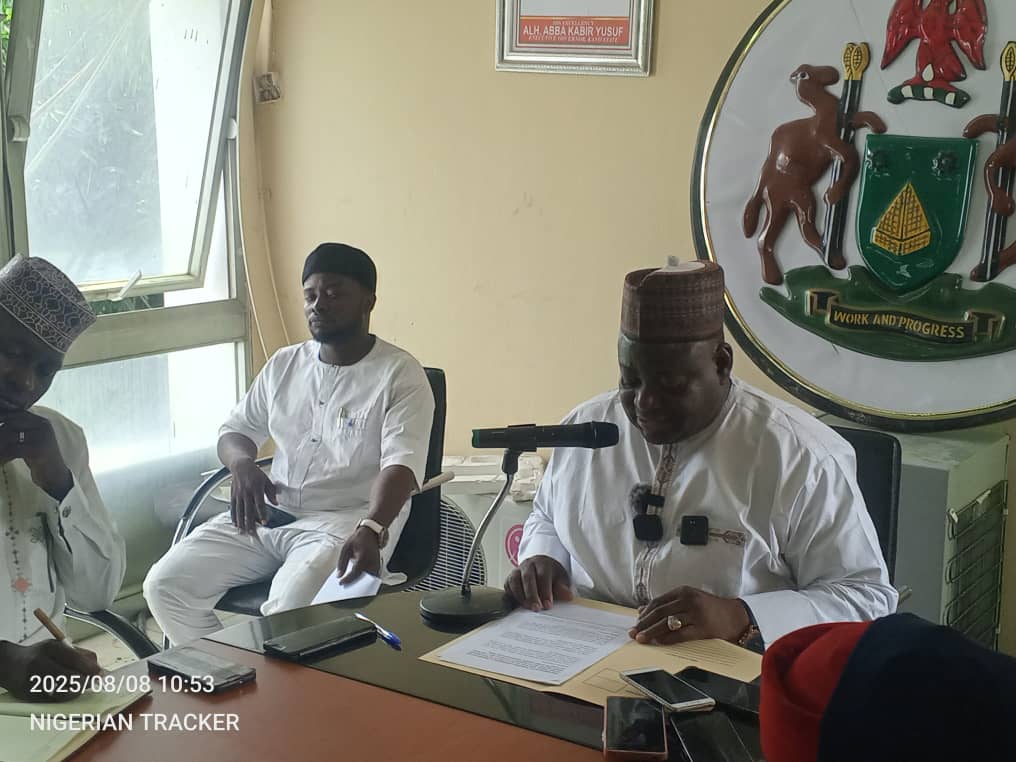
The state Commissioner for Information and Internal Affairs, Comrade Ibrahim Waiya, stated this while addressing journalists on the outcome of the State Executive Council meeting presided over by Governor Abba Kabir Yusuf at the Governor’s Lodge in Kwankwasiyya City.
Ministry of Works Approvals
According to the Commissioner, the Council approved several capital projects under the Ministry of Works, including:
– Conversion of Gaya Orphanage Home to a Female Drugs Reformatory Institute and Construction of a Standard Transit Centre in Gaya LGA – ₦1,383,318,648.25
– Revocation and Re-award of Contract for the Construction of Jaba-Gayawa Road – ₦3,749,120,452.25
– Revocation and Re-award of Contract for the Dualization of Dakata-Yadakunya (Bela) Road – ₦6,147,010,996.10
– Construction of Badgery Road to Yusuf Road in Nassarawa Local Government – ₦522,038,561.21
Total Allocation for Ministry of Works
The total approved allocation for the Ministry of Works stands at ₦11,801,488,657.81.
Ministry of Land and Physical Planning
The Commissioner further disclosed that the Council approved:
– Printing of Security Documents by Nigerian Security Printing and Minting PLC – ₦129,000,000.00
– Expansion of Scope of Work at the Ministry – ₦753,968,746.38
Total Allocation for Ministry of Land and Physical Planning
The total allocation for this ministry is ₦882,968,746.38.
Ministry of Health Projects
In the health sector, the following projects were approved:
– Renovation/Rehabilitation of Sabo Bakin Zuwo Maternity Hospital (Jakara) – ₦364,508,253.28
– General Renovation of Infrastructure at School of Health Technology Bebeji – ₦294,469,189.83
– Supply and Installation of Solar Energy Systems to Five Maternity Facilities – ₦113,986,236.00
– Supply of Drugs and Consumables to Hasiya Bayero, Murtala Muhammad, and Yadakunya Hospitals (July–September 2025) – ₦112,350,593.00
– Renovation/Rehabilitation of Newly Procured House at Zango Quarters, Murtala Muhammad Specialist Hospital – ₦272,177,172.84
– Supply of Working Materials to Two Newly Renovated Wards at Muhammad Abdullahi Wase Teaching Hospital – ₦128,006,452.00
– General Renovation and Construction of Additional Facility at Zakirai Primary Health Care Centre (Phase I) – ₦379,282,039.62
Total Allocation for Ministry of Health
The total allocation for health-related projects is ₦1,664,780,936.57.
Ministry of Water Resources
The Council also approved a settlement for the supply of 120,000 litres of diesel and 17,000 litres of PMS (February 2025) – ₦310,000,000.00.
Ministry for Rural and Community Development
Rehabilitation of five mini earth dams in various LGAs (Madobi, Gwarzo, Garun Malam, Kibiya, Ajingi) – ₦169,630,338.28.
Grand Total of All Approvals
The total value of all approved projects across ministries amounts to ₦14,828,867,679.04.
Policy Matters
In addition to capital projects, the Council ratified the 2025 Proposed Supplementary and Amendment Budget totaling ₦889,277,880,957.81. This reflects an upward adjustment of ₦169,522,463,294.81 over the originally approved budget of ₦719,755,417,663.00. The supplementary budget aims to enhance the government’s capacity to meet its core mandates and emerging obligations.
Legislative Action
The Council directed the immediate transmission of the proposed supplementary budget to the Kano State House of Assembly for legislative action and passage into law.
Waiya told newsmen that the Government Engr. Abba Kabir Yusuf, remains fully committed to rebuilding a better Kano State. These approvals demonstrate a strategic approach to governance, focusing on impactful projects that will deliver democratic dividends to the people.
According to him Citizens are urged to support government policies and actively monitor project implementation as part of the collective effort to elevate Kano State to greater heights.









News
Gov. Mutfwang Orders Closure of Schools Across State as Diphtheria Hits Plateau
By Yusuf Danjuma Yunusa
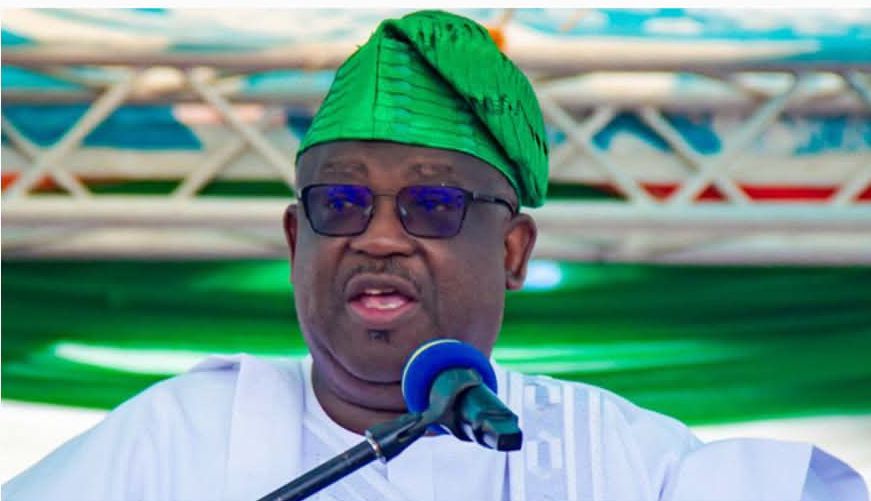
Plateau State Governor, Caleb Mutfwang, has directed temporary closure of public and private primary schools across the state over diphtheria outbreak.
The disclosure was made in a statement on Saturday by the commissioner for information and communications, Joyce Ramnap.
She stated that the directive was effective from Monday.
She noted that the government took the decision as preventive measures against the spread of the disease.
Mrs Ramnap noted that the suspected cases had been recorded in parts of Jos North, Wase, Jos South and Bassa Local Government Areas of the state.
“Accordingly, schools that have already resumed academic activities are also directed to close from Monday, September 7, 2026, and remain closed until further notice,” the statement noted.
The statement said the governor directed school proprietors, administrators, teachers, parents and guardians were to comply with the directive.
The governor also said schools should ensure that students and pupils remain at home throughout the period as part of measures to ensure their safety including the teaching and non-teaching staff during the period.
The statement added that Mr Mutfwang appreciated the stakeholders for their understanding and cooperation as the government continued to take appropriate measures in the best interest of the residents.
”Further information on the resumption of academic activities will be communicated to the public in due course,” he said.
Reports have it that 23 peoples have been killed by diphtheria in several communities, and 143 others infected in Jos North.
News
Emir of Gumel, Ahmad Muhammad Sani, Dies After 45 Years on the Throne
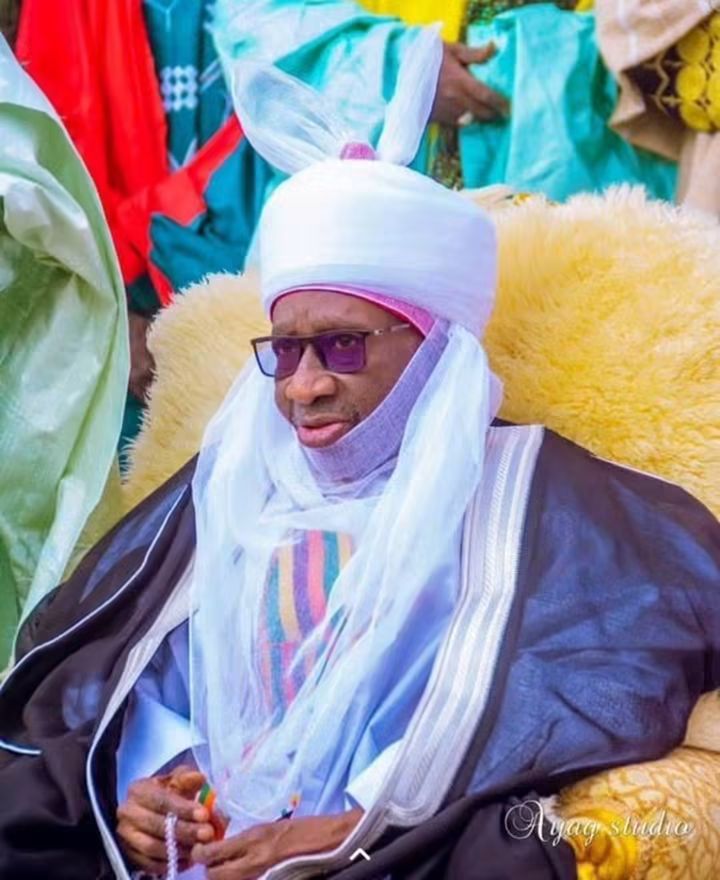
The Emir of Gumel, His Royal Highness Alhaji Ahmad Muhammad Sani II, has died after more than four decades on the throne, bringing to an end the reign of one of Northern Nigeria’s longest-serving traditional rulers.
Ahmad Muhammad Sani II, who became the 16th Emir of Gumel, ascended the throne in 1980 following the death of his father, the late Emir Maina Muhammad Sani II. He subsequently received his staff of office from the then Governor of Kano State, the late Alhaji Abubakar Rimi, in 1981.
His death marks the end of a historic reign that spanned more than 45 years and covered some of the most significant political, social and administrative changes in the old Kano State and, later, Jigawa State.
Before ascending the traditional throne, the late Emir was actively involved in public service and politics. He served as Commissioner for Information, Internal Affairs and Culture in the Kano State Government during the administration of Governor Abubakar Rimi between 1979 and 1980.
His transition from political office to the traditional institution came after the death of his father in December 1980. Historical records indicate that Ahmad Muhammad Sani was selected to succeed his father on December 16, 1980, while his formal presentation with the staff of office followed on May 29, 1981.
As Commissioner for Information, he was associated with important developments in the media sector of the then Kano State. Records indicate that during his tenure, he played a role in the establishment of Triumph newspaper and CTV67 television station, now associated with the state’s television broadcasting history, while also overseeing the expansion of Radio Kano.
His educational background was also notable. He attended Gumel Primary School and Hadejia Middle School before graduating from Kano High School at Rumfa College in 1961. He later obtained qualifications in Public Administration from the Institute of Administration in Zaria, now part of Ahmadu Bello University, and pursued further studies in Political Science and International Relations at Ohio University in the United States.
Before entering politics, Ahmad Muhammad Sani had worked with the Gumel Native Authority and later joined the Immigration Department, where he was posted to Ngamboru Ngala in present-day Borno State. He subsequently served as a senior government official in the Kazaure Divisional Office before moving into politics in 1978.
His long reign as Emir of Gumel made him one of the most experienced traditional rulers in Northern Nigeria. The Jigawa State Government describes him as the 16th Emir of Gumel and records that he had remained on the throne since 1981.
Over the years, the Emir became associated with efforts to promote peace, education, community development and the preservation of traditional values. His palace also played a role in mobilising communities around government programmes, including public health initiatives.
The World Health Organisation, for instance, previously identified the Emir of Gumel as one of the traditional rulers who played an active role in promoting immunisation activities in his emirate. The organisation reported that he publicly vaccinated his own children as part of efforts to reassure communities about the safety of polio vaccination.
Even in the later years of his reign, the Emir continued to participate in peace-building and community affairs. In 2025, he was represented at a farmers-herders peace meeting in Jigawa, where his message emphasised dialogue and mutual understanding as essential to achieving lasting peace.
In December 2025, the Emirate marked his 45th anniversary on the throne, with prominent national and traditional figures, including Vice President Kashim Shettima and the Sultan of Sokoto, participating in activities associated with the anniversary.
His death therefore comes after a reign that began in the final years of the Second Republic and continued through successive military governments, the return to democratic rule in 1999, the creation of Jigawa State and several generations of political leadership.
The Emir of Gumel’s reign also represented a unique bridge between political administration and traditional leadership. Having served as a senior political office holder before becoming a monarch, he brought extensive experience of government and public administration to the traditional institution.
With his passing, the Gumel Emirate loses a monarch whose tenure lasted more than four decades and whose public career had already begun before his accession to the throne.
Details concerning his burial arrangements, the circumstances surrounding his death and the process for selecting his successor are expected to be announced by the Gumel Emirate Council and the Jigawa State Government
News
Uber Shutdowns Operations in Nigeria

By Yusuf Danjuma Yunusa
Ride-hailing company, Uber, has shut down its operations in Nigeria.
In a statement, the company, which came into Nigeria in 2014, said its exit is effective from September 2, 2026.
“We are writing to share some difficult news. After a thorough review of our business, we have made the tough decision to wind down our operations in Nigeria, effective 2 September 2026.
“Since we first launched in Lagos in 2014, it has been an absolute privilege to be a part of your daily life connecting you with independent transportation providers.
“Whether it was a morning commute, a ride to see loved ones, or exploring the city, thank you for trusting the platform to connect you to a driver to get you there safely. We know this may cause disruption to your routine, and we sincerely apologize for the inconvenience.”
In a memo on Wednesday, the ride-hailing company also announced elimination of roughly 3,300 positions.
The job cuts focused on management and coordination roles, according to its CEO, Dara Khosrowshahi.
“Today, we’re making a number of significant organizational changes across Uber. We are removing layers, simplifying team structures, refining our global location strategy, and focusing our people and investments against the biggest opportunities ahead of us.”
“As a result, we will be reducing the size of our team by about 10%. Everyone whose role has been affected has already been notified, except in countries where we will follow the required local process.
“This wasn’t a decision we made lightly, because it will have a real impact on our teammates and friends who have worked hard for Uber. It’s important to say that these changes are about how we’re organized and what we’re prioritizing, not about anyone’s contributions to Uber, which we will always value.
“I’m sure you’re asking, ‘Why, and why now?’ particularly since our business is performing so well. Over the last 5+ years, Uber has grown by orders of magnitude, with our top line nearly tripling. We’ve built new products, expanded into new businesses, reached more consumers and supported more earners, and become a much larger and stronger company. But that growth has also brought complexity: more layers, more coordination, more fragmented ownership, and in some cases structures that made sense when businesses were smaller but no longer serve us well at our current scale.
“Our opportunity from here is enormous: we have the chance to bring Uber to hundreds of millions more people; to invest even more in drivers, couriers and merchants; and to innovate across our core businesses and build the autonomous future.
“The changes we’re making today are designed to do two things: make Uber simpler and faster, and create more capacity to invest in our future. A leaner organization will mean clearer ownership, faster decisions, and more time spent building rather than coordinating. It will also generate savings that we intend to reinvest in growth, innovation, and the capabilities that will matter most over the coming years.
“It’s our job as leaders to make these difficult calls, and to give you transparency into our thinking and our decision-making process.”
The layoffs are the latest round of job cuts for Uber, which eliminated roles in customer service and HR earlier this year.

Gov. Mutfwang Orders Closure of Schools Across State as Diphtheria Hits Plateau

Emir of Gumel, Ahmad Muhammad Sani, Dies After 45 Years on the Throne

Uber Shutdowns Operations in Nigeria

Author of ‘Rich Dad Poor Dad’ Languishes in Billion Dollar Debt

Maulud: Best Choice Specialist Hospital Congratulates Kano Governor, Muslims Globally

From World’s 9th Most Populous City to Perfect: As Gov Yusuf Revisits Kano Master Plan

95% of Governor Abba Kabir Yusuf’s Promises Have Been Fulfilled — CPS Interview By Musa Diso, In Kano

Kano Islamic Scholar Declares Kano Widow Marriage Programme ‘Haram’, Urges Government to Stop It

We’re aware of your clandestine meetings with Lulu-Briggs, 𝐏𝐢𝐝𝐨𝐦𝐬𝐨𝐧, CRP uncovers ex-MD of NDDC, Nunieh

Between Sabotage and Scepticism: Why Nigeria’s Oil Dream Keeps Stalling
Gov. Mutfwang Orders Closure of Schools Across State as Diphtheria Hits Plateau
Emir of Gumel, Ahmad Muhammad Sani, Dies After 45 Years on the Throne
Uber Shutdowns Operations in Nigeria
Author of ‘Rich Dad Poor Dad’ Languishes in Billion Dollar Debt
Maulud: Best Choice Specialist Hospital Congratulates Kano Governor, Muslims Globally
From World’s 9th Most Populous City to Perfect: As Gov Yusuf Revisits Kano Master Plan
95% of Governor Abba Kabir Yusuf’s Promises Have Been Fulfilled — CPS Interview By Musa Diso, In Kano
Kano Islamic Scholar Declares Kano Widow Marriage Programme ‘Haram’, Urges Government to Stop It
We’re aware of your clandestine meetings with Lulu-Briggs, 𝐏𝐢𝐝𝐨𝐦𝐬𝐨𝐧, CRP uncovers ex-MD of NDDC, Nunieh
Between Sabotage and Scepticism: Why Nigeria’s Oil Dream Keeps Stalling
-

 Opinion5 years ago
On The Kano Flyovers And Public Perception
-

 Features5 years ago
How I Became A Multimillionaire In Nigeria – Hadiza Gabon
-

 Opinion6 years ago
Kano As future Headquarters Of Poverty In Nigeria
-

 History5 years ago
Sheikh Adam Abdullahi Al-Ilory (1917-1992):Nigeria’s Islamic Scholar Who Wrote Over 100 Books And Journals
-

 Opinion5 years ago
My First Encounter with Nasiru Gawuna, the Humble Deputy Governor
-

 History5 years ago
The History Of Borno State Governor Professor Babagana Umara Zulum
-

 History5 years ago
The Origin Of “Mammy Market” In Army Barracks (Mammy Ochefu)
-

 News4 years ago
Federal University Of Technology Babura To Commence Academic Activities September