
News
10 Solar-Powered Boreholes: Kano ACReSAL Sets the Record Straight
The Kano State Agro-Climatic Resilience in Semi-Arid Landscapes (ACReSAL) Project has announced significant milestones in its water infrastructure and community strengthening agenda, with the successful completion of 10 solar-powered boreholes across strategic locations in the state.
This development falls under Component A2: Landscape Investment – Water Resources Management, aimed at enhancing year-round access to clean water for irrigation and domestic use.
According to Maryam Abdulqadir, Communications Officer for Kano ACReSAL, these interventions are critical for improving food security and building climate resilience in northern Nigeria’s short rainy season environment.
Speaking on the details of the water infrastructure rollout, Abdulqadir confirmed that the project has invested in the construction and rehabilitation of small dams, reservoirs, and boreholes—including installation of pumps, meters, and borehole heads. “In addition to water supply, we are mobilizing communities to participate in erosion control and disaster prevention efforts,” she said, emphasizing the project’s integrated approach to environmental management.
Addressing questions raised in a recent video about the use of hand pumps instead of solar-powered boreholes, the Communications Officer clarified that all boreholes were implemented according to World Bank Procurement Procedures, ensuring quality and transparency. She noted that construction costs reflect taxes, contractor margins, and the inclusion of value-added infrastructure such as fencing, solar streetlights, and dedicated water-fetching areas.
The completed boreholes commissioned between October and December 2024 span 10 locations across Kano State, including the School of Midwifery in Danbatta, Tsamiya Babba in Gezawa, and Kofar Mata in Kano Municipal. Abdulqadir provided precise geographic coordinates and assured the public that all sites are verifiable. “We encourage journalists and citizens to independently confirm these boreholes. This is about accountability,” she added.
Under Component B1: Community Climate Resilience – Community Strengthening, the project also empowers communities through access to Community Revolving Funds (CRF). On February 6, 2025, a landmark ₦375 million (USD $250,000) was disbursed by Governor Abba Kabir Yusuf to 10 beneficiary communities from Gwale, Dala, Madobi, and Kabo LGAs. The funds are designed to help residents process and market agricultural goods, develop business plans, and invest in sustainable value chains. “This support goes beyond water it’s about livelihoods and long-term resilience,” stated Abdulqadir.
Further bolstering environmental protection, Component C: Institutional and Policy Strengthening led to the procurement of 10 refuse trucks and 2 pay loaders for REMASAB (Refuse Management and Sanitation Board) under the Ministry of Environment and Climate Change. Abdulqadir confirmed that the vehicles are operational and visibly contributing to waste management across Kano. “You can see the trucks working across the city this investment is already making an impact,” she remarked.
The Kano ACReSAL Project continues to position the state as a model of climate adaptation and sustainable development in Nigeria. As Abdulqadir concluded, “Every intervention we implement is a step toward a cleaner, greener, and more resilient Kano.”









News
Jonathan Urges National Assembly to Overhaul Electoral Litigation Process, Create Specialised Court
By Yusuf Danjuma Yunusa
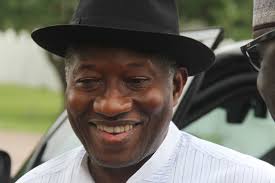
Former President Goodluck Jonathan has called on the National Assembly to overhaul Nigeria’s electoral litigation process by establishing a specialised constitutional court to handle election disputes.
Speaking on Wednesday in Abuja at the 70th birthday and book launch of Senator Gbenga Daniel (APC, Ogun East), Mr. Jonathan argued that a dedicated court would reduce the strain on the political system by resolving election-related cases in a single phase.
He criticised the current three-tier system for governorship disputes—moving from a tribunal to the Court of Appeal and finally to the Supreme Court—as ineffective and unnecessarily prolonged.
Recalling a landmark case from 2011, Jonathan highlighted how technicalities have historically undermined electoral justice. “I remember a particular case where someone lost an election as a governor because the law then stipulated the use of red ink to tick voters’ names,” he said.
“In an entire senatorial district, they were not provided with red pens and used available black or green pens. As a result, those votes were cancelled. The Appeal Court upheld this, even though the lower tribunal felt that a tick is a tick.”
While acknowledging that the National Assembly later amended the law to allow governorship cases to reach the Supreme Court—specifically to prevent such injustices—Jonathan noted that the amendment failed to address the length of the litigation process.
The former president urged Nigeria to draw lessons from Francophone African countries, which employ specialised constitutional courts for political matters. He proposed that if the Supreme Court must remain the final arbiter for governorship elections, the lower tribunal stage should be eliminated entirely.
“I believe the ideal thing to do, which I was considering when I was in office, was to make sure that it’s only one tribunal that listens to any litigation relating to politics. This is done, especially in the Francophone countries in Africa. They have constitutional courts. Anything about elections, only the constitutional courts take decisions,” Jonathan explained.
He also challenged the judiciary to exercise firmness in its rulings, drawing an analogy to football. “Politics is like soccer, and the judges are the referees. If the referee looks the other way, players will break legs or score with their hands,” he added.
News
ADC Defies INEC, Vows to Proceed with Congresses Amid Leadership Crisis
By Yusuf Danjuma Yunusa
Nigeria’s African Democratic Congress (ADC) has declared it will go ahead with its scheduled congresses and national convention, defying the Independent National Electoral Commission’s (INEC) decision to suspend recognition of the party’s leadership.
The party’s National Publicity Secretary, Bolaji Abdullahi, insisted that the ADC has fulfilled all legal requirements, having formally notified the electoral body of its planned events.
“We will go ahead with our congresses. We have given INEC 21 days’ notice, they have accepted. Whether they come or not, we will continue with our congresses and our convention,” Abdullahi said during an interview on Arise TV.
His remarks come just days after INEC announced it would withhold recognition of the ADC’s leadership pending the outcome of a court case related to an internal dispute within the party.
The standoff sets the stage for a potential clash between the electoral commission and the opposition party, raising fresh questions about party governance, internal democracy, and the legal limits of INEC’s oversight powers in Nigeria.
News
ADC Rejects INEC’s Ruling Interpretation, Vows to Clarify Contradictions
By Yusuf Danjuma Yunusa
The African Democratic Congress (ADC) has sharply criticized the Independent National Electoral Commission (INEC) over its interpretation of a recent Court of Appeal statement, alleging that the commission has abandoned its neutrality by siding with the federal government.
In a press release issued on Wednesday, the ADC’s National Publicity Secretary, Mallam Bolaji Abdullahi, rejected INEC’s position, describing it as “contradictory and inconsistent with facts.” The party claimed that INEC was acting under pressure from a government it characterized as “jittery” due to the ADC’s growing momentum.
“We reject INEC’s interpretation of the Court of Appeal ruling,” the statement read. “We knew that INEC was being pressured by a government that has become jittery from the ADC’s rising momentum even in the face of its relentless assault on all opposition parties.”
The ADC accused the electoral commission of caving to political pressure, asserting that it has effectively chosen to align with the government against the Nigerian people. The party vowed to publicly clarify what it called the contradictions in INEC’s statement.
According to the release, the ADC is currently reviewing its legal and political options and will announce its next steps in the coming days. The party urged its members and the public to remain steadfast.
“We are currently reviewing our options, and we shall make these known soon. Meanwhile, we call on our members and all Nigerians to remain steadfast as they await further directives,” the statement concluded, adding the slogans: “Nigeria is rising. ADC is rising.”

INEC, David Mark, And Coming Abachaian Coronation
Jonathan Urges National Assembly to Overhaul Electoral Litigation Process, Create Specialised Court

ADC Defies INEC, Vows to Proceed with Congresses Amid Leadership Crisis

ADC Rejects INEC’s Ruling Interpretation, Vows to Clarify Contradictions

ADC Rising: Salga hails influx of political heavyweights as a turning point for justice

Governor Abba Kabir Yusuf Holds Exclusive Prerogative to Choose Deputy – Malam Inuwa Waya

The Governor Who Chose His People Over His Politics: Abba Yusuf and the Moral Courage Behind Kano First
Restoring the Glory That Was Always There: Governor Abba Kabir Yusuf and the Historical Vision Behind Kano First

NDLEA Clarifies: Drug Case Against Abba Kyari Still Active After Court Discharge

Nigeria’s Education Minister Tunji Alausa Weighs Resignation to Run for Lagos Governor
INEC, David Mark, And Coming Abachaian Coronation
Jonathan Urges National Assembly to Overhaul Electoral Litigation Process, Create Specialised Court
ADC Defies INEC, Vows to Proceed with Congresses Amid Leadership Crisis
ADC Rejects INEC’s Ruling Interpretation, Vows to Clarify Contradictions
ADC Rising: Salga hails influx of political heavyweights as a turning point for justice
Governor Abba Kabir Yusuf Holds Exclusive Prerogative to Choose Deputy – Malam Inuwa Waya
The Governor Who Chose His People Over His Politics: Abba Yusuf and the Moral Courage Behind Kano First
Restoring the Glory That Was Always There: Governor Abba Kabir Yusuf and the Historical Vision Behind Kano First
NDLEA Clarifies: Drug Case Against Abba Kyari Still Active After Court Discharge
Nigeria’s Education Minister Tunji Alausa Weighs Resignation to Run for Lagos Governor
-

 Opinion4 years ago
On The Kano Flyovers And Public Perception
-

 Features5 years ago
How I Became A Multimillionaire In Nigeria – Hadiza Gabon
-

 Opinion5 years ago
Kano As future Headquarters Of Poverty In Nigeria
-

 History5 years ago
Sheikh Adam Abdullahi Al-Ilory (1917-1992):Nigeria’s Islamic Scholar Who Wrote Over 100 Books And Journals
-

 Opinion4 years ago
My First Encounter with Nasiru Gawuna, the Humble Deputy Governor
-

 History5 years ago
The Origin Of “Mammy Market” In Army Barracks (Mammy Ochefu)
-

 History4 years ago
The History Of Borno State Governor Professor Babagana Umara Zulum
-

 News4 years ago
Federal University Of Technology Babura To Commence Academic Activities September