
News
Cover Story :Maternal Mortality Rate in Nigeria A Rising Concern
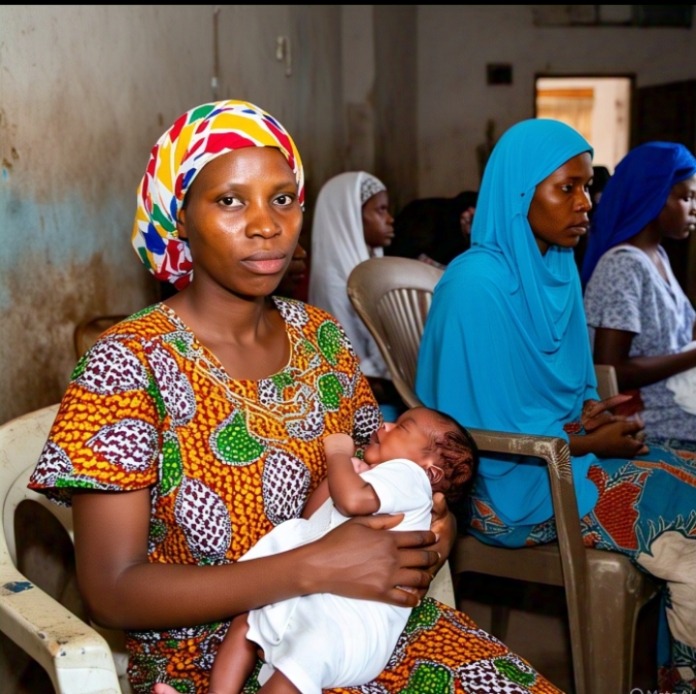
Due to rising cases of maternal mortality in Nigeria and its causes Nigerian Tracker’s Yusuf Danjuma Yunusa takes a look and files in this report
Maternal Mortality Rate (MMR)–the rate of deaths that occur due to complications from pregnancy or childbirth–is a pressing issue that demands urgent attention.
Research has shown that Nigeria is one of the top three African countries with the highest recorded cases of MMR. In 2023, the World Health Organization (WHO) reported that South Sudan and Chad had the highest MMR rates, with Nigeria ranking third.
The rise in maternal mortality is most prevalent in rural areas of the country. Between 2008 and 2018, states in the Northeastern and Northwestern regions recorded higher numbers compared to those in the Southeastern and Southwestern parts.
Furthermore, the Federal Ministry of Health recorded that between 2019 and 2022, out of the 36 states in Nigeria, only 15–16 actively participated in post-natal care. The postpartum period accounts for 27% of maternal mortality cases.
In response, the federal government, through the Ministry of Health and in collaboration with the Sustainable Development Goals (SDG 3.1), launched the National Strategic Health Development Plan II. By 2030, the plan aims to reduce Nigeria’s maternal mortality rate to no more than 70 deaths per 100,000 live births.
Healthcare is Dead in Rural Areas”—Dr. Nurudeen Mustapha Speaks on Causes of MMR
Dr. Nurudeen Mustapha, a medical doctor at the maternity ward of Ahmadu Bello University Medical Centre, highlights the gravity of the situation.

Dr Nuraddin Mustapha ,Medical expert
“Maternal Mortality, as defined by the World Health Organization, refers to the deaths of women due to complications from pregnancy or childbirth—either during delivery or up to 48 days postpartum. In Nigeria, for every 22 women who give birth, one dies. This contrasts sharply with developed countries, where maternal deaths occur only after thousands of births.”*
Dr. Mustapha attributes Nigeria’s high MMR to multiple factors, with marginalization of rural communities being a significant contributor.
“Access to proper healthcare is nearly impossible for people living in rural areas. As a result, they resort to self-administered healthcare, often performed by untrained individuals pretending to be midwives. This leads to complications, including severe hemorrhaging during childbirth—one of the major causes of maternal death.”
Illegal abortion is another contributing factor.
*”Unwanted pregnancies are rampant in our society. Many young girls under the age of 15 get pregnant, and in an attempt to terminate their pregnancies, they succumb to fatal complications.”
Additionally, hypertensive disorders and pulmonary edema—excessive fluid buildup in the lungs—are serious contributors to maternal deaths.
“Women with severe hypertension, particularly those over the age of 35, face heightened risks. Their cases often result in respiratory failure, leading to mortality.”
“Government Negligence Fuels Illegal Healthcare Practices”—Dr. Mustapha Criticizes Unregulated Hospitals.
When asked about the recent deaths at Afolmi Hospital in Durumi, Abuja, Dr. Mustapha did not hold back.
“This tragedy could have been avoided if the government actively enforced policies regulating healthcare facilities. Many illegal hospitals operate without consequences, allowing untrained staff to perform life-threatening procedures. Corruption is a major impediment to effective enforcement.”
On April 27, 2025, reports surfaced that Afolmi Hospital, along with staff member Murtala Jumma, was implicated in the deaths of two women due to childbirth complications. Jumma was reportedly responsible for a failed cesarean section that led to one of the fatalities.
The Path Forward: Experts Urge Government Intervention
According to Dr. Mustapha, improving maternal health in Nigeria requires strategic actions.
“Pregnant women should maintain a healthy diet and attend antenatal appointments regularly to monitor both their health and that of their baby. Family planning is also crucial, as excessive childbirth increases the risk of cervical tears, contributing to maternal mortality.”
Government intervention is equally vital.
Authorities must ensure that rural communities have access to quality healthcare facilities. In urban areas, medical personnel should receive fair remuneration to discourage them from leaving the country. Unregistered hospitals operating illegally must be shut down, and violators should face severe penalties.”
Maternal mortality remains a critical issue in Nigeria, especially in rural regions where healthcare is virtually non-existent. Without immediate action, the country faces severe economic consequences due to dwindling manpower and reduced contributions to the Gross Domestic Product (GDP).
Regulating abortion, enforcing hospital standards, improving healthcare infrastructure, and retaining medical professionals through better compensation could drastically reduce Nigeria’s MMR rate and safeguard the lives of thousands of women.












News
Kwankwaso May Become Nigeria’s Oldest Vice-Presidential Running Mate, Says Activist
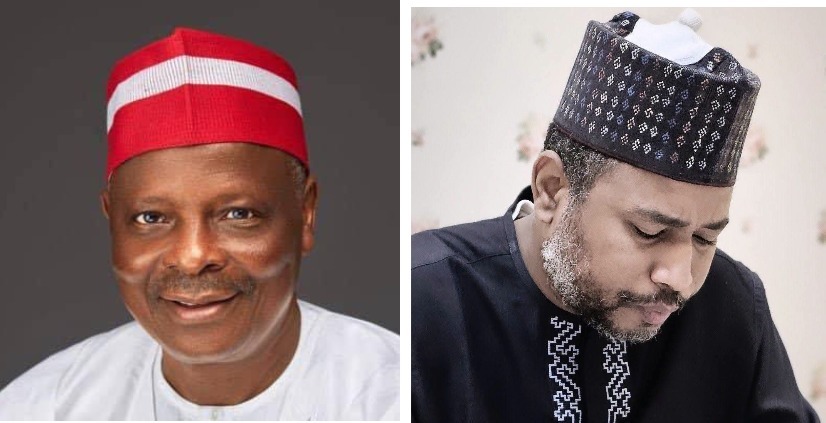
A social media activist and Nigerian diaspora member, Usman Isiyaku, has criticised supporters of Peter Obi and Rabiu Musa Kwankwaso over what he described as double standards in their arguments about the age of presidential candidates ahead of the 2027 general elections.
Isiyaku made the remarks in a post on his verified Facebook page, where he questioned why supporters of Obi and Kwankwaso allegedly criticised former Vice-President Atiku Abubakar over his age while celebrating the possibility of Kwankwaso becoming a vice-presidential candidate at 70.
The activist argued that Kwankwaso, a former governor of Kano State and leader of the National Democratic Congress would be among the oldest politicians to contest for Nigeria’s vice-presidency if he eventually runs alongside a younger presidential candidate.
According to Isiyaku, the criticism directed at Atiku, who is 79, by supporters of Obi and Kwankwaso contrasts with their apparent willingness to support Kwankwaso, who is 70, for the same position.
He questioned the consistency of the arguments surrounding age and leadership, insisting that a 70-year-old politician should also be considered elderly by the same standards used to criticise Atiku.
“The Obidients and Kwankwasites have built a whole campaign narrative against Atiku because he’s 79 years old. But Rabiu is 70 years old today, and they are celebrating him running for a VP at this age,” Isiyaku wrote.
“By every standard, a 70-year-old man is old. I mean, really old. Why the double standard?” he added.
Isiyaku further argued that it was unusual in Nigeria’s political history for a politician aged 70 to seek the vice-presidency alongside a younger presidential candidate, noting that previous civilian presidents generally had younger deputies.
He cited former Vice-President Namadi Sambo as an exception, explaining that Sambo was younger than former President Goodluck Jonathan by three years.
According to the activist, Sambo’s emergence as Jonathan’s running mate followed the death of former President Umaru Musa Yar’Adua in office, after which Jonathan became president and selected Sambo as his vice-president.
Isiyaku also compared Kwankwaso’s age with those of other former Nigerian vice-presidents at the time they assumed office, including Atiku Abubakar, Namadi Sambo, Yemi Osinbajo and Alex Ekwueme.
He stated that Atiku became vice-president at 52, Sambo at 49, Osinbajo at 58 and Ekwueme at 49 during the Second Republic, arguing that Kwankwaso’s possible entry into the vice-presidential race at 70 would represent a significant departure from the age profile of previous occupants of the office.
The activist maintained that political supporters should avoid using age as a weapon against their opponents, particularly when politicians they support are also advancing in age.
“Everybody will either grow old or die young. They should stop this age shaming because their VP candidate is a septuagenarian too!” he wrote.
Isiyaku’s comments come amid political discussions and alignments ahead of the 2027 general elections, with the ages, experience and suitability of prospective candidates featuring in debates among supporters of different political figures.
However, Kwankwaso’s possible emergence as a vice-presidential candidate remains a political proposition in Isiyaku’s post.
The debate highlights the continuing arguments over age, experience and political leadership in Nigeria, as supporters of different political camps assess potential candidates ahead of the next general elections.
News
APC Denies Plot to Assassinate Atiku, Urges Security Agencies to Question Timi Frank
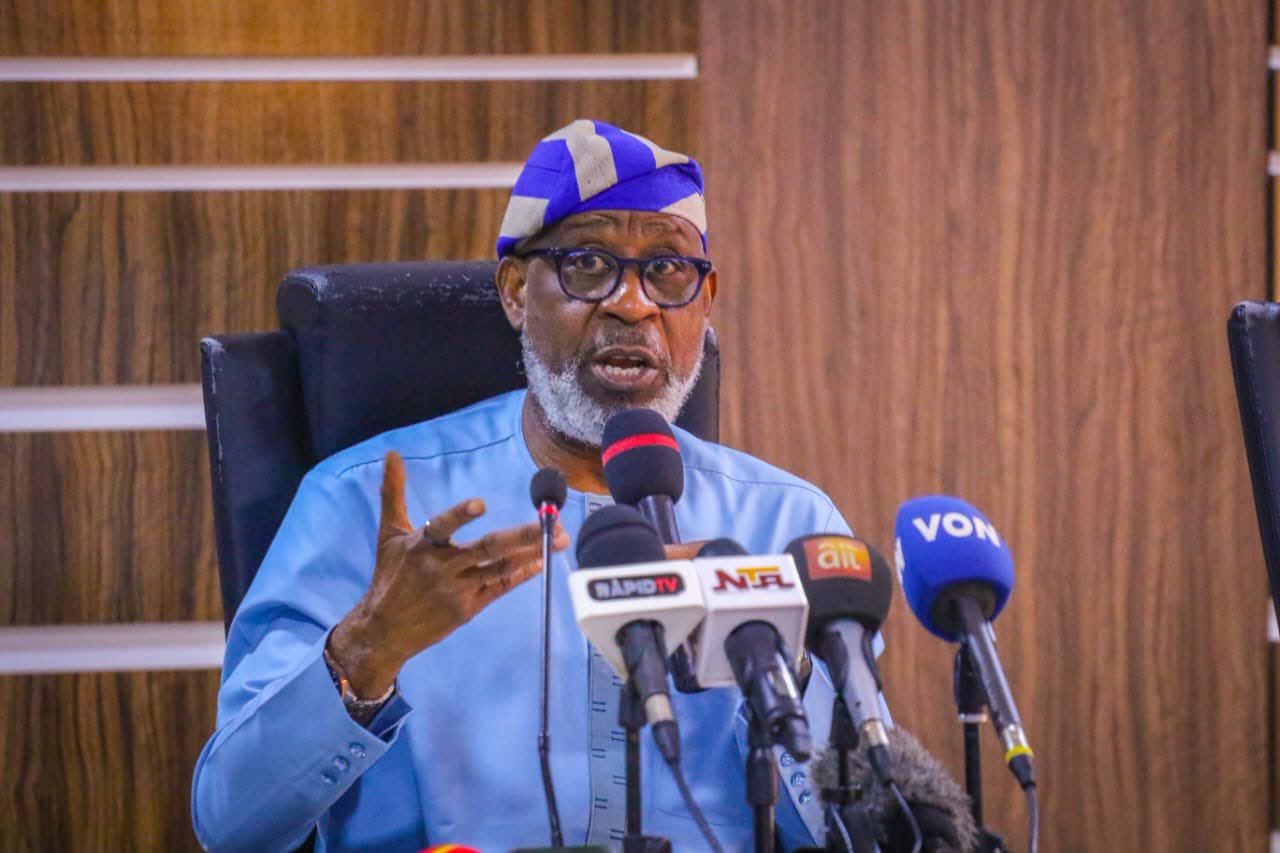
By Yusuf Danjuma Yunusa
The All Progressives Congress Presidential Campaign Council has denied allegations that the Nigerian Government is plotting to assassinate former Vice President Atiku Abubakar, the ADC presidential candidate, and called on security agencies to invite Timi Frank to substantiate the claim.
In a statement signed by its spokesperson, Dele Alake, dated October 20, 2026, the council said:
“Our attention has been drawn to the statement by Timi Frank, a member of the African Democratic Congress, alleging that the Nigerian Government is plotting to assassinate former Vice President Atiku Abubakar, the Presidential candidate of the ADC. This is a grave allegation that Mr Frank must prove. We thus urge security agencies to invite him to substantiate the allegation, given its gravity and the urgent need to preserve life.”
The council also rejected any involvement by the presidency or the APC Campaign Council, stating:
“We categorically reject the claim that the presidency of Nigeria or the APC Campaign Council is involved in any plot to assassinate former Vice President Atiku Abubakar or any opposition figure.”
It further dismissed as false claims that security personnel attached to Atiku had been withdrawn, saying the former vice president is protected by the police and the Department of State Security. According to the statement, President Bola Tinubu recently directed security agencies to reinforce and increase protection for all presidential, vice-presidential, governorship and deputy governorship candidates across the country.
The council said security around the ADC presidential candidate had never been compromised and that, as a former vice president, Atiku enjoys two levels of state-funded security protection, which the statement said Tinubu had increased ahead of the 2027 general elections.
It urged candidates, parties and supporters to be factual and responsible in public statements and to avoid utterances that could trigger avoidable tension, accusing Frank of “typical opposition rabble-rousing.”
News
Kano Youths Condemn Lawmaker Over Alleged Mockery of Governor Yusuf
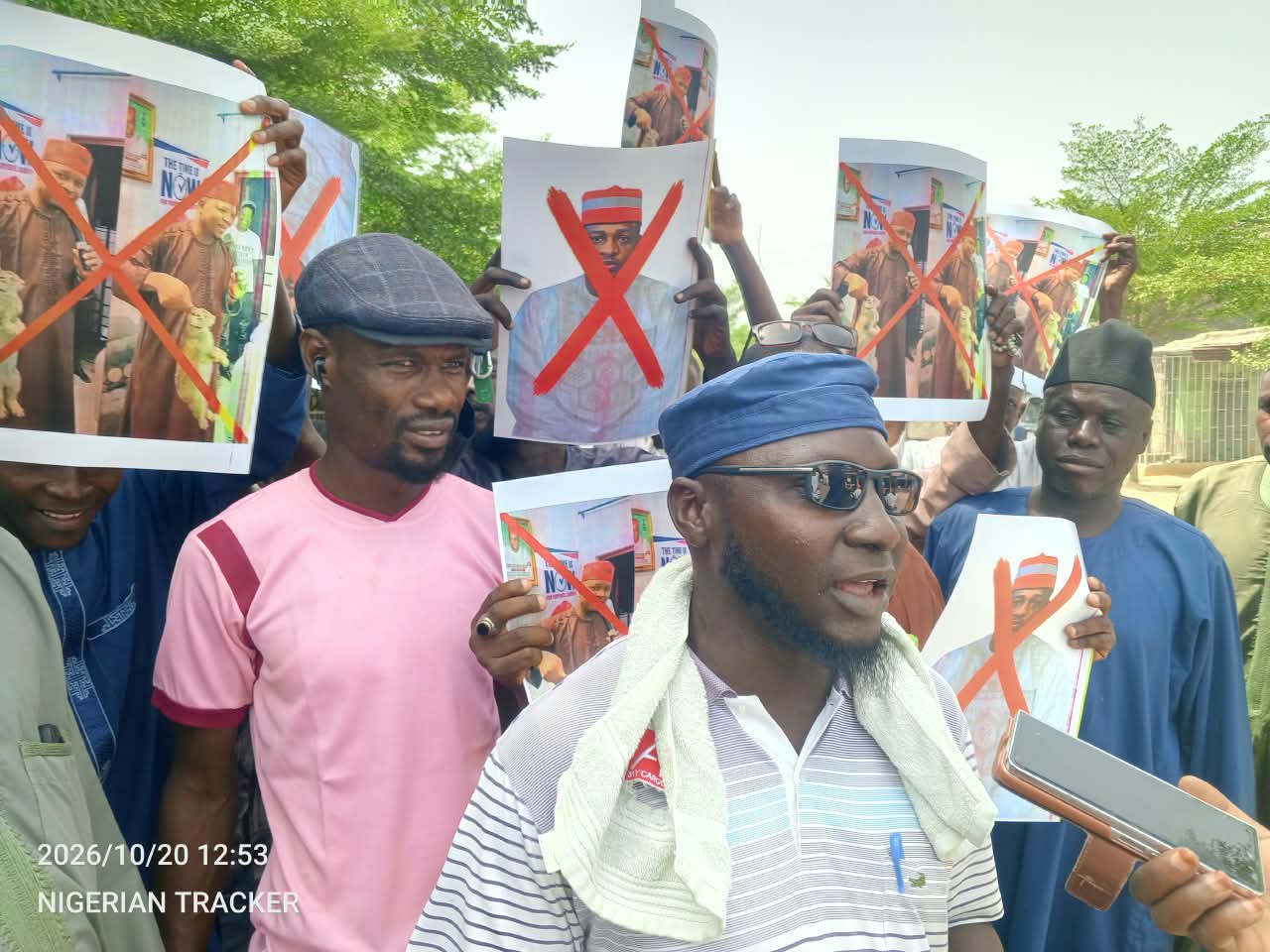
Concerned youths of Gama Ward in Nassarawa Local Government Area of Kano State have condemned the member representing Nassarawa Local Government in the Kano State House of Assembly, Hon. Bello Ali Yusuf, over an alleged act of mockery directed at Governor Abba Kabir Yusuf.
The youths, in a gathering on Tuesday, October 20, 2026, said they were displeased with the lawmaker’s reported action of holding the ear of a live rabbit in the presence of his supporters, which they alleged was intended to ridicule the governor.
Addressing journalists during a peaceful press briefing, the youths described the incident as disrespectful to the office of the governor and contrary to the cultural values and traditions of Gama Ward and the wider Kano community.
According to the group, the alleged conduct was undemocratic and unbecoming of an elected representative, adding that public officeholders should demonstrate maturity, decorum and respect for democratic institutions in their political engagements.
The Concerned Gama Youth further expressed concern that the incident could create unnecessary political tension and undermine the prevailing peace in the state.
They maintained that political disagreements should be handled through constructive engagement and democratic processes rather than actions they considered capable of ridiculing public officeholders.
NIGERIAN TRACKER reports that the group also reaffirmed its support for Governor Yusuf, commending his administration for what it described as people-oriented projects executed in Gama Ward and other parts of Nassarawa Local Government Area.
Specifically, the youths highlighted the construction of the road linking Gwagwarwa to Gama Hotel, describing the project as an important intervention that had improved transportation and eased movement within the community.
While addressing the press the group’s Secretary-General, Comrade Auwal Garba Gama, the road had also contributed to economic activities and improved access for residents.
The youths said the project demonstrated the governor’s commitment to infrastructure development and the welfare of residents of Gama Ward, adding that they appreciated the administration’s efforts to address the community’s needs.
Consequently, the group called on the leadership of the Kano State House of Assembly to investigate the incident and take what it described as immediate and decisive disciplinary action against Bello Ali Yusuf.
The youths argued that the alleged conduct had the potential to bring the legislature into disrepute, urging the Assembly’s leadership to ensure that elected representatives upheld the standards expected of public officeholders.
They also appealed to community leaders, political stakeholders and residents of Gama Ward to continue supporting the governor’s administration while maintaining peace and mutual respect despite political differences.
The group urged residents to remain law-abiding and avoid actions that could escalate political disagreements, while calling on them to pray for the success of the governor’s administration.
The secretary also reaffirmed the group’s solidarity with Gama Ward, Nassarawa Local Government Area and Kano State.

Kwankwaso May Become Nigeria’s Oldest Vice-Presidential Running Mate, Says Activist

APC Denies Plot to Assassinate Atiku, Urges Security Agencies to Question Timi Frank

Kano Youths Condemn Lawmaker Over Alleged Mockery of Governor Yusuf

IITA Trains Over 1,800 Farmers on Modern Farming Techniques in Kano

Former Delta State Governor, Emmanuel Uduaghan, Dies At 71

Zamfara Varsity ASUU Threatens Warning Strike Over FG-ASUU Agreement, Promotion Arrears

PCACC Arrests Man Over Alleged ₦4.5m Sale, Illegal Leasing of Kano Government Horse Stable

Kano Monitors ₦48.9bn Projects Across Six LGAs

Goje’s Electoral War:The Confrontation With Tinubu,Governor Inuwa,Usman Kumo And APC candidates Ahead Of 2027

Prof Yusuf Adamu Delivers BUK’s 63rd Professorial Inaugural Lecture, Reflects on Medical Geography and Academic Legacy
Kwankwaso May Become Nigeria’s Oldest Vice-Presidential Running Mate, Says Activist
APC Denies Plot to Assassinate Atiku, Urges Security Agencies to Question Timi Frank
Kano Youths Condemn Lawmaker Over Alleged Mockery of Governor Yusuf
IITA Trains Over 1,800 Farmers on Modern Farming Techniques in Kano
Former Delta State Governor, Emmanuel Uduaghan, Dies At 71
Zamfara Varsity ASUU Threatens Warning Strike Over FG-ASUU Agreement, Promotion Arrears
PCACC Arrests Man Over Alleged ₦4.5m Sale, Illegal Leasing of Kano Government Horse Stable
Kano Monitors ₦48.9bn Projects Across Six LGAs
Goje’s Electoral War:The Confrontation With Tinubu,Governor Inuwa,Usman Kumo And APC candidates Ahead Of 2027
Prof Yusuf Adamu Delivers BUK’s 63rd Professorial Inaugural Lecture, Reflects on Medical Geography and Academic Legacy
-

 Opinion5 years ago
On The Kano Flyovers And Public Perception
-

 Features5 years ago
How I Became A Multimillionaire In Nigeria – Hadiza Gabon
-

 Opinion6 years ago
Kano As future Headquarters Of Poverty In Nigeria
-

 History6 years ago
Sheikh Adam Abdullahi Al-Ilory (1917-1992):Nigeria’s Islamic Scholar Who Wrote Over 100 Books And Journals
-

 Opinion5 years ago
My First Encounter with Nasiru Gawuna, the Humble Deputy Governor
-

 History5 years ago
The History Of Borno State Governor Professor Babagana Umara Zulum
-

 History6 years ago
The Origin Of “Mammy Market” In Army Barracks (Mammy Ochefu)
-

 News5 years ago
Federal University Of Technology Babura To Commence Academic Activities September