
News
e-RIGHTS Project Partners Condemn Proposed Amendment to Data Protection Act Targeting Bloggers and Social Media Platforms

Avocats Sans Frontières France (ASF France), the Centre for Information Technology and Development (CITAD), and Spaces for Change (S4C), under the European Union-funded eRIGHTS Project, condemn the proposed amendment to the Nigerian Data Protection Act, 2023, which seeks to mandate the establishment of physical offices by social media platforms and compel bloggers to register with recognized national associations and maintain local offices within Nigeria.
The bill, titled “A Bill for an Act to Amend the Nigerian Data Protection Act, 2023, to Mandate the Establishment of Physical Offices within the Territorial Boundaries of the Federal Republic of Nigeria by Social Media Platforms and for Related Matters,” has passed both first and second readings at the Senate, raising serious concerns among civil society organizations, media actors, human rights defenders and social media users in Nigeria.
While the regulation of data protection is important in safeguarding the privacy of citizens, this proposed amendment extends far beyond data protection. By attempting to regulate bloggers and compel them to join recognized associations and establish physical offices, the bill threatens the constitutional rights of Nigerians, including the right to freedom of expression, privacy, and association, as guaranteed by Sections 37, 38, and 39 of the 1999 Constitution of the Federal Republic of Nigeria as amended, as well as international human rights instruments and conventions to which Nigeria is a party to.
This proposed legislation risks shrinking the civic and digital space in Nigeria. Independent bloggers, citizen journalists, and digital creators play a critical role in holding those in power to account, amplifying marginalized voices, and strengthening Nigeria’s democratic discourse. Imposing bureaucratic and financial burdens on these actors will not only undermine digital innovation but also stifle dissent and limit the diversity of online narratives.
We, the eRIGHTS project partners, therefore:
1. Call on the National Assembly to immediately halt the legislative process on this bill and subject it to broader public consultation, especially with civil society actors, media actors, digital rights advocates, and tech stakeholders.
2. Urge the President of the Federal Republic of Nigeria not to assent to any version of the bill that infringes on the rights to freedom of expression, privacy, and association.
3. Request the Nigeria Data Protection Commission (NDPC) to clarify its stance on this bill and uphold its responsibility to protect digital rights and data governance frameworks in a way that aligns with democratic values and international best practices.
The eRIGHTS project remains committed to promoting and protecting the digital rights of Nigerians, and to ensuring that the internet remains a safe and inclusive space for free expression, innovation and civic participation.









News
North-west Development Commission Partners Dala Orthopaedic To Make Quality Health Care Affordable
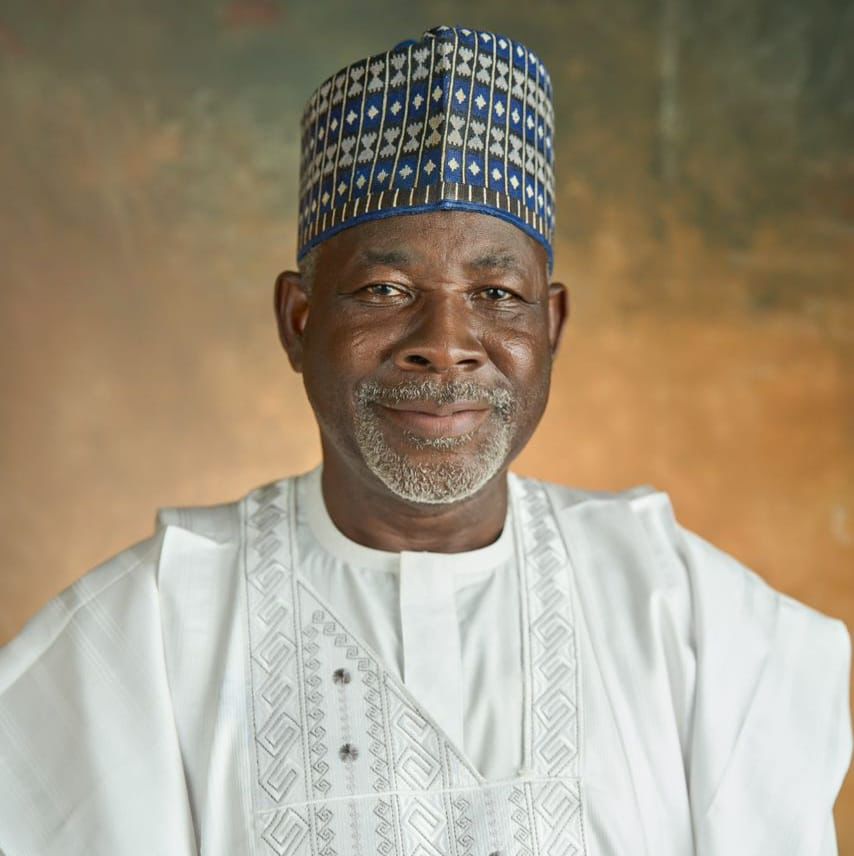
The North-West Development Commission is partnering Dala Orthopaedic Hospital Kano, to explore ways of making quality healthcare more affordable to patients in the country.
This was disclosed by the Managing Director (MD) of the Commission, Professor Shehu Abdullahi Ma’aji recently in Kano when he hosted the Chief Medical Director of the Dala Orthopaedic Hospital, Dr. Isa Nurudeen.
Professor Abdullahi maintained that, as an intervention agency, the Commission would carry out a needs assessment of the operational requirements of the hospital, most especially on the energy component, required to power the hospital’s sophisticated equipment, based on which the Commission would come up with a partnership framework that would support in minimising the running and maintenance cost burden on the hospital.
He expressed the hope that, by the time the Commission wades in and subsidise the operational cost, the gesture would automatically translates into reduction of service charge on respective patients.
Professor Abdullahi explained the Commission’s readiness to extend similar gesture to Aminu Kano Teaching Hospital (AKTH), Ahmadu Bello University Teaching Hospital Shika, Zaria; and Danfodio University Teaching Hospital, Sokoto.
He observed that all the three hospitals situated within the North-West region of the country “offer their services to generality of mankind” and as such, should be supported in whichever way possible to enhance the quality of their service delivery system; and to as well make the services more accessible and affordable.
Professor Abdullahi added that training of technical personnel on equipment operation and maintenance would be another component of the partnership between the two organisations. This is to ensure that operation and maintenance challenges are immediately tackled without waiting for the manufacturers to intervene.
He expressed the believe that by the time these healthcare facilities function optimally, it would reduce the frequency of Nigerians travelling overseas on medical tourism and would in turn boost Nigerian economy.
Earlier in his submission, the Chief Medical Director of Dala Orthopaedic Hospital, Dr. Isa Nurudeen explained that the purpose of the visit was to solicit the support
and assistance of the Commission to tackle some of the operational challenges facing the hospital.
He specifically emphasised on the energy needs to power their equipment, most especially the new sophisticated MRI machine recently donated by the NNPCL.
He explained that for the machine to operate optimally, it needed to run 24 hours continuously on electricity which is costly and beyond what the hospital management could afford considering the high cost of electricity from the national grid and the prohibitive cost of diesel in the country.
He then appealed to the Commission to come in and assist in providing a sustainable alternative source of energy to power the equipment.
The North-West Development Commission was established in 2024 by Mr. President, Asiwaju Bola Ahmed Tinubu to among others, accelerate infrastructure development and address long standing developmental gaps across the region.
In a statement by Abdulrashid Safana the Head press and public relations says the core mandate areas include security, agriculture, health, education, environment, women and youth development.
News
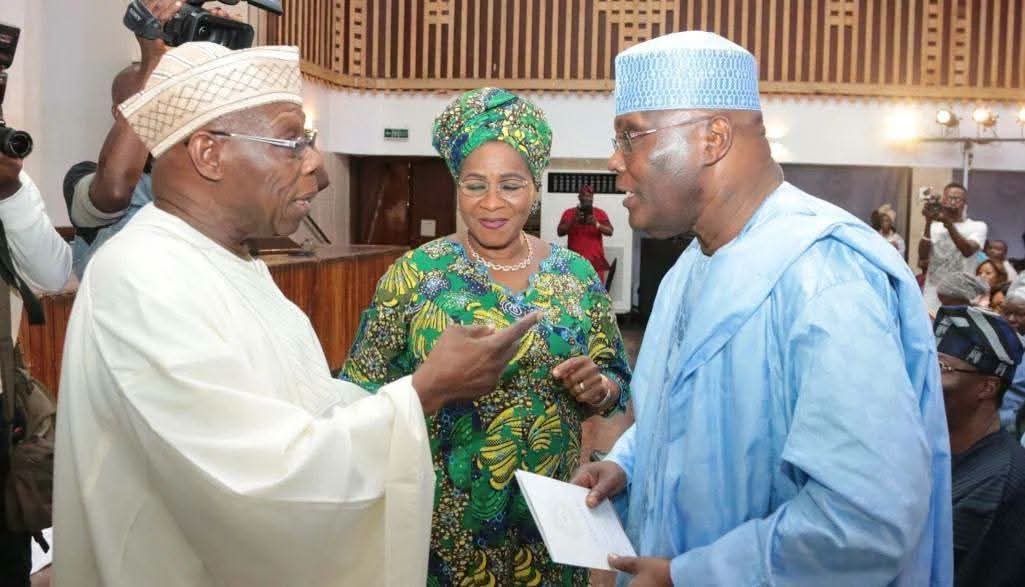
Atiku Replies Obasanjo, Says He Has No Regret Thwarting the Third Term Agenda
By Yusuf Danjuma Yunusa
Former Vice President Atiku Abubakar has said his opposition to the alleged third-term agenda of former President Olusegun Obasanjo was driven by his commitment to Nigeria’s constitutional democracy and not personal hostility towards his former principal.
Mr Atiku, who is the presidential candidate of the African Democratic Congress, ADC, stated this while responding to Mr Obasanjo’s latest criticism of him.
In a statement issued on Saturday by his Senior Special Assistant on Public Communication, Phrank Shaibu, Mr Atiku said the former president’s remarks were an attempt to rewrite history and diminish his role in the administration that governed Nigeria between 1999 and 2007.
He said he received Mr Obasanjo’s comments with sadness rather than anger, arguing that the former president had allowed personal resentment to influence his account of their political relationship.
Mr Atiku said the source of Mr Obasanjo’s alleged hostility towards him was well known to Nigerians, linking it to his refusal to support the reported move to amend the Constitution to allow the former president to seek another term in office.
“I am proud that I stood against the third-term agenda. I am proud that I stood by the Constitution of the Federal Republic of Nigeria. I have no apology whatsoever for frustrating every attempt to subvert our democracy for personal ambition,” he said.
“If Chief Obasanjo’s bitterness stems from my refusal to support an unconstitutional third term, then I wear that resentment as a badge of honour. No individual, regardless of his status or accomplishments, is bigger than the Federal Republic of Nigeria.
“The Constitution is supreme, and I chose Nigeria over personal loyalty.”
The former vice president said the resistance to the third-term agenda was not a personal battle between him and Mr Obasanjo but a struggle to preserve Nigeria’s constitutional democracy.
“The Nigerian people won that battle. Democracy won that battle. History has already delivered its verdict,” he said.
Mr Atiku said it was unfortunate that Mr Obasanjo, whose alleged ambition was resisted, was now criticising those who defended the Constitution.
He also referred to recent comments by the Director-General of the World Trade Organisation, Ngozi Okonjo-Iweala, who, according to him, praised the economic management team of the Obasanjo administration and described it as the best Nigeria had produced.
Mr Atiku said the timing of the comments, coming shortly before Mr Obasanjo’s latest criticism, was for Nigerians to interpret.
“Whether or not the timing is merely coincidental is for Nigerians to judge. What is beyond dispute, however, is that while distinguished Nigerians who served at the highest levels continue to acknowledge my contributions to one of Nigeria’s most successful periods of economic management, Chief Obasanjo appears determined to diminish them,” he said.
“Chief Obasanjo may choose not to appreciate my role in building one of Nigeria’s most prosperous economic eras, but history has been far kinder. The record speaks for itself, and so do the testimonies of those who worked closely with that administration.”
Mr Atiku also recalled his relationship with Mr Obasanjo before the latter became president in 1999, claiming that he supported the former military ruler during his period of incarceration and contributed to his political return.
“History records that while Chief Obasanjo was in prison, I stood firmly by him. I supported his family, worked tirelessly with other patriots for his release and never wavered in my belief that he deserved his freedom,” he said.
“When he eventually regained his freedom, he had little to his name. I received him, clothed him, ensured he was properly cared for and extended every support necessary to help him regain his footing.
“Beyond that, I mobilised political structures, built alliances and made enormous personal and political sacrifices that culminated in his emergence as President of the Federal Republic of Nigeria.”
Mr Atiku said he had no regrets over his support for Mr Obasanjo, adding that acts of kindness should not be undertaken with the expectation of repayment.
“Do I regret helping Chief Obasanjo? Absolutely not. When God gives you the opportunity to lift another human being, you do so without expecting repayment.”
News
Gwamna Petitions IGP, Seeks INTERPOL Probe Over Alleged Coordinated Fake News Campaign
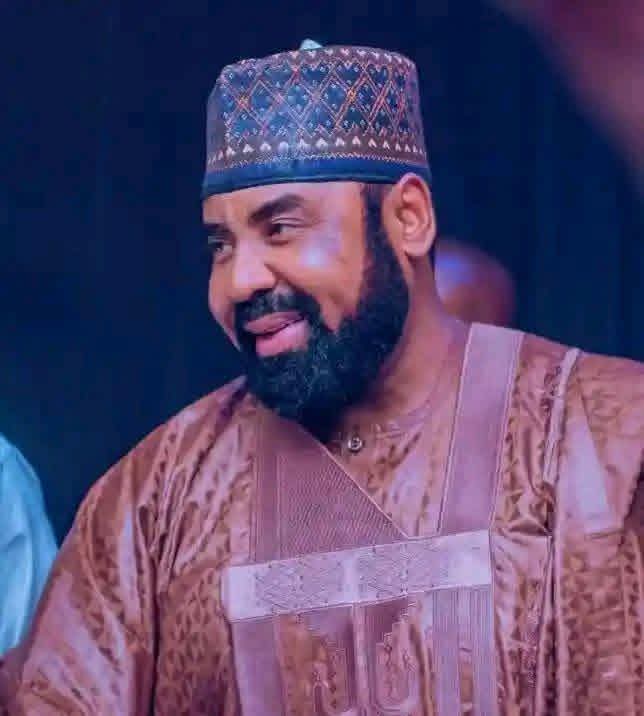
The All Progressives Congress (APC) governorship candidate in Gombe State, Dr. Jamilu Isyaku Gwamna, has formally petitioned the Inspector-General of Police over what he describes as a coordinated campaign of cyberbullying, criminal defamation and fake news allegedly orchestrated to damage his reputation ahead of the 2027 governorship election.
Highly placed sources familiar with the petition disclosed that Gwamna requested an immediate investigation by the Nigeria Police National Cybercrime Centre, with the involvement of INTERPOL, following intelligence suggesting that some of those behind the online attacks may be operating from outside Nigeria.
The petition reportedly names several social media accounts accused of publishing false claims that the APC candidate had been arrested and detained by the Economic and Financial Crimes Commission (EFCC), allegations which Gwamna categorically denies.
According to the sources, the petition describes the publications as a carefully coordinated disinformation campaign designed to mislead the public, injure his reputation and manipulate public perception at a time when his political profile and grassroots support continue to grow across Gombe State.
The petition reportedly urges the Police to obtain subscriber information, IP logs and other digital evidence from Meta Platforms, identify the sponsors and financiers of the campaign, prosecute all those found culpable and secure the removal of the offending publications.
Political analysts believe the latest development underscores the increasingly desperate tactics being deployed as the Gombe governorship contest gathers momentum.
Observers note that Dr. Gwamna’s emergence as the leading contender has significantly altered the political landscape in the state, with his growing acceptance across different constituencies unsettling sections of the opposition.
Rather than engage on policy, programmes and the future of Gombe State, critics say some political actors appear to have embraced misinformation, character assassination and cyberbullying in an attempt to slow the momentum of his campaign.
Supporters of the APC candidate expressed confidence that the petition would expose those behind what they describe as an organised smear campaign and reaffirmed their belief that the electorate would ultimately judge candidates on competence, integrity and their vision for the state.
As of the time of filing this report, neither the Nigeria Police Force nor the EFCC had publicly commented on the petition.

North-west Development Commission Partners Dala Orthopaedic To Make Quality Health Care Affordable

Atiku Replies Obasanjo, Says He Has No Regret Thwarting the Third Term Agenda

Gwamna Petitions IGP, Seeks INTERPOL Probe Over Alleged Coordinated Fake News Campaign

I Gave Tijjani Gandu N10 Million to Support Musicians, Media but Funds Were Allegedly Not Distributed – Governor Yusuf’s Spokesperson

Oloyede Bows out as JAMB Registrar, Hands over to Prof. Aina

Alhaji Tijjani Rabiu Spikin: A Neighbour, Philanthropist, and Friend of Children

Is N100,000 Worth the Risk?’ Nigerians React to Soldiers’ Salary Increase

Goodwill, Visibility, and Operational Security: A Strategic Communication Reading of Senator Ahmad Lawan’s DIA Post

MAAUN Clarifies Status of Former Visiting Lecturer, Reaffirms Zero-Tolerance Policy on Sexual Harassment

ASCON: Kano Concludes Training, Examination for Aspiring Civil Service Managers
North-west Development Commission Partners Dala Orthopaedic To Make Quality Health Care Affordable
Atiku Replies Obasanjo, Says He Has No Regret Thwarting the Third Term Agenda
Gwamna Petitions IGP, Seeks INTERPOL Probe Over Alleged Coordinated Fake News Campaign
I Gave Tijjani Gandu N10 Million to Support Musicians, Media but Funds Were Allegedly Not Distributed – Governor Yusuf’s Spokesperson
Oloyede Bows out as JAMB Registrar, Hands over to Prof. Aina
Alhaji Tijjani Rabiu Spikin: A Neighbour, Philanthropist, and Friend of Children
Is N100,000 Worth the Risk?’ Nigerians React to Soldiers’ Salary Increase
Goodwill, Visibility, and Operational Security: A Strategic Communication Reading of Senator Ahmad Lawan’s DIA Post
MAAUN Clarifies Status of Former Visiting Lecturer, Reaffirms Zero-Tolerance Policy on Sexual Harassment
ASCON: Kano Concludes Training, Examination for Aspiring Civil Service Managers
-

 Opinion4 years ago
On The Kano Flyovers And Public Perception
-

 Features5 years ago
How I Became A Multimillionaire In Nigeria – Hadiza Gabon
-

 Opinion6 years ago
Kano As future Headquarters Of Poverty In Nigeria
-

 History5 years ago
Sheikh Adam Abdullahi Al-Ilory (1917-1992):Nigeria’s Islamic Scholar Who Wrote Over 100 Books And Journals
-

 Opinion5 years ago
My First Encounter with Nasiru Gawuna, the Humble Deputy Governor
-

 History5 years ago
The History Of Borno State Governor Professor Babagana Umara Zulum
-

 History5 years ago
The Origin Of “Mammy Market” In Army Barracks (Mammy Ochefu)
-

 News4 years ago
Federal University Of Technology Babura To Commence Academic Activities September