
Opinion
Barau Scholarship, Global Courses and Addressing Northern Underdevelopment
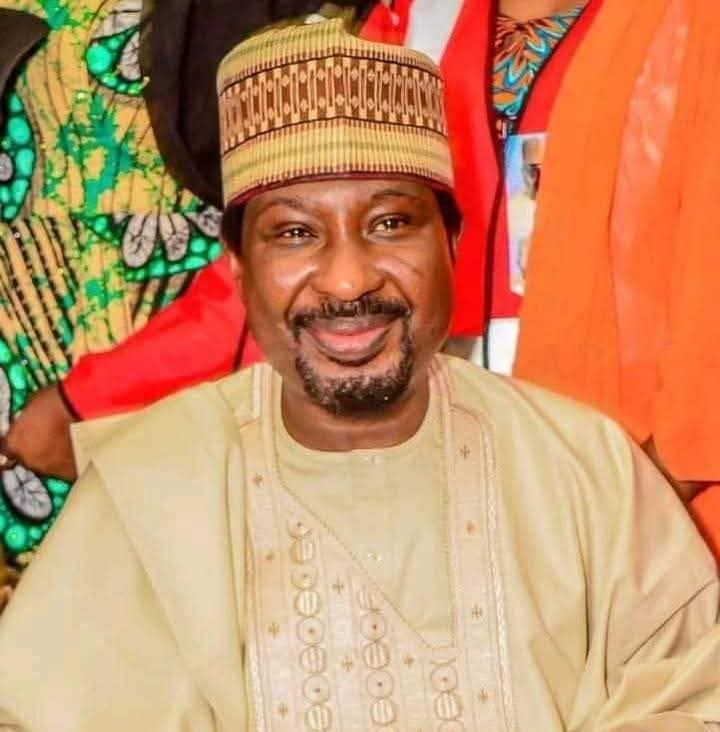
By Abba Anwar
I deliberately coined Barauism as a concept being inspired by values and principles of the Deputy Senate President, Barau Jibrin, suggesting his philosophy, movement and ideology for hastening the process of development in Kano, other parts of Northern Nigeria and the nation by extension.
Let me start by congratulating, not DSP Barau for now, but the process for the selection of his scholarship beneficiaries, numbering 70. Out of this number, 65 are males, while the remaining 5 are females.
Due diligence, merit, clear vision and above all, independence of the process and procedures, from start to finish, were the bedrock of the political will, which brought the successful candidates into limelight.
The first time, to my knowledge, in Northern Nigeria, probably the South also, except in rare case(s) if that existed, when an individual political office holder and/or elected representative, provided similar scholarship for the study of these carefully selected courses, Artificial Intelligence, Cybersecurity and Robotic Science for such number of students. At a go. I stand to be corrected.
These are areas that shape our world today. Making those selected to be global citizens who, after finishing their programmes would come and hasten the process of development in Kano and the nation in general.
The first time in Kano recent history, when such number of students were sent abroad to study 21st Century programmes, at a go. I mean all courses of study for the entire 70 beneficiaries are 21st Century fields. Not even a government, talkless of an individual philanthropist. I am referring to the chosen areas of study. I stand to be corrected.
Just like Senator Abdurrahman Kawu Sumaila, of Kano South and Hon Abubakar Bichi, representing Bichi Federal Constituency, Senator Barau moves to second stage of human Empowerment. With different style and approach. As the courses, country of study and institutions indicate.
This time around, not cash grants or craft tools, like sewing machines, farming implements and the rest. But education, education and education. Of carefully selected programmes.
Surely Barau understands the velocity at which societal growth and development move and fit into modern technology, that have all potentialities for global recognition and acceptance.
When it comes to improved healthcare, increased efficiency in all fabrics of the society, enhanced education and smart infrastructure, among others, Artificial Intelligence is there.
For improving and engaging real technology for national security, job creation and sustainable economic growth and development, among others, Cybersecurity takes charge. Barau has the intelligence to understand this calculus.
As Hon Barau clearly sees beyond local politics, he chooses some of the most relevant and marketable programmes for the already airlifted students for their higher Degrees. The choice of India, for these courses, is in itself extraordinary and engaging.
Under Robotics Science, industrial automation, productivity, accuracy and efficiency in manufacturing are well placed for improvement. While in the healthcare sector this all-important programme, plays an important role in adding up in the areas of patient care, surgeries as well as rehabilitation of global standard.
It also helps much in monitoring and mitigating effects of climate change, pollution and other natural disasters. People of such educational attainment, in Robotics, have an added advantage over others in studying and understanding the universe in a scientific way. That is space exploration at its best.
Just two days to new year, Barau witnessed the airlift of those beneficiaries, when he reveals that, “One of the areas that we have a problem in educating our youth is the northwestern part of this country. We have a youth population, which is an asset to us, but our problem is that they are not well-educated. And I feel that our number one solution to our problems is educating our youth.”
“And we understand the importance of human capital. It’s key to the development of every nation.
It’s in this regard that I feel that the best thing to do is to begin to educate, help, or complement what the president, Bola Ahmed Tinubu, is doing in terms of giving access to indigent students, our youth, who do not have the wherewithal, whose parents do not have the wherewithal to train them educationally.”
So he has the entire Northwest in mind.
As he also promised that, he would provide the beneficiaries with resources for their startups. This tells us that, Hon Barau is targeting at making Kano excel in innovation and entrepreneurship. To become Nigeria’s Silicon Valley.
Which will automatically lead to the emergence of new businesses and job opportunities for the overall development of the state.
While at the same time, such effort automatically leads to skills development, collaboration and teamwork for socio-economic impacts.
The nature and style of this scholarship where beneficiaries come from across local governments, not limited to his Constituency Kano North, but from all parts of the state, is the first of its kind.
People expect and wish that, other politicians, not only from All Progressives Congress (APC) should take a leaf from the Deputy Senate President, Distinguished Senator Barau I. Jibrin. Moving to second stage of empowerment programmes.
Anwar was former Chief Press Secretary to the former Governor of Kano State, Dr Abdullahi Umar Ganduje. Can be reach @ fatimanbaba1@gmail.com
31st December, 2024











Opinion
Kano’s War On Drugs: How Barr. Muhyi’s Taskforce Is Changing The Game
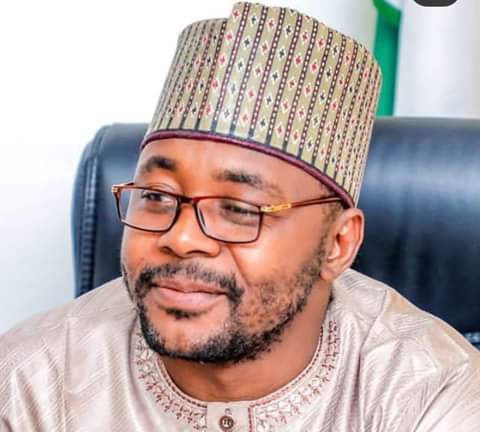
By Muhammad Abubakar Suleiman
When Governor Abba Kabir Yusuf declared a public health emergency on drug abuse on July 22, 2026, and inaugurated the Multi-Agency Task Force on Drug Abuse and Illicit Trafficking, many in Kano saw it as another committee. Three months later, the committee led by Barrister Muhyi Magaji Rimin Gado is dominating security headlines in the state.
The Taskforce was constituted as a multi-agency platform bringing together NDLEA, Police, DSS, Consumer Protection Council, Pharmaceutical Society, Ministry of Health, Anti-Daba Unit and other stakeholders. Dr. Ibrahim Garba Muhammad serves as Secretary.
From Raids to Results: Over 400 Arrests
According to briefings by the Chairman, within the first two months the Taskforce arrested more than 380 suspects and secured over 230 convictions. By September 29, when Barr. Muhyi spoke at the Kano Network of NGOs (KANET) Monthly Lecture at Nasarawa GRA, the figure had risen to over 400 arrests.
Presenting its scorecard to the State Executive Council in late September, the Taskforce reported a 35% reduction in drug-related crimes in the last three months, attributing it to intensified enforcement, seizures and over 500 convictions as of October 22.
Operations have focused on identified hotspots: Race Course, Filin Idi, Filin Mahaha, Tashar Rami, Kawo, Tashar Rimi, Jakara, Madigawa, Yalwa, Sanka, Kul Kul, Dogon Nama and Kukar Bulukiya.
Recoveries include Cannabis Sativa, Tramadol, Diazepam, Pentazocine, Pregabalin, Exol-5 and a Methamphetamine-based designer drug. In one case, 870,000 capsules of Pregabalin were seized from a pharmaceutical company over suspected diversion. Local weapons – knives, daggers, cutlasses and clubs – used by gangs were also recovered.
The Taskforce also recorded high-profile arrests. On August 18, it announced the arrest of a former Chairman of Rogo Local Government for allegedly selling and administering fentanyl injections to youths, after a victim who spent over N2 million on injections identified him.
Latest: Gang Sponsor Tracked to Port Harcourt
In its most recent operation, the Taskforce announced on October 30 the arrest of a 27-year-old suspected gang violence sponsor, Ishaq Lawan Ibrahim, popularly known as Malam Keya, from Yalwa in Dala LGA.
According to the committee, Malam Keya was allegedly financing violent clashes by rival Daba gangs in Dala that claimed lives. He fled to Port Harcourt, Rivers State, after crackdown intensified, but was tracked and arrested in an operation led by Head of Operations, CSP Bashir Gwadabe, and brought back to Kano. He is now in police custody pending prosecution.
Chairman Muhyi said the arrest outside Kano shows the Taskforce will pursue suspects beyond state boundaries.
Beyond Enforcement: Children, Rehabilitation and Technology
The committee says its mandate is not just enforcement. It reported rescuing 43 underage children allegedly exposed to intoxicants and convicting two dealers – Kabiru Isa and Usman Hamisu – for the offence. About 125 persons were referred to the Kano Reformatory Institute in Kiru for rehabilitation. With Kiru overstretched, government has provided an additional facility in Tofa.
The Taskforce has set an ambitious target of taking 10,000 youths off the streets for rehabilitation, skills acquisition and reintegration.
On August 21, Barr. Muhyi inaugurated nine sub-committees to professionalize the fight: Finance; Media and Publicity; Advocacy and Sensitisation; Licences, Inventory and Verification; Compliance, Inspection and Electronic Tracking; Monitoring and Implementation; Intelligence; Reformative and Traditional Council; and Anti-Drug Coordination.
Tech Turn: AI, 24-Hour Line and NDLEA Support
In the last two weeks, the Taskforce unveiled a new approach. On October 22, Barr. Muhyi, on behalf of Governor Yusuf, donated operational equipment to the NDLEA Kano Strategic Command led by Commander Dahiru Yahaya Lawan, to boost operations.
He also disclosed that Kano is deploying Artificial Intelligence for surveillance and tracking of suspected dealers, and equipping a rapid-response centre with ICT and a 24-hour toll-free line where residents can report and get response within 30 minutes.
At KANET lecture themed “Kano Drugs Crisis: Challenges, the Way Forward and the Role of the Community,” Muhyi stressed community intelligence and called for more rehabilitation to decongest remand homes.
No Sacred Cows
From day one, Barr. Muhyi has maintained a hard line on political interference. “No politician can pressure me to free drug suspects. The only person who can stop me is the Governor, and I know he will never interfere,” he told journalists on July 28.
That stance, coupled with intelligence-led raids, has earned the Taskforce both praise and scrutiny.
The Bigger Picture
Kano Police data cited by the Taskforce indicates about 70% of major crimes in 2025 were linked to drug abuse. The Executive Order outlawing Daba gangs provides a minimum of five years imprisonment under Section 97A of the Kano Penal Code.
Whether the Taskforce can sustain momentum will depend on three tests: securing the drug supply chain from pharmaceutical diversion, expanding rehabilitation beyond Kiru, and maintaining inter-agency cooperation without becoming a parallel enforcement body.
For now, in the markets of Filin Idi and the streets of Dala, residents say the presence of the committee is being felt.
Opinion
The Reward For Hardwork Is More Work: A Rejoinder To Dr Garba Ubale Danbatta
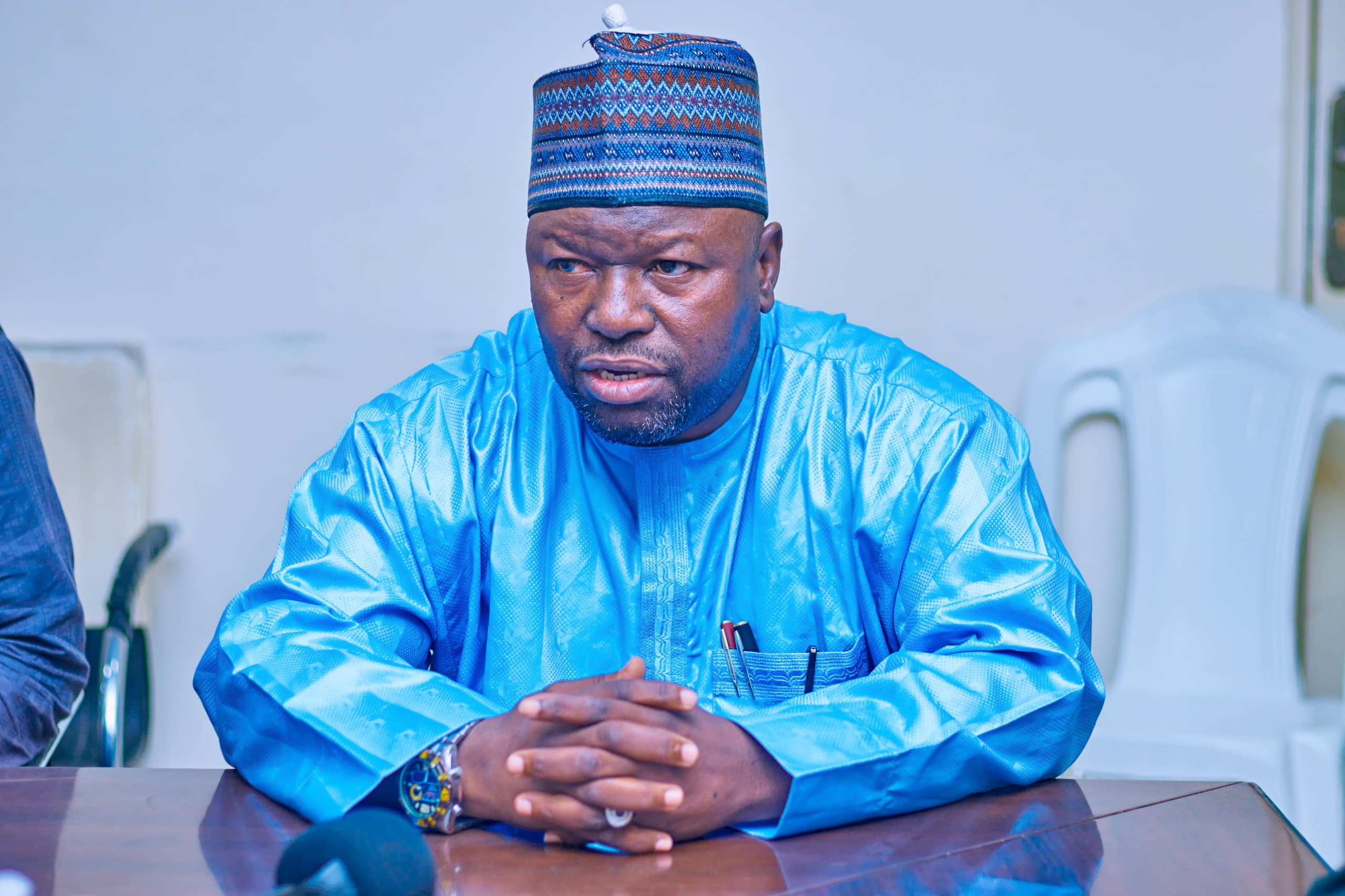
By Nworisa Michael
The redeployment of Hon. Comr. Ibrahim Abdullahi Waiya PhD from the Ministry of Information and Internal Affairs to the Ministry of Youth and Sports Development has attracted several reactions. While professional and civic organisations have congratulated him and acknowledged his contributions, Dr Garba Ubale Danbatta, a supposedly veteran journalist, has chosen to use the development to question his performance and professional conduct in his former ministry.
Dr Danbatta is entitled to his opinion. Nobody should be above criticism, especially in public office. However, when criticism is presented as a professional assessment, it should be supported by facts, not merely personal convictions or years of experience.
Before concluding that journalism suffered under Waiya, perhaps we should examine some of the developments recorded during his tenure.
Eight contributions worth considering:
• Grassroots information: Strengthened engagement with Information Officers across Kano’s 44 local government areas and eight zonal offices.
• Capacity building: Supported training programmes for local government Information Officers, alongside interactive engagements with editors and news managers.
• Media policy: Facilitated the inauguration of an 18-member committee to develop a media and information policy framework for Kano State.
• Digital transformation: Established a Digital Multimedia Department to modernise government communication, improve digital engagement and address misinformation.
• Peacebuilding: Advanced the Safe Corridor Project, an initiative focused on rehabilitation, skills development and reintegration of reformed youths.
• Media engagement: Engaged media practitioners, online publishers and political programme presenters on responsible public communication and professional conduct.
• Institutional development: Pursued interventions aimed at strengthening state-owned media institutions and improving the capacity of personnel within the information machinery.
• National recognition: Received the Crisis Communicator of the Year award at the 2026 National Spokespersons Awards in Abuja.
These developments do not mean that Waiya’s tenure was without shortcomings. They simply demonstrate that there is more to his record than the sweeping conclusion offered by his critic.
There is also something interesting about the public reactions to his redeployment. The Kano State Forum of Information Officers, Northern Youths Assembly and International Peace and Secure Society are among the organisations that have publicly acknowledged his contributions and congratulated him on his new assignment. Their statements may not settle every debate about his tenure, but they show that his work was not viewed negatively by everyone who interacted with his ministry.
Now, to Dr Danbatta’s presentation of his professional experience.
I found it rather curious that a commentary intended to assess another public officer’s performance devoted three of its concluding paragraphs to the author’s own professional journey, positions held and years of experience. One could almost finish reading the piece knowing more about the author’s resume than the evidence behind his criticism of Waiya.
Same individual who has been unable to ensure good working relationship with his staffs at Pyramid Radio Kano where is currently serves as its manager, a station that constantly runs out of diesel and goes off the air, perhaps even he isn’t proud of this hence he left it out from the list of his workplaces listed.
With due respect, professional experience is valuable, but it should strengthen an argument, not become the argument itself. A good product sells itself. A journalist’s professional standing should be reflected in the quality, fairness and depth of their analysis. Thirty years in the profession deserves recognition, but it does not automatically make every opinion conclusive.
If the intention was to assess Waiya’s stewardship, then the more important questions should have been: What did he inherit? What did he change? Which initiatives did he introduce? What measurable outcomes were achieved? And where did he fall short? Those are the questions that give criticism substance.
We can be safe to say that Waiya’s redeployment was a direct reward for his performance in the former ministry. The Governor has publicly explained the cabinet adjustments as part of efforts to strengthen institutions and improve service delivery. What is evident, however, is that Waiya has been entrusted with another important responsibility, and his record in the former ministry remains open to public examination.
The Ministry of Information and Internal Affairs is not beyond criticism, and neither is Dr. Waiya. But fairness requires that we acknowledge the work done alongside the shortcomings alleged.
Frankly the most fitting way to understand this new assignment is captured in the title of this piece: the reward for hard work is more work. His previous assignment is now part of his public record; his new ministry presents another opportunity to serve.
Congratulations, Hon. Comr. Ibrahim Abdullahi Waiya. The expectations continue.
Nworisa Michael is a
Writer, Public Affairs Commentator and writes from nworisamichael1917@gmail.com
1st Nov. 2026
Opinion
My Achievements At Kano State Ministry of Environment — By Dr. Dahir M. Hashim
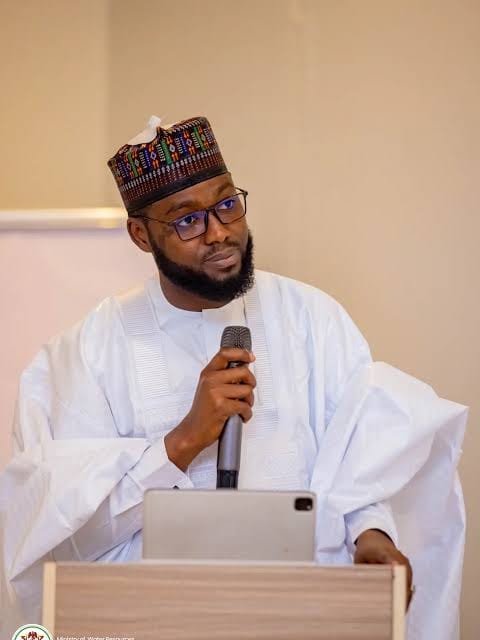
Looking back on my time at the Ministry of Environment and Climate Change, one change I value most is how the public came to see the sector itself. Environmental protection became a stronger part of conversations about our health, neighbourhoods, livelihoods, and Kano’s future. People increasingly joined the work, supported our programmes, and held us accountable.
For that, I thank the people of my dear state.
This journey began for me on 6 January 2025, when His Excellency, Alhaji Abba Kabir Yusuf, the Executive Governor of Kano State, entrusted me with the responsibility of leading the Ministry.
The challenges were clear. Facilities had deteriorated, policies needed updating, enforcement was weak, and frontline workers were owed outstanding payments. Yet His Excellency saw what the Ministry could become and gave us the support to begin rebuilding it.
Our government-owned nurseries tell part of that story. Eight facilities that had become non-functional were fully rehabilitated, restoring our capacity to produce seedlings locally. Building on the administration’s three-million-tree planting programme in 2024, the programme grew to five million in 2025 and ten million in 2026, with all seedlings raised in government-owned nurseries. Behind those numbers was the recovery of public facilities that could continue serving Kano for years to come.
The same determination guided the restoration of the Kano State Pollution Control Laboratory. We renovated, equipped, and recommissioned it, giving the State the scientific capacity to test, monitor pollution, and support enforcement. We operationalised the Environmental Pollution Control Law and developed the Environmental Pollution and Waste Control Regulations to give that work a stronger legal foundation.
At REMASAB, reforms improved the coordination of waste collection, evacuation, and disposal. Waste management became more organised and responsive, with operations supporting the evacuation of approximately one million metric tonnes of waste. The Dorayi Compost Plant was also brought back into operation, restoring the capacity to turn organic waste into useful compost and creating opportunities for investment.
Across flood-prone communities, we undertook drainage construction, clearance and erosion control. The stormwater harvesting intervention in Toranke and work on the Kano State Drainage Master Plan formed part of our effort to move towards better protection and long-term planning.
We also restored four public parks, with more underway. Spaces that had suffered neglect were given new management arrangements and a clear responsibility for maintenance. Families now have more welcoming places to spend time together, while the parks’ combined annual revenue increased from around ₦5 million to ₦90 million.
Alongside these projects, we rebuilt the policy foundations of the sector. We developed the Kano State Climate Change Policy, its implementation plan and results framework; advanced the Climate Change Bill; and reviewed the Forestry Law after more than five decades. We also developed the Climate Finance Reform Action and Implementation Plan and the Green Bond Framework to prepare Kano for environmental and climate investment.
Kano’s third-place finish in the just-concluded 2026 Climate Governance Performance Ranking, and the opportunity to present our work at COP30 in Belém, Brazil, gave us reasons to be thankful. They also reminded us how far consistent support and collective effort could take the state.
None of this work could have continued without the people delivering it every day. With His Excellency’s backing, we cleared nine months of salary arrears for 2,369 verified street sweepers and doubled their stipends, re-engaged inspectors and forest guards, and doubled the stipends of 875 sanitation vanguards. I remain grateful for their service.
Today, as His Excellency separates the ministries and appoints a new Commissioner for Environment and Climate Change, my strongest feeling is gratitude.
To His Excellency, thank you for trusting me with this responsibility, listening to our proposals and supporting the decisions needed to carry them through.
To our staff and agencies, community leaders, development partners, civil society organisations, young volunteers, businesses and residents: thank you for standing with us. Your participation, patience and constructive criticism helped us improve. These achievements belong to everyone who contributed.
I congratulate the incoming Honourable Commissioner and offer my full cooperation to sustain the work we began together.
Serving the people of Kano State in this capacity has been a privilege. Thank you for the trust and support.
Dr. Dahir M. Hashim, Honourable Commissioner
Ministry of Water Resources, Kano State, writes from Kano.

Just In: Court Nullifies Atiku’s Candidacy ,David Mark’s ADC Leadership

President Tinubu Departs Jeddah for Abuja After Completing Umrah

2027: Atiku Kicks off Campaign in Sokoto

Abdul El-Sayed Becomes First Muslim Senator in U.S.

2027: Ja’oji Pledges More Investment in Education, Youth Development If Elected

Kano Monitors ₦48.9bn Projects Across Six LGAs

Kano Spends ₦10.36bn on Hospitality, Sitting Allowances, Others in Six Months

Open The Social Sciences “A Tribute to a Heterodox Scholar: Mallam Ibrahim Muazzam

Senate Passes Barau’s Bill to Provide Legal Framework for Yusuf Maitama Sule Federal University of Education, Kano

Kano Inaugurates Intellectuals Forum To Harness Socio-economic Development-Waiya
Just In: Court Nullifies Atiku’s Candidacy ,David Mark’s ADC Leadership
President Tinubu Departs Jeddah for Abuja After Completing Umrah
2027: Atiku Kicks off Campaign in Sokoto
Abdul El-Sayed Becomes First Muslim Senator in U.S.
2027: Ja’oji Pledges More Investment in Education, Youth Development If Elected
Kano Monitors ₦48.9bn Projects Across Six LGAs
Kano Spends ₦10.36bn on Hospitality, Sitting Allowances, Others in Six Months
Open The Social Sciences “A Tribute to a Heterodox Scholar: Mallam Ibrahim Muazzam
Senate Passes Barau’s Bill to Provide Legal Framework for Yusuf Maitama Sule Federal University of Education, Kano
Kano Inaugurates Intellectuals Forum To Harness Socio-economic Development-Waiya
-
 Opinion5 years ago
On The Kano Flyovers And Public Perception
-

 Features5 years ago
How I Became A Multimillionaire In Nigeria – Hadiza Gabon
-

 Opinion6 years ago
Kano As future Headquarters Of Poverty In Nigeria
-
 History6 years ago
Sheikh Adam Abdullahi Al-Ilory (1917-1992):Nigeria’s Islamic Scholar Who Wrote Over 100 Books And Journals
-
 Opinion5 years ago
My First Encounter with Nasiru Gawuna, the Humble Deputy Governor
-
 History5 years ago
The History Of Borno State Governor Professor Babagana Umara Zulum
-
 History6 years ago
The Origin Of “Mammy Market” In Army Barracks (Mammy Ochefu)
-
 News5 years ago
Federal University Of Technology Babura To Commence Academic Activities September