
Opinion
Dissecting President’s Media Chat (1)-Abba Dukawa
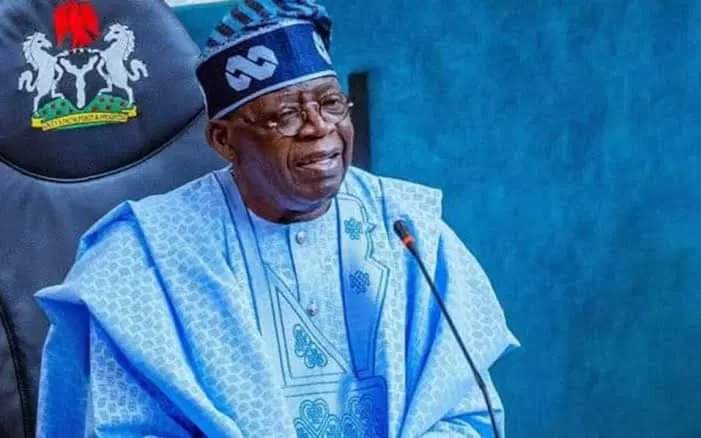
Abba Dukawa
President Bola Ahmed Tinubu’s Monday media chat has sparked intense debate among Nigerians. Even before the interview was aired Nigerians lost interest in listening it.for those watches it argued the chat was pre-recorded and carefully edited, which have prevented tough questions from being asked.
Some question the choice of media outlets, suggesting that the president should have engaged with a broader range of journalists to ensure a more representative and challenging discussion. While Other segments of people point out that the chat demonstrated his confidence and commitment to the country’s development.
On the other hand, supporters argue that the chat was a positive step towards transparency and accountability, and others view it as a demonstration of his leadership and commitment to the country’s future.
In nutshell, opinions on the media chat reflect the deep divisions within Nigerian society. While some see it as a sign of the president’s insensitivity to the suffering of the citizens but the president’s emphasized himself confidence and vision for the country for driving progress.
Let’s begin with the pressing issue of insecurity plaguing parts of the country. Security experts have identified several underlying causes of insecurity in Nigeria, which significantly impede the nation’s socio-economic progress and development.
To grasp the severity of insecurity in certain geopolitical zones, considering Nigeria’s struggles with unprecedented security challenges. Despite the technical defeat of Boko Haram Terrorists (BHTs), the group continues to launch attacks.
Furthermore, banditry and kidnapping for ransom have reached alarming levels, with affected communities at the mercy of armed gangs that roam freely, wreaking havoc. For Mr President genuinely understand Nigeria’s security situation, President Tinubu must move beyond the fabricated statistics provided by his officials.
A firsthand experience, such as traveling from Abuja to Lagos by road, visiting local markets, or taking a stroll through any Nigerian city, will allow him to accurately assess and appreciate the reality on the ground.
According to the National Bureau of Statistics’ latest Crime Experience and Security Perception Survey report, Nigerians paid a staggering N2.3 trillion in ransom to kidnappers within in 2024. The amount surpasses the N1.647 trillion allocated for national defense in the 2024 budget and exceeds the combined 2024 budgets of several states, including Ekiti, Gombe, Yobe, Kogi, and Ondo, totaling N1.69 trillion.
On government borrowing: Within 18 months in power the administration has taken several foreign loans, totaling approximately $9.87 billion. World Bank Loans*: $1.95 billion was secured in the first four months of his administration.
Additionally, a $1.5 billion World Bank loan was reported.External Loan*: The Senate approved a ₦1.77 trillion ($2.2 billion) external loan request to finance Nigeria’s 2024 budget deficit and Other Loans*: $4.1 billion was borrowed, including $700 million for education, $750 million for power, and $500 million for women empowerment.
The government’s reckless borrowing spree is a stark demonstration of leaders insensitivity to the plight of citizens. Nigeria’s economy will continue to struggle unless the government adopts a more sustainable approach to harnessing the country’s vast mineral resources.
To break free from the cycle of debt and dependence on a single revenue source, the administration must prioritize diversifying Nigeria’s economy. This is crucial for building a stronger, more resilient economy that can support the needs and aspirations of all Nigerians.
Who will ultimately bear the burden of these debts? Will our already fragile economy be able to withstand the weight of repayment, or will Nigerians be reduced to slavery in their own country, forced to pay off debts incurred by reckless and frivolous politicians? There is need for President Tinubu and the leadership of Nigeria’s National Assembly to consider the pressing issue of Nigeria’s massive debt.
Tax reforms have come to stay, The National Economic Council (NEC), comprising the 36 state governors led by the Vice President, has expressed reservations about the tax reform bill, emphasizing the need for adequate consultations with stakeholders.
Experts and policymakers warn that these policies may have negative implications, including inflation. and advise the government to postpone tax reform bill and engage in further consultations.However, the President has swiftly rejected the NEC’s recommendation to withdraw the contentious tax reform bills, stressing that these bills are crucial in supporting his administration’s objectives and bolstering the country’s fiscal institutions.
President ‘s statement that he has “no regrets” about removing fuel subsidies ( This Seven Letters Words) has sparked concerns about his sensitivity to the struggles of ordinary Nigerians. Despite his insistence that the reforms are necessary for growth and not intended to cause pain, the timing of the removal has been criticized for disregarding its negative implications for the masses.
The removal of fuel subsidies has had severe economic consequences, including a significant rise in inflation, which has led to skyrocketing prices of essential goods, transportation, and housing This, in turn, has drastically increased transportation expenses, affecting Nigerians’ daily lives and resulting in a decline in their standard of living.
Furthermore, the increased cost of living has led to a decrease in household income, further straining the financial stability of Nigerian families. People argue that the president’s lack of regret over the subsidy removal demonstrates his insensitivity to the plight of the masses, who are bearing the brunt of the economic hardships.
Dukawa write it in from Abuja can be reach at abbahydukawa@gmail.com









Opinion
INEC, David Mark, And Coming Abachaian Coronation
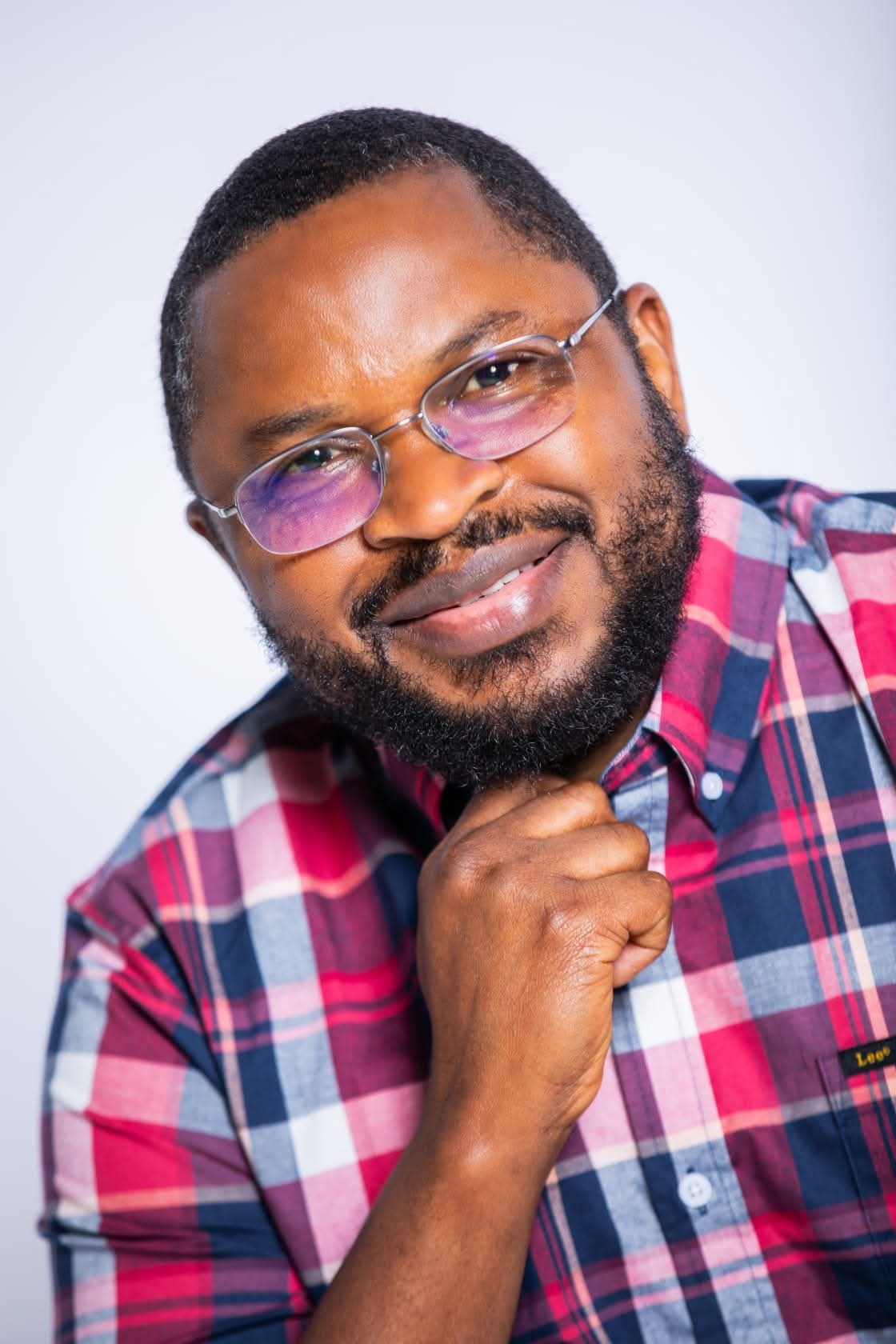
By Farooq Kperogi
With INEC’s overtly partisan, intentionally illegal, and possibly remote-controlled withdrawal of recognition for the David Mark-led ADC, Nigeria has officially reverted to full-on Abacha-era suffocation of even the wispiest pretence to competitive electoral politics.
Lawyers have said that the judgment of the appeal court, which INEC invoked as a convenient crutch to carry out a predetermined action, said the status quo should be maintained. In other words, the judgment says David Mark should remain the chairman of the ADC until the merit of the appeal has been determined.
However, it appears that INEC is in the know of what the final judgment will be and decided to jump the gun. Yet the INEC chairman is a professor of law and a SAN! He can’t even pretend to be neutral.
It seems obvious that the ADC faction INEC will ultimately recognize, as I predicted in my column of two weeks ago, will be the faction that will merely be an extension of the APC, much like the PDP now is. They will either present dummy candidates or adopt Tinubu as their candidate, which is a distinction without a difference.
It is obvious that Tinubu wants a coronation, not a competitive election, in 2027. He is scared to death about a real electoral contest. We all know why.
Well, according to public records, it cost around ₦300–₦355 billion to conduct the 2023 presidential election. It is projected that it will cost almost ₦870 billion to conduct the 2027 election.
Why should Nigeria spend close to a trillion naira on a preset, make-believe, Abachaian coronation exercise? Let’s kuku cancel democracy and make Tinubu the supreme leader. At least we would save a trillion naira.
Opinion
El-Rufai/Uba Sani And Pantami’s Perceived Peace Of The Graveyard
By Bala Ibrahim.
Yesterday was Sunday, a day recognized as the first day of the week, which in the Bible, holds supreme significance as the day of Jesus Christ’s resurrection. Some Christians call it the Lord’s Day. There are many interpretations given to show the significance of Sunday. But for the purpose of this article, attention would be given to the significance of yesterday’s Sunday, (29/03/2026), with special bias to the role it played in promoting reconciliation between parties and friends, as well as how, at the National Mosque, Abuja, the wall of religious divide was unconsciously demolished, as followers of different faiths scrambled over each other, in the competition for space to participate in the funeral rites of late Hajiya Umma El-Rufai, the deceased mother of Mallam Nasir El-Rufai.
By the Islamic tradition, when a Muslim dies, before he or she is taken to the grave yard, special prayers are offered on the deceased person’s body, at any convenient place, before proceeding to the cemetery. For late Hajiya Umma El-Rufai, the National Mosque Abuja, was the venue. And what happened there, is the prelude to this article.
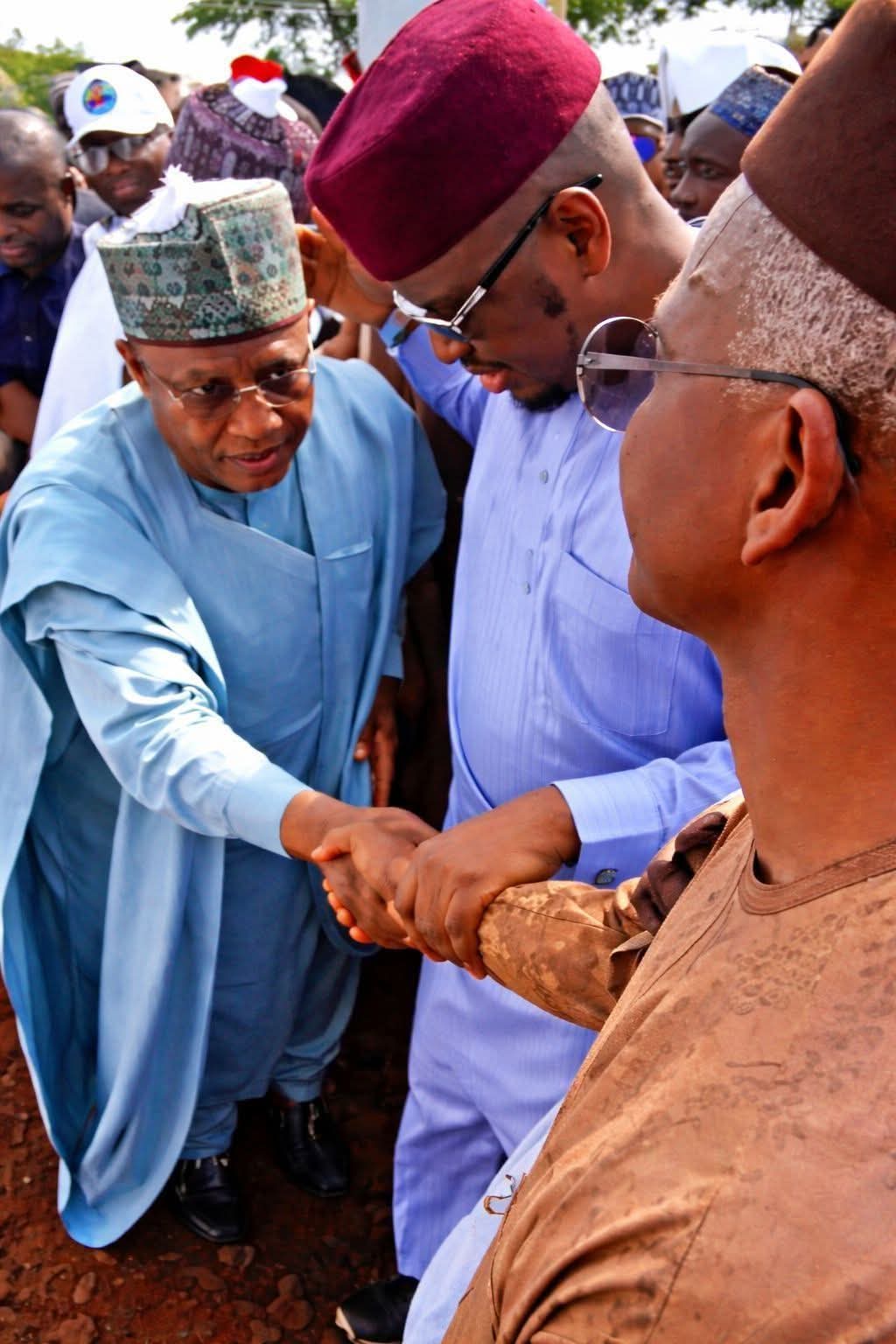
If I say everyone that is anything in Nigeria was there, I think I am making an understatement. But that is not surprising, given the personal and political profile of the bereaved, who is Mallam Nasir El-Rufai. It may interest the reader to know that, among the early callers at the Mosque, were reputable Christians, with people like Peter Obi and Rotimi Amaechi, rubbing shoulders with Muslims, in the stampede to partake in the Islamic ceremonial practice. They know they don’t belong to the Islamic faith, but they want to share with Mallam Nasir El-Rufai, as an honour of solidarity, in the last rites given to his beloved mother. The duo of NSA Mallam Nuhu Ribadu and Governor Uba Sani were there face to face with El-Rufai. The atmosphere was solemn, sombre and clearly sorrowful.
Also present at the Mosque was Prof. Isa Ali Ibrahim Pantami, former Minister and renowned Islamic cleric, who seized the opportunity to advance the imperative of reconciliation in Islam. He started in the Mosque and continued at the graveyard, to the extent of persuading El-Rufai to shake hands with Uba Sani, with a soft but casual commitment from both sides, on the pleaded forgiveness. It was difficult, very difficult, especially when perused through the prism of Mallam Nasir El-Rufai’s position.
Undoubtedly peace is fundamental to Islam, because it serves as a source of inner tranquillity and social harmony. The Quran has laid emphasis on reconciliation and kindness. So every Muslim is enjoined to embrace reconciliation. However, in advancing the course of reconciliation, timing is important, I think. We must not only perceive peace as merely the absence of conflict. No, it also has something to do with our state of mind. A man standing before the lifeless body of his beloved mother, at the graveyard, under intense pressure, is not in the appropriate state of mind to commit to any peace deal. Unless we are referring to the probabial peace of the graveyard.
The ambition of any reconciliation is to arrive at unity. And unity can only come after conflict, if there is healing. By definition, healing is the process of becoming healthy or whole again, encompassing the restoration of physical tissue, mental, or emotional well-being. A man under emotional pressure is not fit for commitment to any peace deal, I think. Unless we are referring to the probabial peace of the graveyard.
Peace of the graveyard is not genuine, because it could be deceptive, by resulting in forced calm, beneath which lies a deep tension. As a friend of the trio of El-Rufai, Nuhu Ribadu and Uba Sani, Sheik Pantami must go for a genuine, organic and sustainable peace agreement between the parties. More so, because they were genuine friends before.
All hands must be put on deck, to compel President Bola Ahmed Tinubu to come into the agreement. Because, he was the one who compelled Mallam Nasir El-Rufai to come into the Tinubu project in 2023. Indeed a lot of water had passed under the bridge. We should forget past misunderstandings or issues that are now irrelevant, and forgivable. Let’s move on from past disagreements and let go of grudges.That’s the only way to arrive at genuine reconciliation.
It may be recalled that the Muslim Rights Concern, MURIC, had long been appealing to the President, to come out clearly and reciprocate the gesture given to him in his time of need by Mallam Nasir El-Rufai. MURIC said they were the ones who persuaded El-Rufai to support Tinubu in 2023, as a result of which, he confronted the so called Buhari cabal, the then CBN Governor and other forces that were putting spanners in the work of the Tinubu project. The result of which is now President Tinubu. MURIC said El-Rufai does not deserve to be humiliated and went further to support their argument with the quote below:
“Noteworthy is a video clip showing how President Tinubu openly asked El-Rufai to join his government and this did not happen at a private meeting. It happened at a campaign ground, in the presence of thousands of party enthusiasts.”
Opinion
Defection: Kwankwaso’s Legacy Under Scrutiny; A Critical Look at his Political Journey Since 1999
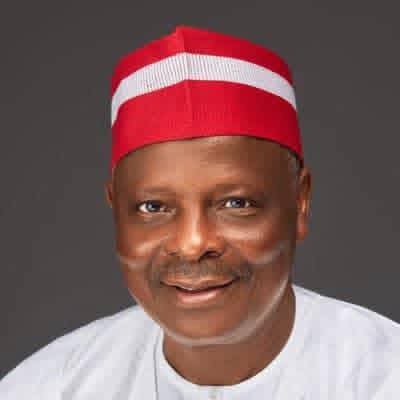
When Nigeria returned to democratic rule in 1999, the people of Kano embraced the moment with hope and expectation after years of military governance. Among the prominent figures who emerged at the time was Rabiu Musa Kwankwaso, whose leadership inspired confidence among many citizens eager for progress and representation.
More than two decades later, however, Kwankwaso’s political legacy continues to generate debate, with supporters highlighting his achievements and critics questioning the long-term impact of his leadership on Kano’s development.
Kwankwaso’s first tenure as governor (1999–2003) was marked by visible infrastructure projects, including roads and public buildings, which were widely welcomed by residents. At a time when tangible government presence was limited, these developments symbolised a new beginning. Yet, some analysts argue that while these projects addressed immediate needs, they did not sufficiently tackle deeper structural challenges, particularly the decline of Kano’s once-thriving industrial economy.
Historically a major commercial hub, Kano’s economy had been weakening due to years of policy neglect and infrastructural decay. Critics maintain that a more comprehensive economic strategy might have helped revive industries and reduce dependence on federal allocations.
Kwankwaso’s defeat in 2003 by Malam Ibrahim Shekarau marked a turning point. Observers note that while the loss strengthened his political network and grassroots appeal, it also raised questions about the sustainability of the systems established during his administration. Many of the projects, though impactful, were seen as lacking the institutional depth needed for long-term continuity.
Returning to office in 2011, Kwankwaso expanded his development agenda with increased infrastructure and an ambitious foreign scholarship programme that benefited thousands of Kano youths. The initiative is widely regarded as one of his most significant contributions, opening educational opportunities for many.
However, critics argue that despite these efforts, broader economic transformation remained limited. Rising population growth, unemployment, and declining industrial capacity continued to challenge the state’s development trajectory.
Beyond governance, Kwankwaso’s political influence has also shaped Kano’s power dynamics. His role in building a strong political movement—popularly known as the Kwankwasiyya—has been praised for mobilising grassroots support but criticised by some for reinforcing a personality-driven political structure.
Political analysts further point to the tensions surrounding the Kano Emirate as a significant episode in the state’s recent history. The controversial removal of Muhammadu Sanusi II highlighted deep divisions within the state’s political and traditional institutions, with varying opinions on the factors that led to the crisis.
In recent years, Kwankwaso’s shifting political alliances—from the PDP to the APC and later to the NNPP—have also drawn mixed reactions. While such moves are common in Nigeria’s political landscape, critics argue that they have contributed to instability and uncertainty within Kano’s political structure.
The 2023 elections brought another dimension to the discourse, with the emergence of Abba Kabir Yusuf as governor under the NNPP platform. Subsequent political developments, including evolving relationships between state and federal actors, have further shaped public debate about governance priorities and political strategy.
Today, Kwankwaso remains one of Kano’s most influential political figures, with a legacy that reflects both notable achievements and enduring controversies. While many credit him with expanding access to education and improving infrastructure, others believe that the state’s long-term economic and institutional challenges require deeper reflection.
As Kano continues to navigate its future, the assessment of past leadership—including Kwankwaso’s role—remains central to ongoing conversations about development, governance, and political direction.

INEC, David Mark, And Coming Abachaian Coronation
Jonathan Urges National Assembly to Overhaul Electoral Litigation Process, Create Specialised Court

ADC Defies INEC, Vows to Proceed with Congresses Amid Leadership Crisis

ADC Rejects INEC’s Ruling Interpretation, Vows to Clarify Contradictions

ADC Rising: Salga hails influx of political heavyweights as a turning point for justice

Governor Abba Kabir Yusuf Holds Exclusive Prerogative to Choose Deputy – Malam Inuwa Waya

The Governor Who Chose His People Over His Politics: Abba Yusuf and the Moral Courage Behind Kano First
Restoring the Glory That Was Always There: Governor Abba Kabir Yusuf and the Historical Vision Behind Kano First

NDLEA Clarifies: Drug Case Against Abba Kyari Still Active After Court Discharge

Nigeria’s Education Minister Tunji Alausa Weighs Resignation to Run for Lagos Governor
INEC, David Mark, And Coming Abachaian Coronation
Jonathan Urges National Assembly to Overhaul Electoral Litigation Process, Create Specialised Court
ADC Defies INEC, Vows to Proceed with Congresses Amid Leadership Crisis
ADC Rejects INEC’s Ruling Interpretation, Vows to Clarify Contradictions
ADC Rising: Salga hails influx of political heavyweights as a turning point for justice
Governor Abba Kabir Yusuf Holds Exclusive Prerogative to Choose Deputy – Malam Inuwa Waya
The Governor Who Chose His People Over His Politics: Abba Yusuf and the Moral Courage Behind Kano First
Restoring the Glory That Was Always There: Governor Abba Kabir Yusuf and the Historical Vision Behind Kano First
NDLEA Clarifies: Drug Case Against Abba Kyari Still Active After Court Discharge
Nigeria’s Education Minister Tunji Alausa Weighs Resignation to Run for Lagos Governor
-

 Opinion4 years ago
On The Kano Flyovers And Public Perception
-

 Features5 years ago
How I Became A Multimillionaire In Nigeria – Hadiza Gabon
-

 Opinion5 years ago
Kano As future Headquarters Of Poverty In Nigeria
-

 History5 years ago
Sheikh Adam Abdullahi Al-Ilory (1917-1992):Nigeria’s Islamic Scholar Who Wrote Over 100 Books And Journals
-

 Opinion4 years ago
My First Encounter with Nasiru Gawuna, the Humble Deputy Governor
-

 History5 years ago
The Origin Of “Mammy Market” In Army Barracks (Mammy Ochefu)
-

 History4 years ago
The History Of Borno State Governor Professor Babagana Umara Zulum
-

 News4 years ago
Federal University Of Technology Babura To Commence Academic Activities September