
News
ECOWAS Gives Burkina Faso,Mali And Niger Six Months To Reconsider Withdrawal
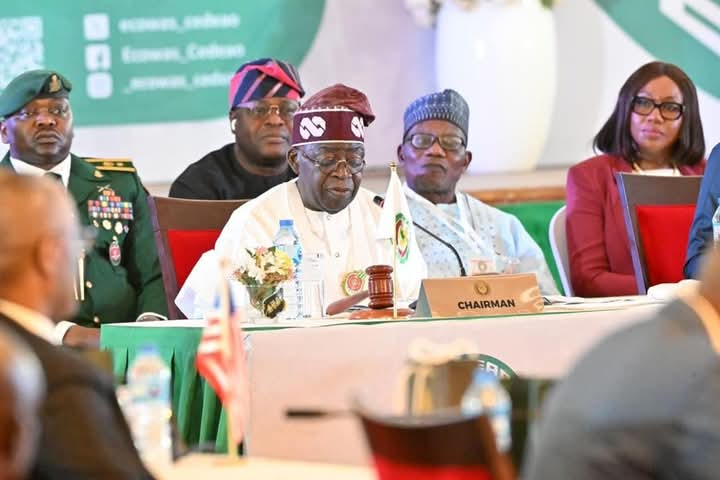
The Authority of Heads of State and Government of ECOWAS has given Burkina Faso, Mali, and Niger six months, from January 29 to July 29, 2025, to reconsider their decision to exit the regional bloc.
President of the ECOWAS Commission, Dr Omar Touray, announced the six-month grace on Sunday in Abuja after the 66th Ordinary Session of the Authority of ECOWAS Heads of State and Government.
“The Authority takes note of the notification by the Republic of Burkina Faso, Republic of Mali and Republic of Niger of their decision to withdraw from ECOWAS.
“The Authority acknowledges that by the provisions of Article 91 of the revised ECOWAS Treaty, the three countries will officially cease to be members of ECOWAS from January 29, 2025.
“The Authority decides to set the period from January 29, 2025 to July 29, 2025, as a transitional period and to keep ECOWAS doors open to the three countries during the transition period.
“In this regard, the Authority extends the mandate of the President of Togo and the President of Senegal to continue their mediation role up to the end of the transition period to bring the three member countries back to ECOWAS.
“Without prejudice to the spirit of the opening, the Authority directs the President of the Commission to launch withdrawal formalities after the end of the deadline of January 29 2025 and to draw up a contingency plan covering various areas.
“The Authority directs the Council of Ministers to convene an Extraordinary Session during the 2nd quarter of 2025 to consider and adopt both separation modalities and the contingency plan covering political and economic relations between ECOWAS and the Republic of Niger, Republic of Mali and Burkina Faso,” Touray read from the communiqué.
ECOWAS leaders commended the exemplary diplomatic engagement of President Bassirou Diomaye Faye of Senegal and President Faure Gnassingbé of Togo, as well as the diplomatic efforts of the Chairman of the Authority of ECOWAS, President Bola Tinubu, and other individual member states toward the three countries.
In his closing remarks, President Tinubu commended the ECOWAS Heads of State and Government for spirited discussions throughout the Summit.
He noted that the collective resolve underscored their strength to address the region’s pressing challenges.
“As we move forward to implement the outcomes of this Summit, let us remain united in our determination and steadfast in our commitment to the principles that bind us together as a Community.
“I call on all Member States to redouble their efforts in ensuring that the decisions reached here translate into tangible benefits for our citizens,” he said.
The Nigerian leader encouraged the leaders to carry forward the optimism and the resolve that guided the deliberations.
“Together, let us continue to champion the cause of a peaceful, secure, and prosperous West Africa, to build ECOWAS as a community of peoples anchored on the ideals of freedom, justice, democracy, and a vision of good governance that addresses the legitimate aspirations of our people,” he said.
President Tinubu congratulated the outgoing Chairperson of the African Union Commission, Moussa Faki Mahamat, as he attended his valedictory session as AUC Chair.
He further praised Ghanaian President Nana Akufo-Addo, whom he fondly called “Mr. Democrat,” and wished him resounding success.
In a statement signed by Bayo Onanuga Special adviser to the President on information and strategy said ECOWAS will continue to draw from President Akufo-Addo’s fountain of wisdom.









News
Northern Youth Group Backs Doguwa for Kano APC Leadership, Urges National Role

The Northern Youths Merger Groups under the All Progressives Congress (APC) has congratulated Hon. Umar Haruna Doguwa on his election as the APC State Chairman in Kano.
In a statement, the group’s National Coordinator, Hon. Musa Mujahid Zaitawa, described Doguwa as a hardworking and experienced politician capable of leading the party to victory.
The group highlighted Doguwa’s track record, noting his four-time leadership of political parties in Kano, as well as his service in two commissioner roles. According to the group, his vast experience will significantly contribute to the success of the APC.
The Northern Youths Merger Groups also called on APC stakeholders to nominate and support Doguwa for appointment as Chairman of the APC States Chairmen Forum, which comprises representatives from all 36 states and the Federal Capital Territory.
They expressed confidence that such an appointment would strengthen efforts toward securing victory for President Bola Ahmed Tinubu and the APC in the 2027 general elections, particularly in the North-West region.
The group further noted that the North-West zone is expected to deliver massive votes in the 2027 elections, describing it as one of the APC’s strongest strongholds with seven sitting governors.
They emphasized that Doguwa’s leadership, experience, and political influence would play a crucial role in ensuring the party’s success in both the presidential and gubernatorial elections.
News
Kwankwaso to Join ADC on Monday
By Yusuf Danjuma Yunusa
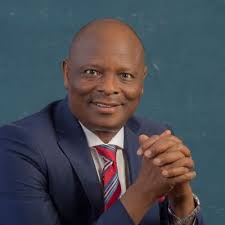
The Kwankwasiyya Movement has announced that former Kano State governor, Rabiu Musa Kwankwaso, will formally defect to the African Democratic Congress (ADC).
In a statement released on Saturday, the movement confirmed that Kwankwaso is expected to complete his registration with the party on Monday, 30 March 2026, in what observers describe as a significant shift in Nigeria’s political landscape ahead of future elections.
The announcement signals a new chapter for the influential northern politician and his loyal political base, widely known as the Kwankwasiyya Movement, whose backing could reshape party alignments and electoral calculations nationwide.
The full statement reads
PRESS STATEMENT
FOR IMMEDIATE RELEASE
Date: 28th March, 2026
The Kwankwasiyya Movement wishes to formally inform all its members across Nigeria and the general public that our Supreme Leader sanetor Rabiu Musa Kwankwaso has concluded all necessary arrangements to join the African Democratic Congress (ADC).
In furtherance of this decision, he will officially register with the party on Monday, 30th March 2026, at his residence, Gidan Kwankwasiyya, Miller Road, Kano, by 12pm.
Consequently, all members of the Kwankwasiyya Movement are hereby directed to proceed and register with the African Democratic Congress (ADC) in their respective wards, local government areas, and states immediately thereafter. Members are also encouraged to fully engage in all party activities and contribute actively toward the growth, development, and success of the party at all levels.
This strategic decision, as always, has been taken in the best interest of the movement, our state, and the nation at large. It reflects our unwavering commitment to the advancement of democratic values, good governance, and the collective aspirations of the people.
We emphasize that democracy must be protected, and the will of the people must always be respected.
The Kwankwasiyya Movement remains resolute, united, and committed to building a better and more inclusive Nigeria.
Signed
Dr. Habibu Sale Mohammed
Spokesperson
Kwankwasiyya Movement
News
Radiographers Kick Against Controversial Health Bills, Demand Immediate Withdrawal
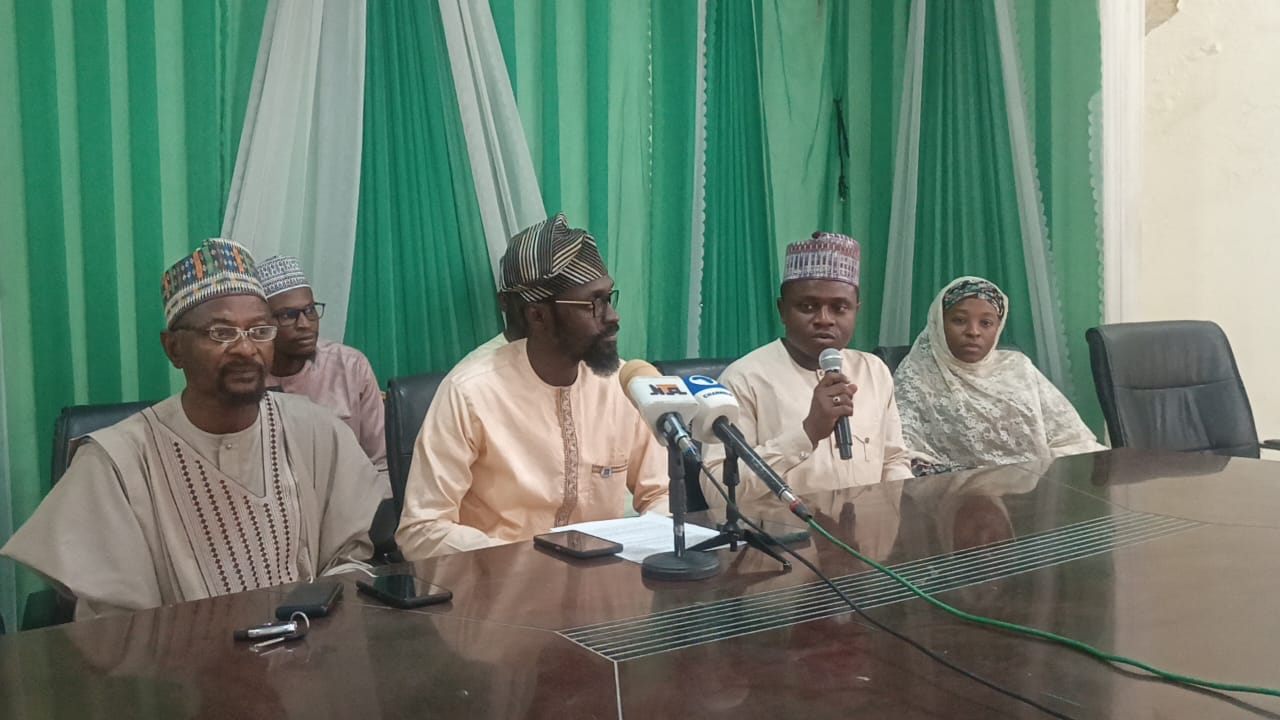
The Association of Radiographers of Nigeria (ARN) has strongly opposed the proposed Dental Practitioners Act (Repeal and Re-enactment) Bill, 2026 (HB 2695), warning that its passage could destabilise Nigeria’s healthcare system and undermine the professional autonomy of radiographers.
The position was made known by the National President of the association, Musa Y. Dambele PhD, during a press briefing held at the Nigeria Union of Journalists Secretariat in Kano on Saturday.
Addressing journalists, Dambele described the bill as a “calculated and existential threat” to radiography practice in Nigeria, alleging that it is designed to transfer regulatory authority from the Radiographers Registration Board of Nigeria to the Medical and Dental Council of Nigeria.
Dambele highlighted Section 8(1) of the proposed bill, which contains a “notwithstanding clause” granting the MDCN overriding authority over other regulatory bodies.
According to him, the provision directly conflicts with the Radiographers (Registration, etc.) Act, Cap R1, LFN 2004, effectively stripping the RRBN of its statutory mandate.
“The clause is designed to create jurisdictional supremacy and dismantle the existing regulatory structure governing radiography in Nigeria,” he stated.
The ARN President also faulted Section 47 of the bill, which defines radiology as encompassing all aspects of diagnostic imaging.
He argued that such classification amounts to a deliberate attempt to subsume radiography under medicine, stressing that radiography is a distinct scientific discipline involving imaging technology, radiation physics, and patient safety.
He warned that the provision could lead to the “legal erasure” of radiography as an independent profession and place practitioners under the control of a council lacking relevant expertise.
Dambele further raised concerns over Section 8(1)(k), which empowers the MDCN to regulate the use of ultrasound, laser systems, and radiofrequency-based devices.
He maintained that these technologies are core components of radiographic practice and are not exclusive to any single profession.
He cautioned that restricting access to such tools could create workforce shortages, limit specialised services, and reduce patients’ access to essential diagnostic and therapeutic procedures.
On disciplinary matters, the ARN President criticised Sections 30 to 32 of the bill, which propose tribunals composed entirely of medical and dental practitioners to adjudicate cases involving all registered health professionals.
He argued that this arrangement violates the constitutional right to fair hearing, noting that professionals cannot be judged impartially by competing disciplines.
Dambele also opposed Section 18(3), which mandates that a significant percentage of professional fees be shared with external bodies, including the Nigerian Medical Association.
He described the provision as “financial exploitation” and a form of regulatory overreach.
The ARN President further alleged that the proposed legislation, alongside HB 2699, represents a coordinated attempt to weaken radiography through what he described as a “pincer movement.”
According to him, while HB 2695 seeks to erode internal regulatory control, HB 2699 aims to impose external constraints that could cripple the profession.
Dambele expressed concern over provisions that expand the powers of the Minister of Health to influence the composition and leadership of regulatory boards, warning that such measures could politicise professional regulation.
He also criticised attempts to dilute the authority of the RRBN in appointing its Registrar, describing it as an erosion of institutional independence.
Furthermore, he opposed the inclusion of loosely defined “community interest” representatives in regulatory boards, arguing that healthcare regulation should remain technical, evidence-based, and competence-driven.
Citing global best practices, Dambele noted that in countries such as the United Kingdom, Canada, and Australia, healthcare professions are regulated independently to ensure accountability and professional competence.
He warned that adopting contrary measures in Nigeria could set a dangerous precedent, trigger inter-professional conflicts, and weaken healthcare delivery systems.
The ARN, he added, aligns with other health sector stakeholders, including the Joint Health Sector Unions, as well as professional bodies in medical laboratory science and physiotherapy, in opposing the bill.
Dambele said the association is calling on the National Assembly to:
Reject the bill in its current form
Uphold the principle of professional self-regulation
Remove provisions enabling external control and dominance
Retain the statutory powers of the RRBN, particularly in appointing its Registrar
Convene a stakeholders’ summit to develop a harmonised regulatory framework in line with international standards
The ARN President emphasised that radiographers play a critical role in delivering diagnostic and therapeutic services, including X-rays, ultrasound, CT scans, MRI, radiotherapy, and nuclear medicine.
He warned that any attempt to centralise control under a single profession could compromise patient safety and reduce the quality of healthcare delivery.
Dambele reiterated the association’s commitment to defending the integrity of the profession and called on Nigerians to support efforts aimed at preserving a balanced and effective healthcare system.

Northern Youth Group Backs Doguwa for Kano APC Leadership, Urges National Role

Kwankwaso to Join ADC on Monday

Radiographers Kick Against Controversial Health Bills, Demand Immediate Withdrawal

2027 Race : President Tinubu’s Aide, Ja’oji Resigns to Contest

Crisis Deepens in PDP as Makinde-Aligned Bloc Rejects Wike Faction’s Convention Plan

The Governor Who Chose His People Over His Politics: Abba Yusuf and the Moral Courage Behind Kano First

FREEDOM OF SPEECH, NOT FREEDOM FROM CONSEQUENCE: A CITIZEN’S CALL FOR RESPONSIBLE PUBLIC COMMENTARY

Press Freedom: IPI Nigeria Calls on New Acting IGP to End Police Harassment of Journalists
Restoring the Glory That Was Always There: Governor Abba Kabir Yusuf and the Historical Vision Behind Kano First
Tinubu to Swear in Olatunji Disu as Inspector-General of Police on Wednesday
Northern Youth Group Backs Doguwa for Kano APC Leadership, Urges National Role
Kwankwaso to Join ADC on Monday
Radiographers Kick Against Controversial Health Bills, Demand Immediate Withdrawal
2027 Race : President Tinubu’s Aide, Ja’oji Resigns to Contest
Crisis Deepens in PDP as Makinde-Aligned Bloc Rejects Wike Faction’s Convention Plan
The Governor Who Chose His People Over His Politics: Abba Yusuf and the Moral Courage Behind Kano First
FREEDOM OF SPEECH, NOT FREEDOM FROM CONSEQUENCE: A CITIZEN’S CALL FOR RESPONSIBLE PUBLIC COMMENTARY
Press Freedom: IPI Nigeria Calls on New Acting IGP to End Police Harassment of Journalists
Restoring the Glory That Was Always There: Governor Abba Kabir Yusuf and the Historical Vision Behind Kano First
Tinubu to Swear in Olatunji Disu as Inspector-General of Police on Wednesday
-

 Opinion4 years ago
On The Kano Flyovers And Public Perception
-

 Features5 years ago
How I Became A Multimillionaire In Nigeria – Hadiza Gabon
-

 Opinion5 years ago
Kano As future Headquarters Of Poverty In Nigeria
-

 History5 years ago
Sheikh Adam Abdullahi Al-Ilory (1917-1992):Nigeria’s Islamic Scholar Who Wrote Over 100 Books And Journals
-

 Opinion4 years ago
My First Encounter with Nasiru Gawuna, the Humble Deputy Governor
-

 History5 years ago
The Origin Of “Mammy Market” In Army Barracks (Mammy Ochefu)
-

 History4 years ago
The History Of Borno State Governor Professor Babagana Umara Zulum
-

 News4 years ago
Federal University Of Technology Babura To Commence Academic Activities September