
News
Barau: Five stages Tax Reform Bills must pass through before passage
By Ismail Mudashir
For bills, including the contentious Tax Reform Bills, to be passed at the National Assembly, they must pass through the following stages:
A bill is a draft of a proposed law presented before the Senate and House of Representatives for deliberation. Such a bill can be given by the executive or members of the National Assembly (Senators or House of Representatives).
The four Tax Reform Bills are executive bills from the executive arm of government.
1: First Reading:
The Tax Reform Bills, like all other executive bills, scaled through the first reading when the letter by President Bola Ahmed Tinubu, GCFR, to that effect, was read on the floor of both chambers of the National Assembly ( Senate and House of Representatives).
At the first reading, the bills are introduced to senators and members of the House of Representatives.
2: Second Reading:
In the second reading, the general principles of the bills are discussed at the chambers. The bill’s sponsors will present their lead debate; other lawmakers will be allowed to speak on it afterwards.
Since the tax reform bills are from the executive branch, the Senate Leader, Michael Opayemi Bamidele, presented the lead debate last Thursday during the plenary presided over by the president of the Senate, Senator Godswill Obot Akpabio, GCON.
When a bill scales through a second reading, it is referred to relevant committees for further legislative actions.
The Tax Reform Bills were on Thursday referred to the Senate Committee on Finance chaired by Senator Sani Musa (APC, Niger State). It has six weeks to scrutinise the bills with stakeholders.
3: Committee Level
At this level, the bill would be subjected to thorough legislative scrutiny, and stakeholders would be given opportunities to contribute to shaping the draft laws.
The committee will organise a public hearing where all stakeholders, ulamas, pastors, socio-cultural, political, religious groups, experts, technocrats and other stakeholders would make input to the bills.
Before the public hearing, advertisements would be placed in newspapers while commercials would be aired on radio and television stations, requesting the submission of memoranda by stakeholders.
The committee Secretariat would aggregate the input of the stakeholders during the public hearing in addition to the memoranda submitted. This will form the committee’s report.
The input of the stakeholders is always the fulcrum of the committee’s report.
This is the level at which the Tax Reform Bills are now.
4: Third Reading.
At this point, the committee’s report would be presented and considered during the plenary in the chamber.
The chairman of the committee would present or lay the report. The chairman would read it.
After the reading, the clause-by-clause analysis of the bills will be done by a committee of the whole. All senators would vote on each clause of the bills.
If most senators vote in support of the bills, it would be passed for a third reading. If it is the other way around, it would be rejected.
The Tax Reform bills can be killed if the lawmakers vote against them.
But if the bill is passed, it would be sent to the Senate or House for concurrence, depending on its origin.
5 a: Signing of the Bill
After the bill is passed, the clerk will print and sign a final copy. The bill is issued after the appropriate presiding officer appends his signature.
5 b: President’s Assent/Signature
The final copy, as approved by both chambers, is presented to the president for his signature. The president’s signature is required to convert a bill into law, and section 58(4) of the Constitution requires the president to append his signature to the bill within 30 days of receipt.
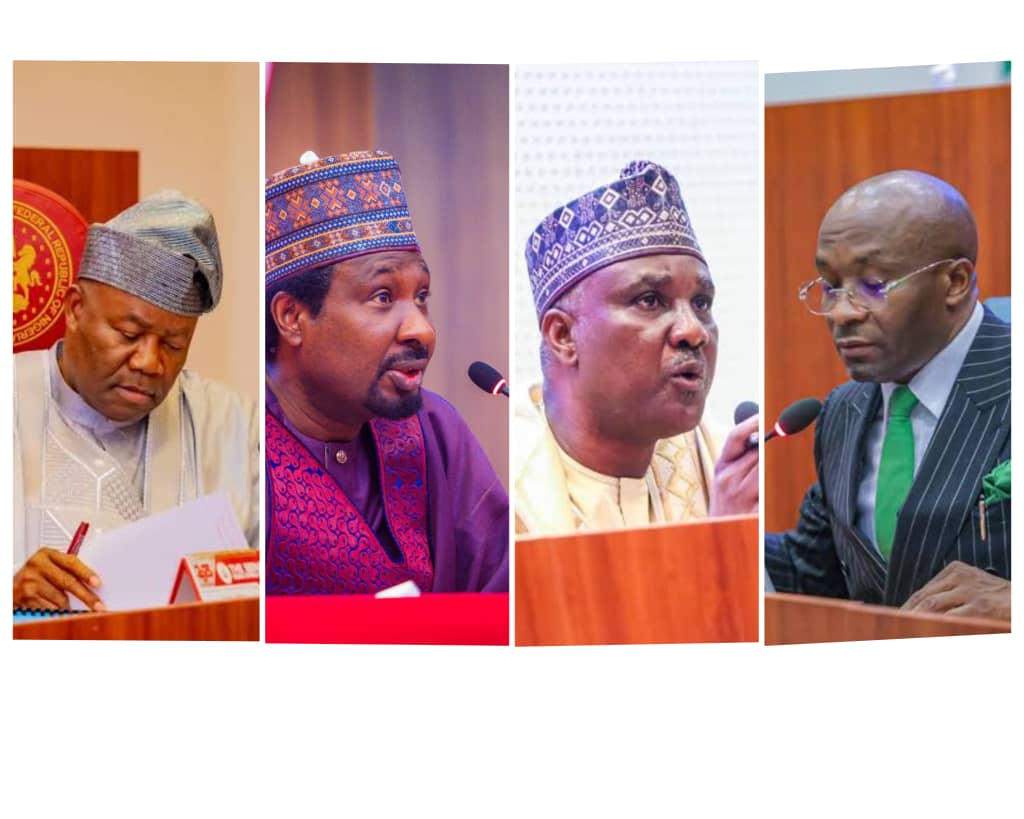
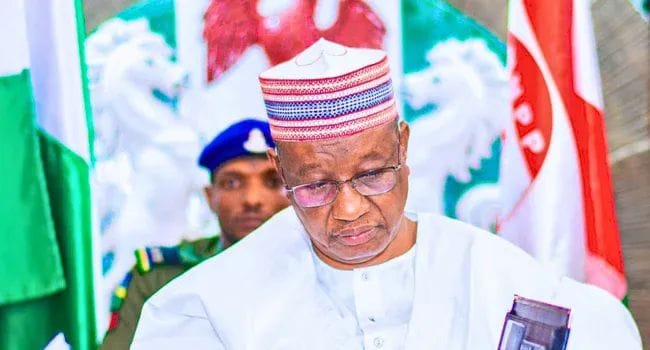
The Deputy President of the Senate, Senator Barau I Jibrin, only presided over the plenary on Wednesday, during which the tax experts were allowed to educate the senators and indeed all Nigerians on tax reform bills.
During the sitting, Senator Barau neither supported nor kicked against the bill; instead, he emphasised an urgent need for all to be educated on the proposed laws. Nothing more.









News
Beyond Connectivity: How a Community Network Is Changing Life in Dakwa
By Ali Sabo
Dakwa is the kind of community that can easily be overlooked in Nigeria’s digital story.
Located along the Zuba–Dei-Dei–Zuma corridor of the Federal Capital Territory, the agrarian community is only about 29 kilometres from Abuja, yet proximity to the nation’s capital has not always translated into access to reliable and affordable internet. For many residents, particularly young people, accessing the opportunities of the digital world meant looking beyond their immediate environment.
That is beginning to change.
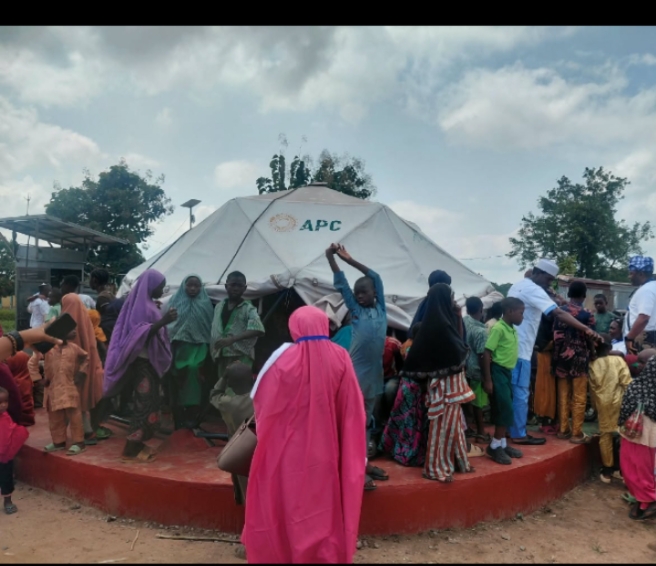
Through the efforts of the Centre for Information Technology and Development (CITAD), the Association for Progressive Communications (APC), Hello World and 48 Percent, a community network and internet hub was established in Dakwa, bringing affordable connectivity closer to residents and creating a space where people can use the internet for learning, communication and accessing opportunities.
But the real story of the Dakwa Community Network is not the infrastructure. It is what the people of Dakwa are beginning to do with it.
During a recent visit to the community, the District Head of Dakwa, Alhaji Shuaibu Samu, described the intervention as a “life-changing opportunity” for residents.
His description is rooted in what the community experienced before the hub came into existence.
“Before the establishment of this facility, access to reliable and affordable internet was a major challenge for our people.”
For a community increasingly connected to a world where education, employment, communication and access to information are moving online, that challenge carries consequences. Being offline or poorly connected does not simply mean having no internet. It can mean missing opportunities that others take for granted.
Today, Samu says the situation is changing.
“Now, our youths can access information, learn new skills and explore opportunities online without having to travel far from the community.”
That statement captures perhaps the most important change taking place in Dakwa: the world of opportunities is becoming physically closer to the people who live there.
A window beyond Dakwa
For Ismail Shuaibu, a Community Champion at the hub, the facility has already become part of the community’s daily life.
He explained that young people now use the hub to study, search for jobs, access online opportunities and communicate with others.
“Many young people now come here to study, search for jobs, access online opportunities and communicate with others.”
These may sound like simple activities. But in a community where reliable and affordable internet was previously a major challenge, they represent something much bigger.
A young person who comes to the hub to search for a job is no longer limited to opportunities advertised within the community. A student who comes to study can access information and learning resources that may not be available locally. Someone looking for information can reach beyond the boundaries of Dakwa and engage with a much wider world.
In that sense, the community network is not merely connecting devices. It is expanding people’s horizons.
From a project to a community asset
Perhaps equally important is the way residents are beginning to see the facility.
Ismail explained that the hub operates through a community-driven model, with users paying a small fee that contributes to maintaining the equipment and keeping the service running.
“The idea is for the community to see this as its own facility. The small amount paid by users helps us maintain the equipment and provide the service continuously.”
This is significant.
Many development interventions struggle after external support ends because the communities that benefit from them were not sufficiently involved in their ownership or management. Dakwa is attempting a different path: making the community part of the solution.
The District Head has also called on residents to take ownership of the facility and support efforts to keep it operational.
That sense of ownership could ultimately determine whether the digital opportunity created in Dakwa becomes a temporary intervention or a lasting community institution.
The real measure of digital inclusion
Dakwa’s experience offers a broader lesson about digital inclusion in Nigeria.
For years, discussions about the digital divide have often focused on infrastructure, broadband coverage and the number of people connected to the internet. These are important measures, but they do not tell the whole story.
The more important question is: What changes when people get connected?
In Dakwa, the early answers are emerging from the residents themselves: young people are studying, searching for jobs, accessing opportunities, communicating and becoming more familiar with digital tools and online services.
The organisations that helped bring the community network into existence deserve recognition for creating that opportunity. But the most important voices in determining its impact are those of the people who now use it.
And their testimonies suggest that something deeper than internet access is taking place.
Dakwa is beginning to discover that distance does not necessarily have to determine opportunity.
A young person can live in a community outside the centre of Abuja and still search for employment online. A student can access learning resources without travelling to the city. A resident can communicate, find information and explore opportunities that were previously difficult to reach.
That is what meaningful connectivity should ultimately achieve.
The success of Dakwa’s community network will not be measured simply by how many people connect to it. It will be measured by how many possibilities people discover because they can.
And perhaps that is the most important transformation happening in Dakwa: the internet is not only bringing the wider world into the community. It is giving the people of Dakwa a stronger opportunity to reach out and participate in that world.
Ali Sabo is the Campaign and Communication Officer of the Centre for Information Technology and Development and can be reached at asabo@citad.org
News
Kenyan Presidential Aspirant Warns Dangote: ‘Don’t Rush Lamu Refinery, I’ll Send You Back to Nigeria’
By Yusuf Danjuma Yunusa
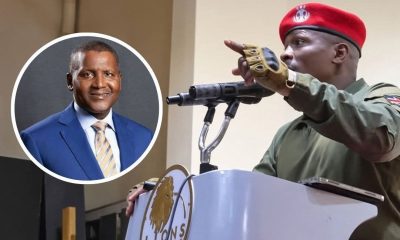
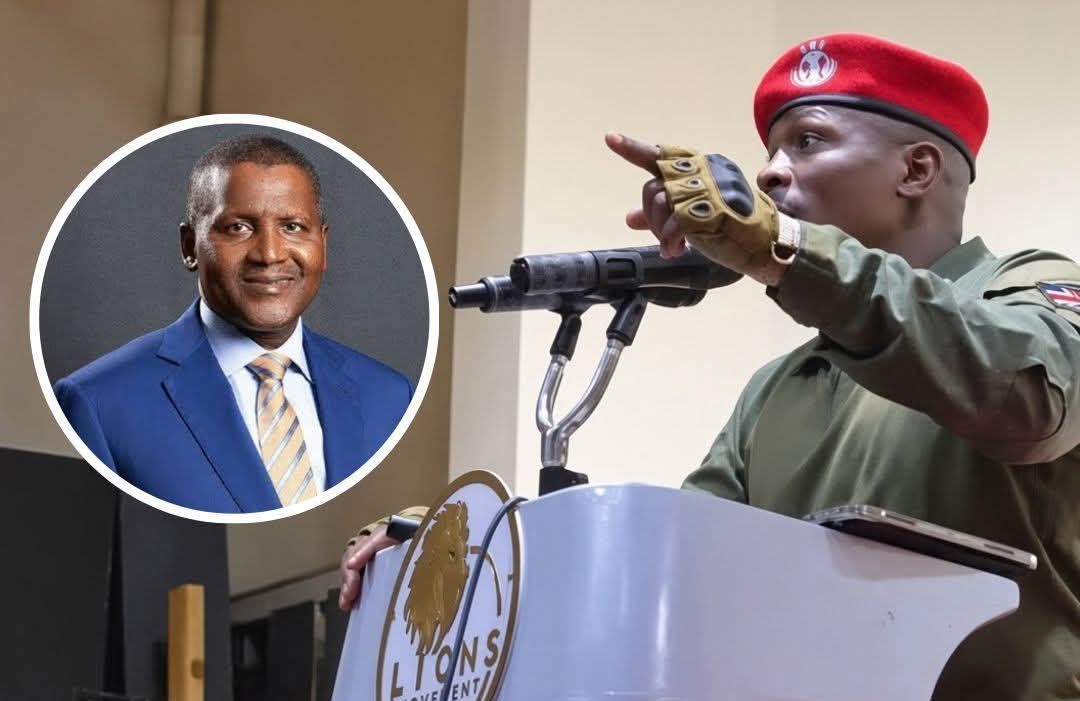
A man identified in a viral video as Kenyan presidential aspirant Patrick Osoi has sparked a heated online debate after warning Nigerian billionaire Aliko Dangote not to rush into establishing an oil refinery in Lamu, saying he would send the businessman back to Nigeria if elected president.
In the clip, said to have been recorded at a Lions Movement event, Osoi says: “I want to tell Aliko Dangote, please don’t rush to start the refinery because, when I’m sworn in as President of Kenya next year, you will be heading back to Nigeria.”
The remarks appear to reference a proposed $16 billion refinery project in Lamu, a coastal county that Kenya has promoted as a future hub for oil and gas infrastructure. Osoi argued that Kenyan investors have the capacity to build and run such a facility without foreign ownership.
“We don’t need to beg foreigners to develop our resources,” he said, according to a partial transcript of the video. “Kenyans can do it.”
The video has been shared widely on Facebook, X and WhatsApp, drawing mixed reactions. Supporters praised Osoi for what they called a bold defense of economic sovereignty. Critics warned that the comments could scare off foreign investors and strain Kenya’s diplomatic and trade ties with Nigeria.
Dangote, Africa’s richest man and chairman of Dangote Group, has not publicly responded to the clip. His conglomerate operates one of the world’s largest single-train refineries in Nigeria and has investments in cement, sugar, fertilizer and petroleum across Africa.
The Kenyan government has not commented on the video. It was not immediately clear whether the Lamu refinery project involving Dangote is still active or whether Osoi’s remarks reflect any official policy.
Political analysts say the controversy underscores growing public debate in Kenya over foreign investment, local content and control of natural resources ahead of the next general election, expected in 2027.
News
NDC’s Kano Governorship Candidate Gwarzo Missing From INEC Final List
By Yusuf Danjuma Yunusa
The National Democratic Congress (NDC) governorship candidate in Kano State, Aminu Abdussalam Gwarzo, is absent from the final list of governorship candidates released by the Independent National Electoral Commission (INEC).
The three-page list, signed by INEC Secretary Rose Oriaran-Anthony, contains 17 governorship candidates and their running mates for the Kano election, but neither Gwarzo nor any other NDC candidate appears on it.
Those listed include Governor Abba Kabir Yusuf of the All Progressives Congress (APC), Abacha Muhammed Sani of the Peoples Democratic Party (PDP), and candidates from the African Democratic Congress (ADC), Labour Party (LP), Social Democratic Party (SDP), Action Alliance (AA), African Action Congress (AAC), Action Democratic Party (ADP), All Progressives Grand Alliance (APGA), Allied Peoples Movement (APM), and New Democratic Party (NDP), among others.
The document provides the names, political parties, ages, genders, and educational qualifications of the candidates and their deputy governorship candidates.
INEC did not state why the NDC candidate was omitted, and the published list does not indicate whether the omission is connected to the party’s nomination process, documentation, or another issue.
The development raises questions about the NDC’s participation in the Kano governorship election, although the list alone does not establish the reason for Gwarzo’s absence.

Beyond Connectivity: How a Community Network Is Changing Life in Dakwa

Kenyan Presidential Aspirant Warns Dangote: ‘Don’t Rush Lamu Refinery, I’ll Send You Back to Nigeria’

NDC’s Kano Governorship Candidate Gwarzo Missing From INEC Final List

Dawakin Tofa Academic Forum Holds Maiden Heroes Day, Honours Former Kano Governor

Atiku Slams Tinubu Over 30-Day Petrol Discount, Demands Answers on Day 31

Zamfara Varsity ASUU Threatens Warning Strike Over FG-ASUU Agreement, Promotion Arrears

PCACC Arrests Man Over Alleged ₦4.5m Sale, Illegal Leasing of Kano Government Horse Stable

Goje’s Electoral War:The Confrontation With Tinubu,Governor Inuwa,Usman Kumo And APC candidates Ahead Of 2027

Prof Yusuf Adamu Delivers BUK’s 63rd Professorial Inaugural Lecture, Reflects on Medical Geography and Academic Legacy

Al-Istiqama University to Hold Convocation, Honours Late Aminu Dantata, Sheikh Ibrahim Khalil
Beyond Connectivity: How a Community Network Is Changing Life in Dakwa
Kenyan Presidential Aspirant Warns Dangote: ‘Don’t Rush Lamu Refinery, I’ll Send You Back to Nigeria’
NDC’s Kano Governorship Candidate Gwarzo Missing From INEC Final List
Dawakin Tofa Academic Forum Holds Maiden Heroes Day, Honours Former Kano Governor
Atiku Slams Tinubu Over 30-Day Petrol Discount, Demands Answers on Day 31
Zamfara Varsity ASUU Threatens Warning Strike Over FG-ASUU Agreement, Promotion Arrears
PCACC Arrests Man Over Alleged ₦4.5m Sale, Illegal Leasing of Kano Government Horse Stable
Goje’s Electoral War:The Confrontation With Tinubu,Governor Inuwa,Usman Kumo And APC candidates Ahead Of 2027
Prof Yusuf Adamu Delivers BUK’s 63rd Professorial Inaugural Lecture, Reflects on Medical Geography and Academic Legacy
Al-Istiqama University to Hold Convocation, Honours Late Aminu Dantata, Sheikh Ibrahim Khalil
-

 Opinion5 years ago
On The Kano Flyovers And Public Perception
-

 Features5 years ago
How I Became A Multimillionaire In Nigeria – Hadiza Gabon
-

 Opinion6 years ago
Kano As future Headquarters Of Poverty In Nigeria
-

 History5 years ago
Sheikh Adam Abdullahi Al-Ilory (1917-1992):Nigeria’s Islamic Scholar Who Wrote Over 100 Books And Journals
-

 Opinion5 years ago
My First Encounter with Nasiru Gawuna, the Humble Deputy Governor
-

 History5 years ago
The History Of Borno State Governor Professor Babagana Umara Zulum
-

 History6 years ago
The Origin Of “Mammy Market” In Army Barracks (Mammy Ochefu)
-

 News5 years ago
Federal University Of Technology Babura To Commence Academic Activities September