
News
ASUU Queries Number of First Class Graduates From Private Universities
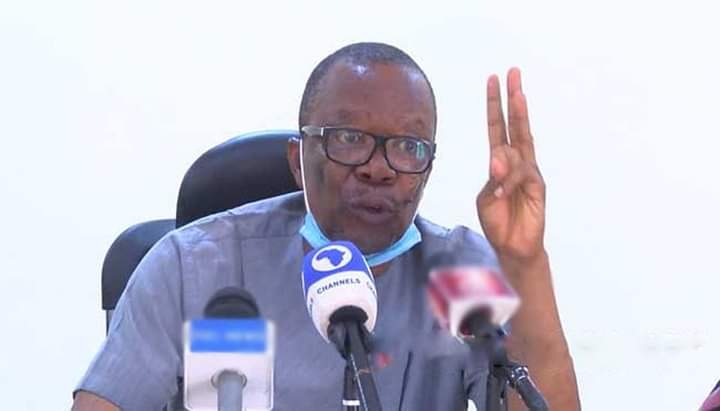
The Academic Staff Union of Universities has frowned at the “increasing numbers of first-class graduates” churned out annually by private universities in the country.
The ASUU National President, Prof. Emmanuel Osodeke, raised the concern on Thursday at an event organised by the body in honour of Prof. Andy Egwunyenga’s successful tenure as Vice Chancellor of Delta State University (DELSU).
The event took place at the DELSU campus, Abraka, Ethiope East Local Government Area of Delta.
Osodeke said that if public universities adopt the same practice without regulation, it could lead to the decline of genuine academic pursuits.
According to him, primary and secondary schools nowadays are producing graduates with excellent grades with insufficient knowledge.
The union leader also decried what he called “the mass exodus” of skilled Nigerian workers to nations perceived to be offering better work and living conditions.
He said that incidents like building collapse in the country indicated there were significant issues within the nation’s institutions.
“The struggle for academics to enjoy a decent standard of living saw some measure of successes in the past when academics could sustain a comfortable life.
The situation has changed; the unions must return to the frontline for a renewed phase of their struggle.
“ASUU will consistently speak out against injustices and support fairness,” he said.
A member of the union, Prof. Omotoye Olorode, spoke on the topic: “New University Curricula (CCMAS): Context and Matters Arising” .
He said that the CCMAS functioned as an imperialistic mechanism aimed at disrupting the established academic structures in the country’s universities.
Olorode said this was designed to perpetuate a system, where Africans remain agricultural labourers to support the agricultural needs of developed nations.
UNESCO recommends that 26 per cent of the nation’s budget should be allocated to education.
“Nigeria has never reached more than seven per cent, which reflects our stagnation and reluctance to facilitate growth in the education sector,” he said.
He congratulated the outgoing DELSU vice chancellor on a job well done.









News
Court Orders Arrest of PDP Factional Chairman Kabiru Turaki for Skipping Trial
By Yusuf Danjuma Yunusa
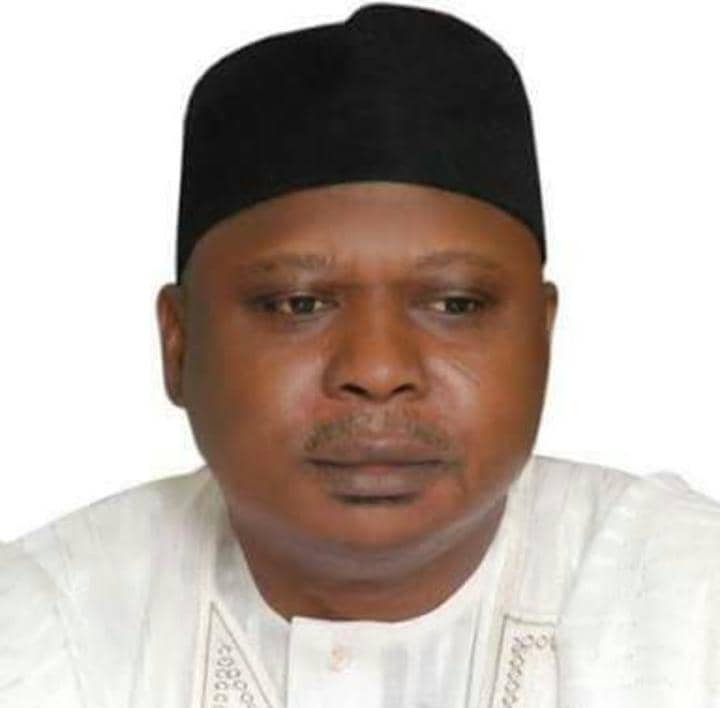
A High Court in the Federal Capital Territory (FCT) has issued a bench warrant for the arrest of Kabiru Turaki, a factional national chairman of the Peoples Democratic Party (PDP), following his failure to appear before the court.
Justice U.P. Kekemeke issued the warrant on Thursday, ruling that the former minister had provided no valid justification for his absence from the proceedings.
The warrant stems from a one-count charge filed against Turaki by the Inspector-General of Police (IGP). The charge alleges that Turaki provided false information to the police in a petition dated October 2022.
News
Youth Call on Ibrahim Little to Contest for Kano Governorship Under ADC
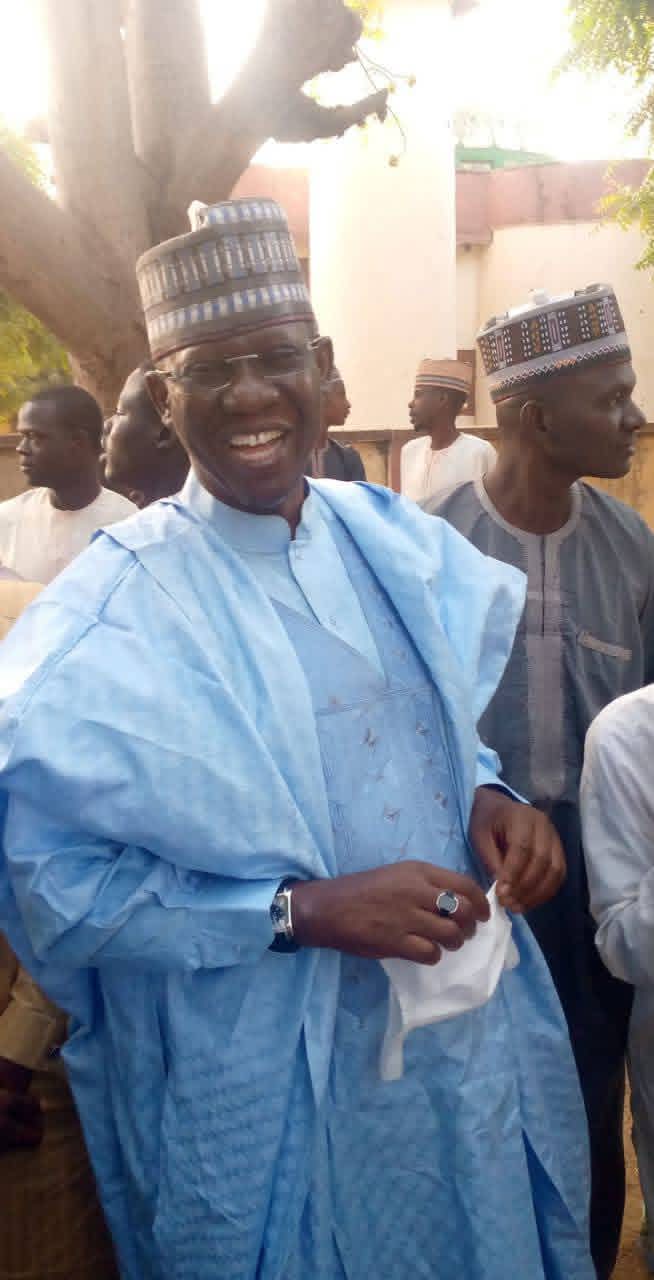
The Kano Youth Concern Initiative has called on ADC chieftain Ibrahim Ali Amin Little to declare his intention to contest for the Kano State governorship under the platform of the African Democratic Congress (ADC).
The group made this known in a statement issued on Thursday, signed by its Chairman, Comrade Abubakar Junaid Binoni, and its Secretary, Saidu Muhammad Ahmad.
According to Binoni, it is high time the ADC chieftain stepped forward to contest for the governorship in order to salvage Kano from the grip of entrenched political godfathers who, in their view, have hindered the state’s progress.
“It is only an independent-minded leader with courage and vision that can drive rapid economic development in Kano, widely regarded as Nigeria’s commercial nerve centre,” Binoni stated.
He further emphasized that Little’s strong background in the private sector sets him apart from previous governors of the state, many of whom were largely career civil servants with limited exposure to private enterprise and, in some cases, products of political godfatherism.
“Ibrahim Ali Amin Little possesses the administrative competence, business acumen, and strategic thinking required to reposition Kano for sustainable growth. His experience in the private sector gives him a practical understanding of job creation, investment attraction, and economic diversification—qualities that are critical for a modern and thriving Kano State,” he added.
The group also noted that Little’s longstanding interest in serving the state, dating back over a decade, reflects a deep sense of patriotism, resilience, and commitment to the welfare of the people.
“His passion and consistent efforts toward the governorship over the years demonstrate that his ambition is driven not by personal gain, but by a genuine desire to uphold the integrity and advance the interests of the people of Kano,” the statement read.
They expressed confidence that under Little’s leadership, Kano could witness significant transformation in key sectors such as commerce, infrastructure, youth empowerment, and industrial development, ultimately restoring the state’s status as a leading economic hub in Nigeria.
The group concluded by urging him to heed the call of the youth and formally declare his intention, stressing that they would not hesitate to explore all legitimate means to compel him to do so if he fails to respond.
“We strongly believe that the future of Kano depends on visionary leadership, and Ibrahim Ali Amin Little has what it takes to lead the state to greater heights,” Binoni said.
News
Attacks on the media: IPI Nigeria urges President Tinubu to call Governor Bago to order.
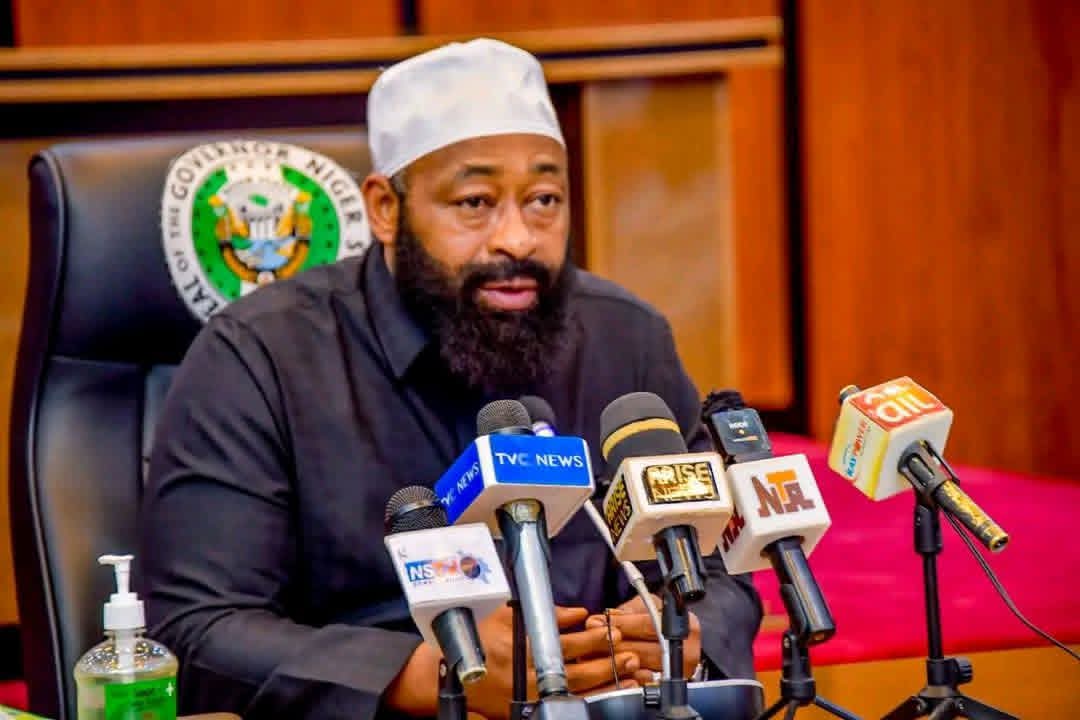
The International Press Institute (IPI) Nigeria has called on Bola Ahmed Tinubu to intervene in what it describes as a pattern of actions by Mohammed Umar Bago that threaten press freedom, warning that such conduct undermines journalists’ ability to perform their constitutional duties within Niger State. The appeal was made in a formal statement issued by the institute’s Nigerian chapter, highlighting growing concerns about the safety and independence of the media.
In the statement jointly signed by Fidelis Mbah and Tobi Soniyi, Deputy President and Legal Adviser respectively, IPI Nigeria said recent actions linked to the Niger State governor and his aides have directly infringed on press freedom. The organisation cited the assault on a reporter with the Nigerian Television Authority (NTA) as the latest example of hostility toward journalists, stressing that such incidents are becoming increasingly frequent and troubling.
The journalist at the centre of the latest controversy, Musa Mikail, was reportedly attacked while covering a Ramadan Iftar event held at the palace of the Etsu Nupe in Bida on March 13, 2026. According to accounts, private security personnel allegedly acting on the directive of Shehu Abdullahi Maikano, the Chief Security Officer to Governor Bago, forced the reporter out of the venue after physically assaulting him.
Recounting the incident, Mikail said he and his cameraman were quietly performing their duties when confronted. He explained that despite clarifying they were not obstructing proceedings, the governor’s CSO allegedly pushed him, after which other security operatives joined in the assault and ejected him from the event. The account has since raised concerns among media stakeholders about the safety of journalists covering public functions in the state.
IPI Nigeria described the attack as part of a “disturbing trend” of violations against journalists, accusing Governor Bago’s administration of fostering an environment hostile to press freedom. The organisation noted that such repeated incidents not only intimidate reporters but also erode democratic accountability by restricting the free flow of information to the public.
The institute also pointed to earlier cases, including the detention of Ahmed Isah Sakpe, a reporter with Prestige FM in Minna, who was summoned by the police over alleged defamation of a government protocol officer. It further referenced the closure of Badeggi FM Radio in November 2025 on grounds that its broadcasts were deemed critical of the state government, describing the action as arbitrary and disproportionate.
Other incidents highlighted include the arrest of freelance journalist Ibrahim Ndamitso in May 2025 after he questioned the governor about insecurity, and the interrogation of journalist Yakubu Mustapha Bina by the State Security Service following a report about the governor’s convoy. IPI Nigeria also recalled the 2023 assault on Voice of America correspondent Mustapha Batsari by a senior state official within Government House, Minna.
According to IPI Nigeria, the cumulative effect of these incidents led to Governor Bago’s inclusion in its “Book of Infamy,” a publication that documents individuals and institutions accused of undermining press freedom. The list, unveiled in December 2025, underscores what the institute describes as persistent attempts by certain public officials to silence critical voices and suppress freedom of expression.
Reacting specifically to the assault on the NTA reporter, the organisation called on the Inspector General of Police, Tunji Disu, to launch an immediate investigation and ensure that those responsible, particularly the governor’s CSO, are held accountable. It stressed that failure to act decisively could embolden further attacks on journalists across the country.
IPI Nigeria reiterated that safeguarding press freedom is essential to democracy, urging federal authorities to take a firm stance against any abuse of power that targets the media. The organisation maintained that journalists must be allowed to operate without fear of harassment, intimidation, or violence, warning that continued violations could damage Nigeria’s democratic credentials and global reputation.

Court Orders Arrest of PDP Factional Chairman Kabiru Turaki for Skipping Trial

Youth Call on Ibrahim Little to Contest for Kano Governorship Under ADC

Attacks on the media: IPI Nigeria urges President Tinubu to call Governor Bago to order.

Governor Yusuf Sacks Sagagi as Kano Commissioner Of Commerce

Terrorist Logistics Suppliers Apprehended in Borno

The Governor Who Chose His People Over His Politics: Abba Yusuf and the Moral Courage Behind Kano First

FREEDOM OF SPEECH, NOT FREEDOM FROM CONSEQUENCE: A CITIZEN’S CALL FOR RESPONSIBLE PUBLIC COMMENTARY

How Kano Government Official Allegedly Intimidate And Insult Two Journalists On Lawful Duty

Press Freedom: IPI Nigeria Calls on New Acting IGP to End Police Harassment of Journalists
Tinubu to Swear in Olatunji Disu as Inspector-General of Police on Wednesday
Court Orders Arrest of PDP Factional Chairman Kabiru Turaki for Skipping Trial
Youth Call on Ibrahim Little to Contest for Kano Governorship Under ADC
Attacks on the media: IPI Nigeria urges President Tinubu to call Governor Bago to order.
Governor Yusuf Sacks Sagagi as Kano Commissioner Of Commerce
Terrorist Logistics Suppliers Apprehended in Borno
The Governor Who Chose His People Over His Politics: Abba Yusuf and the Moral Courage Behind Kano First
FREEDOM OF SPEECH, NOT FREEDOM FROM CONSEQUENCE: A CITIZEN’S CALL FOR RESPONSIBLE PUBLIC COMMENTARY
How Kano Government Official Allegedly Intimidate And Insult Two Journalists On Lawful Duty
Press Freedom: IPI Nigeria Calls on New Acting IGP to End Police Harassment of Journalists
Tinubu to Swear in Olatunji Disu as Inspector-General of Police on Wednesday
-

 Opinion4 years ago
On The Kano Flyovers And Public Perception
-

 Features5 years ago
How I Became A Multimillionaire In Nigeria – Hadiza Gabon
-

 Opinion5 years ago
Kano As future Headquarters Of Poverty In Nigeria
-

 History5 years ago
Sheikh Adam Abdullahi Al-Ilory (1917-1992):Nigeria’s Islamic Scholar Who Wrote Over 100 Books And Journals
-

 Opinion4 years ago
My First Encounter with Nasiru Gawuna, the Humble Deputy Governor
-

 History5 years ago
The Origin Of “Mammy Market” In Army Barracks (Mammy Ochefu)
-

 History4 years ago
The History Of Borno State Governor Professor Babagana Umara Zulum
-

 News4 years ago
Federal University Of Technology Babura To Commence Academic Activities September