
News
President Tinubu To Attend Joint Arab-Islamic Summit In Saudi Arabia
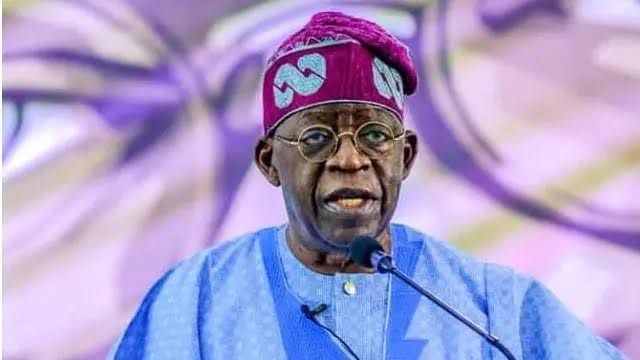
President Bola Ahmed Tinubu will depart Abuja on Sunday for Riyadh, Saudi Arabia, to attend the Joint Arab-Islamic Summit, which will focus on the current situation in the Middle East.
The Summit will commence on Monday, November 11, 2024.
It is being held at the invitation of King Salman and Crown Prince Mohammed bin Salman and follows last year’s summit in the same Saudi city.
During the summit, President Tinubu is expected to address the ongoing Israel-Palestinian conflict, emphasising Nigeria’s strong call for an immediate ceasefire and the urgent need for a peaceful resolution.
Nigeria will also advocate for renewed efforts to revive the two-state solution as a pathway to lasting peace in the region.
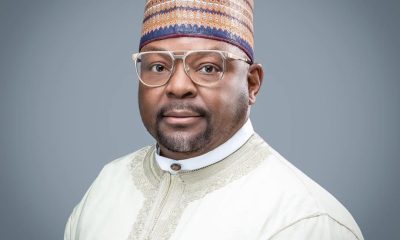
In a statement by Special adviser to the President on information and strategy Bayo Onanuga said key officials including the minister of foreign affairs, Ambassador Yusuf Tuggar, will accompany the President. Other members of the entourage are the National Security Adviser, Mallam Nuhu Ribadu; Minister of Information and National Orientation, Alhaji Mohammed Idris; and the Director General of the National Intelligence Agency (NIA), Amb. Mohammed Mohammed.










News
ADC Leadership Crisis: State Chairmen to Elect Caretaker Committee on Tuesday
By Yusuf Danjuma Yunusa
The leadership crisis engulfing the African Democratic Congress (ADC) intensified Friday as state chairmen of the party announced plans to take control of the opposition party’s national structure, citing the electoral commission’s recent decision to derecognise the Senator David Mark-led National Working Committee.
Temitope Ogga, Chairman of the ADC state chairmen and also the Kogi State Chairman of the party, disclosed the move in an interview with Saturday PUNCH, describing it as necessary to prevent a leadership vacuum and protect the party’s structure ahead of the 2027 general election.
Ogga said the National Executive Committee — comprising the state chairmen — will meet on Tuesday to select a Caretaker Committee that will steer the party’s affairs while legal disputes are resolved.
“After the NWC, we are the next highest decision-making organ of the party,” Ogga stated. “We are the NEC, all the state chairmen are members of the NEC, and it is the most powerful organ of the party.”
The crisis follows the Independent National Electoral Commission’s decision on Wednesday to remove the names of the ADC’s NWC — led by Mark — from its official portal, complying with a Court of Appeal order. INEC said it would maintain the status quo ante bellum pending the determination of a substantive suit before the Federal High Court in Abuja.
The ruling stems from a protracted leadership battle within the ADC, with rival factions led by Nafiu Bala Gombe and Senator David Mark both claiming authority over the party’s national structure.
Ogga insisted the state chairmen are legally positioned to assume leadership. “Now that the court has said that it does not recognise the NWC as the party authority, they did not disband the state chairmen and their executives, so we are the next in line to take over the party, according to the party’s constitution.”
He added that the party would formally notify INEC of the transition. “The committee will be in acting capacity, and we are going to write INEC to inform them of this new development. We will submit the names of the members of the committee to INEC after our meeting on Tuesday.”
News
ADC crisis rooted in legal process, not external influence — lawyers explain
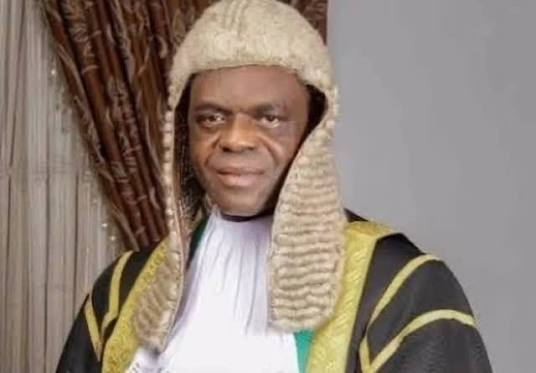
Two Nigerian lawyers, Inibehe Effiong and Bodunde Opeyemi, have offered detailed legal explanations of the ongoing leadership crisis within the African Democratic Congress (ADC), pointing to procedural decisions and binding court rulings as the root of the dispute.
Their interventions come amid growing public debate over the role of the electoral commission and speculation about possible political interference.
Mr Effiong, a public interest and human rights lawyer, criticised the legal approach taken by the faction led by former Senate President David Mark, describing it as procedurally questionable.
He said the Federal High Court did not issue any restraining order against the leadership, but instead directed that all parties be put on notice — a standard legal step requiring both sides to present their arguments.
According to him, the appropriate response would have been to contest the case at the trial court rather than file an interlocutory appeal.
“It became a motion on notice. They should have filed processes in opposition,” he said, adding that the decision to appeal at that stage was “unusual” and “untidy”.
He warned that pursuing further appeals could complicate the matter further instead of resolving it.
*Court ruling shapes situation*
Legal practitioner Mr Opeyemi traced the dispute to a leadership contest that followed a party meeting in July 2025, which produced a new executive.
The situation escalated when a party official challenged the process in court, asking the Federal High Court to stop both the new leadership and the electoral body from recognising the outcome.
While the court declined to grant an interim order, the case later reached the Court of Appeal.
In March 2026, the appellate court directed all parties to maintain the status quo ante bellum — meaning the situation must remain as it was before the case was filed.
Mr Opeyemi said this order is clear and binding.
“It requires a strict preservation of the state of affairs before the dispute,” he explained, adding that no party is allowed to take actions that could influence the outcome of the case.
Why the electoral body acted
The lawyers say this court order explains the position taken by the electoral commission, which has declined to recognise any faction of the party.
According to Mr Opeyemi, the commission is legally bound to comply with the directive and cannot take sides while the case is still before the court.
He said any attempt to recognise a leadership or engage with party activities under dispute could amount to a violation of a valid court order.
*Focus on internal legal process*
Both lawyers suggest that the situation is the result of internal disagreements and legal strategy within the party.
Their analysis indicates that the current impasse is being shaped by court processes rather than actions from outside the party.
The dispute is expected to remain unresolved until the Federal High Court delivers a final judgment on the substantive case.
News
APC Dismisses ADC’s Claims, Calls Leadership Crisis ‘Self-Inflicted’
By Yusuf Danjuma Yunusa
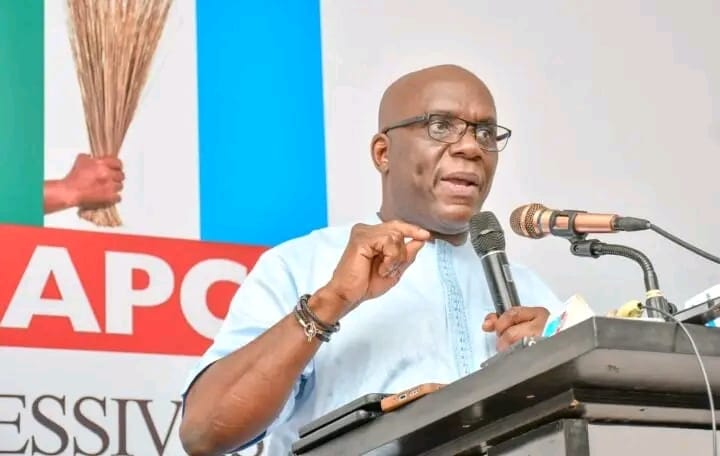
The All Progressives Congress (APC) has described the Independent National Electoral Commission’s (INEC) recent removal of the African Democratic Congress (ADC) National Working Committee (NWC) members from its portal as a problem entirely of the opposition party’s own making.
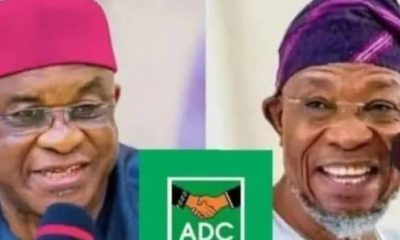
Speaking on News Central on Thursday, APC spokesperson Felix Morka rejected allegations that the ruling party was behind INEC’s decision to stop recognising David Mark as ADC national chairman and former governor Rauf Aregbesola as national secretary.
“We are only concerned about our level of preparation and the effort we are making. We’re concerned about ourselves. It is the opposition that is obsessed about what the APC does,” Morka said.
He added: “Even the most recent development that everyone is talking about—INEC’s decision to derecognise the David Mark executive—was utterly self-inflicted. The APC didn’t do that. We did not orchestrate the hijack of the ADC by that executive.”
INEC removed the Mark-led NWC from its portal on Wednesday, citing a March 12 ruling by the Court of Appeal. The commission also delisted the factional chairman, Nafiu Bala Gombe. INEC stated it would no longer recognise any factional activities until the Abuja Division of the Federal High Court resolves the party’s leadership dispute.
In response, the ADC, through its national publicity secretary Bolaji Abdullahi, accused the ruling party of hijacking its leadership and pressuring INEC to sack the Mark-led NWC. “The electoral body acted under pressure from a government panicked by the opposition momentum, despite its efforts to destroy all opposition parties and foist a one-party rule on Nigeria,” the ADC alleged.
Morka dismissed the accusation, arguing that INEC withdrew recognition from Mark and Aregbesola because they disregarded the ADC’s constitution and the rule of law.
“They did that, completely ignoring the rule of law and the party’s constitution on succession. When you parachute into a party and take over without following constitutional stipulations on leadership succession, this is the consequence,” he said.
“This was manufactured by the same people now complaining and pointing fingers at the APC. We are not concerned about all that.”
The leadership crisis in the ADC—a coalition of opposition politicians positioning to challenge President Bola Tinubu in the 2027 elections—began following the resignation of Ralph Nwosu as national chairman. David Mark was subsequently ratified as chairman, a move Gombe contested, arguing that he was entitled to the position under the party’s constitution.
Gombe then approached the Federal High Court in Abuja, challenging the legality of Mark’s leadership and seeking an order to stop the NWC members from parading themselves as party leaders.
Mark’s faction appealed to the Court of Appeal on December 18, 2025, arguing that the lower court lacked jurisdiction. However, the appellate court dismissed the appeal, allowing the case to proceed at the Federal High Court.

ADC Leadership Crisis: State Chairmen to Elect Caretaker Committee on Tuesday

Kano’s Peculiar Politics in Swap of Political Godfathers

ADC crisis rooted in legal process, not external influence — lawyers explain

APC Dismisses ADC’s Claims, Calls Leadership Crisis ‘Self-Inflicted’

INEC Dismisses Calls for Chairman’s Removal, Clarifies Voter Revalidation Decision

Governor Abba Kabir Yusuf Holds Exclusive Prerogative to Choose Deputy – Malam Inuwa Waya

The Governor Who Chose His People Over His Politics: Abba Yusuf and the Moral Courage Behind Kano First
Restoring the Glory That Was Always There: Governor Abba Kabir Yusuf and the Historical Vision Behind Kano First

NDLEA Clarifies: Drug Case Against Abba Kyari Still Active After Court Discharge

Table Water Producers Increase New Price for Sachet Water in Kano
ADC Leadership Crisis: State Chairmen to Elect Caretaker Committee on Tuesday
Kano’s Peculiar Politics in Swap of Political Godfathers
ADC crisis rooted in legal process, not external influence — lawyers explain
APC Dismisses ADC’s Claims, Calls Leadership Crisis ‘Self-Inflicted’
INEC Dismisses Calls for Chairman’s Removal, Clarifies Voter Revalidation Decision
Governor Abba Kabir Yusuf Holds Exclusive Prerogative to Choose Deputy – Malam Inuwa Waya
The Governor Who Chose His People Over His Politics: Abba Yusuf and the Moral Courage Behind Kano First
Restoring the Glory That Was Always There: Governor Abba Kabir Yusuf and the Historical Vision Behind Kano First
NDLEA Clarifies: Drug Case Against Abba Kyari Still Active After Court Discharge
Table Water Producers Increase New Price for Sachet Water in Kano
-

 Opinion4 years ago
On The Kano Flyovers And Public Perception
-

 Features5 years ago
How I Became A Multimillionaire In Nigeria – Hadiza Gabon
-

 Opinion5 years ago
Kano As future Headquarters Of Poverty In Nigeria
-

 History5 years ago
Sheikh Adam Abdullahi Al-Ilory (1917-1992):Nigeria’s Islamic Scholar Who Wrote Over 100 Books And Journals
-

 Opinion4 years ago
My First Encounter with Nasiru Gawuna, the Humble Deputy Governor
-

 History5 years ago
The Origin Of “Mammy Market” In Army Barracks (Mammy Ochefu)
-

 History4 years ago
The History Of Borno State Governor Professor Babagana Umara Zulum
-

 News4 years ago
Federal University Of Technology Babura To Commence Academic Activities September